
Nan Madol: The Pacific's Impossible City
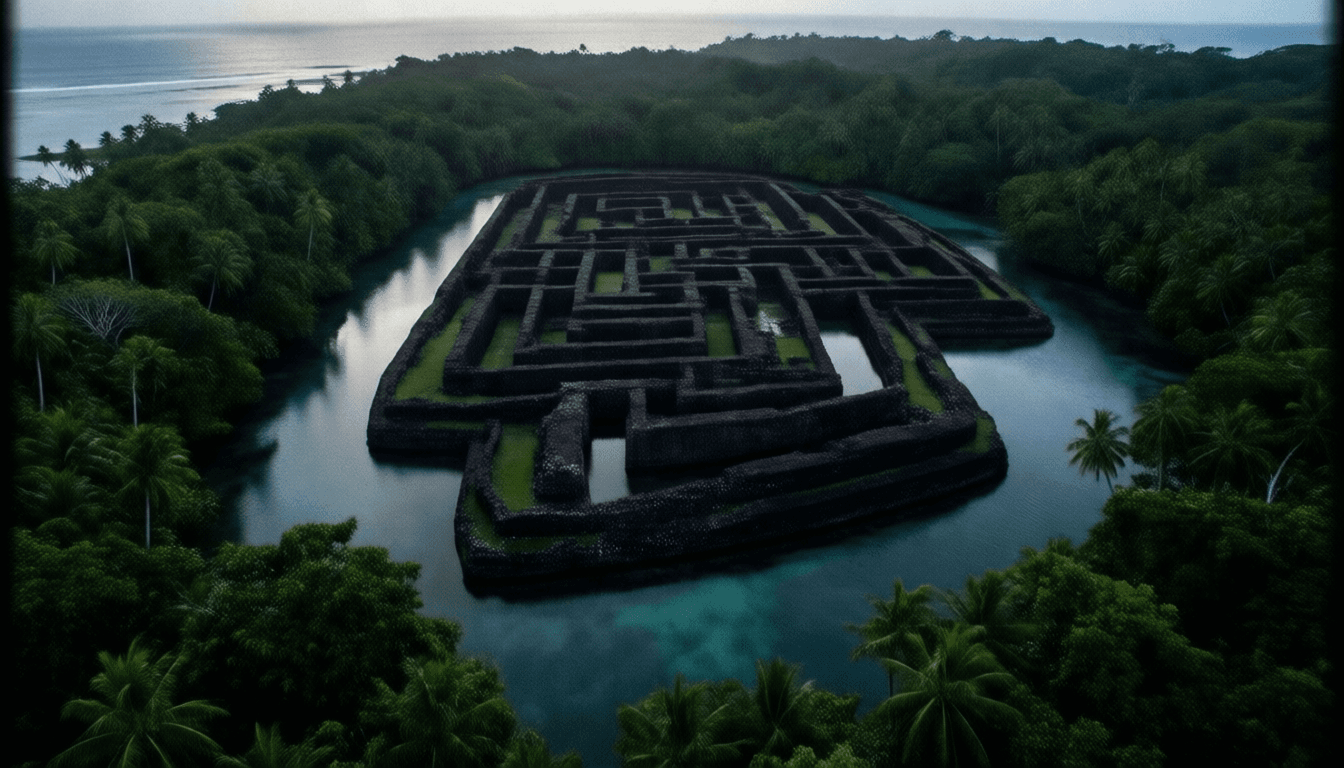
Imagine a city. Not carved into a mountainside or built on solid ground, but a colossal metropolis of massive basalt logs, rising directly from coral reefs in the vast ocean. Situated off the coast of Pohnpei Island in Micronesia, at a remote edge of the Pacific, Nan Madol is often called the ‘Venice of the Pacific.’ From above, hundreds of artificial islands form an intricate grid, connected by a labyrinthine network of waterways. But its true wonder is revealed up close: its walls are not made of bricks or sculpted stones, but colossal volcanic rock columns, some weighing up to 50 tons each, stacked and interlocked with an inexplicable precision. This serene, water-logged ruin stands as both an architectural marvel and a profound historical enigma, daring us to comprehend the near-impossible feat of its creation.
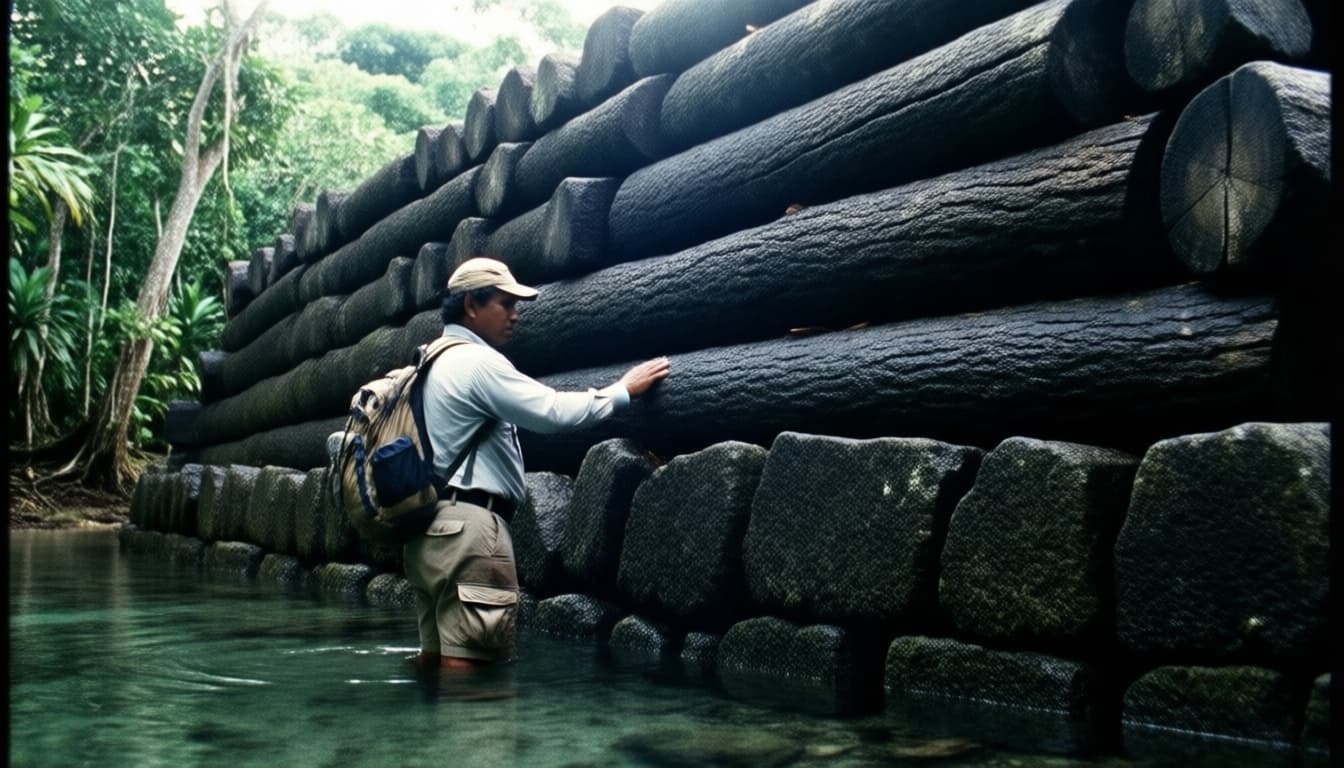
To step into Nan Madol is to enter a forgotten kingdom. The site comprises over 90 artificial islands, intricately constructed from massive, prismatic basalt columns. Some walls reach heights of 7.6 meters and are 5.5 meters thick. These natural volcanic ‘logs,’ rather than being carved, seem to have been split like giant building blocks for children, fitted together and often erected without mortar. Archaeological investigations suggest the city was the ceremonial and political center of the Saudeleur Dynasty, flourishing from around 1200 AD to 1600 AD. Its sheer scale implies a highly organized society with immense labor power and advanced planning capabilities.
However, the known historical records and oral traditions of the Pohnpeian people offer little in the way of conventional explanations for how this monumental work was accomplished. Instead, they lean on tales of magic and divine intervention, notably attributing the magical levitation of the enormous stones into place to the legendary twin sorcerer brothers, Olisihpa and Olosohpa.
It is here that modern science and archaeology run up against a solid wall of the unknown. The most immediate question concerns the origin of these massive basalt pillars. Geologists have identified quarries several miles from Nan Madol, many across treacherous stretches of water. The logistics of transporting hundreds of thousands of tons of rock—with individual pieces ranging from 50 to 90 tons—across land and sea, and then lifting them into precise positions without known ancient technologies like cranes, sophisticated pulley systems, or even the wheel, remain fundamentally unsolved.
Furthermore, the estimated population of Pohnpei during the Saudeleur period was too small to sustain the labor force required for such continuous construction efforts using conventional methods. The absence of archaeological evidence for large-scale civil engineering equipment, rollers, or the numerous laborers needed further deepens the enigma, pushing the boundaries of our understanding of ancient human capabilities in the Pacific region.
The core mystery of Nan Madol lies in the profound disconnect between the monumental scale and sophistication of its construction and the apparent limitations of the society that built it. We are not merely talking about moving heavy stones; we are discussing the systematic construction of an entire city complex on an unprecedented scale for its time and place. Some estimates suggest that approximately 750,000 tons of basalt were used in its construction. This feat would have required not only immense physical labor but also highly sophisticated engineering knowledge to lay foundations underwater, resist currents, and achieve the intricate interlocking without mortar.
The culture that built Nan Madol left no written records, no blueprints, no clear instructions carved into stone detailing their methods. All that remains is the silent, vast ruin—a mute testament to a technological or organizational capacity that seems entirely inconsistent with the known archaeological profile of early Micronesian societies.
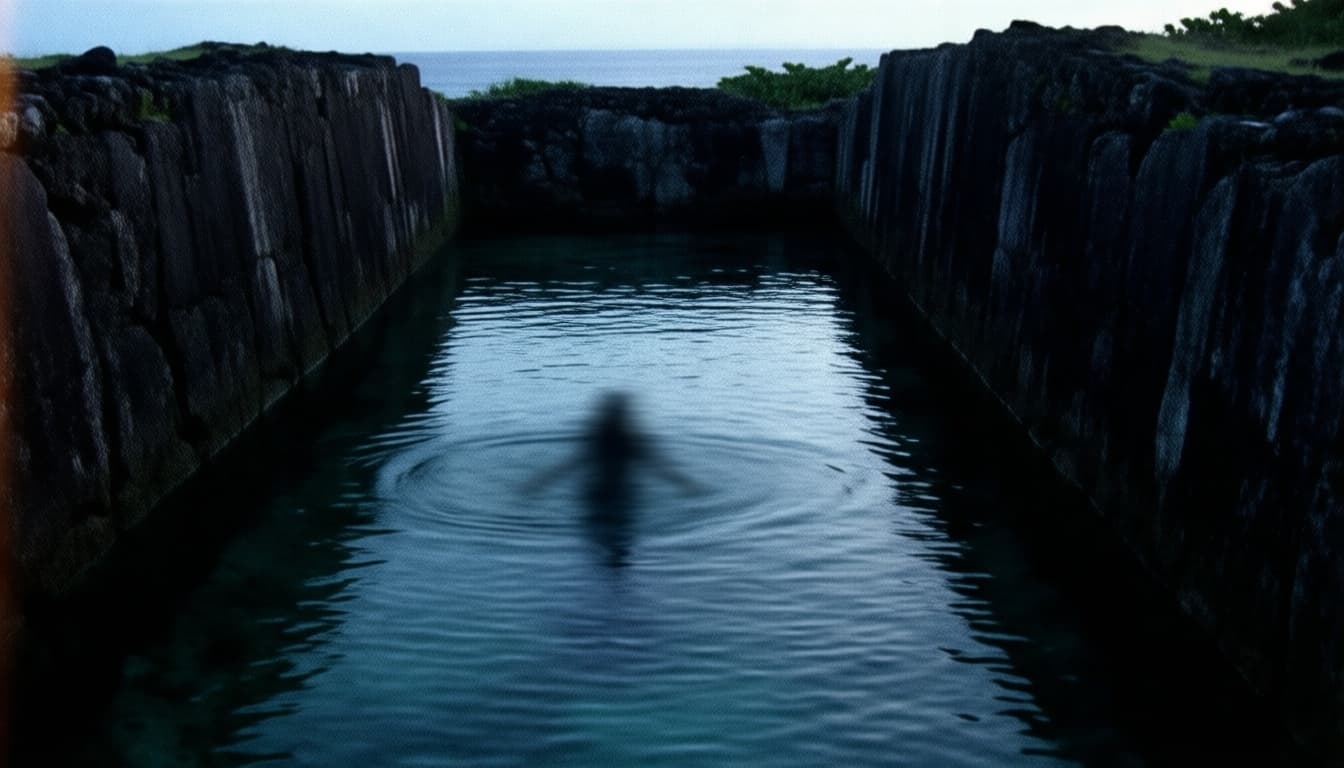
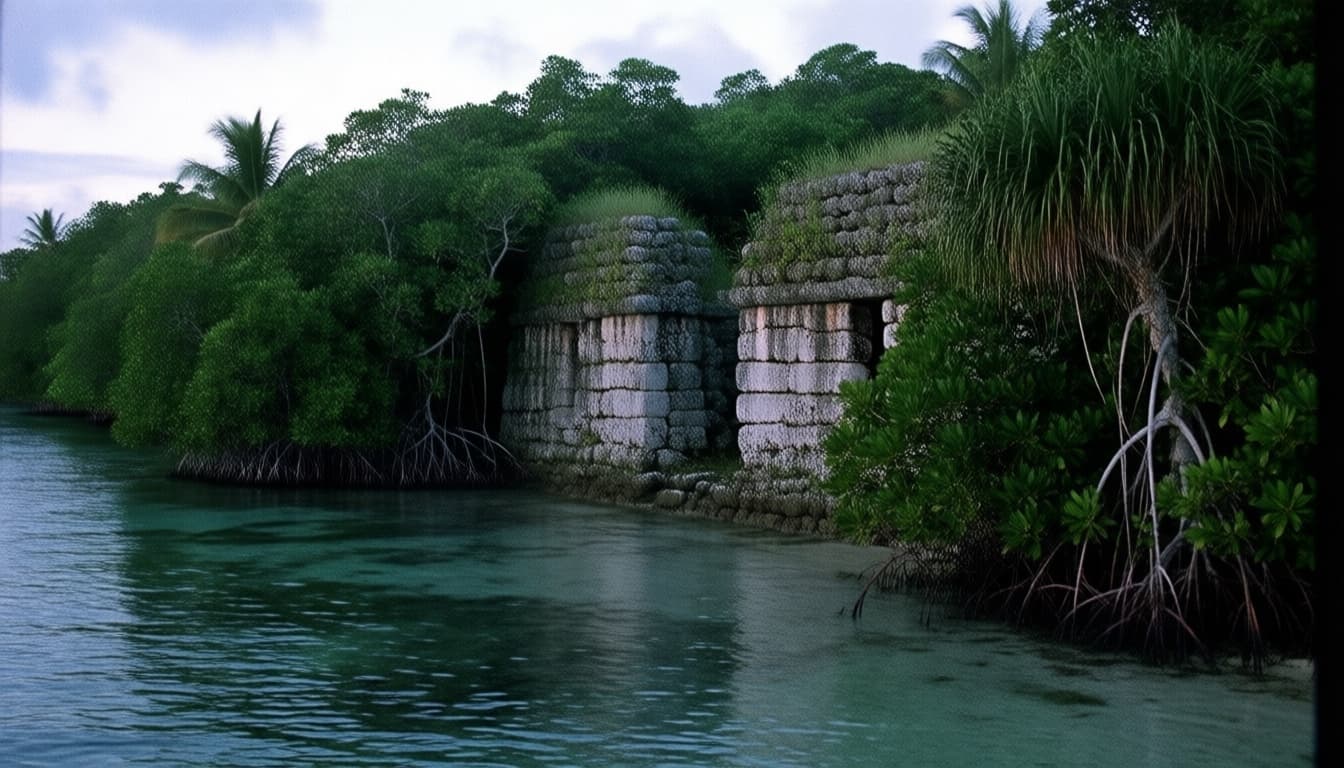
Today, the basalt walls of Nan Madol stand much as they did centuries ago, slowly being reclaimed by mangroves and the relentless tides of the Pacific. The silence of the waterways is broken only by the lapping of waves and the distant cries of seabirds, echoing a profound, unanswered question: Was there knowledge or technology, or a collective effort lost to the currents of time, far beyond our current comprehension? Or do the ancient legends of stones taking flight hint at a more mystical truth, wielded by forgotten master builders, that defies our modern empirical worldview? Nan Madol continues to be a monument of wonder, a colossal submerged enigma that persistently challenges our assumptions about ancient civilizations and their true capabilities. We are left only to ponder the silent, massive testimony of a dominion that once existed, somewhere, lost to human memory, where only the stones tell an impossible story.
[ CLASSIFIED VERDICT ]
[ACCESS LOG - SOURCE FILE]
Nan Madol is an ancient city located on Pohnpei Island in the Pacific, known as the 'Venice of the Pacific,' built from massive basalt pillars on coral reefs. Legend has it that twin sorcerer brothers magically flew the stones into place, and modern science struggles to explain how such colossal structures were transported and built. This city raises questions about advanced civilizations, unknown technologies, or even supernatural powers.