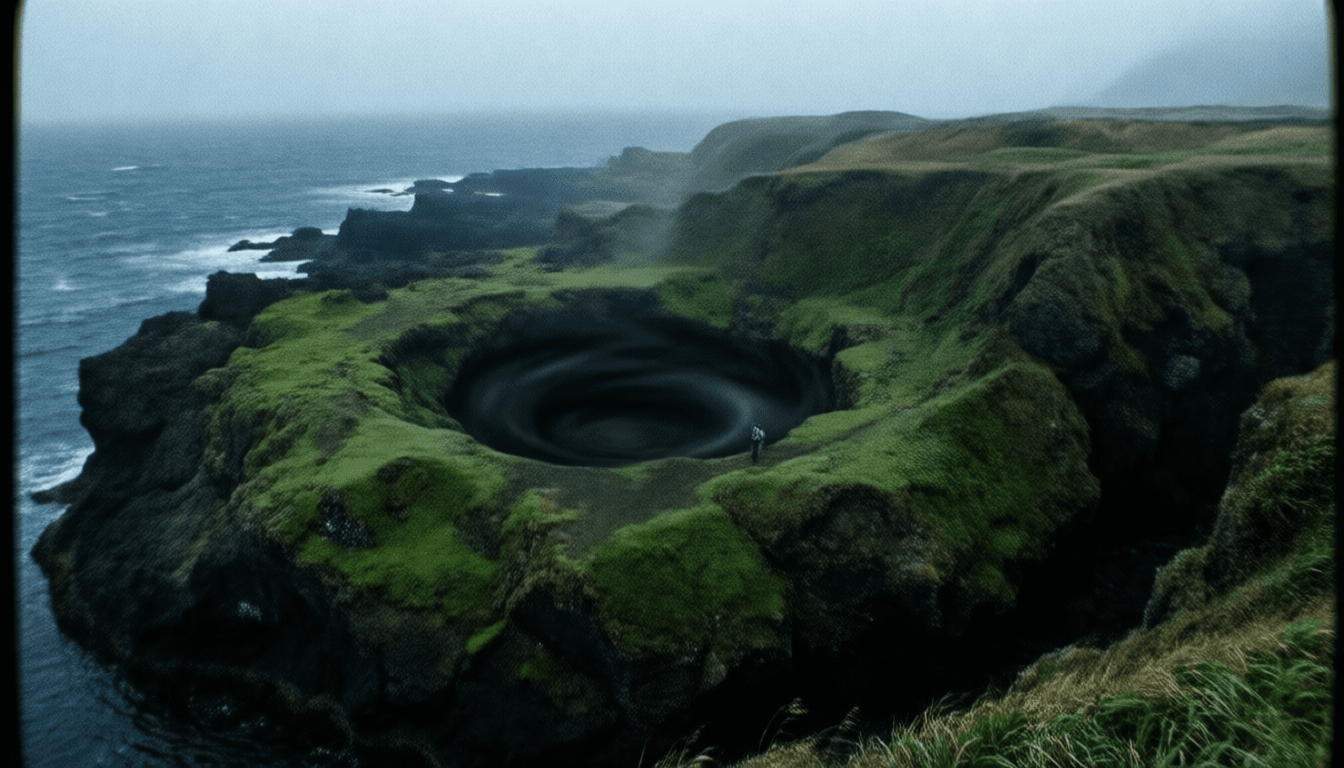
KAL 007: The Silent Sea's Scream
Immediately following the KAL 007 shootdown on September 1, 1983, official reports stated that both Soviet and international search teams found virtually no bodies or significant debris in the Sea of Japan. Yet, for decades, an unsettling rumor persisted among the Ainu fishing communities on Hokkaido’s northern coast and the residents of Moneron Island near Sakhalin. They spoke not of conventional debris fields, but of an unnatural, profound silence draped over a specific section of the sea. More unsettling were the unsubstantiated testimonies of certain items washing ashore years later, defying known currents and official search paths. Specific objects, like a child’s red boot or a flight attendant’s name tag, would be discovered, often accompanied by the nightmarish scent of ozone and jet fuel. These fragmented, persistent whispers, often dismissed as mere death folklore, form the core of our investigation, hinting that the physical and temporal imprint of the incident might be remarkably different from conventional understanding.
As an independent researcher specializing in maritime archaeology with a deep fascination for Cold War aviation mysteries, I was drawn to a faded photograph of a child's boot, allegedly found by a fisherman decades ago, leading me to the desolate, fog-shrouded northwestern coast of Hokkaido. There, I sought out the eldest members of the Ainu community, who confirmed the persistent folklore and directed me to a remote, rocky cove known as ‘Kaminari-no-Ike’ (Thunder Pond), where the most bizarre fragments had reportedly washed ashore. The treacherous path wound through dense, wind-battered pine forests, eventually opening onto a narrow beach littered with skeletal driftwood. Even in mid-summer, the air here was noticeably colder than the surrounding coast, tinged with a faint, metallic, fishy smell. The tide pools were unnaturally still, reflecting the grey sky like polished obsidian.
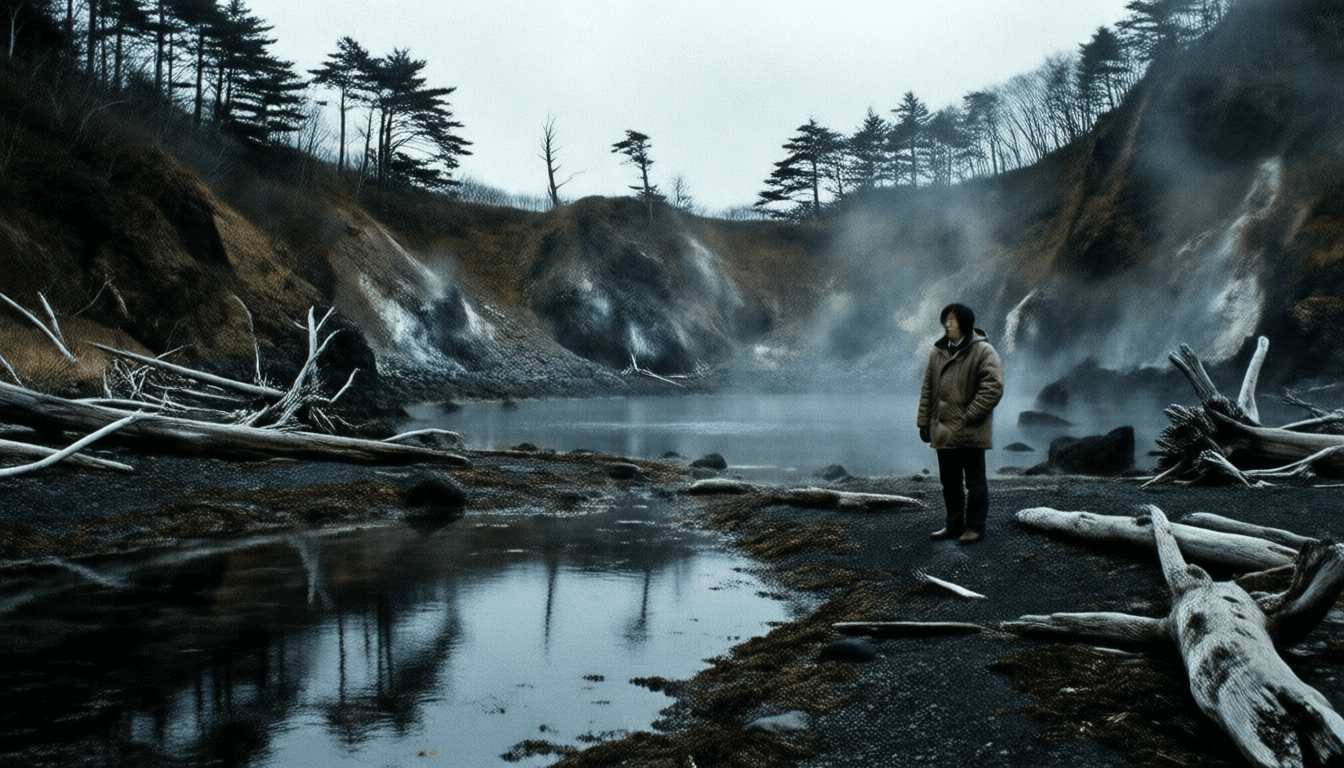
As I systematically began my search of Kaminari-no-Ike, subtle anomalies began to manifest. The distant roar of the waves, which should have been audible, became muffled and absorbed, an ominous silence replacing all other sounds, even swallowing my own footsteps. When I tried to speak, my voice seemed to hang in the air, its echo returning from an impossible direction and with a delay, as if space itself was distorting sound waves. Examining a small tide pool, I noticed the recently incoming seawater was swirling against the receding tide. A low-frequency hum, seemingly emanating from the seabed, began to vibrate through the soles of my feet – less a sound, more a sensation. In certain areas of the cove, there were inexplicable, abrupt drops in temperature, as if pockets of deep, Arctic air were stagnant, contrasting sharply with the warm coastal breeze. A powerful sense of being watched settled over me. It wasn't a physical presence, but the oppressive weight of the silence itself, as if the tragic event of decades past had left an indelible physical wound upon this world.
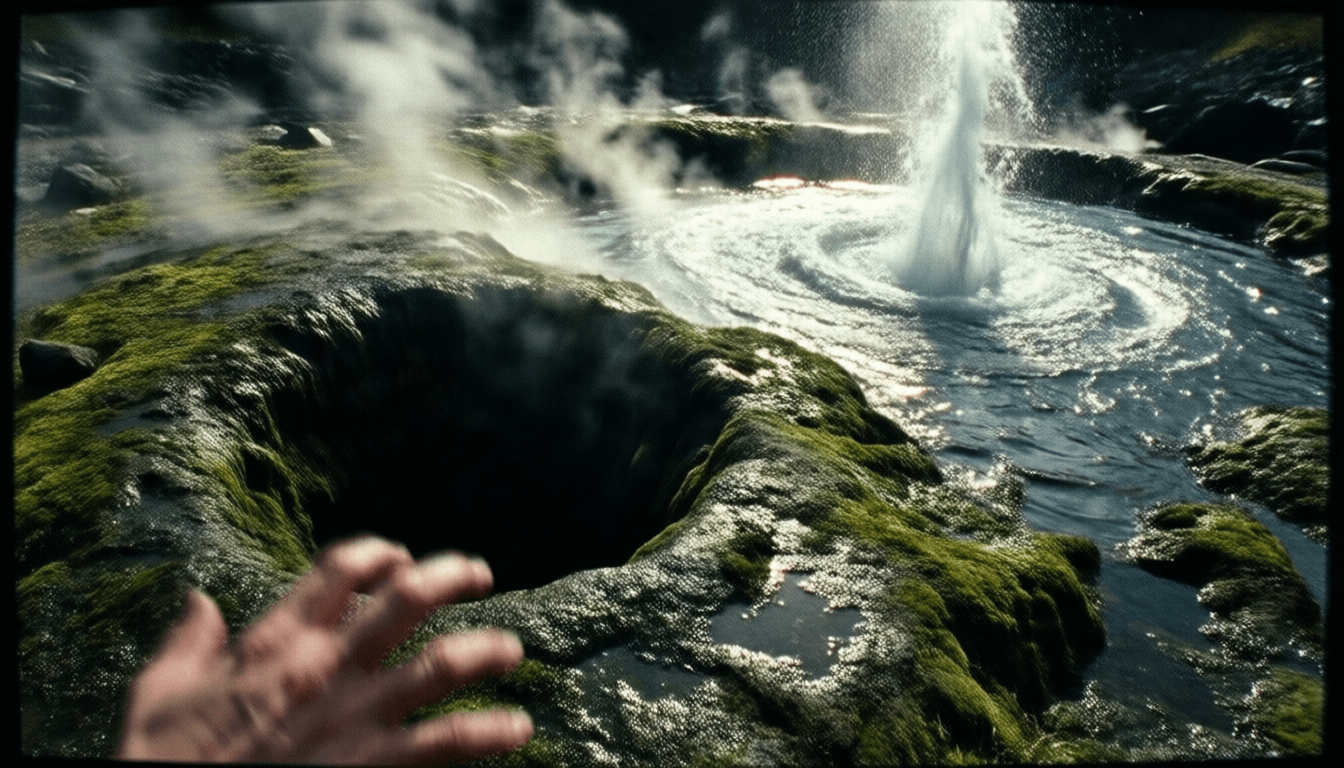
Driven by a growing unease, I discovered a small, perfectly circular depression in the rock face, barely visible beneath decades of moss. Its regularity seemed too perfect for a natural geological feature, almost like a compressed impact scar. As I leaned closer to examine it, the low-frequency hum intensified into an unbearable pressure, an ache in my ears and chest. The air became impossibly cold, my breath fogging solid. For a fleeting moment, the silence shattered. A cacophony erupted. It wasn’t an echo, but an immediate, overwhelming symphony of sound in the present. The guttural roar of jet engines at full throttle rapidly morphed into the metallic shriek of tearing metal, and the distant, terrified screams of passengers became vivid and instantaneous, layered and immediate. The ground beneath my feet began to vibrate violently, a localized seismic tremor seemingly focused only on my position.
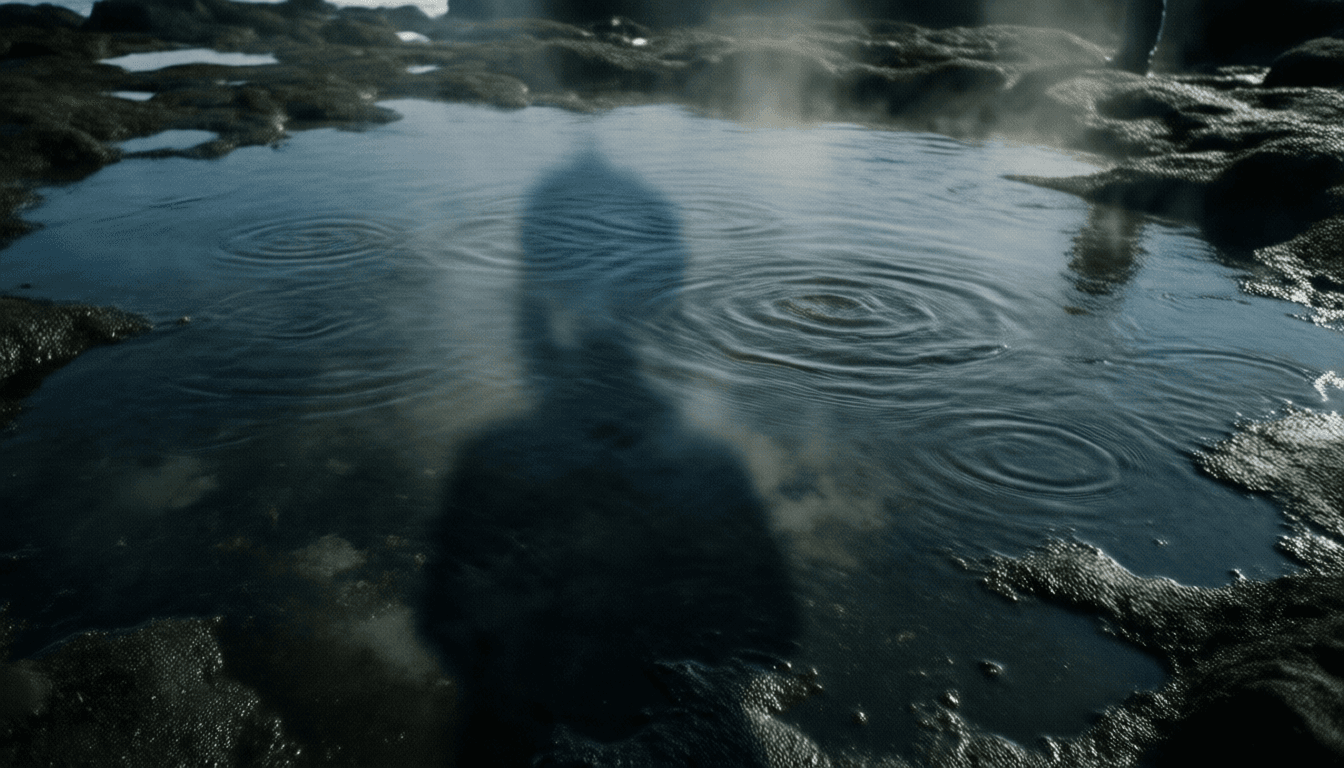
The air around me visibly warped, and light refracted wildly, causing the rocks to shimmer and twist. The water in the tide pools transformed into violent whirlpools, the water not merely moving, but boiling and levitating into impossible spiraling columns in the air. I was suddenly struck by an invisible, crushing force, as if the atmospheric pressure had catastrophically plummeted. My ears screamed under the painful pressure of rapid decompression, and I was thrown backward, slamming against the hard rock, forcing the air from my lungs. For a transient, horrific moment, I was no longer in the cove, but suspended in an icy, roaring abyss of air and disembodied terror. I felt sharp fragments of metal brush past, leaving an icy chill on my skin. Phantom hands pushed me down, then just as quickly, other hands desperately *pushed me away*. My senses were utterly overwhelmed, a total immersion into the final moments of the catastrophe. The physical contact was agonizing. It wasn’t a ghostly claw, but a simulated, crushing force born from the aircraft’s final moments – the impact, the cold, the unimaginable violence of a mass grave.
I eventually clawed my way out of that distorted space, gasping, battered, and utterly disoriented. The horrific cacophony vanished, replaced once more by the profound, unnatural silence. I stumbled away from Kaminari-no-Ike, my entire body aching, my ears ringing with tinnitus, but my mind irrevocably altered. Beyond the superficial scrapes and bruises from my fall, there were no visible external injuries, yet an internal tremor persisted, along with a deep, bone-chilling cold that refused to dissipate.
Even days later, back in civilization, the hum of fluorescent lights or the distant drone of an airplane engine would trigger sudden nausea and disorienting chills. I couldn't shake the persistent smell of ozone and jet fuel, even within my own home. During a routine check-up, my doctor discovered unexplained, persistent inner ear damage that didn't align with any recent injuries. I had no photographs, no direct physical evidence of what I had experienced. But nestled deep within my research notes, I found a small, wet object I didn’t remember picking up. It was a discolored brass button, embossed with the Korean Air emblem, half-embedded in a twisted piece of unidentifiable composite material. Too small, too insignificant to prove anything to the world, yet it was so definitively *there*. The button was always cold to the touch. I now understood that the silence of the Sakhalin coast was not empty; it was a deep, dreadful reservoir containing the echoes of an event so violent and unnatural that it had torn not just lives, but the very fabric of reality itself, waiting for someone to listen too closely. The true conspiracy, I realized, wasn't the cover-up of facts, but the silencing of an impossible, resonant truth.

[ CLASSIFIED VERDICT ]
[ACCESS LOG - SOURCE FILE]
After the 1983 KAL 007 shootdown, official reports claimed few bodies or significant debris were found. However, rumors persisted among coastal communities in Hokkaido and Sakhalin about an unnatural silence in specific sea areas. They spoke of items like a child's red boot washing ashore years later, defying ocean currents, implying the incident's physical and temporal footprint was far more unusual than officially acknowledged, bordering on an urban legend.