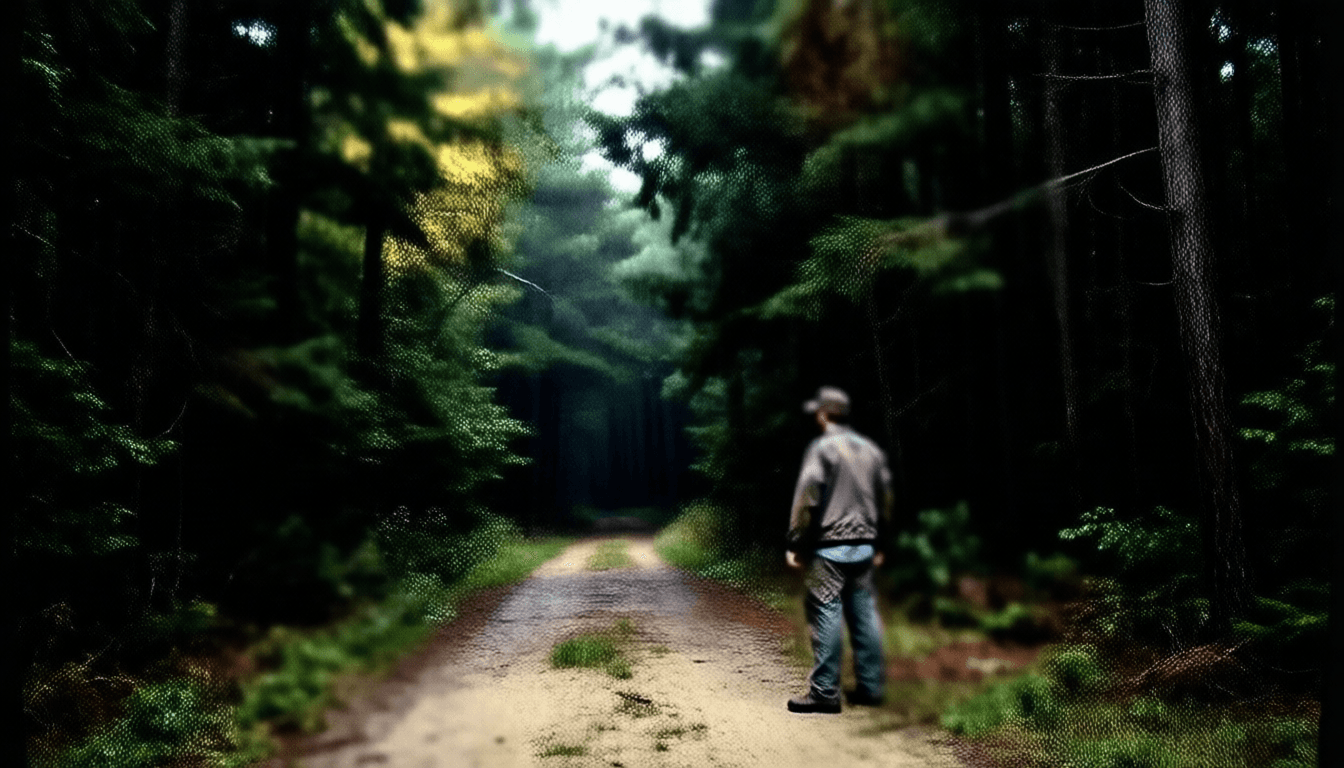
The Devil of Pine Barrens: Imprinted Silence
The online forums were ablaze with the story, and local news outlets, quickly dismissing it as sensationalism or a seasonal prank, rapidly took down their articles. In late autumn, a series of bizarre incidents occurred in a concentrated area within the central New Jersey Pine Barrens. It started with livestock. Not cattle, but several alpacas kept on a small farm adjacent to Wharton State Forest were found surgically mutilated with chilling precision. There were no bloodstains, only deep, clean incisions and extracted organs. Veterinarians, despite a complete lack of forensic evidence, were forced to vaguely conclude 'unknown predator' or 'human intervention.'
Then the disappearances began. Two experienced and well-equipped hikers vanished without a trace from a marked trail near Batsto. A week later, a local explorer known for deep forest expeditions failed to return. Police searches yielded nothing, leaving officers increasingly baffled. Instead, what surfaced were eerie aerial photos captured by a drone enthusiast just before their equipment mysteriously malfunctioned: long, strange shadows stretching across treetops, and one highly pixelated image on soft soil, appearing to be an incredibly massive hoof print. Soon-deleted forum threads related to these events were filled with comments from numerous locals whispering the same name: The Leeds Devil. The precise mutilations, inexplicable disappearances, and physical anomalies found within an environment historically steeped in countless tales demanded scrutiny.
My entry point was a narrow, unpaved access road deep within the Pine Barrens, not far from the explorer's last reported location. The air immediately thickened, heavy with the region's characteristic damp pine, cedar, and peat scent. The dense pine canopy blocked sunlight, leaving the forest floor in perpetual twilight. The terrain, a mix of sandy soil and low-lying wetlands, swallowed sound and perspective.
My GPS led me to the edge of a once-barren, now overgrown fire break—the farthest point a vehicle could safely approach. Beyond lay a trek into oppressive silence. My goal was simple: locate the explorer's last phone signal coordinates and find any evidence the police might have overlooked. My first steps were surprisingly ordinary. The ground beneath was soft, cushioned by years of fallen leaves and pine needles, absorbing the sound of my boots. The usual forest sounds—birds, cicadas, rustling undergrowth—were strangely absent, replaced not by peace, but by a complete silence, as if sound was actively suppressed. The only audible presence was my own breathing, sharp and invasive.
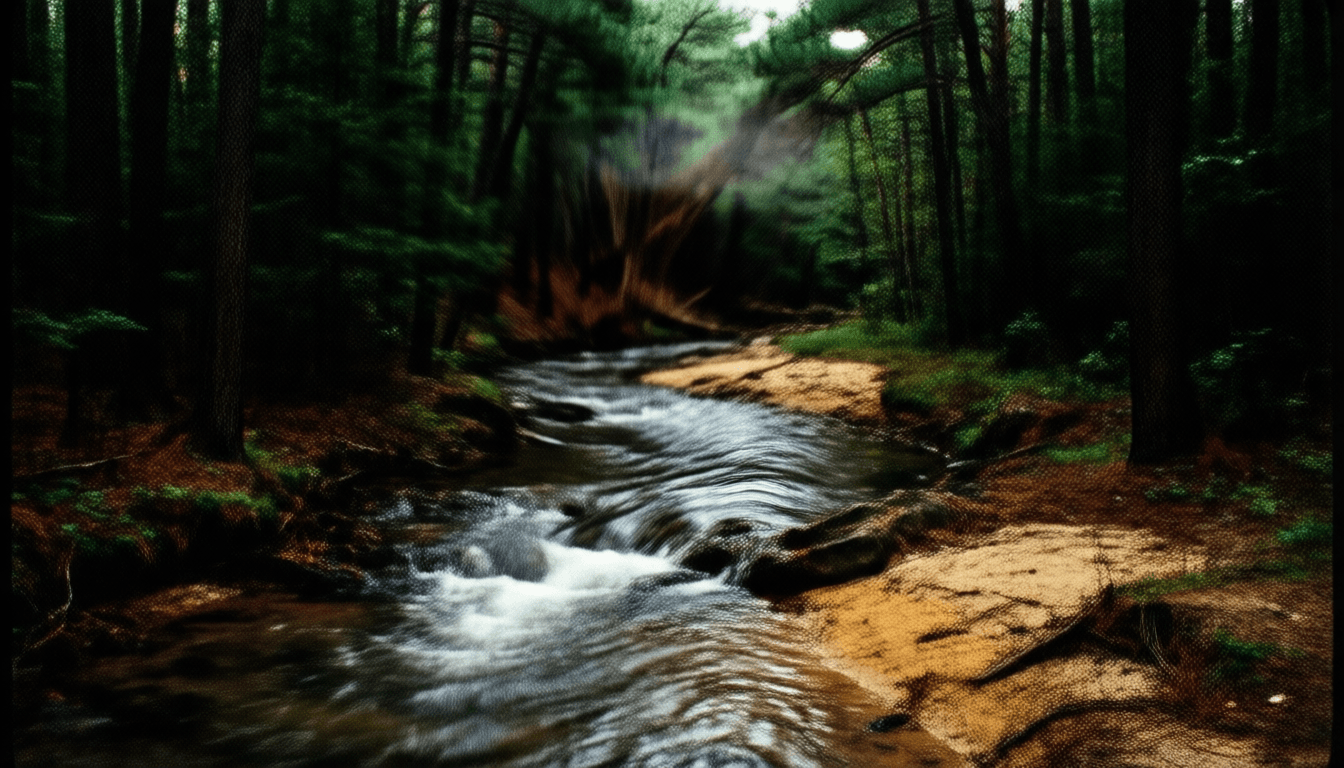
As I ventured deeper, the anomalies began. A small, winding creek, barely thirty centimeters wide, crossed my path. In certain sections, the water seemed to flow with an unsettling hesitation, as if encountering an invisible resistance, almost imperceptibly pausing before resuming its natural course. It wasn't turbulence; it was a subtle, localized resistance to flow. I knelt and dipped my hand in. The water was cold but otherwise unremarkable. Yet, the visual distortion persisted.
Further in, I shouted to test sound propagation. In an open forest, my voice would normally echo, but here it was instantly swallowed. No echo, no faint reverberation. It was as if the air itself absorbed the sound, leaving only a dead, empty space. My attempt to confirm my presence with sound was futile, intensifying my unease. The silence was not passive; it was active.
Then came the smell. A faint, pungent, metallic yet faintly sweet odor hung in the air. Similar to the ozone scent after lightning, but without a storm. It was subtle but clung persistently to the dense undergrowth. And the sounds, or lack thereof. Every rustle of leaves, every distant snap of a twig, felt amplified yet simultaneously detached, as if coming from where it shouldn't. There were no distinct animal sounds, only an overwhelming sense of an unseen gaze constantly pressing in from the periphery of my vision, within the impenetrable thickets.
The coordinates led me to a small clearing in the middle of a swampy area. In the center of the clearing stood an ancient cedar tree, its twisted branches reaching like skeletal fingers towards the sky. Despite no such temperature drop in the surrounding forest, the air here was noticeably colder, heavier, and eerily still. The acrid scent I had previously detected was now stronger, becoming nauseating and foul.
As I approached the center of the clearing, the ground beneath my feet began to change unnaturally fast. What appeared to be firm peat soil rapidly transformed into sticky, sucking mud, its boundaries expanding quicker than any natural swamp I had encountered. I felt my boots being pulled down with an eerie force. As I struggled to extract myself, a powerful gust of wind suddenly erupted. It was a concentrated whirlwind, confined only to the clearing, not the entire forest. It tore at my equipment, threatened to throw me off balance, and into the rapidly expanding mire.
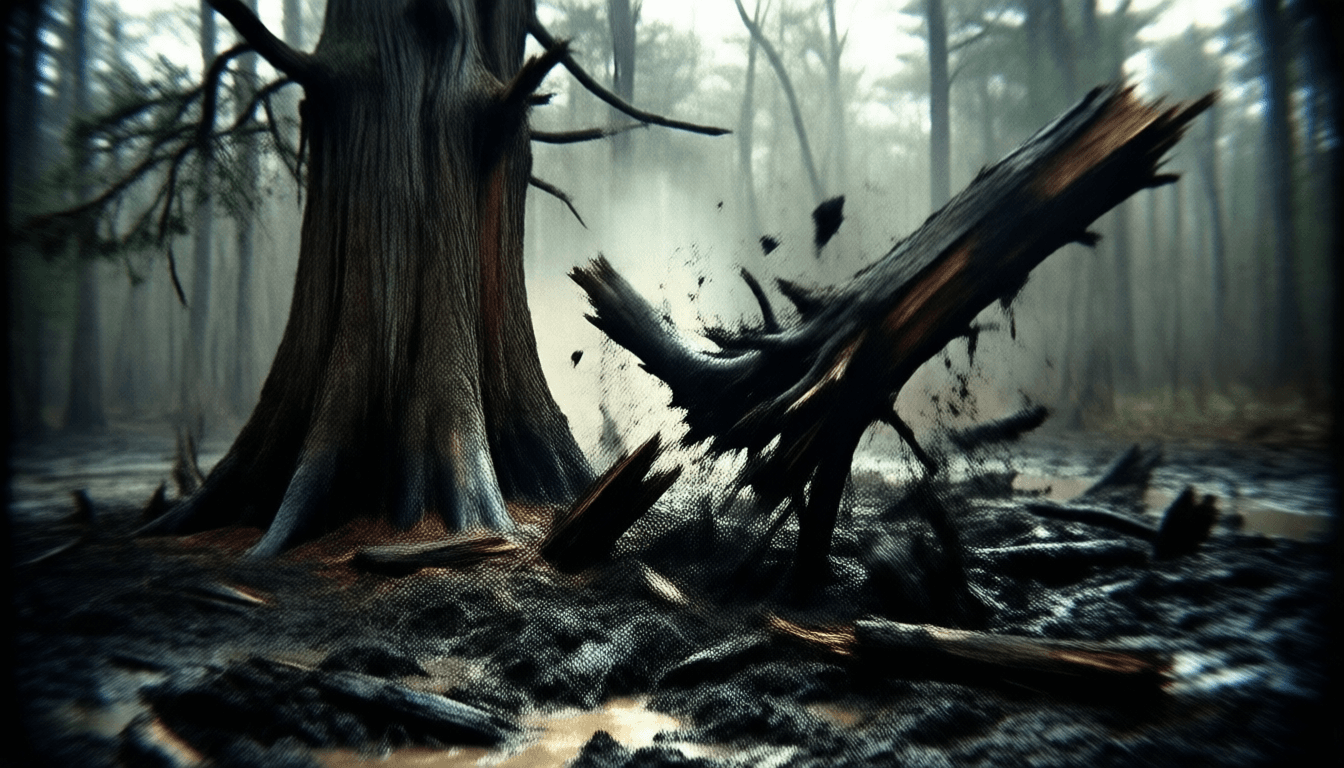
Then, a sound. Not a growl or a roar, but a sharp, high-pitched shriek. The shriek resonated unnaturally close, right above my head. It was an unclassifiable sound, part bird, part mammal, part something utterly alien and agonized. I instinctively looked up, shielding my eyes from the wind, and in that instant, I realized one of the ancient cedar tree's massive, rotten branches had snapped cleanly off without warning, with an eerie, bone-breaking sound. There had been no visible cracks, no precursor to such sudden breakage. It fell directly towards me. I twisted desperately. An adrenaline-fueled surge to escape the swamp's sticky grasp barely cleared the impact point, and the branch slammed into the ground with a bone-jarring thud, spraying black mud and broken wood.
Before I could regain my balance, a terrible coldness tore and pierced through my left pant leg, followed by a sharp, deep pain. Something had grazed me. Too fast to identify, too substantial to be an illusion. It was rough and cold, leaving a persistent, burning ache. I stumbled forward, narrowly avoiding the swamp's edge. The shriek had now morphed into a low, guttural, beast-like growl, less a cry and more a challenge. Trapped, cornered, and physically marked, I abandoned my heavy backpack. Desperate survival instincts had kicked in. As I retreated, slipping and falling through the shifting ground, the localized wind seemed to herd me towards the forest edge. The shriek was a constant, haunting echo, always behind me.
Hours later, I emerged from the outskirts of the Pine Barrens, disoriented, scratched, and bruised. The cool autumn air felt sharp and clean on my skin, yet the cold sensation in my left calf burned from within. My escape had been a frantic tangle of movements in terror. I had little clear memory of the path, just an overwhelming, primal urge to flee. My abandoned backpack, containing all my recording and telemetry equipment, was gone. Without a trace.
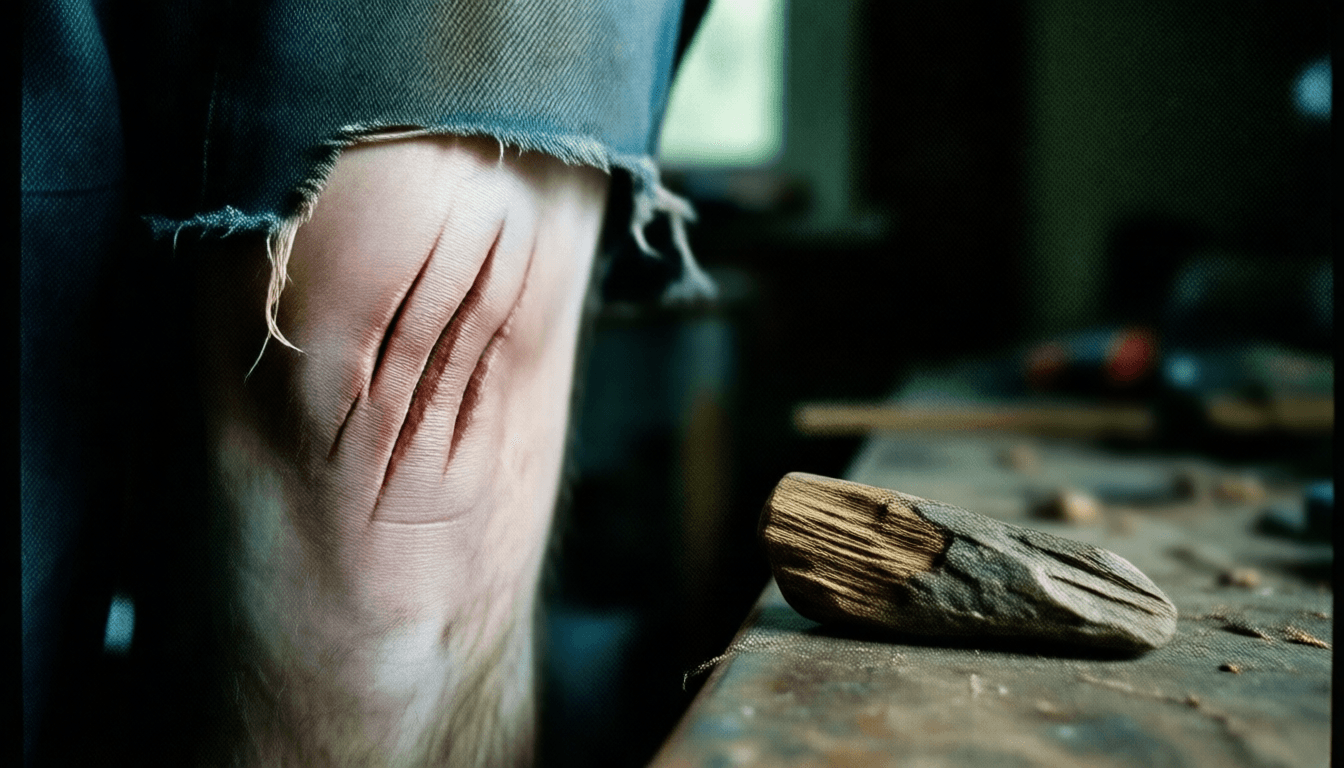
Reaching my car, an extreme fatigue washed over me, but the pain in my calf demanded attention. Pushing aside the torn fabric of my pants revealed a deep, clean scratch. It wasn't the jagged tear of a tree branch. It was a precise, almost symmetrical laceration: three distinct lines converging at a point, as if etched by a specific tool. Blood flowed slowly, and despite my efforts to wipe it away, an abnormal coldness continuously emanated from the wound. It was a coldness that seeped into the very bone.
Later, under the sterile light of my workshop, the true horror set in. Rummaging through my shoes, I found it. A small, stone-hard splinter of wood, deeply embedded in the sole of my left boot. It was incredibly dense, heavy for its size, and its grain pattern was unlike anything I had ever encountered. It was undoubtedly from the fallen branch. But its physical properties defied explanation.
And the smell. That acrid, metallic-sweet odor I had first encountered in the Pine Barrens now clung to my clothes, my hair, even my skin. I washed and rewashed, but it wouldn't dissipate. It continued to permeate my personal space with a faint, ghostly presence. It was the smell of *it*, the presence of *it*, and it had followed me. The forest had released me, but it had sent a piece of itself with me. The legend wasn't just a story; it was a living force, an ecosystem that left its mark on those who witnessed it. The question was no longer if it existed. It was: What exactly was it, why did it act this way, and why did it let me leave? The scratch on my calf pulsed like a cold ember beneath my skin, a constant, chilling reminder that some truths are not meant to be fully understood, only endured.
[ CLASSIFIED VERDICT ]
[ACCESS LOG - SOURCE FILE]
This story is based on the infamous urban legend of the 'Leeds Devil' or 'Jersey Devil,' originating from the Pine Barrens region of New Jersey. According to the legend, the 13th child of the Leeds family was born as a horrific, winged creature in the 1700s and escaped into the dense forest, becoming the elusive entity blamed for countless unexplained occurrences and strange sightings within the Pine Barrens.