Fort Marcy's Cold Silence
The official announcement surrounding the death of White House counsel Vincent Foster on July 20, 1993, has long been subject to intense scrutiny by independent researchers and the public. Despite multiple investigations concluding suicide, a persistent array of unexplained anomalies fueled enduring suspicion. Among the most unsettling, and often dismissed, were initial observations around the body. Several anonymous reports, later echoed in online forums and privately circulated newsletters, noted an unusual lack of moisture in the soil and vegetation immediately beneath and around the body. “The grass was dry,” one unnamed source stated, “bone-dry, despite rain the day before.” This minor detail, initially written off as simple misidentification or a memory lapse, resurfaced decades later as a footnote in shared documents among those who believed the official narrative was incomplete. It hinted at an aberrant condition, a localized anomaly counter to the environmental conditions of a humid July evening in Fort Marcy Park. It was this subtle environmental incongruity that spurred my own quiet investigation.
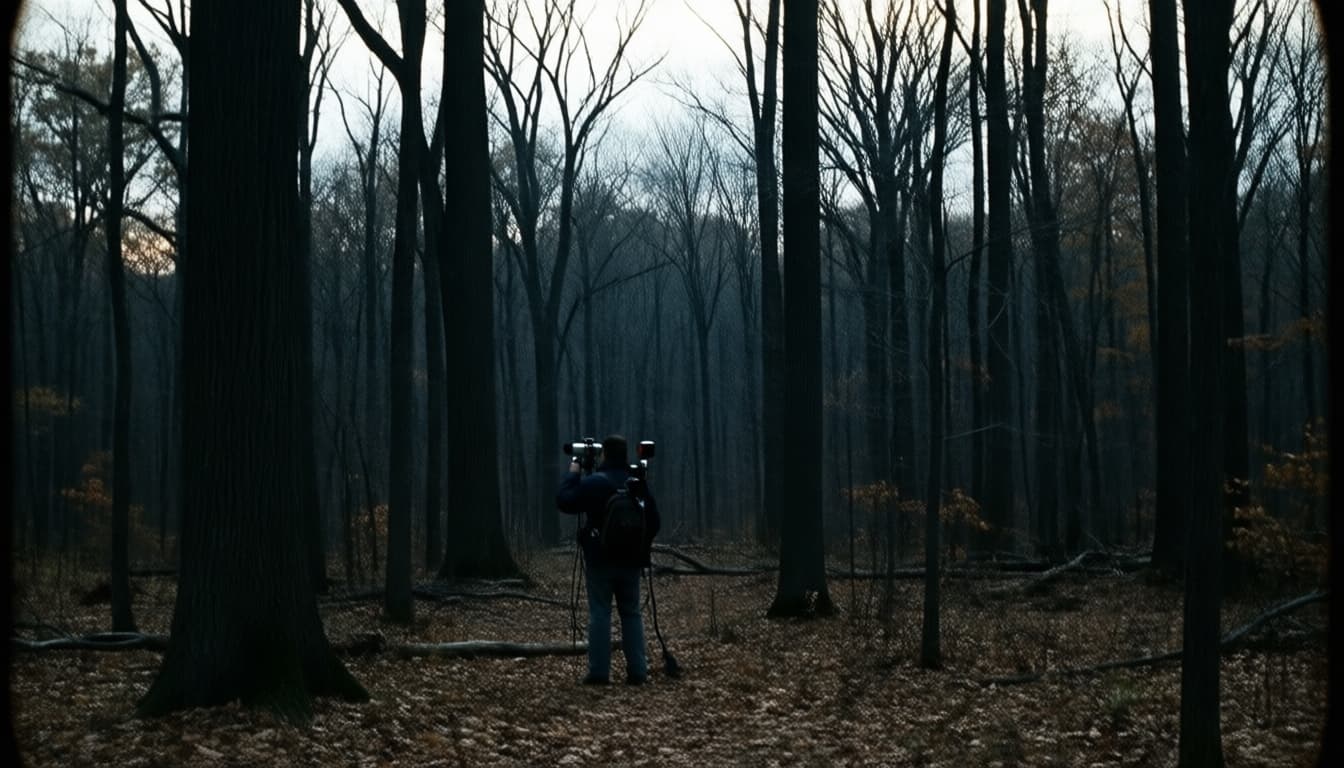
The approach to Fort Marcy Park was unremarkable. A narrow asphalt path winding through suburban woodland. I intentionally chose a late autumn Tuesday, when foot traffic would be sparse. The air was crisp, carrying the scent of damp earth and decaying leaves. My equipment was minimal: a directional microphone, a high-resolution handheld thermal camera, a laser rangefinder, and a small, well-worn notepad.
I followed the park’s main trail before diverging onto a less-trodden path, a faint deer trail, to be precise. It descended into the wooded ravine where Foster’s body had been discovered. The silence there was immediate. Not the quiet of an autumn park, but a profound absence of sound, as if weighted by pressure. No distant traffic hum, no birdsong. Only the crunch of my boots on fallen leaves. The trees here were older, thicker, filtering the already dim sunlight into an oppressive gloom. The thermal camera registered cool temperatures consistent with the surrounding air. The ground was noticeably damp, and a light dew clung to the undergrowth, just as the previous night's forecast had suggested.
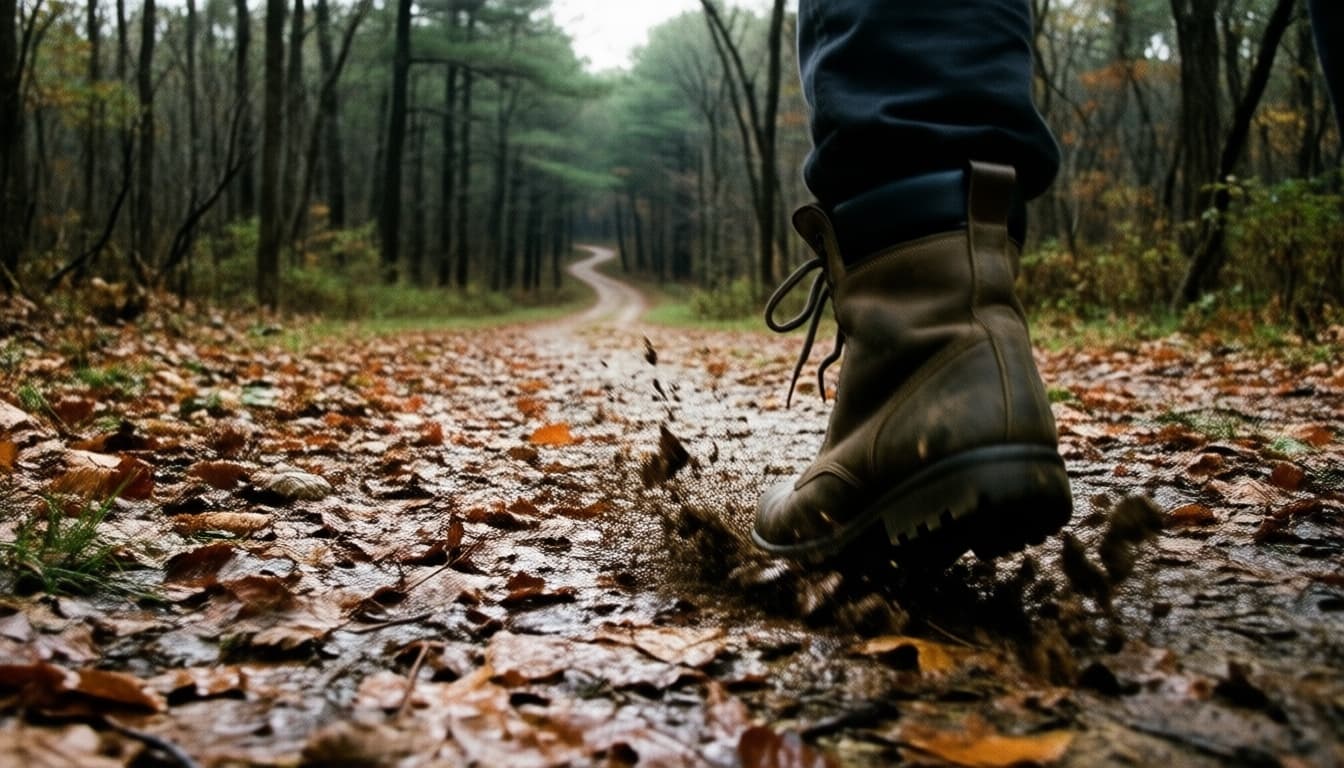
As I delved deeper into the ravine, the silence intensified. It transformed from mere absence into a presence, like a thick, suffocating blanket drawn over the senses. My directional microphone, usually sensitive to the slightest creaks and rustles, recorded only a flat, barely perceptible hum. The air was unnaturally still, devoid of even a subtle breeze. I located the approximate spot, a slight depression in the irregular terrain, based on memory and geographical cross-referencing. Here, subtle anomalies began.
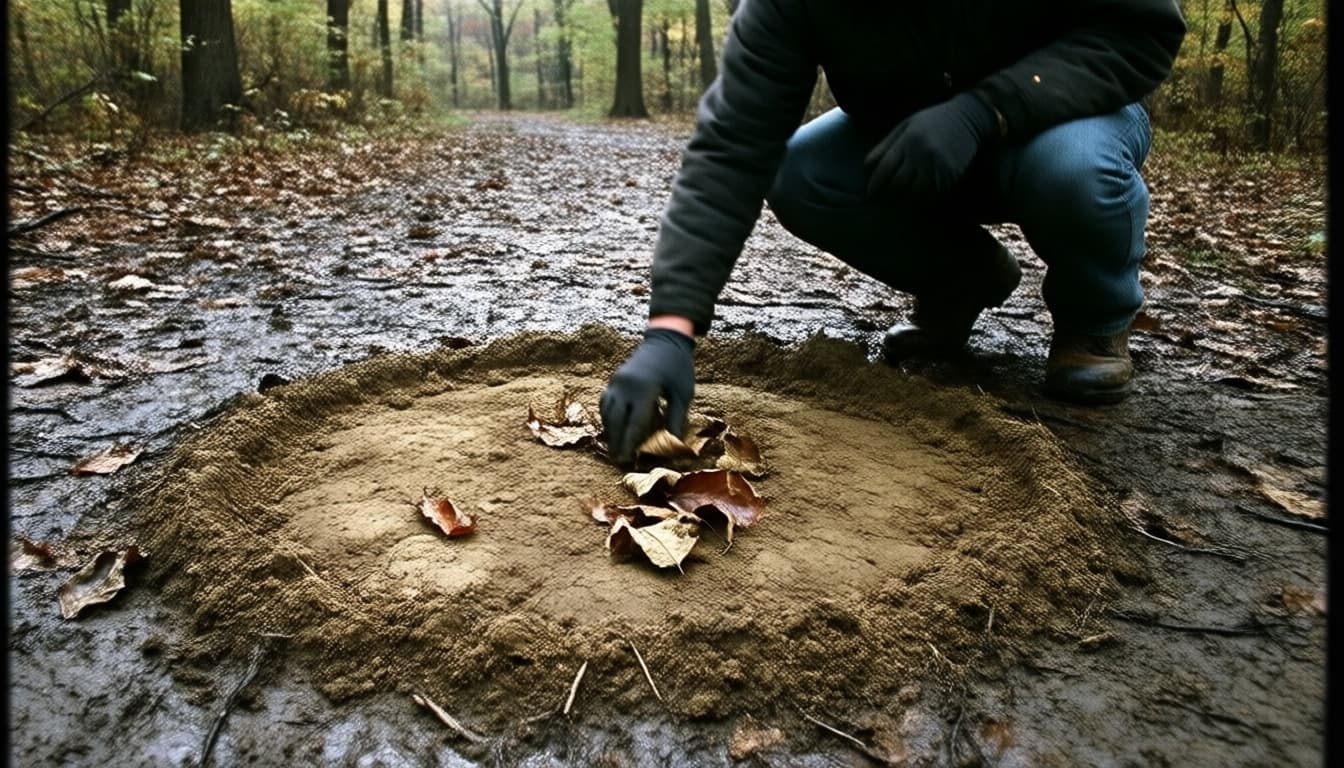
My laser rangefinder, which I’d just calibrated, began to return inconsistent measurements. Re-measuring from the same reference points yielded distances that subtly shifted by several centimeters. More unsettling was the earth itself. While the surrounding undergrowth was distinctly moist, a distinct patch of ground, roughly two meters in diameter, was bone-dry. The fallen leaves within it were curled at the edges, and the exposed soil, when touched, felt arid and powdery. The thermal camera showed this patch to be consistently 1-2 degrees Celsius colder than the surrounding earth – a persistent thermal signature that defied conductive heat transfer laws for soil of similar composition.
A faint, acrid smell, like burnt ozone, occasionally pricked the air before vanishing. As I knelt to examine the dry earth more closely, a low, resonant groan, like deep tectonic plates grinding, seemed to echo not from a direction, but **from within my own head.** Simultaneously, an intense pressure built in my ears.
The groan escalated, vibrating through the ground into my legs. The subtle cold spot intensified, drawing warmth from my hands. Rational thought became fractured. The previously stable ravine walls seemed to shimmer at the periphery of my vision, and the trees blurred and sharpened in a disorienting rhythm. The dry patch before me began to expand. Its desiccation effect visibly spread, causing the damp leaves at its edges to wilt and turn grey.
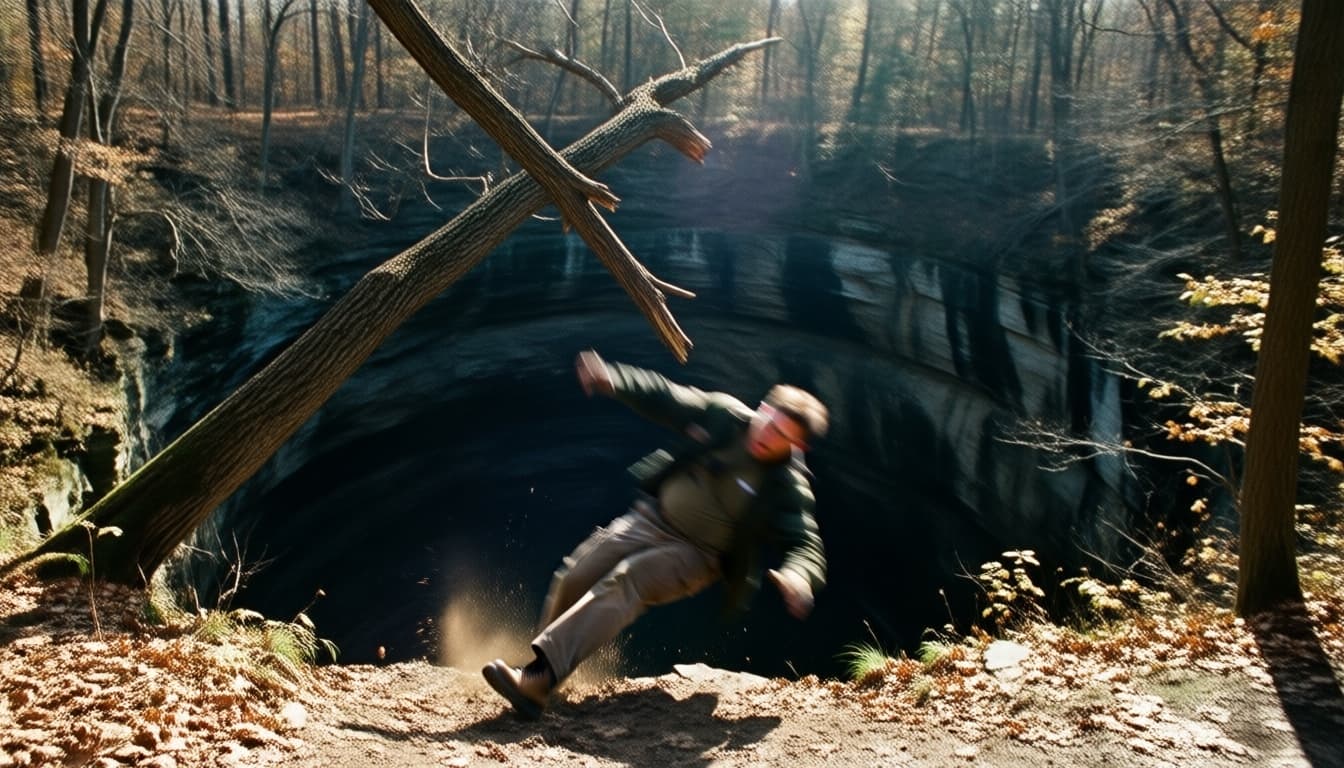
A controlled, icy tremor began to wrack my body. I attempted to retreat, but the ground behind me, previously firm, now felt spongy and unstable. Without warning, it gave way, and my left foot plunged into a soft, yielding pit of earth that hadn't been there moments before. As I stumbled, a powerful current of air, impossibly localized and originating directly above the dry patch, slammed into my chest. It wasn't wind; it was a concentrated physical force, pushing me backward.
I lost my balance completely, scrambling on the sliding incline. A thick, dry branch, the diameter of my forearm, firmly embedded in the hillside above me, snapped with a sudden crack. It didn't fall straight down, but arced with **unnatural speed directly towards my head.** I twisted, absorbing a heavy, bruising impact on my shoulder as I tumbled deeper into the ravine, crashing hard against tangled tree roots. Air burst from my lungs. The resonant groan intensified into an ear-splitting roar, and the surrounding woods seemed to compress. Space itself warped.
An invisible, yet palpably cold and strong hand seized my ankle, attempting to drag me deeper into the dry, cold earth. With a horrific, tearing pain in my leg, I thrashed wildly, my fingers digging desperately into the damp soil. I struggled to pull free from the encroaching dry circle, and whatever force exerted its dominion within it.
I escaped the ravine. I clawed my way up the slick, damp bank. My clothes were torn, my right shoulder throbbed with a dull ache, and my left ankle screamed. The intense pressure in my ears only receded once I reached the relative normalcy of the main trail. The silence was still present, but not with the suffocating weight it had possessed before. I didn't look back.
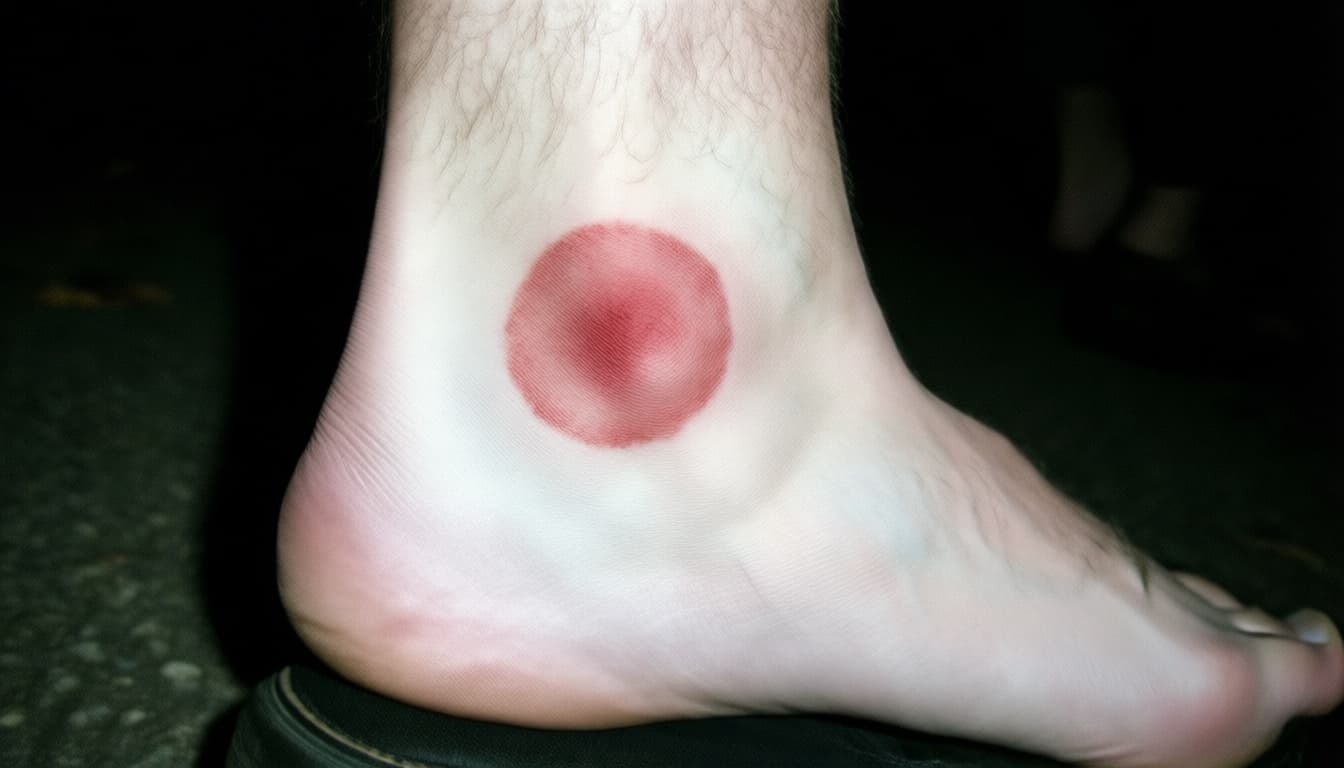
Back in a controlled environment, the thermal burns on my hands and the deep bruising on my shoulder healed as expected. However, an unexplained circular rash formed on the skin around my left ankle where the invisible hand had gripped me – a rash that remained **unnervingly cold** to the touch for weeks, despite dermatological examination. More unsettling was the raw audio I had barely managed to record before my fall.
Between the escalating groans and the impossible air current, there was a fleeting, almost subconscious moment. A whisper I had initially dismissed as wind. Upon playback and isolation, it was not wind. It was a long, exhaled breath, a raspy, ancient hiss underlying a low growl. No words were spoken, but it conveyed **unequivocal possession.**
The “dry grass” was not an anomaly. It was a symptom. The true conspiracy of Fort Marcy Park wasn’t merely human machinations. It was a primordial, territorial force. One that maintained a precise, deadly silence over its chosen ground, and actively purged any intrusion that sought to disturb its unnatural balance. The park, or whatever resided within it, was actively **protecting** its secrets, and I was now marked by its cold, silent touch.
[ CLASSIFIED VERDICT ]
[ACCESS LOG - SOURCE FILE]
The 1993 death of White House counsel Vincent Foster was officially ruled a suicide, but unexplained phenomena, such as "dry grass" around the body, have long fueled conspiracy theories and supernatural speculation. This story explores the hypothesis that the dry grass is a "symptom" of a primordial, territorial force inhabiting that specific location.