Echoes in the Sewer: The Black Dahlia's Resonance
On January 23, 1947, a patrol officer's report, archived with the Los Angeles Police Department, was recently digitized. It pertained to a 'disturbance' near the intersection of South Figueroa Street and 39th Street. While the primary report focused on homelessness, a supplementary, almost illegible handwritten report contained chilling details. Officer Thomas Miller recorded receiving complaints from nearby residents about 'distorted wailing' and 'wet, thrashing sounds' repeatedly emanating from a specific drain leading to the extended sewer system. It was Officer Miller's personal notes that transformed a simple noise complaint into an object of deep curiosity. "Investigated drain entrance. Nothing visible. However, the acoustics within the passage… did not function as expected. Sounds from inside returned not as echoes, but as if heard in advance—a pre-echo. A bizarre resonance. And the smell near the drain was… indescribable." Officer Miller was later reassigned due to 'superstitious tendencies,' and this report was classified as 'unsubstantiated sensory anomaly,' seemingly forgotten by history. Until now.
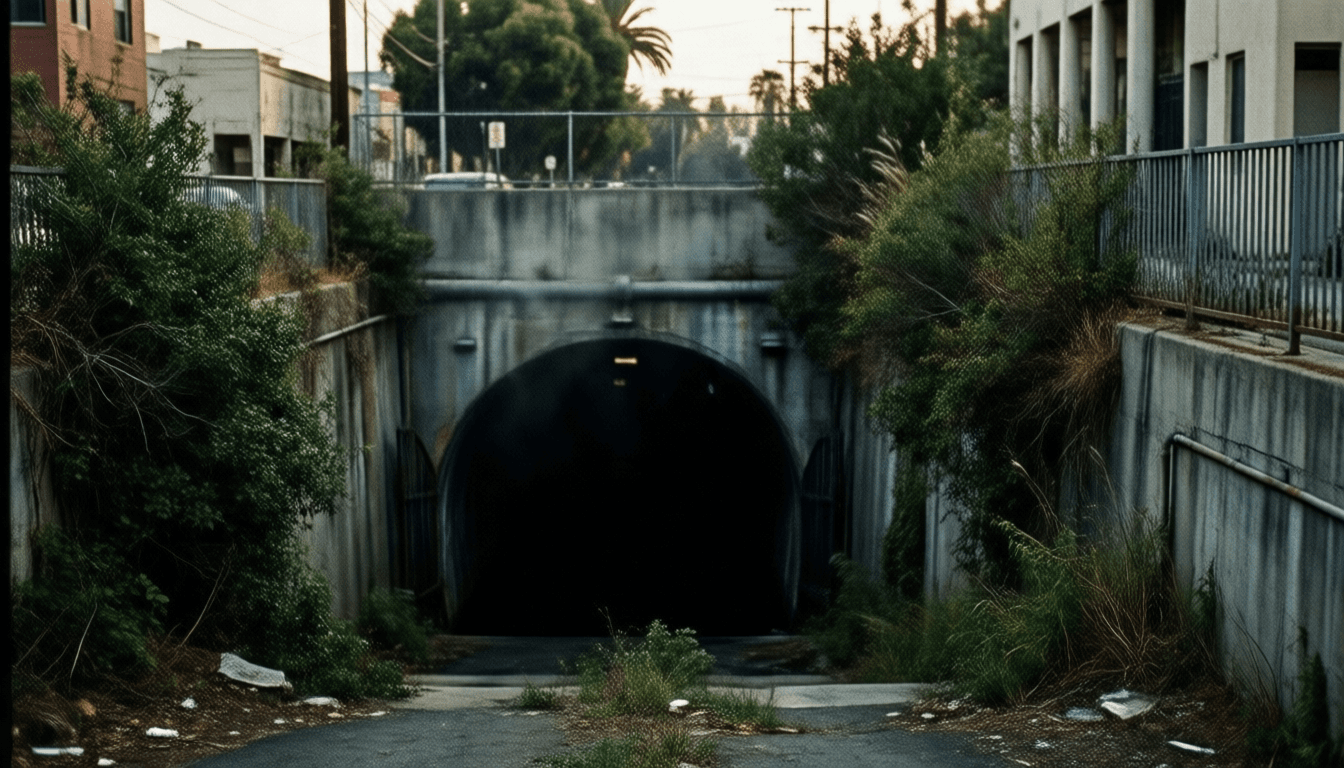
Following the faded coordinates etched into Officer Miller's report, I located the drain entrance in question. It was a concrete maw, partially obscured by dense undergrowth and urban decay, leading into the ancient arteries beneath Los Angeles. The air at the entrance was heavy and musty, tinged with a faint metallic, fishy odor from stagnant water.
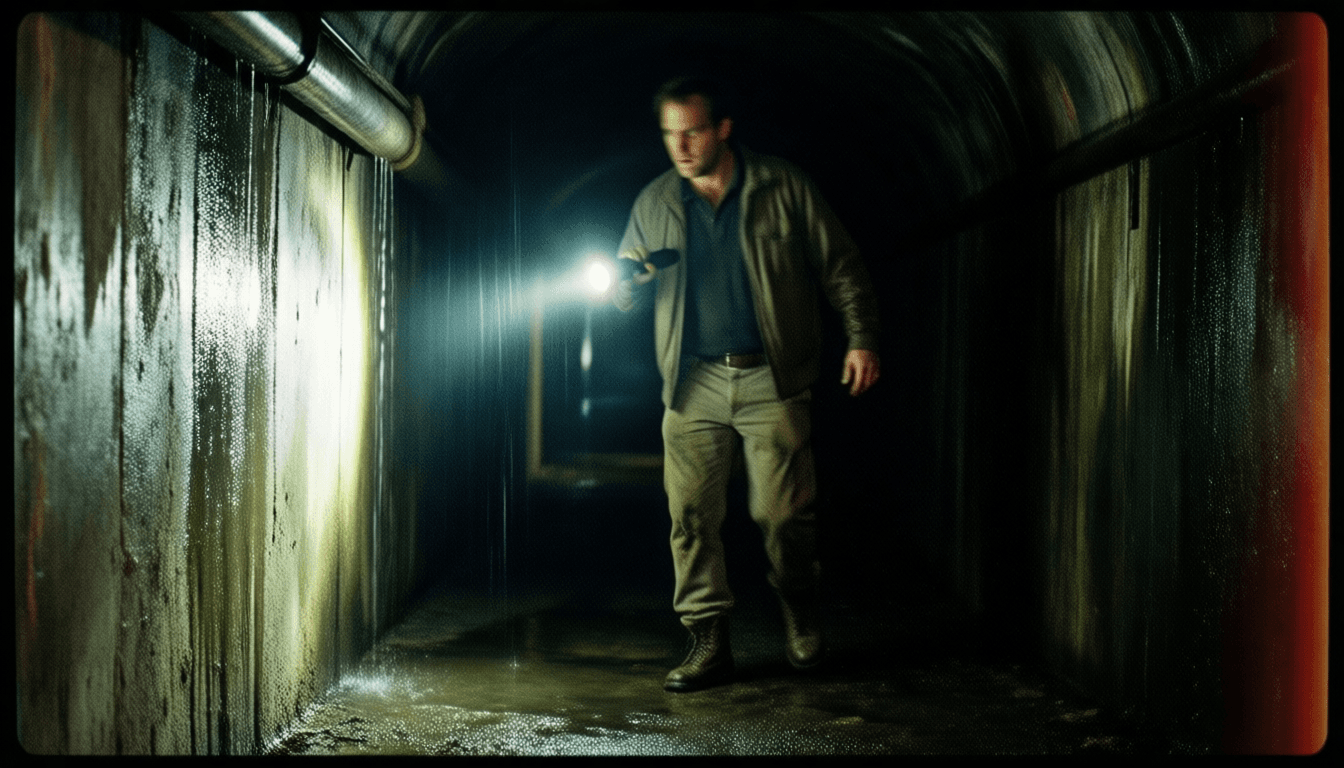
Equipped with a high-powered tactical flashlight, a sensitive audio recorder, and an air quality monitor, I stepped inside. The tunnel immediately swallowed the city's sounds, leaving only the drip of water and the scuff of my boots on the floor. The concrete walls were damp and cold, spotted with moss in places. The ceiling was low, forcing me to crouch. About 50 yards in, the passage narrowed further, and the sense of enclosure intensified, the outside world rapidly becoming a forgotten memory.
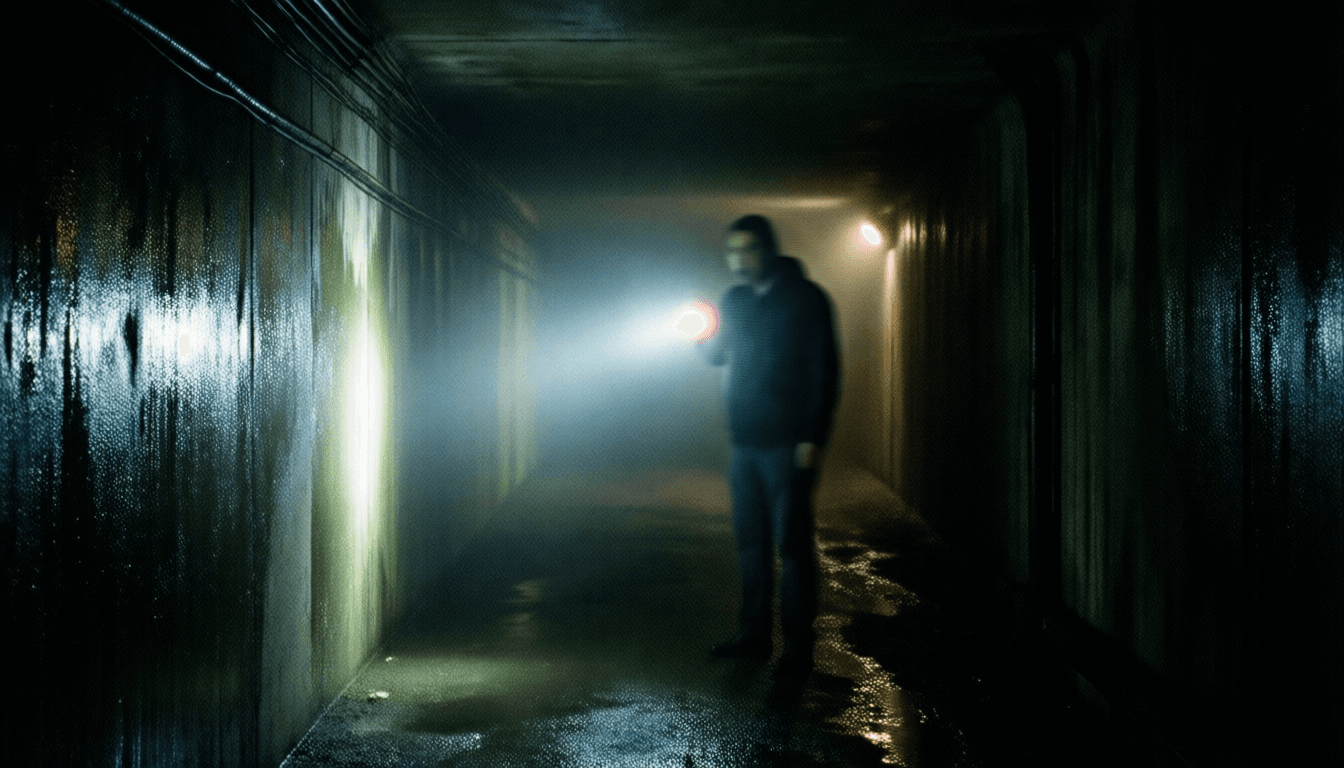
Deeper into the sewer, the environment subtly began to deviate from expectation. My flashlight's beam, which usually produced a sharp cut of light, seemed to diffuse unnaturally. The darkness felt as if it swallowed the light, and the surrounding shadows clung more thickly and tenaciously. The air quality monitor registered an inexplicable sharp drop in temperature, and a tingling sensation, like fine hairs rising, ran over my skin, as if stirred by an invisible current.
But the most unsettling aspect was the acoustics. My footsteps produced faint, delayed echoes that seemed to arrive before the actual sound. It was a strange phenomenon where the ghost of the impact arrived before the impact itself. Then, 'the sound' Miller mentioned began. It was faint, wet, and suffocating. At first, it sounded incredibly distant, then suddenly close, then distant again, always just beyond the range of clear identification. It wasn't a consistent sound, but a pattern of choked inhalations and desperate gasps, as if filtered through water or distorted by extreme agony. It seemed to be everywhere and yet nowhere at the same time.
The smell Miller had referred to also began to manifest. It wasn't the usual putrid stench of a sewer. It was a sticky, sweet, metallic odor, like newly rusted coins and dried, old blood.
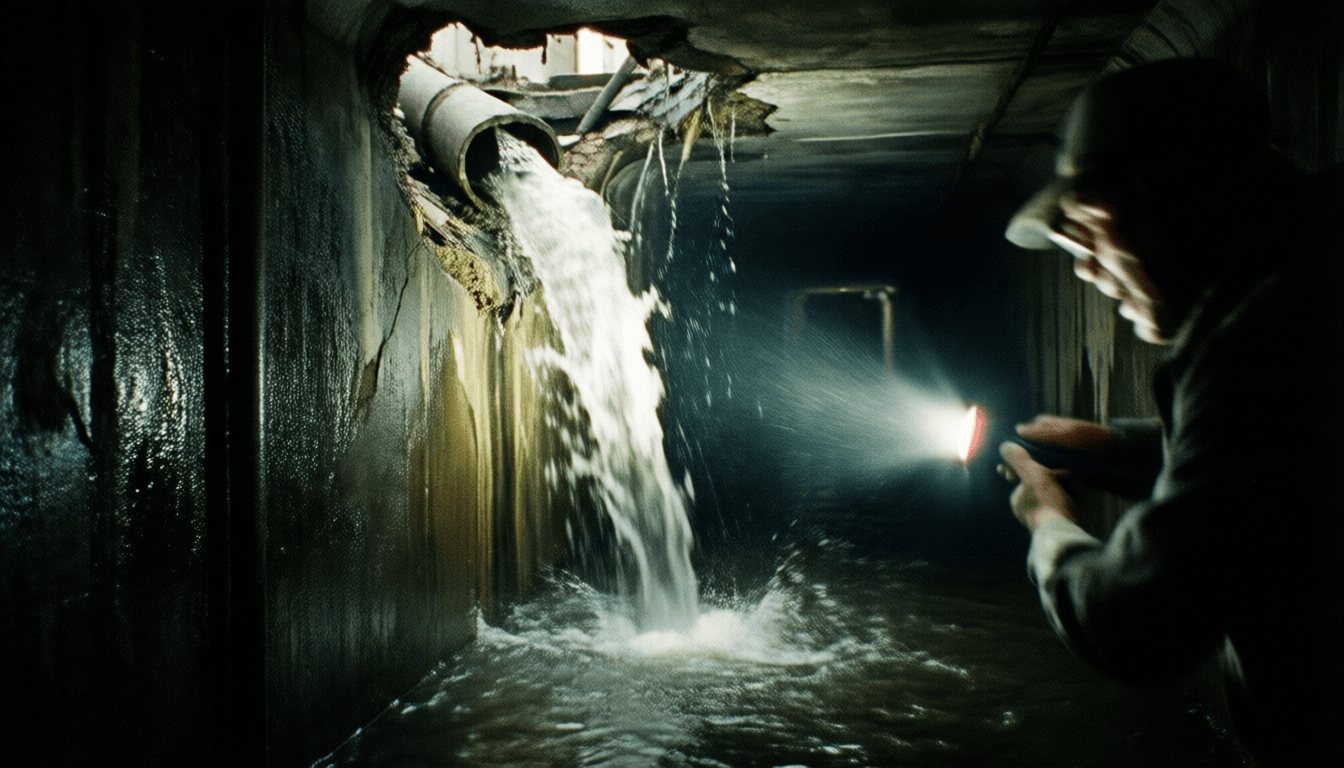
Navigating carefully past a collapsed section of piping, I emerged into a wider cylindrical chamber where several smaller pipes converged. The suffocating gasps were louder and clearer here, yet still unnaturally reverberating. My audio recorder's levels spiked erratically.
Then, the physical laws of this environment shattered. A trickle of water from a broken pipe suddenly began to flow backward for several seconds, rising about a foot against gravity, before resuming its normal trickle. Simultaneously, a cold, intense pressure built in the air, making it difficult to breathe, as if the air itself was being compressed. My flashlight flickered violently, then died, plunging me into absolute, suffocating darkness. The gasping was no longer distant. It was right beside me, wet and guttural.
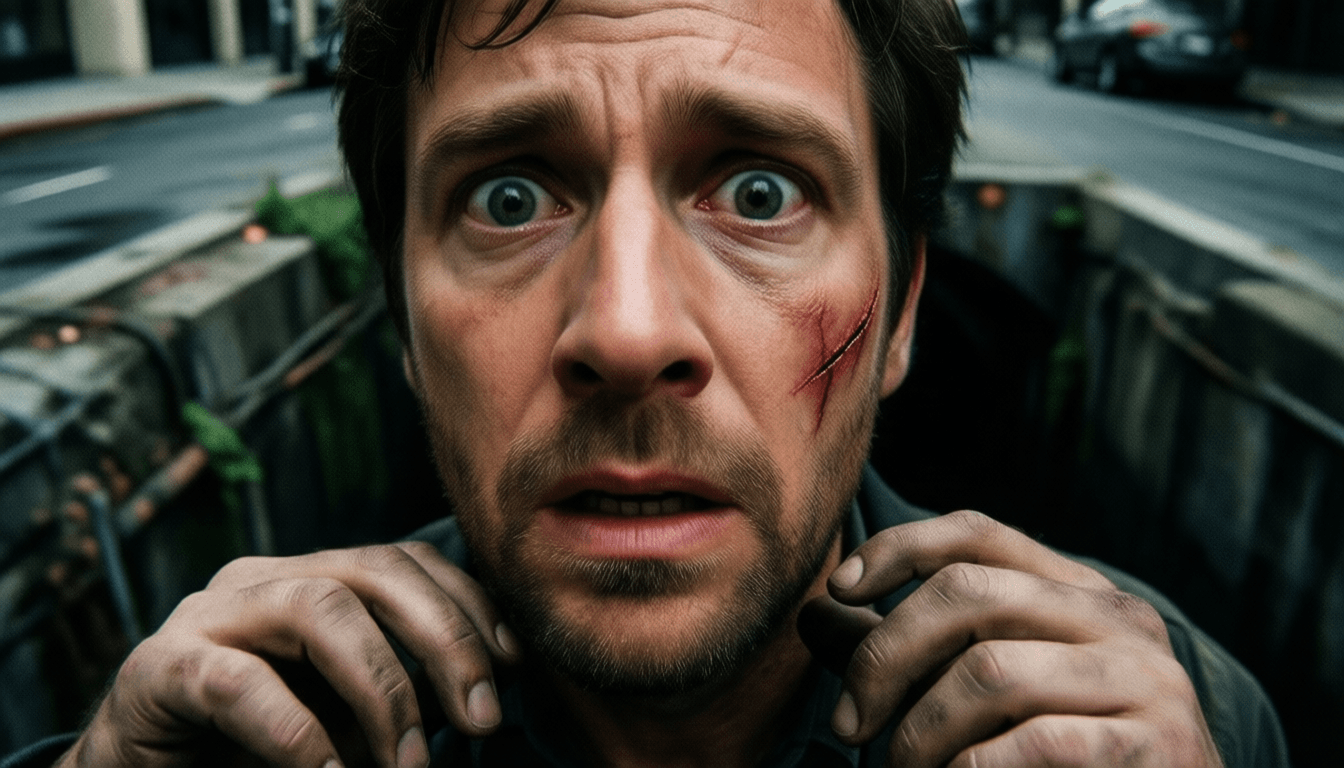
Suddenly, an unseen force slammed me against the cold, damp concrete wall. My head struck the rough surface, sending a skull-piercing pain through me. Moments later, something cold, incredibly sharp, and wet-sticky grazed my cheek, leaving a searing trail that felt less like a mere scratch and more like a deliberate cut. A distinct, sickeningly sweet scent of blood surged. I thrashed wildly in the blind darkness, the sounds of unseen struggle distorted, breaking the laws of physics once again. A painful, wet scraping sound seemed to loop itself, repeating before it even finished.
Desperately, I stumbled forward, finding a rusted emergency ladder. I scrambled upwards, my fingernails scraping against the wall. The overwhelming weight of its presence, its wet, suffocating breath, felt like it was right there below me. I finally kicked open a rusted manhole cover and burst out. I gasped for air, the outside world strangely quiet and indifferent.
I surfaced several blocks away, disoriented. My hands were raw and bleeding, and a dull ache throbbed behind my eyes. The wound on my cheek bled in a thin, precise line, too clean to be a scrape from concrete, like a delicate incision. My camera was shattered, its memory card corrupted.
But my audio recorder, in its final seconds, held a chilling clarity. Amidst my panicked screams and struggles, 'the sound' was recorded with disturbing fidelity. A long, wet, gurgling gasp, unmistakably human yet unnaturally sustained, layered with a faint, almost subconscious hissing. It was the sound of a living thing struggling to breathe, being silenced, and leaving the distinct impression that the silencing never quite ended.
The final, horrifying realization came not through a ghostly apparition, but through the evidence itself. The Black Dahlia was not merely murdered and discarded in Los Angeles. The process of her agonizing and brutal death, the very act that silenced her, had been imprinted upon a specific part of the city's hidden infrastructure. What found me was not a ghost, but the eternal, repeating afterimage of an act. And deep within the darkness, the suffering itself still held the power to influence the present, to leave its mark. The wound on my cheek was no accidental scrape. It was a physical resonance of unresolved violence, buried for too long, a piece of evidence. Archives hold more than just paper. They hold truths that seep into the present.
[ CLASSIFIED VERDICT ]
[ACCESS LOG - SOURCE FILE]
The Black Dahlia case refers to the unsolved murder of Elizabeth Short in Los Angeles in 1947, one of the most famous and gruesome cold cases in American history. Her body was found severed in half and severely mutilated, and to this day, decades later, the killer remains unknown, giving rise to countless speculations and urban legends.