Chilgok's Echoes: March of the Dead
For decades, an uneasy current has permeated the quiet mountainous region of Chilgok-gun, South Korea. While official narratives tend to dismiss these phenomena as environmental peculiarities or mass hysteria, local whispers and fragmented testimonies paint a different picture. The most compelling evidence emerged in 2017: a heavily redacted Republic of Korea Armed Forces report concerning a routine training operation on the secluded 'Jaegeun-ryeong' pass. The report detailed multiple soldiers experiencing acute disorientation, intense auditory hallucinations described as 'muttering commands' and 'ancient battle cries,' and sudden, severe hypothermia, leading to several non-combat frostbite cases and one instance of temporary catatonia. The official conclusion cited 'extreme weather fluctuations' as the cause. However, an unsigned, unofficial addendum leaked via an online veterans' forum mentioned 'unexplained pressure anomalies' and 'audible, non-local, rhythmic ground vibrations inconsistent with seismic activity.' This addendum concluded with an ominous note: 'Local folklore attributes these phenomena to 'Gwishinbyeong' – ghost armies – said to linger in places of great suffering.' The confluence of such official cover-ups and persistent local legends, the 'Echoes of Chilgok,' piqued my interest.
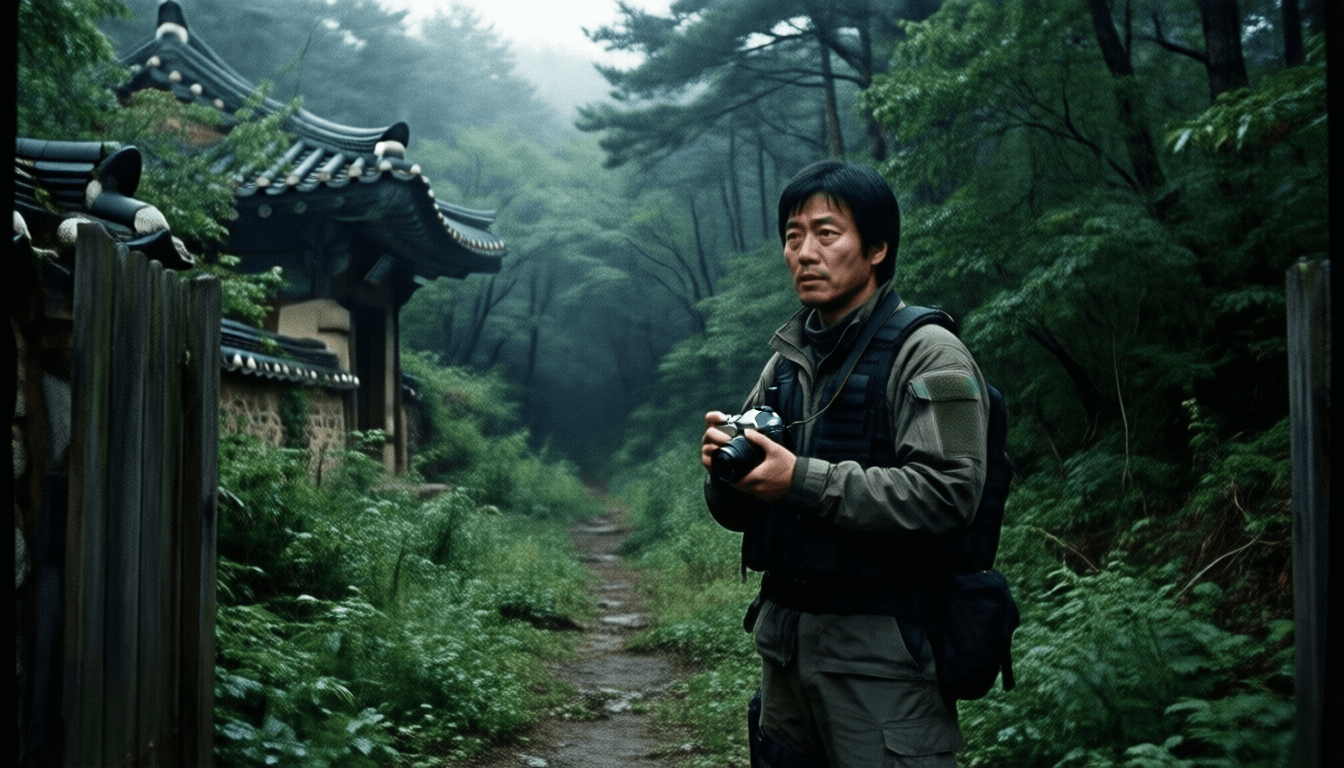
As a former military historian, my interest, rooted in an unyielding fascination with documented but inexplicable phenomena, drew me to Jaegeun-ryeong. The pass itself was a winding, forgotten path, now largely overgrown with tenacious brush, only animal tracks remaining. Historically, it was a strategic choke point repeatedly stained with blood during the Imjin War, the Japanese colonial period, and most recently, the Korean War. Upon entering the pass, the immediate environmental shift was palpable. The natural sounds of the forest – insects, distant birdsong, rustling leaves – simply ceased. An almost unnatural stillness permeated the air, thick and heavy, yet subtly colder than the sun-dappled forest outside the pass entrance. I meticulously set up my equipment: high-sensitivity seismographs, thermal cameras, and specialized directional microphones. I documented the narrow path, the steep, rocky inclines, and the broken remnants of ancient stone fortifications half-swallowed by earth and ivy. Initial data from the seismograph registered a subtle, consistent low-frequency hum. It was too regular for natural geological activity.
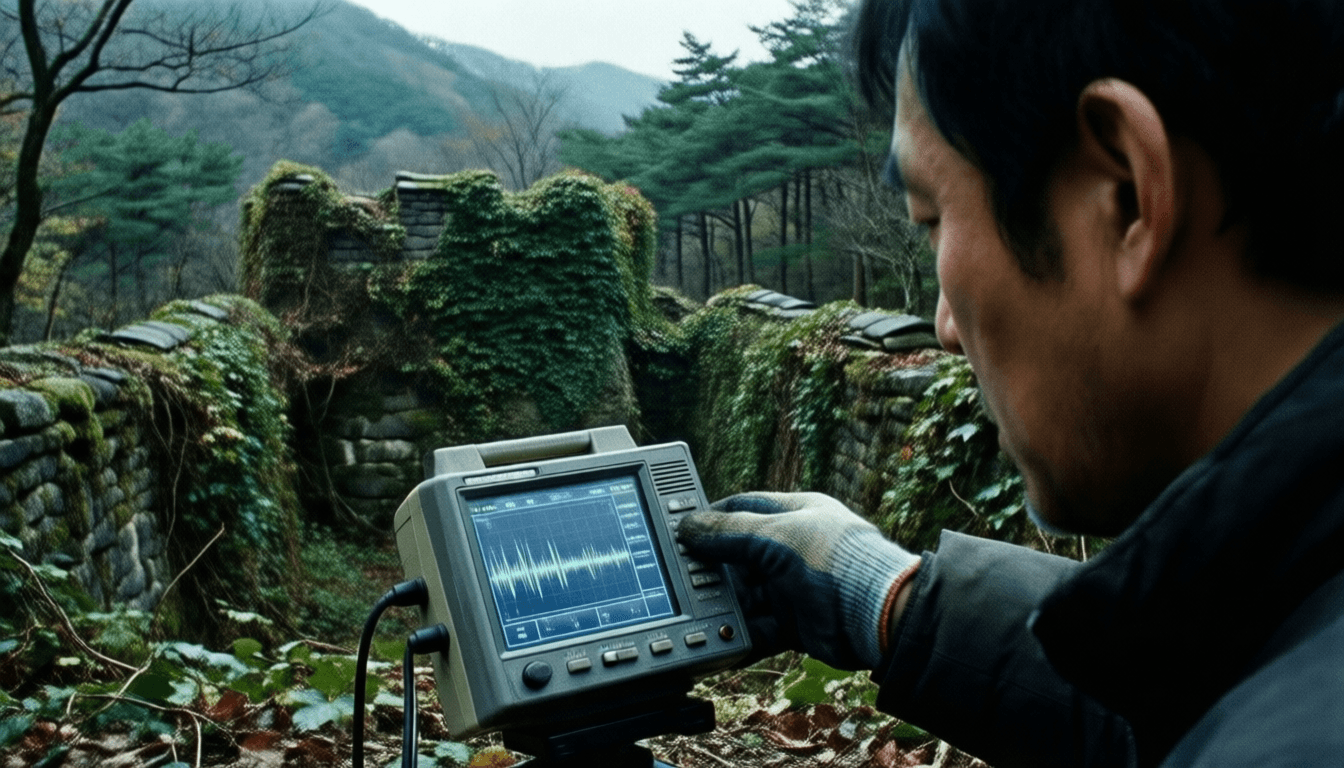
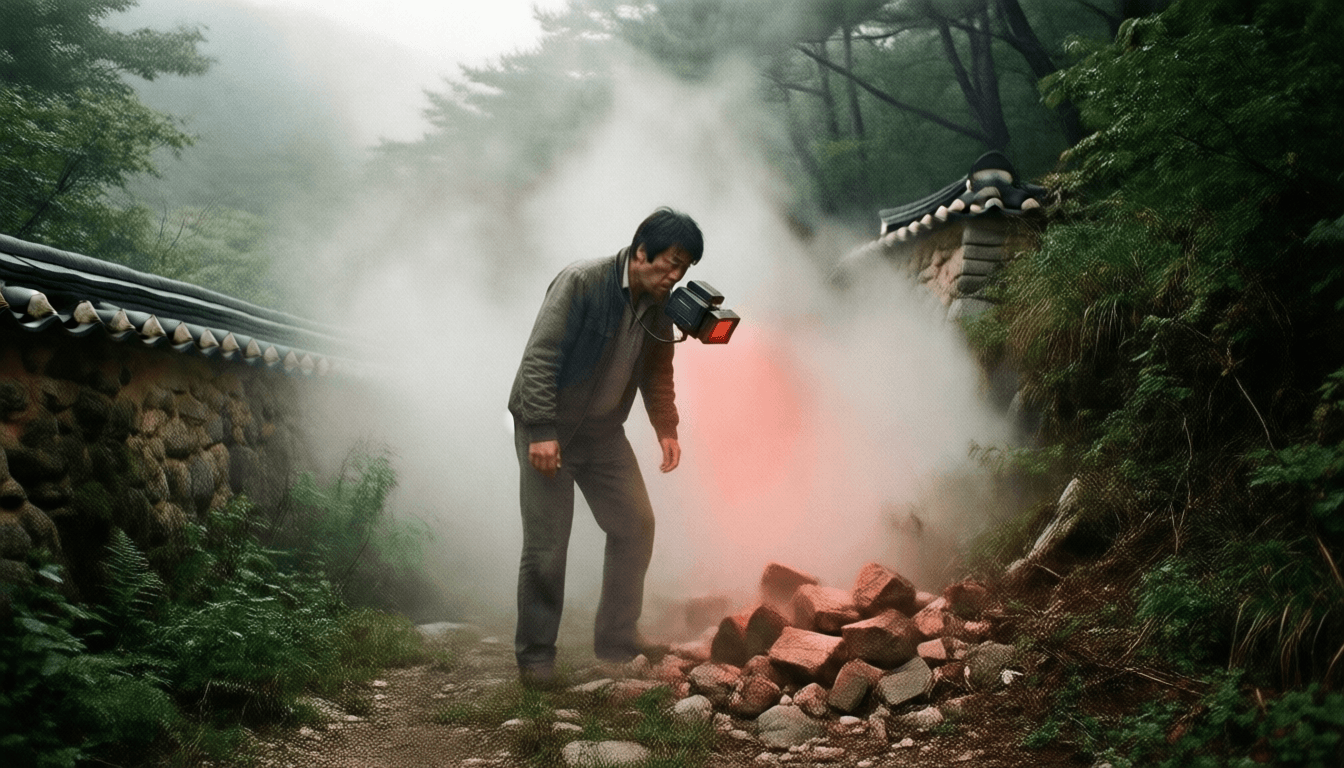
Deeper into the pass, the anomalies transcended environmental peculiarities, morphing into a more insidious presence. My audio recorders, played back through headphones, captured a faint, rhythmic thumping: thump, thump, thump. Almost imperceptible to the human ear, but unequivocally present with amplification. It sounded like many feet marching in unison, yet its source was elusive, constantly shifting, always seeming to come from 'just around that corner.' Pockets of air became intensely, unnaturally cold, localized to specific points along the path despite no visible source of wind or drafts. My thermal camera recorded sudden, transient temperature drops of 10-15 degrees Celsius in these areas, appearing and disappearing within seconds. I experienced sudden, inexplicable bouts of vertigo, a disorienting dizziness even on flat ground, and a growing sense of profound spatial disorientation. A dense, unnatural fog rolled in swiftly, seemingly from nowhere, reducing visibility to mere meters, even though the sky remained clear and blue. Within the swirling mist, I distinctly saw small, dislodged stones on the ground forming strange, transient patterns suggestive of movement, yet no clear footprints. An icy, chilling pressure settled on my back, as if someone stood too close, breathing cold air onto my neck, yet I was utterly alone. And then the whispers began: an unintelligible, murmuring cacophony of low voices, too fragmented to form words, yet unmistakably present 'within' the enveloping mist.
Driven by a desperate, almost obsessive need to confirm my findings, I pressed on along the barely visible path. It led to an ancient, partially collapsed bunker, mostly obscured by dense foliage. Its construction hinted at the Imjin War era, yet layers of debris suggested subsequent usage, perhaps even into the Korean War. Here, the phenomena became lethal, undeniably physical.
Inside the bunker, the rhythmic thumping intensified into an unbearable full-body vibration that rattled the ground beneath my feet. The air became impossibly dense, difficult to breathe, as if an enormous, unseen weight pressed in from all sides. My seismograph shrieked readings far exceeding anything human footsteps could produce – figures consistent with the impact of hundreds of heavily armed soldiers running simultaneously. The air temperature plummeted instantly, a sharp, searing cold that burned my lungs with every intake of breath. The already dense fog thickened into an opaque, swirling wall, completely stealing my sense of direction and depth.
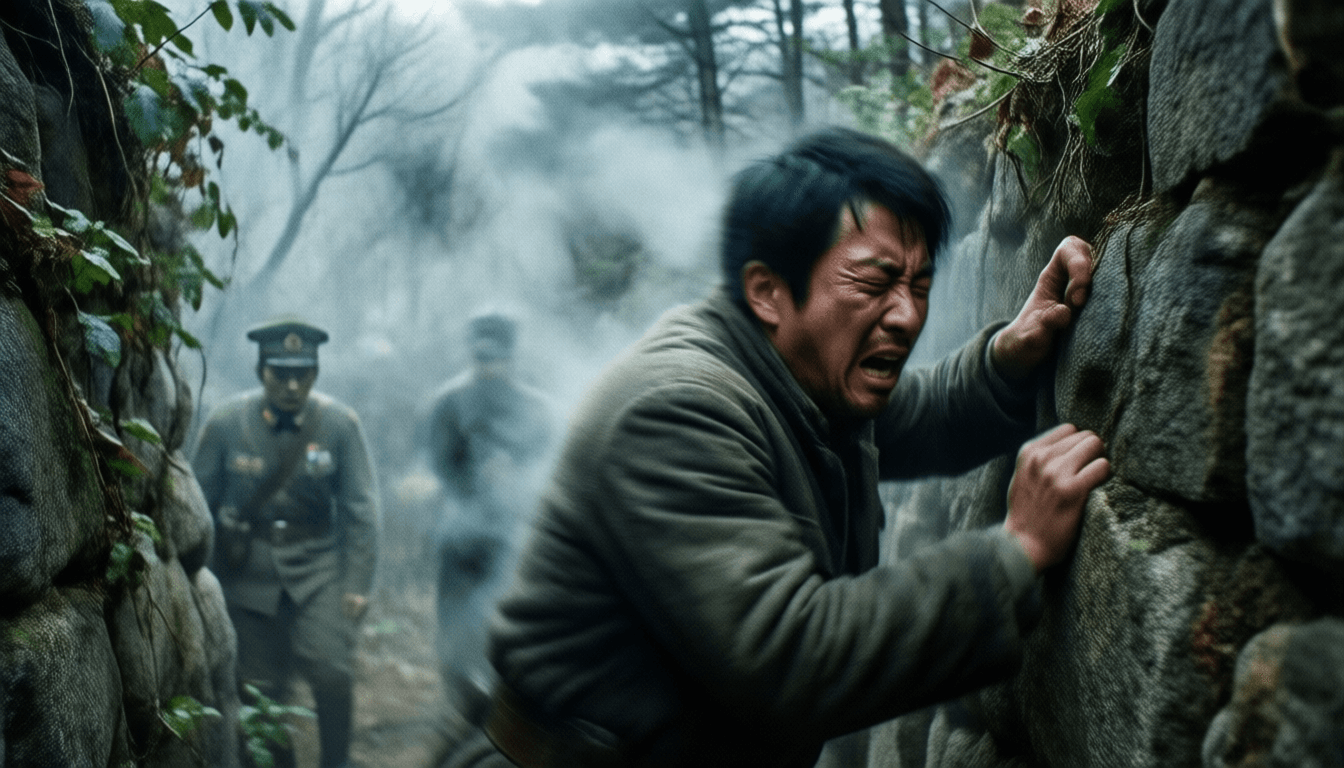
Then, a violent, invisible force slammed into my chest, flinging me against the bunker's rough stone wall. A crushing pressure pinned me there, squeezing the air from my lungs. I thrashed, clawing at the unseen weight, my vision blurring as the cold intensified. I was no longer just hearing battle cries; a myriad of murmuring shouts, ancient commands, and the screams of dying men seemed to reverberate within my mind, not merely heard by my ears, but inside my skull. Faint, indistinct distortions moved within the swirling mist – ambiguous, peripheral forms of men in old military uniforms. Not clearly formed apparitions, but undeniable, encroaching movement. The stones of the bunker walls began to shake and groan, threatening to collapse as if an enormous, unseen mass bore down upon them. I felt ghostly hands violently tugging at my legs. My face brushed against an incredibly cold, rusty metallic object embedded in the earth – which, for one chilling moment, felt like a decaying gauntlet. I was experiencing the 'ghost army' not as individual specters, but as an overwhelming collective manifestation of despair, trauma, and an eerie physical force. Adrenaline surging, I managed to twist free, scrambling towards a narrow crevice, barely escaping just as a section of the bunker's ancient structure groaned and collapsed behind me, swallowed by the swirling, freezing mist.
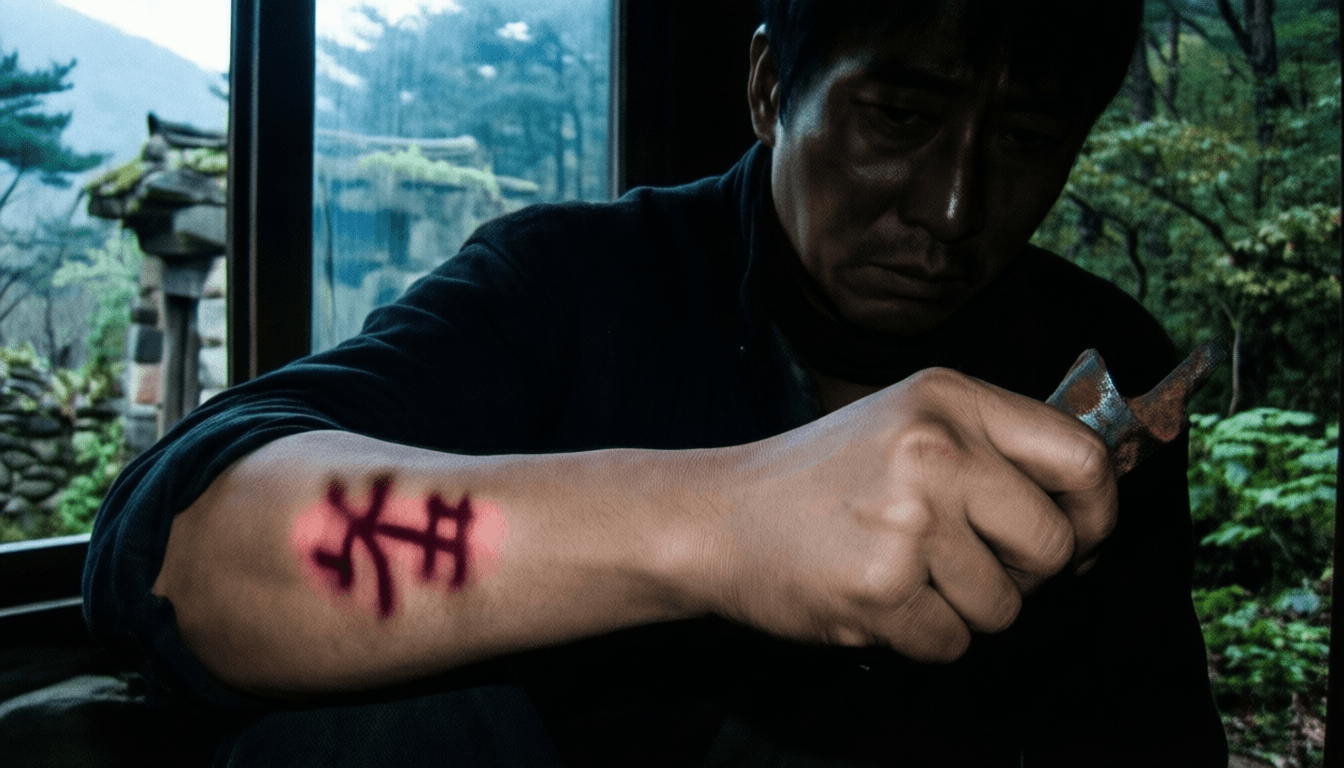
I stumbled out of the pass hours later, disoriented, bruised, and in a profound state of shock. My equipment was damaged, but I recovered the audio and thermal data, along with a rusty, unidentified piece of metal from the bunker – a fragment that resembled the earpiece of an ancient helmet. Its origin and age were inexplicable. Medical staff at the nearest hospital diagnosed mild hypothermia and a fractured rib from the shock. They also noted unusually deep, cold-burn-like bruises on my chest and limbs that could not be explained by simple blunt force trauma.
Back in civilization, the pervasive, chilling dread I felt at Jaegeun-ryeong cloaked me like a shroud. I constantly felt a phantom coldness, accompanied by the faint, rhythmic thump, thump, thump of military marching, especially in quiet moments. I often woke gasping, the chest pressure a residual, spectral sensation.
Then, I found it. A faint red discoloration on my left forearm, stylized, resembling ancient Korean script. A mark I had no memory of seeing before. I consulted an expert in ancient scripts, who, after careful review, identified the character as an ancient pictograph for 'power,' but in some contexts, also meaning 'host' or 'vessel.' The final, chilling realization dawned on me. Something from Jaegeun-ryeong pass hadn't simply 'touched' me. It had left its mark. The 'Echoes of Chilgok' were no longer merely a phenomenon of the pass. They had become mine. I trace the symbol on my arm. The faint thump, thump, thump resonates in my ears. I know those soldiers are no longer confined to that mountain pass alone.
[ CLASSIFIED VERDICT ]
[ACCESS LOG - SOURCE FILE]
Jaegeun-ryeong Pass in Chilgok-gun has been a strategic stronghold where numerous battles, from the Imjin War to the Korean War, took place. Here, soldiers frequently experience bizarre phenomena such as sudden hypothermia, auditory hallucinations, and disorientation, which locals attribute to a ghost army called 'Gwishinbyeong'. While official reports dismiss these as environmental anomalies, unofficial addendums mention unexplained ground vibrations and pressure anomalies.