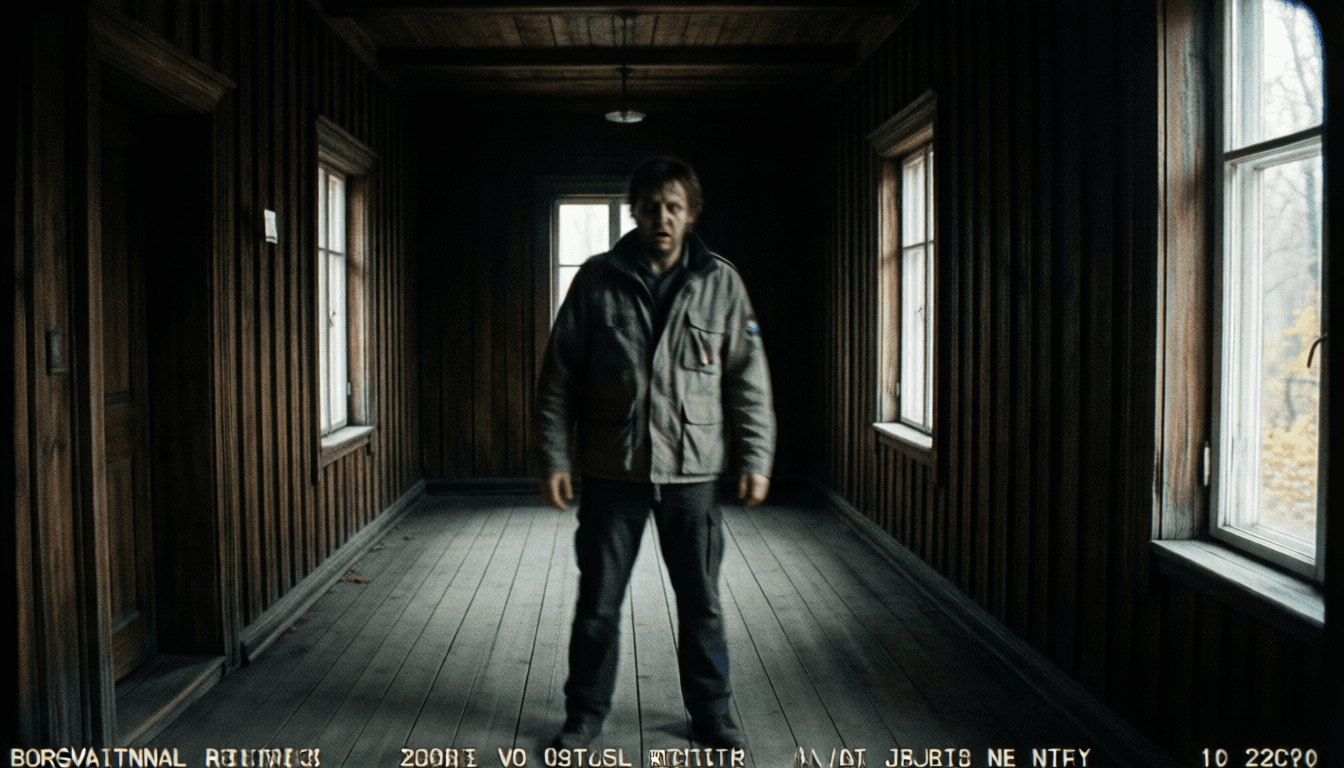
Borgvattnet Rectory: The Shadow Exchange
Deep in the Jämtland region of Sweden, Borgvattnet Rectory has long held the chilling reputation as "the most terrifying house in Sweden." While similar claims abound worldwide, what makes Borgvattnet unique is not merely its long-standing infamy, but the specific nature of reports consistently documented for over a century. From official parish records and local newspaper accounts in the early 20th century, to the testimonies of numerous paying guests drawn by the peculiar offer of a "certificate of courage" for enduring a night, all paint a disturbingly similar picture.
Among countless tales, one specific detail recurs with unsettling frequency: the "Cradle Room." Local legends, supported by multiple independent accounts, allude to a "Gray Lady" or the lingering presence of a wrongfully deceased maid associated with an old, empty wooden cradle. An archived police report from March 1978, filed by then-owner Tore Ekman, details an incident of "disturbing the peace." Guests reported the cradle in the empty room violently rocking, accompanied by "cries not of this world." Despite no apparent drafts or external forces, the incident was witnessed by multiple individuals who were entirely unaware of the legend. It is this consistency, emerging from the mundane language of official reports attempting to categorize the unclassifiable, that strongly compelled my personal investigation.
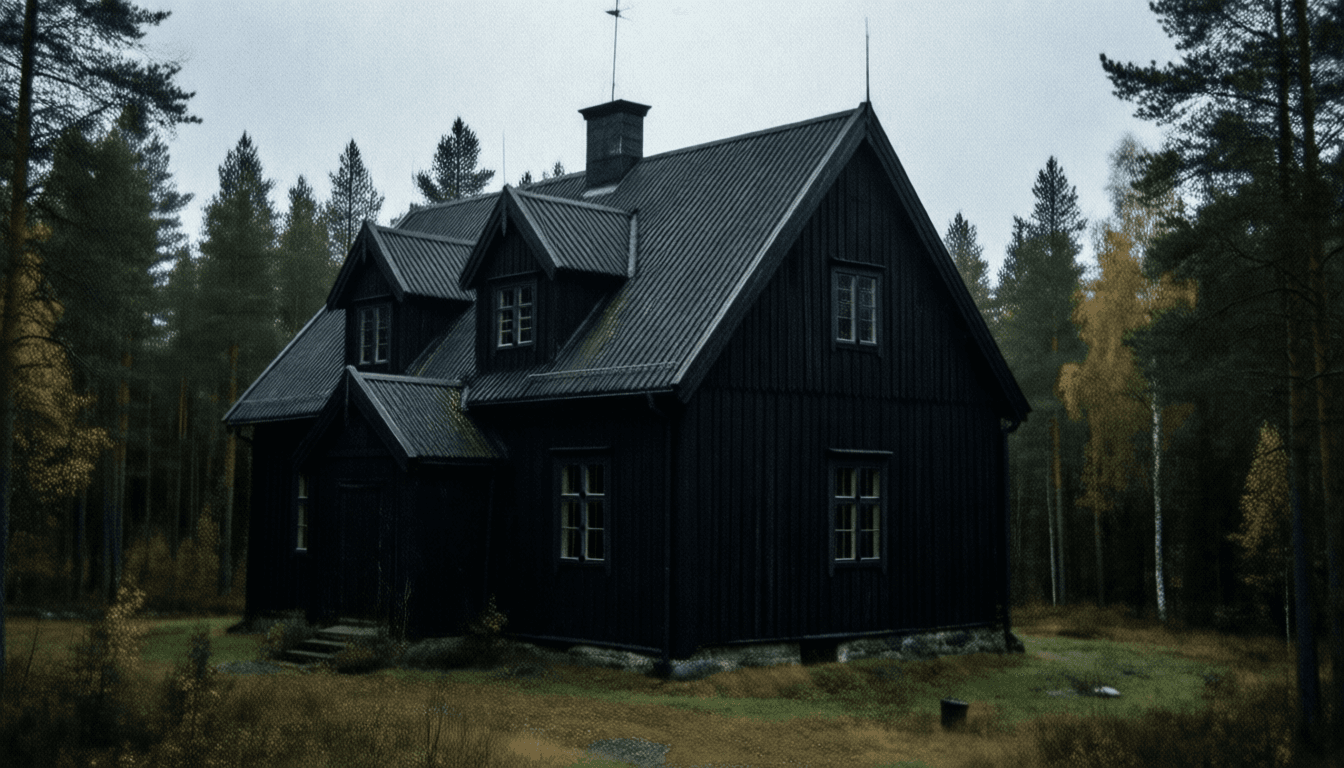
The journey to Borgvattnet itself was a continuous stretch of isolation: miles of dense spruce forests, lakes reflecting an overcast sky, and then the sudden appearance of small, desolate villages. The rectory stood slightly apart. Built in 1876, its skeletal black timber structure, with a steep roof and multiple gables, seemed to observe its surroundings in the dim light of a late Swedish autumn afternoon.
Upon arrival, the air inside the house was distinctly different. Beyond merely cold, it was still. The smell of old wood and the underlying damp hung heavy. I moved systematically, deploying environmental sensors: thermal cameras, EMF detectors, digital audio recorders. Initial reconnaissance focused on the well-known hotspots: the former pastor's study, the "Gray Lady's" bedroom, and most critically, the small upstairs room containing the infamous wooden cradle. The aged floorboards complained with creaks, but the overall silence within the house was profound, a kind I'd never experienced in any empty building. There was an oppressive weight, as if the very air absorbed sound.
As twilight deepened into night, subtle anomalies began. The audio recorder, initially picking up only the faint hum of equipment and distant wind, started to capture intermittent high-frequency shushes. Short and almost subliminal, yet distinctly present in the profound silence. When I replayed sections, convinced I'd heard a physical sound, the room remained silent, the sound only captured by the recorder.
In the "Gray Lady's" bedroom, a precision localized thermal sensor recorded an abrupt 15-degree Celsius drop in a specific corner, a phenomenon that persisted for several minutes before slowly equalizing with the ambient temperature. When I personally checked the spot, the air felt like a concentrated pocket of freezer cold, an unnatural chill emanating from an unseen source. No drafts, no insulation issues.
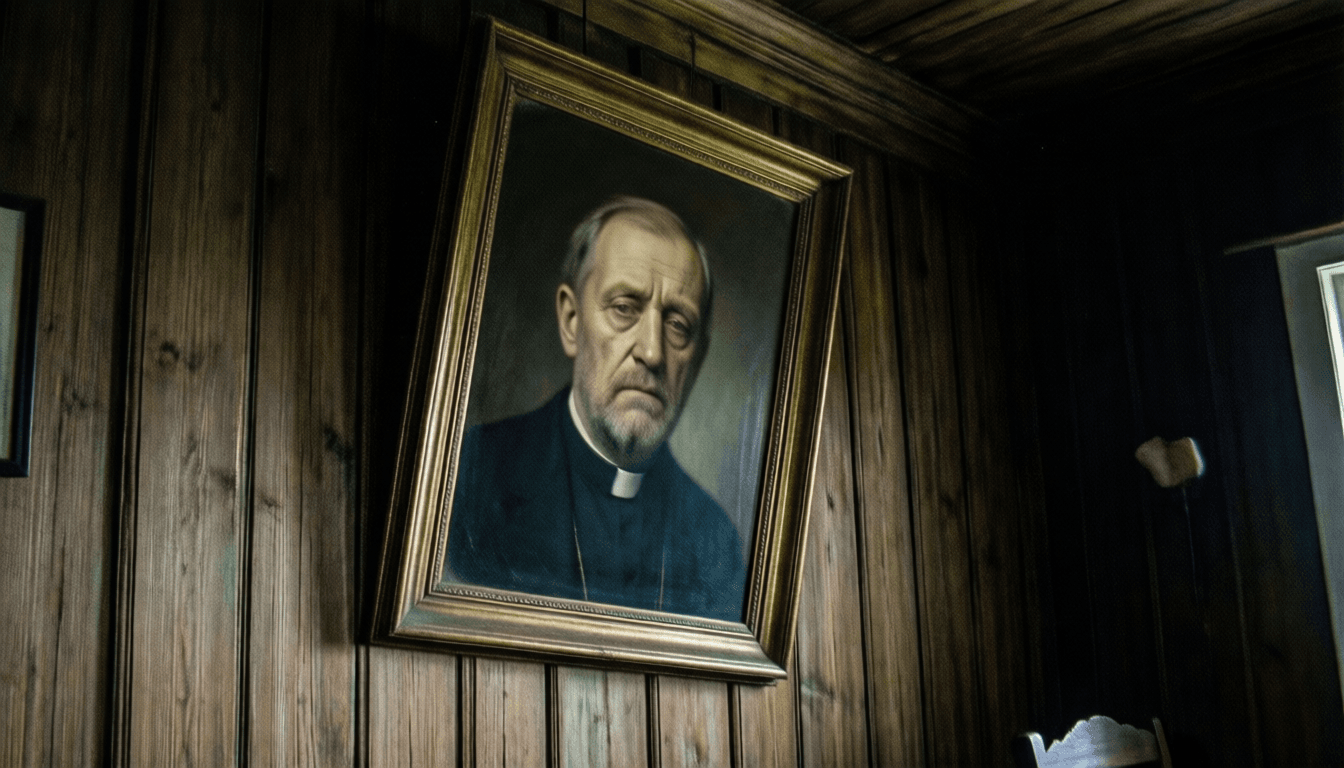
Later, reviewing camera footage, subtle distortions became apparent. A heavy framed portrait of a somber-faced former clergyman, perfectly straight moments before, was now noticeably askew. Just enough to be noticed, with no signs of impact or jostling. The feeling of being watched intensified, particularly when I looked into the darkened glass of an antique wardrobe mirror. For fleeting moments, an additional, indistinct shadow seemed to flicker at the edge of my own blurry reflection – taller, gaunter – vanishing as soon as my gaze directly met it.
The most unsettling event occurred in the central hallway. A distinct, heavy thud from upstairs was immediately followed by an almost frantic scurrying – too light for a human, too erratic for an animal. Upon checking, there was nothing. Only deep, waiting silence. The house was not empty.
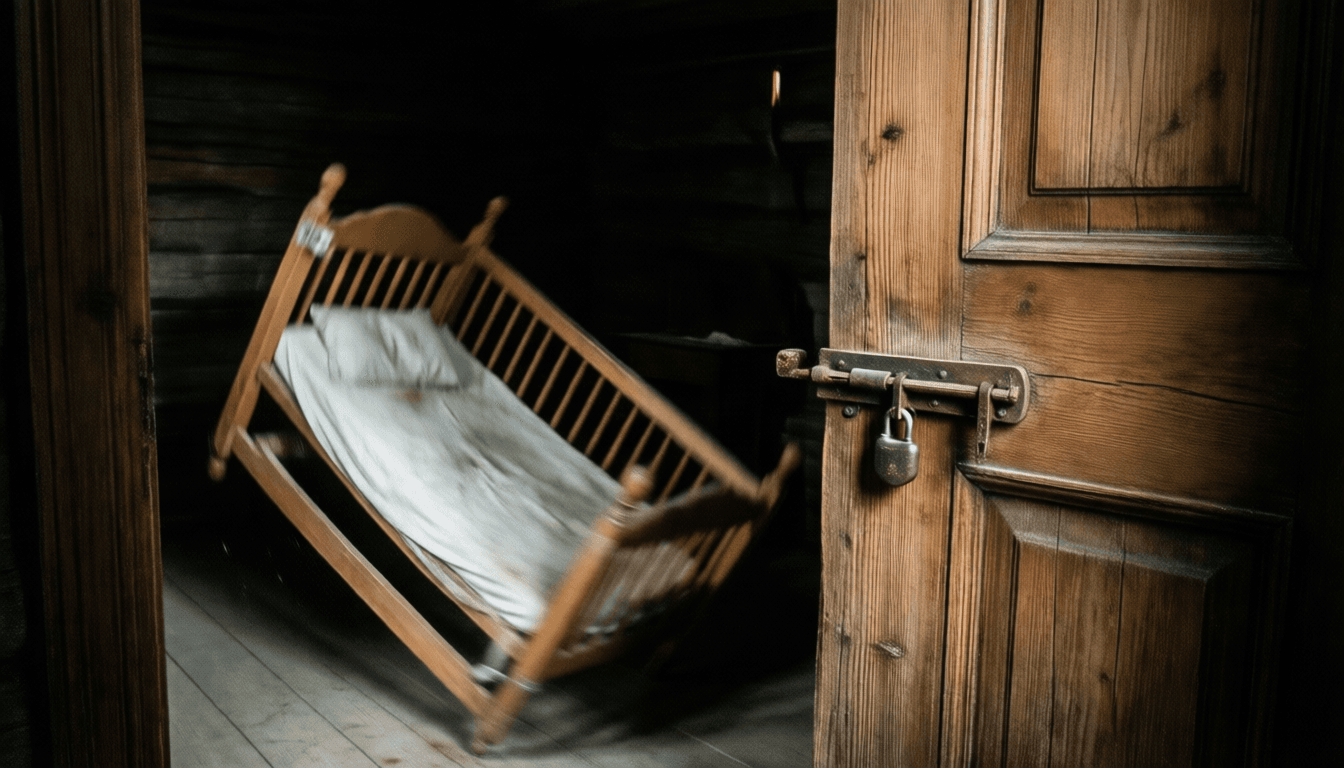
I spent hours in the Cradle Room, meticulously documenting its dimensions, the wood grain, even the subtle sway of the cradle when gently pushed. Records indicated this was the epicenter of much activity. Seated on a small, sturdy cot provided for guests, carefully noting observations, the atmosphere thickened, the air settling heavy like a lead blanket. And then, without any provocation, the wooden cradle, motionless for hours, began to rock.
It wasn't a gentle sway. It moved back and forth in violent, unnatural arcs, accelerating to impossible speeds. The aged wood seemed to strain, yet there was no creaking or groaning despite its furious motion. The silence, save for the whoosh of the cradle, was absolute. Then, the heavy oak door of the room, which I had deliberately left ajar, slammed shut with a deafening crash. A click followed, locking it from the inside.
A cold, sharp terror pierced through my professional detachment. Suddenly, an immense pressure descended onto my chest, pinning me to the cot. My breath caught, gasps trapped in my throat. I couldn't move. My limbs felt impossibly heavy, glued to the mattress.
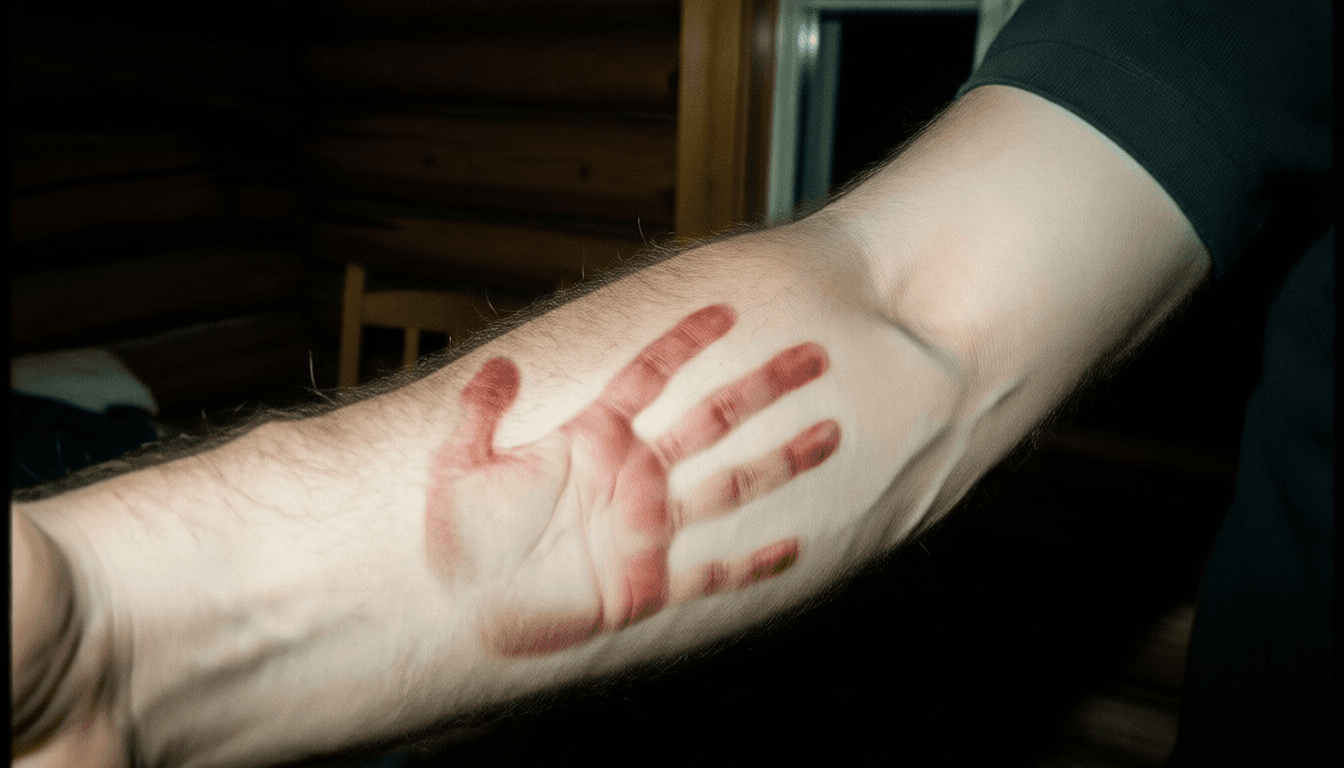
A damp, guttural whisper, like the scraping of wet stone, resonated not in the air, but in my head. Incomprehensible, suffocating. As I struggled against the unseen weight, my vision blurred. Then a sharp, burning pain began in my left forearm. It felt as though an impossibly strong, cold hand had gripped me. It wasn't mere pressure; it was searing, invasive. My lungs screamed for air.
Just as my vision began to fade at the edges and the whispers intensified, a piercing shriek – inhuman, guttural, vibrating every cell in my body – tore through the room. It was not my scream. It emanated from the walls, a condensed wave of pure sonic violence. The pressure on my chest vanished instantly. I scrambled off the cot, gasping, disoriented, my arm screaming. I lunged for the door, fumbling with the latch. It felt firmly locked, unyielding. Adrenaline surged, and I ripped the door open, stumbling blindly into the dark hallway. I half-fell, half-rolled down the stairs, thinking only of escape and air.
I sped through the frozen Swedish night, speedometer needle buried, the rectory a rapidly receding silhouette in my rearview mirror. Hours later, in the rented cabin, as the adrenaline receded with relief, a deep tremor followed. I examined my left forearm, where the burning pain had been. There, faint but distinct, was a reddish mark. Not a bruise, but a ghostly imprint. Five impossibly long, translucent finger marks, already fading, yet undeniably etched into my skin. More like talons than human fingers, or the impression of something not entirely solid.
I downloaded the audio files. Amidst my ragged breathing and sounds of my escape, the recorder had captured it: the increasingly damp, guttural breathing just before the attack. And then, after my hurried retreat, when the house should have been quiet, for a full minute until the recorder's battery completely died, a faint, rhythmic creaking – the slow sway of an empty cradle.
A week passed. The physical mark on my arm vanished completely, leaving no trace. But the suffocating weight, the burning grip, the whispers in my head – they lingered. I compulsively checked darkened windows and mirrors at dusk, half-expecting to see that indistinct shadow appear at the edges.
But the true horror came when I finally emptied the inner pocket of my field jacket – a pocket where I habitually kept a specific, tarnished silver coin. It was gone. In its place lay a cold, unnerving object: an old, dull iron thimble. I had never owned such a thing, had not brought it into the rectory, and could not have picked it up by accident. The chilling realization was not simply that something had been left behind, but that mine had been taken in exchange. Borgvattnet Rectory had done more than just haunt me; it had made a profoundly personal transaction in silence, leaving behind a cold, iron tether to its eternal presence. For me, this investigation had not concluded with answers, but with a terrifying, permanent exchange.
[ CLASSIFIED VERDICT ]
[ACCESS LOG - SOURCE FILE]
Borgvattnet Rectory in the Jämtland region of Sweden is a real place known as 'the most terrifying house in Sweden.' This rectory is particularly famous for its 'Cradle Room,' where an empty cradle reportedly rocks on its own and baby cries are heard, linked to the legend of a presence known as the 'Gray Lady.' Its notoriety is so great that there's even a peculiar tradition of awarding 'certificates of courage' to those who endure a night's stay there.