Aksum's Silent Giants: The Mystery of Lost Architecture
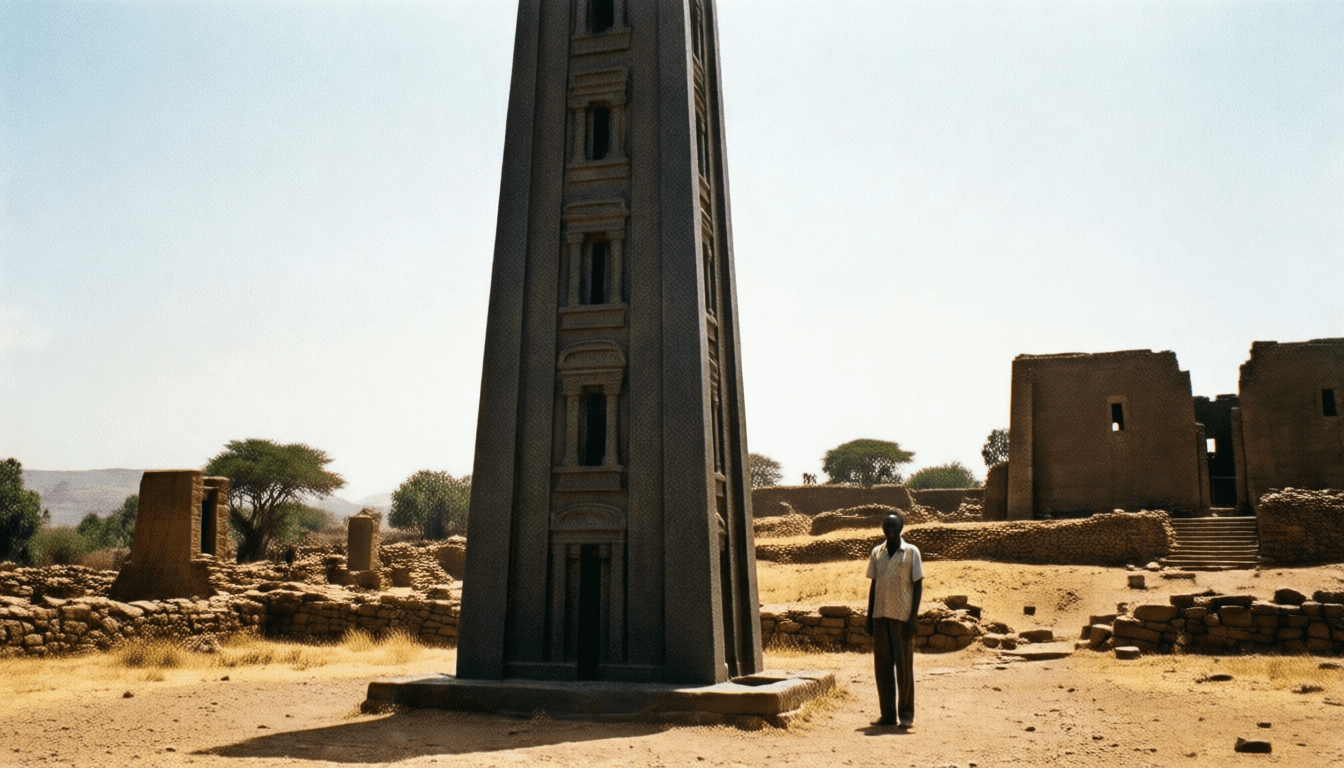
In the northern highlands of Ethiopia, towering stone pillars, reaching the height of a 10-story building, rise from the barren land. Carved from a single rock, these pillars display the astonishing precision of multi-story architecture, each weighing hundreds of tons. The Aksumite stelae, these silent, colossal sentinels, are evidence of an ancient civilization that once rivaled the might of Rome and Persia. But their true wonder lies not just in their scale. How did a kingdom that flourished 1,700 years ago defy modern engineering principles to quarry, transport, and erect these massive monolithic structures? It is this unsolved mystery where our exploration begins.
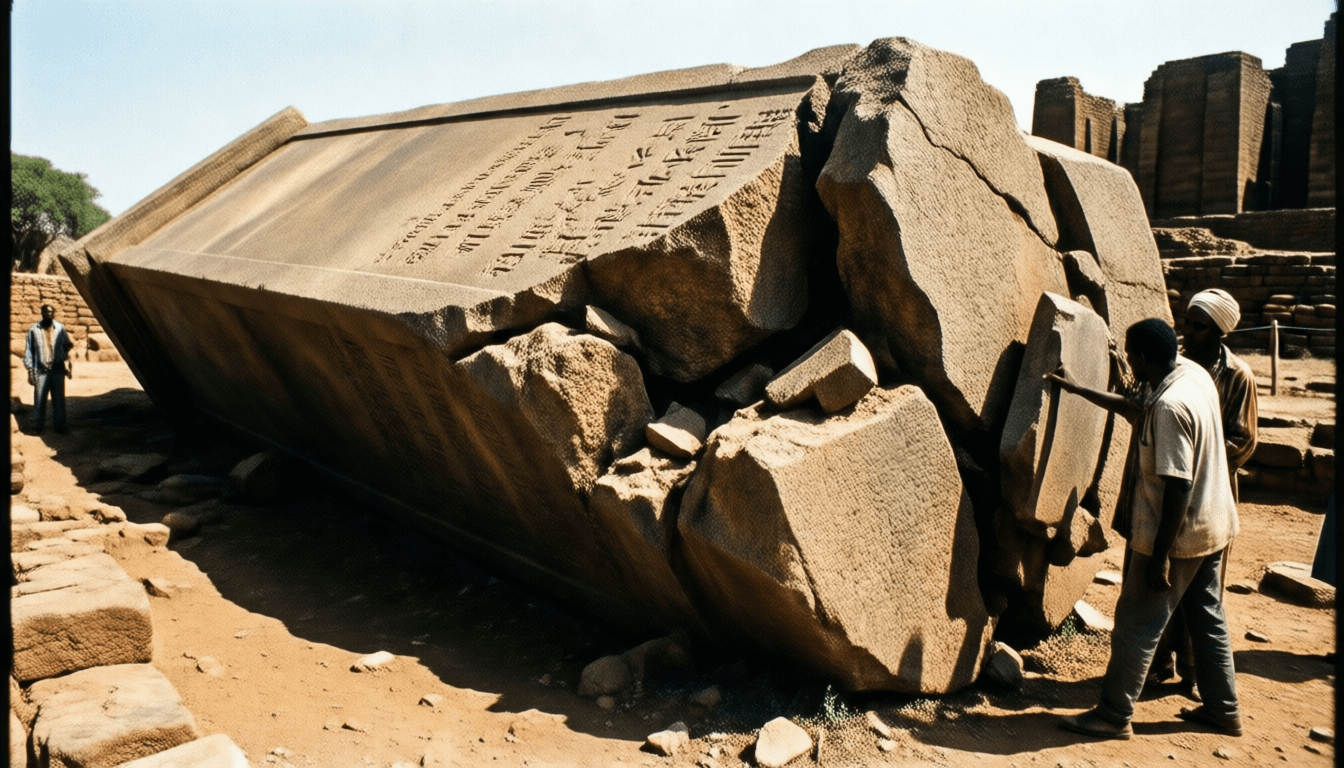
The journey to Aksum, a city steeped in legend, begins in the expansive Stele Park, where the echoes of an ancient empire resonate. Obelisk-shaped monuments, rising majestically between dry plains and distant mountain ranges, pierce the sky. Among them, three iconic colossal stelae dominate the view. First, the 'Great Stele,' lying shattered on the ground, measures approximately 33 meters long and is estimated to weigh 500 tons. This is the largest single stone an ancient civilization ever attempted to erect. Beside it stands the magnificent 24-meter high, 160-ton 'Aksum Obelisk,' recently repatriated from Rome and now gleaming under the African sun. However, the most definitive display of Aksumite civilization's astounding technology is the 'Stele of King Ezana,' still standing firm at 21 meters tall.
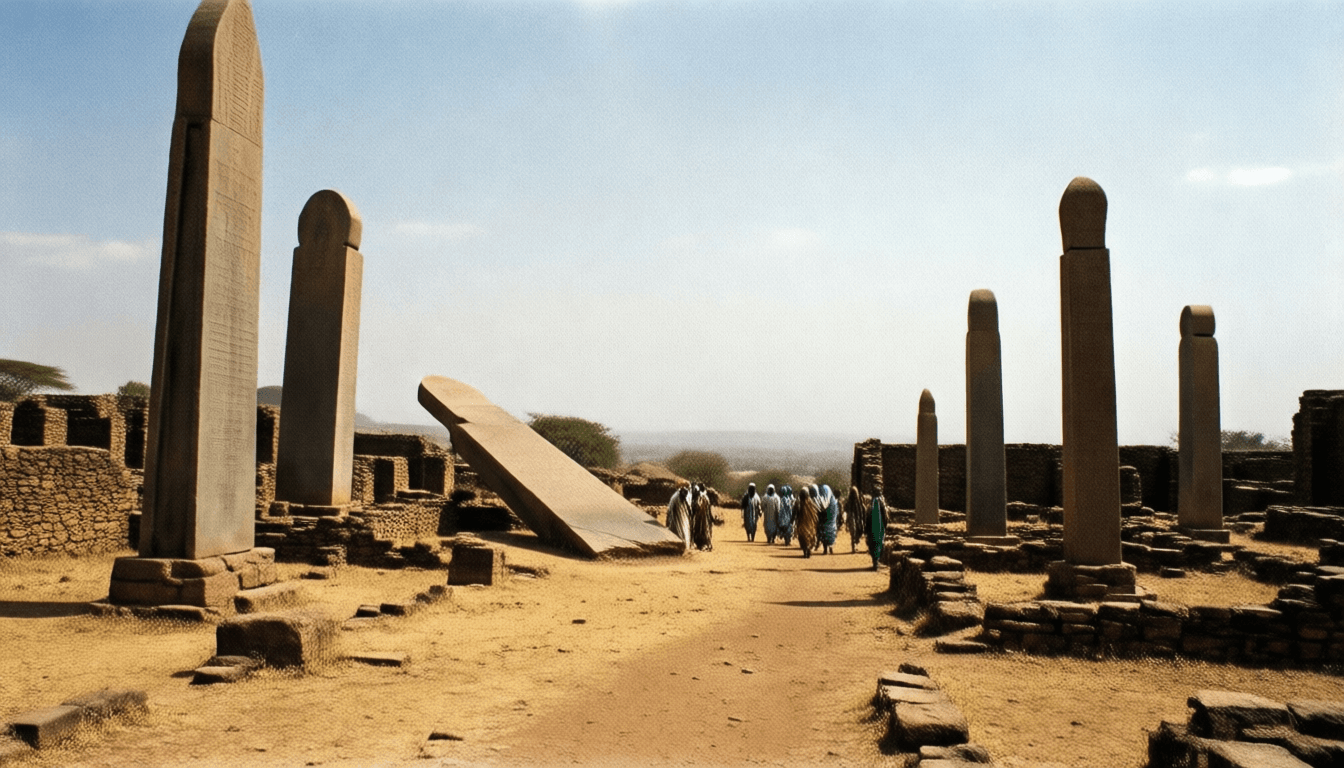
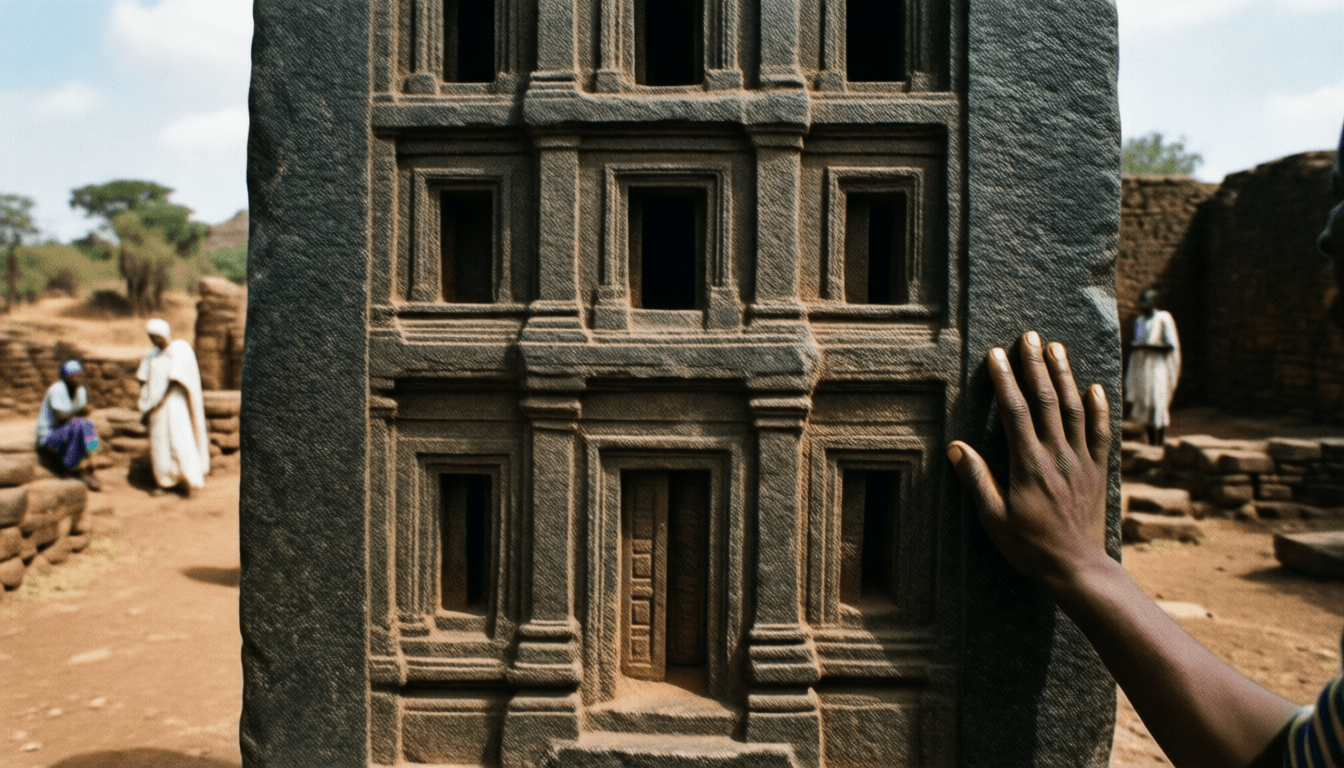
Each surface of these dark syenite giants is intricately carved with false doors and windows, creating the illusion of a grand multi-story palace. Perhaps they were symbolic 'stairways to heaven' for the noble souls buried beneath them. These stelae are more than mere grave markers; they are an epic tale of an empire that controlled vast trade routes, minted its own gold coins, and uniquely blended indigenous culture with early Christianity.
As we meticulously examine the physical evidence, the scale of this engineering challenge becomes breathtakingly clear. The quarries for these massive syenite blocks are located several kilometers from Stele Park. Even with the most advanced modern theories involving ropes, levers, and ramps, the logistics are difficult to convincingly explain. How were hundreds of tons of stone transported across rough terrain, without even wheels suitable for such immense loads? Furthermore, how were these unimaginably heavy megaliths lifted and precisely seated onto deep foundations?
Archaeological excavations have yielded no detailed blueprints, advanced machinery, or extensive documentation recording the process. The sheer scale and number of these monuments suggest not a single experimental feat, but a well-established and repeatable engineering methodology that has completely vanished from historical records, leaving a colossal gap in our understanding of Aksumite civilization's technology.
The most fascinating and stubbornly unexplainable part lies in the process of erecting the stelae themselves. Consider the fallen colossus, the Great Stele. Its estimated weight of 500 tons is nearly equivalent to a modern jumbo jet. Lifting such a massive single stone from a horizontal to a vertical position without breakage presupposes an understanding of physics, leverage, and sheer force that is almost unbelievable for 3rd or 4th-century technology. While smaller obelisks were erected in Egypt and Rome, the Aksumite stelae are unique in being carved from a single rock and were significantly heavier than most obelisks from other regions.
Experts have proposed various methods, such as counterweights or earthen ramps, but no theory fully accounts for the archaeological evidence or the immense forces involved. The Aksumites built with single, enormous pieces defying gravity, not stacked blocks. This was more than mere physical force; it was a highly applied science, a jealously guarded but ultimately lost technology that allowed them to raise megaliths to monumental heights.
Today, most of Aksum's stelae stand in dignified silence, testifying to an age of forgotten genius. They speak of a civilization that achieved wondrous feats, yet deliberately remained silent to posterity about 'how' they did it. As the sun casts long shadows across their weathered surfaces, we are left to ponder the true extent of human ingenuity in the ancient world. Did the Aksumites possess knowledge of mechanics or construction techniques that have been completely erased from history? Or were their achievements the result of ingenious low-tech solutions that just barely escape modern comprehension? Through their serene grandeur and inexplicable origins, the Aksum stelae continue to challenge our perceptions of what was possible in antiquity, leaving us with a profound sense of awe for the unknown capabilities of our ancestors and the eternal mystery whispered by stone giants to the vast Ethiopian sky.

[ CLASSIFIED VERDICT ]
[ACCESS LOG - SOURCE FILE]
The colossal stelae located in Aksum, Ethiopia, are an astonishing legacy left by the ancient Aksumite kingdom. These massive monolithic pillars were quarried, transported, and erected in a manner difficult to explain with modern engineering. The mystery of how this ancient civilization built these seemingly impossible structures remains unsolved to this day.