The Vacuum of South Mountain: The 1973 DNR Declassified Report
In November 1973, a declassified internal document from the Department of Natural Resources (DNR) was uncovered in the annex of the Western Maryland Regional Library in Frederick, Maryland. The report, bearing the mundane title 'Non-Game Wildlife / Unclassified Carcasses,' detailed twelve white-tailed deer carcasses retrieved from the South Mountain ridge near Boonsboro. There were zero predator tooth marks or external lacerations; however, each carcass bore smooth, circular quarter-inch perforations along both carotid arteries. The internal soft tissue within their thoracic cavities was emulsified beyond recognition, and the iron concentration in the topsoil beneath the bodies was an anomalous absolute zero. The blood had not soaked into the earth—it had been completely evacuated from within.
The investigation was permanently shuttered following the disappearance of Daniel Callow, an auxiliary forest ranger inspecting an avian migration acoustic monitoring station near Lambs Knoll. Inside his patrol vehicle, abandoned at the trailhead, sat a microcassette recorder whose internal circuit board had melted from an electrical surge. As an archival researcher tracking Appalachian ecological anomalies, I packed Callow's recovered 1973 tape and modern directional acoustic equipment, heading toward his last recorded coordinates. I had to locate the epicenter of the metallic, rasping screech that echoed rhythmically behind his static-drenched voice.
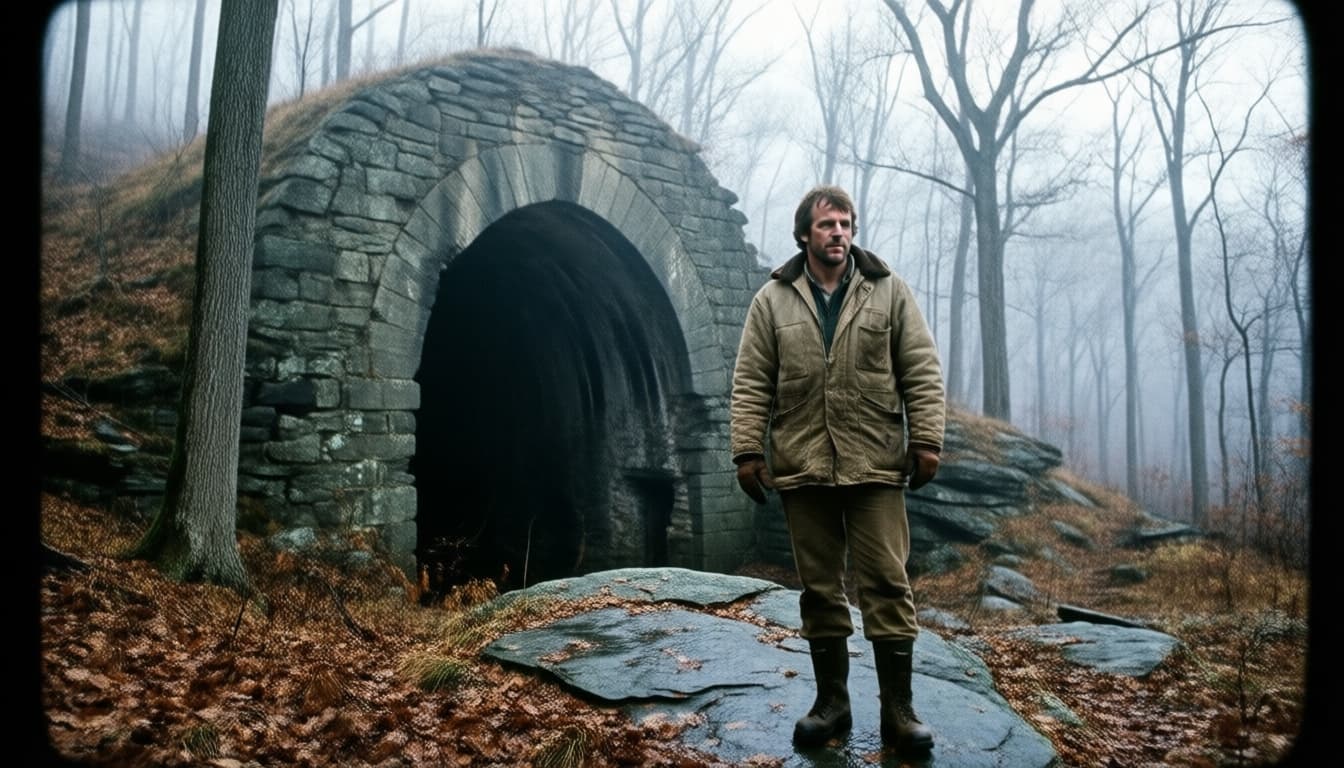
By late November, an inversion layer had choked the South Mountain hollows with freezing, clammy fog. Visibility was barely twenty meters through bare oak branches and shattered limestone outcrops. The quiet was punctured only by the dampness weighing down my heavy canvas chore coat, the briny stench of wet slate, and the crackle of frost-bitten leaves shattering like glass shards. I stepped into unmapped karst terrain leading toward a 19th-century abandoned lime kiln that had been omitted from modern park maps.
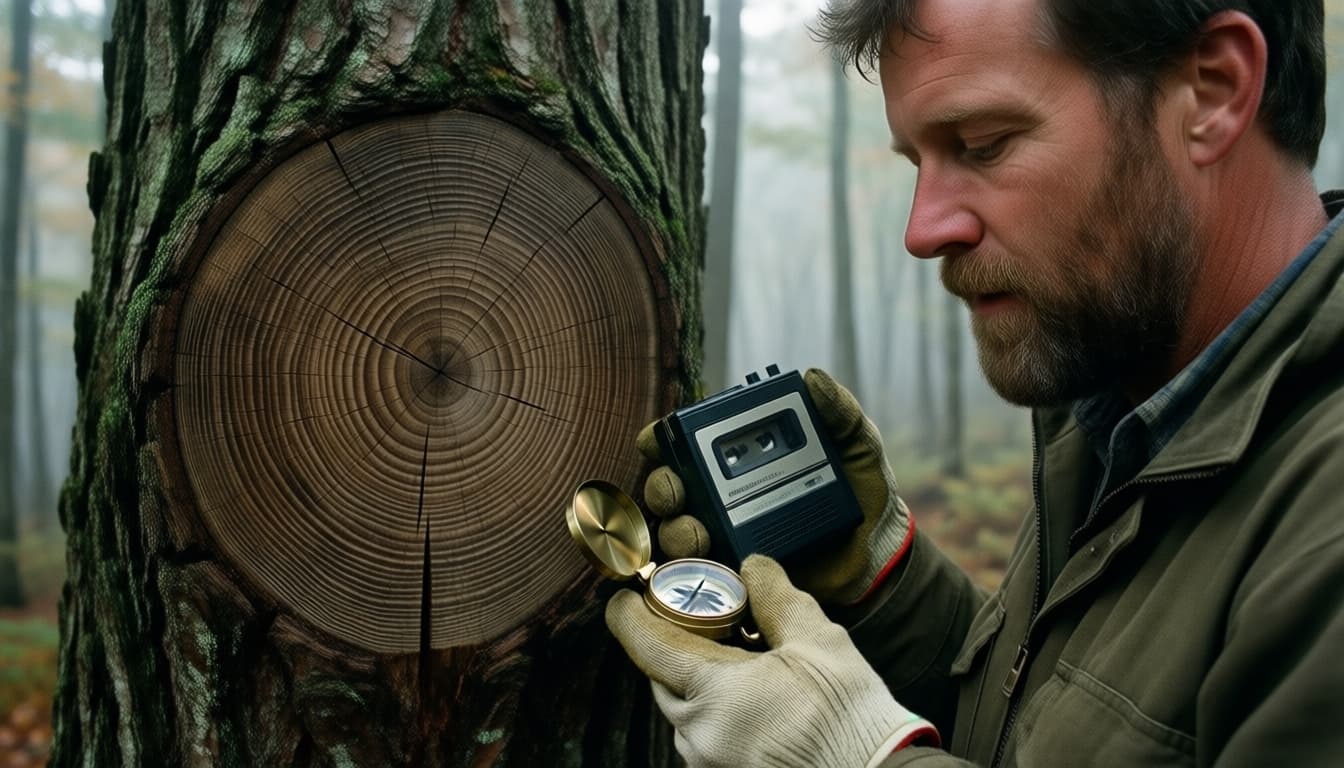
Fifty meters before the kiln, I encountered the first sign of territorial marking. The bark of mature hemlock trees, roughly two meters off the ground, was smoothly peeled away in clean rings. These were not claw marks from a bear or bobcat. Something immense had coiled around the trunks and squeezed with unimaginable pressure, causing sap crystals to whiten over the exposed wood in perfect circles.
From that moment, the atmospheric acoustics broke down completely. A brass compass slipped from my pocket and struck the slate rock, yet it produced no audible impact sound whatsoever. Conversely, the rustle of dry leaves scraping a branch forty meters away struck my eardrum as crisply as if someone were whispering directly against my ear. Though standing on a flat ridge, the needle of my altimeter surged wildly, the sudden barometric drop aching deep in my jaw hinge while moisture flash-froze across the camera lens.
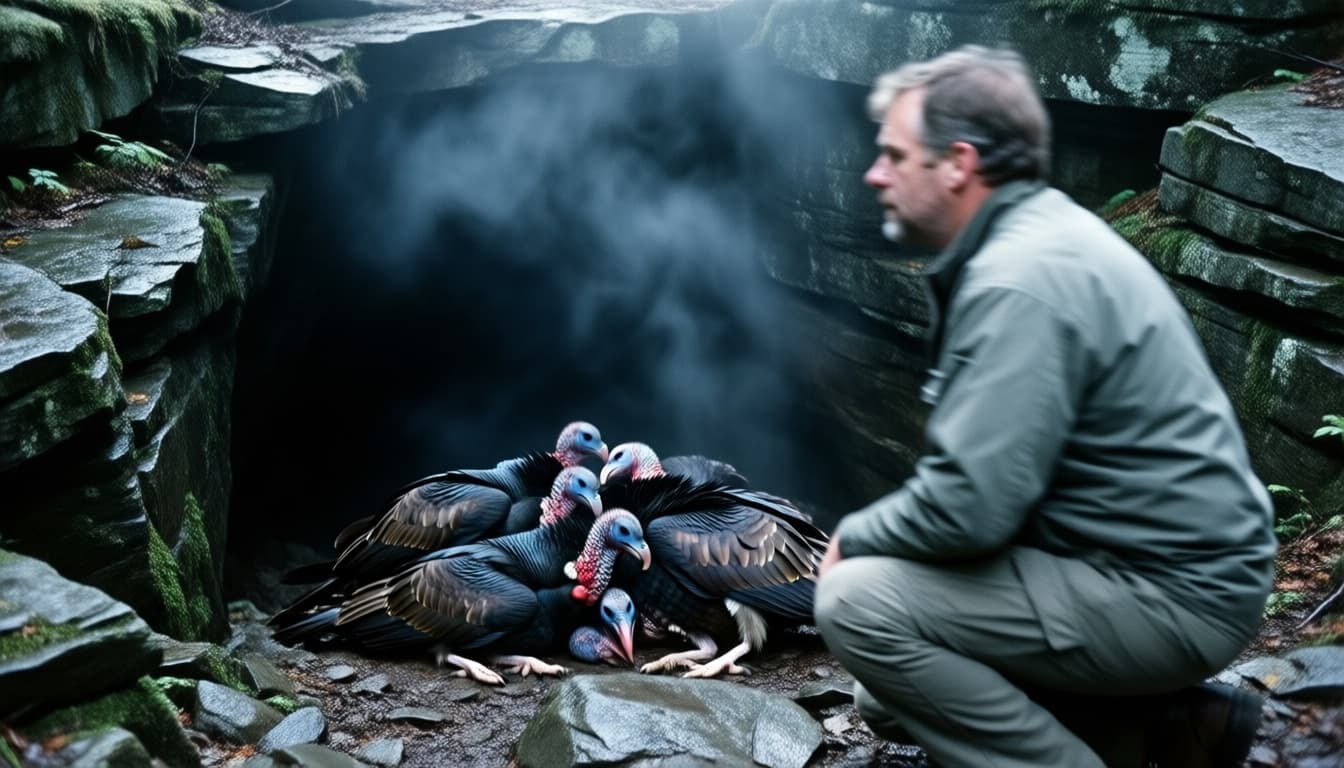
When I looked up into the canopy, the fog was not drifting. Around a specific empty coordinate in the air where no wind blew, the mist was rapidly spinning like a top, forming a tight vortex. It was the vacuum wake left behind after a massive physical mass carved through the air without a trace. Shining my torch into a rock crevasse revealed half a dozen turkey vulture carcasses jammed into the cracks. They had not been discarded; their heads had been forcefully rammed into the stone fissures to prevent their wings from opening. The stinging stench of burnt zinc and dry sulfur stung my nostrils—the nauseating smell of scraping flint inside an iron pipe.
A sudden, localized downburst snapped the crowns of three young hardwood trees simultaneously. Instinctively, I threw myself forward, rolling into the arched stone entrance of the lime kiln built deep into the cliffside. The moment I retreated into the five-foot-wide circular masonry chamber, complete darkness fell over the interior. It was not the fog thickening; an immense physical mass had descended over the top exhaust flue, blotting out all ambient daylight.
Every sound inside the chamber was violently sucked away. Panicked, I clutched my throat and screamed, but though my vocal cords vibrated painfully, not a single decibel echoed inside the stone womb. In that total, suffocating vacuum, I gazed up at the ceiling. Looming down through the flue gap was neither a tree bough nor an animal's leg. It was a jointless, segmented bundle of cartilage, oozing a clear, copper-scented slime across hairless, taut skin. The entity did not land. Bracing itself by clamping against the external masonry on either side of the chimney, it suspended its immense weight midair.
What broke the silence was not a beast's roar. It was a piercing, mechanical scream produced by high-pressure air blasting beyond the speed of sound through a narrow bony syrinx. The shockwave vibrated the surgical pin inside my old knee injury, causing my leg to buckle. Seizing that split second, a fibrous, whip-thick tendril lashed down like lightning, coiling tightly around my nylon pack strap. Its tensile strength was impossible. My entire body was hoisted several inches off the floor before the seams tore violently, dropping me back onto the cold dirt.
The icy surface of the tendril grazed the back of my neck. Along with a bone-chilling frost, microscopic serrated ridges ground against my skin, crushing the capillaries beneath with unnatural pressure. Reacting purely on instinct, I pulled the safety pin of an emergency signaling flare from my coat and scraped it against the stone floor. A blinding white phosphorescent burst flared to life, instantly catching the sulfur film coating the kiln's inner walls.
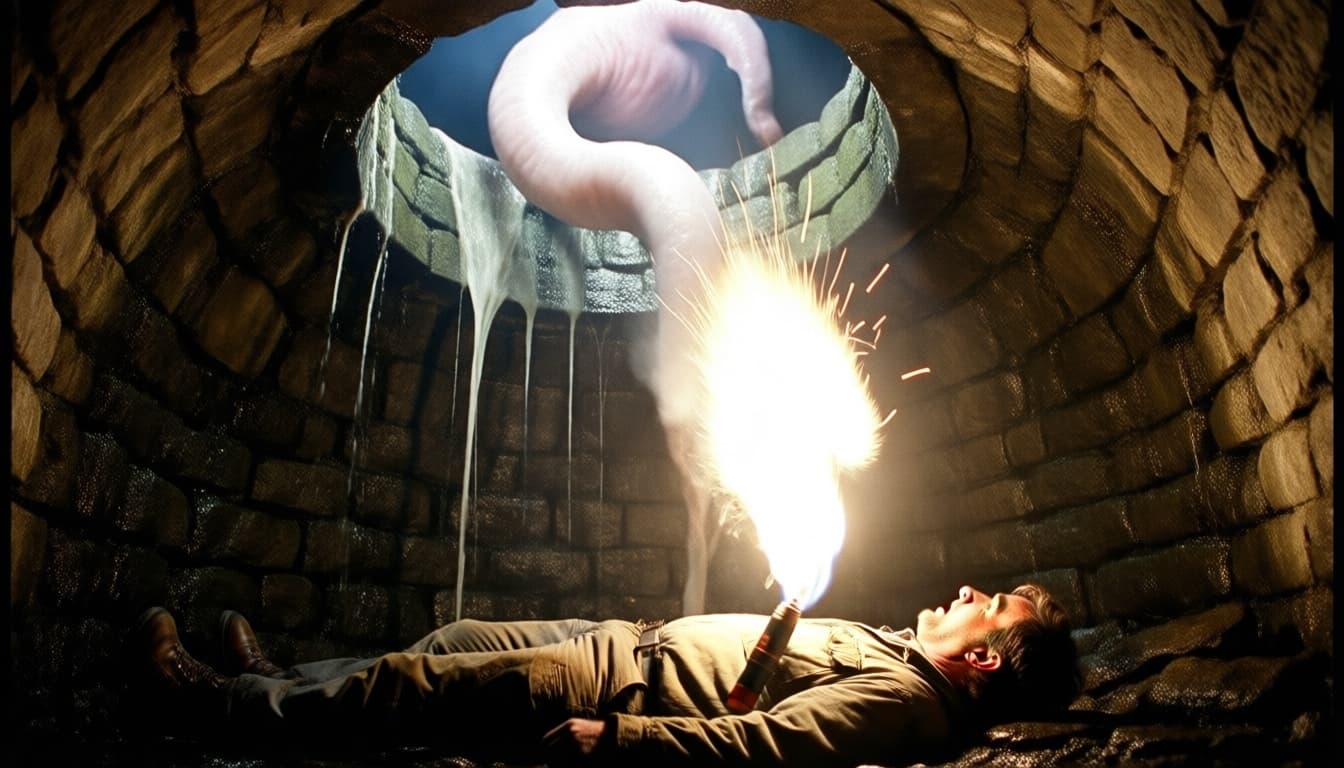
A heavy, wet impact shuddered beyond the ceiling. Repelled by the volcanic heat, the mass withdrew, collapsing century-old mortar and heavy slate slabs in its retreat. Falling rubble choked the flue and buried the entrance. Lying face-down in the dirt, I dragged in trembling breaths. My hand had dropped the flare and rested flat against the stone floor, yet my shadow cast against the flickering wall remained motionless, arm still raised toward the empty ceiling.
It took five grueling hours of clawing through stone debris until my nails tore before I dragged myself into the freezing dawn light. The South Mountain ridge was deceptively peaceful, the wind rustling leaves according to normal laws of physics. The directional audio equipment I had left mounted on a tripod outside had not captured a single second of biological noise. The magnetic tape recorded forty minutes of high-output degaussing, punctuated at rhythmic intervals only by sharp, mechanical clicks caused by the microphone diaphragm being sucked inward under catastrophic barometric drops.
On the right side of my neck, five permanent coin-sized circular necrotic scars remain—numb tissue with sweat glands and capillary response completely destroyed. Two months later, United States Geological Survey (USGS) seismic monitors along the South Mountain fault began recording regular low-frequency vibrations every Tuesday between 2:00 and 4:00 AM. These tremors were not caused by shifting bedrock. They were moving steadily at precisely eleven miles per hour—the cruising speed of a massive glider sweeping above the tree canopy—drifting smoothly along the Appalachian ridge line, descending slowly south toward the Potomac River.

[ CLASSIFIED VERDICT ]
[ACCESS LOG - SOURCE FILE]
In the South Mountain and Middletown Valley areas of Maryland, legends of the 'Snallygaster'—a winged cryptid said to swoop down from the skies and drain the blood of livestock and isolated travelers—have endured since 18th-century German immigrant folklore. This story reimagines the folk legend as modern techno-horror, intertwining it with real-world anomalous Department of Natural Resources (DNR) carcass files from the 1970s and decaying 19th-century lime kilns.