The Mimic of Duncan Canal
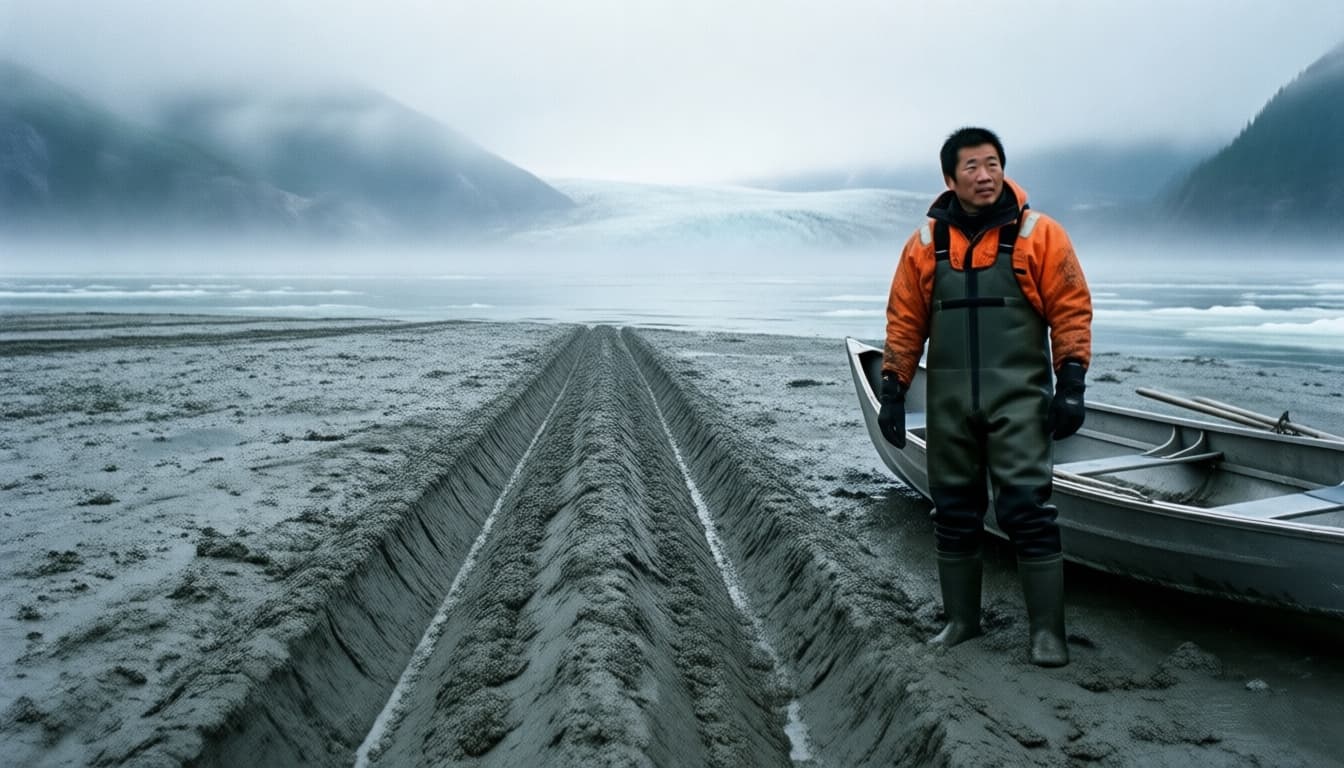
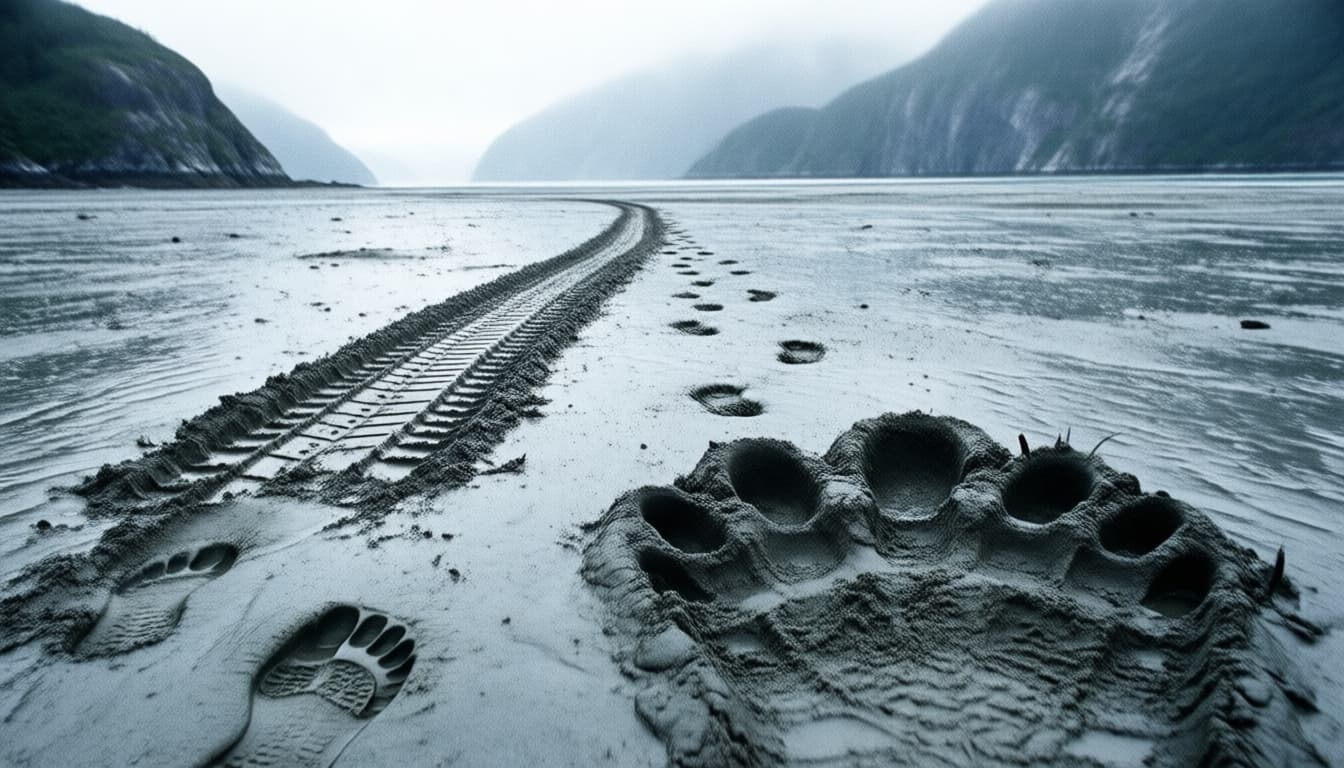
A strange record remains in Alaska State Troopers Incident Report No. 21-8842. On November 14, 2021, an 18-foot skiff belonging to veteran crab fisherman Dennis Bain was discovered stranded on the tidal flats of Duncan Canal, south of Petersburg. The outboard engine had completely seized after sucking in thick glacial silt. The last of three VHF transmissions picked up by the Coast Guard in Juneau was logged at 4:32 PM. Over the radio, instead of a human voice, came heavy, wet panting pressed directly against the microphone, followed only by the distinct metallic click of the emergency kill switch being yanked out. Inside the cabin, a folded immersion survival suit lay untouched, but on the mudflats outside, alongside barefoot human impressions, ran an eerie 2.5-meter-wide drag mark—a parallel furrow without claw marks left by something massive crawling straight toward the rising tide.
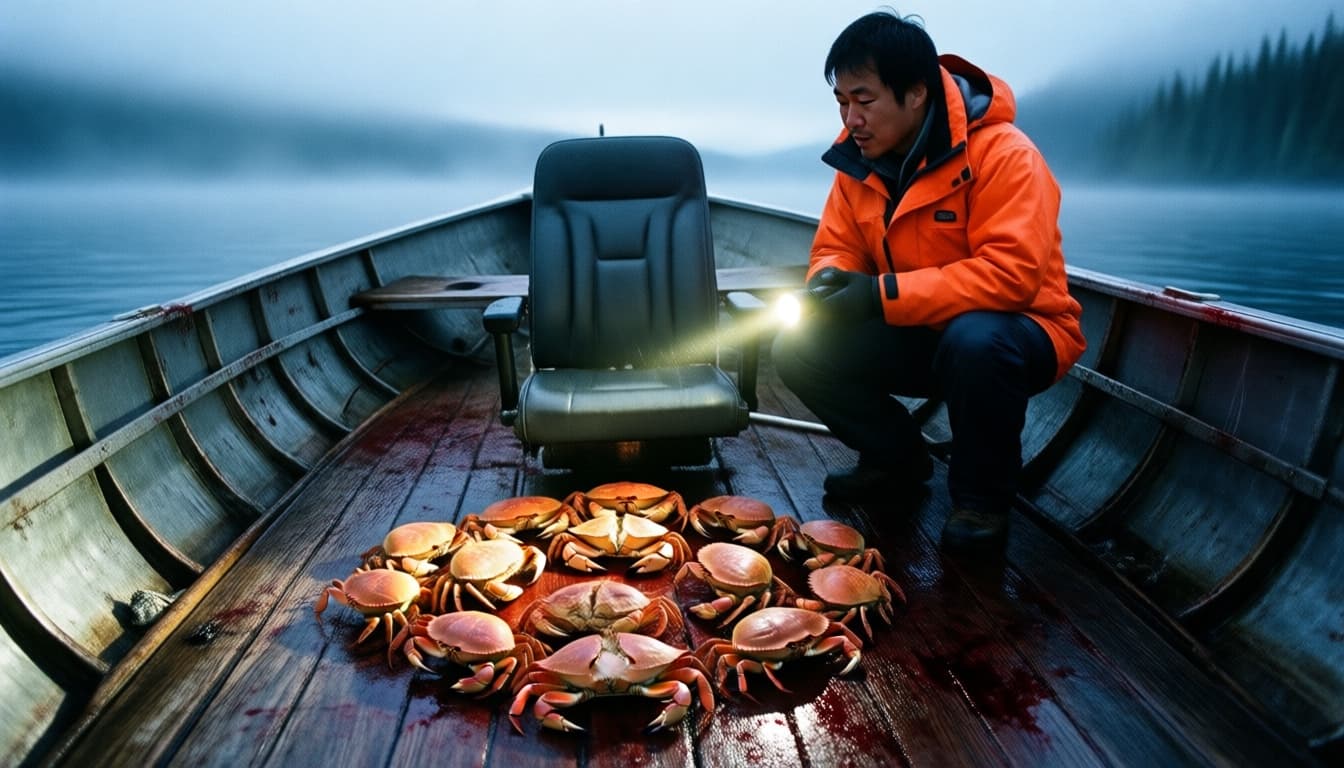
Three weeks after the disappearance, I entered Duncan Canal during a spring low tide to recover the acoustic telemetry recorder Bain had deployed. Duncan Canal is an eroded fjord choked with freezing glacial silt. While it appears solid, the ground behaves like a non-Newtonian fluid that liquefies under pressure, and the 0.5-degree Celsius water can incapacitate a human body in less than four minutes. Stepping onto the deck of Bain's mud-stuck boat, my stomach dropped. Sixteen Dungeness crabs, which should have been in the bait locker, were arranged in a meticulous circle around the helm chair, their carapaces precisely split in half. The crab meat was entirely untouched, but the boat's emergency foghorn was nowhere to be found.
As I trekked across the mudflats toward the survey buoy, the ambient acoustics began to deteriorate unnervingly. The towering rock faces of the fjord should have rebounded sharp echoes, but when I fired a flare gun, the report was instantly smothered, as if swallowed by wet cotton. The air itself seemed to absorb all vibrations. Advancing through this uncanny dead silence, I spotted deep trenches carved into the silt. They resembled the sliding trails of North American river otters, but the stride length easily exceeded two meters. Reaching a sandbar ridge, the dragged tail impression abruptly vanished, and the five-toed tracks transformed into bipedal footprints with unnaturally elongated webbing and deep-set human heels.
Through the dense fog, a high-frequency metallic shriek pierced my eardrums. It was the emergency horn missing from Bain's skiff. It wasn't a brief warning blast; the continuous, unyielding wail lasted for over two minutes without pause—a lung capacity impossible for any known mammal. Reversing against the seaward wind, the heavy mist began rolling aggressively toward me. The metallic tang of blood mixed with copper, rotting kelp, and a pungent, musky animal odor choked the back of my throat.
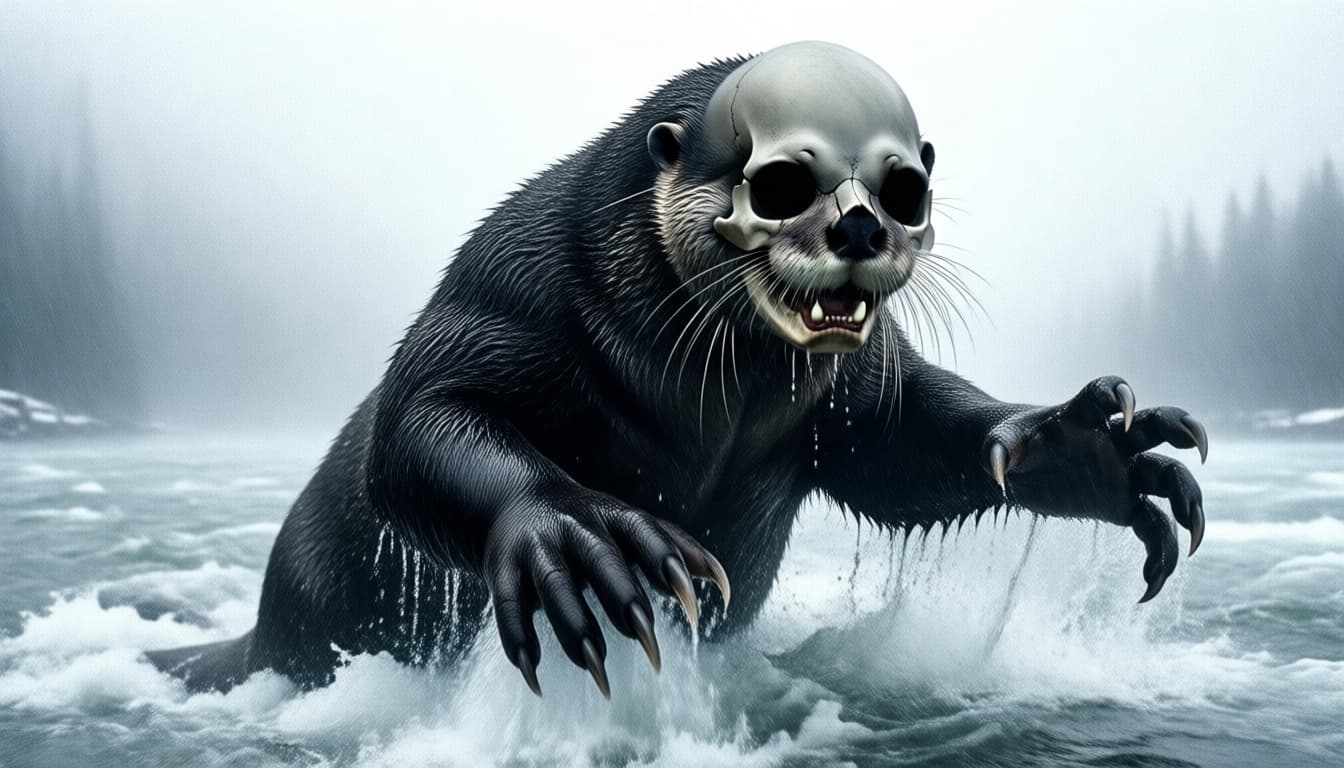
Turning back to verify my retreat route, my fingertips went numb with dread. The tide wasn't gently rising; a massive bore tide rushing at over ten kilometers per hour was already engulfing the corridor back to my boat. The mud island I stood on was sinking by the second. Fifty meters ahead, cutting through the churning, dark-gray sea, something surged violently out of the foam. It was a massive, streamlined slab of muscle over 2.5 meters long, slick with drenched black fur.
It moved toward me, unnervingly alternating between a quadrupedal bound and the crouched, lurching gait of a human. When it raised its head, my brain rejected what my eyes were seeing. It wasn't the flattened skull of an otter. Beneath the sleek, black hide, the underlying bone structure formed a tall, domed, unmistakably human skull. In the deep-set sockets that sucked in all light without reflection, there were neither whites nor pupils—only absolute darkness.
The thing did not roar. Its jaw rattled, unhinging slightly, and then it spat out the exact words I had spoken into my radio test twenty minutes earlier: "Survey Team Two, radio check, loud and clear." The inflection, the subtle tremor, even the spacing of breath were an identical, flawless mimicry of my voice. As soon as the words left its mouth, it slipped seamlessly beneath the surface and disappeared from view.
From the murky water, a heavy forelimb shot out and clamped onto my left calf. Bone-crushing pressure tore through my neoprene waders. But pressing into my flesh were not animal claws. Five unnaturally elongated human fingers with thick, blunt nails were wrenching my leg downward. My lower body was being dragged down into the sub-zero mud. Suffocating in panic, I drew the stainless-steel sediment coring spike from my hip and drove it blindly beneath the surface. A dull, sickening jolt traveled up my wrist as the spike impaled dense, leathery cartilage.
A scream erupted from beneath the water. It was not a beast's howl. It was the frantic, agonizing shriek of an adult man choking on seawater. The crushing grip on my leg loosened for a fraction of a second. Before the mud shoal collapsed entirely into the tidal bore, I lunged forward, grabbed the aluminum ladder of my safety skiff, and scrambled aboard.
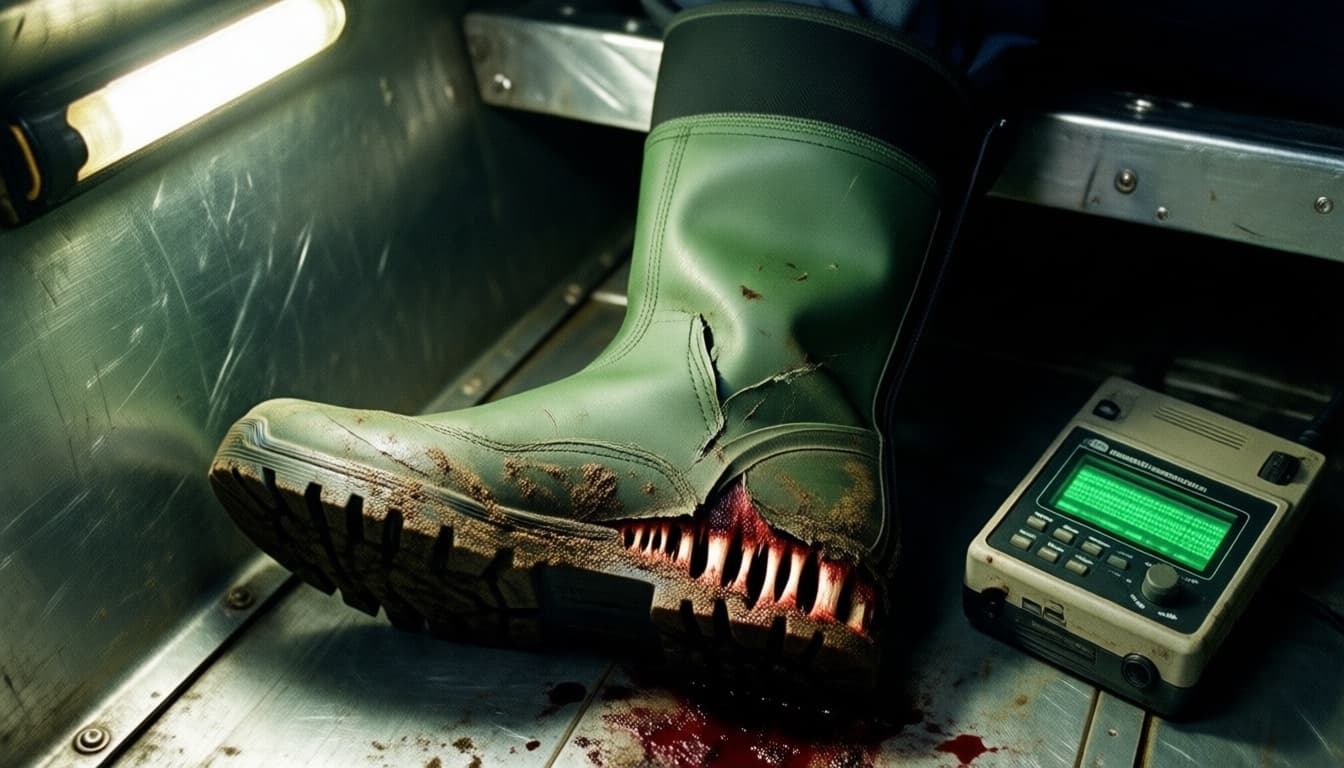
At the hospital, X-rays revealed a comminuted fracture in my left fibula. The torn heel of my wader boot had been cleanly sheared through, as if severed by the carnassial shears of an apex predator. The acoustic recorder retrieved from Bain's buoy held one final entry before it failed. Following twelve hours of total, chilling background silence was a four-minute recording capturing the faint, unmistakable wailing of a newborn baby resonating through the frozen silt. The device logged an ambient water temperature of minus 20 degrees Celsius, yet the water had not frozen.
Dennis Bain's body was never recovered. And two months into my convalescence in my Juneau apartment, three-second voicemails from an unknown caller began arriving at irregular hours. In every message, the metallic click of an outboard motor's kill switch sounds first, followed by my own faint voice echoing as if called through thick sea fog:
"Survey Team Two...... loud and clear."
[ CLASSIFIED VERDICT ]
[ACCESS LOG - SOURCE FILE]
This story is a modern reinterpretation of the 'Kushtaka' (Land Otter Man) legend from Southeast Alaskan Tlingit folklore. According to native myth, the Kushtaka is a shape-shifting predator that dwells in freezing fjords and tidal mudflats, mimicking the cries of infants or the voices of lost companions to lure travelers into treacherous waters, drowning them to steal their souls.