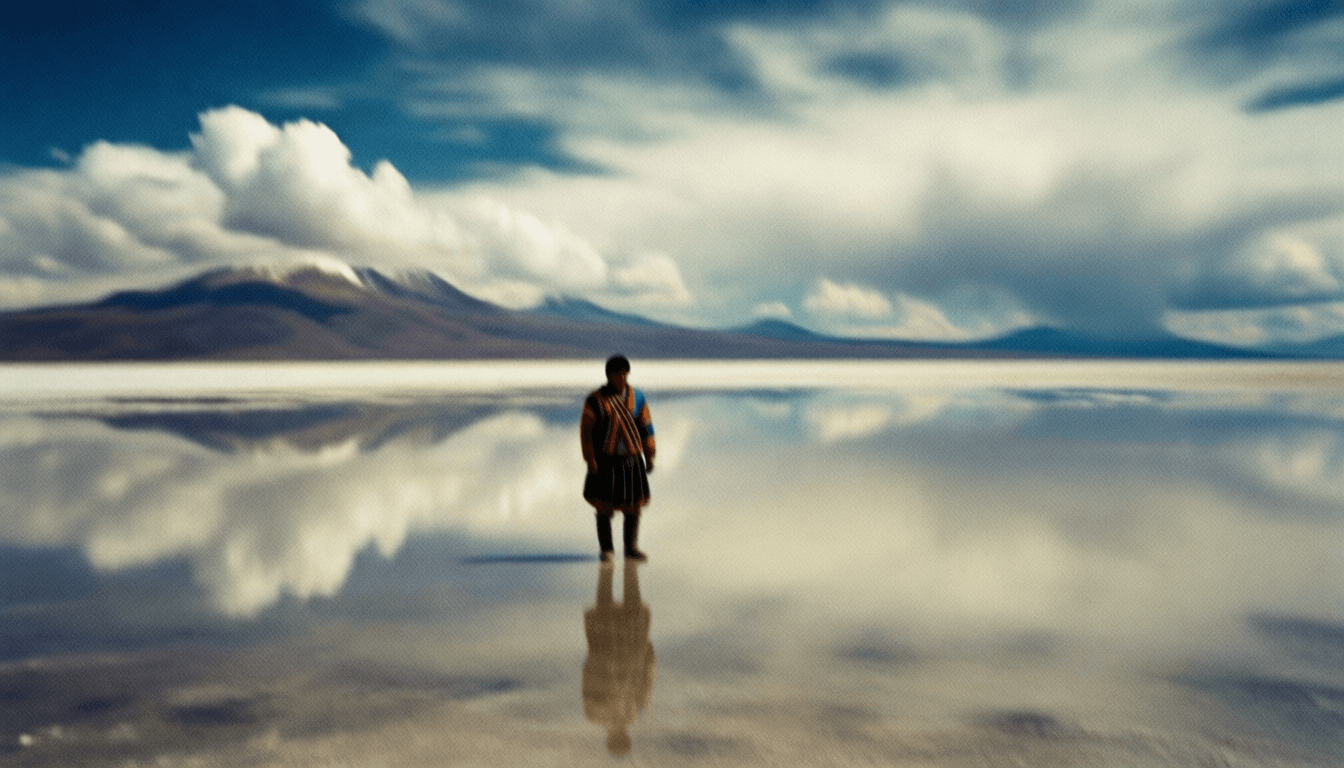
Uyuni Salt Flat: The Mystery of the Perfect Mirror
Imagine a place where the sky and earth meet as perfect mirrors, without a single seam, an endlessly stretching canvas beyond the curve of the horizon. This is not a dreamscape, nor a digitally manipulated fantasy. This is the Uyuni Salt Flat, the world's largest salt desert, located in Bolivia. Spanning over 10,500 square kilometers on the high altitudes of the Andes Altiplano, this geological marvel transforms for a short, magical period each year, due to a thin layer of rainwater, into the planet's most colossal natural mirror. Its wonder is such that it makes one question the very essence of reality. Yet, behind its breathtaking illusion lies an unsolved enigma: How did such an extraordinary, perfectly flat, and mineral-rich landscape form? And what ancient secrets are hidden beneath its shimmering surface?
Our journey begins in the desolate yet beautiful tranquility of Bolivia's southwestern Altiplano plateau, situated at an average elevation of 3,656 meters above sea level. There lies the dazzling white Uyuni Salt Flat. This vast expanse of salt, with hexagonal patterns etched into its surface and stretching beyond the horizon, overwhelms human perception with its sheer scale alone. Beneath this brilliant crust lies a solid salt layer up to 10 meters deep, a monumental testament to geological time.
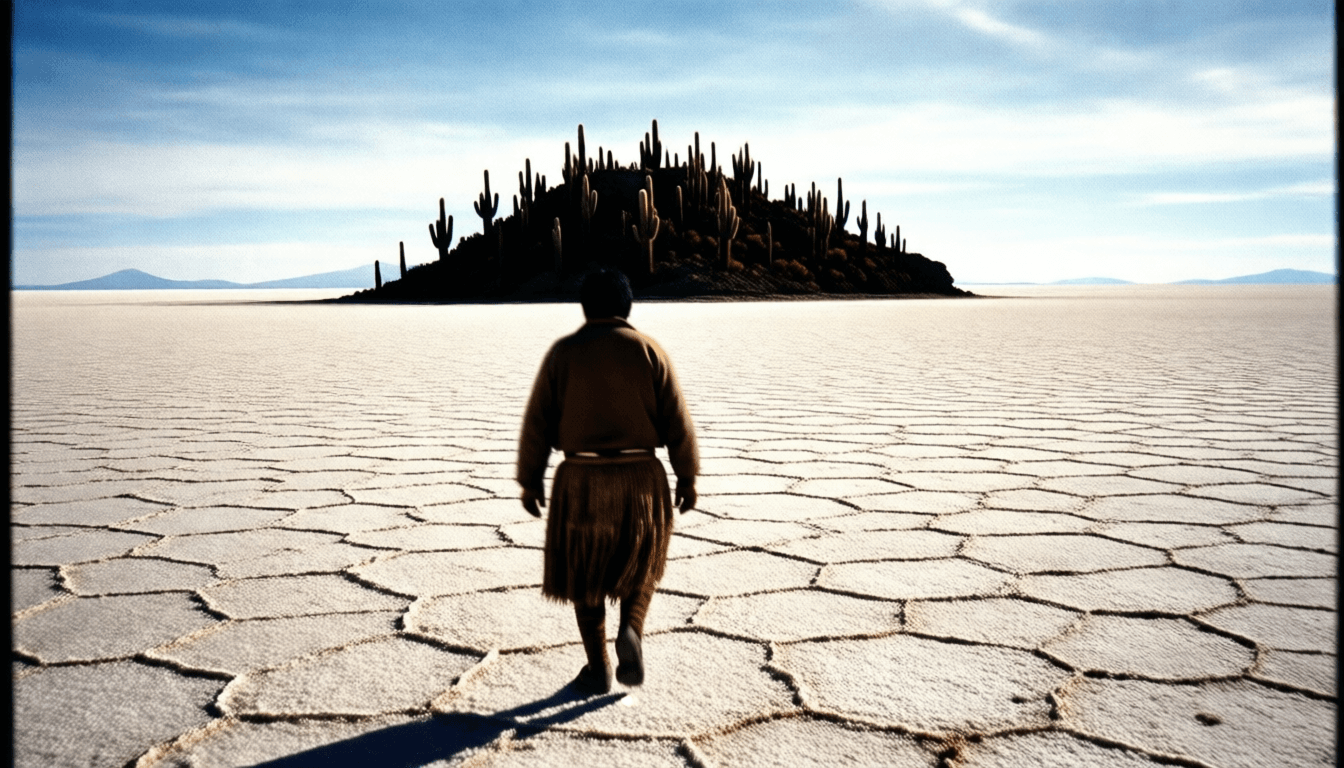
Millions of years ago, this region was dominated by immense prehistoric lakes such as Lake Minchin and Lake Tauca. Meltwater from surrounding volcanoes filled these lakes, which, along with climate changes, evaporated, leaving behind concentrated brine and mineral deposits. This process slowly evolved into the salt flat we see today. Throughout its vast plains, ancient volcanic remnants like Incahuasi Island, covered in giant cacti, rise, providing the only vertical sanctuaries in a horizontal world. Furthermore, beyond its captivating beauty, the Uyuni Salt Flat holds immense economic value. It is known to contain 50% to 70% of the world's lithium reserves, along with vast mineral resources like sodium, potassium, and magnesium, essential for modern technology.
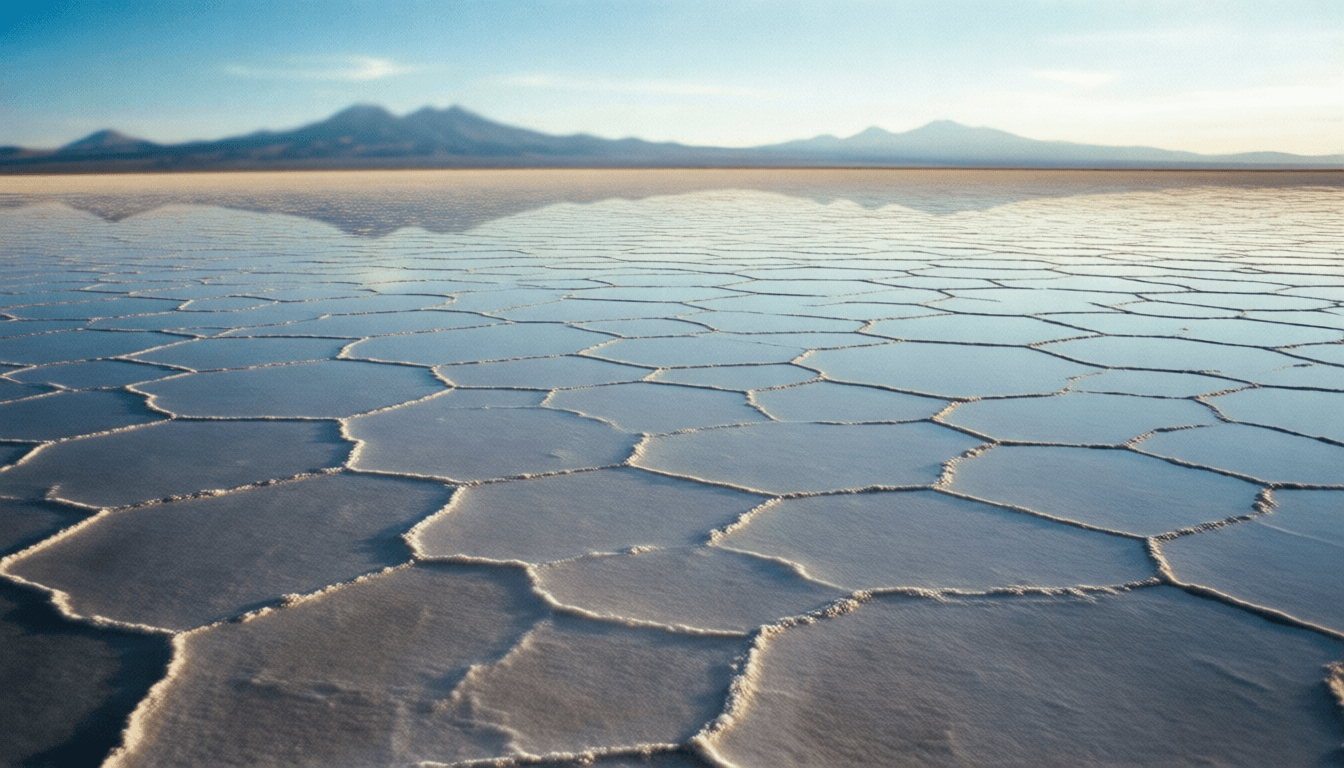
While science provides a framework for explaining Uyuni's formation, its immense scale and unique characteristics begin to transcend simple explanations. It's understandable that salt remains when lakes dry up. But how could nature sculpt an area the size of Jamaica into such an astonishingly intricate and perfectly flat surface? The Uyuni Salt Flat is so impeccably smooth that no subtle undulations can be found, and it is globally recognized to the extent that it is used to calibrate Earth observation satellites. The fact that subtle variations over vast distances average less than 1 meter is a marvel difficult to explain by typical erosion and deposition processes.
Moreover, compared to other salt flats worldwide, the extreme concentration of lithium in this particular basin raises questions about unique geological conditions or yet-unknown hydrothermal flows. Indigenous Andean legends passed down through generations describe Uyuni not merely as a landscape, but as the 'tears' and 'milk' of ancient mountain gods and goddesses – Tunupa, Kusku, and Q'olqe – which gathered to form the shimmering land. These mythical narratives imbue the landscape with a deep, almost sentient quality, suggesting that forces far beyond ordinary human comprehension shaped this extraordinary place.
The true mystery of the Uyuni Salt Flat is concentrated in its defining feature: the mirror. When a thin layer of water covers its surface, Uyuni transforms into a colossal, flawless mirror, perfectly replicating the sky to the point where the horizon completely disappears. Clouds, mountains, and even the occasional human figure are replicated with an unnerving precision, blurring the boundary between solid ground and infinite space.
This is more than mere reflection; it is a complete perceptual shift. It's a disorienting and profound experience that challenges our very sense of 'up' and 'down,' 'here' and 'there.' Our vision is confused, spatial perception is dismantled, and we are swept into an overwhelming illusion as if stepping into a new dimension of reality.
This natural wonder is a direct result of Uyuni's extreme flatness and the crucial salt structure that minimizes light dispersion. However, the question remains: Why here, of all places? How did this particular confluence of ancient geology, volcanic activity, and climate change create not just a simple salt flat, but a canvas for a sublime, mind-bending illusion of impossible scale? The intersection of inexplicable geological perfection, unparalleled mineral resources, and breathtaking visual illusion – this is the true core mystery of the Uyuni Salt Flat. It hints at a planetary artistry operating on principles we are yet to fully grasp.
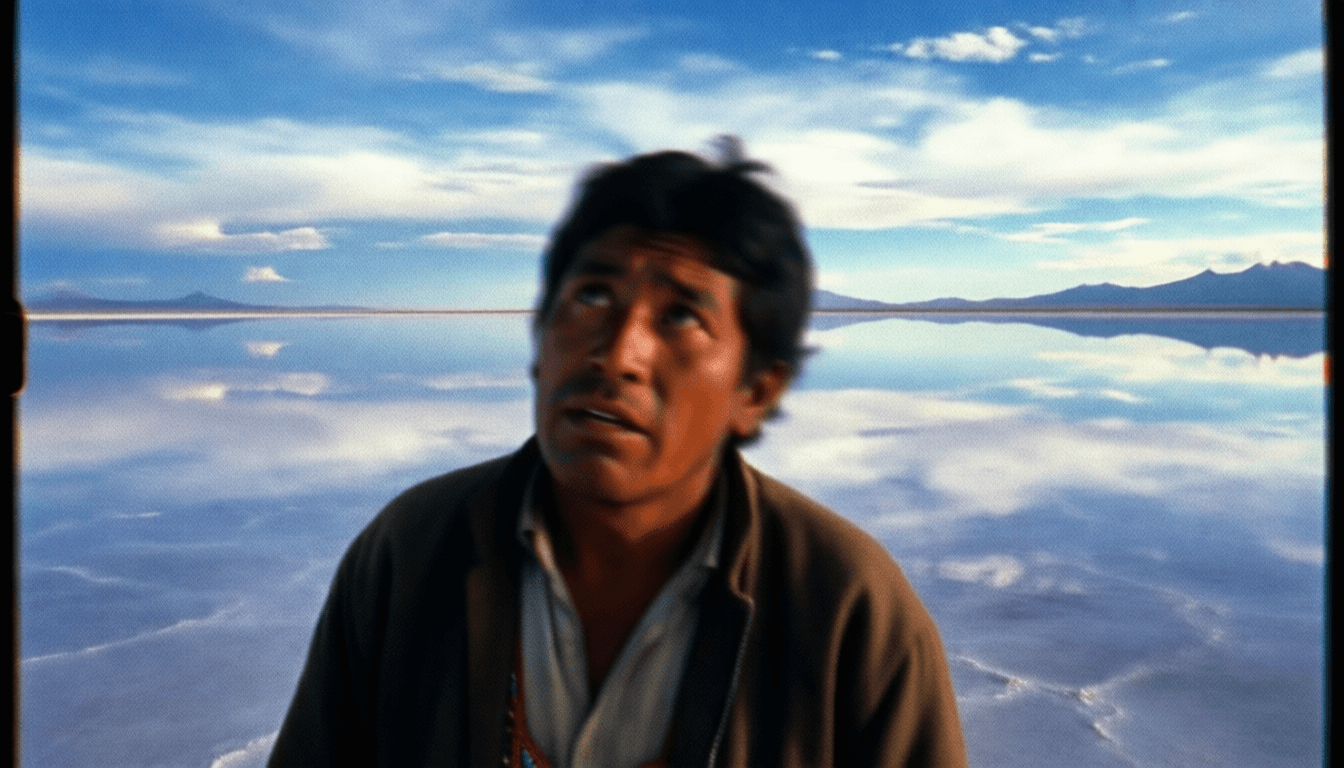
Despite decades of scientific exploration and visits by countless researchers, the Uyuni Salt Flat remains a monumental testament to Earth's profound and often perplexing geological processes, and an unending mystery. We can measure its depths, analyze its composition, and model its formation, but the fundamental 'why' of its astonishing perfection and its ability to erase the horizon remains unresolved.
Standing on its mirror-like surface, looking at the sky above and the sky below, one is enveloped in an overwhelming sense of insignificance and awe. This is where Earth truly works its greatest magic, prompting us to contemplate the vastness of natural creation and the beautiful, unanswered questions it continuously poses.

[ CLASSIFIED VERDICT ]
[ACCESS LOG - SOURCE FILE]
According to Andean indigenous legends, the Uyuni Salt Flat is not merely a landscape, but is believed to have been formed by the 'tears' and 'milk' of ancient mountain gods and goddesses: Tunupa, Kusku, and Q'olqe. This myth imbues the wonder of Uyuni with a divine, almost sentient origin, suggesting that forces beyond human comprehension shaped this extraordinary place.