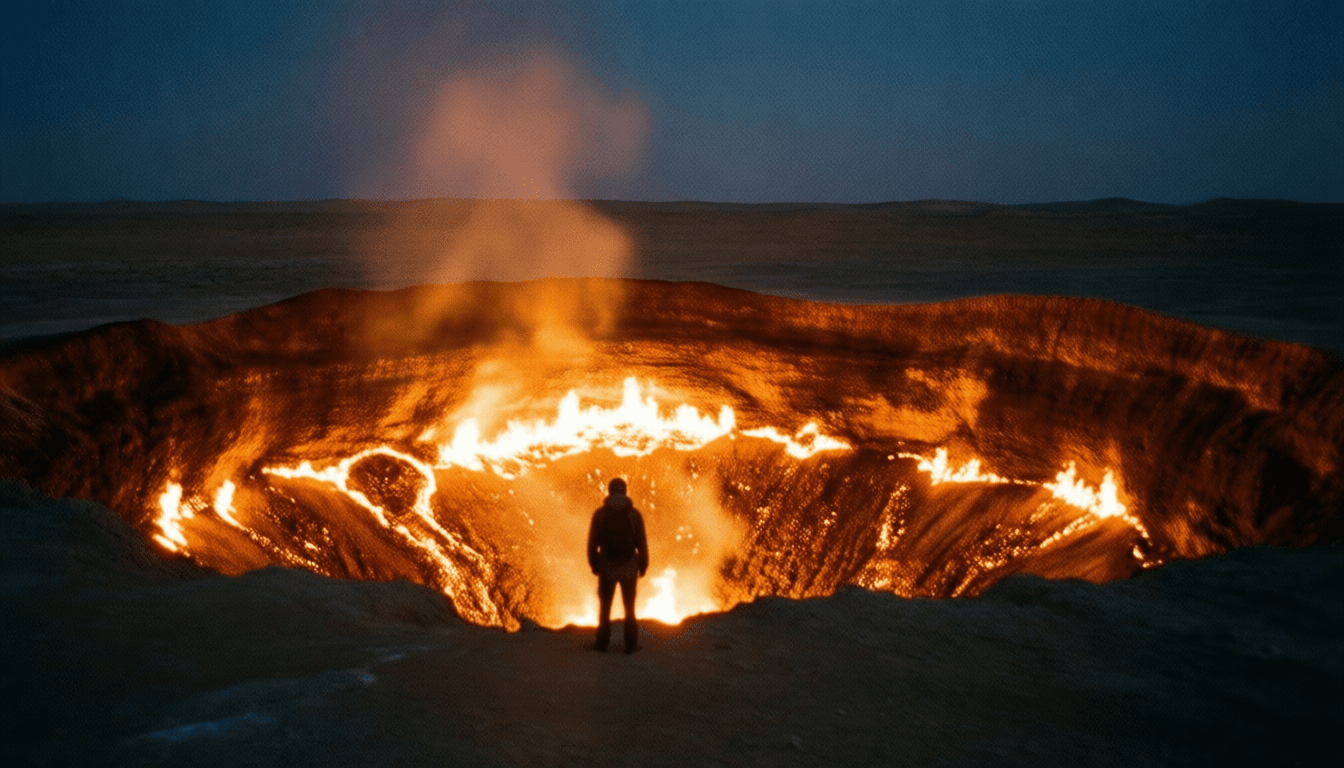
The Door to Hell: Earth's Eternally Burning Wound
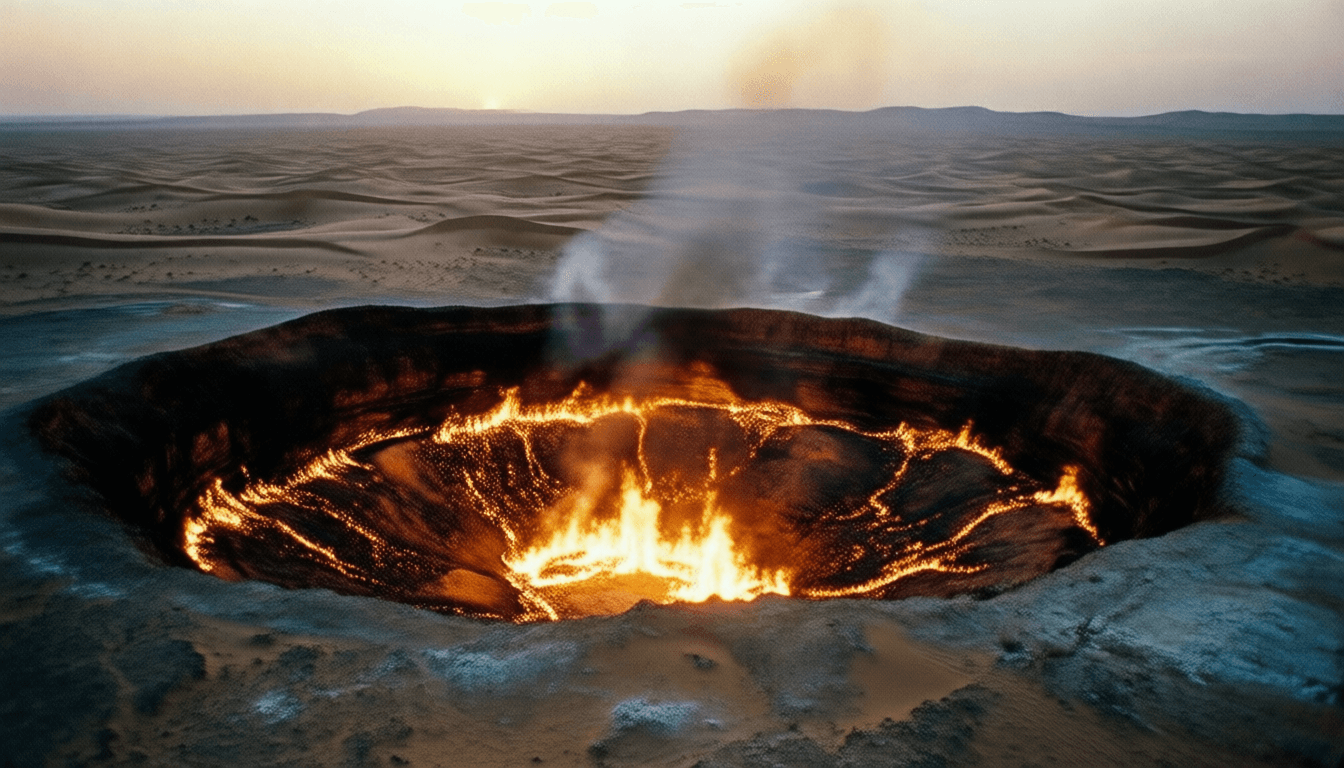
In the arid heart of the Karakum Desert, Turkmenistan, where only an endless expanse of sand stretches beyond the horizon and temperatures fiercely soar, lies a wound of the Earth that has been spewing fire for over half a century. Locally known as the 'Door to Hell,' the Darvaza Gas Crater is a colossal pit, approximately 69 meters in diameter and 30 meters deep, its depths consumed by incessantly burning incandescent flames. This astonishing geological anomaly, vividly glowing miles away even in the dead of the night, is neither a volcanic eruption nor an ancient myth. It is a modern enigma, man-made, burning continuously since its ignition in 1971. How could this enormous furnace, located in one of the Earth's most remote places, sustain its flames for so long, uncontrollably?
The story dates back to the early 1970s, an era of intensive natural resource exploration by the Soviet Union. A team of Soviet geologists, prospecting for oil near the village of Darvaza, stumbled upon a substantial underground cavern filled with natural gas. While setting up drilling equipment, the ground beneath them unexpectedly collapsed, creating a massive sinkhole and swallowing their equipment. Fearing the spread of dangerous methane gas to nearby areas and harm to wildlife, the geologists made a fateful decision: they ignited the gas, expecting it to burn off within a few weeks. However, the flames did not subside. Instead, they intensified, transforming the colossal sinkhole into a perpetually burning inferno. As weeks turned into months and then years, the initial optimism of the scientists turned into bewilderment, and the crater's incandescent glow became a permanent feature of the desert landscape.
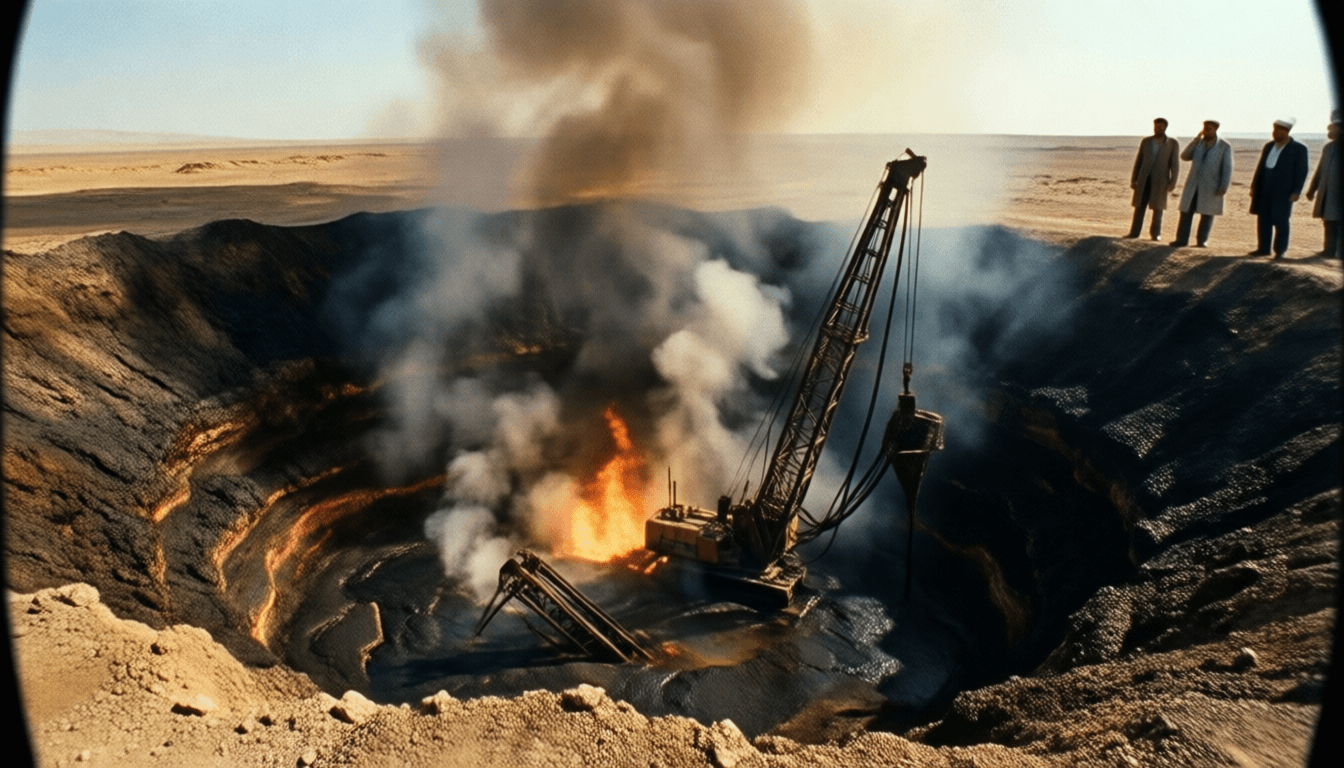
Fifty years later, the Darvaza Gas Crater continues to burn with unyielding intensity. The immense duration of this geological phenomenon has baffled scientists and challenged existing understandings of natural gas reserves. What vast underground network could possibly supply such an incessant blaze for generations? Geological surveys confirm Turkmenistan possesses one of the world's largest gas fields, indicating substantial natural gas reserves in the region. However, the specific mechanisms of the Darvaza crater's fuel source – its volume, emission rate, and the exact conduits sustaining the flames – largely remain unidentified. Attempts to extinguish the fire were considered but deemed too complex and potentially dangerous, only raising more questions about the forces at play beneath the desert surface.
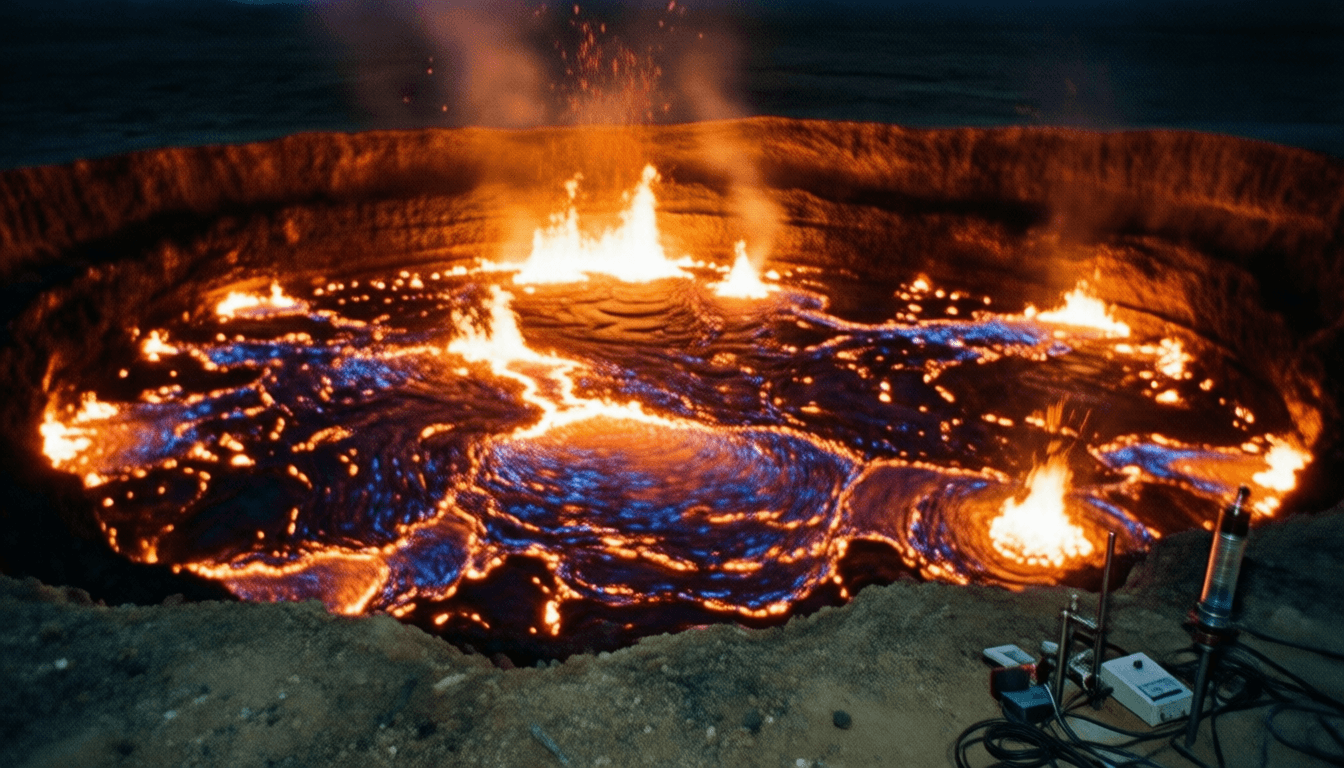
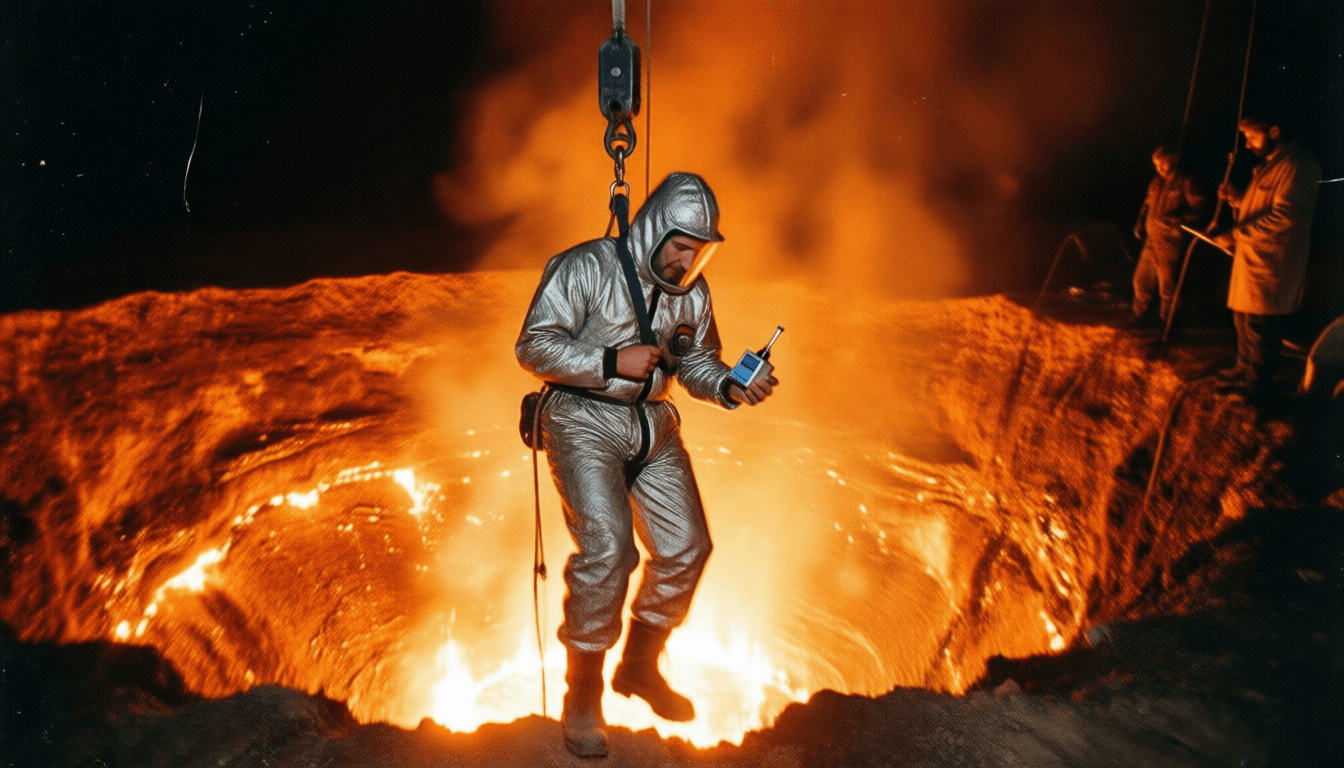
Beyond the sheer scale of the blaze and its incredible duration, the Darvaza Gas Crater presents an even more profound anomaly. It is not merely a burning hole; it is a dynamic, self-regulating system. Within its fiery maw, gas erupts from hundreds of individual vents, spontaneously igniting upon contact with the superheated atmosphere, creating a shimmering spectacle of constantly shifting orange and blue flames. Temperatures inside the crater can exceed 1,000 degrees Celsius, yet even within this hellish environment, life persists. In 2013, explorer George Kourounis descended into the crater and discovered extremophile bacteria in samples collected from its floor. These microorganisms were species perfectly adapted and thriving in a highly acidic, ultra-hot, methane-rich environment previously thought incapable of sustaining life. These resilient microbes offer potential analogs for life on other planets, hinting at life's adaptability in the most hostile environments imaginable. This makes the crater not just a geological marvel, but a potential cradle for understanding astrobiology.
The Darvaza Gas Crater, dubbed the Door to Hell, stands as a humbling testament to Earth's colossal, untamed power and the limits of human intervention. It is a primal, geological roar against the silence of the desert, a constant reminder that beneath our feet exist forces that can reshape landscapes and defy our attempts at control or complete understanding. As the flames dance, illuminating the night sky with an otherworldly glow, the crater remains a profound enigma. It is a wild, uncontrolled spectacle that silently mocks our scientific models and whispers of deep Earth secrets that continue to breathe, oblivious to humanity's fleeting existence. What unknown subterranean mysteries still lie dormant, or perhaps awakened, beneath our planet's surface? Only time, or perhaps another dramatic collapse, will tell.
[ CLASSIFIED VERDICT ]
[ACCESS LOG - SOURCE FILE]
The Darvaza Gas Crater, known as the 'Door to Hell,' located in the Karakum Desert, Turkmenistan, is a massive pit created in 1971 when Soviet geologists accidentally collapsed the ground during natural gas exploration. They ignited the gas to burn off harmful fumes, but contrary to their expectations, it has been burning continuously for over 50 years, leaving a mystery regarding its cause and persistence. This phenomenon serves as a real-world example of Earth's unpredictable power beyond human control.