The Defiance of Gravity: The Enigma of Ladakh's Magnetic Hill
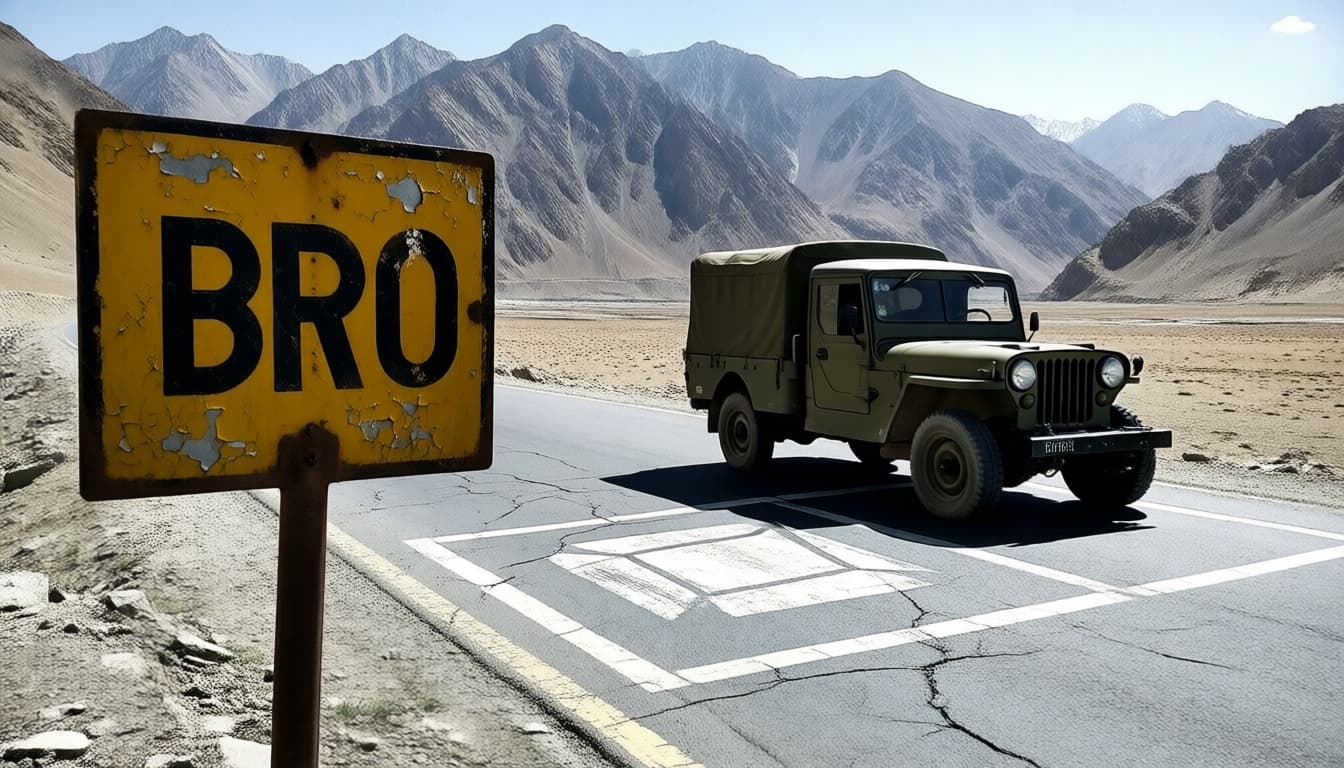
At an altitude of 4,200 meters, amidst the oxygen-deprived and barren plateau desert of the Trans-Himalayas, lies a stretch of highway that directly challenges everyday laws of physics. Along the national highway connecting Leh and Kargil in the Ladakh region of India, a crisp white box is painted onto the weathered asphalt, right beneath a bold yellow signboard erected by the Border Roads Organisation (BRO). The instructions are unsettlingly simple: "Park your vehicle here in neutral with the engine turned off. Watch it climb the hill on its own."
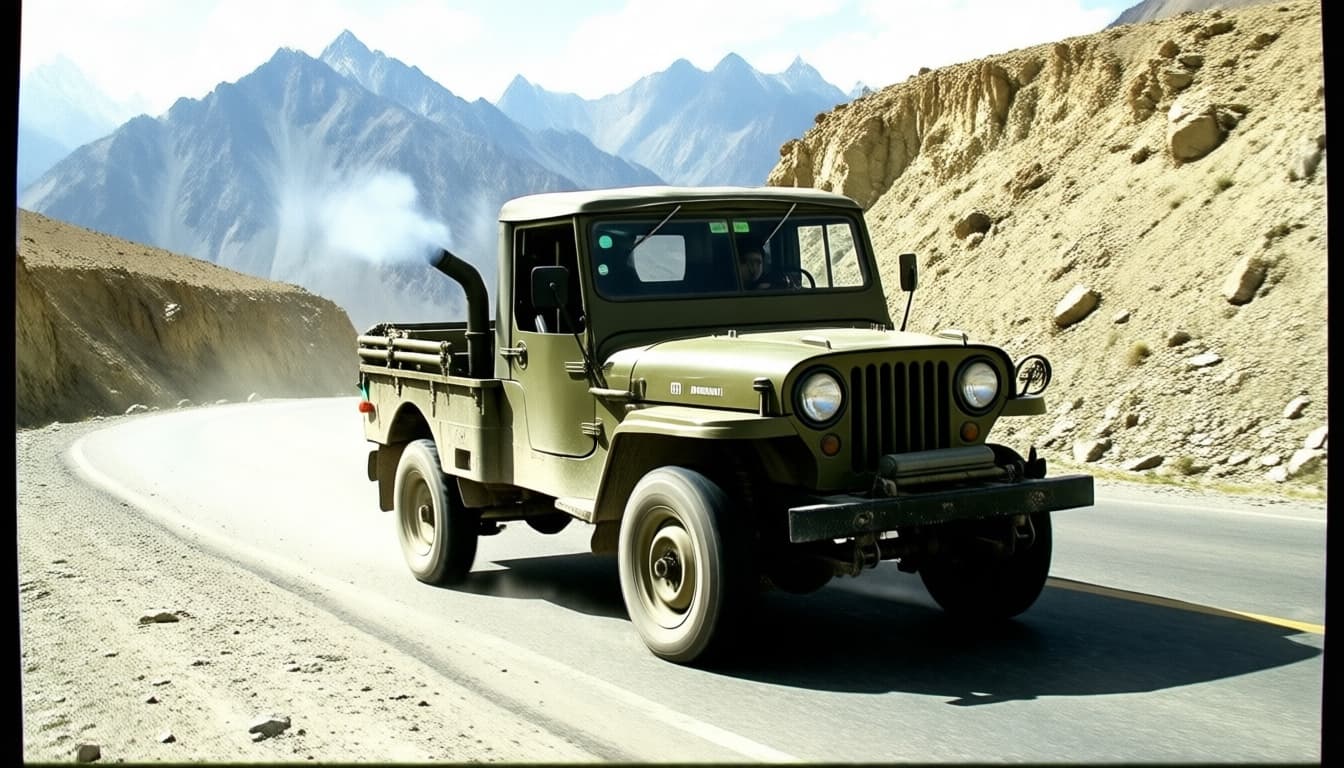
The phenomenon witnessed here is not limited to lightweight two-wheelers. Multi-ton military supply trucks and heavily laden freight carriers, once placed in neutral with their ignitions cut, release from a complete standstill and begin gliding toward the clearly visible incline before them. Completely stripped of mechanical propulsion, vehicles accelerate steadily against the apparent pull of gravity, reaching speeds exceeding 15 kilometers per hour as they scale the grade.
This bizarre kinetic effect is not confined to the road. Official flight logs of the Indian Air Force (IAF) have repeatedly recorded transport pilots experiencing abrupt aerodynamic downdrafts and momentary navigation instrument malfunctions while traversing this precise mountain pass. Aircraft crossing the valley were routinely forced to throttle up to maximum power and intentionally climb to a higher cruising altitude to avoid being snared by an unaccountable downward drag.
On this dry, windswept stone terrain, field researchers conducted basic physical tests. When water was poured onto the asphalt surface, the liquid defied natural drainage gradients, flowing upstream along the slope in a steady, unbroken trickle. Metal spheres placed on the road surface similarly broke inertia and rolled toward the crest of the hill, gaining speed as they ascended. On this treeless, moon-like expanse where the earth's fundamental rule of downward fall ought to be unquestionable, the behavior of matter seemed profoundly distorted.
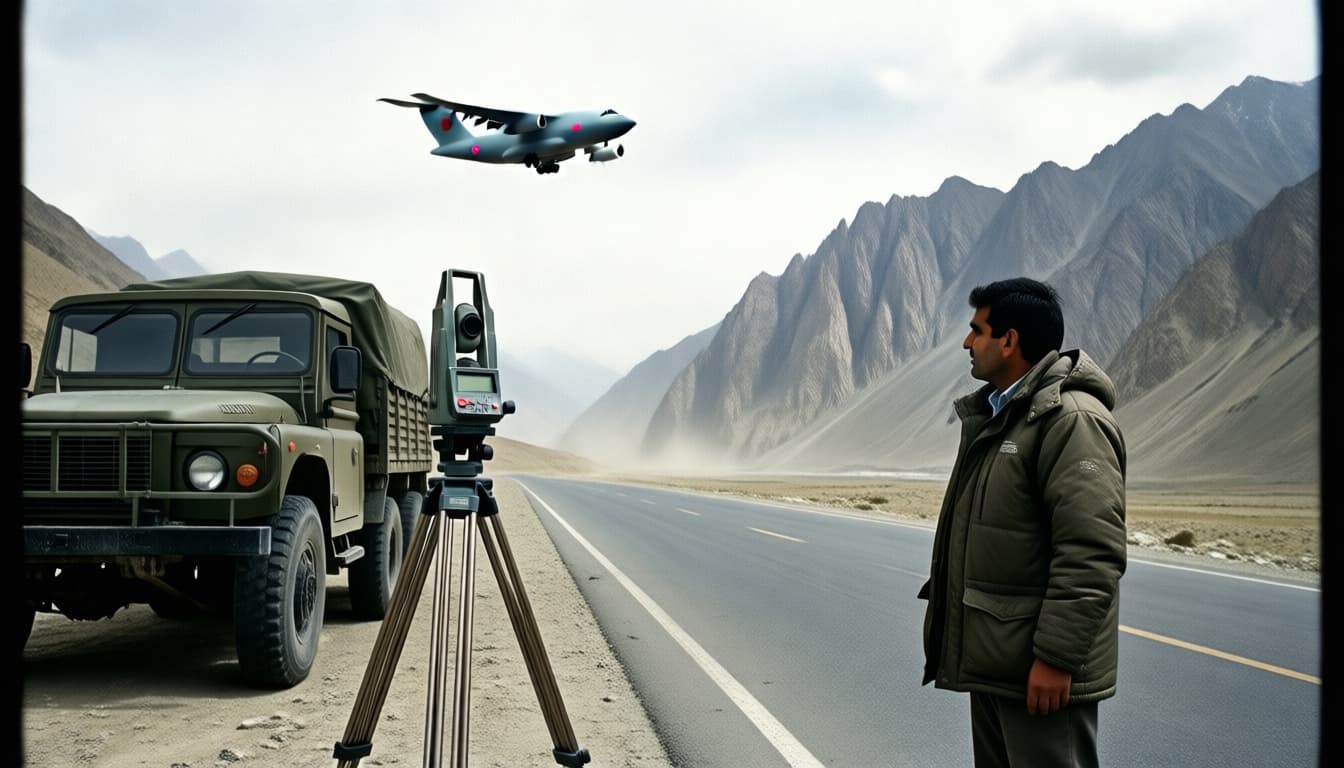
Geodesists arriving with differential GPS (DGPS) units and laser digital inclinometers declared the spectacle a sophisticated optical trick of nature. According to their findings, the asymmetric erosion of the surrounding Karakoram and Zanskar mountain ridges completely obliterates the horizon, which the human brain relies on as an absolute reference. Under this 'Gravity Hill' hypothesis, the road is actually an optical descent; the visual cortex and the vestibular system of the inner ear are duped by the surrounding landscape, misinterpreting a gentle downward slope as a steep uphill climb.

Yet the comforting conclusion of an optical illusion fails to account for the decades of conflicting physical anomalies gathered on-site. The highway sits directly atop a massive fault line within the Indus Suture Zone—the tectonic battleground where the Indian plate rammed beneath the Eurasian plate approximately 50 million years ago, heaving up the tallest mountain range on Earth. Deeply buried magnetite-rich bedrock produces localized electromagnetic fluctuations that disrupt sensitive magnetometers during recurring freeze-thaw cycles.
Even more compelling is the direct somatic experience of human travelers. Even when blindfolded—stripping the brain of all deceptive visual horizon cues provided by the mountain contours—individuals standing on the asphalt report a distinct, physical pull dragging their bodies toward the crest of the incline. The stubborn gap between what surveying lasers register as an optical plane and what vehicle accelerometers record as physical inertia remains unresolved.
Massive lithic blocks compressed over hundreds of millions of years, subterranean cavities woven deep beneath the crust, and uneven distributions of super-dense mineral veins raise uncomfortable questions about whether local gravitational uniformity holds absolute across such extreme vertical tectonic massifs. The possibility that this collision zone harbors localized microgravitational anomalies remains a largely uncharted frontier of geophysics.
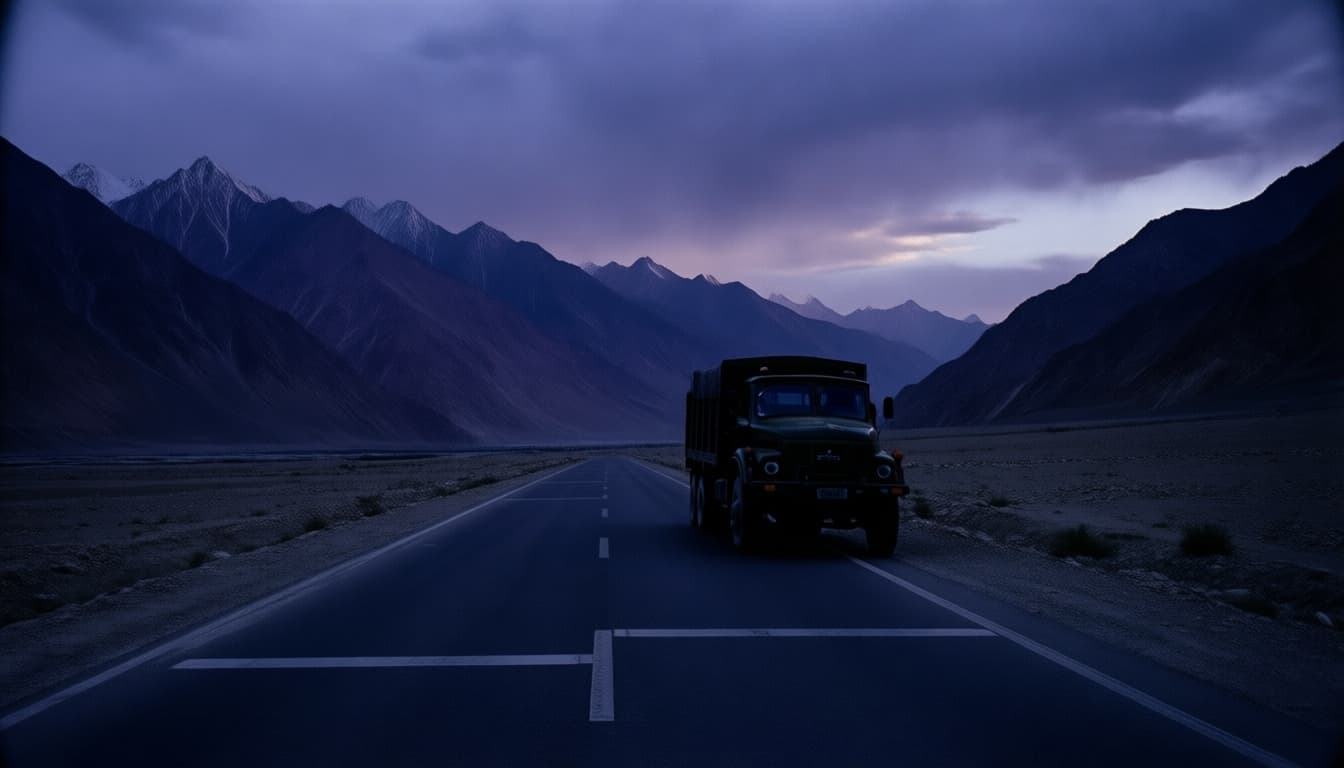
As dusk falls and the gargantuan shadows of the Himalayan peaks swallow the entire canyon, the last visual cues differentiating uphill from downhill vanish into the dark. Even in an era when orbital satellites map every coordinate of the Earth's surface down to the centimeter, a heavy silence hangs over the gray asphalt—testing humanity's most primal instincts regarding what is truly 'up' and what is 'down.'
[ CLASSIFIED VERDICT ]
[ACCESS LOG - SOURCE FILE]
Based on the real-world phenomenon of the 'Magnetic Hill' located along the Leh-Kargil highway in Ladakh, India. The site gained international notoriety as vehicles with engines turned off appear to roll uphill, fueling an ongoing debate between scientists advocating the optical illusion of a 'gravity hill' and those proposing genuine geomagnetic anomalies within the Indus Suture Zone.