Atlantis of the Sands: The Ghost City Buried Beneath Rub' al Khali
In the spring of 1992, an uncanny image flickered across the monitors of NASA's Jet Propulsion Laboratory. A high-resolution imaging radar mounted aboard the Space Shuttle Endeavour had pierced meters below the desiccated surface of the Rub' al Khali, the largest continuous sand desert on Earth spanning the southern Arabian Peninsula.
What materialized on the screens was a colossal network of phantom subterranean arteries. These were ancient caravan routes, packed hard by the hooves of millions of camels and iron-rimmed wheels thousands of years ago. Invisible to the naked eye, these subterranean tracks stretched across hundreds of kilometers, converging like the spokes of a wheel toward a single coordinate in southern Oman. There, marked on modern cartography as nothing more than a wind-scoured wasteland, science first pinpointed the legendary coordinates of Ubar—the fabled 'Atlantis of the Sands' spoken of in ancient lore.
Spanning over 650,000 square kilometers, larger than all of France, the Rub' al Khali is an uncharted realm of shifting mega-dunes towering over 250 meters high. T.E. Lawrence—'Lawrence of Arabia'—spent his life chasing whispers of an ancient metropolis vanished beneath divine wrath, and countless explorers perished seeking the lost city of pillars swallowed by sand. Guided by orbital coordinates, an archaeological team entered the outpost of Ash Shisr deep in the wasteland and finally drew back the millennia-old curtain of silence.

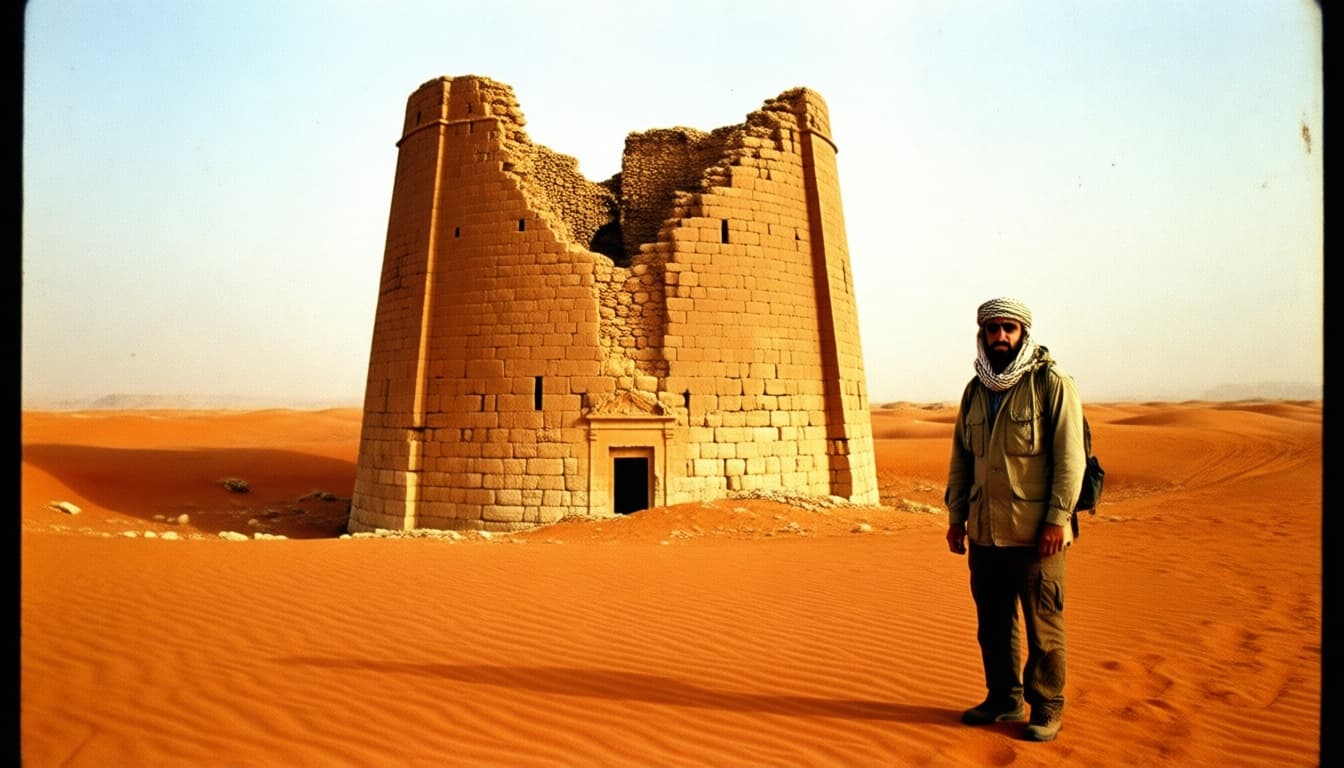
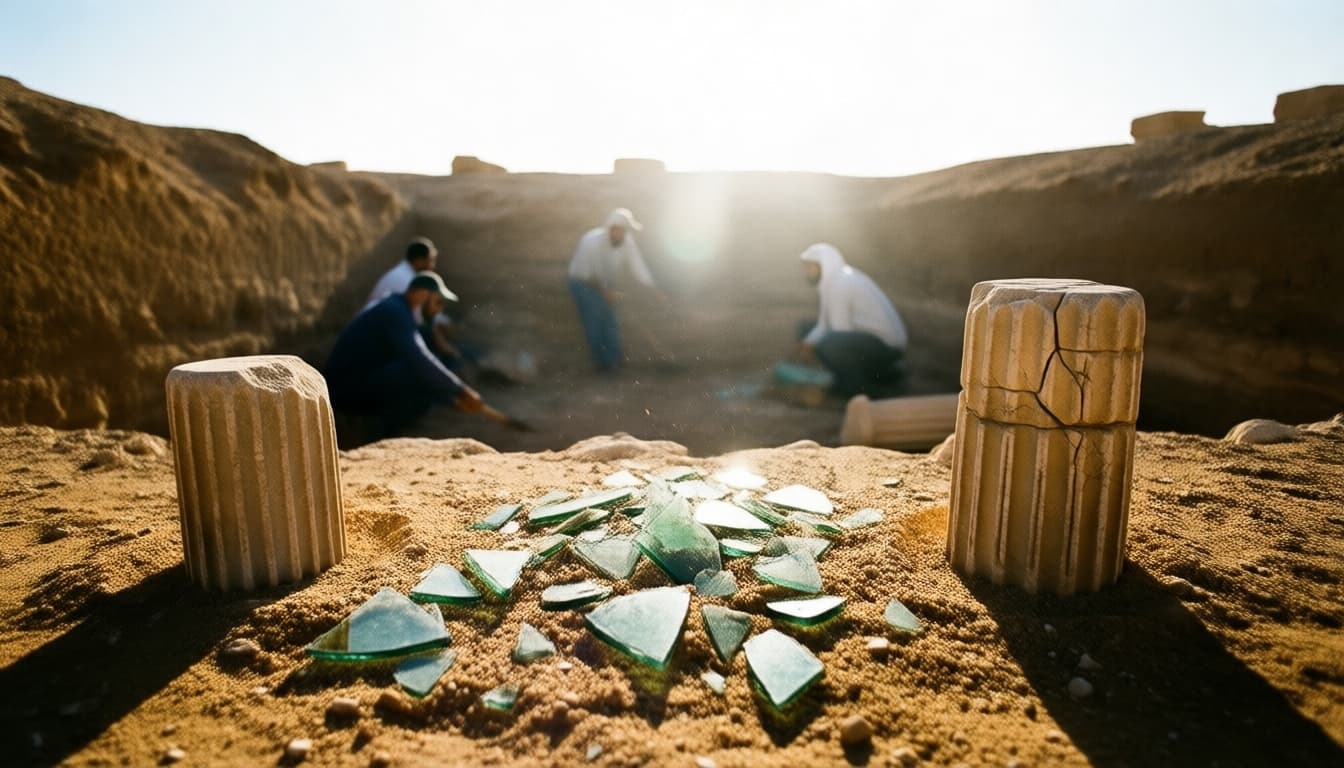
Unearthed beneath the sands was a massive octagonal limestone fortress with watchtowers constructed over four thousand years ago. Excavators retrieved exquisite Roman glassware, Greek ceramics, and Parthian artifacts from the trenches. It was empirical proof of the once-thriving epicenter of the frankincense trade, an aromatic resin more prized than gold throughout the ancient Mediterranean and Orient.
Yet celebration soon collapsed into deep bewilderment. While the radar corridors indicated an empire that accommodated hundreds of thousands over centuries, the fortress at Ash Shisr was surprisingly small—hardly matching the scale of the colossal metropolis described by Ptolemy or revered in ancient Arabic traditions as 'Iram of the Pillars'.
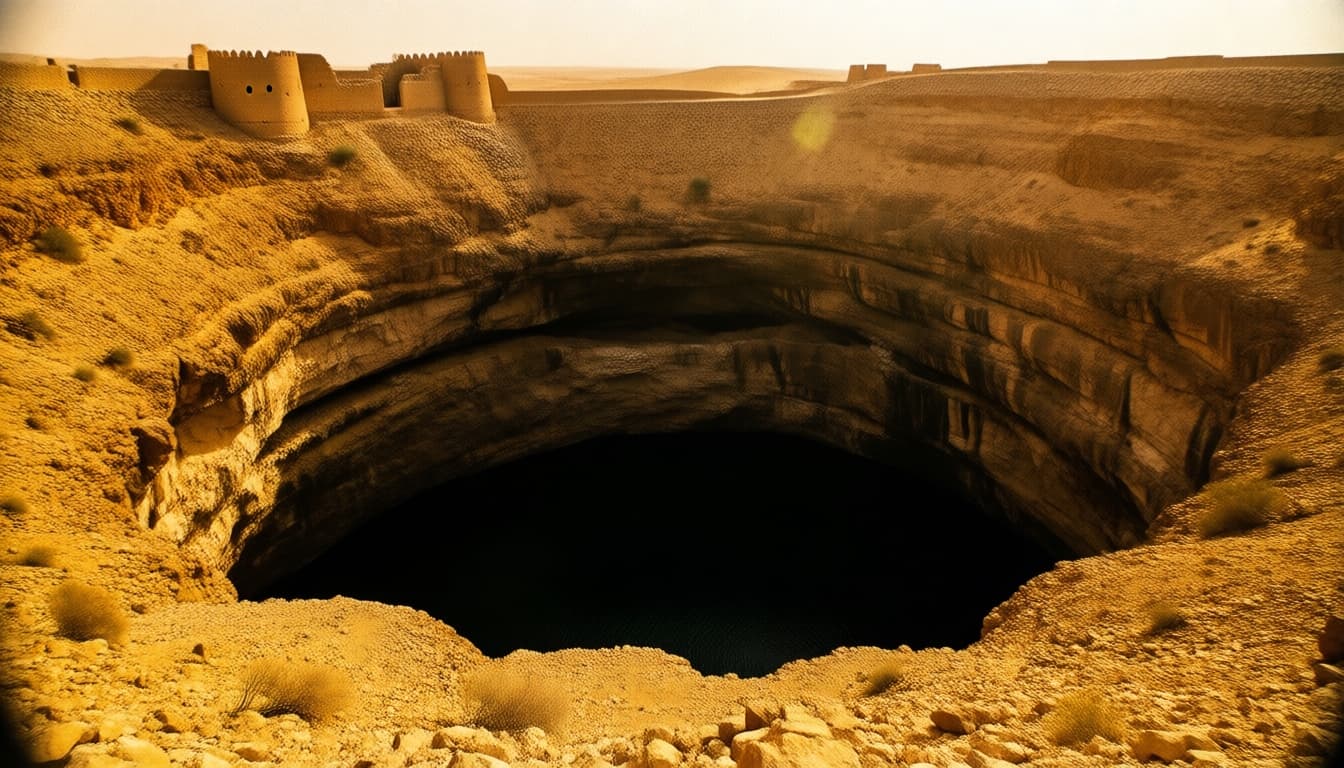
The cause of the settlement's demise was equally unsettling. There were no traces of invading blades or devastating fires. Half of the entire fortress had plunged straight down into a colossal sinkhole. The settlement had been built directly over a vast subterranean limestone cavern holding an ancient aquifer. When the subterranean water table that sustained their prosperity dried up, the structural pressure collapsed, sending towering stone bastions hurtling into the abyss below.
The true anomaly, however, lay beyond the collapsed subterranean chasm. Ground-penetrating radar revealed that the immense caravan arteries did not terminate at the sunken fortress. Instead, the tracks continued beyond the ruined perimeter, slicing boldly toward the deep interior of active mega-dunes where no human stone structure was ever thought possible.
Following the mysterious subterranean trajectory deeper into the desert heartland, researchers encountered an acoustic phenomenon. When avalanches of sand cascaded down the dune slopes, the entire desert resonated with a heavy, cello-like low frequency between 60 and 100 Hertz—the eerie 'singing sands.' Yet field seismographs installed in the sector registered harmonic waves far beyond the thresholds of surface friction. The deep acoustic vibrations were not echoing across the dunes, but resonating through unknown subterranean hollows dozens of meters down.
Deep acoustic sounding equipment detected colossal, regular geometric megaliths buried 15 to 30 meters beneath the shifting dunes. Over several square kilometers lay an impossibly straight, symmetrical alignment of cut stone structures. Moving dozens of meters every year, the colossal dunes momentarily exposed fractured edges of these cyclopean structures before burying them beneath hundreds of millions of tons of sand, resolutely defying modern excavation.
The ruins unearthed at Ash Shisr may have been nothing more than an outer gatehouse pointing to an unimaginable megalithic core. The phantom tracks mapped by orbital radar still stretch silently into the boundless heart of the golden sand mountains. When the winds rise and the desert groans with low-frequency resonance, an awe settles over the dunes—as if a colossal fragment of forgotten history is still breathing alone beneath the sea of sand.
[ CLASSIFIED VERDICT ]
[ACCESS LOG - SOURCE FILE]
Based on the 1992 discovery where NASA Space Shuttle Endeavour's radar detected ancient caravan trails buried under Oman's Rub' al Khali desert, leading to the excavation of the lost frankincense city of Ubar. The narrative intertwines the historic sinkhole collapse of the Ash Shisr fortress with the myth of 'Iram of the Pillars' and unexcavated geometric megaliths hidden beneath shifting mega-dunes.