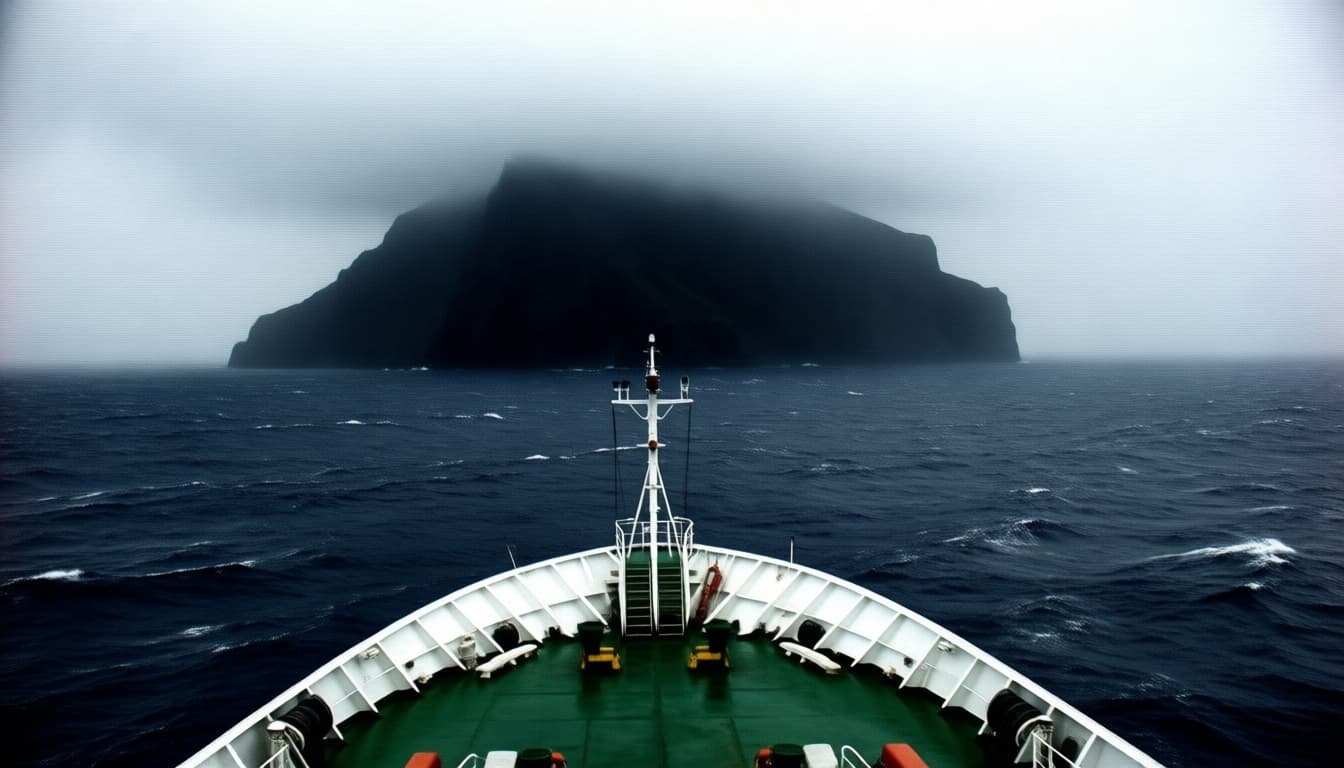
The Ghost Island of Tyrrhenian Sea: Secret of Centropa Seamount
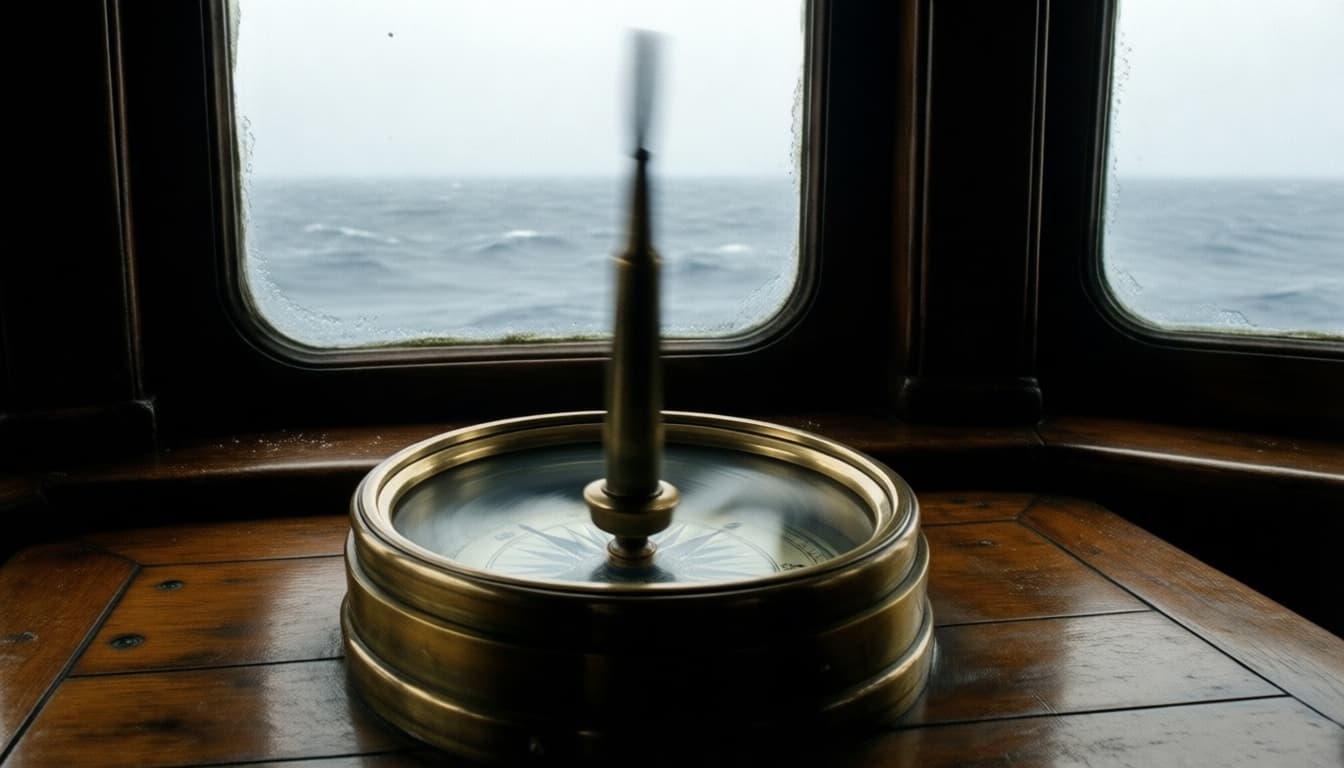
In August 1891, the British Hydrographic Office survey vessel HMS Stork was sailing across the southern Tyrrhenian Sea, just north of the Aeolian volcanic arc. Over an abyssal plain recorded on maritime charts as exceeding 1,200 meters in depth, the ship's dry card compass suddenly swung violently, deflecting by 40 degrees from true north. A hastily deployed sounding lead struck jagged basalt reef merely 12 fathoms—about 22 meters—below the surface. Yet, only two weeks later, the logbook of a French merchant vessel crossing the exact same coordinates documented nothing but a calm, bottomless abyss.
For over two thousand years, spanning from ancient Syracusan navigators to modern oceanographers, sightings of this 'phantom island' were dismissed as mere mirages or floating pumice rafts. However, modern satellite gravity observations and high-resolution multibeam bathymetry have definitively captured the physical existence of a colossal submerged caldera rising thousands of meters from the abyssal floor: the Centropa Seamount. Remarkably, paleomagnetic data from the seamount's rock strata revealed a localized magnetic dipole reversal standing in direct opposition to the Mediterranean's regional geomagnetic field, pulsating with a subtle and rhythmic frequency that defied plate tectonics.
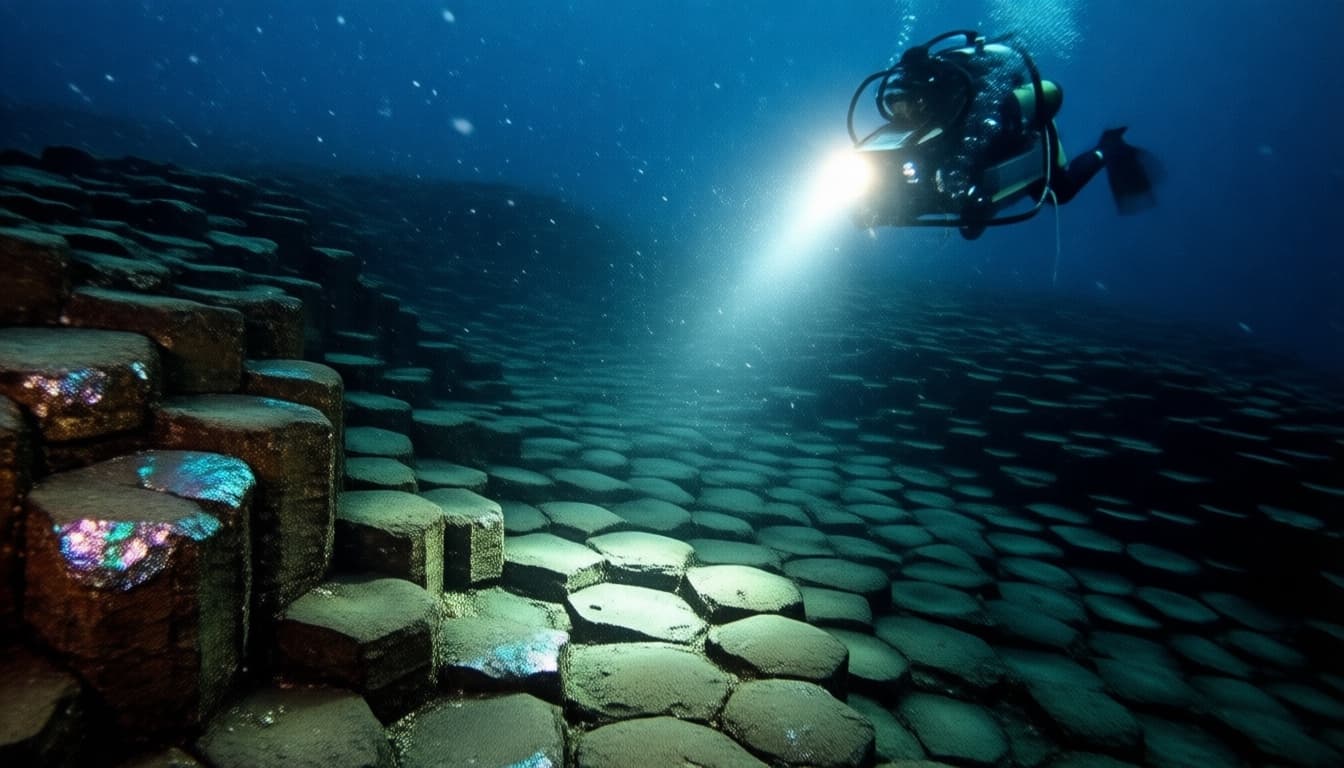
Into the pitch-black Mediterranean depths where the African and Eurasian plates collide, a multinational marine expedition deployed an Autonomous Underwater Vehicle (AUV). The images transmitted back by synthetic aperture sonar revealed no conventional volcanic cone. Instead, it was an immense terraced plateau paved with columnar basalt divided by perfect polygonal fissures, evoking the image of a sunken cyclopean highway.
When the spotlights of a towed deep-sea submersible illuminated the sea floor, an extraordinary sight met the camera lens. Cold hydrothermal vents were discharging fluids saturated with iron, blanketing the entire bedrock in an iridescent metallic patina of magnetite and hematite. Even more astonishing were the figures recorded by the side-scan sonar: without any seismic activity, the seamount's summit was regularly expanding and contracting by several meters, rhythmically breathing.
Typically, the uplifting of a submarine volcano generates massive earthquake swarms and violent eruptions. Yet during recorded rises in 1707, 1846, and 1943 during naval operations, not a single seismic wave was recorded from Centropa. Seafloor core samples also revealed an uncanny sequence of 'ultra-fine reversals'—magnetic orientation shifting over spans of mere decades or centuries rather than the million-year cycles of Earth's normal geomagnetic polarity.
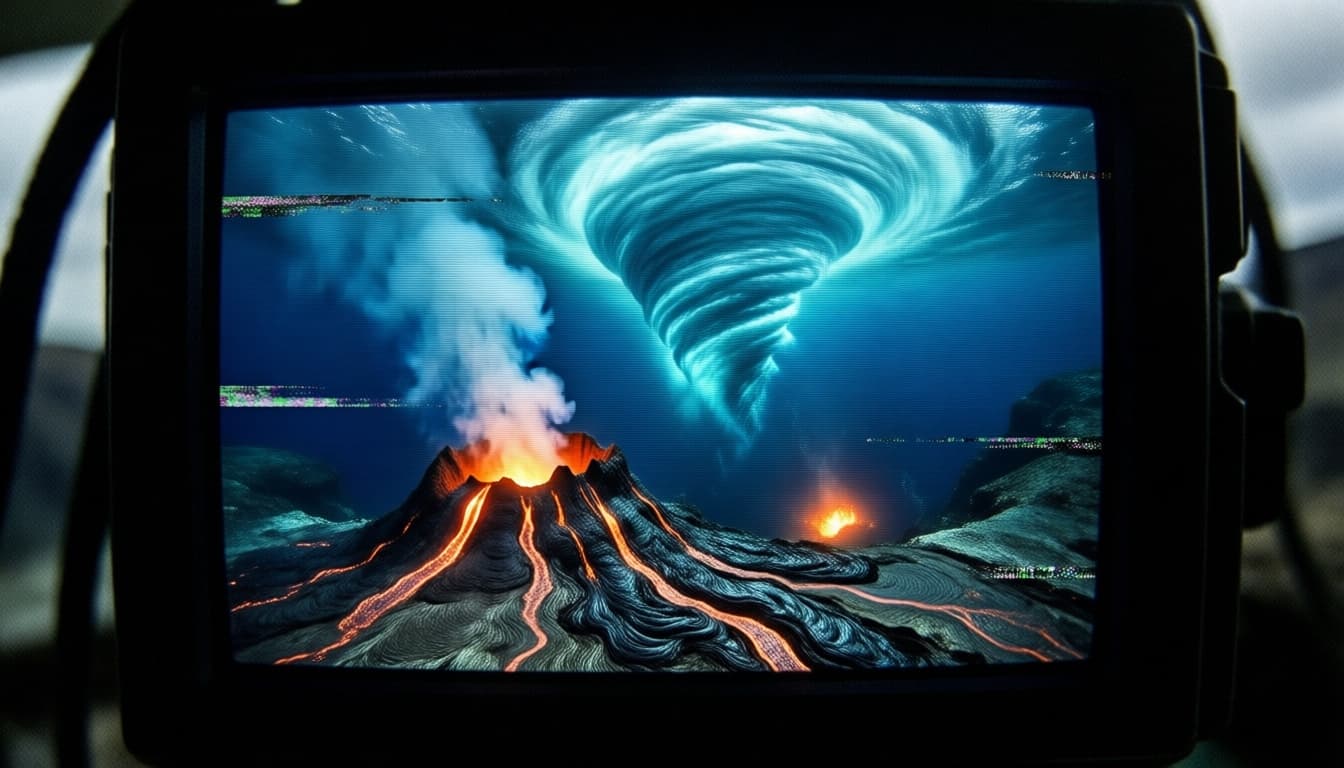
As the research vessel hovered directly above the caldera center, precision GPS signals began to drift. Concurrently, the acoustic Doppler current profiler documented an even more inexplicable anomaly: unaffected by surrounding deep-sea currents, an enormous vertical vortex remained perfectly anchored directly atop the submerged peak, stationary amidst the water column.
Geochemical analyses finally unmasked its staggering framework. The bedrock of Centropa Seamount was a natural superconducting matrix of densely interwoven titanium-iron oxides and deep native copper veins. Superheated by mantle temperatures, highly mineralized hydrothermal fluids circulated through metallic conduits, interacting with conductive seawater. The seamount functioned as a colossal natural magnetohydrodynamic (MHD) generator.
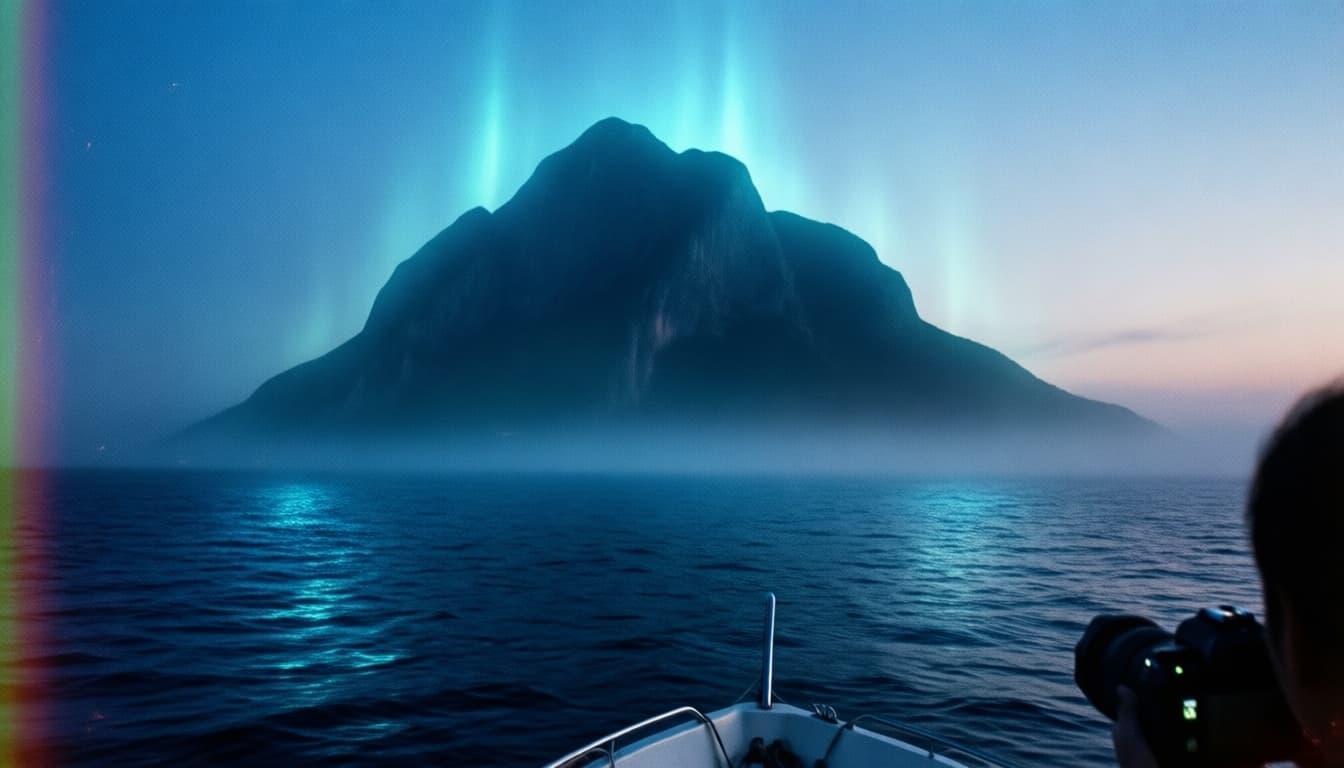
The tremendous electromagnetic resonance discharged by this abyssal dynamo drastically ionized the air above the sea surface under specific atmospheric conditions. Combined with dense marine fog and extreme atmospheric refraction, the silhouette of the black basalt plateau lying thousands of feet beneath the waves projected skyward. The ephemeral, black rocky island encountered by mariners across centuries was an immense electromagnetic mirage of the abyss itself.
Yet physical mechanics alone could not decipher the fundamental riddle of this vast system: What amplified the caldera's electromagnetic engine across centuries, silently lifting tectonic rock before letting it sink back into oblivion? It remains a planetary breath operating on cycles far beyond human measurement.
The sailors who witnessed that black island thrust from the Tyrrhenian waters had not fallen prey to illusion. Across the silence of the blue expanse, they had looked upon the living, beating engine of the planet itself.
[ CLASSIFIED VERDICT ]
[ACCESS LOG - SOURCE FILE]
In the southern Tyrrhenian Sea and off the coast of Sicily, numerous legends and naval logs recount phantom islands—such as the real volcanic island of Ferdinandea—that suddenly surfaced and vanished, alongside severe compass deviations and unmapped volcanic peaks. This story draws upon Mediterranean maritime folklore regarding an anomalous seamount whose potent magnetic fields and oceanic dynamo create electromagnetic mirages appearing as a ghost island.