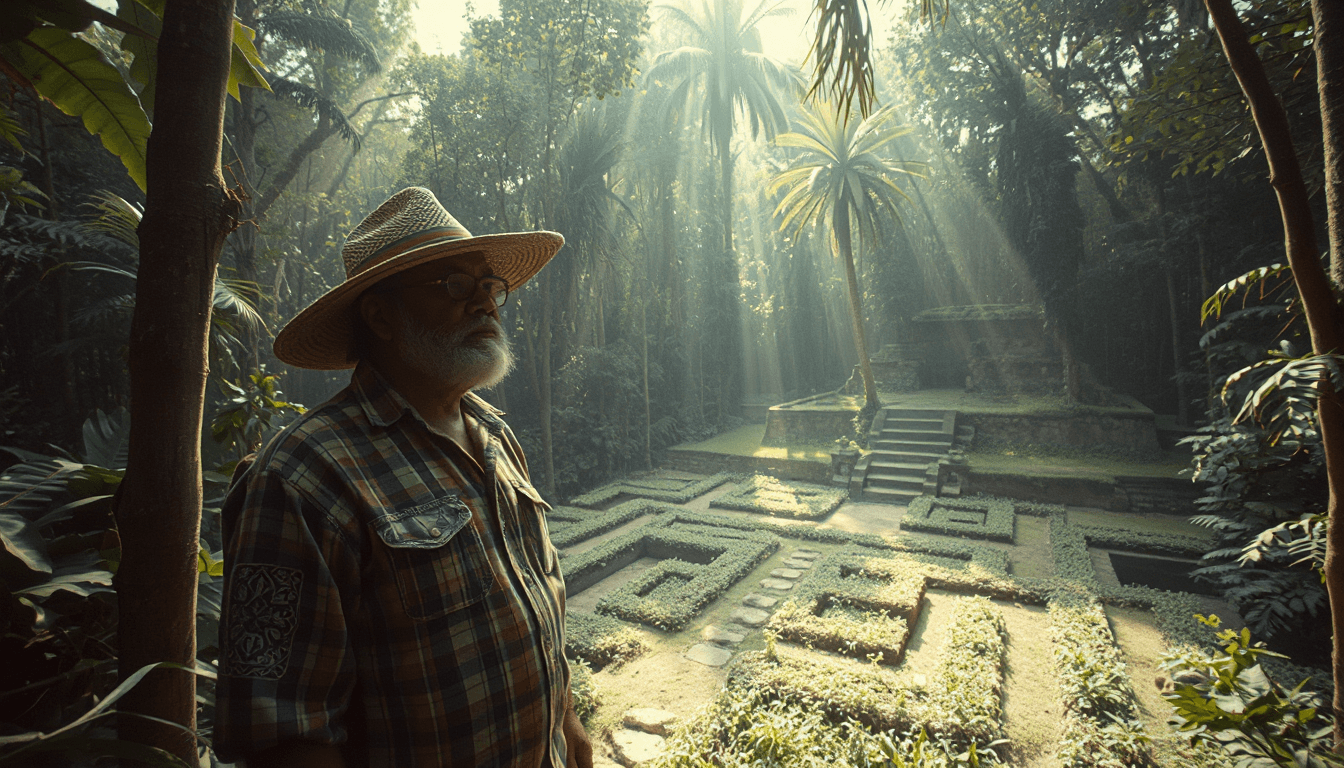
El Dorado's True Secret: The Green Civilization of the Amazon
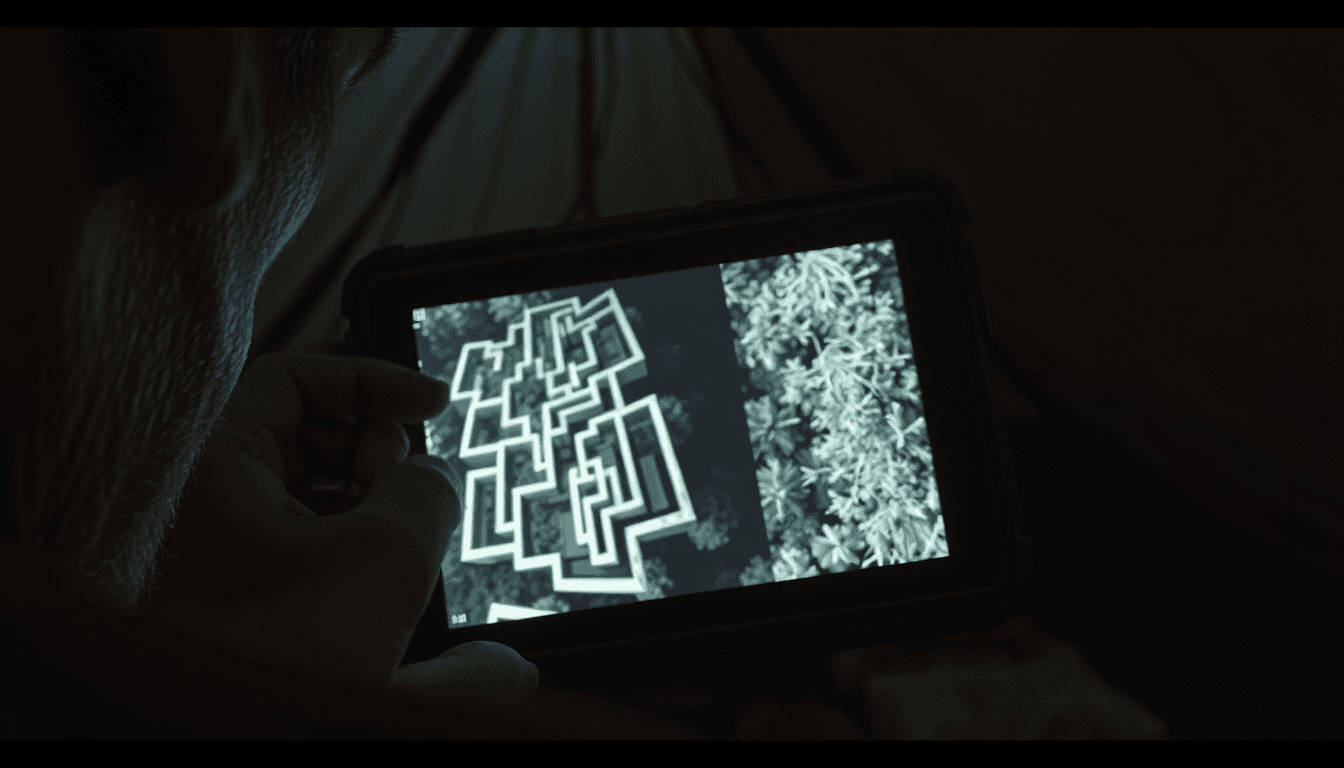
Our story doesn't begin with the glimmer of gold or ancient 16th-century maps. It opens in the quiet stillness of an air-conditioned data processing lab, where black and white images slowly materialize on a monitor. These are LIDAR (Light Detection and Ranging) scans of a section of the Ecuadorian Amazon, once considered untamed wilderness.
Billions of laser pulses have digitally peeled back the dense triple canopy rainforest that has swallowed explorers for the past five centuries. And beneath it, something almost impossible emerges. Not a single structure, but a colossal network. Roads stretching for kilometers in perfect straight lines. Rectangular platforms and plazas precisely arranged in geometric patterns. Even the faint outlines of canals and agricultural fields are clearly visible.
Archaeologists have long dismissed the Amazon basin as too harsh an environment to support large-scale complex societies. It was believed to be a pristine wilderness sparsely inhabited by small, nomadic tribes. Yet, from Bolivia to Colombia, this digital ghost we are witnessing now overturns all those assumptions. It is the footprint of a civilization on a scale previously dismissed as pure fantasy. The data proves that vast cities demonstrably existed there. And with that certainty, one of the Americas' oldest and most captivating legends is stepping out of the realm of myth and into the light of scientific inquiry: El Dorado.
To understand the root of this obsession, we must travel back to 1537. Spanish conquistadors, having plundered the Incan Empire, were driven by insatiable greed towards what is now northern Colombia. What they heard was not a story of a golden city, but of a man, 'El Dorado', meaning 'The Gilded One'.
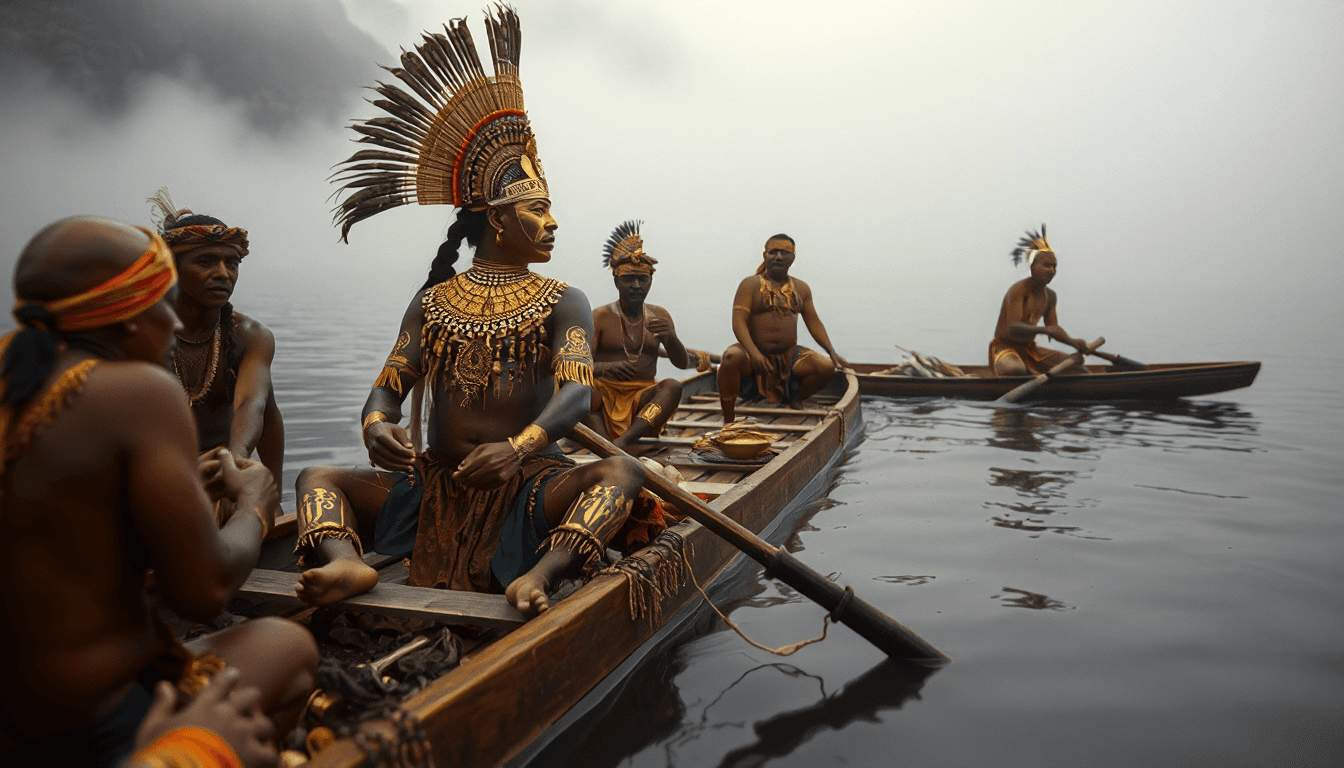
Archival records from the time, such as Juan Rodríguez Freile’s "The Conquest and Discovery of the New Kingdom of Granada," meticulously describe the Muisca tribe's coronation ceremony. High on the sacred Lake Guatavita, the new chieftain, aboard a ceremonial raft, would be covered in sticky resin and then dusted with fine gold powder. He became a living golden statue. As sunlight struck his body, making him glitter brilliantly, he would plunge into the lake, washing off the gold as an offering to the gods, while his attendants threw gold and emeralds into the water.
This was the truth that seeded the legend. The ritual was real. Numerous Muisca artifacts, including an exquisite miniature gold filigree of the raft ceremony found near the lake and housed in Bogotá's Gold Museum, are testament to this. Gold-crazed Spaniards even attempted to drain parts of Lake Guatavita in the 1580s, discovering vast amounts of gold artifacts in the lakebed mud. But the legend had already begun to mutate. A man gilded in gold became a kingdom made of gold, and ceremonial offerings ballooned into cities where gold was as common as stone.
The legend spread like a fever. For over 200 years, thousands of European adventurers marched into the Amazon, seeking this golden city. Cartographers, using their imaginations, drew its location across the continent. Gonzalo Pizarro, Francisco de Orellana, Sir Walter Raleigh. Their expedition records are nothing short of lists of failure and death.
These expedition logs read less like adventure stories and more like desperate survival diaries. People succumbed to disease, venomous snakes, and starvation. Records also speak of minds breaking, suffering from paranoia and disorientation amidst the endlessly repeating, monotonous jungle landscape. The Amazon wasn't just an obstacle; it was a living antagonist, devouring ships, supplies, and lives without a trace. It was a green ocean itself.
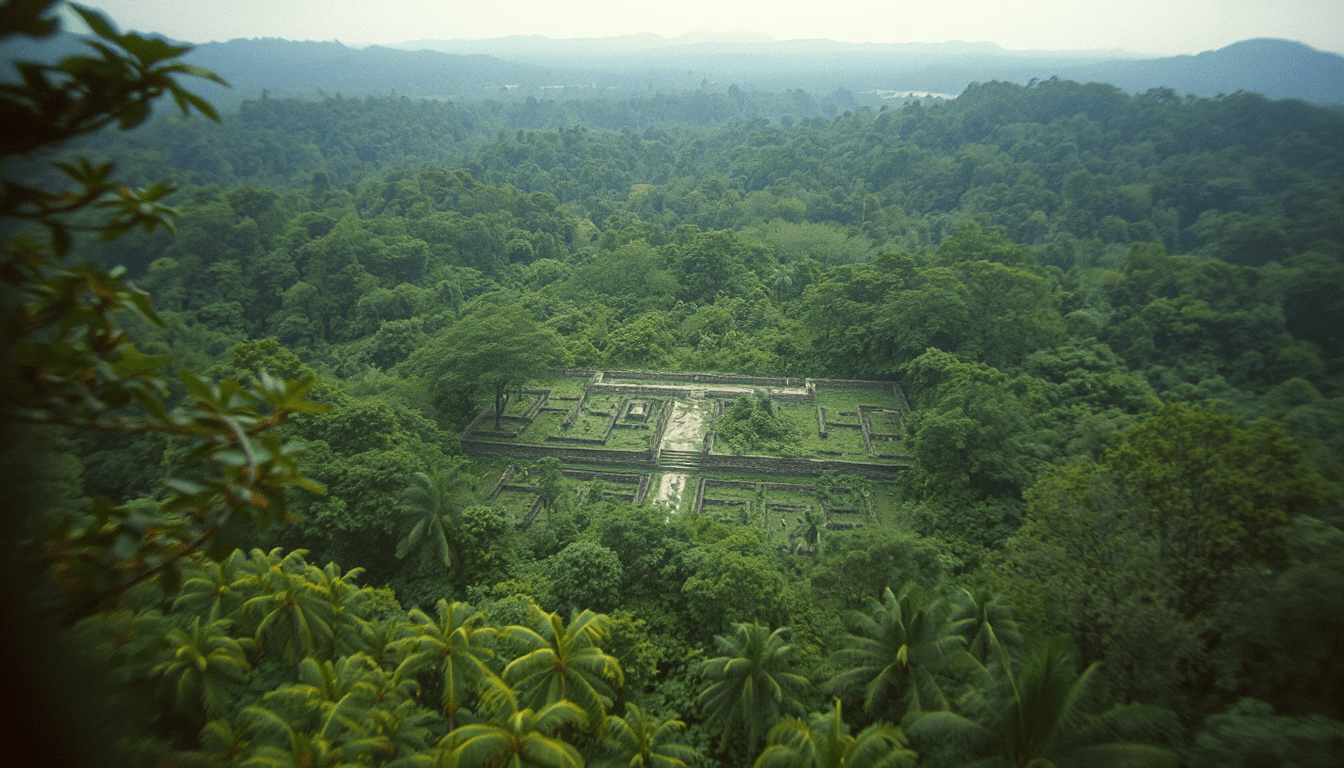
The mystery deepens with their failures. If these colossal cities now being revealed by LIDAR scans truly existed, how could they have remained so perfectly hidden? How could large expeditions have marched directly over the ruins of civilization without discovering a single clue? They weren't just unlucky; they couldn't see what was right beneath their feet. They were searching for Spanish cities built of stone and European metals, and thus couldn't comprehend a completely different form of urban civilization woven into the very fabric of the forest.
Here, the story shifts from metallurgy to geology. The core anomaly of Amazonian civilization isn't gold, but earth. Across the Amazon basin, inexplicably fertile black soil, known as 'Terra Preta do Indio' (Indian Black Earth), is extensively scattered.
Standard Amazonian soil is poor, thin, and acidic, leading scientists to believe it couldn't sustain large-scale agriculture for a settled population. But Terra Preta is different. It is Anthropocene soil – a man-made artifact. Rich in charcoal, pottery shards, and organic matter, it's teeming with microbial life that allows it to regenerate itself. It's a biological engine created thousands of years ago.
This was the lost technology of the Amazonian people. LIDAR scans show us the 'what' – cities and roads – and Terra Preta shows us the 'how'. This was not a city of gold, but a vast, sprawling 'garden city'. They engineered the very land beneath their feet to create a sustainable paradise. They didn't build civilization *on* the Amazon, but *with* the Amazon. Their wealth wasn't an accumulation of metal, but a landscape that produced eternal abundance.
The conquistadors, trekking through the jungle in search of golden temples, were walking over one of humanity's greatest treasures: millions of acres of engineered super-soil that supported millions of people. They stood in the middle of El Dorado, searching for El Dorado. This civilization was so deeply integrated with its environment that when European diseases, which preceded the explorers, wiped out its inhabitants, the jungle simply quietly reclaimed the infrastructure, leaving only the ghost of its fertility in the soil.

We now confront a profound twist in the legend. The myth of El Dorado drove people to madness, destroyed cultures, and took lives. What they chased was lifeless, cold metal. But the reality was a civilization that had mastered the technology of manipulating life itself, creating a world that endured for millennia.
Today, as laser light peels back the jungle canopy, what we discover is not a single city, but the faint echoes of a continent-spanning society. We have their maps, but we don't know their names. We've found their fields, but we can't hear their language. We've uncovered the foundation of the world they built, but the people are gone, and the knowledge of how to create such a world has vanished with them.
The Amazon, once thought to be Earth's last pristine wilderness, is now revealing itself as a colossal ruin. A garden overgrown, having lost its gardeners. We stand at the edge of this vast, silent, and enigmatic space and ask ourselves: What other secrets, what other forgotten ways of being, lie dormant beneath that green canopy, waiting not for a conqueror's shovel, but for a ray of light?
[ CLASSIFIED VERDICT ]
[ACCESS LOG - SOURCE FILE]
El Dorado is a legend referring to a city of gold or a king covered in gold, said to exist in South America. Spanish conquistadors, drawn by this legend, explored the Amazon for centuries but never found the golden city. However, recent LIDAR scans and archaeological discoveries suggest that El Dorado might not have been gold, but rather a vast, sustainable green civilization.