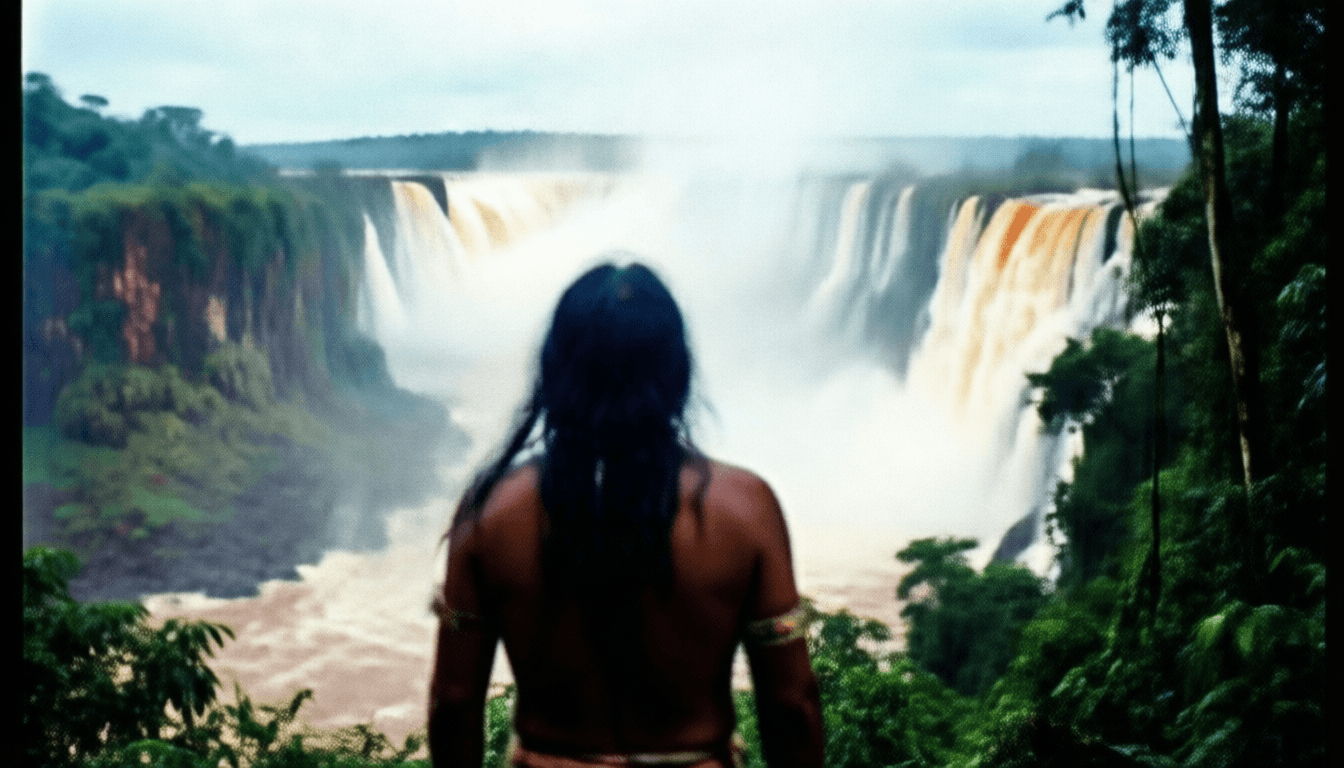
Iguazu: Tragedy Etched in Flowing Water
In the heart of the South American continent, at the junction where Brazil, Argentina, and Paraguay meet, a thunderous roar, older than human memory, erupts. It is the sound of Iguazu, meaning "great water" in the indigenous Guaraní language. With a staggering 275 individual falls, some plunging over 80 meters, and an average of 1,500 cubic meters of water per second cascading down, this colossal natural spectacle transcends comprehension. In the face of this immense power, reminiscent of countless freight trains endlessly hurtling over a cliff, Eleanor Roosevelt famously exclaimed, "Poor Niagara!" Yet, beyond the awe-inspiring statistics and geological marvel, the true essence of Iguazu lies not merely in hydrological data. It resides in the ancient whispers steeped in the eternal mist, in the tragic love story of the serpent god M'boi, the beautiful Naipi, and the tale etched into the very rocks and waters of the falls themselves.
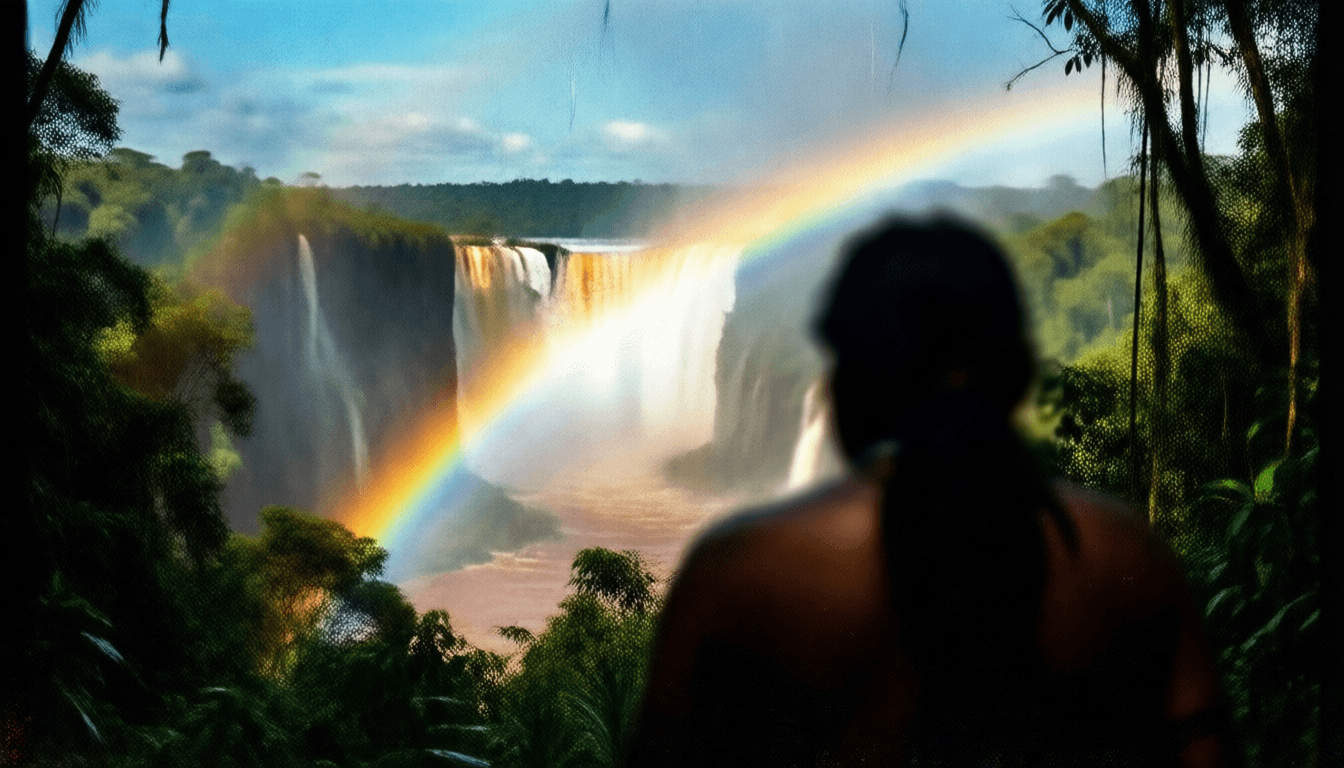
For millennia, the Guaraní people have been the guardians of this sacred place. Their lives, cosmology, and very identity are intricately woven into the rivers and lush subtropical rainforest that embrace Iguazu. Unlike modern visitors armed with cameras and scientific inquiry, the Guaraní approached the falls with reverence. They observed the overwhelming power, the ceaseless arching rainbows, and the swirling depths of the U-shaped gorge known as the "Devil's Throat" (Garganta del Diablo), where half the river plunges into the abyss. To them, this land was not inert matter but a living entity, shaped by powerful spirits and divine will. To comprehend the origin of these great waters, where geological erosion or basalt formation offered unsatisfactory answers, they required a story—a truth—that resonated with emotion and overwhelming scale.
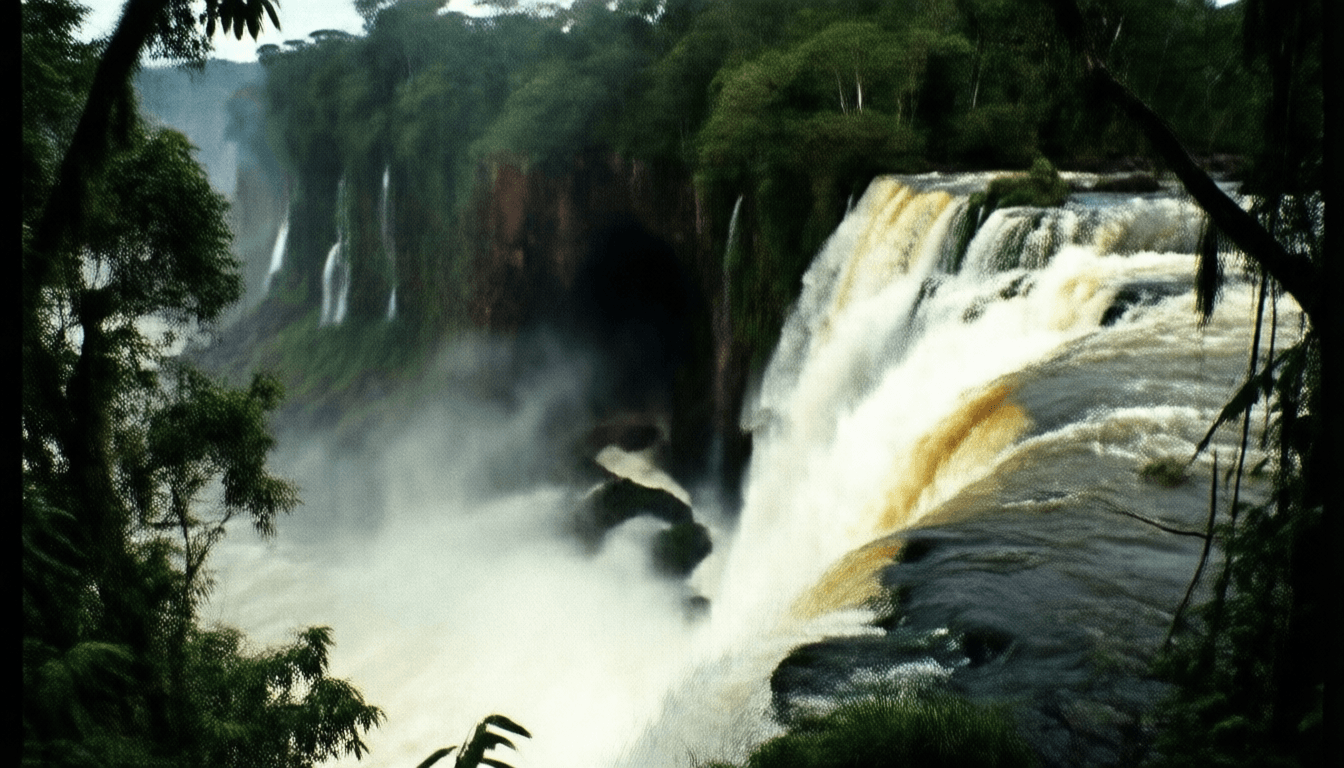
While geologists meticulously trace the basalt lava flows and tectonic shifts that sculpted the Iguazu plateau over millions of years, the Guaraní presented a far more compelling narrative: a creation myth that imbues every spray and rising mist with a tragic purpose. Their explanation transcends empirical facts, entering a realm where the landscape itself becomes a living testament to divine wrath and eternal love. This mystery deepens in how the contours and features of the falls seem to perfectly mirror the narrative events of the ancient legend. How could a story, passed down through generations, so accurately describe the very characteristics that define this natural wonder, hinting at an intimacy with the land that science, in its pursuit of objective facts, often overlooks?
At the heart of the Iguazu mystery, from the Guaraní perspective, lies the dramatic tale of Naipi, a beautiful maiden destined for sacrifice to M'boi, the serpent god residing in the river. With sun-like eyes and skin like jacaranda blossoms, Naipi was loved by the young warrior Taroba. Defying tradition, Taroba fled with her in a canoe just as the High Priest prepared to offer her in ritual. Enraged by their betrayal, M'boi responded with divine fury, leaving an indelible scar upon the earth. With unimaginable force, the serpent god thrashed his colossal body, tearing the riverbed and cleaving the land, creating countless waterfalls to block the lovers' escape.
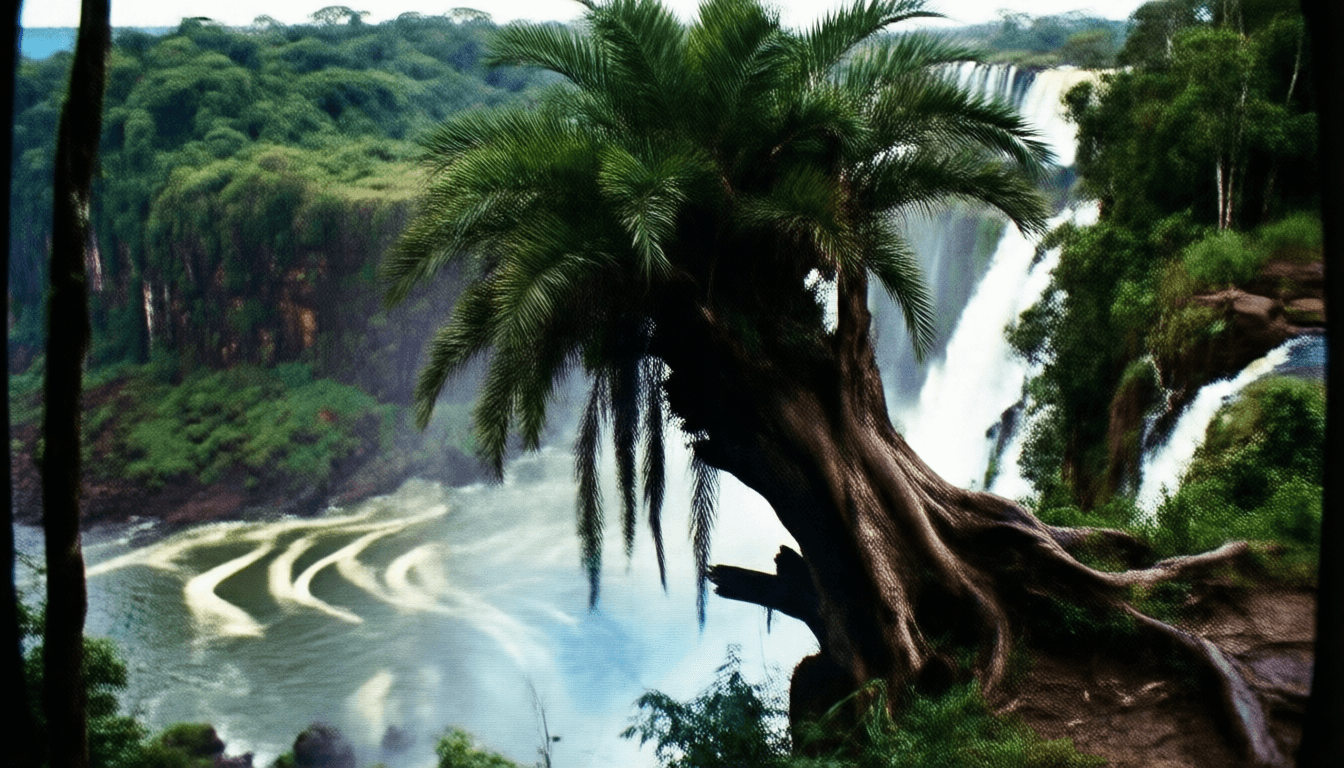
Naipi became one of the main falls, her cascading waters her flowing hair and eternal tears. Taroba was transformed into a palm tree at the edge of the falls, forever gazing at her, yet unable to reach her. M'boi himself, in a final act of vengeance, plunged into the Devil's Throat, his serpentine form shaping the U-shaped gorge, forever watching over the two lovers, his thunderous roar an eternal echo of his wrath.
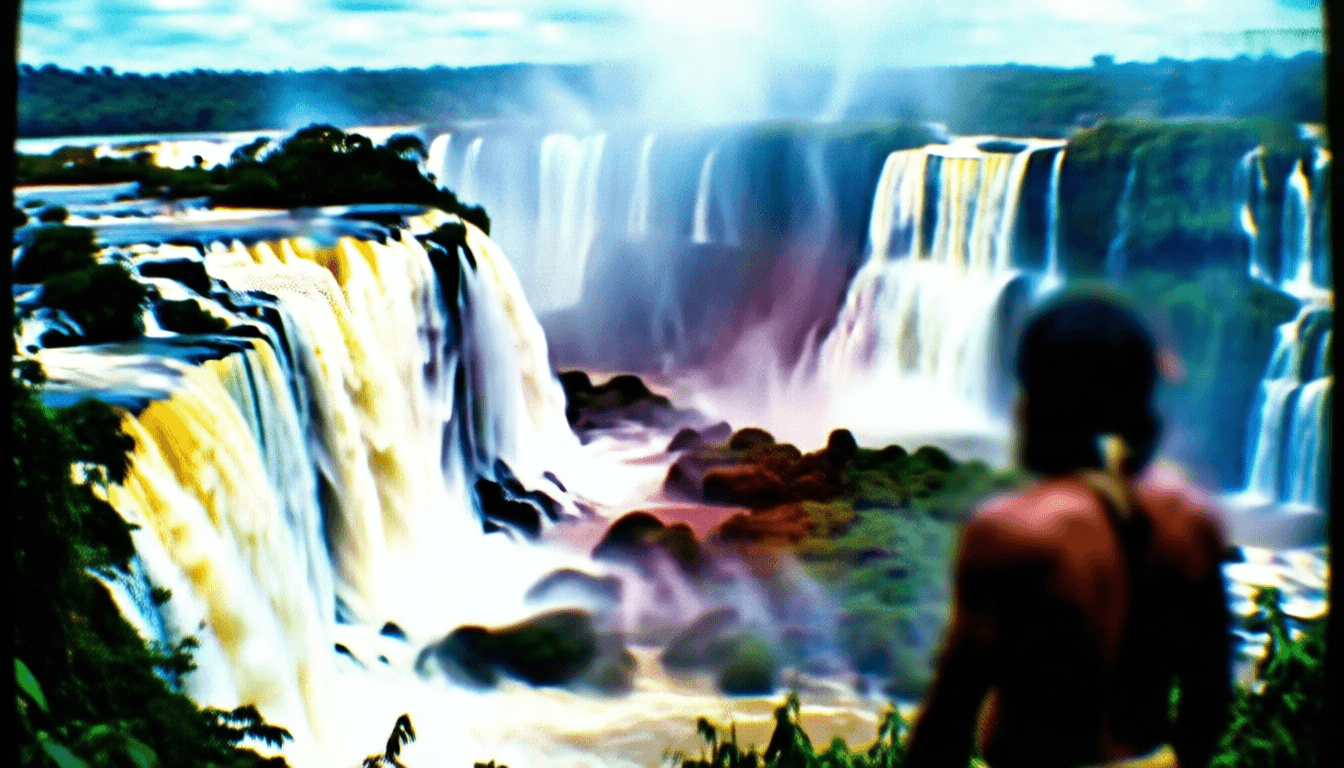
Today, as millions stand before Iguazu, engulfed by its thunder and mist, mesmerized, the legend of M'boi, Naipi, and Taroba still ripples through the air. Scientific explanations of geological fault lines, millennia of erosion, and the specific confluence of two rivers offer a robust, verifiable account of the falls' formation. Yet, it fails to capture the profound soul of the place, the deep spiritual resonance that the Guaraní legend bestows upon it. Is it mere coincidence that the falls resemble flowing hair? Is the palm tree towering above the cascades truly Taroba incarnate? And what makes the Devil's Throat seem to possess the menacing power of a serpent? The enduring mystery of Iguazu is not just how such a colossal natural wonder came to be, but how ancient peoples crafted a story that perfectly explains it, imbuing every droplet, every stone, and every eternal rainbow with meaning, love, and tragedy. The waters of Iguazu flow endlessly, and with them, the legend continues, carrying the powerful realization that some of the world's deepest truths are not found in geological surveys, but whispered in the human heart, forever echoing in the magnificent roar of the great water.
[ CLASSIFIED VERDICT ]
[ACCESS LOG - SOURCE FILE]
The origin of Iguazu Falls is rooted in an ancient legend of the Guaraní people, who inhabit the border region of Brazil, Argentina, and Paraguay. When the beautiful maiden Naipi, destined to be sacrificed to the snake god M'boi, attempted to elope with her lover Taroba, M'boi, in a fit of rage, tore the river apart and split the earth, creating the falls. It is a tragic love story where Naipi became a waterfall, Taroba a palm tree, and M'boi transformed into the Devil's Throat, forever watching over the two lovers.