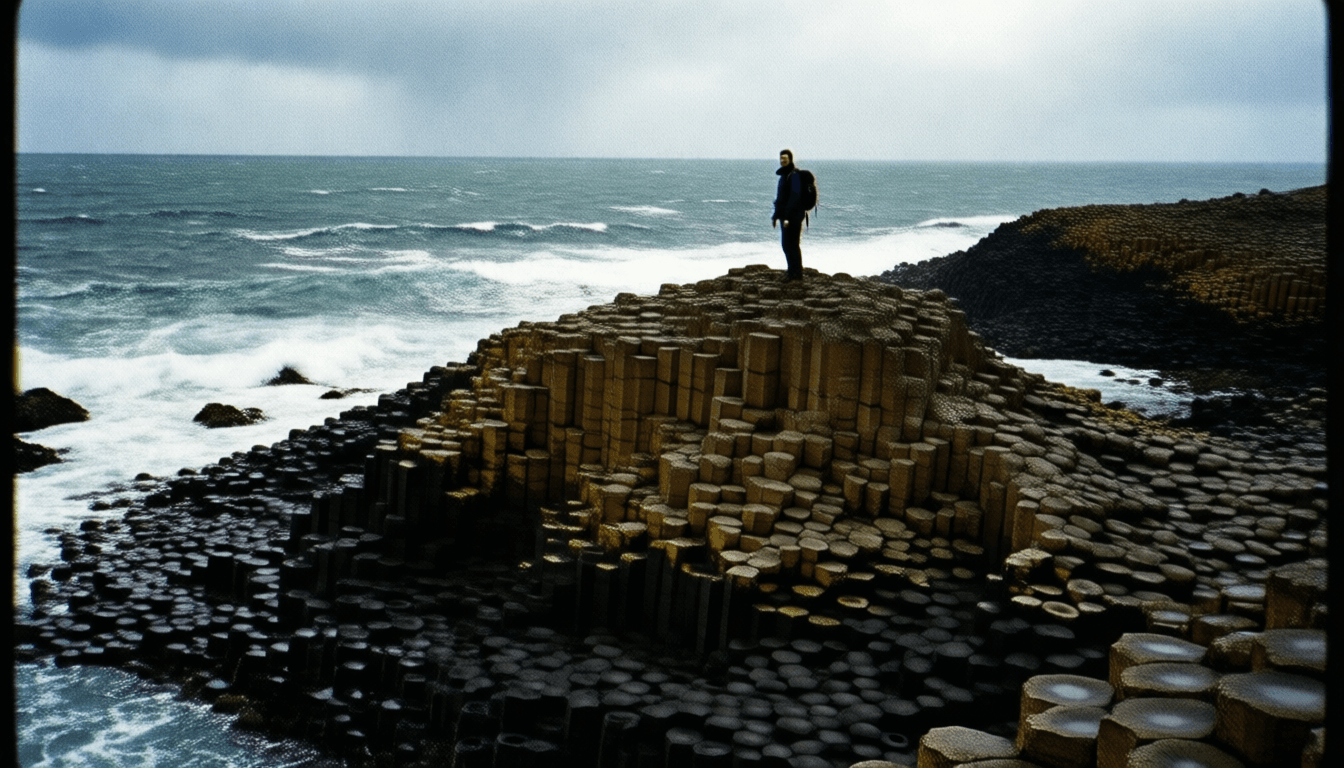
Giant's Causeway: Where Science Meets Myth
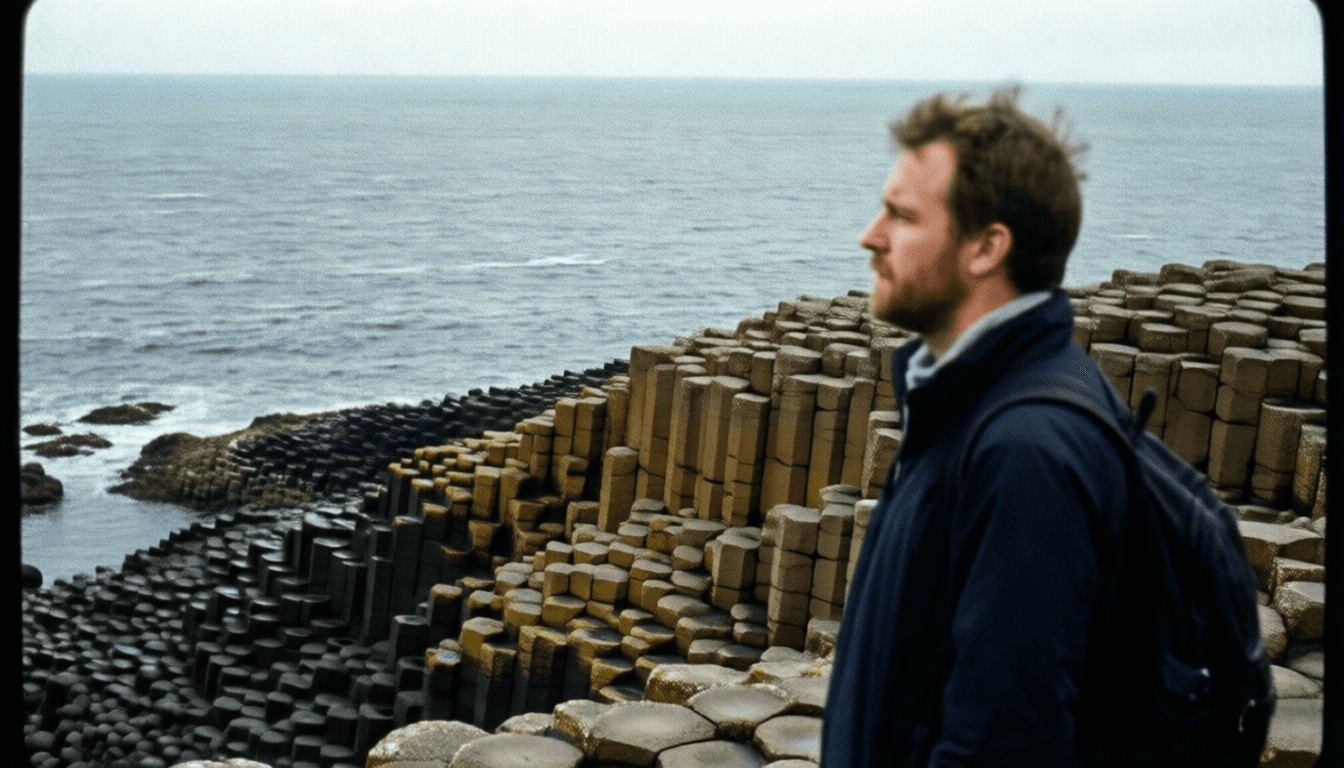
On the wild, windswept northern coastline of County Antrim, Ireland, the land meets the tumultuous Atlantic Ocean with an incredible spectacle. Here, instead of soft sands or crumbling cliffs, a wondrous geometric landscape of over 40,000 interlocking hexagonal basalt columns greets the waves. These colossal stone pillars rise from the sea and continue along the cliffs, forming an impossibly perfect mosaic, as if laid by an ancient, meticulous hand.
A UNESCO World Heritage site, the Giant's Causeway is a testament to Earth's immense power, yet its eerily precise arrangement and scale whisper of a far older narrative. It's as if the footsteps of mythical beings who once roamed and shaped this magnificent coast are etched into the very rock. To stand here is to step into a realm where geology and legend intertwine. Visitors walk among towering columns, some over 12 meters high, or gaze upon perfectly flat yet angular stepping stones disappearing into the waves.
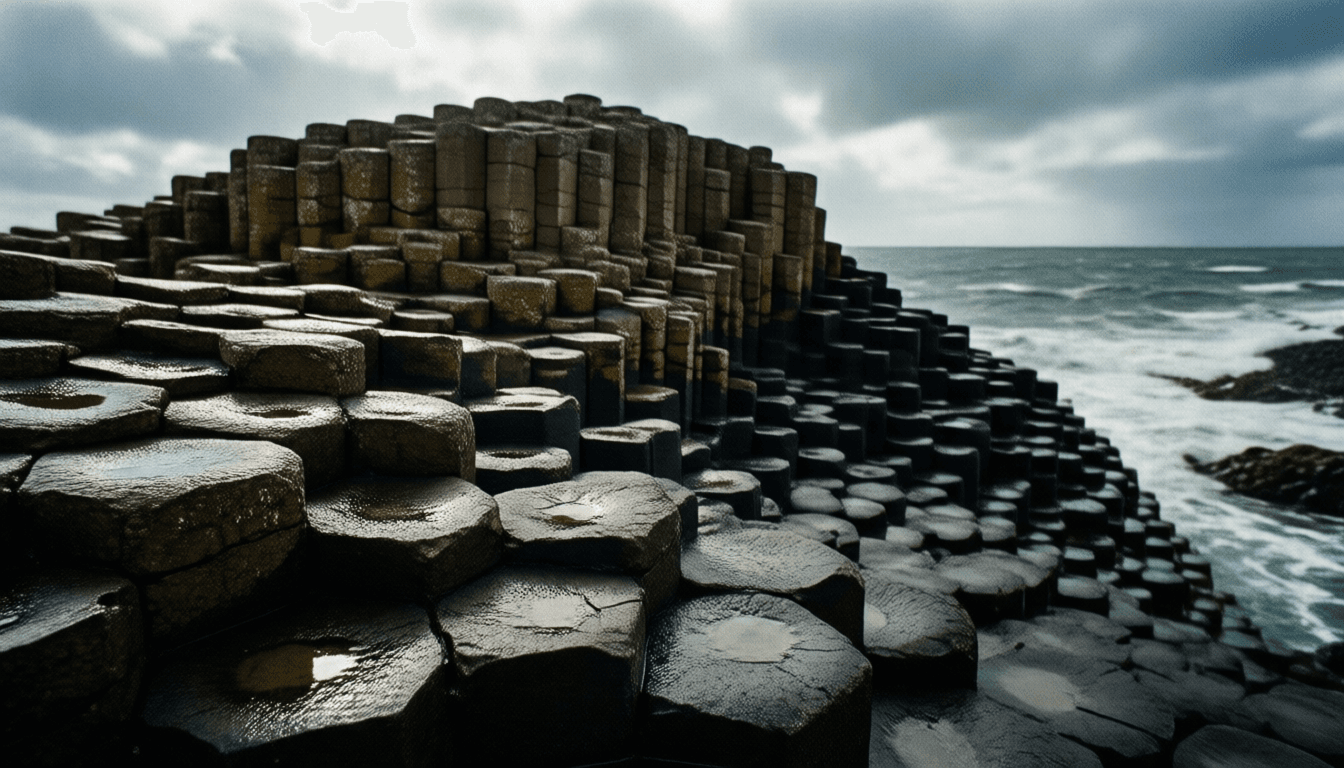
The scientific explanation is elegant: approximately 50 to 60 million years ago, intense volcanic activity erupted vast quantities of molten basalt lava. As this lava came into contact with air or water, it cooled rapidly and uniformly, causing it to contract and crack into the distinctive pillar shapes. The process is understood, yet such an extensive, intricate, and visually stunning example is exceedingly rare. Geologists point to the precise mineral composition and cooling rate as the architects of this natural wonder – a slow, relentless geological dance carved by heat and time.
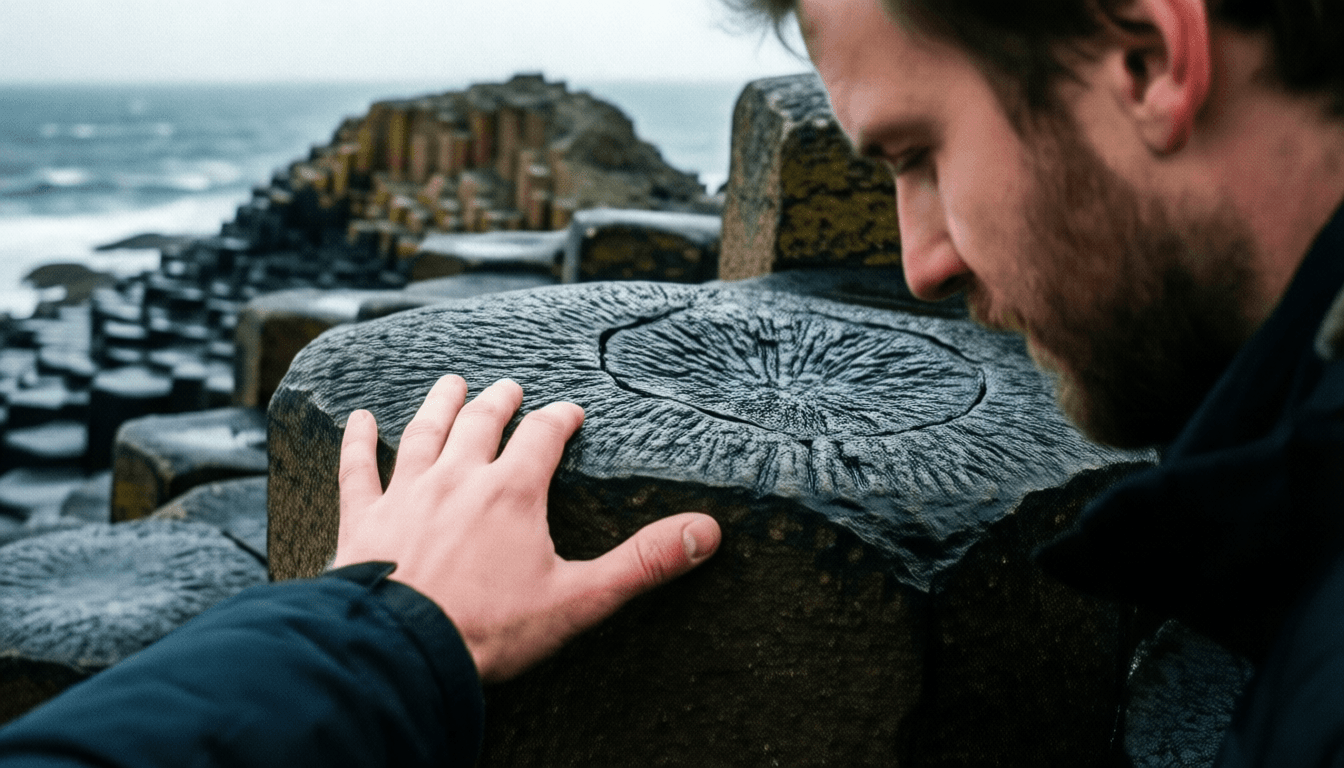
Yet, despite all scientific clarity, the Causeway's perfect uniformity and immense scale leave a profound sense of awe that challenges the limits of understanding. Why here? Why so perfectly? While columnar jointing is a known phenomenon, the Giant's Causeway displays an unparalleled density and regularity. Perfectly formed hexagons, octagons, and occasional squares are packed so tightly, forming natural staircases and stepping stones, even creating formations along the cliffs that resemble ancient organ pipes or chimneys. It feels too deliberate to be a mere random geological accident. The eye, searching for flaws, encounters only astonishing consistency, and the mind refuses to accept it as just a quirk of nature. It is this profound aesthetic order that deepens the mystery, suggesting a blueprint beyond simple natural forces.
It is precisely at this intersection of colossal geological forces and impossible precision that ancient myth offers an irresistible alternative. For centuries, local folklore has attributed the Causeway's construction to Fionn mac Cumhaill (Finn MacCool), a mighty Irish giant. Legend states Fionn built this massive bridge to cross the North Channel and challenge his Scottish rival, Benandonner. And then, compelling evidence emerges – evidence that elevates these ancient tales from mere legend to an eerie echo of possibility. Across the rugged North Channel, on the Scottish Isle of Staffa, lies Fingal's Cave. It is a sea cave formed from the same hexagonal basalt columns as the Giant's Causeway, appearing as if a monumental construction was halted, leaving only the two ends of an unfinished bridge. This astonishing geological twin, spanning 19 kilometers of treacherous sea, transforms the legend from a local curiosity into a global enigma. Did two giants truly attempt to bridge the gap? Or does this geological mirroring hint at an even grander, more harmonious natural event that stretches our imagination further?
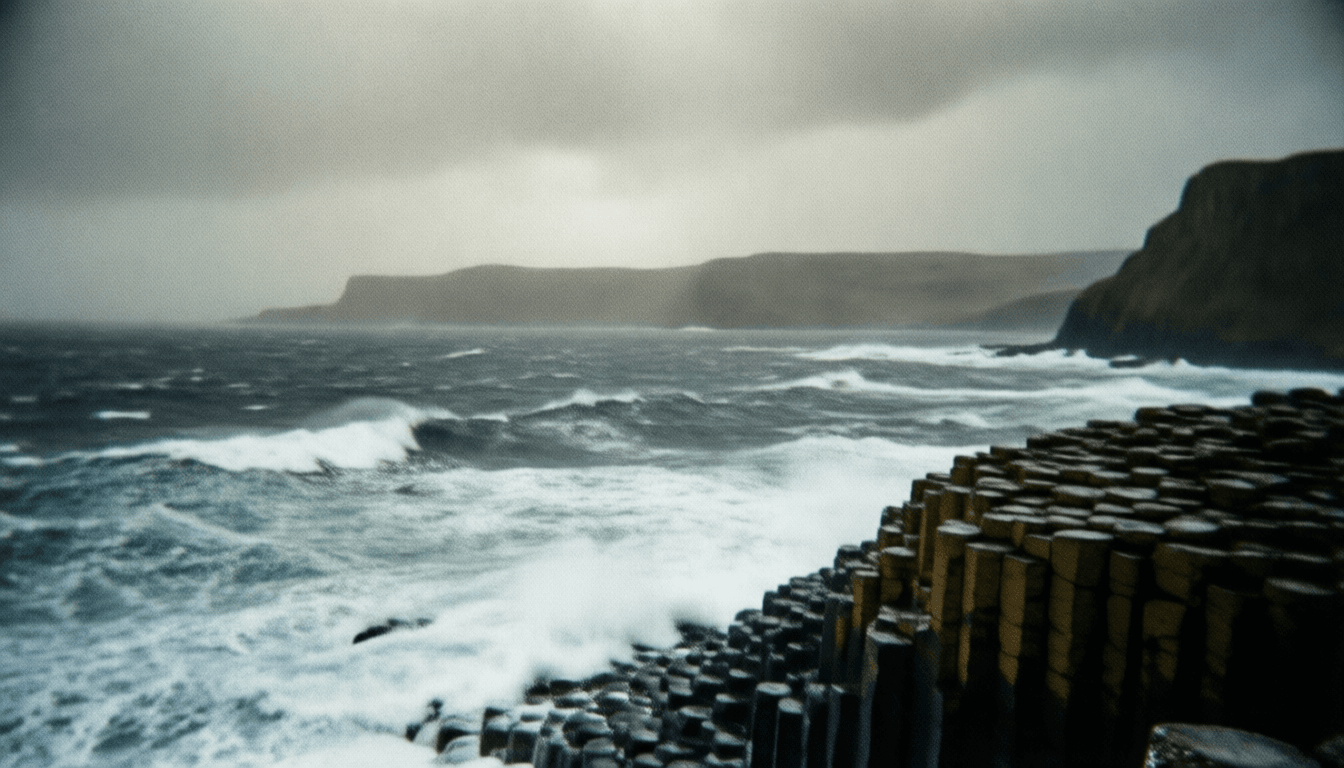
Today, standing amidst the Giant's Causeway, with the Atlantic's primal roar as a backdrop and the columnar stones cold beneath one's fingertips, the wonder persists. Science offers a powerful, logical explanation for this remarkable landscape's birth. Yet, its unparalleled geometric perfection, vast sprawling scale, and the compelling mirror image across the Scottish sea hold something that scientific explanation alone cannot fully encapsulate. When confronted with such a skilled spectacle of Earth's forces, the human mind instinctively seeks explanations that resonate with its own capacity for creation and purpose. The Giant's Causeway remains a profound testament to the awe-inspiring forces that shape our planet – a place where nature's colossal hand has crafted a landscape of such deliberate beauty and symmetry that it forever blurs the lines between geological fact and the majestic, eternal myth of giants. Some mysteries are simply too grand, too perfectly rendered, it seems, to ever entirely lose their singular, inexplicable feeling.
[ CLASSIFIED VERDICT ]
[ACCESS LOG - SOURCE FILE]
The Giant's Causeway in Ireland is based on an ancient legend that states the Irish giant Fionn mac Cumhaill built a bridge across the North Channel to fight his Scottish rival, Benandonner. The presence of identical hexagonal basalt columns in Fingal's Cave on Scotland's Isle of Staffa lends a mysterious reality to this folklore, fueling the imagination that giants may have indeed attempted to bridge the gap.