The Phantom Pressure of Watertight Door 13: RMS Queen Mary
A declassified 2014 hull condition assessment report from the Long Beach Marine Bureau contained an anomalous set of structural telemetry. The data originated from an ultrasonic non-destructive test performed on the keel plating adjacent to Watertight Bulkhead Door 13, situated deep in the lower aft machinery space of the RMS Queen Mary. Instead of thinning from seawater corrosion, the 1.25-inch-thick high-tensile steel plate was bearing an inexplicable, continuous localized load of over two tons from the inside out—as if an immense weight were permanently leaning against the bulkhead. There was a purely physical reason why night shift maintenance crews had long refused to sign off on patrol logs for Shaft Alley. Over a span of fifteen years, seven separate resignation letters cited the exact same phenomenon: atmospheric pressure in the sealed corridor plunging instantly to vacuum-like levels, accompanied by the suffocating stench of oxidized machine grease discontinued since 1968.
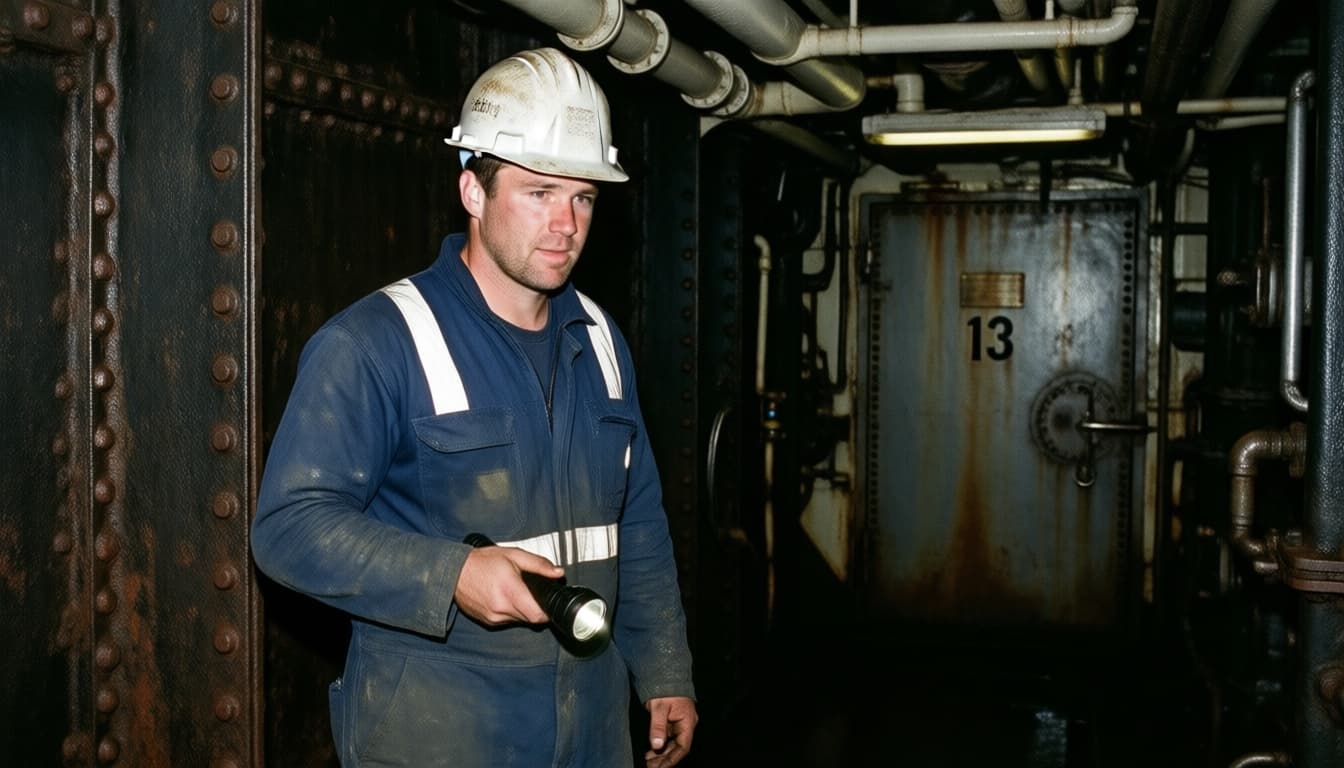
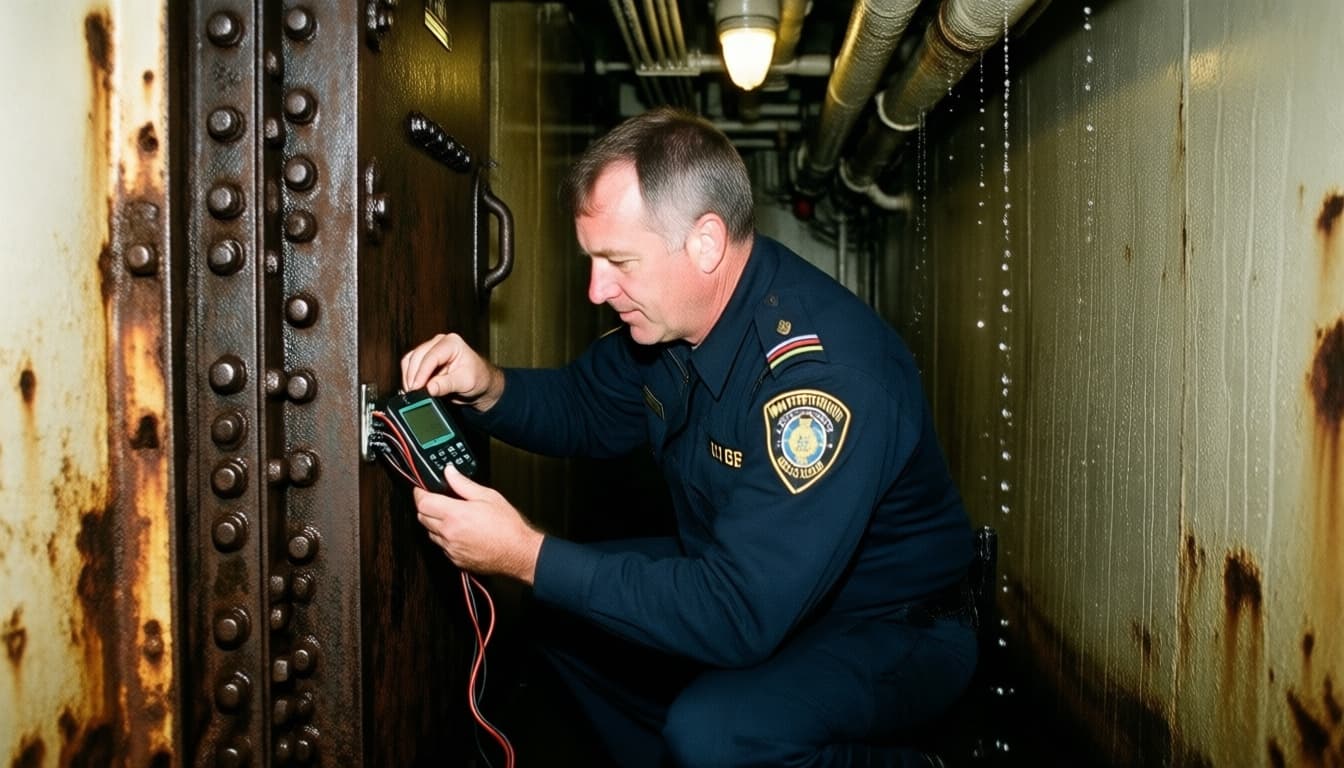
Fifteen minutes before midnight, I descended into the bowels of the retired liner in my capacity as a certified marine structural diagnostic surveyor assessing the vessel for insurance renewal. Passing beyond the preserved luxury decks and cavernous boiler rooms, I climbed down to G Deck, the deepest compartment resting well below the harbor waterline. The Pacific chill permeated through the thick iron skin, driving the ambient temperature down to a stark nine degrees Celsius. Amidst the rancid stench of eight-decade-old Bunker C fuel residue and dried salt crust, the 81,000-ton steel leviathan emitted deep, low-frequency structural groans as harbor currents nudged its hull against the muddy sea bottom. My objective was strictly empirical: attach digital strain gauges to the frame of Watertight Door 13—the exact site where 18-year-old senior fireman John Pedder was crushed and severed during a watertight drill in 1966—to verify whether recorded stress vectors were tidal or caused by mechanical warping.
While adjusting a bracket, my wrench slipped, clattering against the deck plating. In structural steel, sound travels at approximately 4,800 meters per second. Yet the sharp metallic clank failed to ring out immediately. It was as though the noise was swallowed into an acoustic vacuum, only echoing back from the far end of the bulkhead four seconds later. In a closed tunnel barely eighteen meters long, such acoustic latency was physically impossible. At that exact moment, the digital barometer clipped to my harness began to plummet. Without an exhaust valve opening, the air turned brutally dry and thin, piercing my lungs. I could not even produce vapor from my breath; the ambient moisture vanished so rapidly that the skin on my lips split and began to bleed.
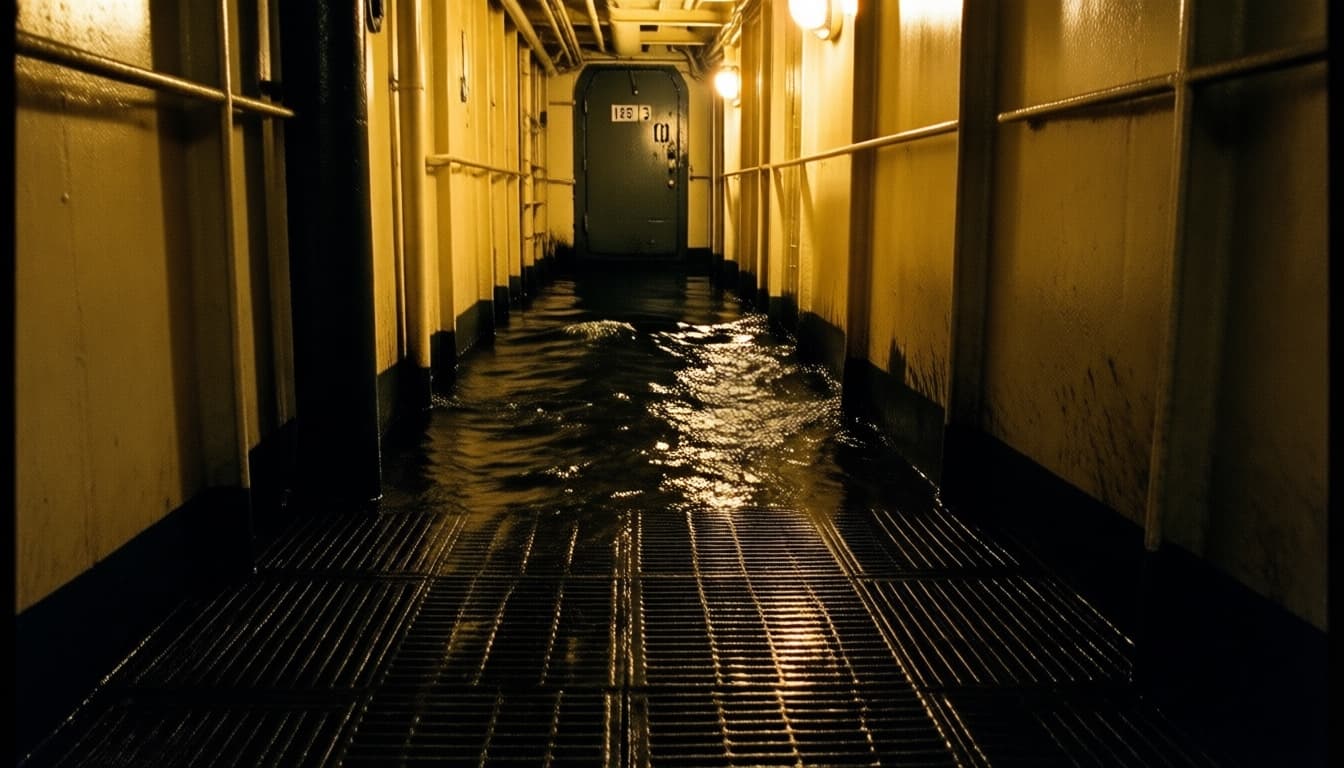
Looking down at the drainage trench grating, my heart stopped. The foul black bilge that should have been trickling downward toward the sump pump was flowing in reverse, creeping uphill along the incline. Defying gravity, the viscous slurry crawled toward the threshold of Watertight Door 13. It did not flow like ordinary liquid; it pulsed, contracting in rhythm at precisely seventy beats per minute like sentient tar gathering at the sill. Instictively backing away, my gloved hand brushed against the cast-iron manual lever of Door 13. The iron handle, which should have been frigid in the damp void, radiated a moist, biological warmth—exactly 36.5 degrees Celsius, matching human body temperature.
When the ship was converted into a floating hotel in 1968, the hydraulic lines had been drained and the massive cylinder was permanently bolted and welded into an open position with two-inch steel bars. Yet, with a deafening acoustic rupture, the preservation welds sheered off like exploding shrapnel. The 300-kilogram slab of cast iron did not fall by gravity. Propelled by raw, phantom hydraulic thrust along its horizontal track, it slammed shut, screeching violently before coming to an abrupt halt exactly ten centimeters above the deck—the precise clearance that had severed the young crewman's torso half a century earlier.
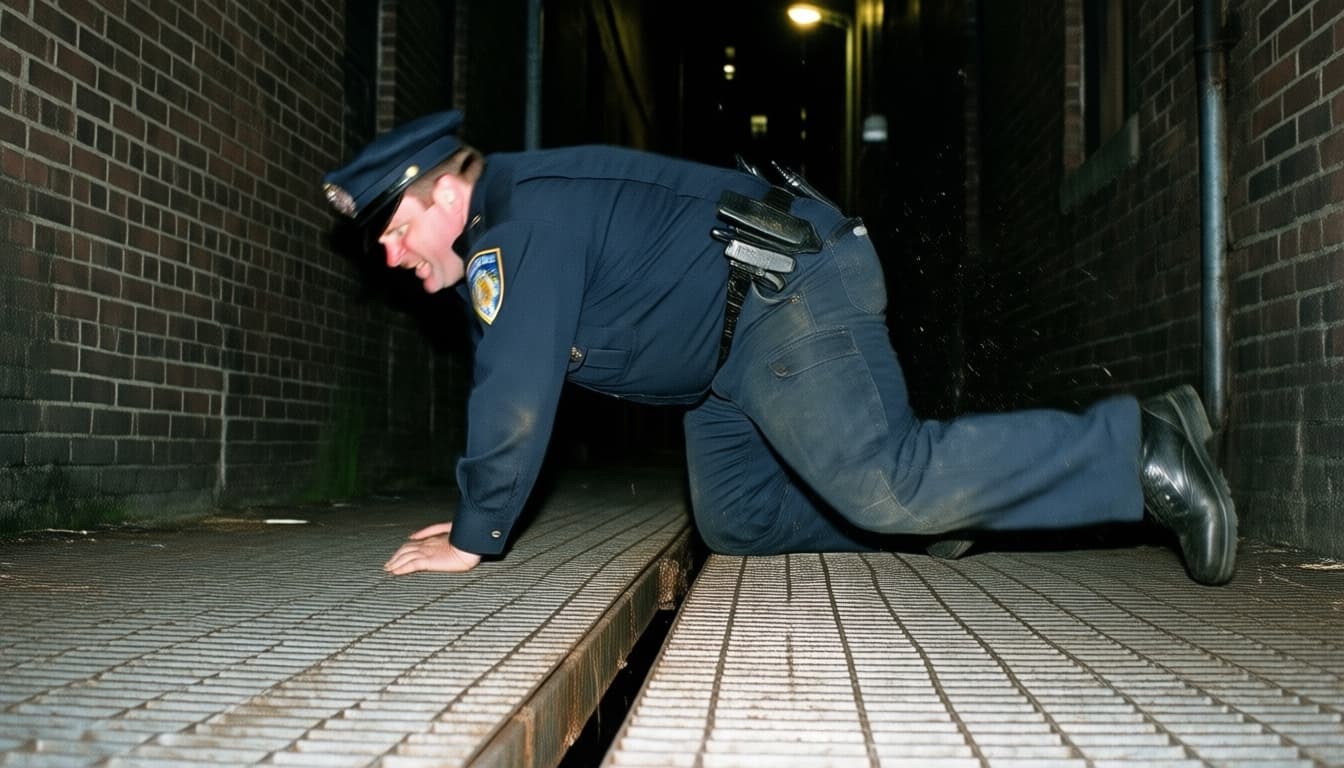
The atmospheric pressure inside the sealed Shaft Alley collapsed entirely. The capillaries in my ears and nasal passage ruptured, sending warm, metallic blood running down my chin. Beneath the steel floor plates, something dense, sodden, and heavy began scraping through the bilge trench toward me. I lunged desperately toward the vertical escape trunk, but my left work boot was pinned to the floor as if trapped in an invisible industrial vice. It was not cold spectral dread; it was the sheer, bone-crushing physical weight of industrial machinery.
I looked down at my ankle. The space was empty. Yet the thick canvas of my work trousers was twisting and tearing in midair, gripped by an unseen, violent torque. The invisible pressure left unmistakable impressions of five broad fingers across the canvas, violently dragging me toward the ten-centimeter opening beneath the watertight door. The unseen force was not tracking me as a person; it was mechanically dragging whatever crossed its threshold along a predetermined path of agony.
Just as my shin was about to be drawn under the iron slab, my fingers caught the dog-latch of the emergency access hatch above. Straining with broken fingers, I pried the lever open. The drastic pressure differential between decks triggered an explosive backdraft, blowing the hatch open with a roar and tossing my body onto the deck above. The sensor cable caught in the hatchway was sheared cleanly in two as the door snapped shut behind me.
The following morning, Harbor Department investigators retrieved the data logger from my abandoned diagnostic rig. Over the fifteen minutes of my entrapment, the frame of Door 13 had sustained an active shearing force of 1,400 pounds per square inch—the exact operating pressure of the steam turbine hydraulic pumps dismantled fifty years ago. More terrifying was the hydrostatic depth sensor: despite the ship being permanently moored in ten meters of calm harbor water, the gauge recorded an external pressure equivalent to thirty-three meters below sea level—the waterline of the Queen Mary while cutting through the North Atlantic at full cruising speed.
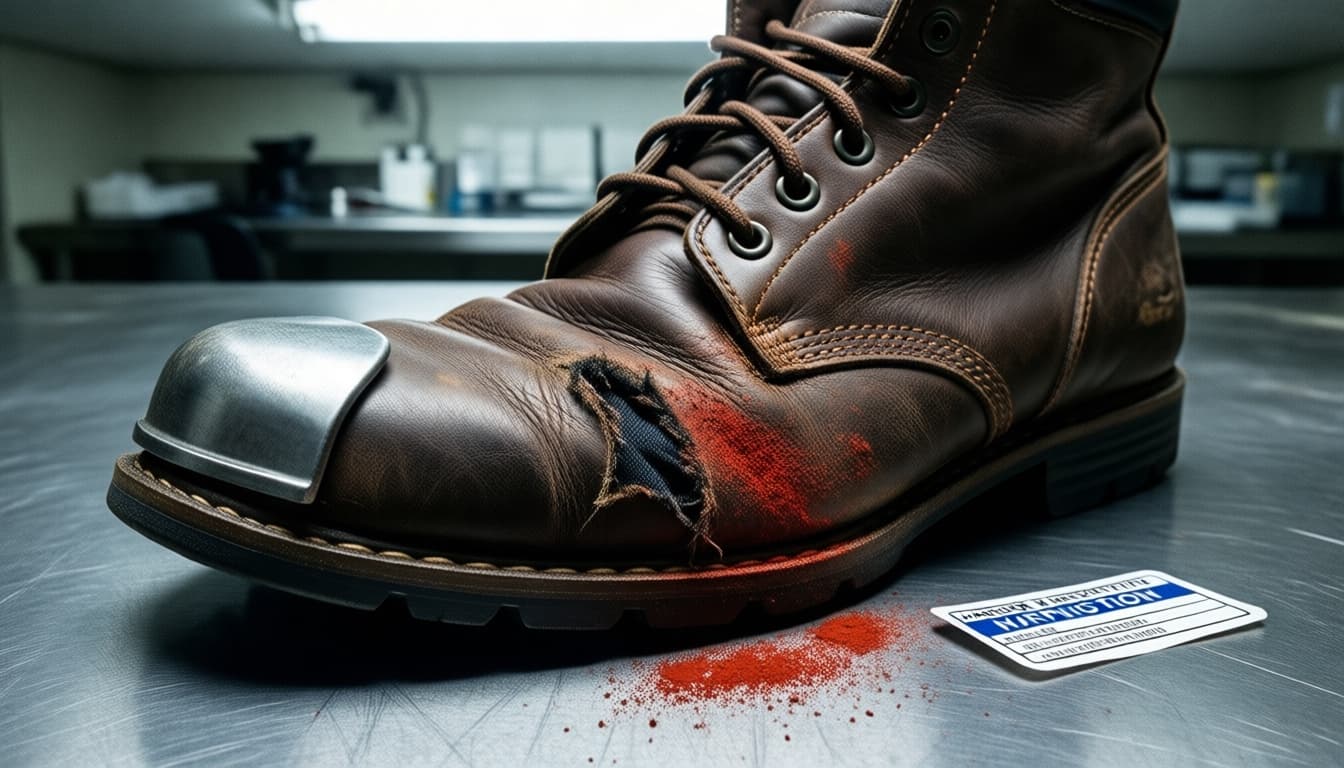
My left safety boot, impounded as accident evidence, had its steel toe cap crushed flat as if stamped by a factory press. Deep inside the shredded leather lay traces of organic fluid mixed with oxidized red lead primer—a vintage marine paint formula that had not been applied anywhere aboard the vessel since October 1966.
[ CLASSIFIED VERDICT ]
[ACCESS LOG - SOURCE FILE]
Based on the notorious urban legend of Watertight Door 13 in the Shaft Alley aboard the RMS Queen Mary, permanently moored in Long Beach, California. In 1966, eighteen-year-old crewman John Pedder was crushed to death during a routine watertight drill. Since then, ship engineers and visitors have reported inexplicable hydraulic noises, sudden pressure drops, and phantom mechanical activity in the lower hull where machinery was deactivated decades ago.