Frame 142 of the Queen Mary: Crushed at Zero Depth
On November 14, 2022, a confidential inspection report, No. 409-B, authored by the Port of Long Beach Maritime Safety Administration contained a bizarre anomaly. Technicians conducting non-destructive ultrasonic testing on the lower keel plates of the permanently moored RMS Queen Mary encountered physical readings that defied all logic. The 1.25-inch low-carbon steel plates of the hull were registering an external hydrostatic load of 42 atmospheres—equivalent to a crushing depth of 1,400 feet beneath the sea. Yet, the ship was tethered in a warm, calm, artificial harbor only 36 feet deep. Shortly after, a 14-second hydrophone audio recording was leaked to a local underwater acoustics research forum near Pier H. Instead of typical harbor ambiance, the file captured the acoustic cavitation signature of a massive steam turbine turning at 180 RPM. The Queen Mary's boilers and engines had been entirely stripped and backfilled with solid concrete back in 1968.
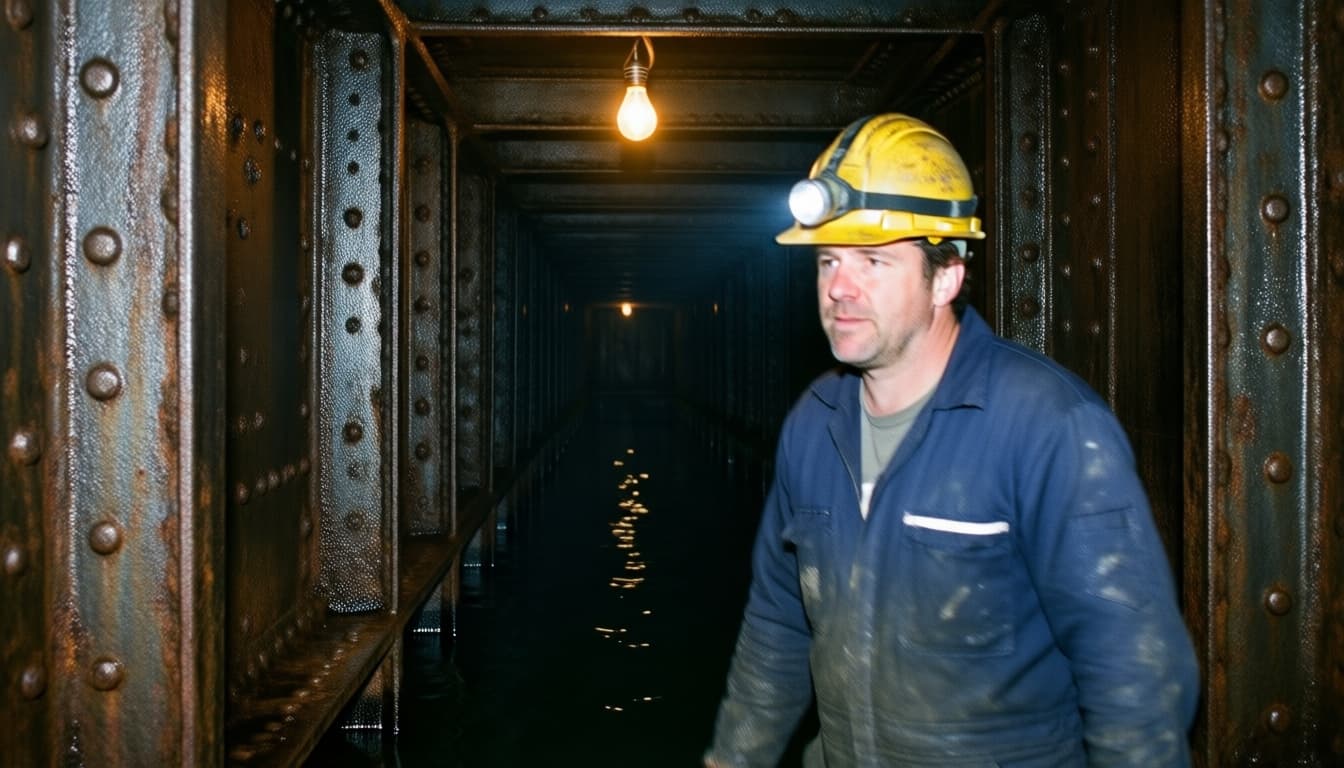
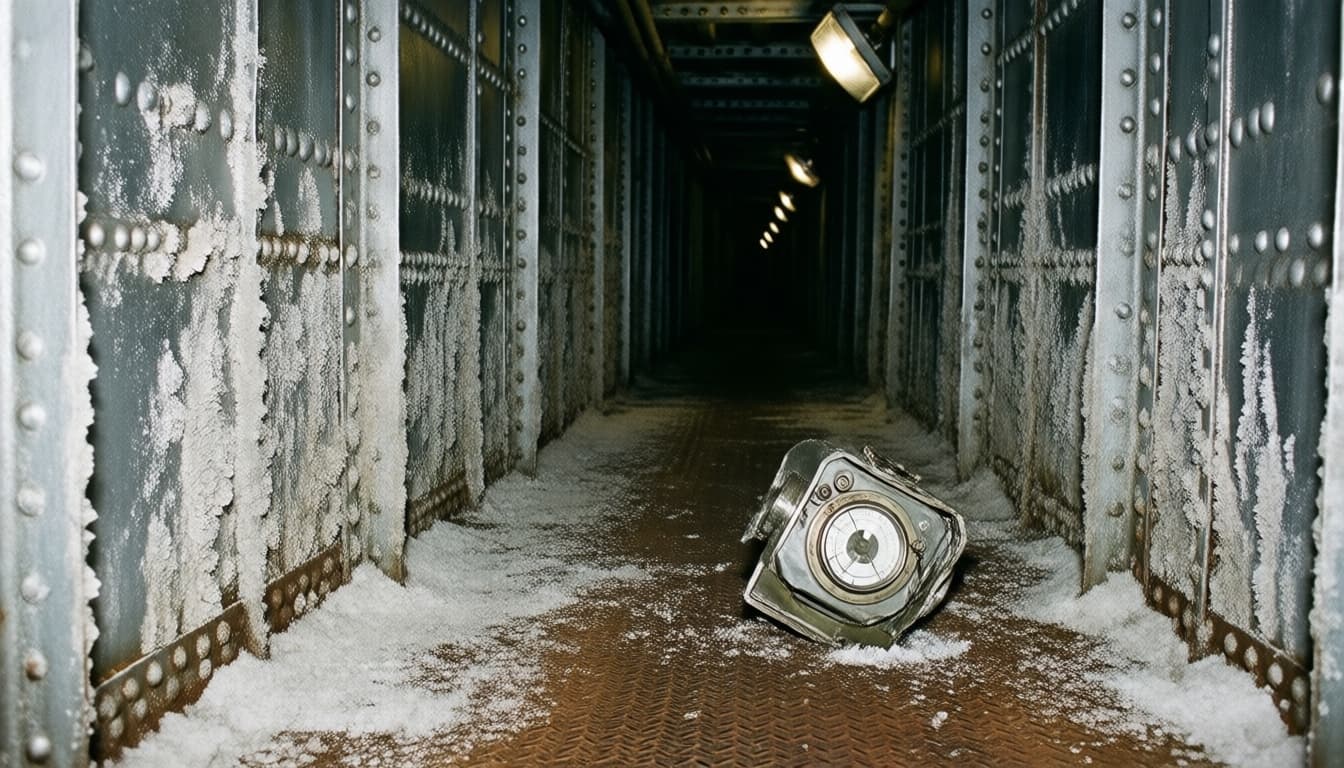
Gaining access under the guise of a hull seismic stability audit, I descended five levels below the polished tourist promenade deck. The cheerful scent of gift shop carpets and museum displays vanished instantly. Stepping into the 'tank top' compartment far below the waterline, the sour stench of seventy-year-old red-lead primer and congealed Bunker C fuel oil bit into my nostrils. A riveted steel tunnel measuring ten feet wide and three hundred feet long—known as Shaft Alley—stretched toward the stern propeller housing. Normally, the ambient hum of the harbor would reverberate through the steel skin, but here, the air hung in an eerie, deafening anechoic silence.
I mounted a tri-axial seismometer and contact microphones against the bulkhead at Frame 142—the tragic impact point where, in October 1942, the Queen Mary sliced through her escort cruiser, HMS Curacoa, cutting the warship in half at high speed and sending hundreds of sailors to a watery grave. In stark contrast to the mild evening air of Southern California outside, the steel plates radiated a bone-chilling frost that immediately turned my breath to white mist.
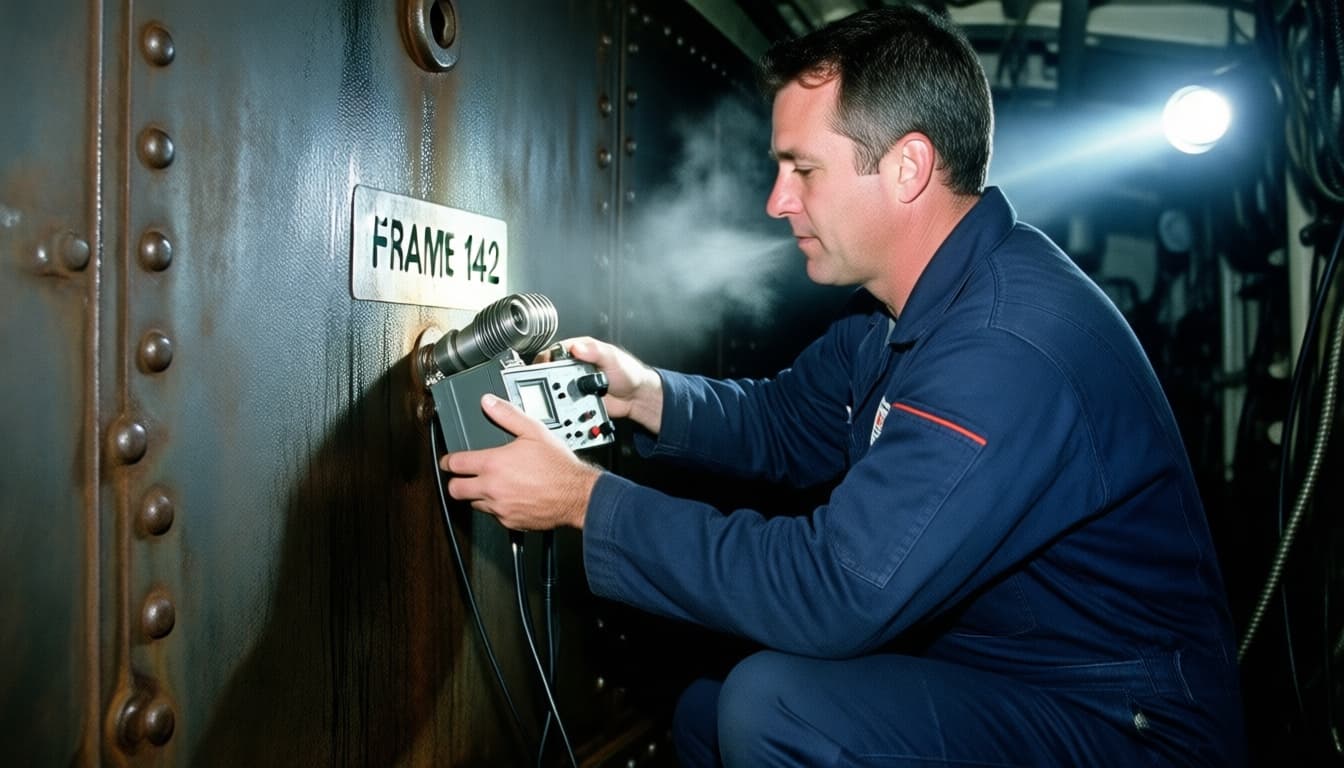
To check for internal structural stress fractures, I tapped the steel rib with a brass inspection hammer. Inside a sealed metal tube, the blow should have yielded an immediate, sharp metallic ring. But no sound returned. Only after an exact delay of 1.8 seconds did a dull, muffled acoustic wave thrum back through the steel plate into my palm. It was the distinct acoustic delay of sound traveling not through air, but through thousands of yards of deep, freezing seawater.
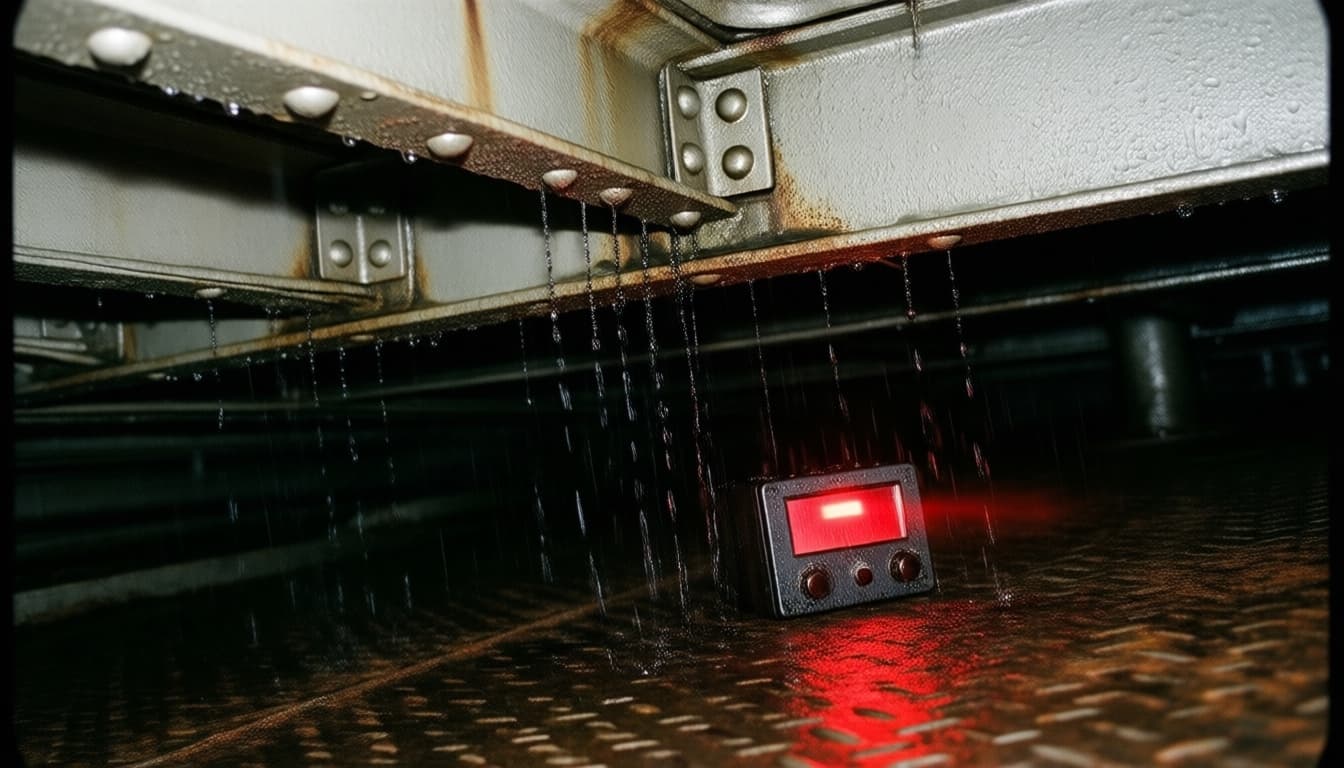
As goosebumps crept up my neck, I noticed the condensation forming along the overhead rivets. The droplets were not falling downward. They were sliding horizontally along the ceiling seams toward the forward bulkhead, drawn by some immense, unseen momentum—as if the steel itself were physically experiencing the violent forward inertia of an 80,000-ton vessel charging full steam ahead.
The seismometer's input gauge spiked into the red, flashing erratic warnings. When I pressed my palm flat against the bulkhead, my heart sank. The steel plate was not merely vibrating; it was torquing heavily, flawlessly mimicking the violent roll of plowing through the North Atlantic at 28.5 knots. Visually, the floor remained dead level, but my vestibular system spun out of control, triggering a violent surge of motion sickness and dry heaves.
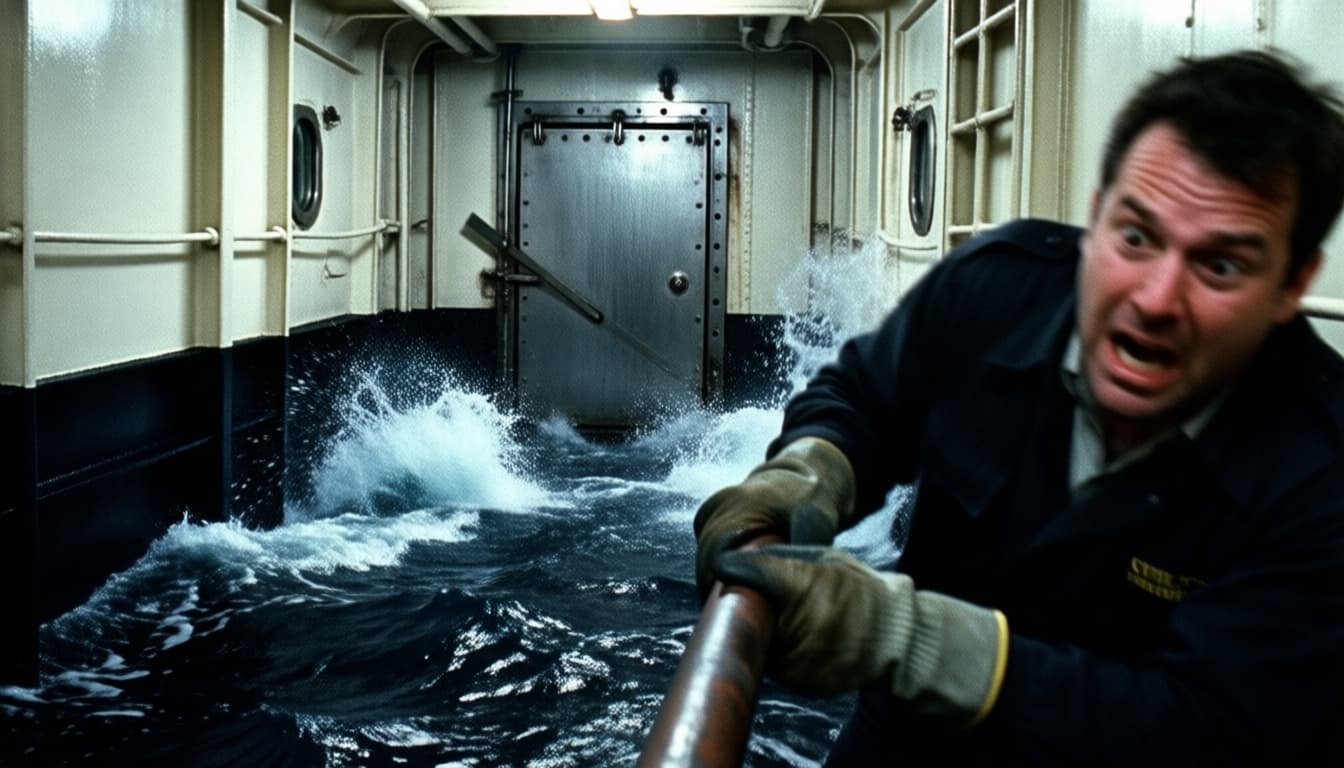
The moment I spun around to secure an exit route, Watertight Door 13 slammed down without any electronic chime. It was not a smooth descent down greased guide tracks. It plunged like a four-ton guillotine, shearing clean through the seismometer cables and crushing the four-inch steel sill. Complete isolation.
The atmospheric pressure inside the sealed compartment skyrocketed instantly, rupturing the capillaries in both my nostrils. Coppery blood trickled over my lips. The steel had not cracked or torn. But my blood ran cold as I realized water was sweating directly through the molecular grain of the overstressed steel plates. It was not the lukewarm brine of Long Beach Harbor. The liquid was pitch-black, sub-zero saltwater that numbed the skin on contact.
It was not an apparition or a ghost. It was the physical reenactment of pure mass, kinetic energy, and hydraulic devastation unleashed when a warship was sucked under an eighty-thousand-ton keel and ground into scrap. Thousands of tons of invisible iron and turbulent displacement tore through the narrow corridor. A violent gust carrying the smell of torn wool uniforms, cordite residue, and scorched 1940s boiler steam slammed into my chest. The shockwave threw me violently against the propeller shaft casing, shattering two ribs with a sickening crack. The heavy bolted seismometer bracket was torn loose and folded like paper.
With black freezing water rising swiftly to my neck, I tilted my chin upward toward a tiny pocket of air trapped between ceiling conduits. Shivering uncontrollably, my numb fingers fumbled with a steel wedge on my tool belt, forcing it into the seal of an emergency escape scuttle overhead. As I dragged my broken body through a narrow six-inch opening and pulled myself out, the chaos in Shaft Alley behind me instantly died into absolute, dead silence.
At 4:30 AM, a morning security patrol discovered me collapsed on the deck plating of the D-deck engine casing. Beyond severe hypothermia and multiple fractures, emergency room doctors diagnosed me with alveolar trauma—severe decompression sickness, commonly known as 'the bends,' a condition physically impossible to contract at sea level. Hours later, when a maintenance crew entered Shaft Alley via the overhead hatch, the corridor was bone dry. Not a single drop of water remained.
However, the entire surface of Frame 142 was encrusted in a thick layer of coarse, grayish salt crystals. Subsequent isotopic analysis by the National Oceanic Institute confirmed the residue matched the specific salinity profile of the deep waters off Donegal, Ireland. On the audio file recovered from my smashed recording gear, there were no human screams. Only thirty minutes of groaning steel tortured by swirling currents, accompanied by a rhythmic, metallic tapping ringing from the outside of the hull—the exact distress pattern hammered by trapped engine room crewmen against the bulkheads of a sinking ship, doomed because their sister ship had orders never to stop.
[ CLASSIFIED VERDICT ]
[ACCESS LOG - SOURCE FILE]
Based on the real 1942 wartime disaster where the troopship RMS Queen Mary accidentally rammed and severed its escort cruiser HMS Curacoa in half, drowning 338 British sailors while strictly forbidden to stop due to U-boat threats. Urban legends surrounding the permanently docked Queen Mary in Long Beach, California, claim that the lowest hull compartments near Frame 142 still manifest phantom deep-sea pressures, freezing Atlantic salt deposits, and the rhythmic SOS tapping of trapped crewmen from the doomed cruiser.