The Pulsing Hydrotherapy Drain of Baker Hotel's Basement B
In the archives of the Palo Pinto County Water Control District in Texas, there exists an inspection log dated November 14, 2018, that was permanently omitted from official public records. During the multi-million-dollar restoration of the historic Baker Hotel, an inexplicable pressure surge was detected along the mineral water conduits piercing the bedrock beneath the foundation. The epicenter was traced to the raw mineral water intake line in Basement Area B—a sector completely sealed beneath 1.2 meters of reinforced concrete immediately following the hotel's abrupt closure in 1972. A digital transducer affixed to the exterior recorded a continuous cycle of contraction and expansion at a precise rhythm of 14 pulses per minute. It was neither seismic activity nor the rhythmic churning of municipal pumps.
An eight-inch exploratory endoscopic probe lowered through a bored shaft recorded forty-six minutes of rhythmic, surging liquid displacement accompanied by the metallic screech of a dry cast-iron valve turning against its threads from the inside. Cross-referencing the original 1929 architectural blueprints revealed that the valve fed into only one possible terminus: a private hydrotherapy immersion basin belonging to the 7th-floor executive suites, drained and abandoned for over half a century.
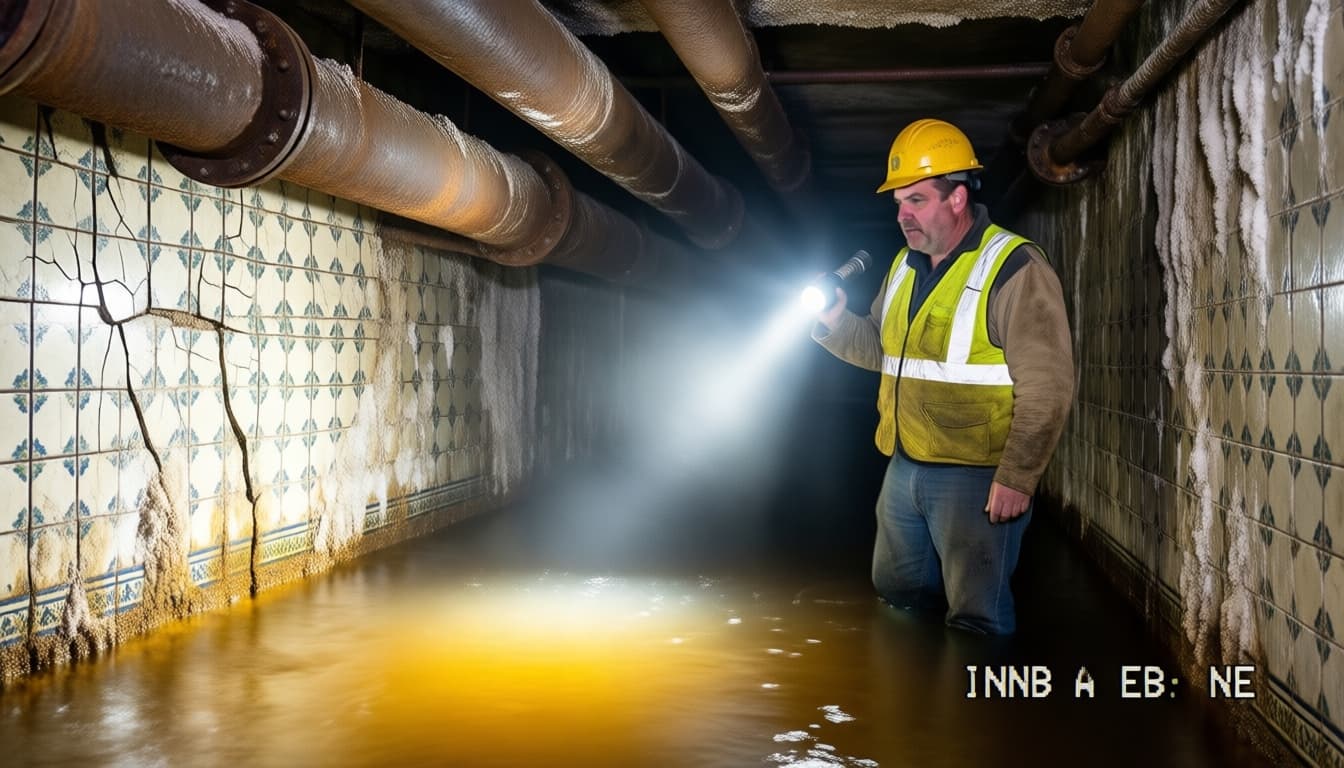
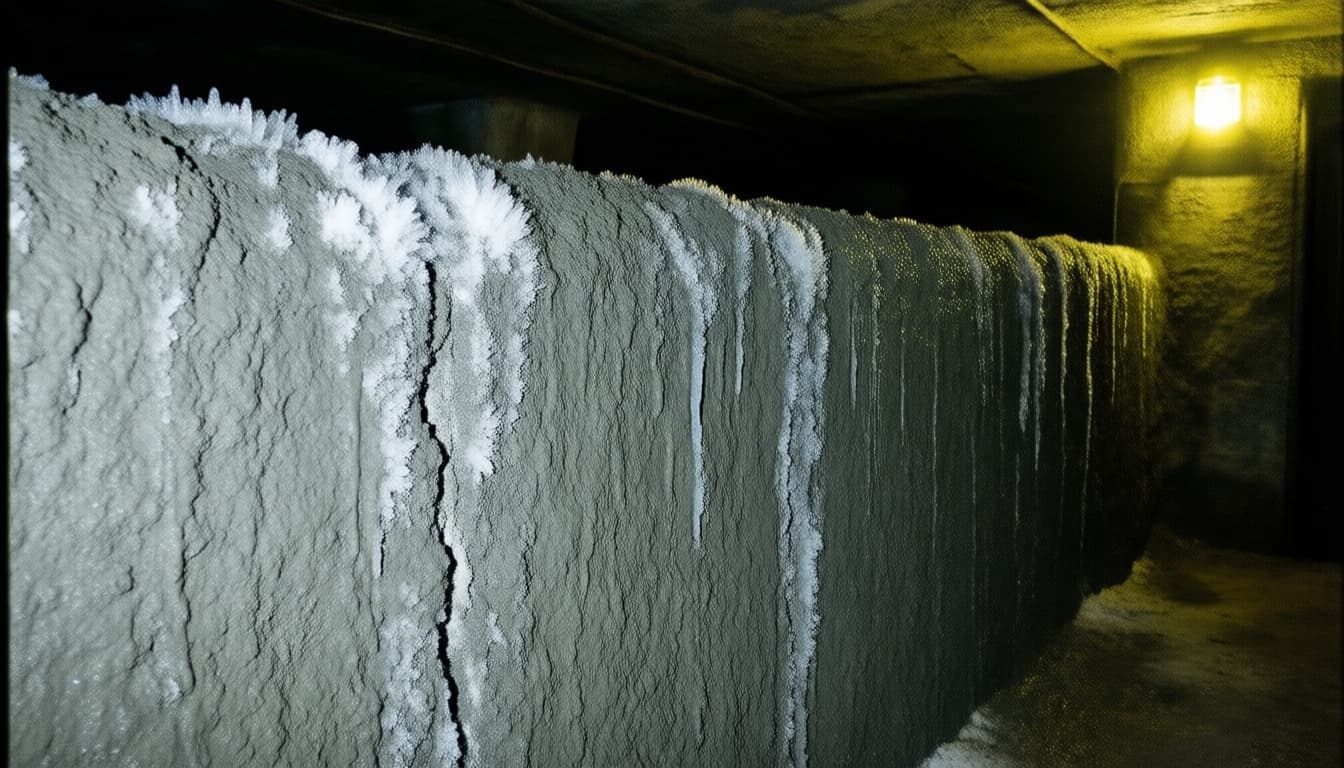
Hydrological structural investigator J. Finch made a solo entry into Basement Area B via an emergency service corridor running beneath the former grand ballroom to ascertain whether the mineral surge was undermining the load-bearing foundation. As he squeezed through the breach, a suffocating atmosphere hit his lungs. In the stifling 29-degree heat and 90% humidity, dry cement powder mingled with the sickeningly sweet, medicinal odor of lithium salts. The beam of his flashlight caught Spanish tiles along the walls, suffocated under thick, dried crusts of white carbonate mineral bloom. Overhead, lead conduit pipes groaned under an internal negative vacuum.
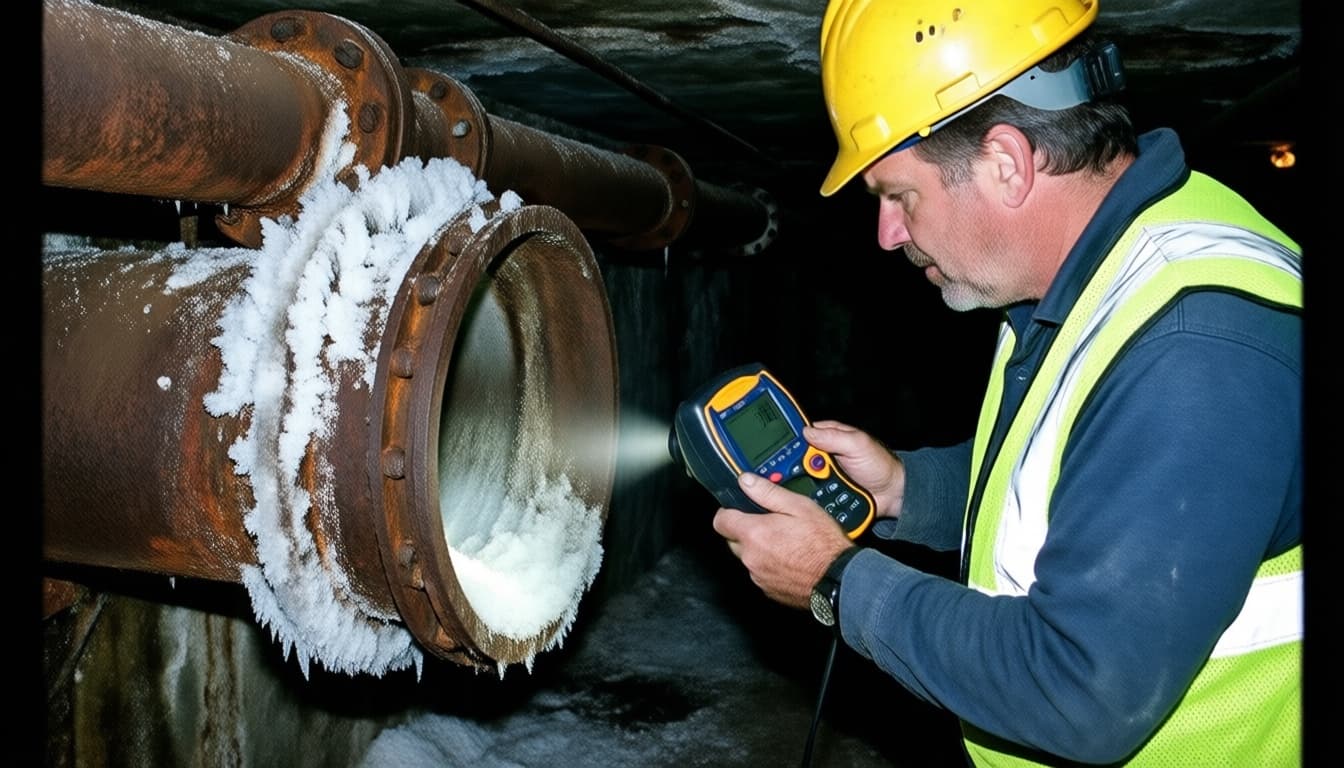
When his boots met the white powder on the floor, an eerie disquiet crept up his shins. There was no echoing footprint. His footsteps died instantly, swallowed as if by damp velvet, only to return precisely three seconds later as a heavy, wet thud reverberating from the far side of the pipe trench. Raising his thermal imaging camera, the digital readout plunged erratically. Despite the oppressive ambient heat, the surface temperature of the exposed iron drainpipe dropped rapidly: fifteen degrees, five degrees, plummeting to two degrees below zero Celsius. Amidst the sweltering subterranean humidity, pure white frost bloomed outward along the rusted iron seams.
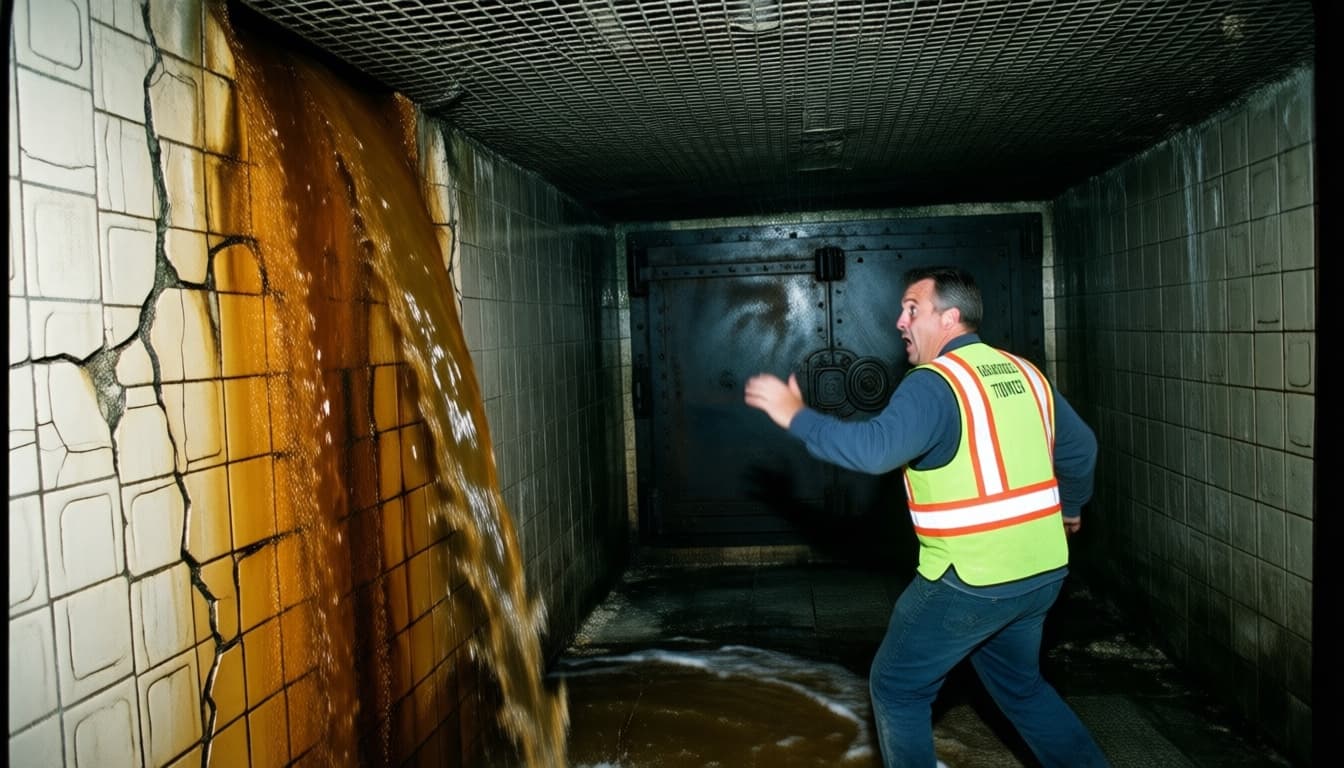
The flashlight beam swung toward the central hydrotherapy basin, illuminating a thick liquid pooling along its lip. It was not condensation falling from the ceiling. A viscous, amber-hued sulfur mineral water was flowing upward against gravity, crawling vertically up the tiled wall toward the ceiling pipe matrix. The stale limestone stench was instantly overtaken by an entirely different odor: 1920s cold cream, medicinal lavender soap, and the sharp, coppery reek of freshly spilled arterial blood.
A sudden hydraulic hammer rattled the entire underground foundation. Behind him, the heavy cast-iron bulkhead hatch slammed shut with a concussive boom. The exterior locking wheel spun violently on its own before grinding to a halt with the sickening screech of stripped threads. The realization of being trapped turned his throat bone-dry.
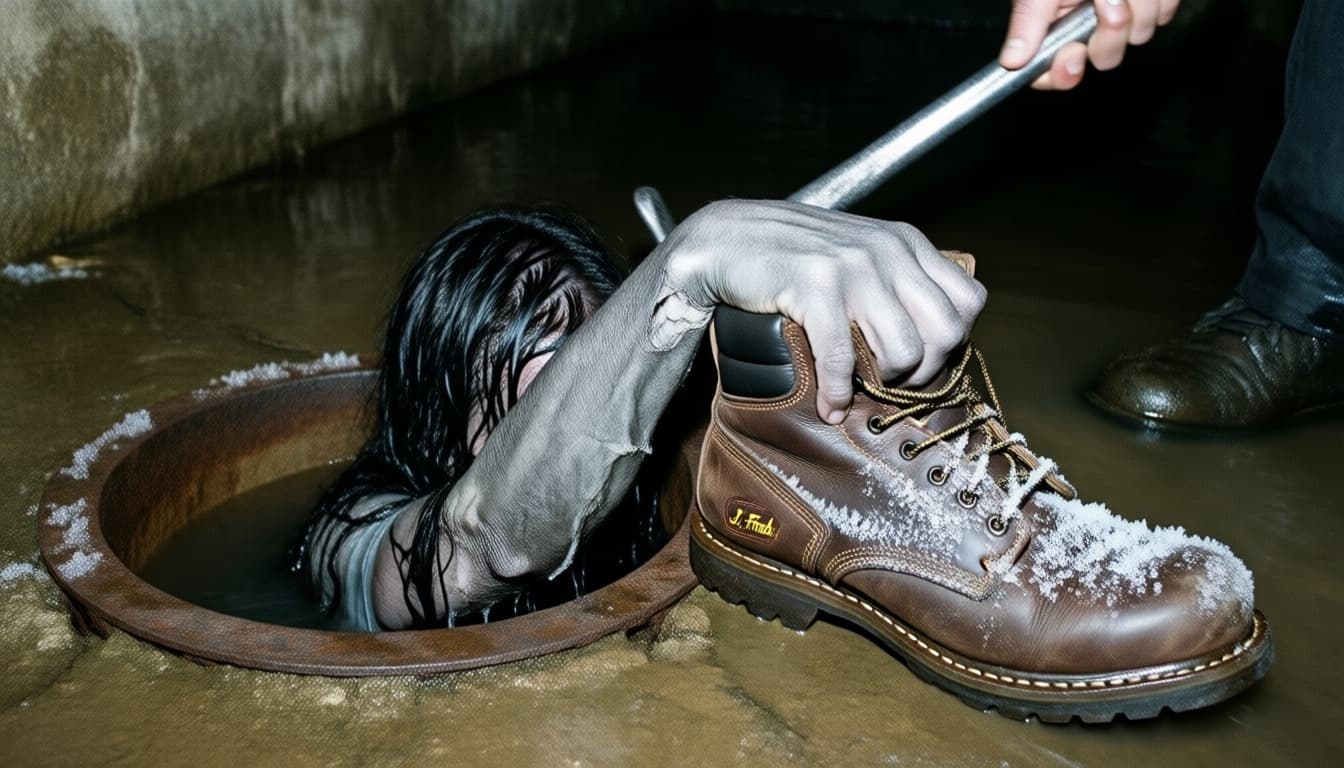
From the bottom of the supposedly dry basin, heatless froth began to churn. The water was not boiling; something was forcing its way out of the narrow drain hole, which measured barely twenty-five centimeters in diameter. At first, it looked like a tangled mass of black hair matted with salt crystals. But as torn shreds of white linen gave way to gray, waterlogged flesh and unnaturally bent joints, he realized a human form was violently wrenching itself through a pipe far too narrow for physical passage. Its limbs jerked in sharp, mechanical twitches, mimicking the cadence of a century-old hydraulic pump.
Wherever the entity brushed the dry ceramic tiles, the porcelain cracked and shattered outward from extreme thermal shock. Paralyzed with terror, Finch attempted to step back, but his limbs refused to obey. The atmospheric pressure within the chamber collapsed, violently pulling air and loose debris down toward the suction drain. Viscous mineral water erupted across the floor, rising to knee height in seconds. Desperately lunging toward a corroded steel ladder on the far wall, an ice-cold grip seized his right combat boot.
A crushing, skull-splitting pressure bored into his ankle. An abyssal frost pierced clean through the thick leather, instantly numbing his nerves as crystalline white salt bloomed like frost across the boot. Finch swung an aluminum pry bar downward, smashing the calcified grip. Three chalk-like fingers shattered off with a dull thud. From the clean breaks oozed not blood, but a warm, slippery lithium oil. Even severed on the flooded floor, the broken fingers continued to twitch, bending their joints to crawl toward the ladder.
Reaching for the high-pressure CO2 canister holstered on his utility belt, Finch slammed the nozzle backward into the vortex of the suction drain and ruptured the emergency release. The explosive gas expansion collided violently with the reverse hydrostatic pressure, triggering a catastrophic steam hammer within the plumbing. Tiles splintered into dust as the pressure blew the access hatch clean off its hinges. Sloshing through chest-deep, brine-slick water, Finch dragged himself into the access tunnel and scrambled up toward the surface.
Transported to Palo Pinto General Hospital, Finch was diagnosed with severe, deep-tissue frostbite on his right ankle. Subsequent tissue biopsies revealed his subcutaneous cells were permanently saturated with hyper-concentrated lithium, bromine, and strontium salts—a chemical signature unseen in municipal water tables since 1932. Five years later, the deadened skin of his ankle remains bone-white, dry as chalk, and icy to the touch.
Immediately following the incident, city officials declared Basement Area B an irreversible hazard zone, entombing the entire sub-level beneath two hundred tons of quick-setting hydraulic grout. The above-ground restoration of the Baker Hotel proceeded without delay, returning its historic facade to lavish grandeur.
Yet deep beneath the earth, the fourteen-pulse-per-minute heartbeat never truly stopped. Since the concrete cure, the frequency has merely slowed to eleven pulses per minute, while its amplitude reaches deeper and heavier toward the surface. And in Finch's Fort Worth apartment, sixty kilometers away, the dry plumbing rattles late at night beneath an inexplicable vacuum. Whenever he places a hand over the closed bathroom faucet, he feels the freezing suction pulling outward at his skin, accompanied by the faint, wet slithering of soaked hair slowly climbing the rusted iron pipes from the dark below.
[ CLASSIFIED VERDICT ]
[ACCESS LOG - SOURCE FILE]
The historic Baker Hotel in Mineral Wells, Texas, opened in 1929 and famed for its curative 'crazy water' mineral baths, closed in 1972 and became the epicenter of local paranormal lore and drowning legends. The mysterious pulsing sounds and localized freezing anomalies within its abandoned underground plumbing network and hydrotherapy facilities remain a well-known urban legend among regional contractors and urban explorers.