The Melon Heads of Wisner Road: The 1998 Ravine Survey Incident
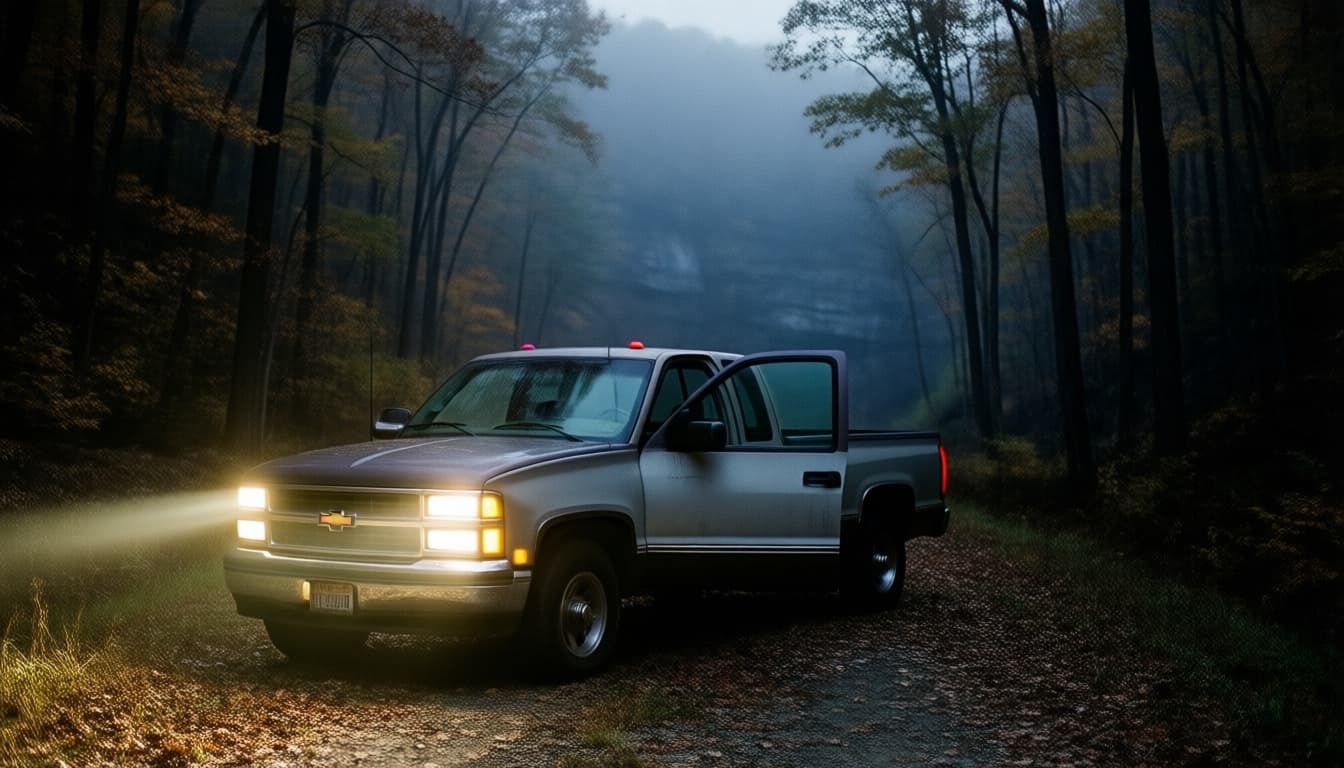
In the dispatch logs of the Lake County Highway Patrol in Ohio, dated October 24, 1998, a bizarre note remains. At the southern fringe of the Holden Arboretum, just before the barricade where the unpaved stretch of Wisner Road terminates, an idling Chevrolet pickup truck was found abandoned. The driver’s door was wide open, its high beams cutting through the tangled underbrush of a deep ravine. The truck belonged to Arthur Vance, a field surveyor for the Department of Water Resources. Early the following morning, Vance was discovered three miles away along Route 6, suffering from severe hypothermia and dissociative shock. Traces of human cerebrospinal fluid with high protein concentrations were later detected embedded in the mud-caked hem of his torn canvas coat.
Locals had long whispered that Wisner Road was the hunting ground of the 'Melon Heads'. According to local lore, a neurologist named Dr. Crow operated a private sanatorium in the 1960s where hydrocephalic children were kept in isolation for unauthorized human experimentation; following an unexplained fire in 1974, all institutional records vanished. People whispered that the deformed orphans with grossly enlarged craniums had fled into the dense deciduous forest, though municipal authorities dismissed it as a cheap urban legend. Vance, however, was the first city official in twenty-four years tasked with descending into the unmapped drainage culvert deep within the ravine.
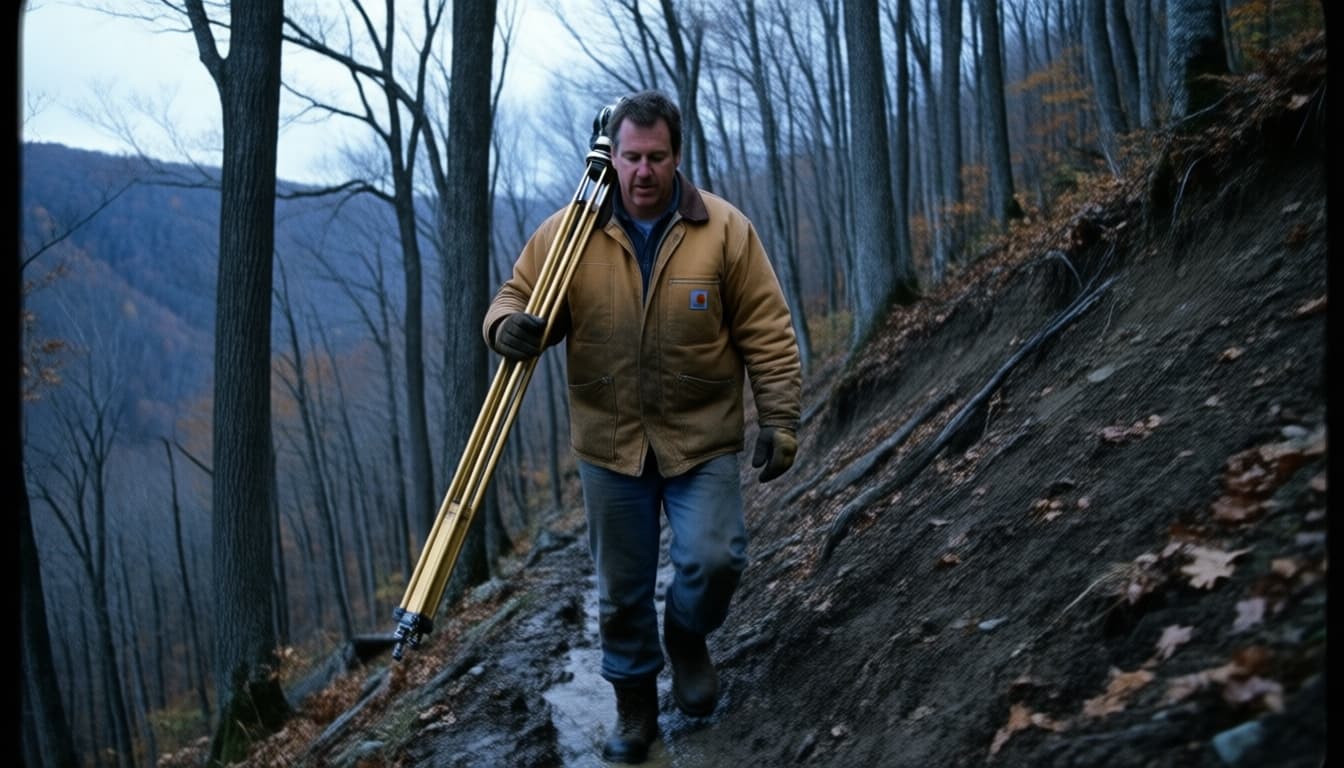
At 4:30 PM, Vance hoisted an eight-foot leveling rod and tripod over his shoulder, beginning his descent down the steep Chagrin shale incline. As soon as he navigated the 40-degree muddy embankment, the constant hum of highway traffic vanished abruptly, swallowed by the gorge. Giant beech trees formed a canopy that blocked out the late autumn sun, leaving the air damp and freezing. The only sound was the brittle clatter of wet shale snapping like thin slate tiles beneath his heavy work boots.
Reaching the gaping maw of the concrete culvert, Vance struck the outer wall with his brass prism pole to test its structural integrity. Something felt wrong. Instead of a sharp, metallic ring, a dull, hollow echo reverberated back after a distinct two-second delay, as if bouncing off a cavernous void deep behind the mud embankment. It wasn't merely resonance; layered faint beneath the tail of the echo was a rhythmic scraping, like something being dragged through a narrow, choked pipe.
Sweeping his halogen flashlight beam across the ground, Vance noticed grotesque anomalies. The underbrush, two feet off the ground, had been deliberately cleared. Thick twigs were not snapped by foraging beasts, but woven tightly together with wet willow bark to form low, crouching tunnels. Wedged inside the hollow of a rotting log were cleanly picked bones of opossums and groundhogs. The marrow had not been gnawed by predatory canines; rather, the bones were pulverized by wide, blunt human incisors.
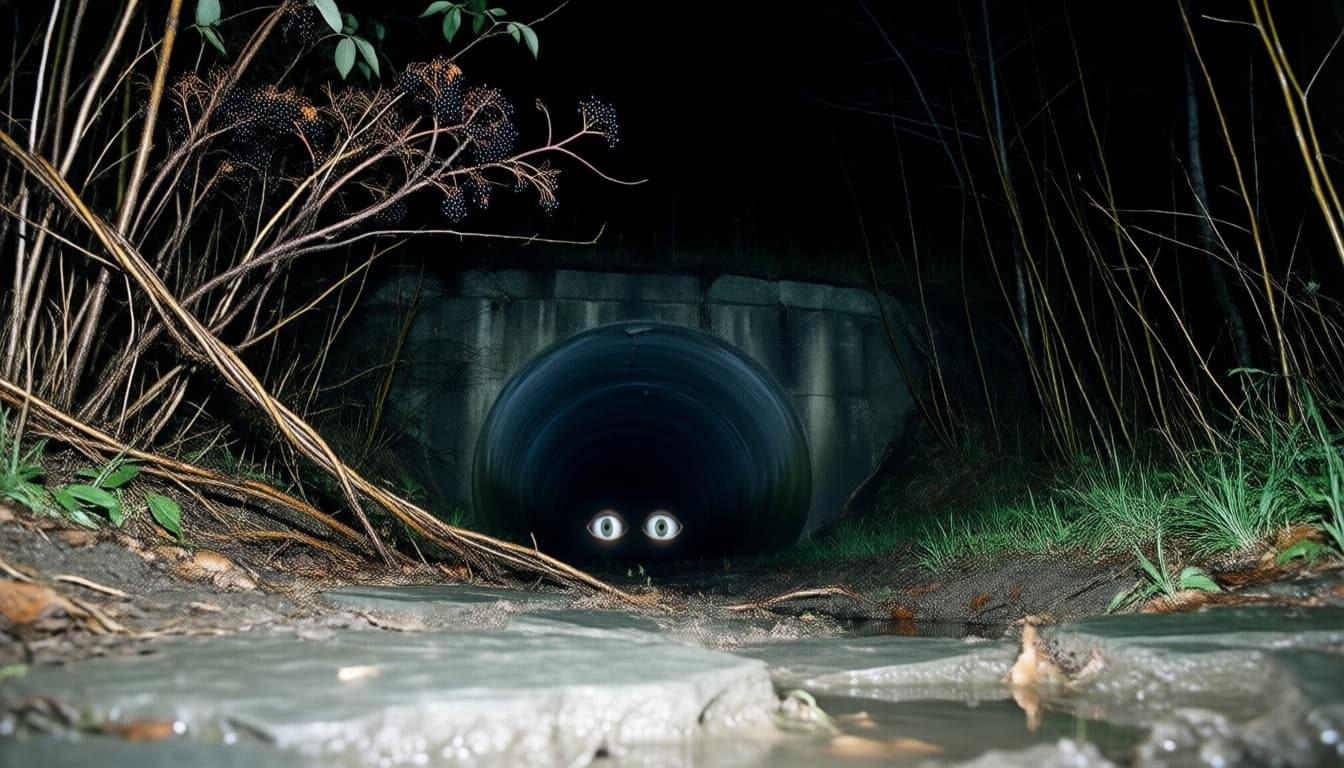
Vance adjusted his optical leveling scope, his fingers suddenly freezing. At the edge of the reticle crosshairs, two reflective pinpoint eyes flared behind a thicket of dry elderberry. They matched no known predatory fauna. They were not set lateral like a deer’s, nor close together like an owl’s or bobcat’s. The distance between the eyes was twice that of an average human face. As he adjusted the focal ring, a cold chill gripped his spine. It was no animal. Through the lens, framed by unnaturally stretched, paper-thin pale skin, three pairs of sunken human eyes were staring straight up at him from the dark thicket.
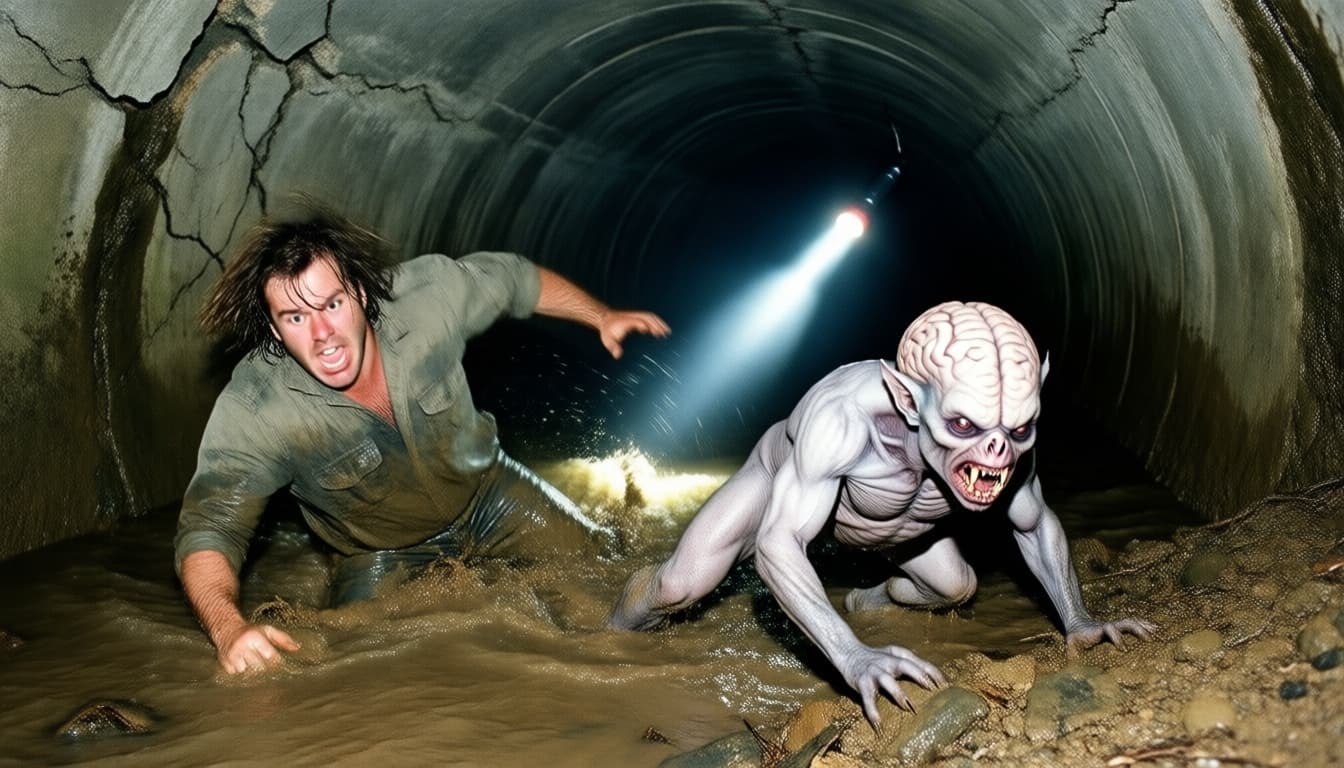
Panicked, Vance grabbed his tripod and scrambled to climb the shale slope, but the damp rock gave way beneath him with a hollow roar. Sliding down the muddy bank, his right foot wedged hard into the tangled root system choking the culvert mouth. From the underbrush, the silhouettes did not leap—they crawled. Three of them emerged on all fours, wobbling violently under the sheer weight of their grotesquely swollen, spherical heads, yet scuttling forward with the uncanny speed of joint-broken crabs. None stood taller than three feet. From compressed vocal cords and narrowed nasal passages came a wet, rapid clicking noise that echoed through the misty ravine.
The largest entity lunged across the mud, wrapping pale, malformed limbs around Vance’s trapped leg. There was no feral roar, only a choked, phlegmatic breathing. A second creature clambered onto his shoulders, forcing his face deep into the shale silt. Short, callous fingers, worn flat like digging trowels, dug viciously into the soft tissue of his throat. In suffocating darkness, Vance swung the heavy brass head of the prism pole blindly behind him. Thud. It did not sound like cracking bone; it sounded like a heavy ceramic jug bursting under extreme hydrostatic pressure.
A deep fissure split the creature’s scalp, and a stream of clear, translucent fluid surged out over the mud. The creature let out no cry; it merely dropped to the ground, twitching rhythmically in silence. Instantly, the hands strangling Vance went rigid in mid-air. Even as Vance thrashed to tear himself away, the second creature’s fingers remained locked in the empty air, spasming in exact sync with the dying spasms of its fallen kin. Moments later, the remaining two entities completely ignored Vance, shoving their faces into the mud to lap up the clear fluid draining from the split skull.
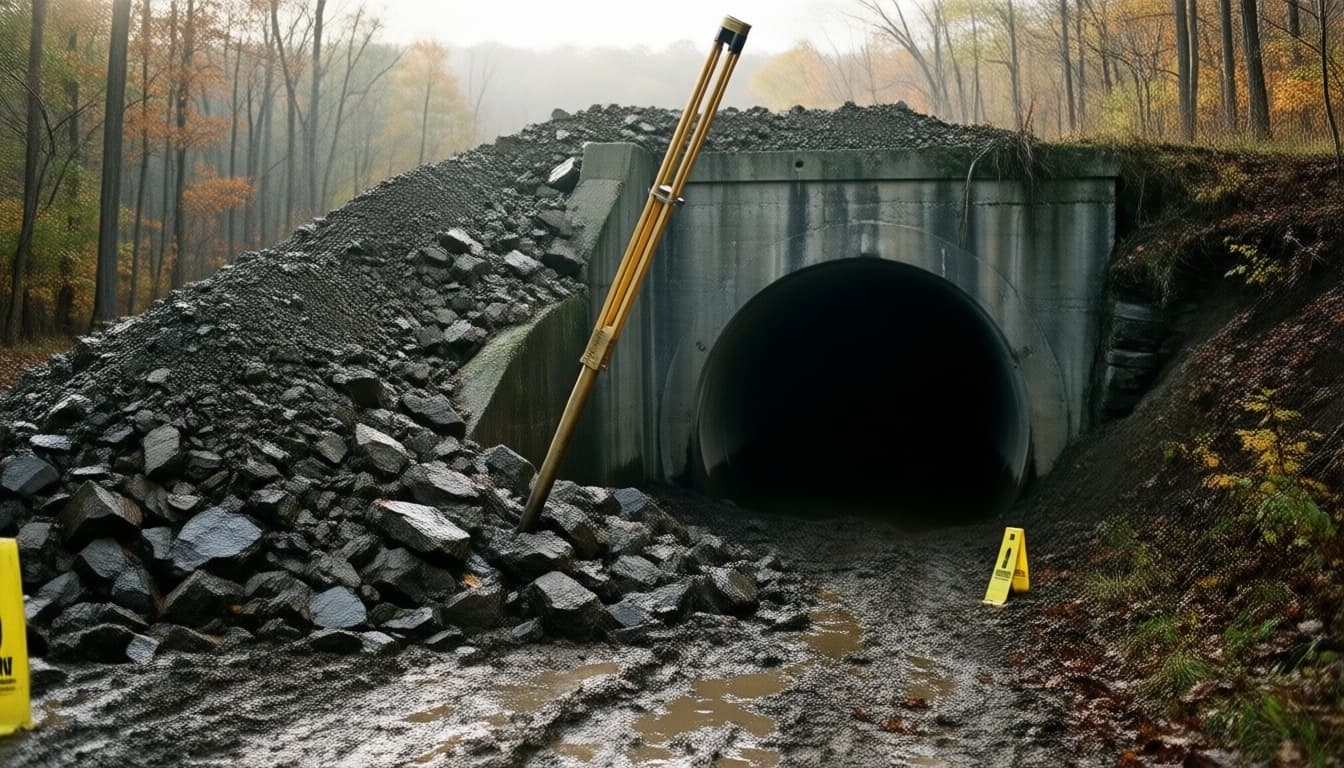
Ignoring his torn ankle ligaments and leaving a work boot lodged in the roots, Vance crawled frantically up the crumbling shale wall using his bare elbows. When the search-and-rescue team arrived the next morning, not a single piece of Vance's equipment was recovered from the ravine floor. The culvert mouth had been completely buried under tons of freshly scraped shale debris, intentionally dumped from the rim above. The only item recovered was Vance’s brass survey pole protruding from the rubble. The clear residue adhering to the brass was verified as albumin and beta-trace protein—markers of human cerebrospinal fluid. However, genetic analysis revealed severe homozygous mutations, indicating three or more generations of closed, maternal inbreeding without any external genetic introduction.
In November 1998, the Lake County Board of Commissioners permanently closed the section of Wisner Road near Mitchell's Mill, citing 'severe slope instability and drainage hazards.' All further excavation permits were permanently denied. Even today, if you stand at the northern barricade of Wisner Road just after dusk, a faint, rhythmic clicking can still be heard from the bottom of the ravine—the sound of things crawling impossibly low to the ground, scraping their blunt fingernails along the wet, slick Chagrin shale.
[ CLASSIFIED VERDICT ]
[ACCESS LOG - SOURCE FILE]
Based on the prominent Midwestern urban legend of the 'Melon Heads,' centered in Ohio and Michigan. According to the legend, hydrocephalic children kept at an isolated facility were subjected to unethical experiments by a rogue doctor in the 1960s, eventually fleeing into the surrounding wilderness after a catastrophic fire. Wisner Road in Lake County, Ohio, remains notorious to this day as a hotspot for sightings of these feral, mutated humanoids.