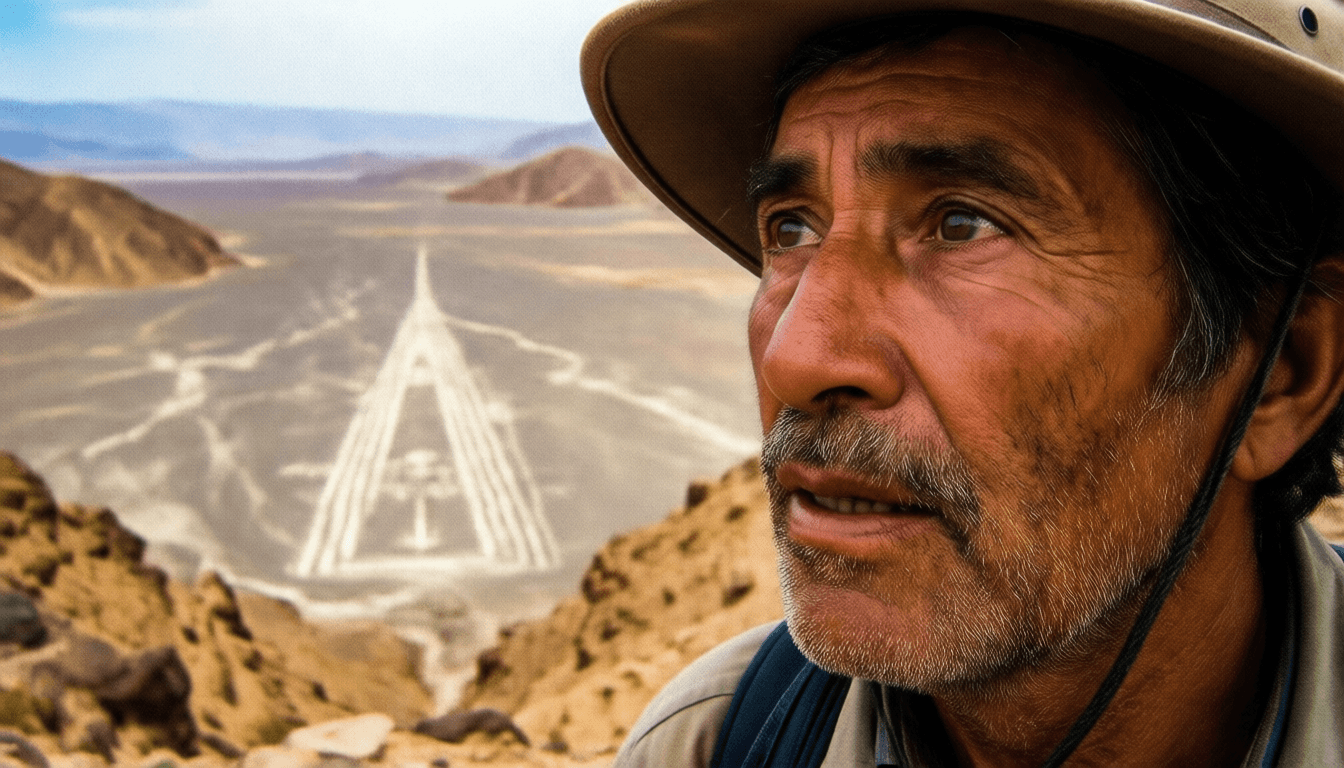
Nazca Lines: Ancient Civilization's Secret Hidden by the Sky
As a small aircraft slices through the arid plains of southern Peru, the vastness of the Nazca Desert unfolds featurelessly outside the window. But suddenly, your gaze halts. Below, colossal figures, breathtakingly etched into the earth-colored ground, reveal themselves: a hummingbird with a wingspan of 100 meters, a monkey with a spiral tail, a perfect spider, and geometric patterns of impossible scale. These are the Nazca Lines, whose majestic forms were only truly revealed with the advent of aviation in the 1920s.
Before pilots looked down, the indigenous people knew only some paths, and the true grandeur and complexity of these geoglyphs remained largely hidden. A monumental work of art, created by an ancient civilization without means of flight, yet fully appreciable only from the sky. This aerial discovery immediately poses a profound question: Who created these massive masterpieces, and why were they designed for eyes that could not see them?
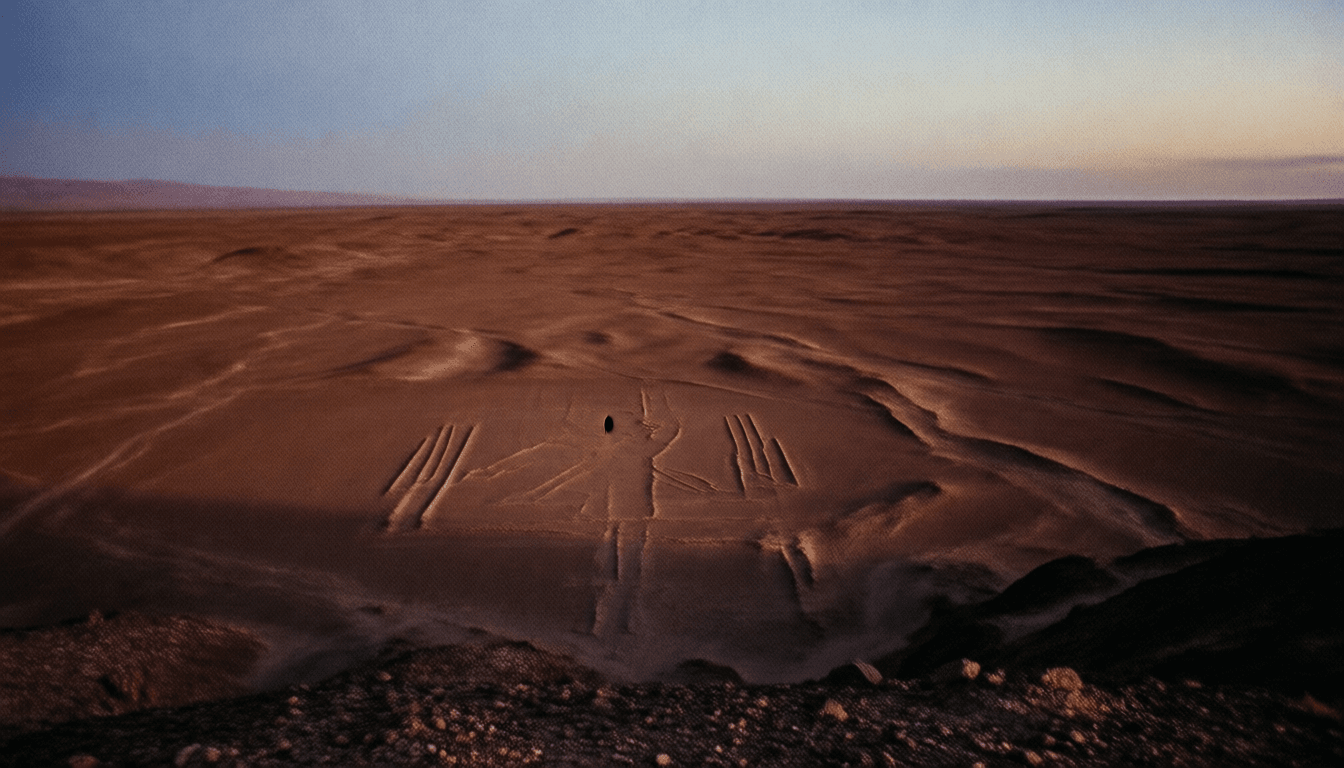
Our exploration begins on the desolate, majestic plains of the Nazca Pampa. We delve into the physical structure of how these wondrous creations were made. The Nazca people, who flourished between 100 BCE and 800 CE, ingeniously removed the reddish-brown top layer of oxidized rock and gravel to reveal the lighter, yellowish-gray soil beneath.
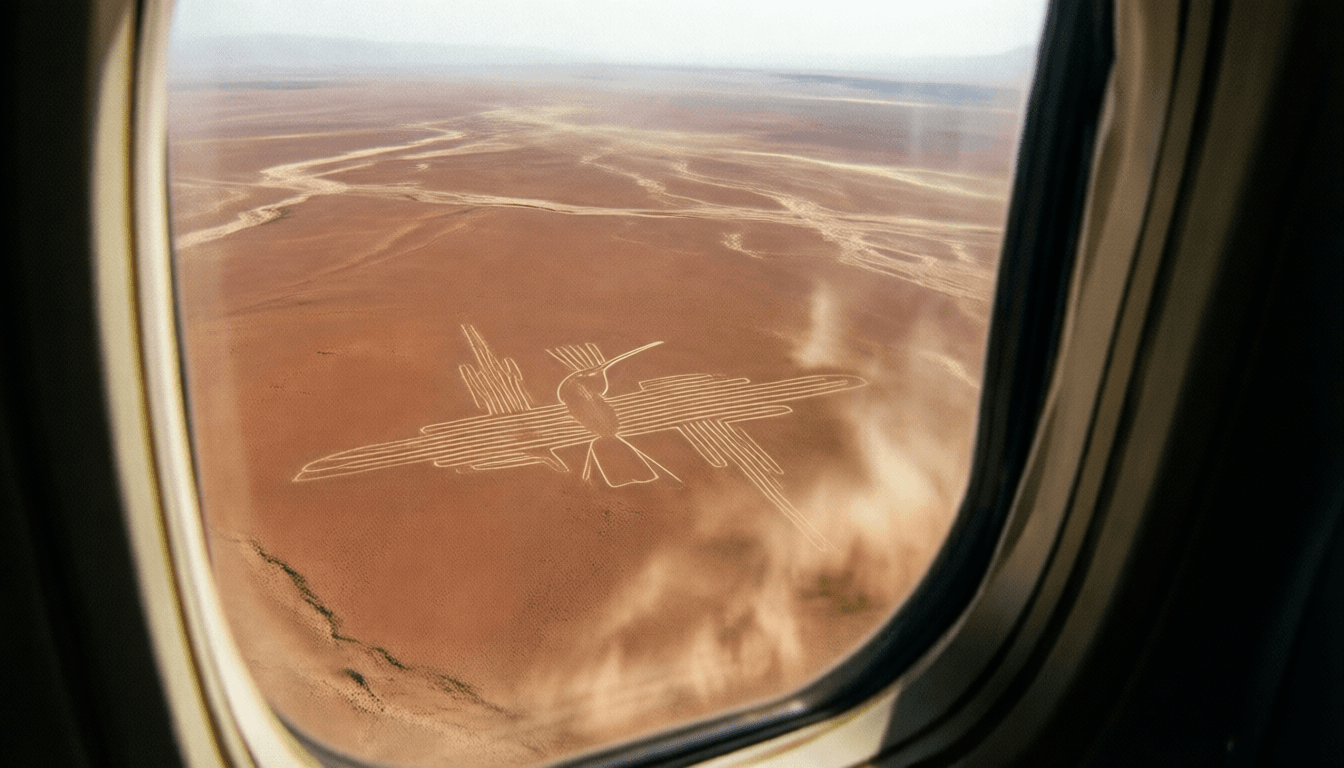
This simple yet effective technique created lines, some mere ditches, others wide bands, forming a vast outdoor canvas. We explore the diversity of the geoglyphs, from the elegant, curved forms of animals and birds to impossibly perfect straight lines, trapezoids, and spirals stretching for kilometers.
The remarkably stable desert environment, with minimal wind, rain, and erosion, has preserved these delicate markings for nearly two millennia – a silent testament to the creators' intentions and the earth's gentle guardianship. The sheer scale and meticulous execution, even when felt from the ground, hint at a monumental, organized effort involving thousands of individuals.
As we understand 'how', the question of 'why' leads us deeper into the unknown. Early researchers, notably Maria Reiche, dedicated decades to mapping and protecting these lines, hypothesizing they might be a gigantic astronomical calendar marking solstices and equinoxes, or sources of water essential for an agrarian society in an arid land.
Other theories emerged: pilgrimage routes, elaborate ceremonial pathways, or colossal offerings to mountain deities overseeing crucial water sources. Yet, no single theory fully explains the puzzling diversity and sheer volume of the geoglyphs. Why are some animals and others abstract forms? Why are many interwoven, while some stand alone?
The deepest enigma lies in the fact that these colossal drawings can only truly be appreciated from hundreds of feet in the air. How could the Nazca people, without hot air balloons or aircraft, achieve such perfect symmetry, scale, and perspective over vast distances? Here, traditional archaeology and science reach their limits, facing a visual and design problem that seems almost impossible for that era.
The most captivating and stubbornly unexplained aspect of the Nazca Lines lies in their astonishing precision and design. Consider the 'hummingbird,' 93 meters long, maintaining perfect proportions, or the 'spider,' whose legs subtly connect in ways that seem utterly impossible with crude ground planning.
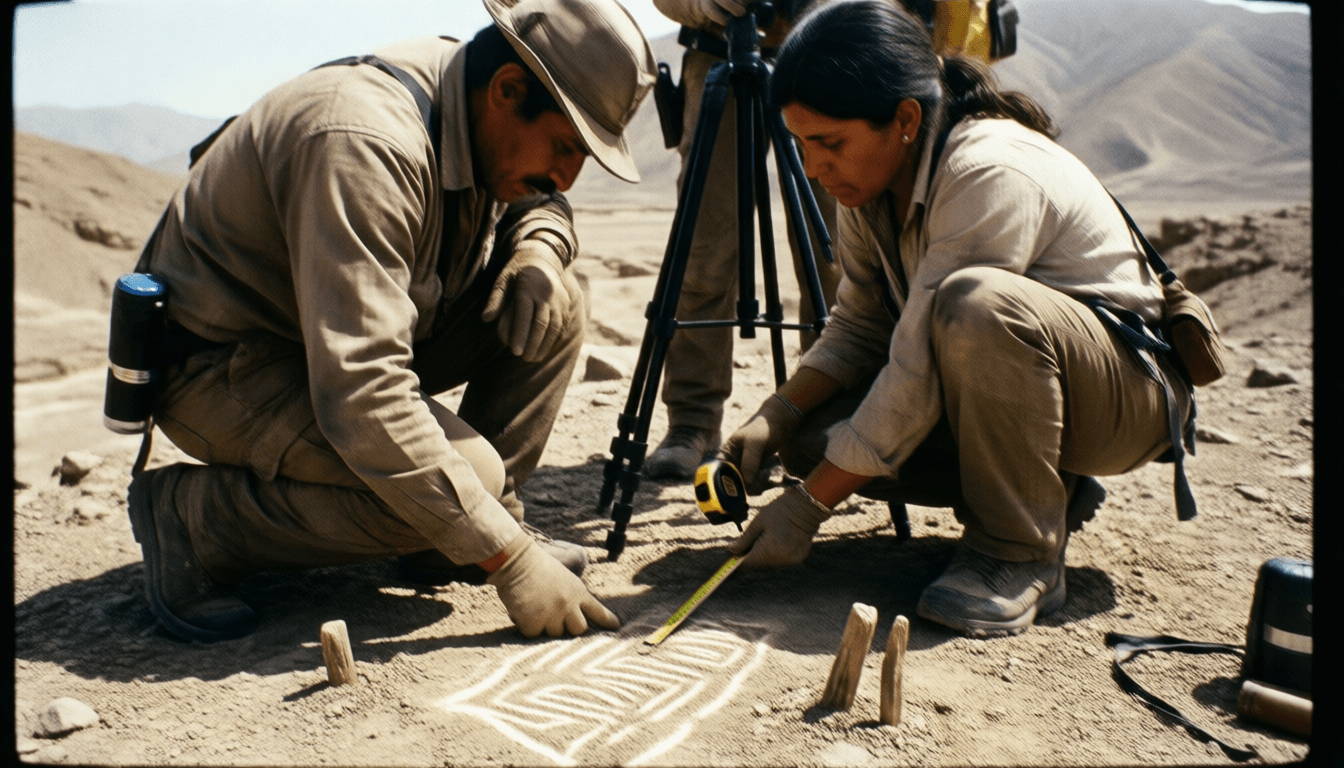
Even more perplexing are the geometric figures. Trapezoids and straight lines maintain their direction without wavering for kilometers, showing no distortion despite traversing uneven terrain. While wooden stakes and ropes found at some sites suggest sophisticated surveying techniques, the perfect execution of such vast, perspective-dependent designs with only these basic tools remains a profound mystery.
That such intricate and large-scale images could be visualized and executed without an aerial vantage point suggests either unknown technologies, a mastery of geometry and scale far beyond what is typically attributed to ancient cultures, or that the human endeavor was driven by a purpose so profound it is simply inscrutable – by a vision beyond our understanding.
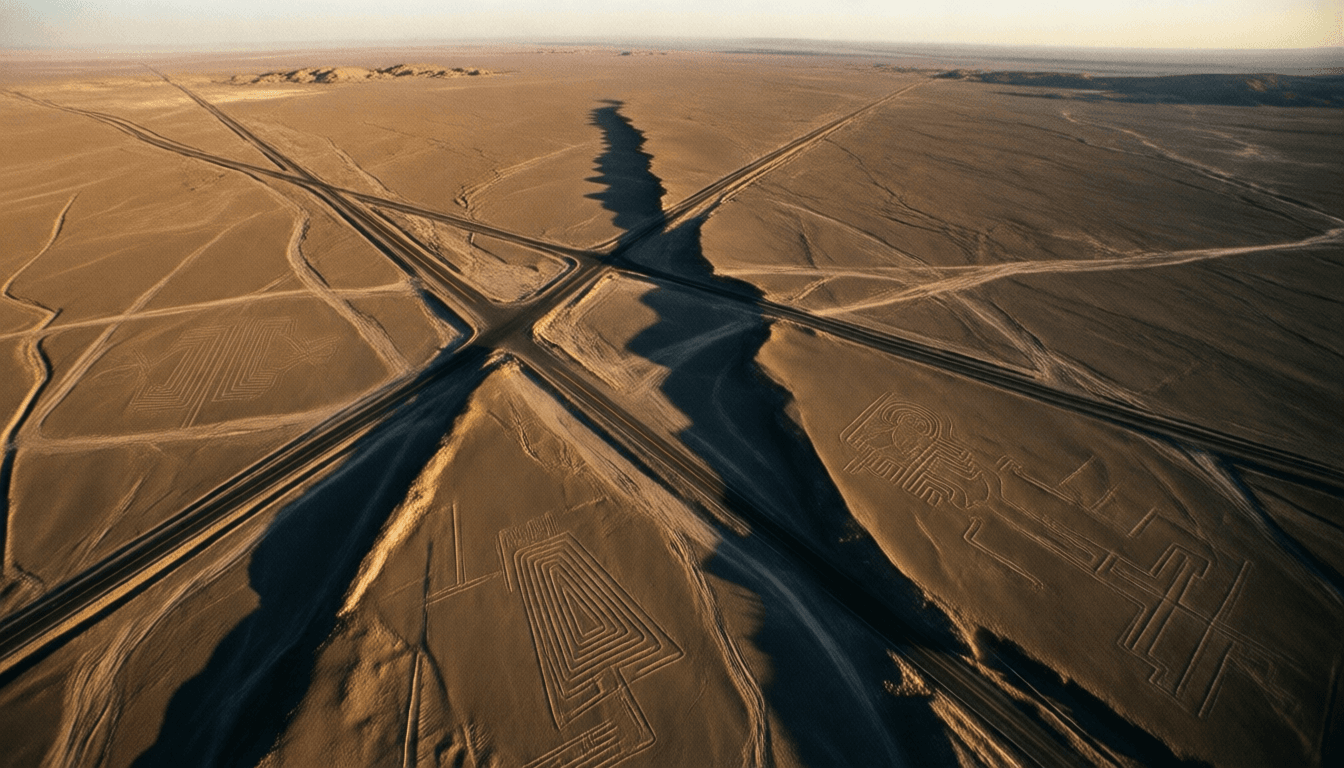
As the sun sets over the Nazca Pampa, casting long shadows across the ancient etchings, the full weight of the mystery settles. Generations of researchers, armed with satellite imagery, drones, and sophisticated mapping tools, have peeled back layers of dust and theory, yet the ultimate purpose of the Nazca Lines remains elusive.
Were they ancient forms of communication with sky gods? Monumental prayers for rain? A cosmic map? Or an elaborate ceremonial landscape whose meaning has been completely lost to time? The desert floor continues to guard its profound secrets, offering no definitive answers.
What remains is a humbling testament to the ambition, ingenuity, and profound spiritual or scientific drive of a civilization long vanished. The Nazca Lines are etched into the earth as breathtaking silent questions, inviting us to ponder the vastness of human potential and the enduring realization that some of history’s most magnificent creations may forever remain beyond the grasp of our complete understanding.
[ CLASSIFIED VERDICT ]
[ACCESS LOG - SOURCE FILE]
The colossal geoglyphs known as the 'Nazca Lines' in Peru's Nazca Desert remain a great mystery because, despite being created by an ancient civilization, they can only be fully appreciated from the sky. There are numerous hypotheses about who, why, and how these massive drawings were perfectly made without an aerial perspective, but no clear answers exist yet.