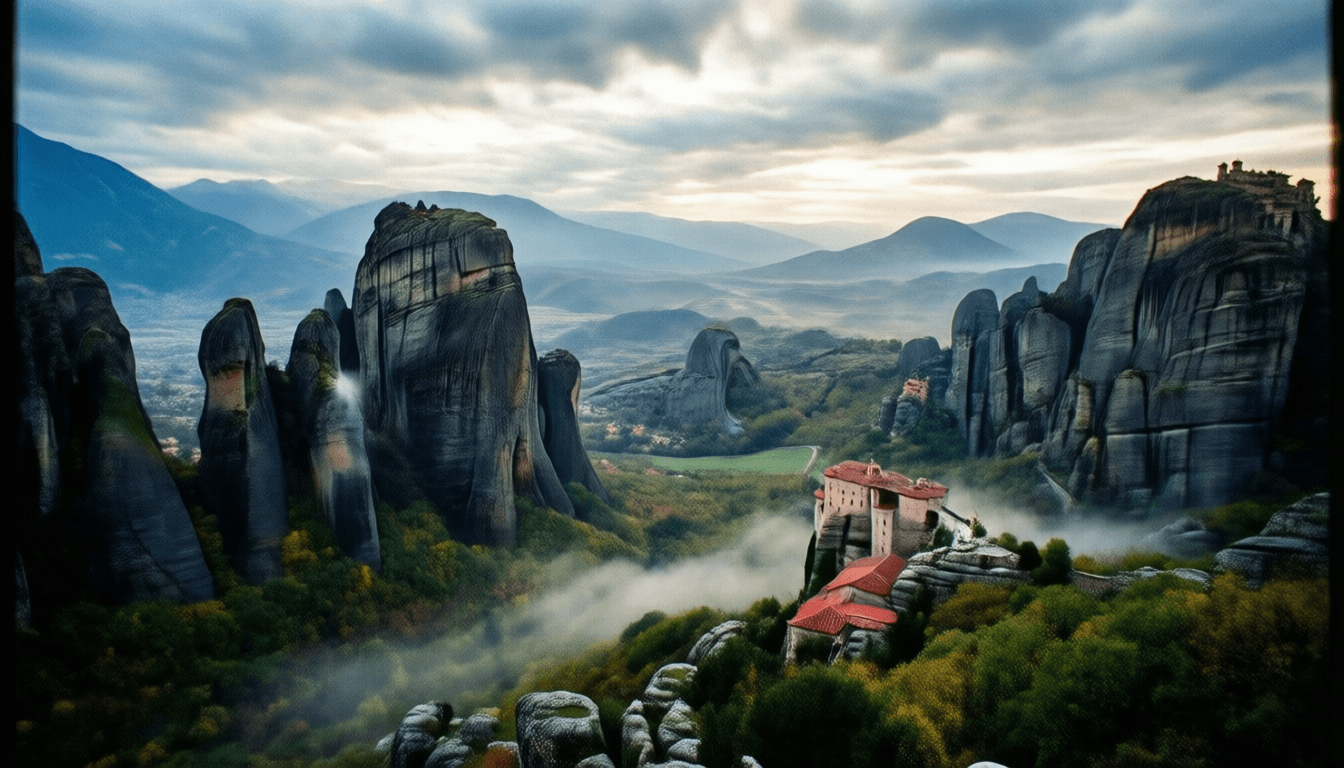
Monasteries Above the Sky: The Impossible Construction Mystery of Meteora
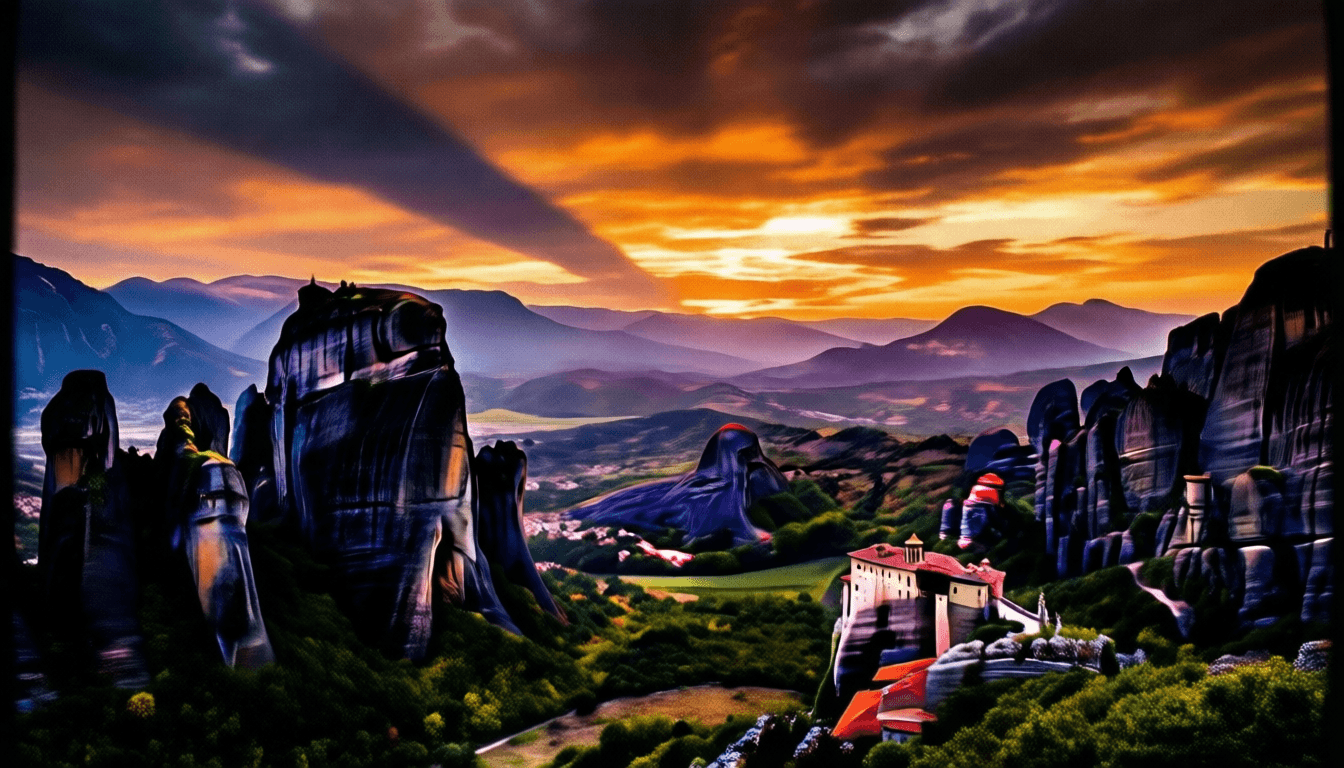
In the heart of Greece, not amidst ancient ruins, but in a landscape so surreal it feels awakened from a dream, our story begins. Where the vast and fertile plain of Thessaly meets the distant Pindus Mountains, the earth unexpectedly thrust upward, forming a colossal "forest of limestone pillars." These smooth sandstone monoliths, soaring over 400 meters high, command attention not just for their geological grandeur. Perched atop these seemingly unconquerable rock peaks, defying gravity and logic, lie ancient monasteries. Stone and timber structures, precariously clinging to the edge of existence on cliff faces, accessible only by vertical drop or arduous, nearly invisible paths. This is Meteora, meaning 'suspended in the air.' The name itself poses an impossible question that has remained unanswered for centuries: How were they built there?
To truly grasp Meteora's magnificence, one must stand at the base of these colossal rock pillars. Geologists explain that millions of years of ancient river deltas, seismic activity, and relentless erosion sculpted this conglomerate rock into its distinctive vertical sentinels. Yet, this geological marvel only deepens the human mystery. Historical records suggest that by the early 11th century, the first hermits arrived in the area, seeking ultimate isolation in caves carved into the rock faces. But by the 14th century, a far more ambitious vision took shape. Monks began construction not within caves, but atop these rock pillars. Some were sheer drops, others only reachable by perilous rock climbing – an unreal construction site representing a deep, desperate yearning for spiritual sanctuary. Early ascents involved removable ladders, ropes, and rudimentary pulley systems, with people and materials hauled up in large nets. The very idea of these pioneers carving out footholds and enduring the harsh elements only offers a glimpse into the monumental work that would follow.
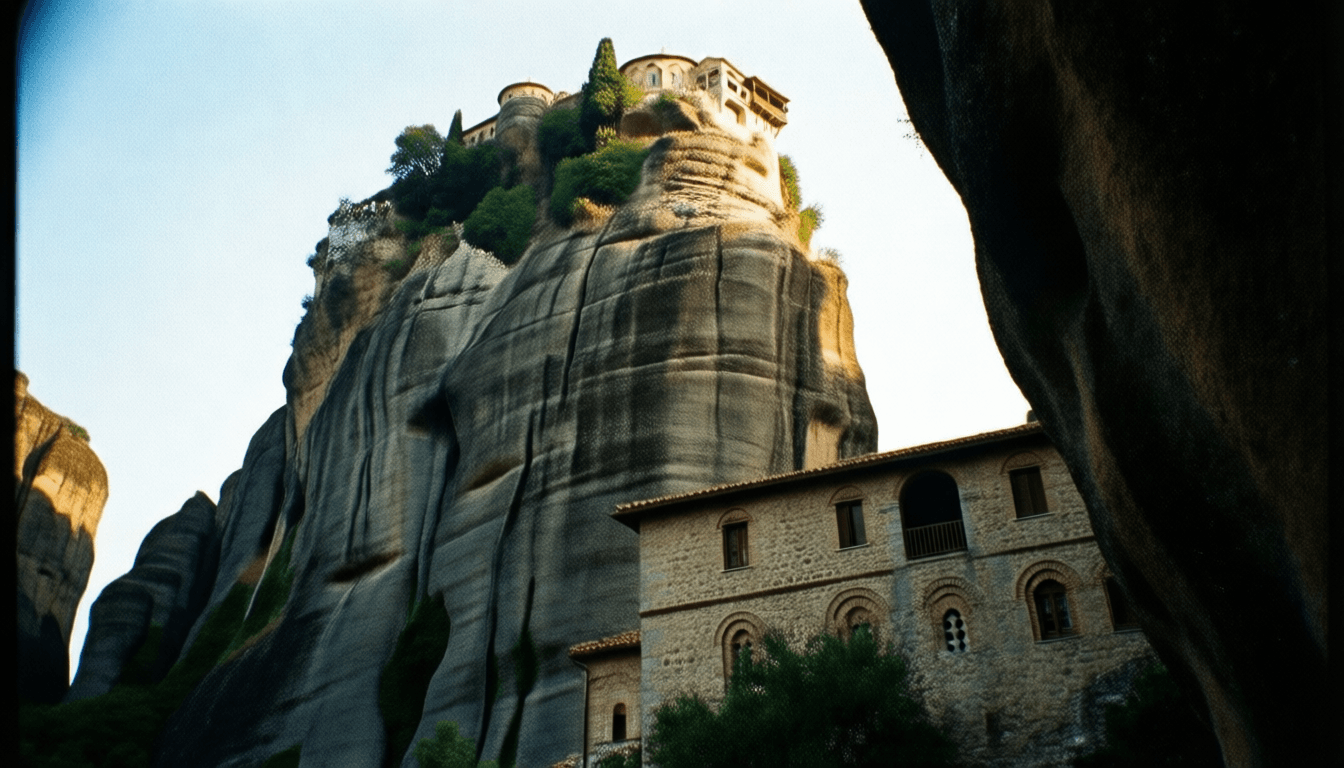
As the number of monasteries grew to twenty-four, the logistical challenge transformed into an engineering enigma. Beyond merely ascending, the construction itself was the issue. Enormous weights of materials—wooden beams, quarried stone, plaster, Byzantine frescoes—had to be transported from the valley floor to dizzying heights hundreds of meters above. Today, there's little archaeological evidence of the extensive scaffolding systems that would be required for a project of this scale. Historical accounts mention nets and ropes, but given the sheer volume and weight of materials needed to erect entire complexes of chapels, monastic cells, and refectories, these methods strain credulity. The intricate way these structures were integrated into the irregular, wind-swept peaks suggests not only advanced building techniques but also a profound understanding of the chosen foundations' inherent instabilities. While modern engineers grapple with the forces of wind and erosion, these ancient architects anchored their structures with a permanent stability that defies the perceived limitations of their era.
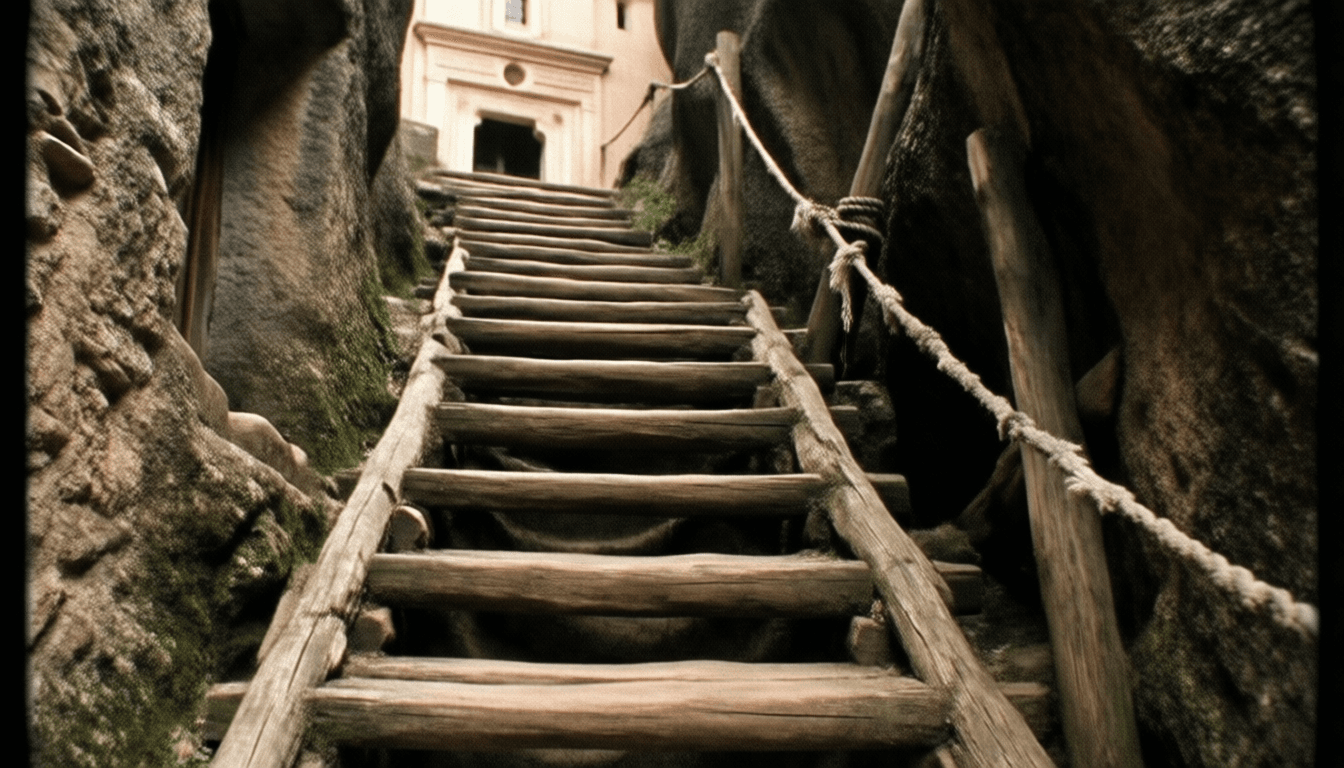
The most wondrous, and perhaps inexplicable, aspect of Meteora lies not in the 'how' of its construction, but in the profound 'why.' While early hermits sought isolation, the construction of entire communities atop these impossible fortresses signifies a dedication far beyond simple spiritual solitude. It speaks to a collective will, a lost architectural knowledge, or an almost supernatural tenacity. The idea that this monumental undertaking, continued by successive generations of monks over centuries, could have been accomplished solely with the tools and techniques we know challenges our understanding of ancient human capabilities. These were not just isolated hermits; they were architects, planners, and engineers of remarkable prowess, their methods largely unrecorded and unexplained. The sheer audacity of their vision, and their successful execution of a task that would challenge even modern technology, leaves a vast, silent question mark etched into the stones of the sky monasteries above the Thessalian plain.
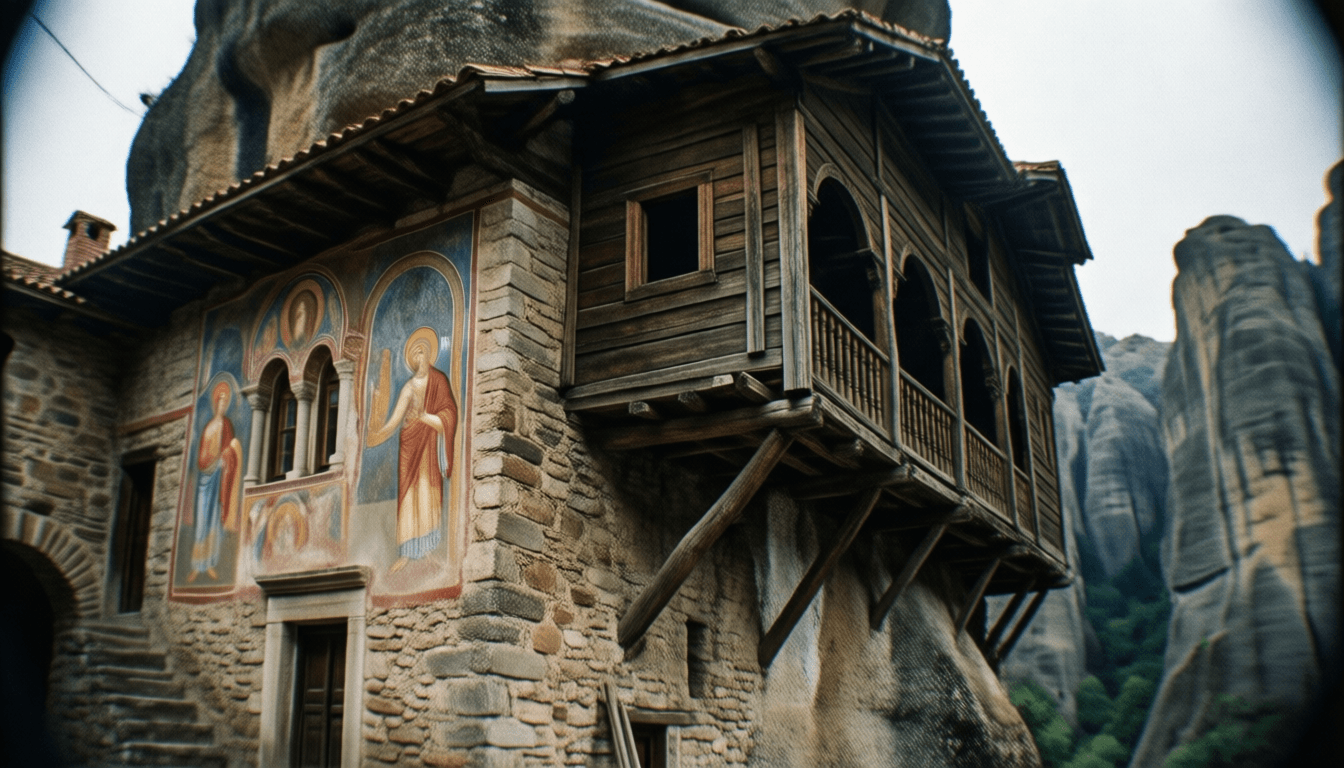
Today, as the last rays of sun illuminate Meteora's ancient stones, painting the sky in hues of orange and violet, the initial questions remain. The modern world marvels at their enduring presence, a testament to faith, ingenuity, or a confluence of forces we can only surmise. We can visit, ascend by modern means, and appreciate the art within, but the true secrets of their genesis remain locked within the silent stones. A tale of profound effort, forgotten methods, and the immense audacity to build cities in the sky continues to whisper across millennia—a monumental testament to human will, or perhaps a deeper, more mystical connection between ambition and the forces of the natural world. Forever suspended between earth and sky, beyond human comprehension.
[ CLASSIFIED VERDICT ]
[ACCESS LOG - SOURCE FILE]
Meteora refers to ancient monasteries built atop massive rock pillars that rise from the Thessalian plain in Greece. How these structures, which would be challenging even with modern technology, were constructed in the Middle Ages, and why, remains a mystery. This raises questions about human will, lost architectural techniques, or unknown forces, leading to countless speculations.