Jangsanbeom's Whispering Temptation
Rumors circulating online began to coalesce into specific threads on some Korean hiking forums and local community boards. Reports spoke of “sounds that were not quite right for animals” echoing from a deep valley near Jirisan National Park. It wasn't just strange; it was too perfect. The chillingly flawless scream of a deer reverberating in a forest too dense for deer to inhabit. The exact same mournful cooing of a pigeon from its nest, repeated three times from an utterly impossible direction. Small articles subsequently appeared in local newspapers. Along with reports of missing hikers, there was a chilling anecdote: after a dog barking fiercely at the edge of a rural home's yard suddenly vanished, a distinct, high-pitched sobbing sound emanated from the dark forest, pulling the family's attention before abruptly cutting off. An archived voice message from a hiker, now deleted, was even more unsettling. Sent to his wife, it contained the words: “Honey, I keep hearing your voice. You didn't come here, did you? It sounds just like you… coming from deeper inside…” Then the signal cut out. This pattern was subtle, easily dismissed as mere animal sounds or psychological pressure, but for those who looked closer, a terrifying story unfolded. It was mimicry, designed to lure.
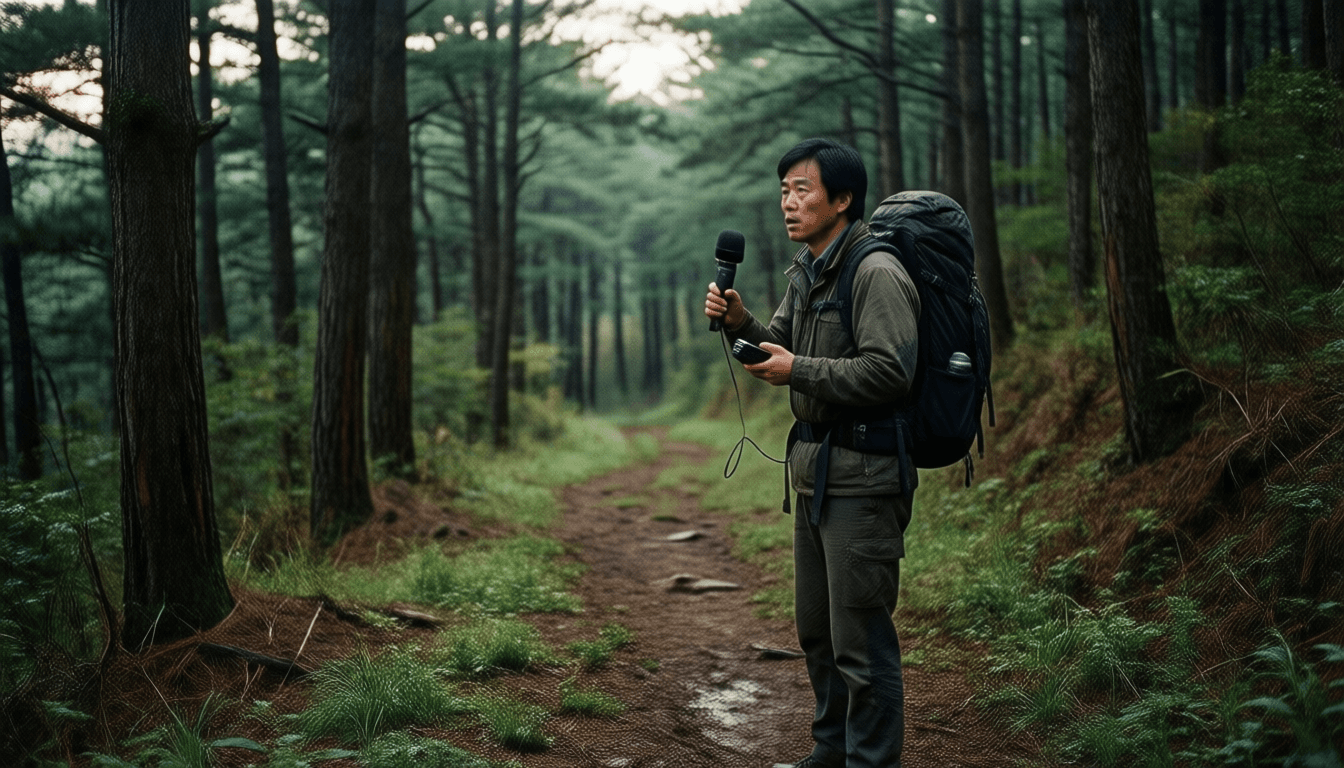
As always, my interest lay at the intersection of persistent folklore and unexplained phenomena. The Jangsanbeom—'Tiger of Jangsan' or 'Hairy Beast of Jangsan'—was an unconfirmed creature described as a white-furred, feline-like animal that mimicked human voices and natural sounds to lure victims. Given the recent spate of reports, I packed minimal gear: a voice recorder, a directional microphone, a high-intensity headlamp, a satellite phone, and emergency rations. My destination was a remote section of Jirisan, a seldom-used trail near where the reported disappearances had concentrated.
The trail was overgrown with lush grasses, and the air hung heavy with the scent of pine and damp earth. As I ventured deeper, an overwhelming silence descended rapidly, the usual rustle of leaves or distant bird calls vanishing sooner than expected. It wasn't merely quiet; it was an 'absence' of sound, an inherent void. The ground, softened by decades of accumulated fallen leaves, swallowed even my footsteps. My directional microphone, which initially picked up faint insect chirps, now registered nothing but the hum of its internal circuits.
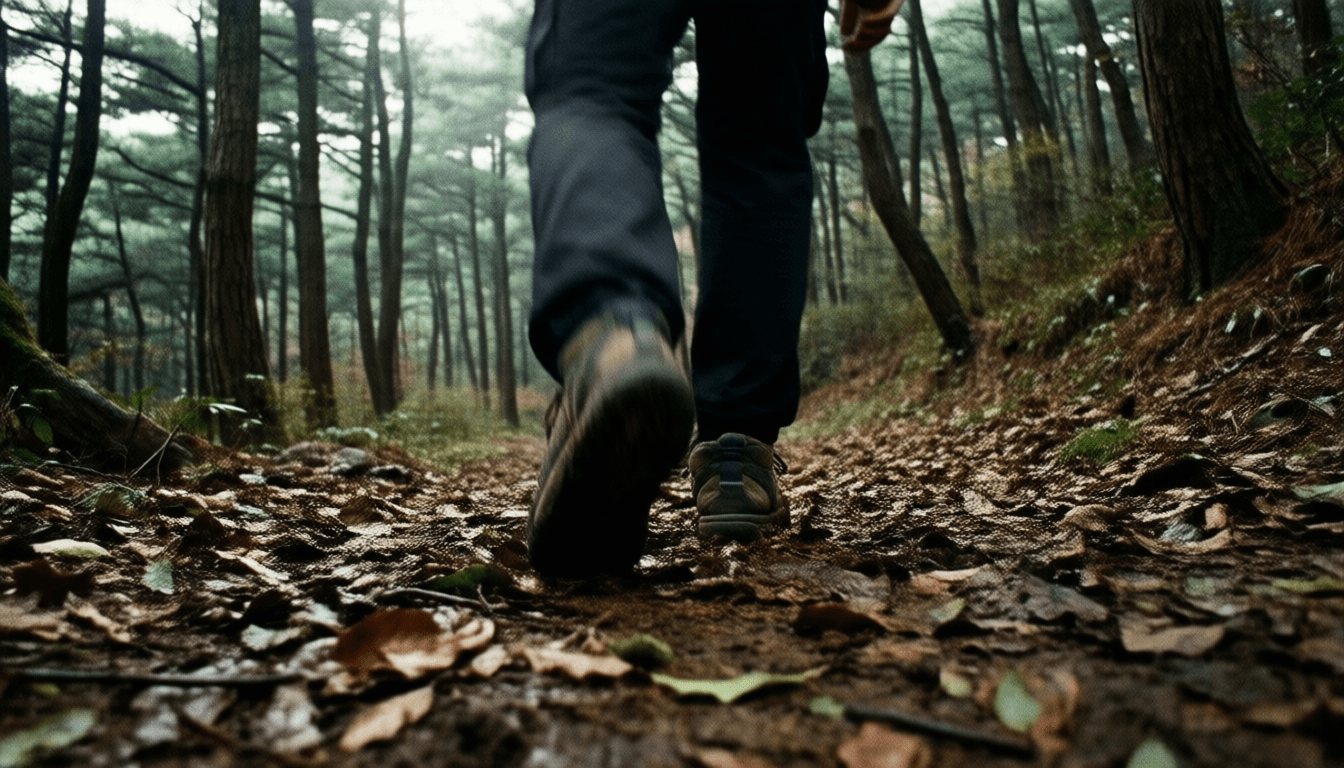
The first anomaly was a distant, almost imperceptible sound: a child's laughter. Clear and pure, yet utterly out of place in this remote wilderness. It faintly echoed, then faded. I stopped, recorder in hand, but the forest merely returned profound, empty silence. Minutes later, pushing through particularly dense undergrowth, a sharp 'snap' of a twig came from directly behind me. My heart hammered, but when I turned, nothing was there. The sound itself had been too distinct, too close. It was as if it had mimicked my movement from moments before.
I pressed on, my senses heightened. The path narrowed, leading into a steep ravine where the air grew noticeably colder. Here, the subtle disturbances escalated. Faint whispers, carried on a non-existent breeze, spoke my name. Then, the perfect drumming of a Red-bellied Woodpecker—but it emanated from beneath a root, an impossible location. The most unsettling moment came when I paused to drink water. Immediately after I took a sip, the sound of water hitting metal was perfectly replicated from behind a rock directly in front of me. The acoustics in this enclosed space were warped; echoes were unnaturally delayed, or sounds seemed to originate simultaneously from multiple, contradictory points. It was no longer a case of merely hearing things; it was a distinct sensation of being 'heard,' and being 'mimicked.'
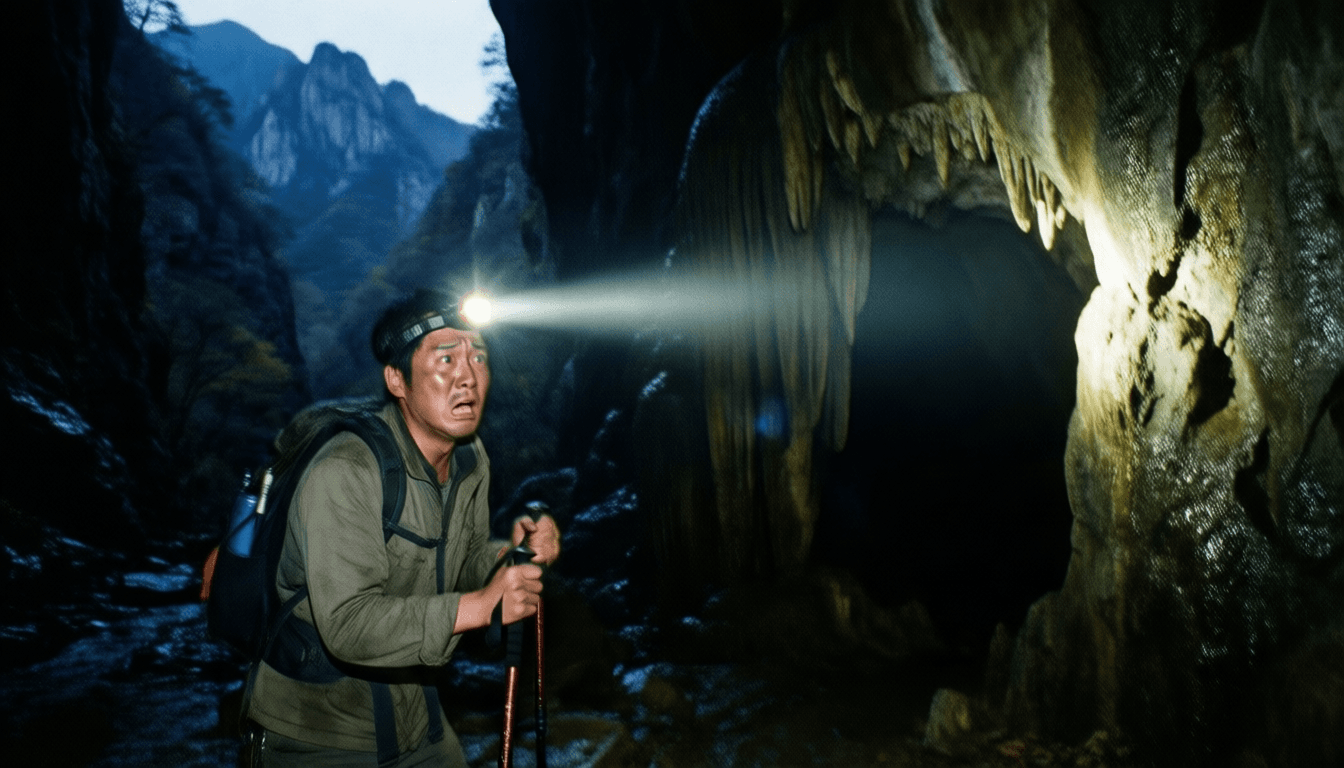
As dusk approached, the ravine deepened, plunging into shadow. It was time to turn back. That's when the true mimicry began. My satellite phone, tucked in my backpack, suddenly rang—the ringtone perfectly identical to my home landline. Then, my wife's voice, as clear as if she were standing beside me, echoed, “Honey? Are you okay? Where are you?” The sound wasn't coming from my backpack. It came from down the ravine, from the mouth of a dark cave. Instinctively, I knew it was a place to avoid.
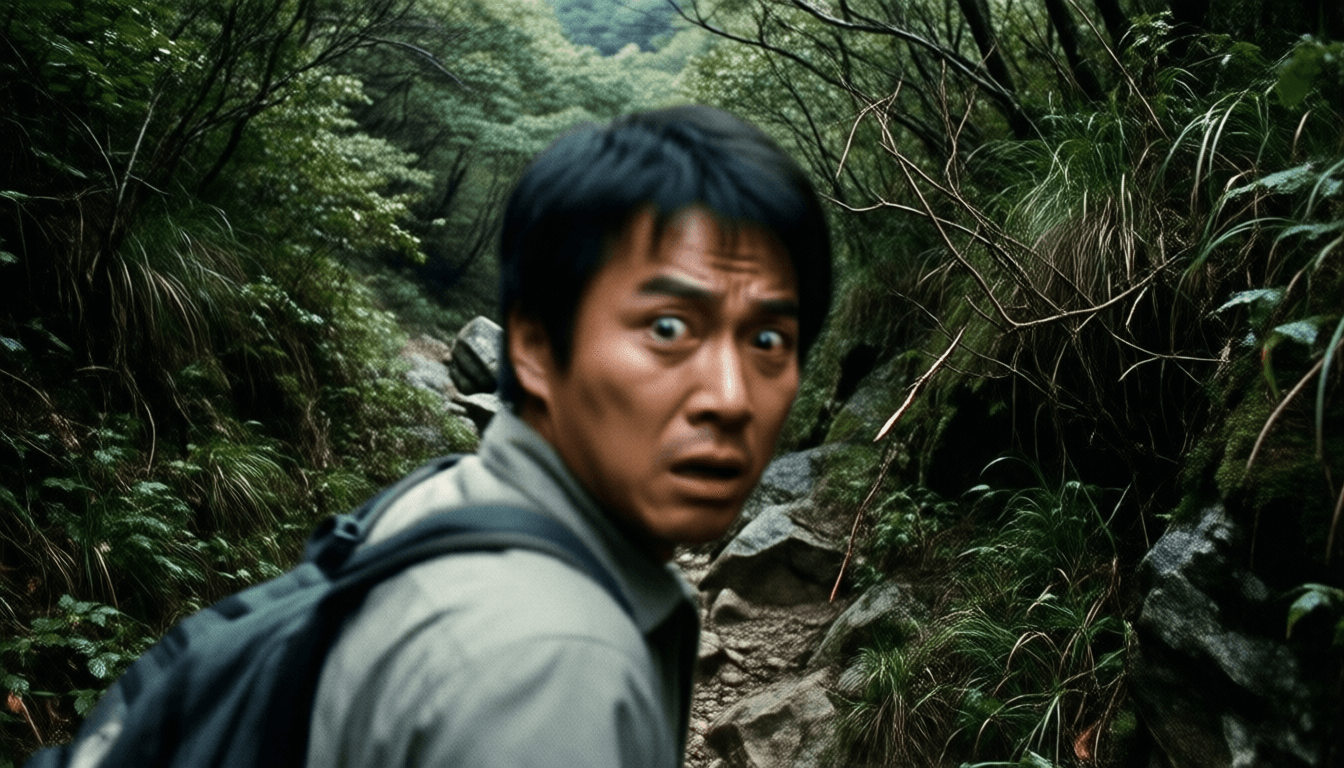
I froze, my heart pounding. This was no trick of an echo; it was active luring. 'Trap!' screamed in my mind. I gripped my hiking pole tightly and shone my headlamp into the cave. The light revealed nothing but ancient rock. Then her voice came again, closer, pleading. “Please… I'm scared. Come help me.” The sound itself seemed to vibrate in my chest, feeling like a physical presence.
I turned to flee, scrambling desperately up the ravine, but then a sudden, ear-splitting scream erupted directly behind me—a twisted blend of human shriek and animal roar. It was so loud it felt like a physical impact, vibrating through the ground, painfully assaulting my ears. I stumbled, my foot catching on loose rocks, and slid down into a shallow crevice. As I struggled to regain my footing, sharp, coarse claws scraped across my backpack, creating an eerily human-like ripping sound. A sudden, icy pressure bore down on my shoulder, vanishing as quickly as it came, but leaving behind a burning coldness. The air around me grew heavy, and a smell of damp fur and something acrid and repulsive filled my lungs. A low growl was heard, then it echoed directly beside my ear, perfectly mimicking my own ragged breathing, in a mocking fashion. It was hunting me, not just with sounds, but with calculated physical intent.
Overwhelmed by sheer terror, I abandoned my backpack and scrambled out of the crevice. My own ragged breathing seemed to pursue me from all directions, distorted into echoes.
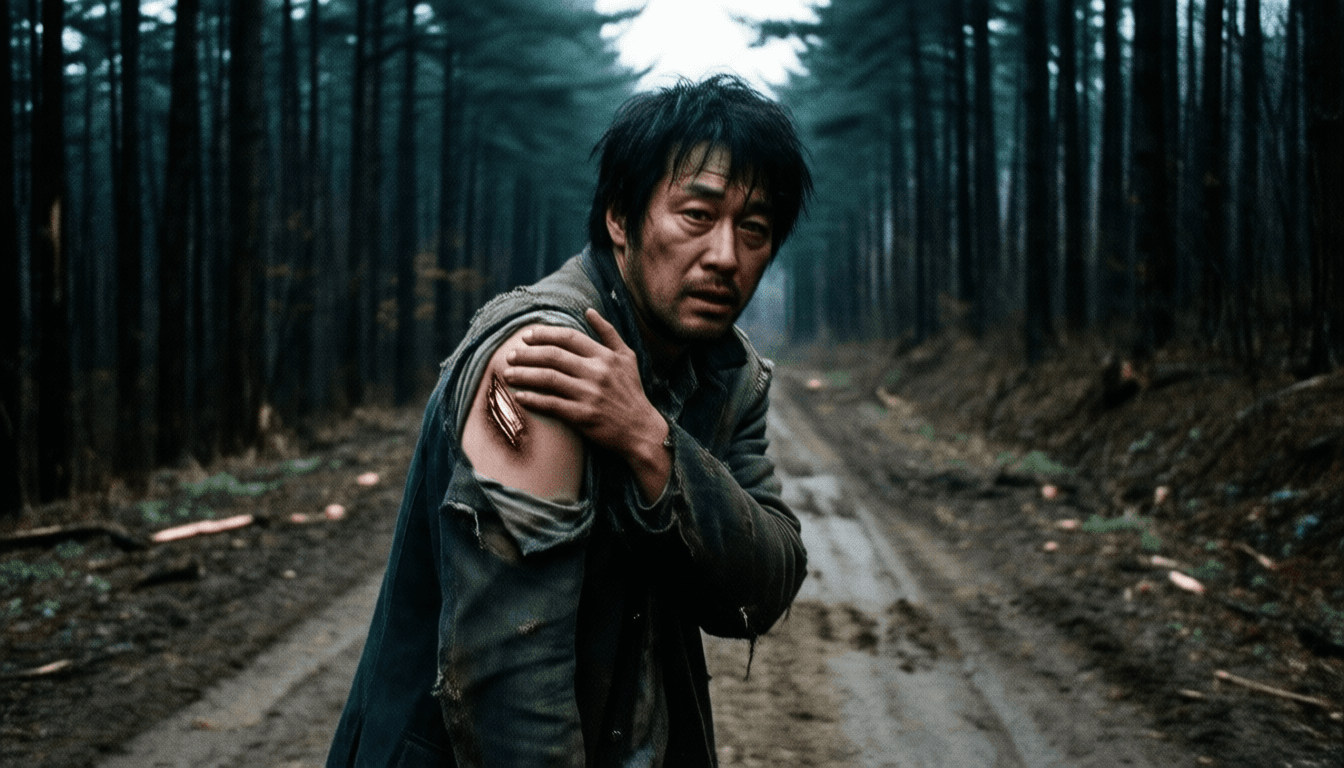
I stumbled out of the forest at dawn, onto a desolate logging road several miles from where I'd parked my car. My clothes were torn, and my shoulder was bruised and bleeding from a shallow, jagged wound. The last two hours in the dark woods were a blur. Only the crushing weight of sound remained, the absolute certainty of being pursued, and the sounds mimicking my fear with terrifying perfection.
Days later, my backpack was miraculously recovered by the search party I'd contacted. The voice recorder was intact. I played back the last few minutes of the recording. After the child's laughter and the twig snap, there was a long, unbroken silence. Then came my muttered curses, followed by faint, perfectly mimicked whispers from an impossible distance. Finally, a series of distorted, overlapping sounds—a woman's pleading voice, my scream, and then a persistent growl, abruptly cutting off as it eerily mirrored my desperate gasps. The last three seconds were just static.
The medical report listed my shoulder injury as “deep scratches from vegetation,” but the wound was too clean and precise to be from branches. And the inexplicable cold sensation lingered for weeks. My wife's voice, calling my name, still drifts sometimes at the edges of my hearing. Always in an empty room, always a whisper. I now subconsciously analyze every sound, dissecting its origin, its purity, its intent. Reports of the Jangsanbeom always spoke of its cunning mimicry, but they never truly conveyed the chilling, profound horror of an entity that hunts you by replicating not just your voice, but the sound of your very soul.
[ CLASSIFIED VERDICT ]
[ACCESS LOG - SOURCE FILE]
The Jangsanbeom is one of South Korea's most prominent urban legends, an unconfirmed creature known to mimic human voices to lure and ensnare hikers or people in isolated areas. It is often described as a white-furred, feline-like animal, with sightings and rumors primarily concentrated in deep mountains like Jirisan. This story reinterprets the horror of the Jangsanbeom's characteristic vocal mimicry and pursuit in a modern context.