The Breathing Fairy Circles
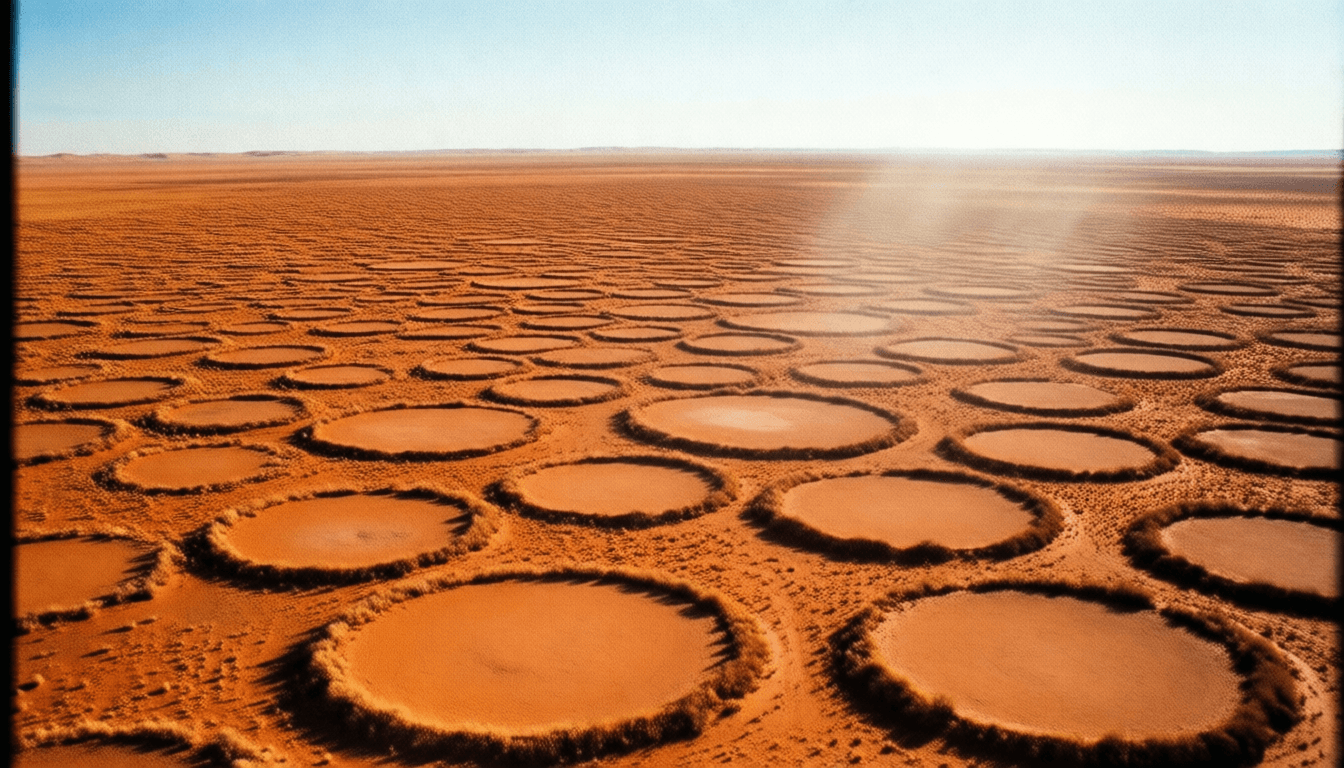
The ‘Fairy Circles’ of the Namib Desert had been a scientific enigma for decades. Millions of perfectly circular barren patches, ranging from 2 to 15 meters in diameter, appeared and disappeared without clear explanation. Numerous hypotheses were proposed—underground termite colonies, self-organizing plant ecosystems, even localized radiation anomalies—but none fully explained their uniform distribution, temporary nature, and the razor-sharp boundary between the barren interior and the surrounding grass. However, among the Himba people, a far older and more chilling story is told. They speak not of insects or botany, but of ‘footprints of the gods’ or, even more unsettlingly, ‘breathing holes of the Earth Dragon’. It’s a tale of an ancient, hungry intelligence lurking beneath the sand, a colossal entity that siphons life, leaving perfect circular scars as its trace. While tourists dismissed these as colorful folk myths, this explanation gained an eerie weight when considering mysterious disappearances of trekkers without a trace in specific areas, and the inexplicable phenomenon of small drones ‘crashing’ when flying over these circles. Especially recently, after satellite images revealed subtle, unexplainable ‘indentations’ at the center of several circles, my attention turned to Zone 7.
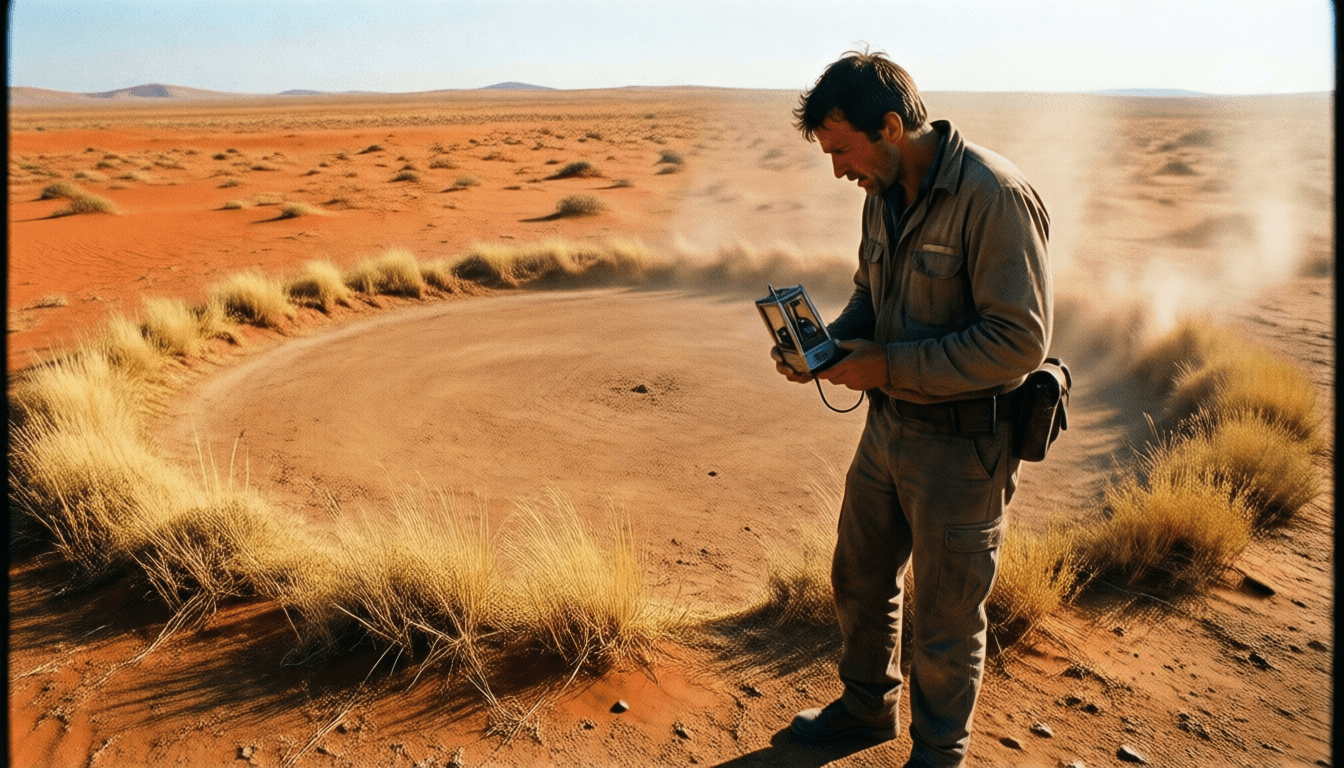
My modified Land Rover rattled to a halt at the boundary of the designated research zone. The immediate, suffocating heat was overwhelming. Dust danced in the harsh sunlight. Ahead, a vast expanse of ochre-colored sand stretched out, dotted with thousands of bizarre, perfectly circular formations. A profound silence was only intermittently broken by the low hum of the cold engine and the crunch of my boots on the rough ground. I had packed a modified seismograph, a gravimeter, and an aerial mapping drone to detect anomalies invisible to the naked eye.
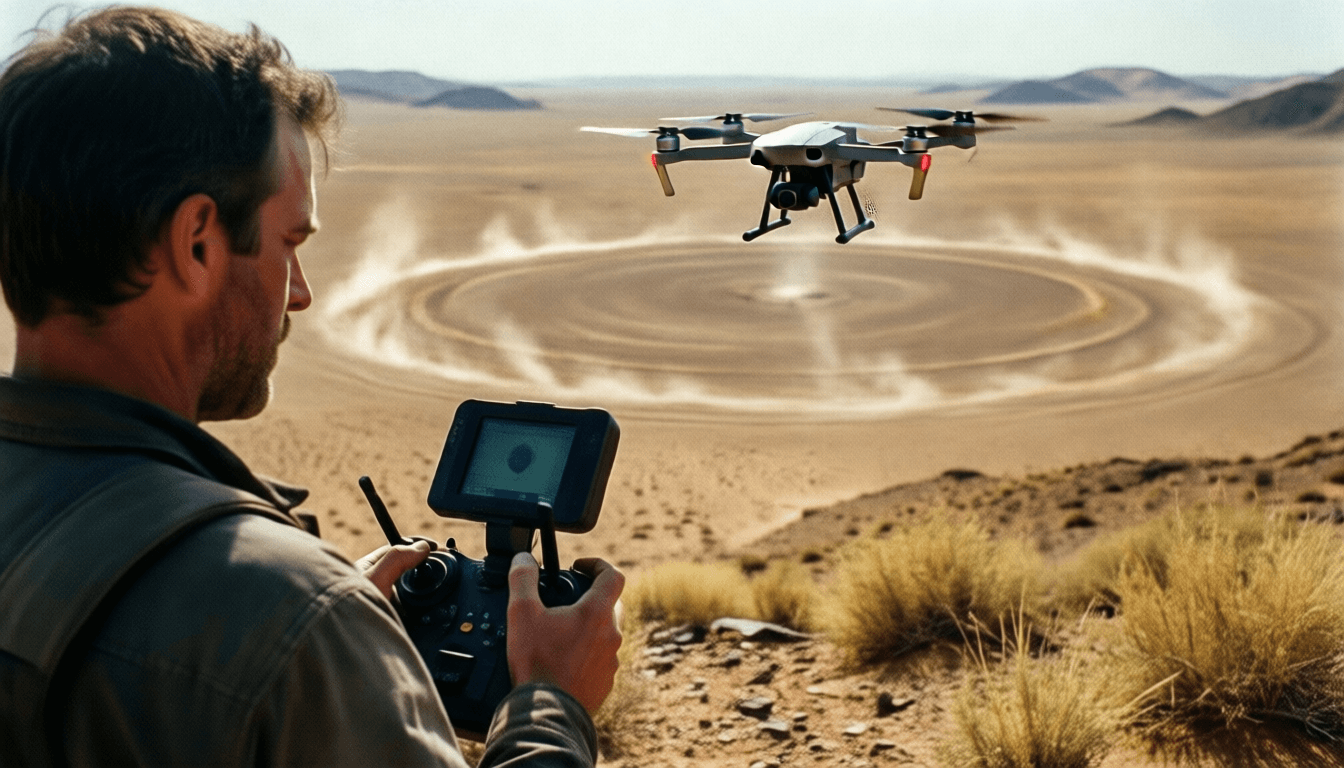
I began my investigation with a large, isolated circle, about 10 meters in diameter, known for its persistent nature. The boundary was sharply defined by a neat belt of green tufted grass. The sand inside the circle was uniformly dry and reddish. There was no plant life, no termite mounds, not even visible insect activity. The sun blazed, making the air shimmer. I first launched the drone to map the area above the circle, capturing high-resolution images and thermal data. As the drone hovered directly over the center, the video feed flickered, briefly displaying a blurry distortion that looked like heat haze but was more structured, before stabilizing. I reassured myself it was merely a minor glitch. As I walked into the circle, the temperature dropped subtly, almost imperceptibly. It felt like stepping into the shade of a non-existent tree. The sand underfoot felt firm and unusually compacted. The seismograph recorded no unusual seismic activity beyond faint earth tremors. However, the gravimeter showed a slight but definite positive gravity anomaly at its center—a localized increase in gravity that shouldn't exist. Re-checking the drone feed, the blurry distortion precisely coincided with this gravity spike.
Deciding to spend the night, I set up a small, camouflaged camp just outside the circle. The desert night was surprisingly cold. As the moon rose, casting long, sharp shadows, I perceived a difference in the quality of light ‘inside’ the circle. It was a deeper, more velvety black than the surrounding terrain, as if it absorbed more moonlight. Familiar desert night sounds, like the distant cries of jackals and the rustling of nocturnal insects, seemed to ‘fade’ whenever my attention focused on the circle. It wasn't complete silence, but an eerie sound absorption, as if the air itself grew denser, trapping all ambient noise within its boundaries. I threw a small stone towards the center of the circle; it landed with a dull thud, its echo completely swallowed.
I observed through night vision goggles. The sand surface inside the circle seemed eerily still. Then, almost imperceptibly, shallow, rhythmic depressions and expansions were detectable on the sand surface. It was like a slow, faint breath. The wind could not explain it. I told myself it was just an illusion, a trick of the night vision or tired eyes. But the gravimeter, still running, was recording periodic, minute fluctuations that corresponded to these ‘breathing’ patterns. These readings were too irregular, too ‘alive’ to be natural geomagnetic currents. A deep sense of unease settled upon me. These circles were not merely barren patches. They were ‘responding’.
Driven by a horrifying curiosity and scientific duty, I re-entered the circle at dawn to investigate this ‘breathing’ phenomenon more closely. I brought my portable ground-penetrating radar. Reaching the center, the air felt noticeably colder and heavier. My boots sank deeper than before. The sand surface around my feet began to ripple, not from wind, but from an ominous internal movement.
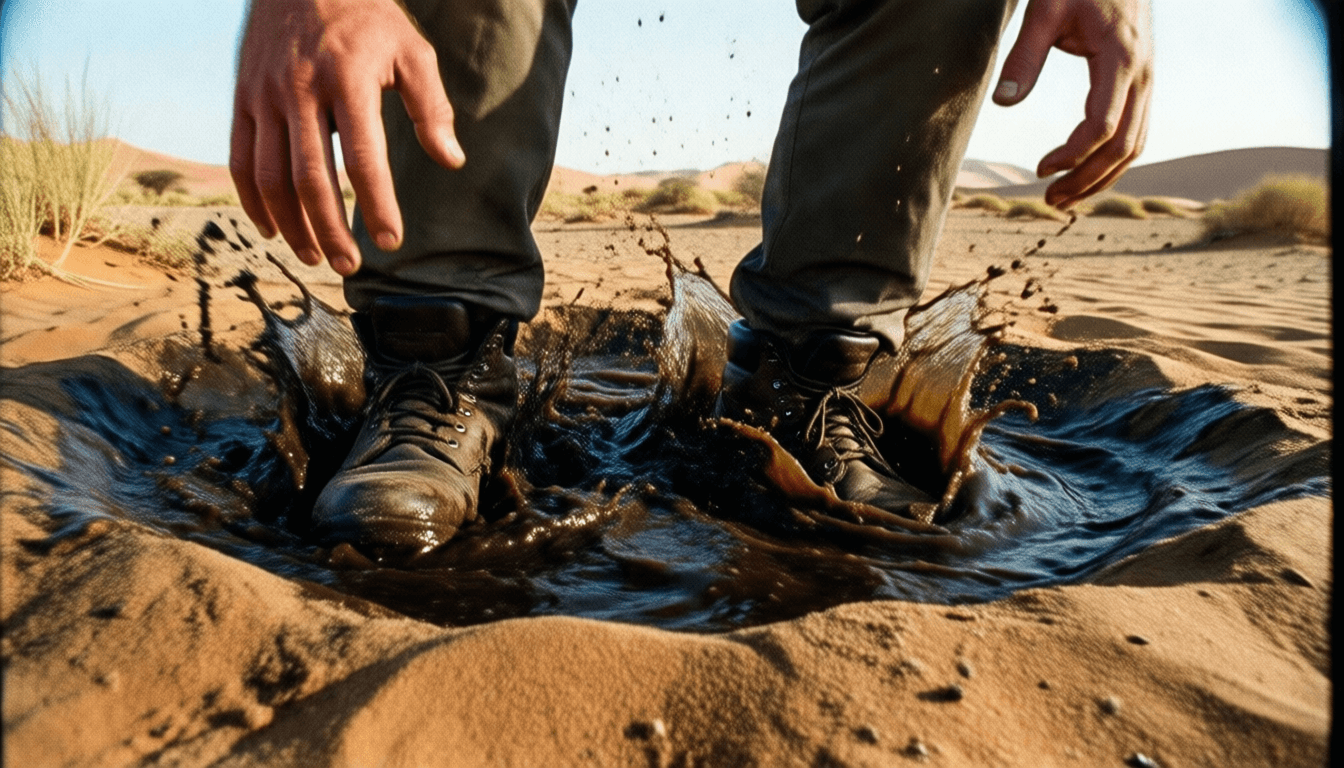
Suddenly, the subtle increase in localized gravity intensified. My gravimeter let out a sharp warning beep. The sand around my feet began to churn slowly, like a viscous liquid. I tried to pull my feet out, but the sand held them firmly, stubbornly. The ground-penetrating radar (GPR) screen showed anomalies not just beneath my feet, but extending horizontally around me, like an invisible, permeable membrane. The rippling of the sand around me quickened, forming small whirlpools. A low, resonant hum vibrated through my boots, through my bones. It felt as if the entire ground beneath me was a single, colossal, contracting organism. My legs slowly, but inexorably, were drawn deeper. The sand was no longer sand. It was a dense, crushing weight. I tried to grip the ground to brace myself, but the sand here was abnormally slippery, as if actively resisting. The silence within the circle was absolute. Every sound was swallowed by the vibrating earth. I could hear my own ragged breaths amplified in this eerie void. As the pressure on my lower body became unbearable, my vision blurred. The blurry distortions from the satellite images, those tiny indentations, came to mind. They weren't indentations. They were ‘dimples’. Points of absorption. This entity wasn’t merely creating circles. It was ‘drawing in’ from them.
With a desperate, primal scream, I plunged my exploration knife deep into the compacted sand beside my leg, leveraging with all my strength. The sand resisted, but fueled by the adrenaline surging with the movement, I managed to shed one boot, then the other, and finally pull my legs free. I crawled, on hands and knees, dragging my body towards the boundary. The sand behind me rippled violently, as if in frustration, before settling back into its slow, rhythmic ‘breathing’. I reached the edge and collapsed onto the coarse grass, gasping. My lower legs were raw and scraped from the struggle.
I didn't look back. I didn't retrieve my discarded boots or the half-buried seismograph. The Land Rover felt like a distant sanctuary. The drive out of Zone 7 was a blur. My hands trembled on the steering wheel, and after the profound silence of the circle, the hum of tires on gravel was deafening. I kept checking my rearview mirror, as if expecting to see a faint, shimmering distortion, or a deeper void.
Back at base camp, reviewing the gravimeter readings showed an unprecedented surge in localized gravity during the time I was trapped, followed by a sharp decline. The drone footage, which I initially thought was corrupted, now played with chilling clarity. Just before the feed distorted, a brief, almost subconscious image flashed—a dark, indistinct ‘something’ beneath the sand, like a massive, pulsating organ.
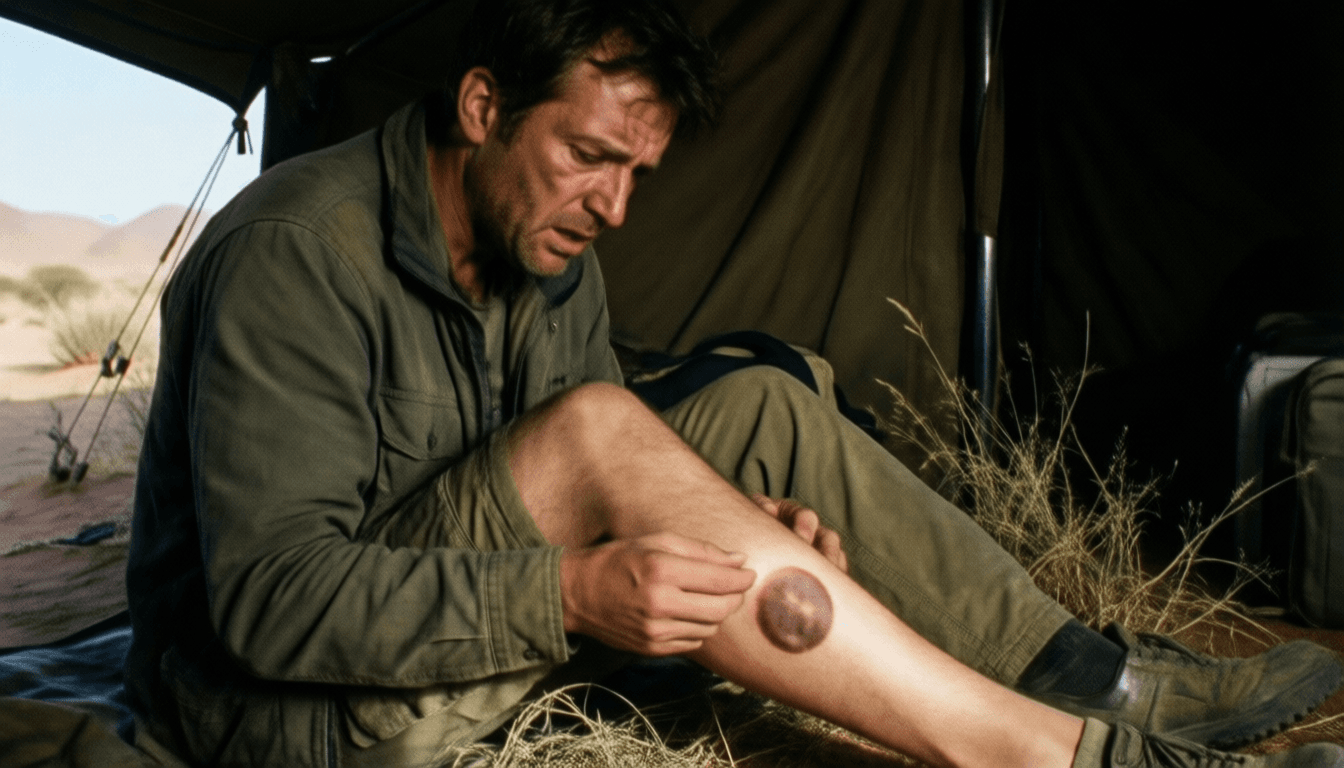
Days later, showered and ostensibly safe, a strange, persistent pressure remained in my calves. Not pain, but a deep, bone-deep sensation, as if the Earth’s colossal grip had left a phantom weight. I traced the faint, perfectly symmetrical circular bruises remaining around my ankles—the marks where the sand had clamped around me. And sometimes, in the dead of night, when the wind outside my cabin is just right, I swear I can hear it. A low, resonant hum, a vibration from beneath the ground, a sound that doesn't belong. The scientific debate over the Fairy Circles, of course, continues. Termites. Plant competition. But I know what lies beneath. I know what breathes slow and deep beneath the sand, waiting to draw in. And I know it has left its mark not just on the desert, but on me. Those circles are not static scars etched into the earth. They are the visible manifestation of something reaching, something devouring, something incredibly old and incredibly patient. And it is still there.
[ CLASSIFIED VERDICT ]
[ACCESS LOG - SOURCE FILE]
The ‘Fairy Circles’ of the Namib Desert are a peculiar phenomenon that has puzzled scientists for decades. While various scientific hypotheses like underground termites or plant competition have been proposed for these circular barren patches, the Himba tribe regards them as ‘footprints of the gods’ or ‘breathing holes of the Earth Dragon,’ believing them to be traces of an ancient entity that siphons life. This mystery has taken on an eerie urban legend status, intertwined with unexplained tourist disappearances and drone crashes.