The Silence of the Paracas Candelabra
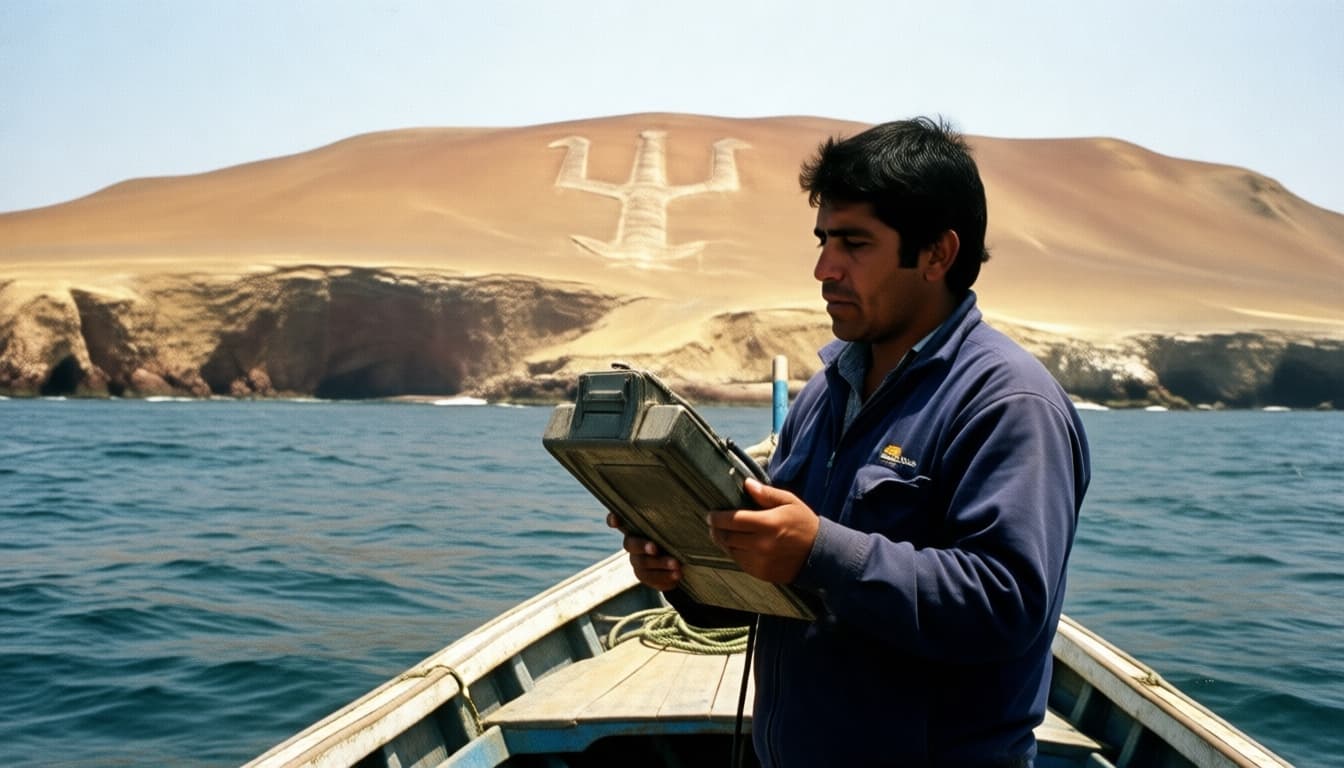
The colossal geoglyph carved into the sandy cliffs of Peru's Paracas Peninsula, known as the 'Paracas Candelabra,' has fueled decades of academic debate and conspiracy theories. Unlike the Nazca Lines, its origin and purpose remain a profound enigma. Mainstream archaeology attributes it to the Paracas culture around 200 BCE, speculating it served as a navigational aid or religious symbol. However, unofficial accounts, especially rumors circulating in certain online forums and local maritime communities, tell a different story. They speak of the geoglyph's eerily precise placement, its orientation visible only from the sea, and a 'cold presence' consistently observed by divers and fishermen in the waters below, irrespective of currents or depth. Recently, satellite imagery enthusiasts, analyzing public data, have captured subtle, inexplicable current shifts and even temporary discoloration patterns in the sea directly offshore from the Candelabra. While official channels dismissed these as lens effects or optical illusions, the phenomena persist. What piqued my interest was a now-deleted social media post by a small fishing boat captain. He wrote of experiencing an 'unnatural, crushing silence' and a 'death-like calm' directly beneath the symbol, even amidst a severe storm. His crew, overwhelmed by an intense unease, abandoned their fishing and returned to port, complaining of severe nausea. While dismissed as seasickness, the consistent localized environmental anomalies warranted investigation.
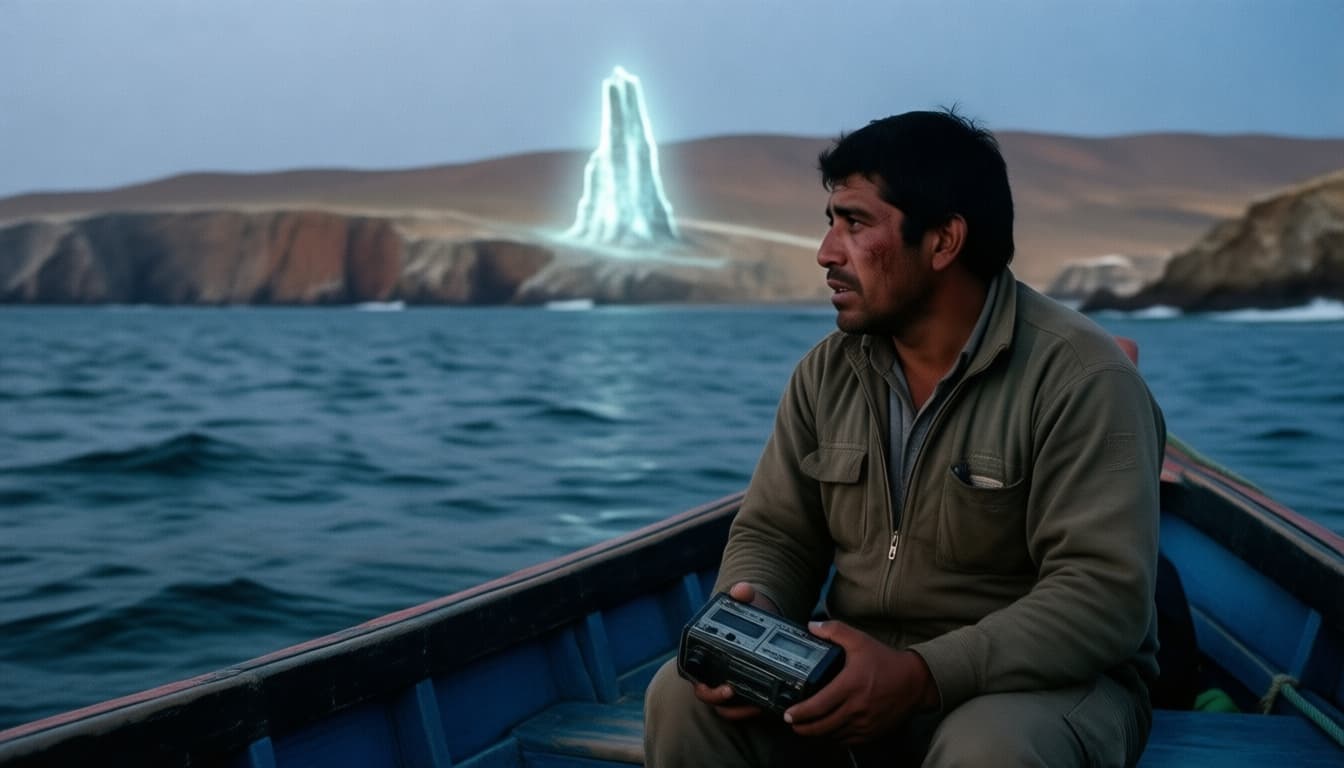
Like ancient mariners, I approached cautiously in a chartered fishing boat from the Pacific. The Candelabra dominated the cliff face. The stern, monumental symbol etched into the ochre rock was something one couldn't fully comprehend until confronted with its immense scale firsthand. Salty sea air whipped around the small vessel, carrying the cries of gulls and the rhythmic crash of waves against the shore. I deployed specialized hydrographic sensors calibrated to detect even subtle shifts in temperature, pressure, and acoustic patterns, along with a deep-sea microphone and precision laser rangefinders. Initial readings were normal; typical marine data for the area. The air smelled of salt and iodine. Mateo, the taciturn captain, kept his distance, frequently glancing towards the shore, his wary posture betraying a superstitious nature. The sun beat down, illuminating the Candelabra sharply against the sky, its lines appearing almost too perfect to have been carved by ancient tools.
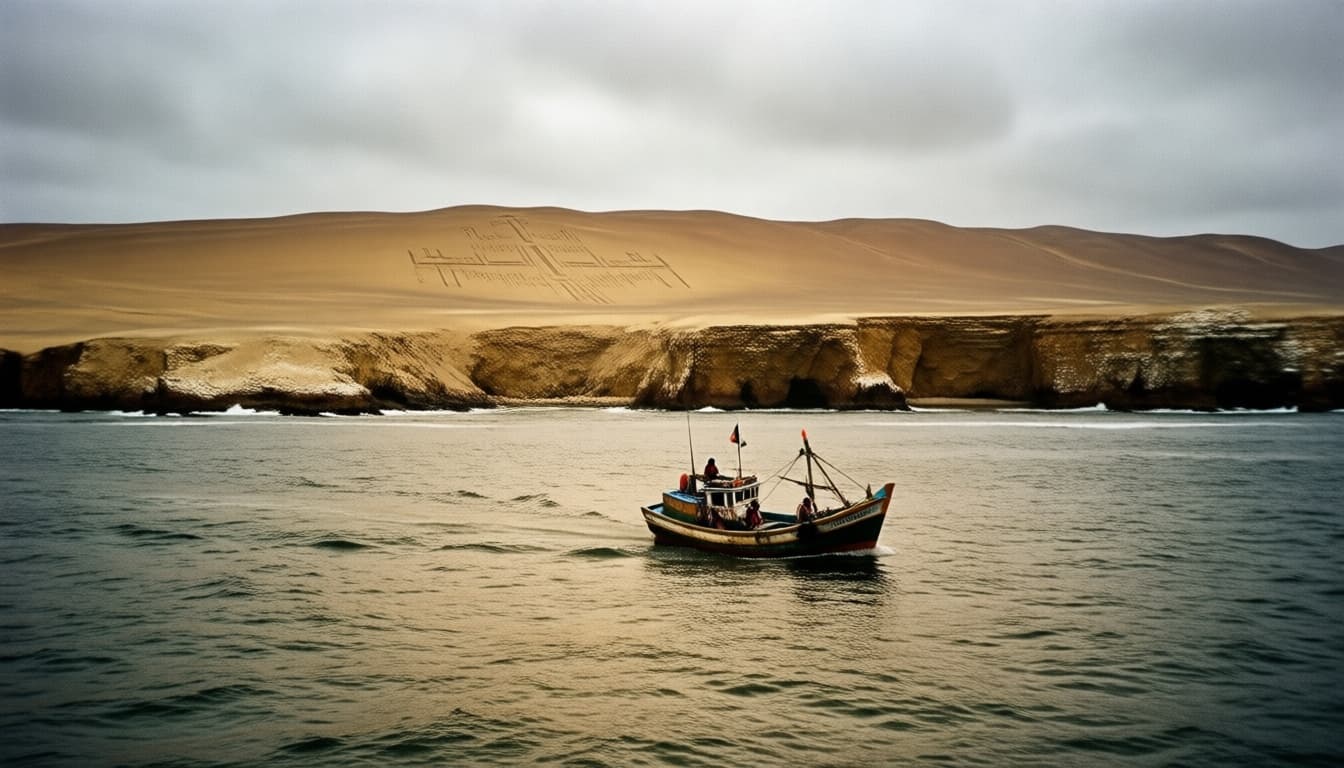
As the boat positioned itself directly beneath the central cleft of the Candelabra, the change began. Imperceptible at first, then undeniably present. The constant coastal breeze started to diminish. Not gradually weakening, but rather, as if the very atmosphere had suddenly held its breath. The previously noisy gulls reduced to intermittent squawks, then fell utterly silent. The rhythmic crash of waves against the cliff face became strangely dulled, muffled as if the water itself was absorbing the sound.
My equipment registered the first anomaly. The surrounding water temperature dropped locally by nearly two degrees Celsius, confined to a precise 50-meter radius centered on our position, despite ambient currents. The deep-sea microphone, which should have picked up the ocean's deep hums and distant marine life, returned only a low, resonant thrum. An unidentifiable frequency, yet continuously sustained. Mateo, gripping the helm, silently pointed to the sea. The surface directly beneath the Candelabra was eerily still, like a perfect obsidian mirror. Even as waves broke normally 50 meters to either side of us. It was as if the sea itself was holding its breath, suppressed by an invisible force radiating from the colossal symbol above. A pressure began to build in my ears; an almost physical weight.
The stillness intensified. The low thrum from the deep-sea microphone grew louder, vibrating through the boat's hull, causing even the deck to faintly tremble. Then, the impossible happened. The previously still water directly beneath the Candelabra began to recede. Not tidal, but a rapid, localized pull. The water withdrew from the rock, revealing a surface covered in seaweed. This was a sight usually only seen during extreme low tide, despite current forecasts indicating high tide. The exposed rock gleamed, revealing a perfectly circular depression on the seabed below the cliff, precisely at the center of the Candelabra's deepest point. A dark, smooth stone, unlike the rough surrounding rock, began to emerge from the receding water within this depression. It was impossibly black, absorbing the sunlight.
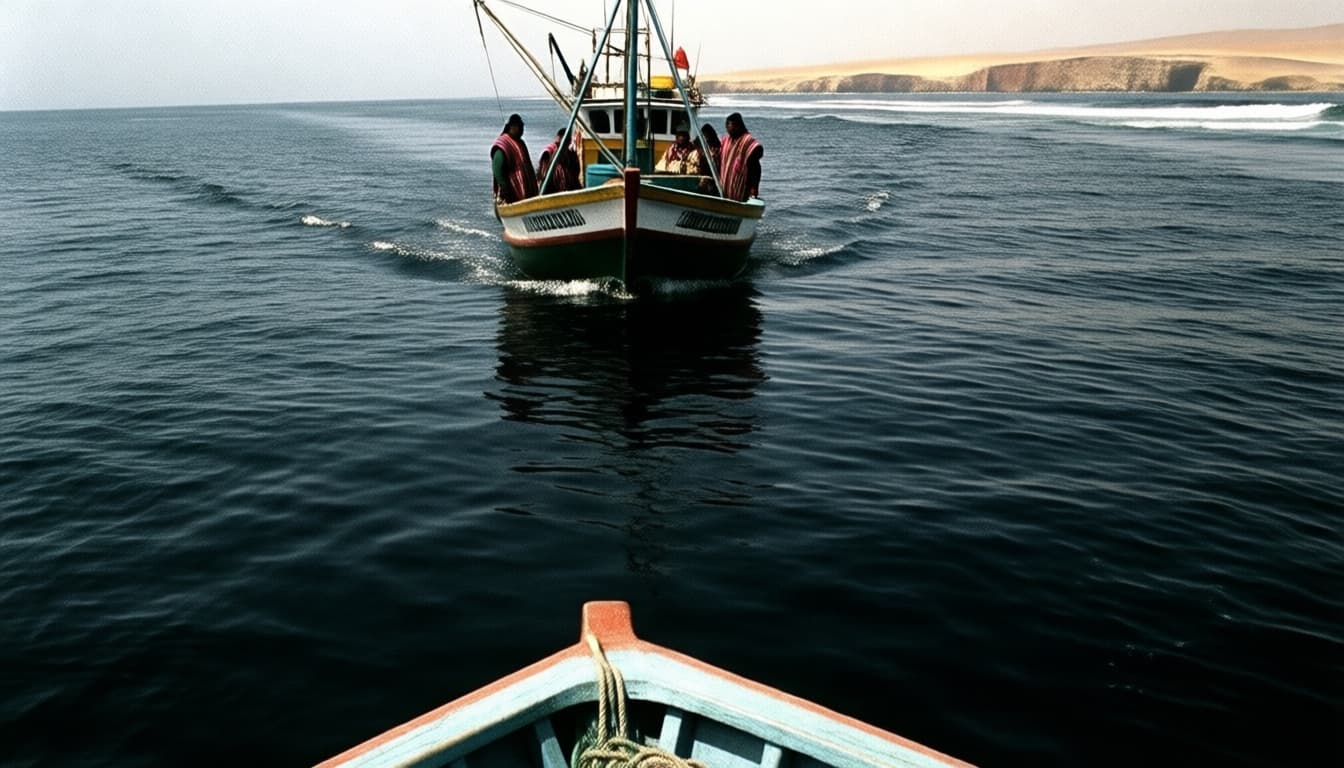
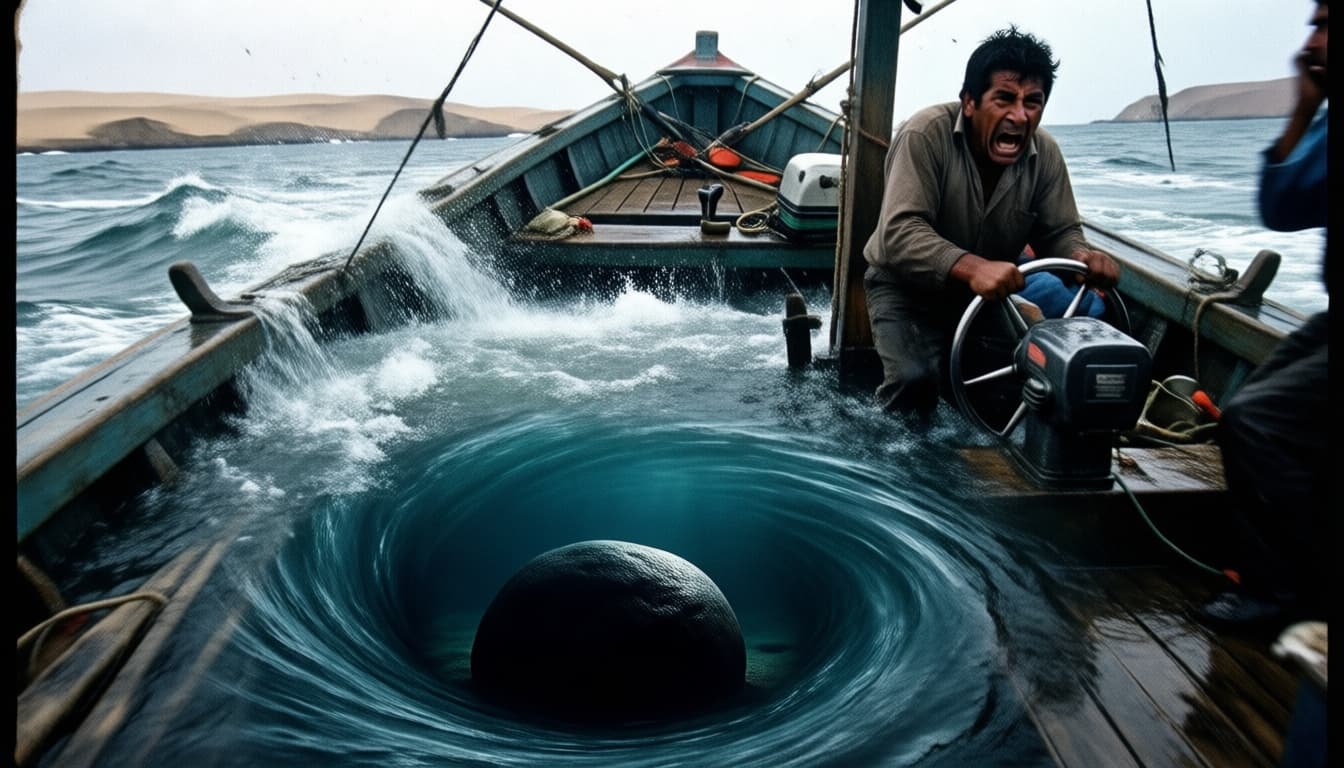
As it fully revealed itself, the air pressure became unbearable. It pressed down on the boat, on us. The hull groaned. Suddenly, the water didn't just recede; it began to flow inwards towards the black stone. Creating a slow, deliberate vortex that tugged at our boat. The thrum reached its crescendo, a palpable resonance vibrating through my very bones. I struggled to keep my footing as the boat was irresistibly pulled towards the exposed stone. Mateo screamed, wrestling with the engine, but the propeller spun uselessly against the powerful, unnatural current. My equipment malfunctioned, then died. The pressure felt like an invisible hand pushing me down onto the deck. I could feel the cold emanating from that black stone, a tangible chill seeping into my very marrow.
As the boat scraped against the newly exposed rock, threatening to capsize, I looked up at the geoglyph above. Its previously static lines seemed to shimmer with a faint, internal luminescence, reflecting the cold radiating from the stone below. I realized the Candelabra was no longer just a symbol; it was an anchor. And whatever it held was now beginning to stir. With a final, desperate surge, Mateo somehow restarted the engine, just managing to pull us out of the dangerous current's grip. The black stone, fully revealed, gleamed with an impossible chill.
We made it back to shore safely. As we gained distance, the unnatural calm dissipated. Mateo, without a word, dropped me off and sped into the night, the sound of his boat engine a desperate roar. My equipment, once restarted, spewed corrupted data files, but it had saved one chillingly perfect audio recording: an 8-second loop of the thrumming sound, followed by a faint, resonant 'click,' and then over a minute of absolute, profound silence that overwhelmed all ambient noise. The temperature anomalies were gone, currents returned to normal, and the gulls cried once more.
But the sight of that exposed black stone radiating impossible cold, and the sudden, precise recession of the sea above it, remains seared into my memory. The geoglyph on the cliff, once an ancient mystery, now feels less like a navigational marker or cultural symbol, and more like a warning. Or worse, a mechanism. For a few chilling moments, I witnessed that mechanism activate, unleashing an invisible influence that silenced the very ocean. The Candelabra isn't merely carved into the rock; it feels etched into the fundamental fabric of that place, connected to something profound and utterly alien slumbering beneath the waves, awaiting its next inexplicable summons. I keep that recording. It's too pristine, the impossible silence too perfect, to be anything but evidence. And the pressure in my ears… sometimes, when the wind dies down, it comes back.
[ CLASSIFIED VERDICT ]
[ACCESS LOG - SOURCE FILE]
The Paracas Candelabra, along with the Nazca Lines, is one of Peru's iconic geoglyphs. While several theories exist regarding its origin and purpose, it remains a mystery. There have been unofficial reports, particularly from divers and fishermen in the surrounding waters, of a 'cold presence' felt beneath the candelabra, which is fully visible only from the sea. This story explores strange phenomena occurring beneath the Paracas Candelabra, building upon these mysteries and unofficial rumors.