The Pulsing Mound of Gyeongju
Whispers have existed in Gyeongju for generations about deep, resonant sounds echoing from beneath the ancient city. Some elders call it "the Earth's Tumulus". Traditionally dismissed as seismic activity or the groans of deep geological layers, the frequency of these reports has surged in recent years, and the nature of the sounds has become unsettlingly specific. Now, online forums are inundated with related posts. Last month, a post titled "What on earth is that sound?" on a Gyeongju local community board exploded with hundreds of comments. Descriptions included a low, unpleasant hum, sometimes a growling friction, and sometimes an incredibly slow, pulsing beat. Notably, several users reported the sound intensifying particularly around the Daereungwon area, especially after heavy rain or on unusually quiet nights. A deleted post from a hiker was even more chilling: he claimed a small ceramic piece from his backpack was violently torn away by an unseen force near the western outskirts of Cheonmachong, coinciding with the sound, and the item immediately vanished. The official explanation remains 'sub-audible micro-seismic activity.' My investigation pointed to another possibility.
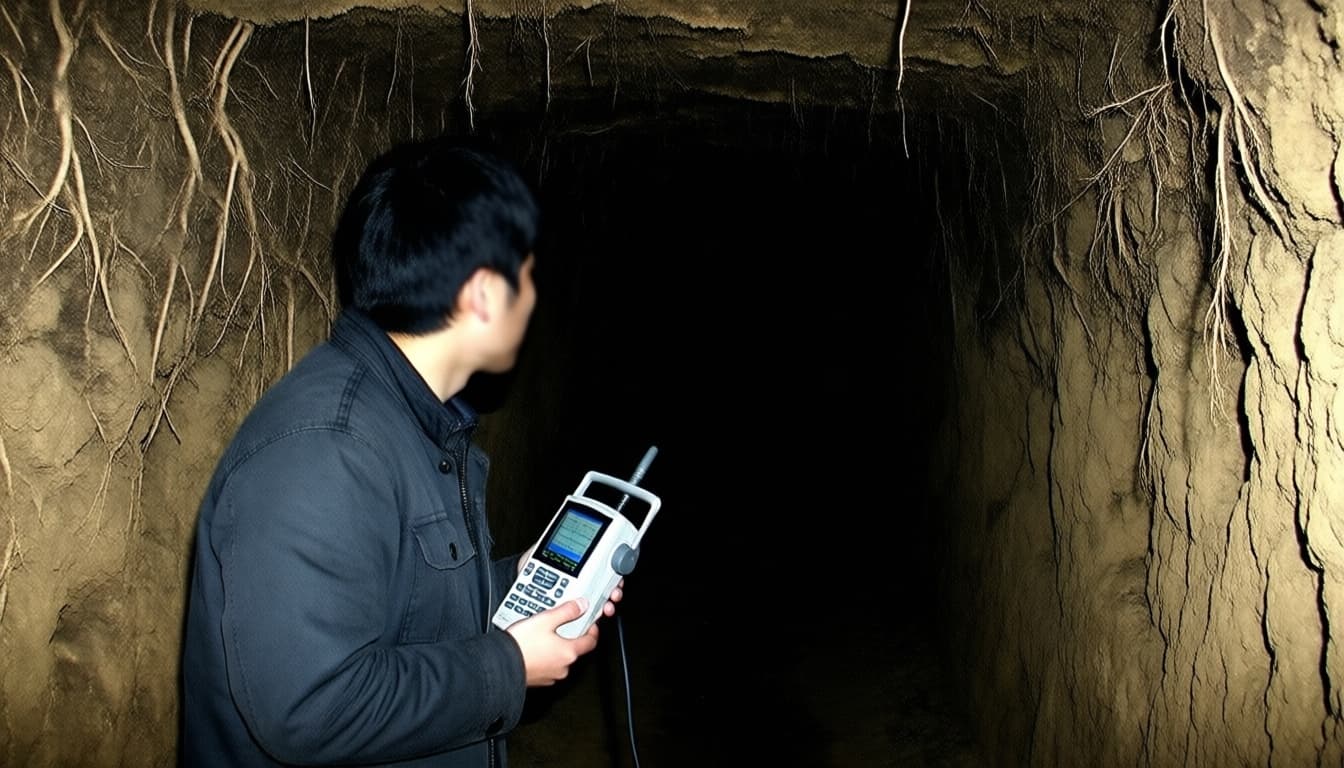
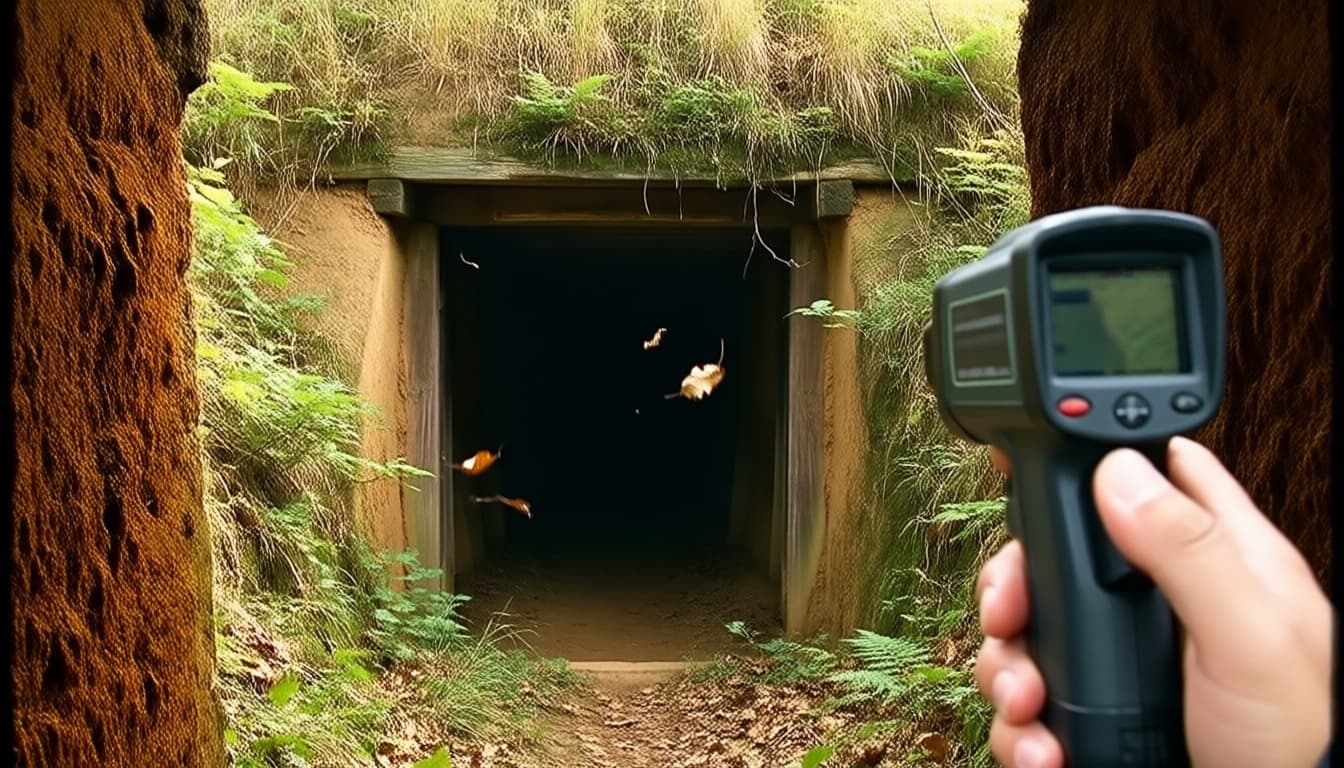
Armed with a directional microphone array, a portable seismograph, and a thermal camera, I arrived at specific coordinates: an old passage, almost invisible, overgrown with lush grass, in the earthen wall of Cheonmachong. Even under the bright autumn midday sun, the air here felt unusually heavy and thick, much colder than the surrounding autumn chill. The distant sounds of Gyeongju city, which would normally be incessant, were eerily faint, as if the very earth had absorbed them. The ground beneath my feet was soft in some places, abnormally hard in others, feeling like walking on solidified foam. There was no wind at all, yet the dry leaves at the entrance stirred in small, meaningless currents. My seismograph registered only minor seismic activity. However, the air was already subtly resonating. Equipment calibrated to infrasound recorded a faint ambient hum of 8-12Hz – a frequency known to induce unease or fear at the very edge of human perception. This was not yet the 'Tumulus'; it was merely its precursor, its breath.
I ventured deeper into the passage, a claustrophobic tunnel of earth and roughly hewn stone. The air grew colder, fogging the lens of my thermal camera. For a standard acoustic test, I shouted, "Hello?" An echo returned, but something was wrong. Instead of a crisp, singular reverberation, my voice seemed to shatter, each syllable stretching out, scattering into countless whispers far beyond what was physically possible. It was as if the air itself chewed up the sound and then very slowly exhaled it. It was not a simple echo. It was a reverberation that defied the confines of this small space.
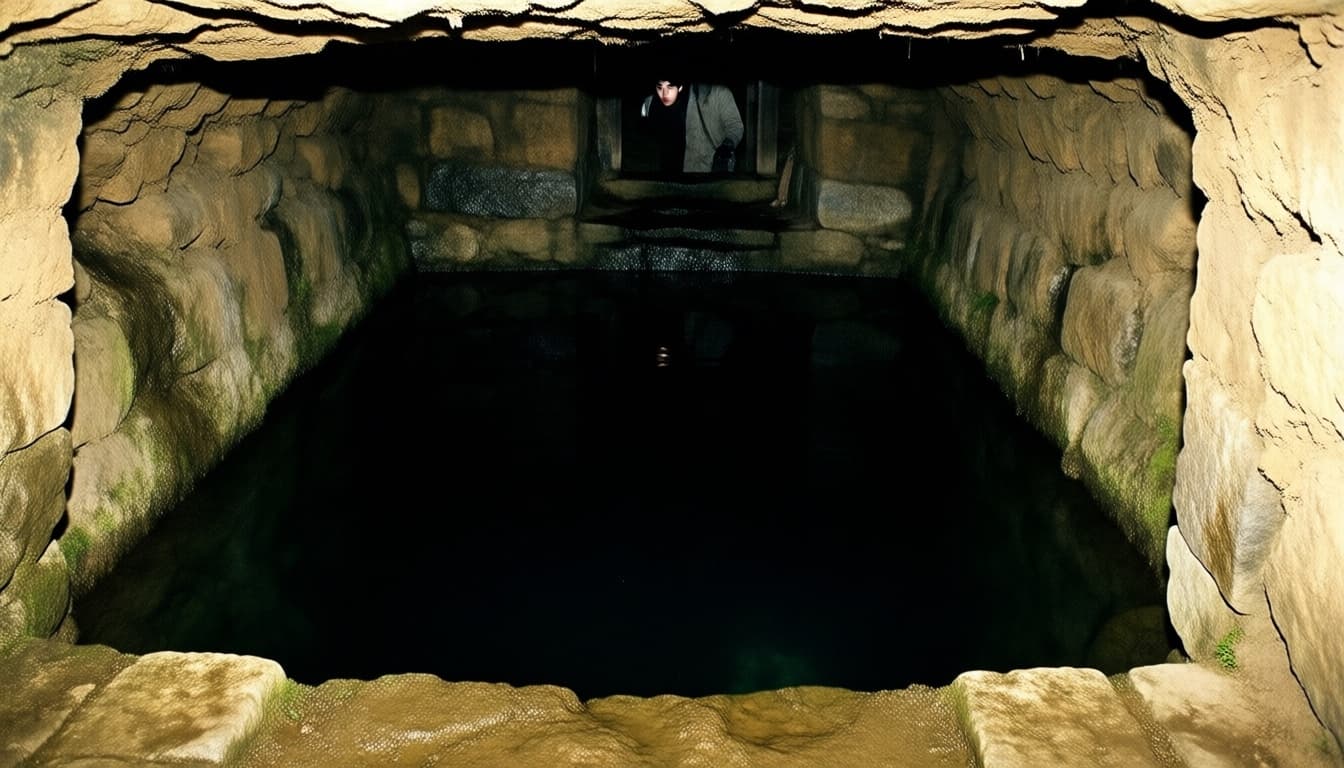
Going deeper, the tunnel widened slightly, leading into a small, irregular chamber. In its center lay a shallow, dark pool of water, perfectly still. Its surface was abnormally black, absorbing light rather than reflecting it. I tossed in a small pebble. The ripples spread outwards, then inexplicably seemed to subtly reverse direction for a brief moment before fading normally. The water was still, yet it seemed to resist disturbance, pulling it back in. Then, the sound truly began. Not a violent burst, but a gradual, bone-deep resonance. It started as an almost imperceptible hum, rising from the floor, up my legs, up my spine. My previously dormant seismograph showed frantic, chaotic spikes, yet the ground itself appeared stable. This was not seismic energy. It was acoustic pressure converted into physical vibration. The air itself began to feel compressed, pressing on my eardrums. Now it was a distinct, slow, deep rhythmic pulse, like a primitive heartbeat, clearly different from the low hum. So slow, so immense. It came from the ground, yet also from the air, the water, everywhere. The chamber itself now felt alive.
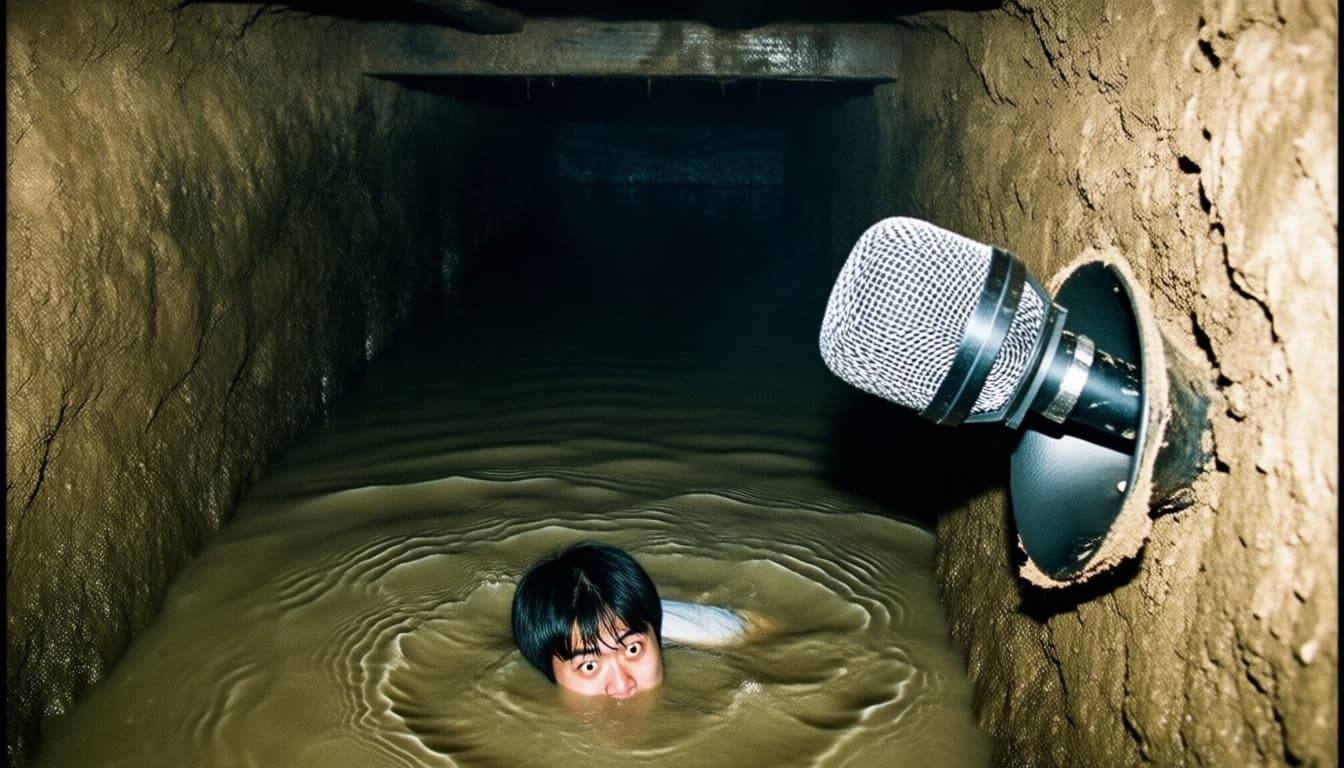
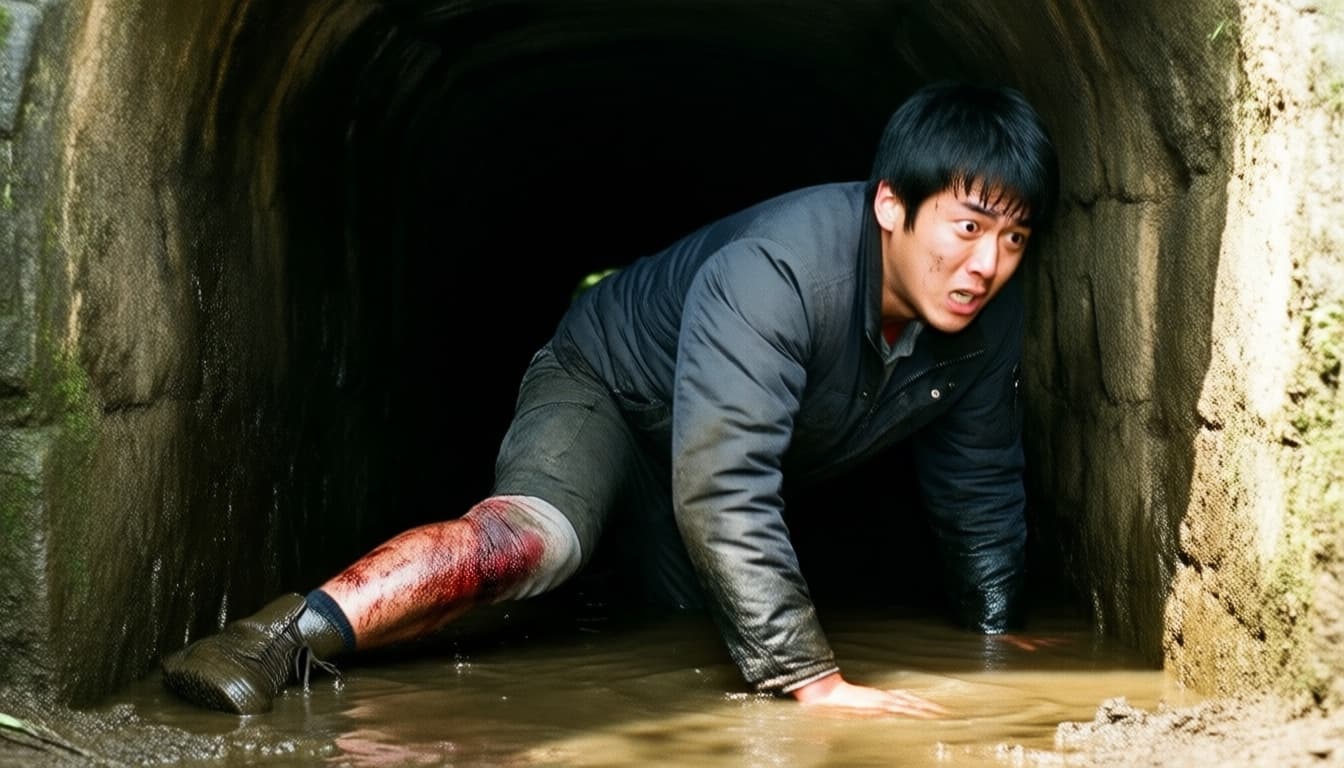
The rhythmic hum intensified, finally becoming the 'Tumulus' itself. A deep, thrumming percussive sound, resonating directly inside my skull, bypassing my ears. My vision blurred, and I lost all sense of direction. I stumbled, leaning against the rough earthen wall. It was no longer merely a sound; it was a physical presence. The air in the chamber was so dense it became difficult to breathe, like trying to inhale water. My microphone array, which I had placed near the dark pool, began to violently vibrate, and with an impossible shudder, one of its directional cones tore free. It did not fall; instead, it shot across the room with immense force, embedding itself deep into the opposite wall. And the ground beneath my feet became fluid. It did not collapse. It rippled in slow, viscous waves, attempting to swallow me whole. I desperately crawled towards the tunnel entrance.
The entity's final act was the most terrifying. As I reached the narrow entrance of the passage, an overwhelming pressure concentrated from behind. The water of the previously still dark pool began to rise. Not overflowing, but seeming to be lifted upwards by an unseen force. It formed a glowing, tendril-like pillar, stretching towards me. It was no longer water; it was a semi-conscious liquid arm. It lashed out, striking my left leg with cold, crushing force, pinning me to the entrance frame. The sensation of bone breaking, blinding pain, sharply contrasted with the furious thrumming resonance, now the only sound in the world. With a desperate surge of adrenaline, I tore myself free. I left a significant amount of equipment, and perhaps some of my blood, behind. The air behind me closed with a shocking force, like a gigantic, organic lock engaging, sealing the passage. I crawled out, then stumbled into the relatively safe afternoon of Gyeongju. The sound of the 'Tumulus' faded, but never truly vanished.
My leg sustained clean fractures and severe soft tissue damage consistent with blunt force trauma, but around the impact site, there were strange, almost crystalline bruises that even medical staff couldn't fully explain. Despite the impact force, my eardrums were intact, but I developed a constant low-frequency hum in my head. It faintly pulses with my heartbeat, like a phantom echo of the 'Tumulus'. Doctors attributed it to trauma. I know better.
My abandoned equipment was not recovered. But a small, fist-sized stone, inadvertently attached to my boot from the passage, was later found in my vehicle. When held, it occasionally vibrates with an almost imperceptible resonance, matching the 8-12Hz frequency I first detected. It remains abnormally cold to the touch, even after hours in a warm room. The deleted online posts about lost items near the 'Tumulus' now strike me with chilling clarity. Gyeongju's 'Earth's Tumulus' is not merely a natural phenomenon. It is a vast, sentient organ, a colossal intelligence buried beneath the ancient city. It does not listen to the world. It makes the world listen to it. And it remembers those who tried to listen back. The hum in my head is a reminder, a signal, that it has not forgotten.
[ CLASSIFIED VERDICT ]
[ACCESS LOG - SOURCE FILE]
Whispers persist in Gyeongju about strange reverberations emanating from beneath ancient tumuli. While often dismissed as seismic activity, these sounds are actually believed to be the heartbeat of a colossal, sentient entity slumbering beneath the old city, perceiving everything around it and making its presence known to the world.