The Whispering Map: Piri Reis and the Abyss
The Piri Reis Map, compiled by Ottoman Admiral Piri Reis in 1513, is one of the most famous world maps filled with mysteries. Its accurate depiction of the Antarctic coastline without ice, centuries before its official discovery or the advent of modern surveying techniques, has confounded historians, geographers, and scientists. Piri Reis himself claimed to have compiled the map from much older sources, some dating back to the time of Alexander the Great. This historical anomaly has recently found an eerie modern echo.
Last autumn, a consortium of European libraries digitized and released the private nautical logbook of Ibrahim al-Farsi, one of Piri Reis's lesser-known navigators. While mostly mundane, one brief, feverish passage described Piri Reis's "deepest source" not as paper maps, but as "echoes of the sleeping abyss," "silent tremors speaking of lands no star has ever seen." Al-Farsi recounts a terrifying, brief expedition to a specific, desolate stretch of coastline near present-day Kaş, Turkey, where Piri Reis allegedly tuned his instruments not to stars, but to "submerged whispers." The passage breaks off abruptly, followed by a crude sketch that, when overlaid on modern bathymetric maps, points to a distinct, almost geometrically shaped cluster of underwater sea caves. Even more startling, an amateur geologist exploring the area recently reported unusual low-frequency seismic anomalies occurring deep within this region, far removed from normal geological activity – anomalies that align with Al-Farsi's account. This synchronicity of obscure historical records, modern seismic data, and the map's unsolved enigma led me to this investigation.
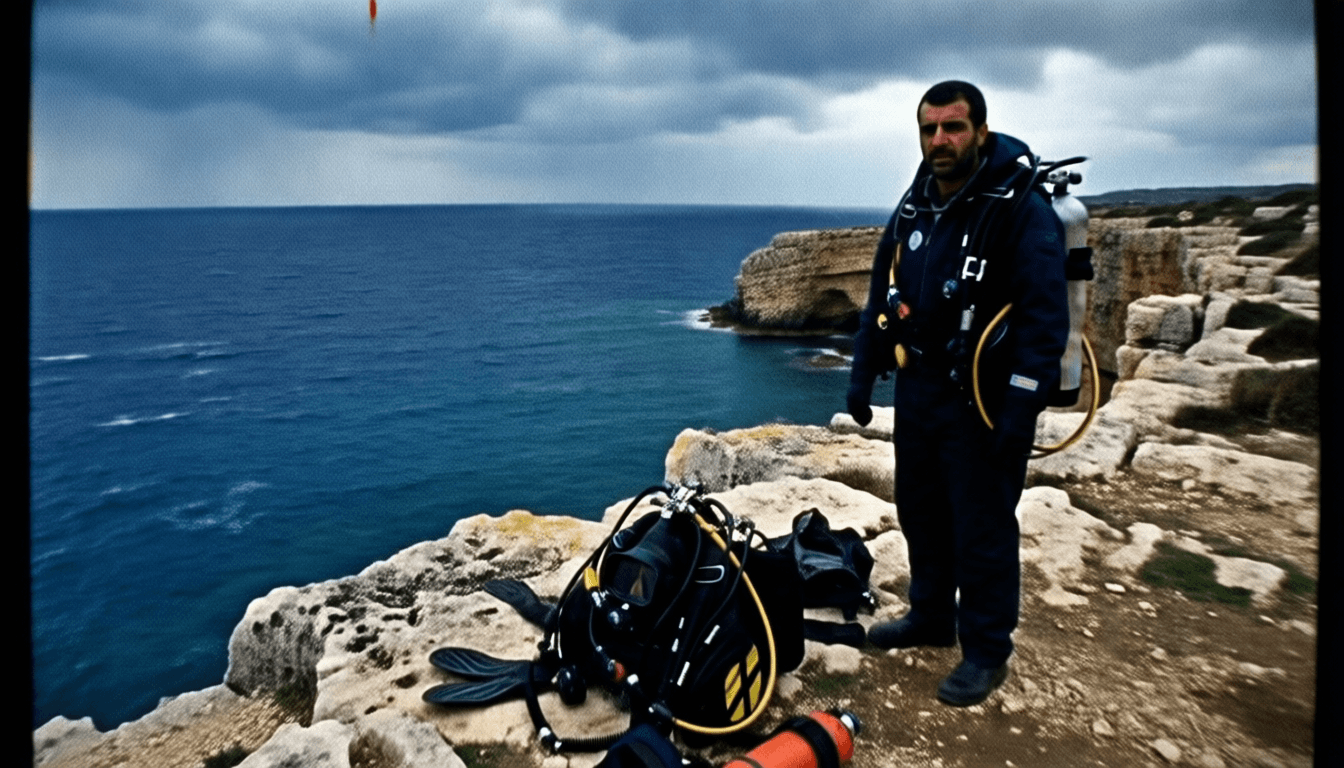
The designated coastline near Kaş, Turkey, was as desolate as Al-Farsi described. Ancient, sun-bleached limestone cliffs plunged steeply into the Aegean Sea, scarred by centuries of wind and salt. I arrived equipped with high-sensitivity geophysical prospecting gear specially designed to detect ultra-low frequency vibrations and anomalous electromagnetic fields, along with standard diving equipment. The reported cave cluster was mostly submerged, with access to the subterranean network only possible through narrow, tide-affected crevices.
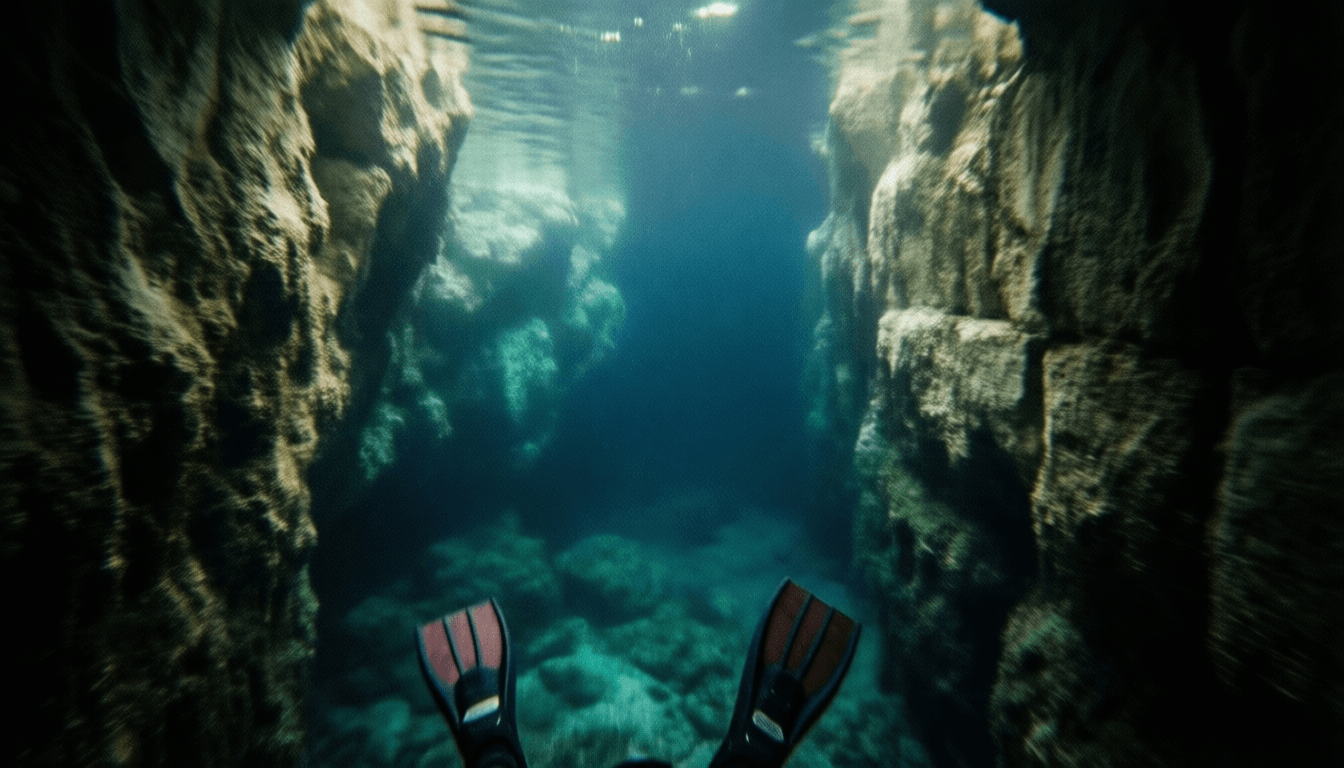
The moment I entered the first chamber, the air immediately felt heavy and compressed, strangely still despite its proximity to the open sea. The water inside was unusually clear, revealing an intricate, almost crystalline seabed. Calibrated against the region's typical geological background noise, my equipment instantly detected a faint, rhythmic pulsation. It was a deep hum, far below human hearing, yet undeniably present in the readings. The pulsation was unlike any conventional seismic activity; it lacked the chaotic irregularity of tectonic plate shifts, suggesting instead a deliberate, almost artificial periodicity. Though the cave walls, smoothed by millennia of water erosion, showed no obvious signs of prior habitation, there was a subtle, inexplicable order to their eroded forms, an alien symmetry.
As I ventured deeper into the labyrinthine network, the environmental anomalies grew more potent. The faint hum intensified, transforming from an external vibration to an internal resonance felt in my chest and teeth. Sound became an unpredictable medium; my own breath seemed delayed, echoing not from the nearest wall, but from behind me, or perhaps from the rock itself. The water exhibited an unsettling contradiction: while the overall current moved steadily, small, isolated vortices spun against the main flow, perfectly circular, with their centers utterly still, as if defying fluid dynamics.

In a larger, almost perfectly spherical chamber, the air was so still that dust particles hung suspended, defying gravity for eerie seconds. The temperature dropped several degrees, a localized cold spot within the humid cave interior. My geophysical prospecting equipment began to malfunction erratically. Readings blinked impossible data: unexplained magnetic field fluctuations, gravitational anomalies fluctuating without discernible cause. I began to perceive subtle, non-visual distortions – a blurring at the edges of my vision, instantaneous sensations of vertical displacement. The 'whispers of the sleeping abyss' were no longer an abstraction; they were a physical manifestation, a pervasive, silent pressure, a vast and unknown information broadcast from the rock itself. My sense of direction warped. I was no longer certain if I was heading towards the entrance or deeper into the earth. The silence between the deep hums was not an absence of sound, but an overwhelming presence, a void that seemed to swallow all auditory information.
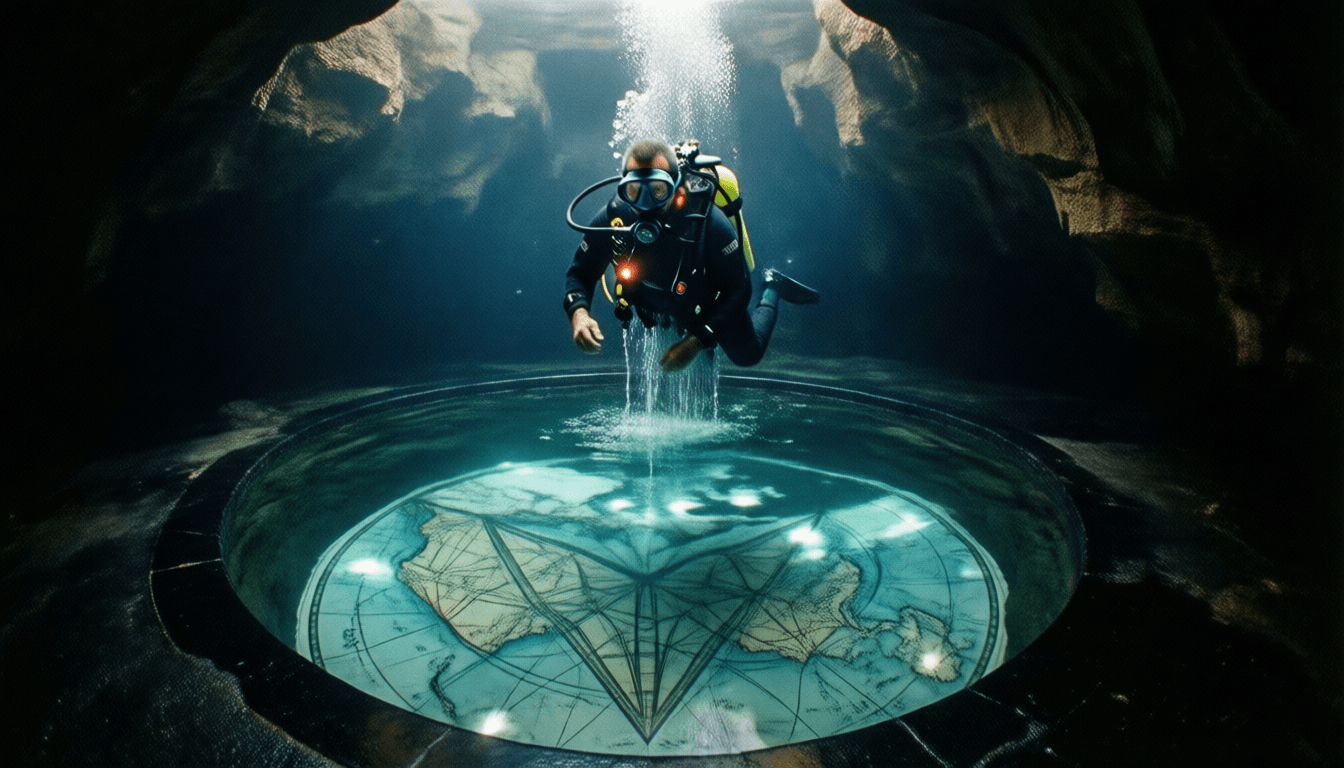
I reached a final chamber, much smaller than the others, perfectly circular and smooth, as if bored by some invisible force. In its center, a perfectly still, deep pool of water reflected the ambient light with an oily sheen. My equipment shrieked, then died. The hum amplified beyond resonance, becoming an unbearable osteal vibrational frequency, attacking my skull and organs directly, not through my ears. The air itself seemed to solidify around me, pressing down with immense, non-physical weight, making each breath a monumental effort.
Then, from the impossibly still pool, the water began to recede. Not flowing out, but sinking, as if a drain had opened beneath it. Yet, the surface tension remained undisturbed. It was drawn down in a perfect inverse cone, defying gravity, revealing a perfectly smooth, obsidian-like floor. As the water level lowered, intricate, geometric patterns began to emerge from the pool's base. These patterns were alien, yet terrifyingly familiar. They were not carved but seemed to be the rock itself, glowing with an internal light, replicating the impossible coastal formations of the ice-free Antarctica depicted on the Piri Reis Map.
The rock itself around me began to breathe. Not physically expanding, but its crystalline structure wavered, becoming porous, then liquid, then solid again, pulsating with the unbearable frequency. A fissure, initially hair-thin, opened in the wall of the chamber opposite me, widening fluidly in chilling silence. From within that fissure emanated a powerful, non-gravitational pull. An irresistible force seeking to draw me into the abyss, into the source of the impossible cartography. My body convulsed. Every nerve screamed. I felt as if I was being torn apart. My very being stretched towards that fissure, towards a knowledge of geometry and geography that transcended human perception. What I faced was not a physical entity, but a spatial and temporal anomaly, a living archive of unimaginable scale. With a desperate surge of adrenaline and a final, agonizing effort against the impossible pressure, I lunged back, escaping, my body scraped and torn against the walls of impossible fluidity as the fissure pulsed, threatening to consume me.
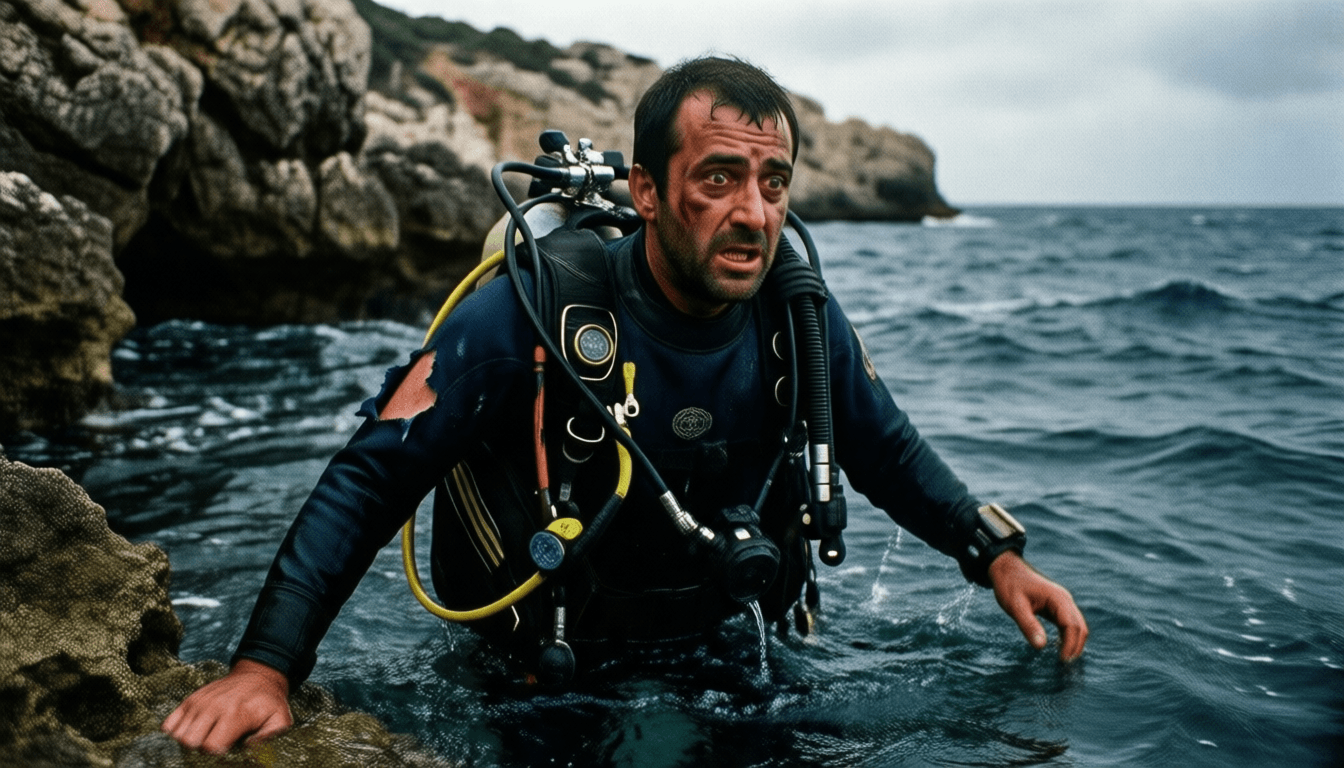
I emerged from the cave system hours later, disoriented and battered, skin abraded, diving gear ruined. My specially designed geophysical prospecting equipment had ceased functioning, its internal circuits burned out, but one last corrupted data log remained. It contained a fragmented, chaotic recording of impossible frequencies, interspersed with faint, inaudible pulsations that, when visually analyzed, translated into complex fractal patterns. These patterns bore an eerily undeniable resemblance to the anomalous topography of the ice-free Antarctic coast depicted on the Piri Reis Map.
My hearing, though technically intact, is subtly altered. I now perceive a constant, almost imperceptible low hum, a deep resonance faintly vibrating within my bones. It is less a sound than a presence, a perpetual reminder. More profoundly, at times, during moments of quiet thought or just before sleep, my mind conjures fleeting, complex visual schematics. They are not images of places I know, but vast, swirling topographies, intricate ley lines, and impossible continental drifts rendered with an alien, crystalline clarity. It is as if something from that chamber, or beyond that fissure, has imprinted not just upon my body, but upon my very perception. I did not bring back a map; a piece of the map's source now resides within me, an internal, silent compass pointing to a geography that cannot, should not, exist. The fear is not that I encountered something, but that something found a new passage.
[ CLASSIFIED VERDICT ]
[ACCESS LOG - SOURCE FILE]
The Piri Reis Map is an ancient world map created by Ottoman Admiral Piri Reis in 1513. Centuries before the discovery of Antarctica, it accurately depicted an ice-free Antarctic coastline, sparking long-standing debate among historians about the source of this impossible knowledge. This story explores the chilling possibility that the map's intelligence might originate from an unknown, possibly non-human, underwater entity or phenomenon.