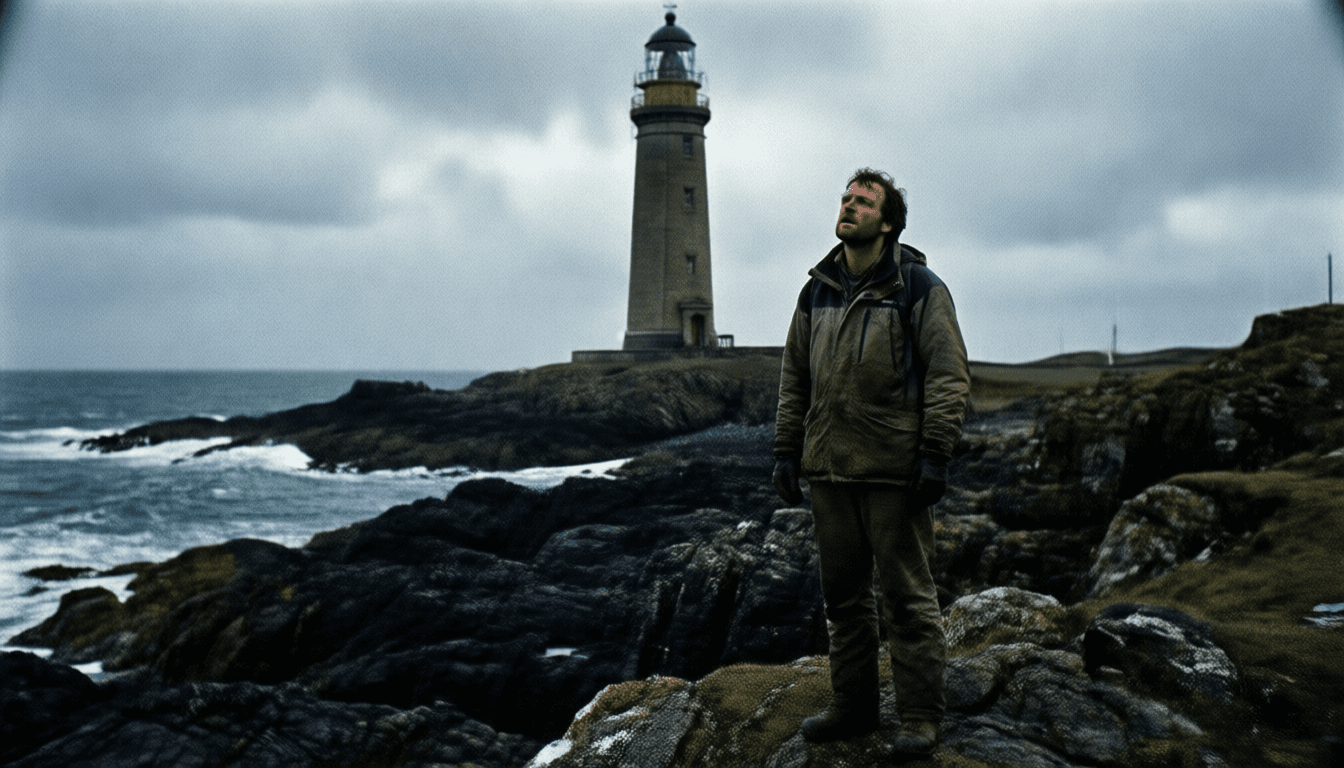
Eilean Mòr: The Lighthouse's Cry
On December 26, 1900, the supply vessel Hesperus approached the Eilean Mòr lighthouse, located in the remote Flannan Isles. Its purpose was to relieve the three lighthouse keepers. However, what they discovered defied all logic. The lighthouse was deserted, the living room door unlocked, beds unmade, and a half-eaten meal sat cold on the table. Most chilling were the lighthouse keepers' log entries. Records from December 12th to 15th were filled with mentions of an unprecedented storm, a wailing lighthouse keeper, another silent one, and repeated references to an 'unseen presence' on the island. Yet, meteorological records of the time showed no major storm in the area. Despite extensive searches and official theories like rogue waves or madness, the disappearance of Thomas Marshall, James Ducat, and Donald Macarthur remains one of the sea's oldest mysteries, whispered among Scottish sailors as a chilling reminder of the true cost of isolation.
What piqued our interest was a seemingly ordinary post on an internet forum by a recently retired coast guard officer. He mentioned a recurring, low-frequency hum picked up by sonar buoys in the waters near Eilean Mòr, especially on particularly calm nights. This sound was inexplicable by known marine life or geological activity, sometimes accompanied by "erratic pressure fluctuations" that made the water around the island feel as if it were pulsating. This testimony, coupled with local legends of the island 'taking' what it desires, made a closer investigation unavoidable.
Access to Eilean Mòr was restricted, but we managed to secure a permit under the pretext of environmental research. I arrived on the island with a local boatman, who left me with a day's rations and a promise to return at sunset. The landing was treacherous, the basalt cliffs slick with spray and guano. Despite the island's exposed position, the wind was surprisingly absent, yet the air hung heavy with salt and a pervasive smell of decay.

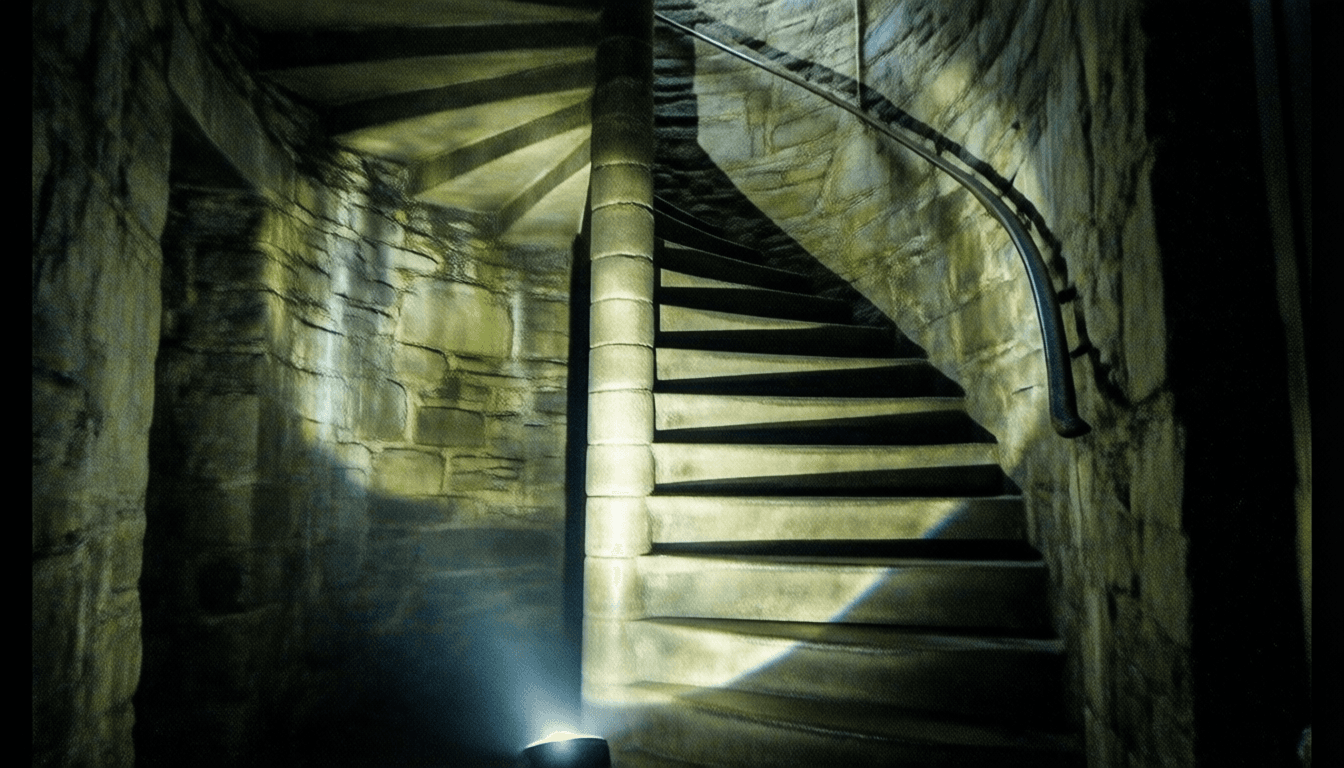
Stepping inside the lighthouse, the massive iron door groaned on ancient hinges, revealing a cold, damp interior. A spiral staircase, smoothed by a century of footsteps, coiled upwards into a suffocating silence. Each step I took produced an unnatural echo, not a crisp single reverberation, but a long, sticky sound, as if the very air was thick and resistant. My gloved hand traced the cold stone walls, feeling the texture of a century of salt buildup and abandonment. The living room was exactly as described in the reports: a table in the center of the room, on its thick layer of dust lay empty plates and a rusted teacup, remnants of a meal abruptly halted. Not the smell of mold, but a deeper, metallic cold scent, like a mix of blood and seawater, permeated the space.
As I ascended the lighthouse, the environmental anomalies multiplied. In the narrow stairwell, the cries of seagulls outside seemed to vanish completely, replaced instead by a deep, resonant hum that vibrated through the stone, making my teeth ache. Then, abruptly, the sound of waves crashing against the island below surged deafeningly loud, as if I were underwater, only to vanish again, leaving an overwhelming, absolute silence. My usually sharp and clear flashlight beam strangely diffused higher up, casting shadows that seemed to move independently of the light source – blurred afterimages that flickered just beyond the edge of perception, quickly vanishing around my field of vision.
Reaching the lantern room, a panoramic view of the churning grey sea unfolded beyond the colossal glass panes. The air here was much colder, denser, almost liquid in its consistency. A thin film of moisture coated the inside of the glass, yet the outside was dry. As I wiped it away, my reflection unnaturally elongated and distorted, as if pulled by an unseen current. A low, hoarse wail faintly reached me, seemingly emanating from the surrounding stone itself, now waxing and waning with the bizarre, unreported pressure fluctuations that hammered my eardrums. It was the sound of something vast, sorrowful, and deeply lonely.
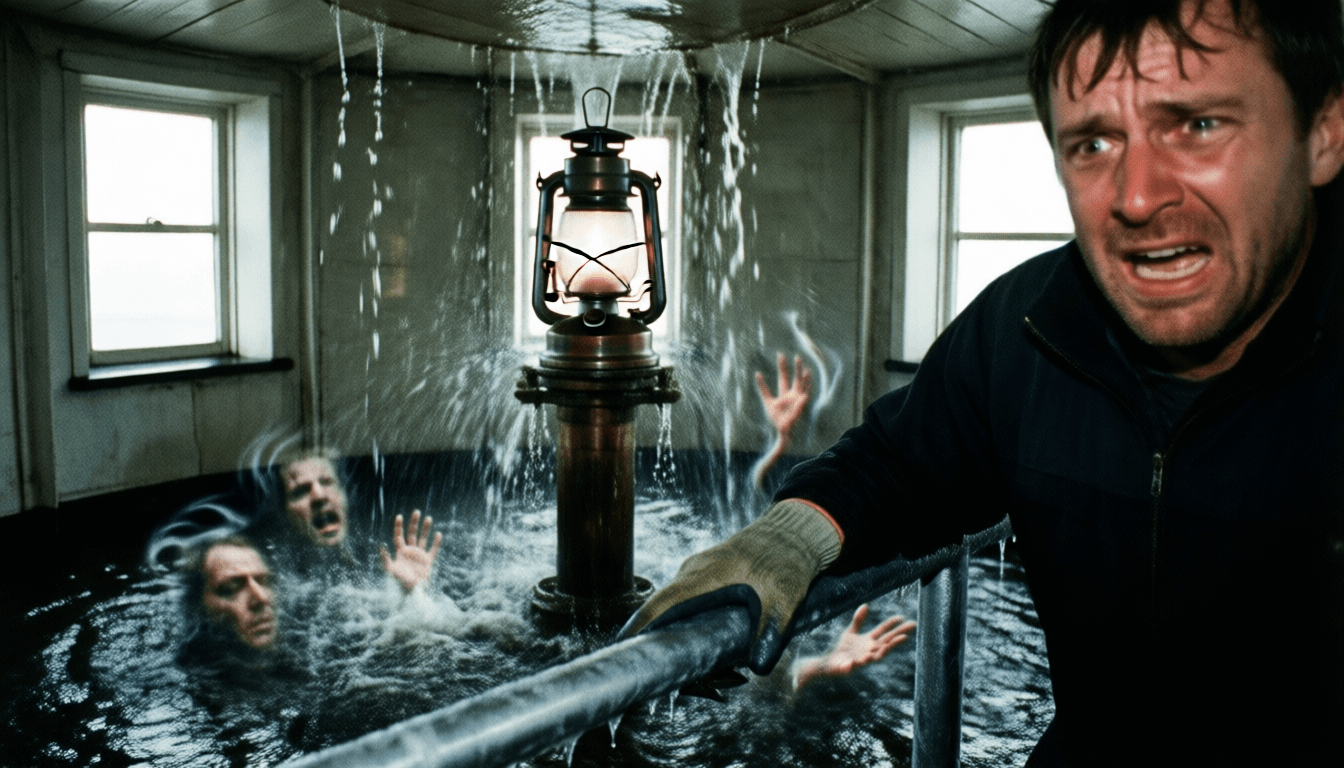
A sudden, violent tremor threw me against the cold iron railing. The lighthouse groaned, not from the wind, but from an impossible stress within. Water began to pour, not drip, from the seams of the lantern room ceiling – clear, cold water that quickly pooled on the floor. It wasn't rain; the sky outside was still an overcast grey. This water seemed to be forced out with abnormal propulsion, in some places almost jetting upwards, swirling at the base of the central apparatus. The hum intensified, becoming a physical vibration, a crushing presence.
Then, the true horror manifested. The massive, heavy iron door leading from the lantern room to the exterior walkway, which had been secured with rusted bolts, slammed shut with a shocking force, shattering one of the glass panes. The sound was deafening, metallic, and utterly final. My failing flashlight beam flickered wildly, and the water on the floor, not from any draft but an unseen current, churned, tugging at my boots. A powerful, invisible force struck my chest, stealing my breath. I stumbled backward, hitting my head against the cold metal of the lantern. Dazed, I looked down, and I saw it: in the swirling water, patterns began to form – faint, ephemeral outlines of hands, and faces, contorted and screaming in silent agony, coalescing and dissipating. The pressure intensified, a tangible weight crushing me, making it impossible to breathe. It was as if the entire lighthouse, perhaps the entire island, was trying to drown me from within. I felt myself slowly, inexorably, being dragged towards the now unlocked outer door. Icy, damp hands seemed to grip my ankles. I thrashed, clutching at the metal, as the cold water rose past my knees, and the phantom faces swirled ever closer.
I have no clear memory of how I escaped. The next thing I recall is the taste of salt in my mouth, the boatman's anxious face, and the relief of him pulling me into the boat. My clothes were soaked, even though I had only been waist-deep in water inside the lighthouse. On my left ankle, there was a deep, symmetrical bruise, exactly where the invisible hands had grasped me, its form eerily resembling an old anchor rope.
Back on the mainland, reviewing the few photographs I'd managed to salvage, a chilling detail emerged. One image, taken from the living room below just before the incident, was severely corrupted. Yet, amidst the digital noise, a faint, almost translucent smear of light reflected on the dusty surface of the old table was captured in a corner of the frame. Too blurry to identify, yet its form… was that of a distorted, weeping eye.
Days later, that persistent low hum I’d heard on the island subtly began to manifest in my quiet office. It's not constant, but appears in extreme silence, accompanied by a resonant tremor that feels as if it emanates from the building's foundations, and subtle, almost imperceptible shifts in atmospheric pressure. I find myself checking weather forecasts more often than necessary, and sometimes in the dead of night, I hear a faint, metallic groan from the floorboards below, followed by the slow, solitary drip of water, whose source I can never find, no matter how hard I search. The sea, it seems, always finds its way, even to the driest land.

[ CLASSIFIED VERDICT ]
[ACCESS LOG - SOURCE FILE]
This story is based on the real-life mystery of the Flannan Isles Lighthouse in Scotland, where three lighthouse keepers vanished without a trace in December 1900. Their final log entries chillingly describe an unknown storm and an 'unseen presence,' contradicting actual weather records of the time, making it one of the sea's enduring enigmas to this day.