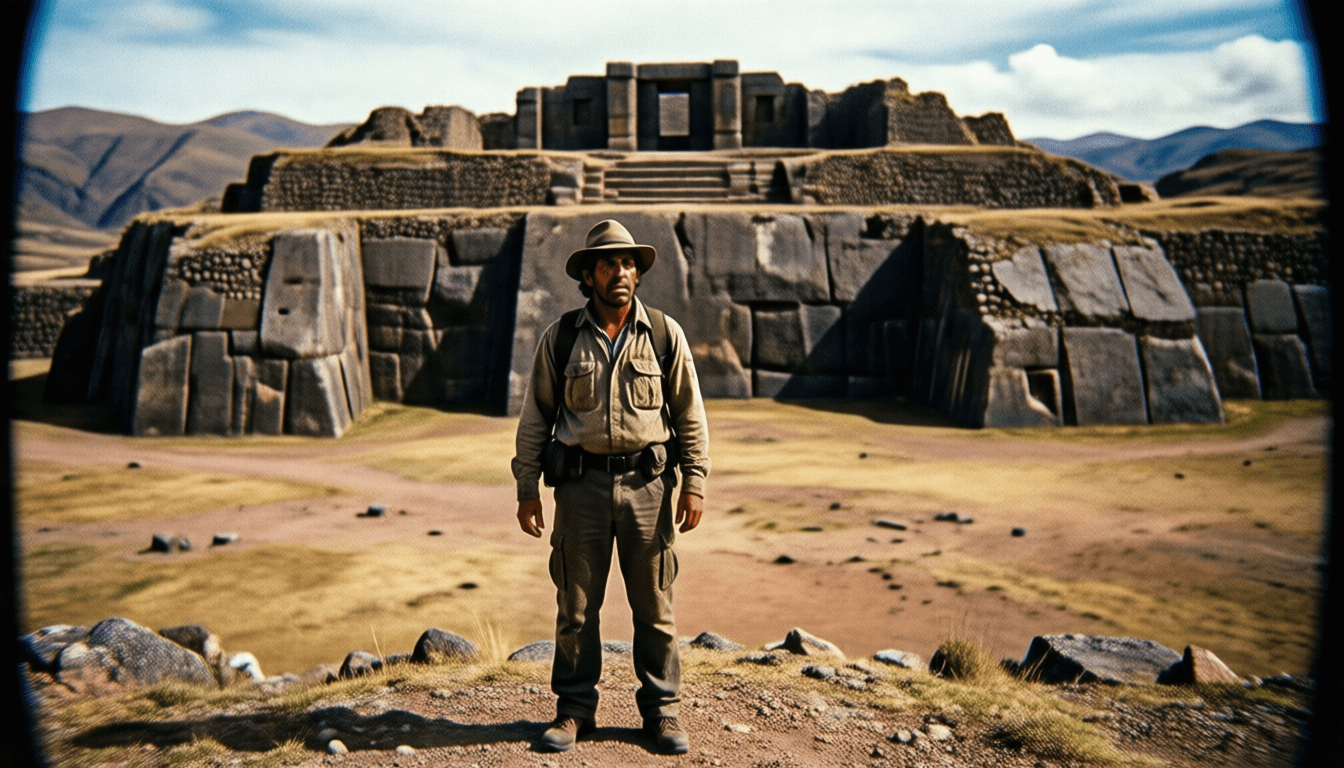
The Lying Stones: Puma Punku's Distorted Reality
Whispers about the ancient ruins of Puma Punku in Bolivia initially circulated in obscure corners of the internet, gradually seeping into local legends. Tourists, archaeologists, and even indigenous shepherds who had spent their entire lives there, reported a profound sense of deep disorientation that went beyond awe. It wasn't tales of ancient aliens or fantastical creatures; it was a grounded, yet unsettling, observation. Compasses spun wildly near the colossal H-blocks, cameras malfunctioned with inexplicable internal errors, and most chillingly, an increasing number of people claimed to experience brief, localized cognitive distortions. One German tourist, an amateur cartographer, insisted that perfectly flat ground subtly 'adjusted' its angle, creating an illusion of impossible inclines. His last Instagram posts, just before he vanished two months prior, featured photos of the site's intricate interlocking masonry, each image subtly warped as if the camera itself wrestled with the geometry it tried to capture through its lens. Usually cheerful local guides now whispered about 'Piedras que Mienten'—'The Lying Stones'—implying that Puma Punku not only held secrets but actively 'distorted' the reality of those who lingered too long. My investigation began with official reports detailing the recovery of the cartographer's equipment and vehicle near the site, but his body was never found.
The air at Puma Punku was thin, acrid, and dry even under the high-altitude sun. The wind was a constant companion, whistling through the broken ruins. As I approached the central platform, I was immediately overwhelmed by the sheer, cold impossibility of the H-blocks. Their precise cuts, perfectly flat surfaces, and complete absence of mortar defied all archaeological notions. I had packed a full array of equipment: laser rangefinders, high-resolution cameras, directional microphones, and a modified Geiger counter, all calibrated and checked. My first impressions were purely physical. The stones were a uniform grayish-brown, absorbing the sunlight yet feeling colder than they should. The wind wasn't random gusts but seemed to be channeled by the angles of the blocks, creating localized currents and strange, harmonic hums. Laser measurements aimed at a perfectly horizontal cut face in the distance flickered erratically, indicating sometimes a slight upward, sometimes a downward tilt on what was ostensibly flat. It was the first subtle, yet undeniable, concrete anomaly. The H-blocks, weighing tens of tons, were so precisely placed that the edges of individual stones met with microscopic accuracy, creating an unnervingly smooth surface.
As I delved deeper into the ruins, stepping between interlocking blocks that formed a kind of recessed chamber, the subtle anomalies began to amplify. The constant howl of the wind locally vanished, replaced by an unsettling, absolute silence that felt like it was pressing in from all sides. My directional microphone, designed to pick up faint ambient sounds, recorded only static at this point. Conversely, when attempting to record a low, resonant hum I felt deep in my chest near certain blocks, the recording either failed entirely or contained bizarre, impossible frequencies not present in audible ranges.
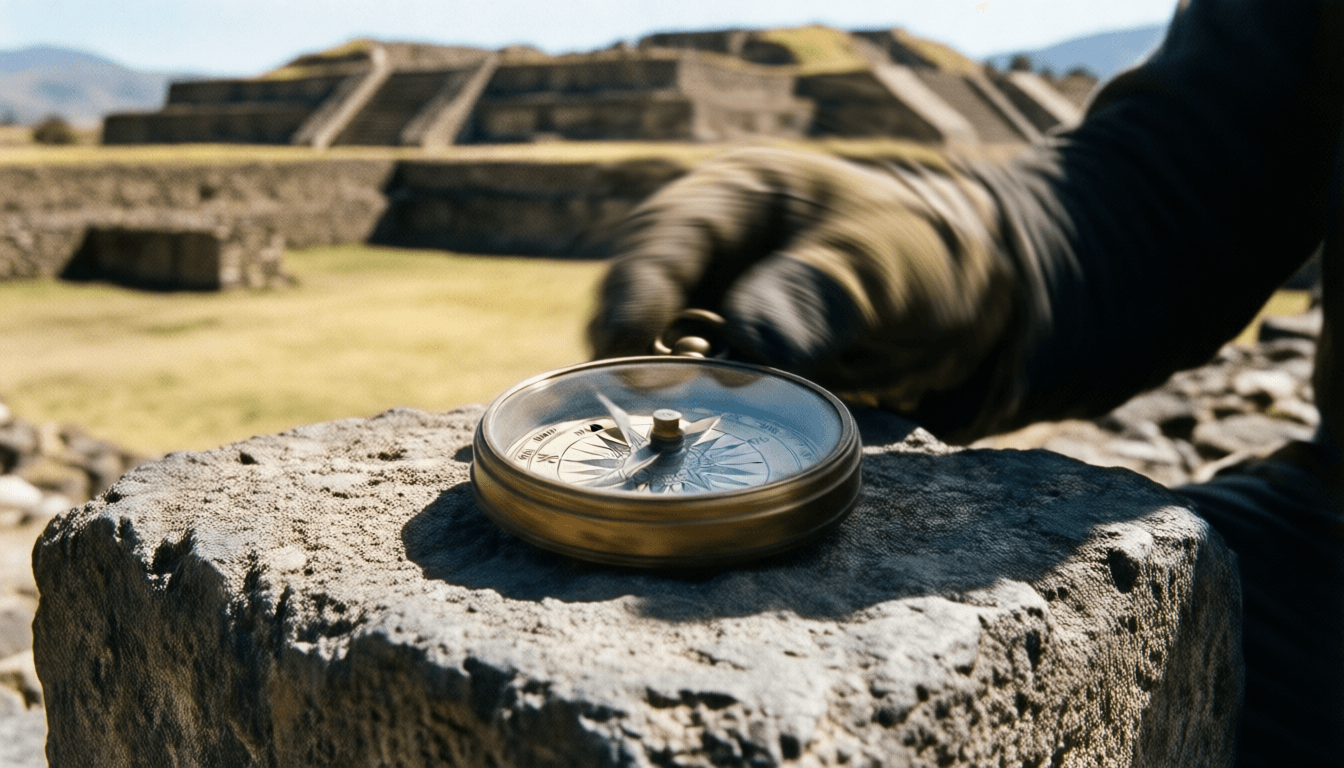
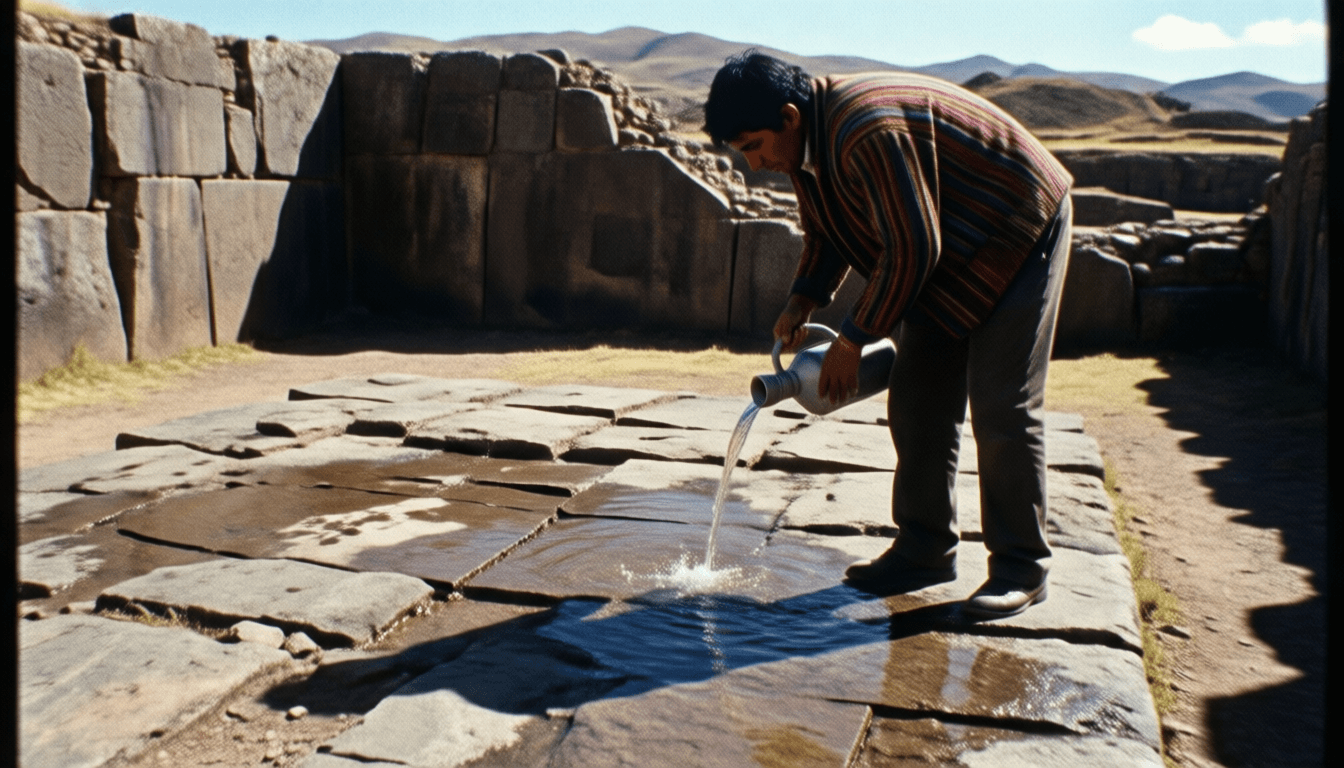
Visually, the precise cuts of the stones began to induce optical illusions. Perfectly flat faces subtly curved when viewed from slightly different angles, creating optical phantasms of impossible geometries. A straight edge held against a block appeared to warp slightly in my peripheral vision. Shadows, instead of shifting with the sun's slow traverse, seemed to 'click' into new positions discontinuously. My compass, previously just erratic, now spun violently before locking into random directions, humming faintly. I poured a little water from my canteen onto a smooth block surface. Instead of running off as expected, it spread unnaturally, then slowly seemed to be drawn into an almost imperceptible, inexplicable groove, where it stopped and vibrated. It wasn't the feeling of being observed, but of being 'processed' by the geometry itself. As if the ancient arrangement of stones was a colossal, immobile machine, slowly coming alive around me in an incomprehensible way. In my camera's viewfinder, a faint distortion began to appear around the edges of the frame, a fisheye effect that intensified when aimed directly at the most intricate H-blocks.
I stood in a narrow passage between two massive, perfectly aligned blocks, each etched with the same precise grooves, intricately carved. The air here was utterly still, devoid of wind or sound, yet an immense internal pressure bore down on my eardrums. My quiescent Geiger counter faintly clicked, then erupted into a frantic chatter, signaling an inexplicable localized burst of radiation.
And then, the geometry began to act.
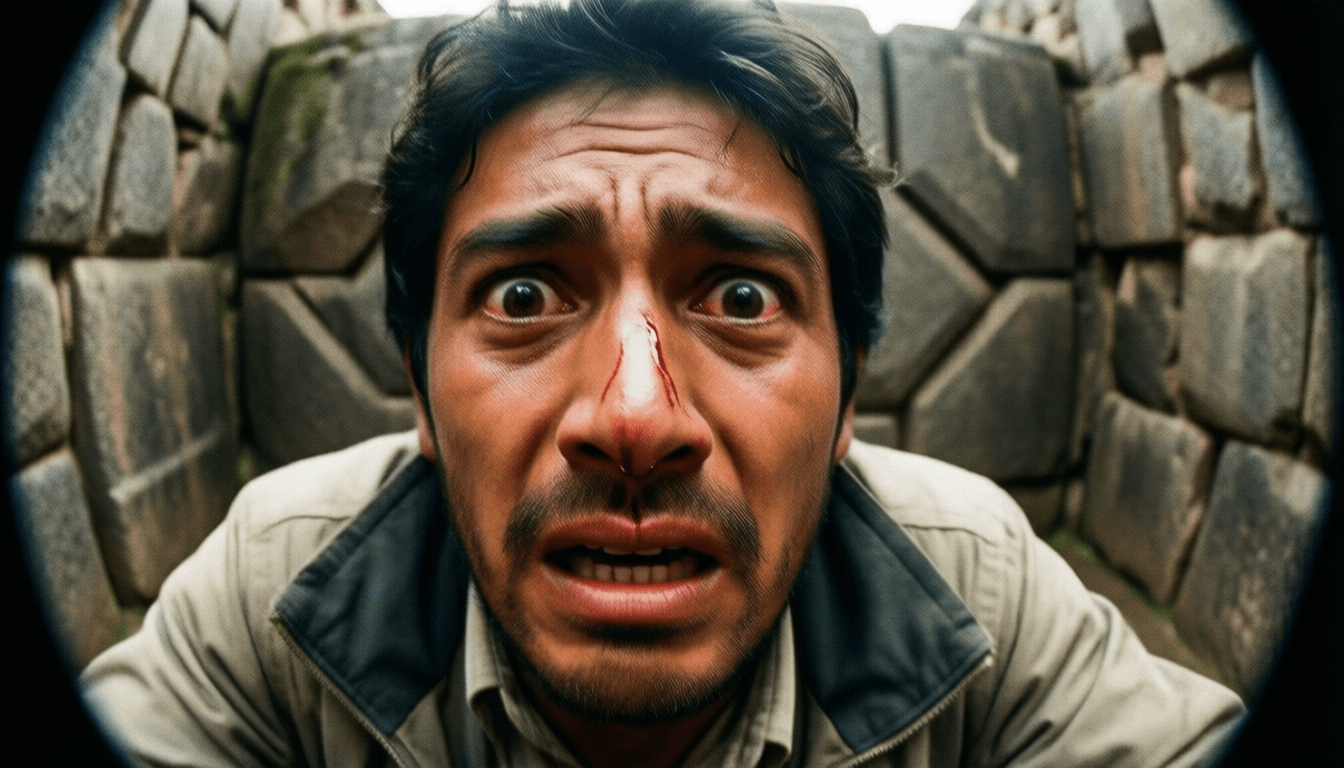
The perfectly horizontal andesite floor began to vibrate. It was a low-frequency hum that resonated directly in my bones, bypassing my ears. The light, already filtered by the thin air, became viscous, its hue shifting, rendering the already chaotic optical illusions unbearable. The 'fisheye' distortion in my camera's viewfinder became extreme, straight lines of the blocks curving inwards, bending space. Suddenly, I felt an inexplicable 'pull'. As if an invisible force was dragging me sideways and downwards, attempting to pin me against the rough, cold surface of one of the monumental blocks. This wasn't physical contact, but a localized spatial distortion, a gravitational anomaly, like being caught between two tectonic plates. My muscles tensed, my vision narrowed. These impossibly precise structures, the H-blocks, were not moving in any conventional sense. But the 'space' between them, the geometry of the environment itself, was shifting, tightening. I felt the pressure. A force squeezing the air from my lungs, trying to fold my body at an impossible angle against the cold, inert stone. The air around me seemed to 'crack', not a sound, but a compression, as if a physical barrier was pressing inwards. The stones themselves were utterly impassive. Their ancient, alien precision was now actively hostile. It was a trap, not by design, but by latent, incomprehensible properties activated by my presence. I gasped. The thin air was insufficient, my tense ribs feeling invisible walls of force as I bled from my nose, fully trapped. My last desperate act was to throw my camera, still recording, into the gap, hoping it would escape the localized event.
I don't remember the exact moment the pressure released. There was a sudden, jarring 'crack' that seemed to tear through the air, and for a moment, normal gravity returned. I staggered, collapsing, freed from the suffocating, warped embrace of space. I crawled, then ran. I burst out of the H-block chamber without looking back. The thin air burned in my lungs, the taste of blood from strained sinuses filling my mouth. My body, despite no external trauma, ached with deep, internal bruising.
Days later, back in La Paz, the internal pressure in my eardrums persisted. A phantom ache. My vision was functionally normal, but I now perceived certain right angles in the city—building corners, doorways, furniture—as subtly and unsettlingly 'curving'. Faint, momentary distortions that no one else noticed. The world was subtly warped.
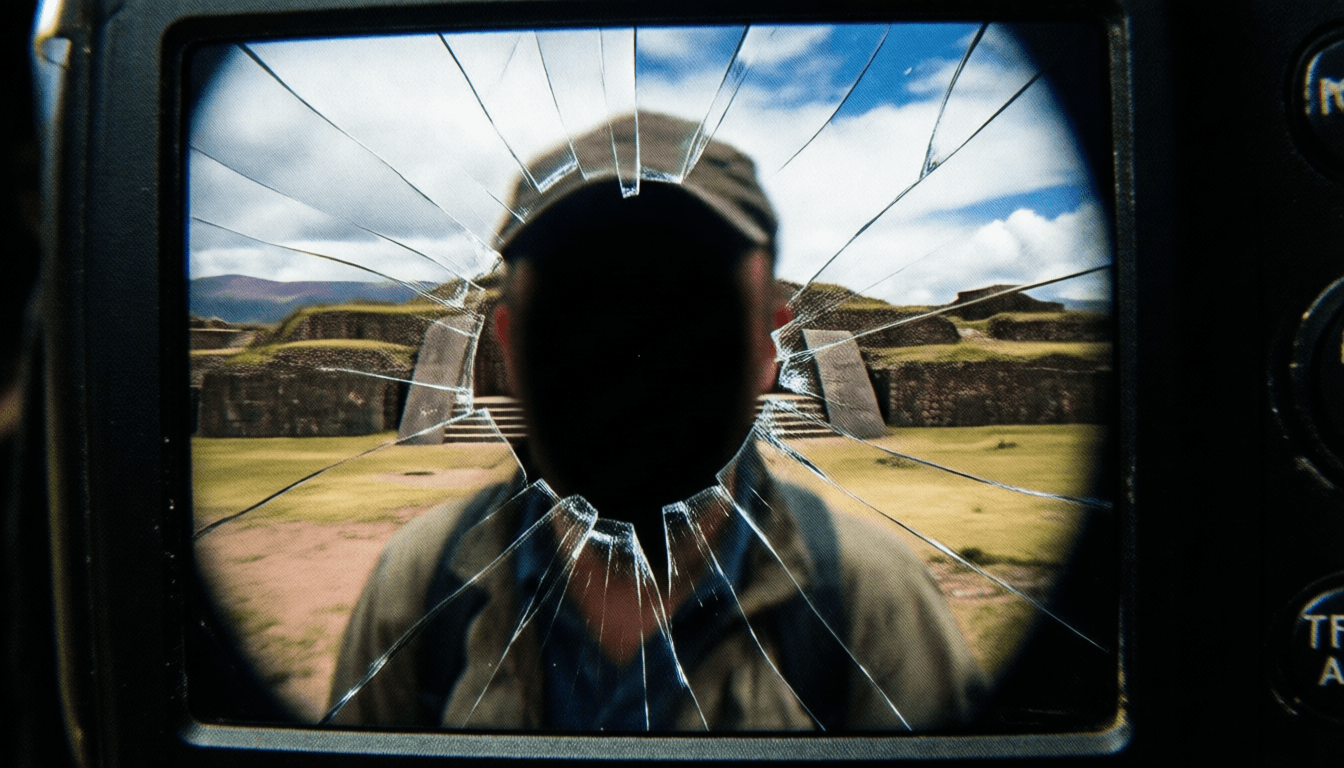
My camera was miraculously recovered a few days later by local guides. Inexplicably, it was found outside the perimeter fence, its casing cracked but the memory card intact. The last few seconds of footage were the most chilling. It showed the H-blocks in increasingly distorted perspective, straight lines bending, depth collapsing into flatness. Then the sound cut out, replaced by a deep, resonant hum that seemed to vibrate the recording itself. The final frame, just before the lens shattered, showed that the perfectly smooth surface of the block I had been pressed against reflected, unbelievably, not my terrified face, but an infinite, black void. A reflection of 'nothingness', without detail or light.
The cartographer's case remains unsolved. My official reports detailed extreme barometric changes and localized magnetic anomalies, carefully omitting my personal experiences. But Puma Punku remains, a persistent wound in the fabric of reality, a physics we cannot comprehend, continuing to 'bend' and 'lie' to those who approach it. Sometimes, in quiet moments, I still feel the pressure. A reminder that some truths are not meant to be discovered, and some places remember too much.
[ CLASSIFIED VERDICT ]
[ACCESS LOG - SOURCE FILE]
The Puma Punku ruins in Bolivia are rumored among tourists and locals to cause profound disorientation, compass malfunctions, and cognitive distortions that warp reality. These stones, known as 'The Lying Stones' due to their intricate and precise construction that defies physical laws, are said to actively alter the perceptions of those who linger too long.