Easter Island's Silent Giants: The Moai Mystery
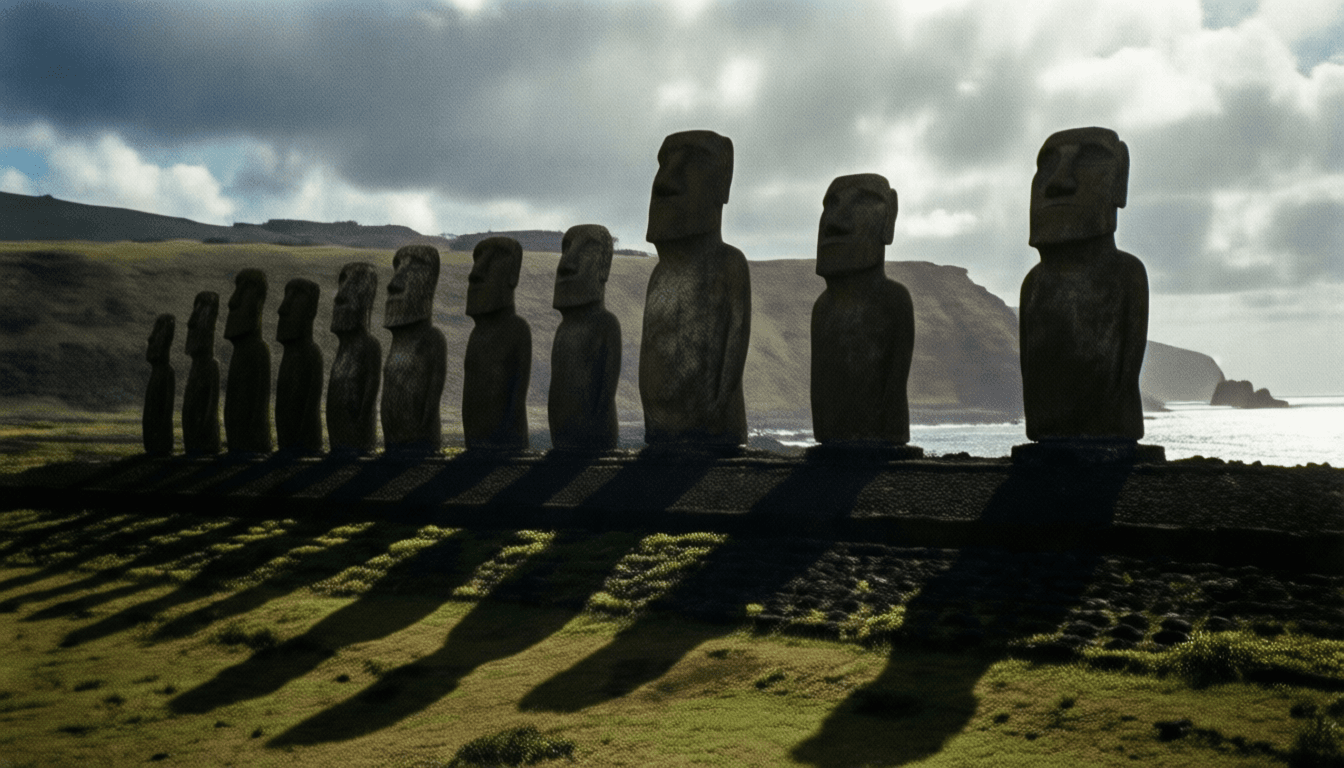
In the vast blue heart of the Pacific Ocean, an isolated island floats a staggering 3,700 kilometers from the nearest continent. Rapa Nui, also known as Easter Island, is a place that challenges our understanding of ancient human capabilities and the collapse of civilizations. Scattered across its windswept volcanic landscape are nearly 1,000 colossal stone statues, the Moai. Some Moai weigh over 80 tons, while others stand taller than a four-story building. Their enigmatic faces gaze silently inland or out to sea. Their very existence poses one of archaeology's most profound questions: How did a Stone Age civilization in extreme isolation create and move these gigantic statues, ultimately leading to the island's devastating environmental and social collapse?
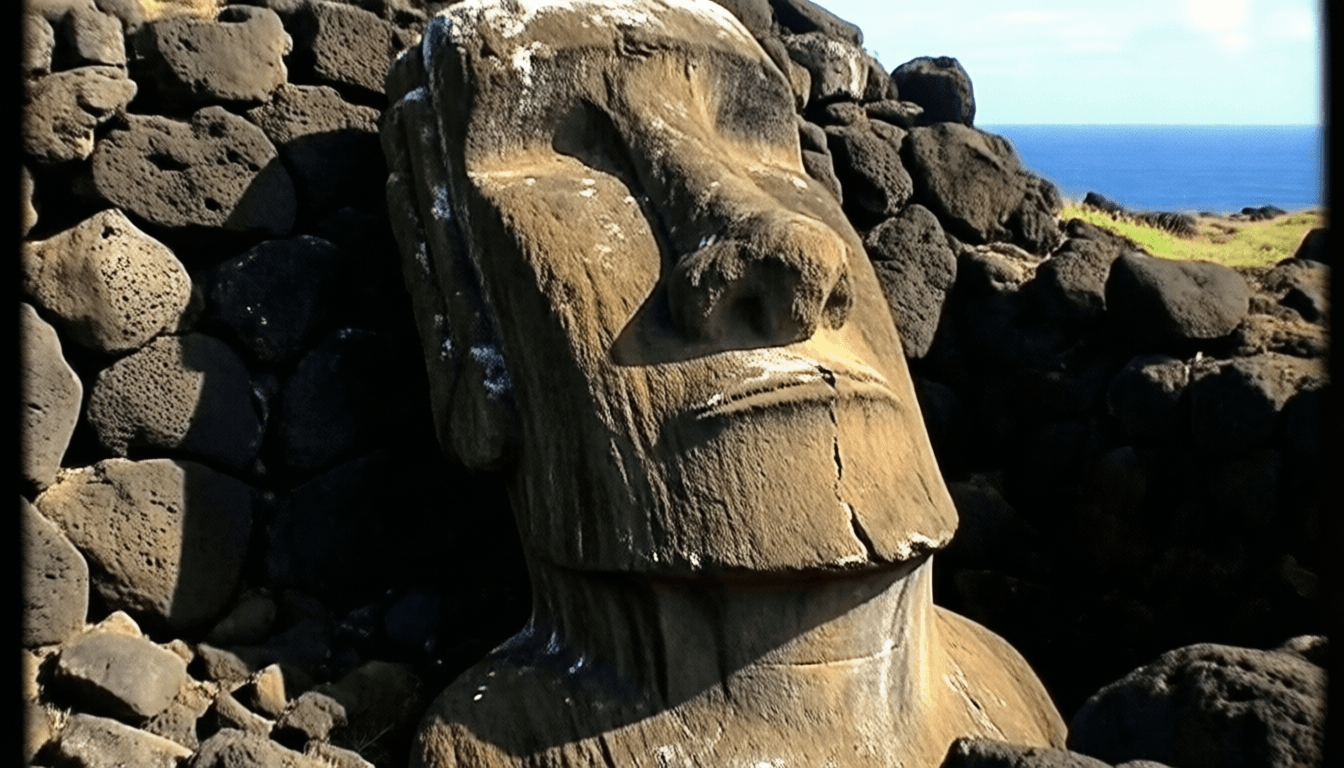
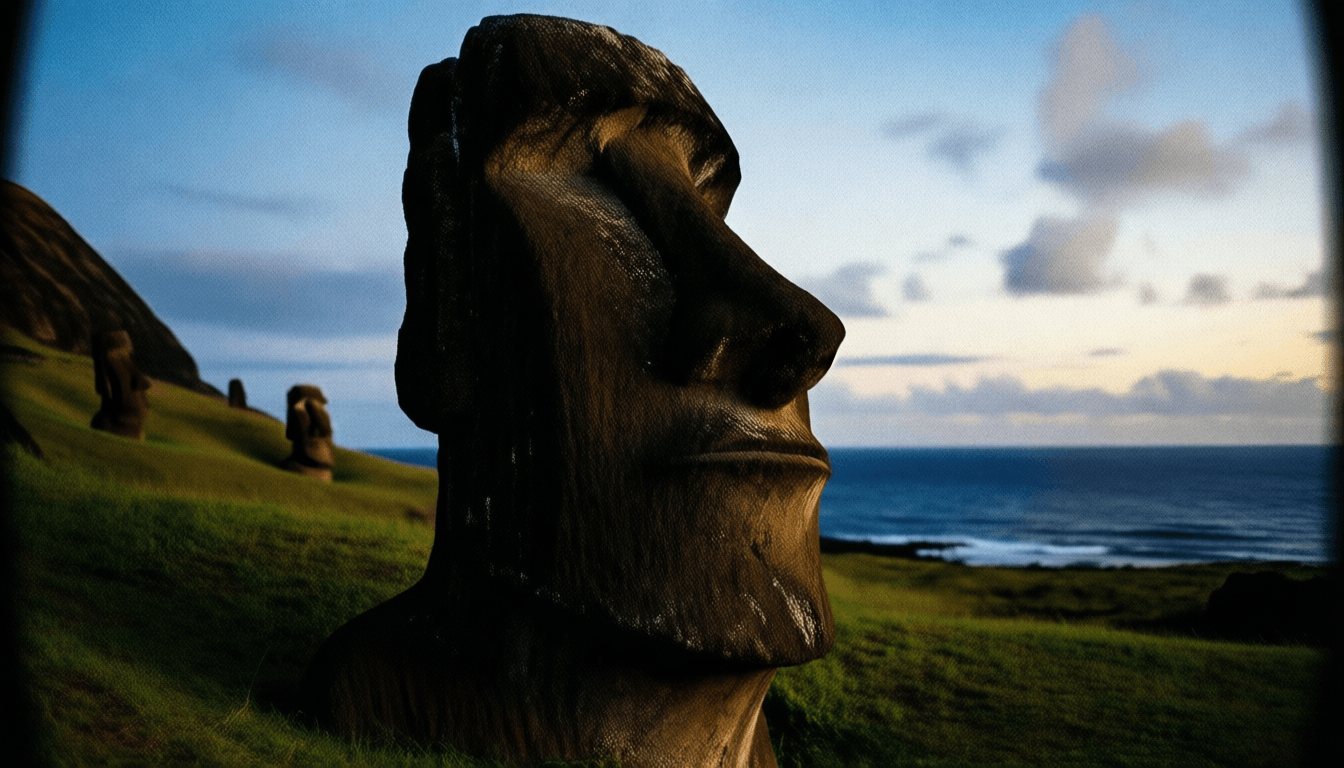
When European explorers first arrived on Rapa Nui in 1722, they were stunned by the sight. On an island seemingly devoid of large trees, a once-thriving population had carved, transported, and erected hundreds of megalithic sculptures. Our investigation begins at Rano Raraku, the island's volcanic quarry and the very heart of the Moai mystery. Here, hundreds of unfinished Moai are found embedded in the bedrock—some still connected to the rock face, others toppled during transport. This scene presents a frozen tableau of a civilization's immense effort. The scale is staggering: colossal figures over 20 meters long lie half-quarried, revealing traces of the intricate yet rudimentary tools used in their creation: basalt chisels. From Rano Raraku, these statues were somehow moved to massive stone platforms, known as Ahu, located along the coastline, sometimes many kilometers away. From their elongated ears to their distinctive brows and proud chins, the meticulous details of each Moai suggest a deep spiritual or ancestral worship purpose, yet their precise meaning remains shrouded in mystery. The once lush, forested landscape has transformed into a barren expanse, speaking of profound changes inextricably linked to these statues.
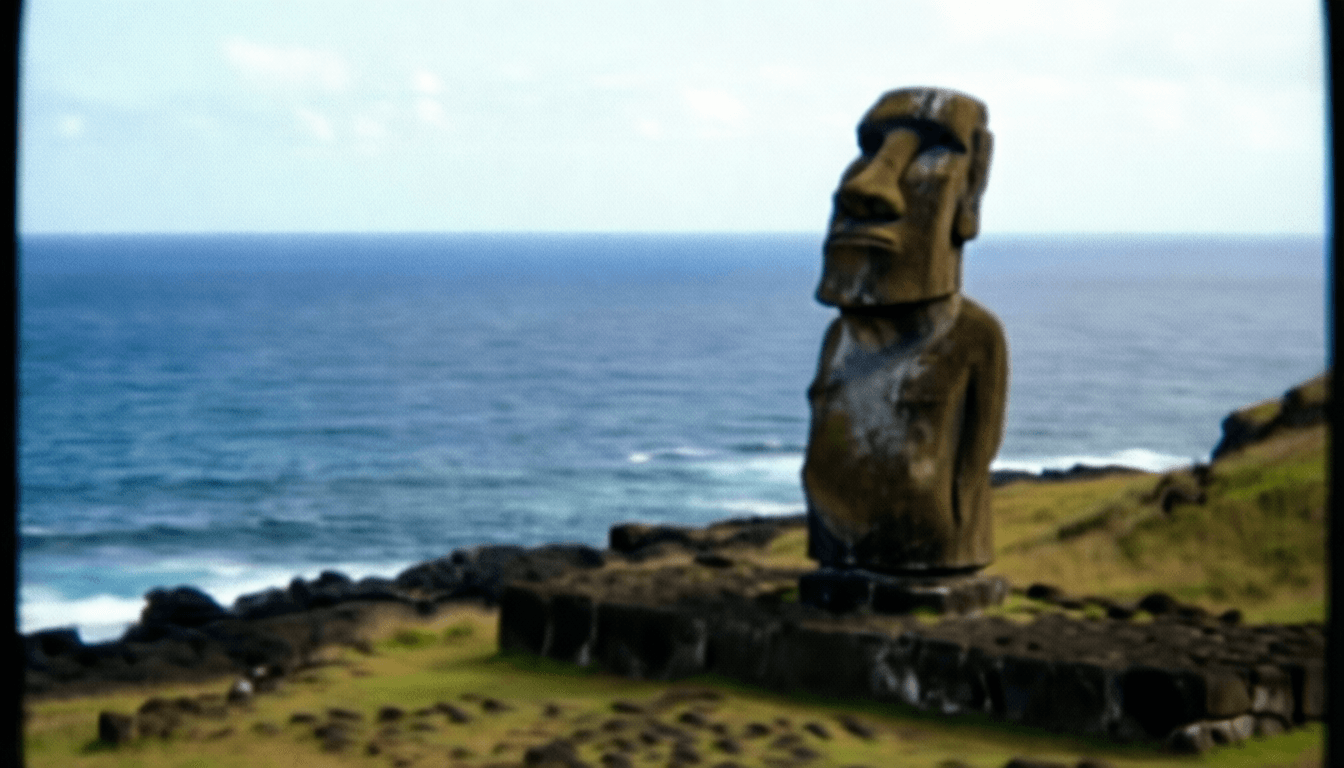
While archaeological evidence and oral traditions offer clues to Moai production, the critical step of transporting the statues across the island's rugged terrain remains an engineering marvel without a fully satisfactory explanation. Theories abound. Some suggest the use of wooden rollers, but the ancient scarcity of large trees on Rapa Nui casts doubt on this hypothesis. Elaborate rope and sled systems, or even a 'walking' method where the statues were rocked upright from side to side, have also been proposed. Experimental archaeology has attempted to replicate these feats, but with limited success, requiring far more manpower and resources than historical estimates. Further deepening the mystery are the massive red scoria 'Pukao,' weighing up to 12 tons. These were quarried separately, transported to the Ahu, and then mysteriously lifted onto the heads of already erected Moai. How these heavy structures were elevated to such heights without advanced equipment adds another layer of wonder to the Rapa Nui people's unimaginable ingenuity.
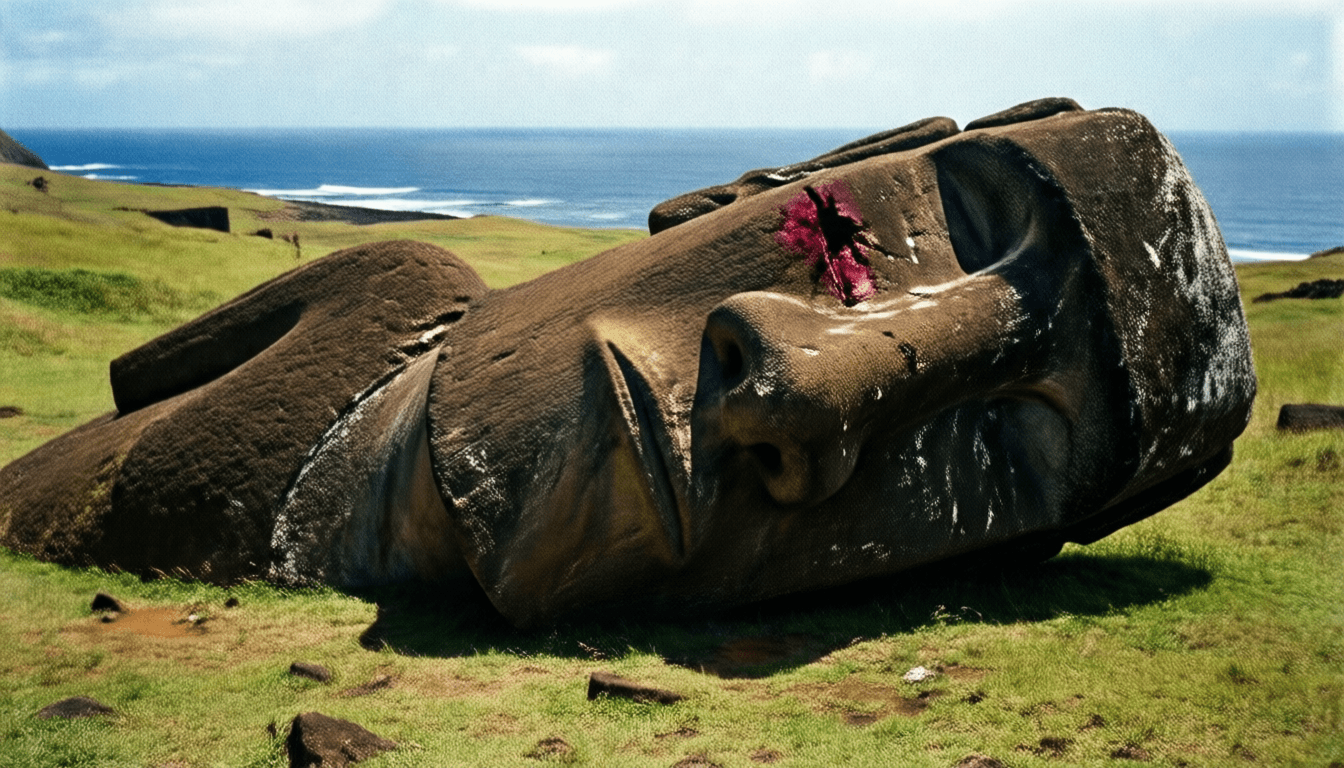
Rapa Nui's most profound anomaly lies not just in the 'how' of the Moai, but in the 'why' and, subsequently, 'what happened.' This once-thriving society underwent a catastrophic collapse. Palynological studies reveal extensive deforestation, likely due to the demand for wood for Moai transport, fishing canoes, and fires. This ecological devastation probably led to resource scarcity, soil erosion, and a dramatic decrease in food sources, sparking a desperate struggle for survival. Oral history speaks of a period of internal conflict and social unrest, where the very objects of their worship became targets. Almost all the Moai were systematically toppled from their Ahu, a process known as huri moai. Their faces were intentionally broken or defaced. These statues, once symbols of power and spiritual connection, became monuments to a broken civilization, silently testifying to their own destruction. The dramatic shift from monumental construction to deliberate destruction, followed by a rapid population decline, points to a cultural suicide of horrifying proportions.
Today, numerous colossal Moai have been carefully re-erected, once again silently gazing out across Rapa Nui's windswept plains. They stand as eternal testaments to the extraordinary capacity of human endeavor, the profound artistic vision of a Stone Age people, and an unwavering commitment to a belief system that demanded immense effort. Yet, the island still whispers unanswered questions. What was the true motive behind such immense devotion? What exact combination of environmental change and social pressures led to such a rapid and irreversible decline? The story of Rapa Nui is a powerful, unresolved narrative, an haunting warning about the delicate balance between human ambition and ecological sustainability. The silent sentinels of the Pacific still guard their secrets, leaving us to ponder the vast mysteries and profound lessons hidden within their stoic, weather-beaten faces.
[ CLASSIFIED VERDICT ]
[ACCESS LOG - SOURCE FILE]
The Moai of Easter Island represent an archaeological mystery: how an isolated island civilization created and moved giant stone statues, ultimately leading to the island's environmental destruction and social collapse. This story is seen as a cautionary tale about the fragile balance between human ambition and ecological sustainability, raising profound questions about the unknown and the rise and fall of human civilizations.