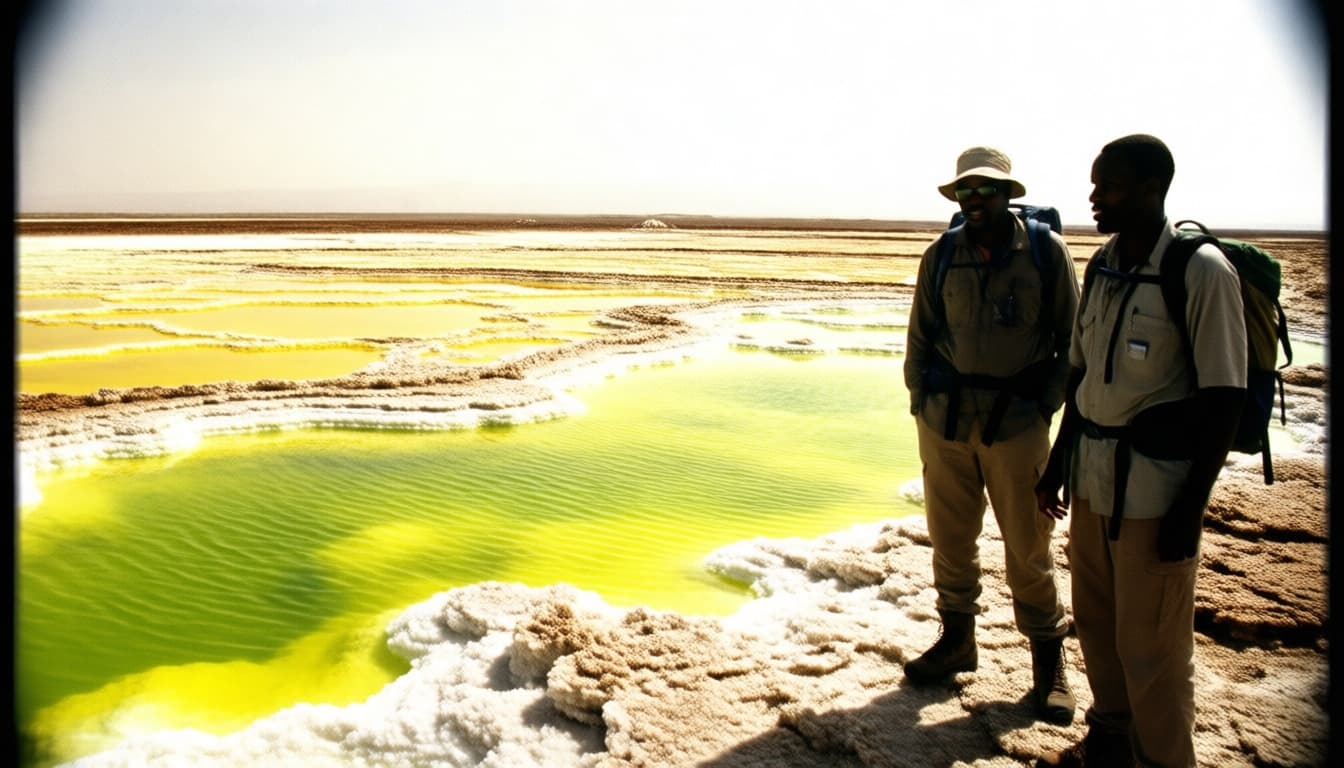
The Abyss of Dallol: Tearing Earth and the Alien Salt Hell
In the late 2010s, satellite radar interferometry (InSAR) and seismic networks captured data that sent chills through the geological community. Beneath the Afar Triangle in northern Ethiopia, the Earth's crust had thinned to less than 15 kilometers—less than half the thickness of typical continental crust. The continental plates were tearing apart at three times the speed predicted by standard plate tectonics. The Earth was violently peeling back its own skin, opening the womb for a brand-new ocean.
Sunken 125 meters below sea level at the heart of this rift lies the Dallol volcanic field. Scorched under an incandescent atmosphere where temperatures regularly exceed 50 degrees Celsius, luminous sulfur terraces and neon-yellow, hyper-acidic ponds paint a grotesque, alien landscape. As early as the late 1960s, French volcanologist Haroun Tazieff's expedition recorded mysterious low-frequency tremors rumbling from deep underground. It was no simple magma surge; it was the titanic respiration of the Earth, caused by superheated brine blasting upward through ancient subterranean salt beds buried kilometers deep.
This basin is a geological battleground where three tectonic plates—the Nubian, Somali, and Arabian plates—diverge in opposite directions. Millennia of marine flooding from the Red Sea followed by relentless evaporation produced massive halite layers up to two kilometers thick. This vast salt plain, seemingly desiccated, is a living stratum: subterranean minerals constantly erupt through its fractures, sealing wounds in the crust overnight.
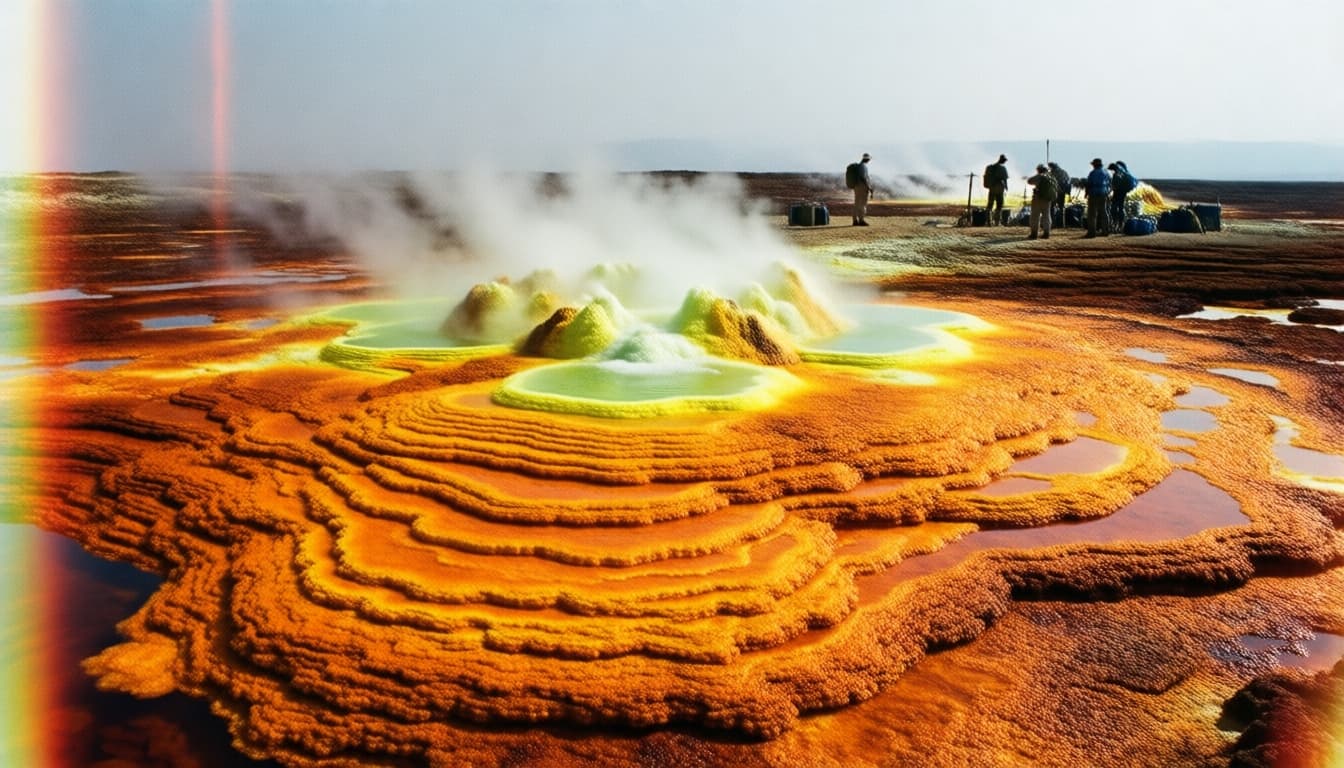
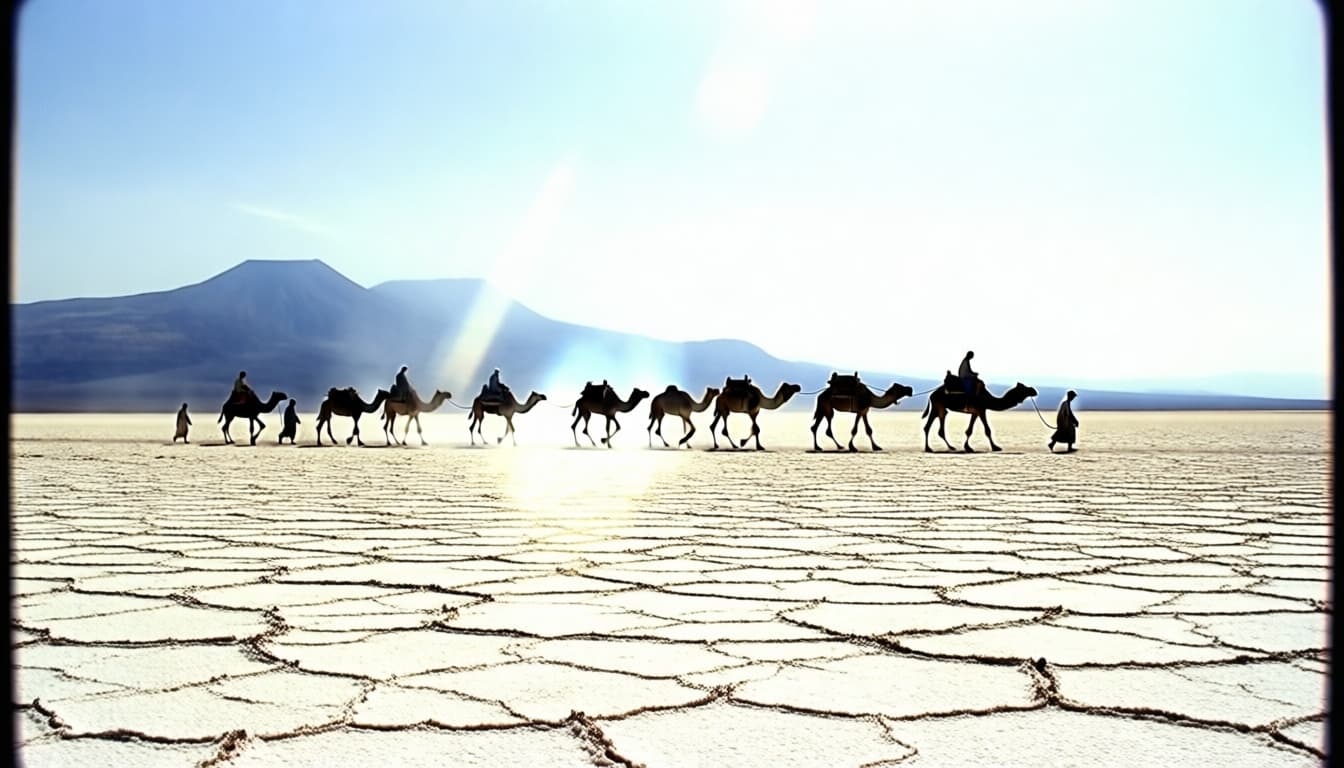
For centuries, the Afar caravans have braved this hellish heat, quarrying rectangular salt blocks using only wooden poles and axes. They navigate this scorched earth using hydrothermal vents and fault lines as natural compasses. Beneath their feet, boiling groundwater discharges halite and carnallite minerals, erecting hollow salt chimneys resembling sinister pipe organs. As high-pressure volcanic gas leaks through fissures in these mineral towers, a bizarre whistling sound resonates across the barren expanse.
Yet the true enigma begins in the peculiar brine ponds on the surface. Astrobiologists from Europe's Europlanet consortium focused heavily on Dallol's extreme conditions. With boiling points exceeding 108 degrees Celsius, supersaturated salinity, and negative pH levels plunging below zero, this site represents a 'multi-extreme environment' unmatched anywhere on Earth.
Initial electron microscopy revealed microscopic structures suspected to be unknown 'nanobacteria,' electrifying the scientific world. However, subsequent high-resolution molecular genomic sequencing shattered conventional biology. While one pool yielded an unprecedented density of novel archaeal genetic sequences never before documented, another pool mere meters away—possessing an identical physicochemical composition—was a sterile void capable of destroying organic carbon bonds on contact. Modern science cannot explain the boundary between teeming life and absolute annihilation under identical chemical conditions.
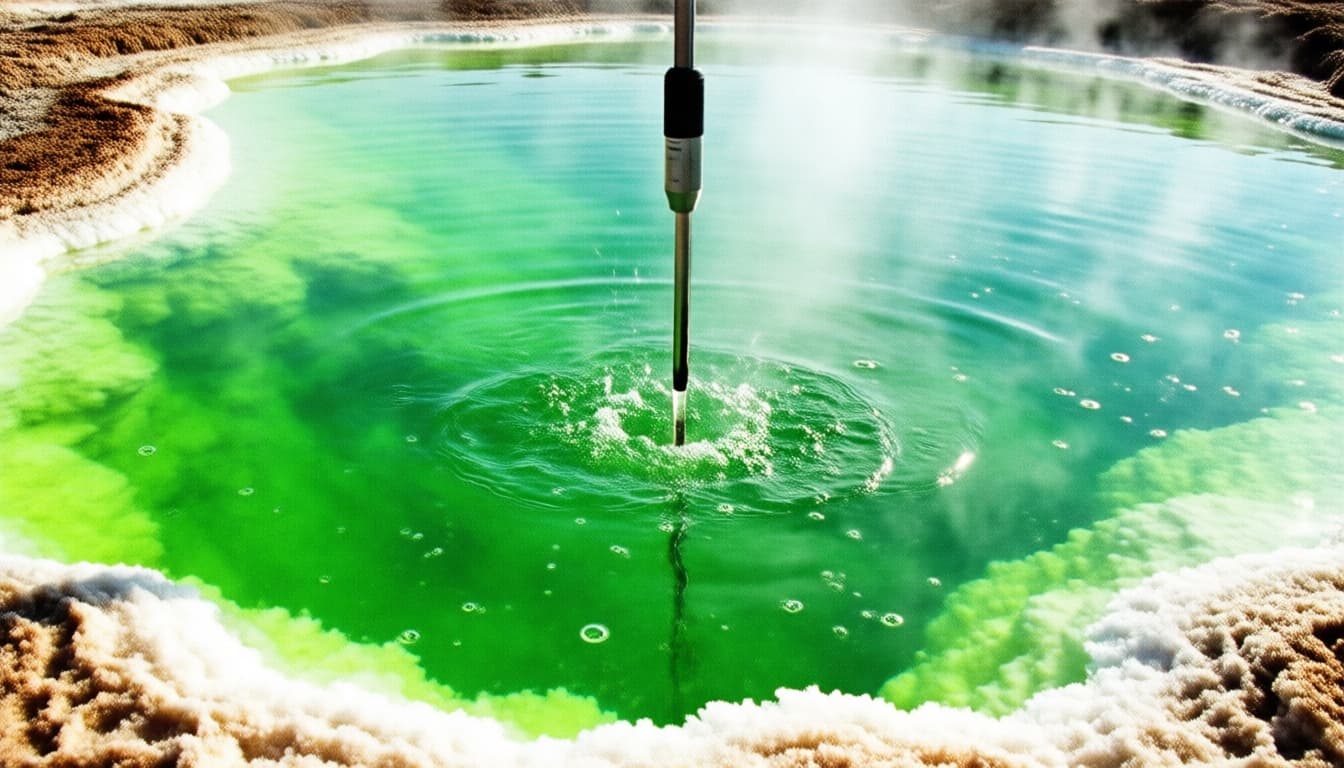
Hydrological contradictions do not end there. Beneath boiling salt crusts, researchers discovered pockets of near-freezing freshwater with remarkably low salinity. Isotope analyses proved this water is entirely distinct from East African highland rain or local river runoff. It is a ghost stream isolated from modern Earth's hydrological cycle, circulating silently in the subterranean dark.
Deep Ground Penetrating Radar (GPR) and magnetotelluric surveys revealed that Danakil's bedrock is not solid sediment. The earth is hollowed out like a gigantic honeycomb, concealing a maze of hermetically sealed crystal caverns. It is an immense underground ark trapped when the Red Sea corridor abruptly closed millions of years ago.
Core samples retrieved from deep halite domes preserved pristine air bubbles sealed inside ancient crystals. Holding atmospheric samples from the Late Pleistocene, these bubbles revealed anomalous gas compositions incompatible with existing African Humid Period climate models, leaving paleoclimatologists speechless.
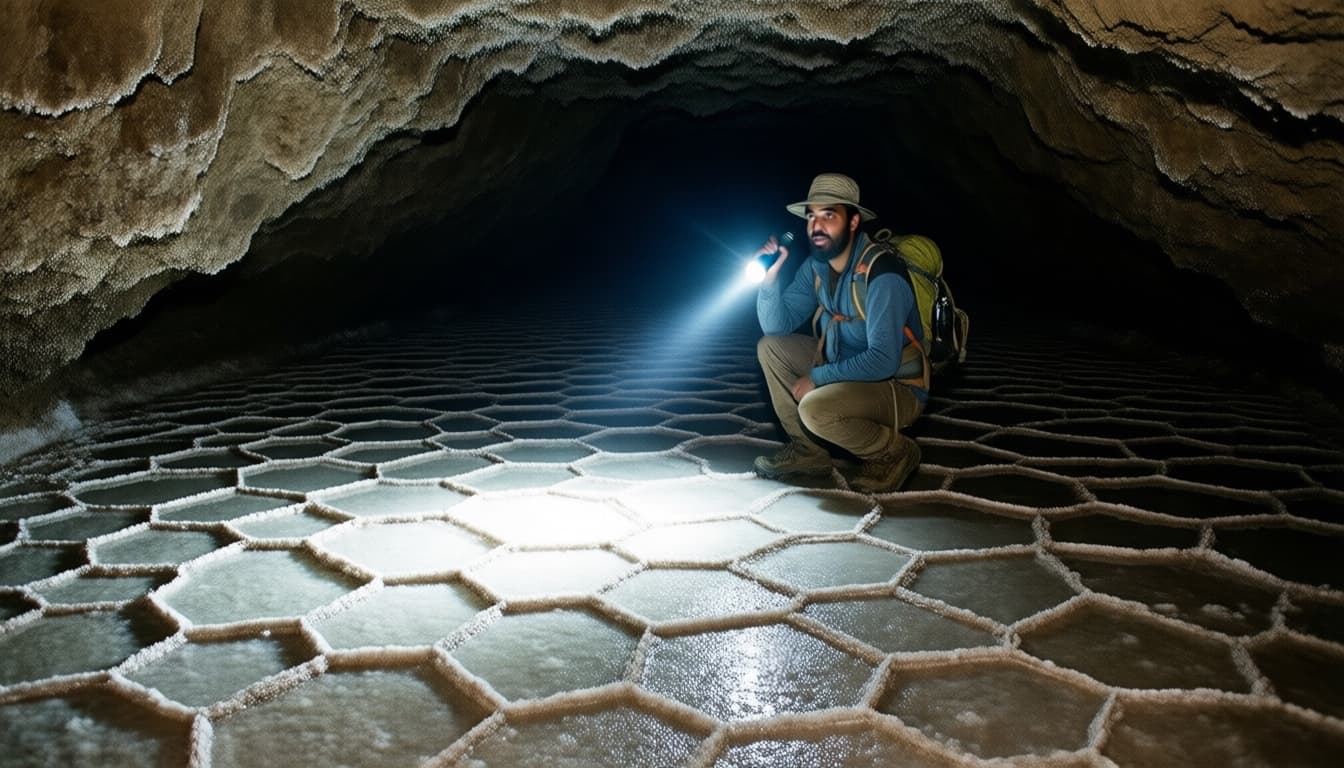
An even more baffling sight was documented at the bottom of a subterranean brine lake. Extending across hundreds of meters were mineral salt crystals formed in perfectly symmetrical, hexagonal interlocking matrices. Resembling a silicon circuit board designed by an advanced intelligence, this geometric lattice is presumed to be the result of self-organizing geothermal convection and hidden wind currents—yet its precise formation mechanism remains entirely unexplained.
The Danakil Depression is both a relic of the primordial Earth and the cradle of a future ocean millions of years away. An extraterrestrial world akin to the frozen depths of Jupiter's moon Europa or the hydrothermal vents of ancient Mars lives and breathes beneath our feet.
Above the blinding white salt flats, heat mirages waver, swallowing the Afar camel caravans as they vanish into the desert haze. Beneath their silent footsteps, the tearing, melting, and recrystallizing earth continues to slip far beyond the reach of human science.
[ CLASSIFIED VERDICT ]
[ACCESS LOG - SOURCE FILE]
The Dallol volcano and Danakil Depression in Ethiopia's Afar Triangle form one of the hottest and most extreme depressions on Earth, where diverging tectonic plates are actively tearing the continent apart to birth a new ocean. This story is grounded in real scientific mysteries: boiling brine pools with sub-zero negative pH where teeming archaea and complete abiotic sterility coexist side by side under identical chemistry, alongside unexplained geometric crystal formations deep underground.