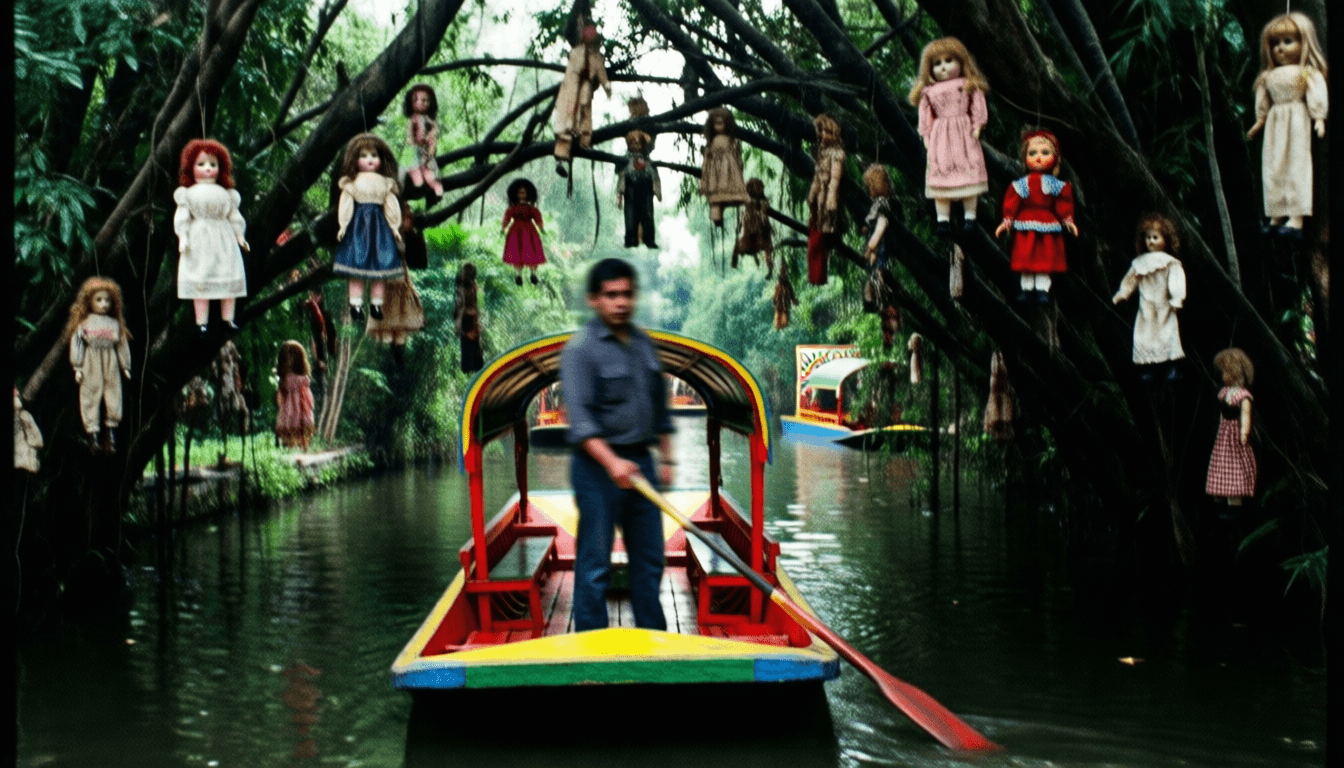
Xochimilco's Island of Dolls: The Whispering Curse
Online forums and lesser-known travel blogs rarely agree, but the sentiment regarding Mexico's 'La Isla de las Muñecas' (Island of the Dolls) in Xochimilco is almost universally consistent: "Beyond eerie, something is deeply wrong." Tourists upload photos of thousands of old, broken dolls hanging from tree branches, their glass eyes staring blankly from dusty faces. They recount anecdotes of dolls' heads turning, eyes following them, or faint whispers mingling with the canal's breeze. More unsettling is the persistent local legend: the story of Julián Santana Barrera, the island's caretaker, who, possessed by the spirit of a drowned girl, descended into madness, eventually dedicating his life—and ultimately sacrificing it—to offering grotesque dolls. Visitors often report a deep, unnatural silence upon entering the island, broken only by the sound of water, and an intense feeling of being watched. A recent widely shared Reddit post described a tourist's camera battery repeatedly and instantly draining only when pointed at a specific group of dolls, working perfectly before and after. My research into the uncanny valley phenomenon, where inanimate objects take on human characteristics, suggests profound human discomfort, but Xochimilco's Island of Dolls transcends mere discomfort. It radiates a much more deliberate malevolence.
My 'trajinera'—a brightly painted, flat-bottomed boat—slowly moved along the narrow canal, leaving the clamor of the main tourist docks behind. The air was humid and sticky, a mix of marsh, stagnant water, and an unidentified chemical sweetness. Ricardo, my guide, maintained a stoic, detached silence, offering no explanations beyond an occasional grunt. As we neared the 'chinampa' designated as the Island of the Dolls, the vegetation grew denser, almost claustrophobic. And then, they appeared. Not gradually, but abruptly, in countless numbers. Thousands of dolls. Discolored, broken, some headless, some eyeless. They hung from every branch, every stem, every vacant space, decaying like strange plastic fruit. The sheer quantity was overwhelming. A static, silent army. I began documenting with my specialized low-light camera, focusing on patterns, materials, and the peculiar distribution of older, more decayed dolls versus relatively newer ones. The silence Ricardo had mentioned was immediate and oppressive, swallowing even the distant hum of other boats and the natural sounds of the marsh. Even the water here seemed to move slower, like a viscous, dark mirror reflecting distorted faces.
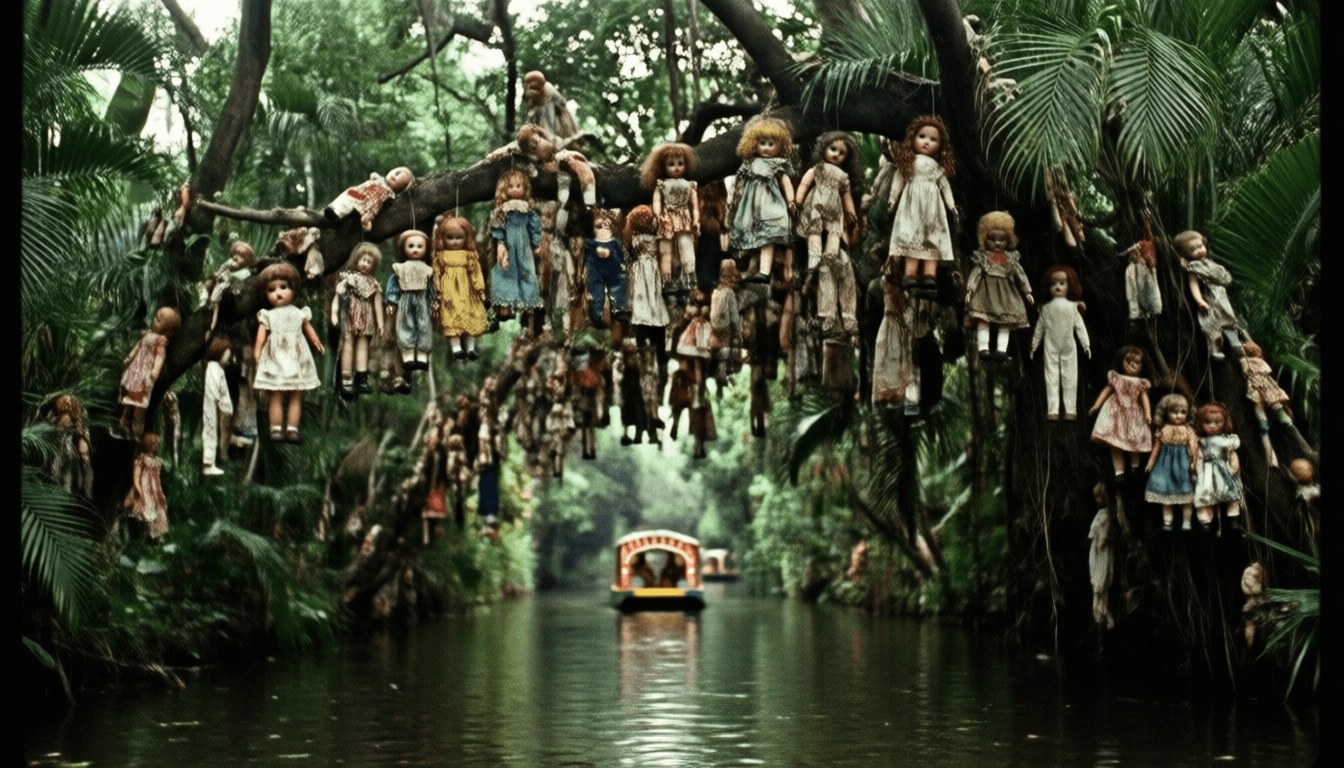
Deeper into the island's periphery, the anomalies began. My perfectly functional camera intermittently malfunctioned, displaying corrupted frames or momentary static bursts before returning to perfectly crisp images. Too specific to be coincidence. The water in the narrow tributary leading to the island's core seemed to impede the boat's progress, creating faint, concentric ripples that 'went against' the subtle current. I rationalized this as eddies or submerged obstructions. But it continued. When the breeze blew, I seemed to hear not random rustling, but distinct whispers, a hoarse chorus of dozens of voices murmuring just beyond the threshold of comprehension. I attributed it to the dolls' old plastic skirts and tattered clothes, listening intently. But then, a distinct, guttural gurgle resonated directly beneath the boat. Not the displacement of water, but an organic, choked sound. It quickly vanished. Ricardo stiffened, gripping his oar, his eyes scanning the doll-laden branches with a new tension. I saw a doll whose head had been sharply turned towards me, and a moment later, I was certain it subtly shifted, its one remaining eye fixed on me. My logical mind scrambled for explanations: boat movement, trick of light, parallax. But the feeling of being 'assessed' intensified, a cold pressure behind my eyes. The silence deepened, becoming an active presence that drowned out even my own heartbeat.
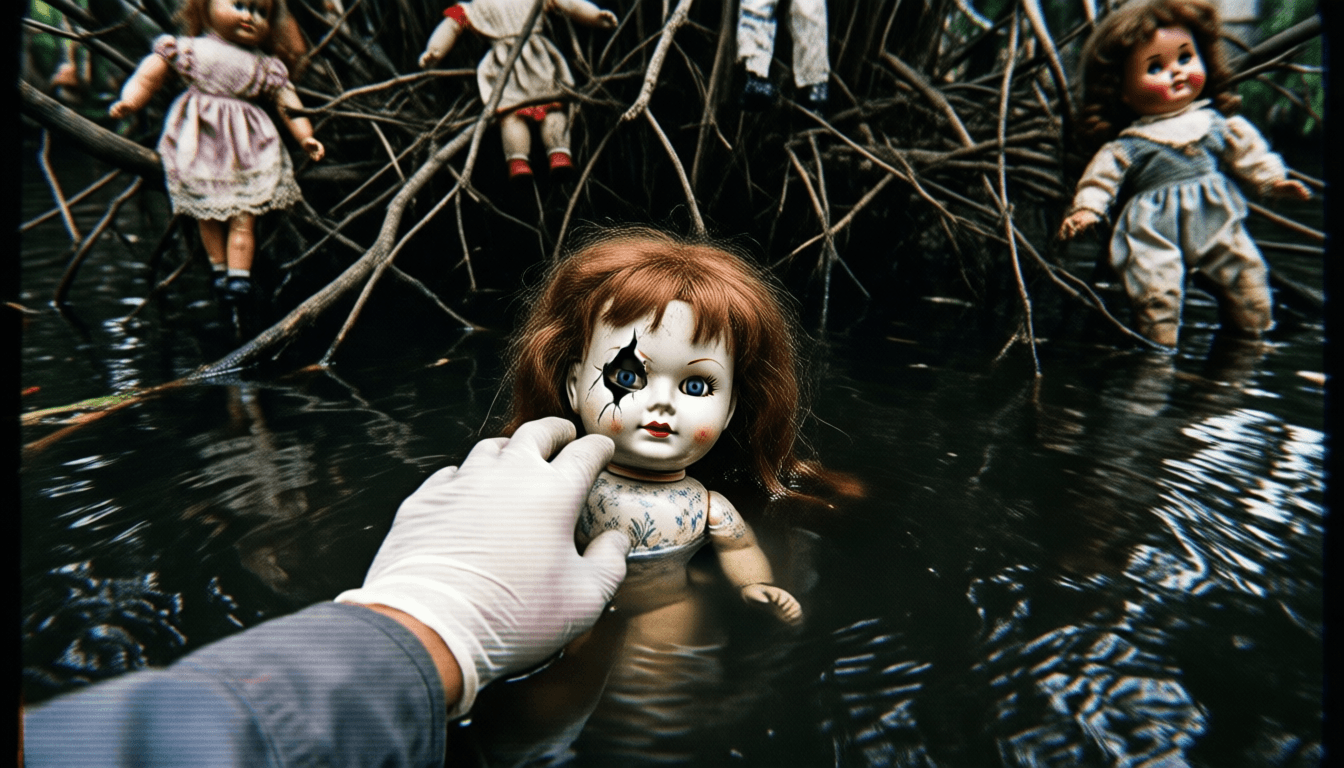
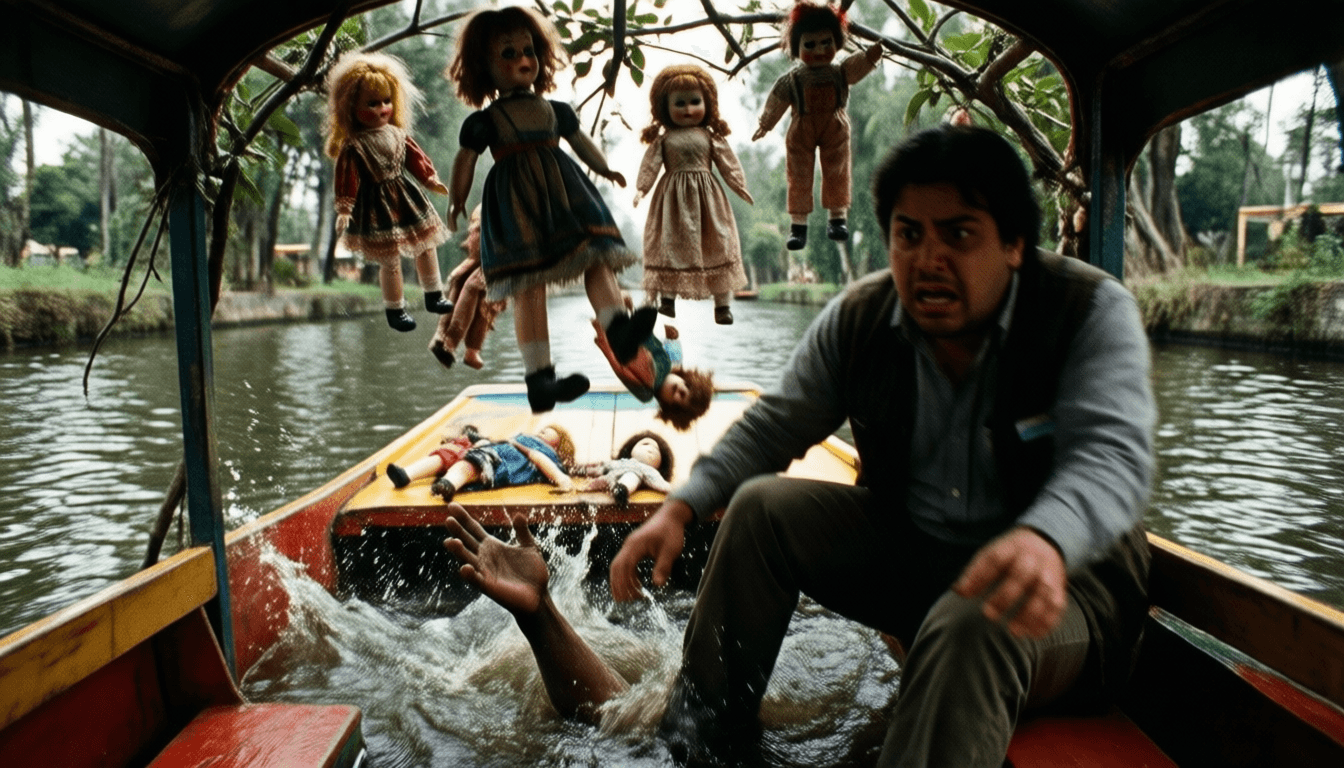
I was reaching for a particular antique doll—a porcelain one with a single broken eye and an unsettlingly serene smile—half-submerged in the brackish water near a particularly dense cluster of dolls. Its age and unique state of decay, I believed, would offer crucial clues. The moment my gloved fingers touched its cold porcelain face, the water around my hand erupted violently. Not a wave, but a concentrated, deliberate force pushing me away. The small boat rocked. Ricardo cried out, losing his grip on the oar. It was sucked into the murky water with impossible speed. The temperature dropped abruptly. And then, the silence was 'broken'. Not by whispers, but by a horrible cacophony of thousands of old plastic and porcelain joints creaking and grinding against each other, amplified to an unbearable level. All the dolls around us began to 'move'. Not swaying in the wind, but with small, unnatural twitches. A severed doll's arm, dangling from a single thread, 'jerked' upwards then swung down, scratching the side of my boat. Dozens of dolls directly above me loosened their precarious moorings and tumbled down like broken corpses. They clattered onto the deck, some hitting my head and shoulders, feeling cold and hard.
I cowered, disoriented. As I tried to push the boat away with my foot, something in the water seized my ankle. It was a cold, surprisingly strong grip. Like a tangled mass of seaweed, yet stubbornly insistent. Terror surged. I pulled my leg, but the grip tightened. The boat was now held captive by an unseen force, Ricardo desperately trying to push us away with his bare hands to no avail. The collective "creaking" of the dolls ascended to a crescendo of agony and intent. The water around my trapped ankle 'churned', forming small, tight whirlpools that tugged at my clothes, pulling me down. The one broken eye of the porcelain doll I had tried to retrieve floated disturbingly close, seeming to glow with a faint internal light. The distorted faces of the dolls that had fallen into the boat were illuminated by this light, their expressions frozen in silent, expectant horror.
With a desperate, animalistic cry, Ricardo managed to cut the rope that had, for unknown reasons, tethered our boat to thick submerged roots. His small knife flashed in the dim light. The force on my ankle abruptly released, leaving a deep coldness and a squeezing phantom sensation. We fled. Ricardo rowed with a frantic, terrified strength I hadn't seen in him before. I did not look back.
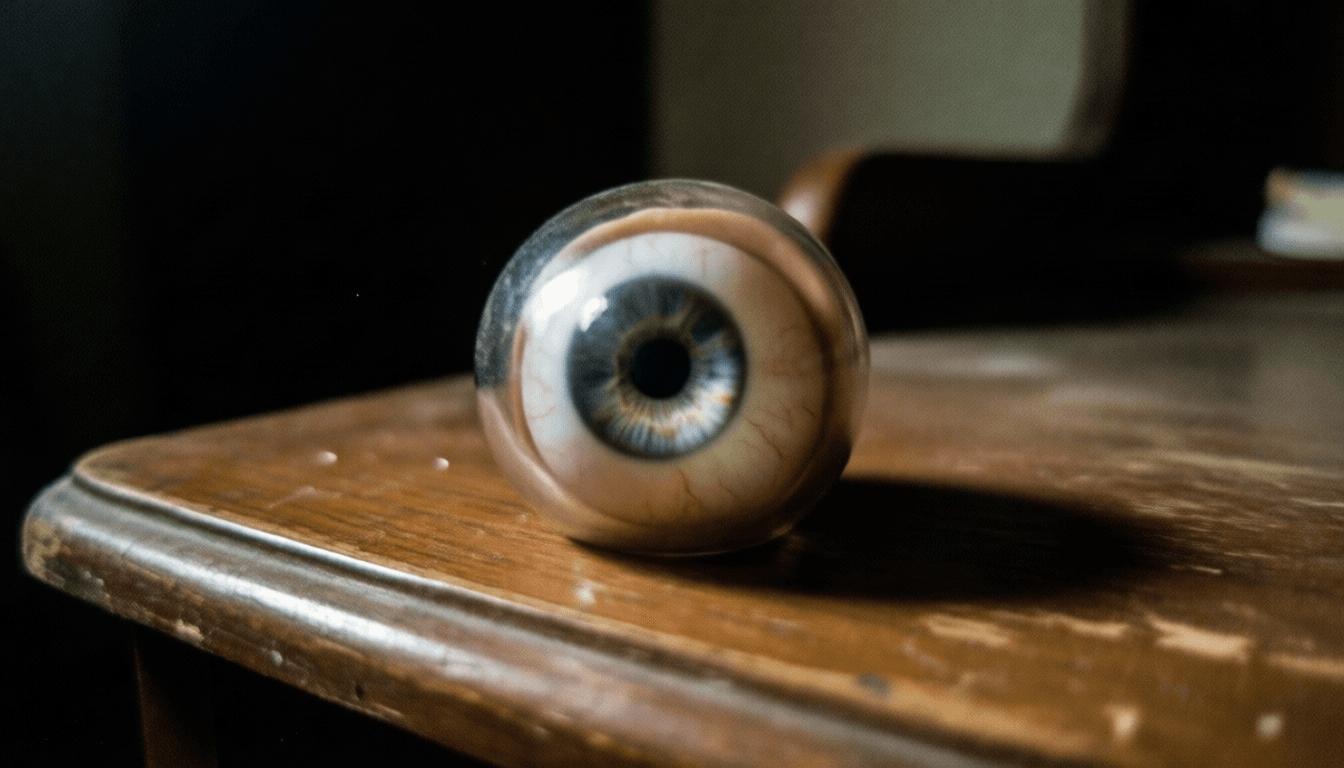
Days later, in the sterile quiet of my office, the smell of stagnant canal water and that cloying, chemical sweetness still clung to my clothes and hair. Multiple showers hadn't banished the phantom scent. My camera still functions, but refuses to delete the corrupted frames from the island. They remain, like persistent digital ghosts. One photo, taken just before the chaos, shows the porcelain doll with the broken eye. Upon closer inspection, a faint, almost imperceptible discoloration—like a tear track—was visible beneath its intact eye, a detail I hadn't remembered, and its expression was far less serene, much more 'knowing'. More disturbing still, a single old doll's eye, a milky-irised glass orb, was found in my field jacket pocket. I have no memory of ever picking it up. It sits on my desk now, inanimate, yet its presence is heavy, making me feel watched. Sometimes, late at night, in the perfect quiet of my apartment, I can almost hear it. A faint, barely audible creaking, followed by the soft, regular lapping of water. As if an unseen boat is slowly approaching, just beyond the threshold of my perception.
[ CLASSIFIED VERDICT ]
[ACCESS LOG - SOURCE FILE]
This story is based on the real-world 'Island of the Dolls (La Isla de las Muñecas)' located in Xochimilco, Mexico. According to legend, Julián Santana Barrera, the island's caretaker, became possessed by the spirit of a drowned young girl and descended into madness. He hung countless old dolls throughout the island to appease her spirit, ultimately dedicating his life and sacrificing it in grotesque devotion to the dolls.