Where Emptiness Waits
The official announcement of Netaji Subhas Chandra Bose's death in a plane crash over Taiwan in 1945 has always been shrouded in doubt. Decades of investigative committees, declassified documents, and fervent public debate have failed to produce clear, universally accepted evidence of his demise, leaving his final fate veiled as one of India's most enduring historical mysteries. This unresolved conclusion inevitably spawned countless conspiracy theories, and from forgotten corners, more insidious and unsettling whispers emerged.
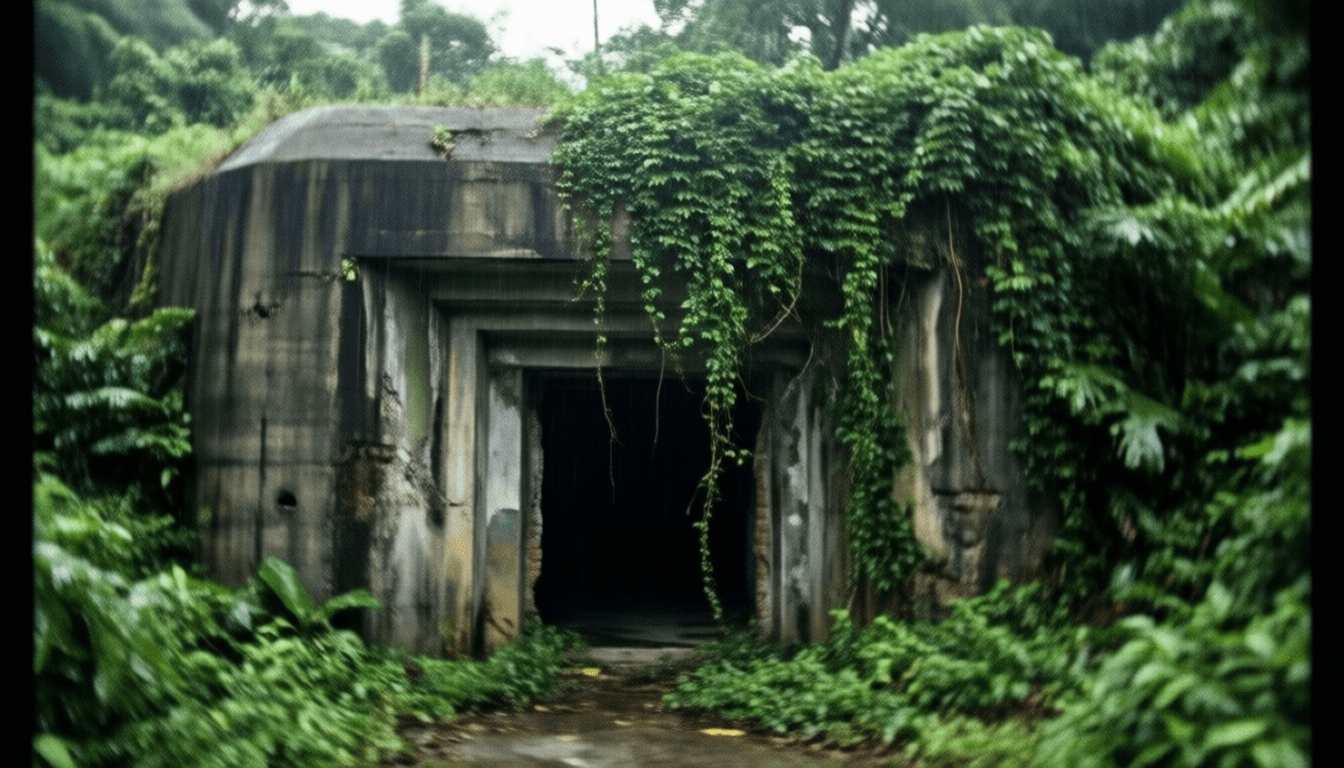
One such whisper appeared not in official reports, but in archived posts from an obscure online forum dedicated to forgotten World War II Pacific theatre supply lines. An anonymous user, claiming to have been a local Taiwanese guide, meticulously detailed inexplicable phenomena experienced by those who explored the crumbling remains of an "auxiliary air logistics relay point": a makeshift airstrip and a small bunker complex, deep in the subtropical interior, far from the mainland's primary airfields. This site, the user asserted, was locally rumored to be an unrecorded "final rallying point" for high-ranking Japanese assets or their allies, immediately abandoned post-war. The posts spoke of an unnatural stillness, "air that forgot how to breathe," and echoes that were either distorted or failed to return at all. Crucially, they warned that those who lingered too long, especially near the hidden, collapsed bunker structure, would experience severe disorientation, a feeling of being watched, and a chilling "fading" of reality. The account ended abruptly, the user never posting again.
Dr. Anya Sharma, a meticulous yet unorthodox historical cartographer specializing in lost colonial-era infrastructure, stumbled upon these archived posts while researching unconfirmed Japanese wartime air routes. Skeptical but intrigued by the consistent environmental descriptions, and drawn by a quiet fascination with the Bose mystery (a subject often dismissed as fringe by her academic peers), she pinpointed the approximate coordinates of the "auxiliary relay point." Armed with LIDAR scanners, atmospheric sensors, and high-resolution cameras, Dr. Sharma set out for the remote, overgrown jungle locale. The air was immediately heavy, thick with humidity and the smell of metallic decay.
Vines choked every crumbling concrete structure. The first anomaly was the stillness. A deep, almost absolute silence that felt less like an absence of sound and more like an active suppression. Even the ubiquitous jungle insects seemed muted, their usual symphony reduced to a hesitant, distant murmur. The ground beneath her boots felt strangely soft, as if absorbing sound.
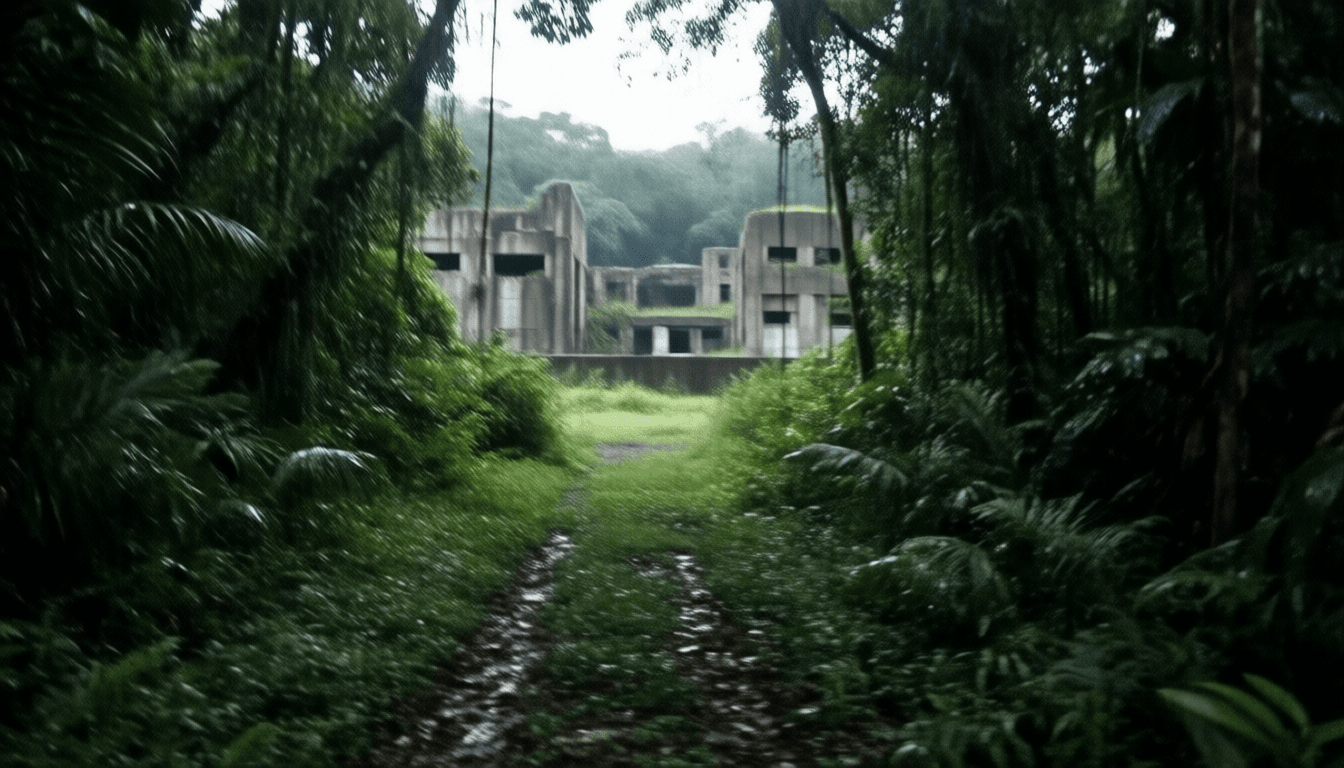
As Dr. Sharma ventured deeper, closer to the reported bunker complex, subtler anomalies began. As a common practice for echo detection at ruins, she called out. Her normally clear, resonant voice was almost immediately swallowed. No echo returned. She tried again, louder, and this time a faint, delayed resonance came back – not her voice, but a twisted, drawn-out guttural murmur, unsettlingly inhuman. The metallic decay scent intensified, now layered with a faint but distinct other odor: the acrid smell of burning wire and ozone, incongruous in the humid, organic jungle.
Checking her field watch, she found an hour had passed, even though the short distance she'd covered felt like only minutes. Her internal clock was profoundly disoriented. It was a chilling sensation of time inexplicably accelerating or decelerating. As she pushed through dense undergrowth, she caught fleeting glimpses of indistinct shadows darting at the edge of her vision, too fast to discern shape, always just out of sight. The jungle itself seemed to subtly shift: a dense patch of ferns briefly appeared on an open path, only to vanish when she blinked.
She found the partially collapsed bunker entrance. The air here was noticeably colder, a sharp contrast to the oppressive tropical heat. Her breath plumed faintly. The metallic/ozone scent was most potent here.
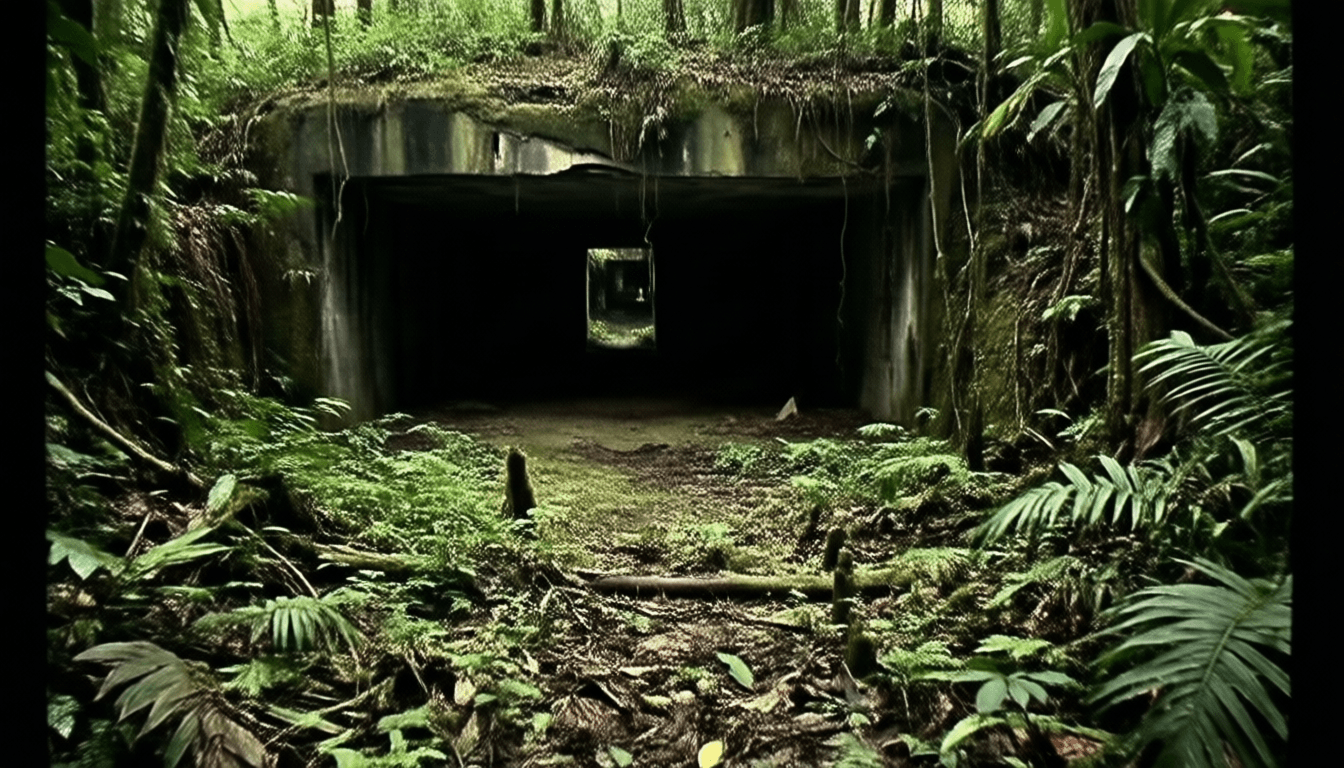
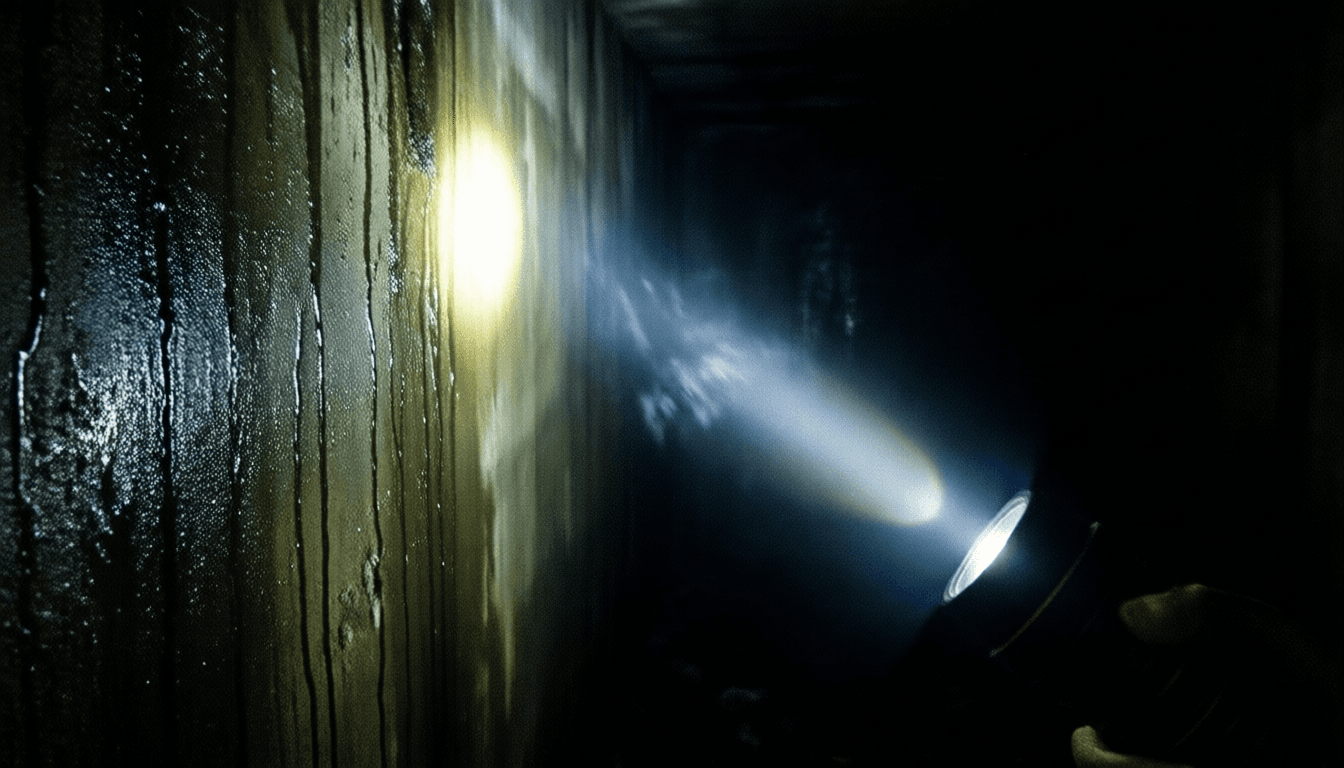
Dr. Sharma descended into the bunker, her flashlight beam cutting through absolute darkness. The space was small and claustrophobic, containing nothing but rusted equipment remnants and empty crates. No bodies, no personal effects, no definitive evidence of Bose. Just an oppressive, chilling emptiness. It felt less like a forgotten room, and more like a sealed chamber of absence. As she set up her camera to document the void, the environmental effects escalated at an unnerving pace.
The internal bunker temperature plummeted, almost instantly reaching near-freezing. Exposed skin didn't numb, but burned with an intense, tingling cold. Condensation dripping from a cracked ceiling no longer fell normally. Instead, individual droplets shivered, then slowly *crawled upwards* along the rough concrete wall, defying gravity, forming unnatural, static rivulets before evaporating. The profound silence shattered. An indistinguishable cacophony of whispers erupted, swirling from all directions and nowhere at once, as if a thousand muted conversations were occurring simultaneously. It morphed into a deafening, psychological assault, threatening to shatter her focus.
The air in the bunker solidified, pressing in on her. Her LIDAR equipment toppled, not from vibration, but as if struck by an unseen force. Her flashlight flickered violently, fading to a desperate glow. Then, an intense, overwhelming pressure constricted her arm, twisting her wrist with impossible force. It felt like an enormous, silent weight, invisible yet utterly physical, trying to restrain her. A sensation of flesh compressing and bone grinding. Not a hallucination, but the environment itself turning into a hostile, solid presence. As she struggled against the unseen pressure, panic surged, and the force intensified, threatening to break her arm. The air thinned, crushing her chest, trying to suffocate her. The whispers changed to a low, resonant rumble, vibrating through her very bones. It was a sound that felt like a question never answered, an emptiness given form.
With a desperate, animalistic scream, she wrenched her arm free, feeling something tear. Scrambling, abandoning her bag and equipment, she half-crawled out of the bunker against the thick, resisting air. The whispers followed her, and she burst into the humid, relatively normal jungle air, gasping.
Dr. Sharma stumbled out of the jungle, bruised, disoriented, and profoundly shaken. Her arm was badly sprained, perhaps fractured, and her skin showed unexplained deep bruising alongside pallor consistent with extreme localized cold exposure. She barely made it back to her lodging. She tried to explain her experience, but the words felt inadequate and hysterical. Without her equipment, there was no concrete proof beyond her injuries and fractured mental state. Her colleagues, contacted days later, attributed her story to stress, jungle fever, or a fall. The official report to Taiwanese authorities about her "incident" was merely recorded as an unfortunate adventuring mishap.
Weeks later, still recovering from her arm injury, sitting in a quiet archive room, Dr. Sharma reviewed the last few salvaged photos from the camera she'd managed to stuff into her pocket. Most were blurry, but one clear shot of the empty bunker room stood out. Centered in the frame, where the most severe pressure had been felt, was a faint circular distortion in the air. It rippled like heat haze, yet it was captured in a cold, enclosed space. Almost imperceptible, a trick of the light, she told herself.
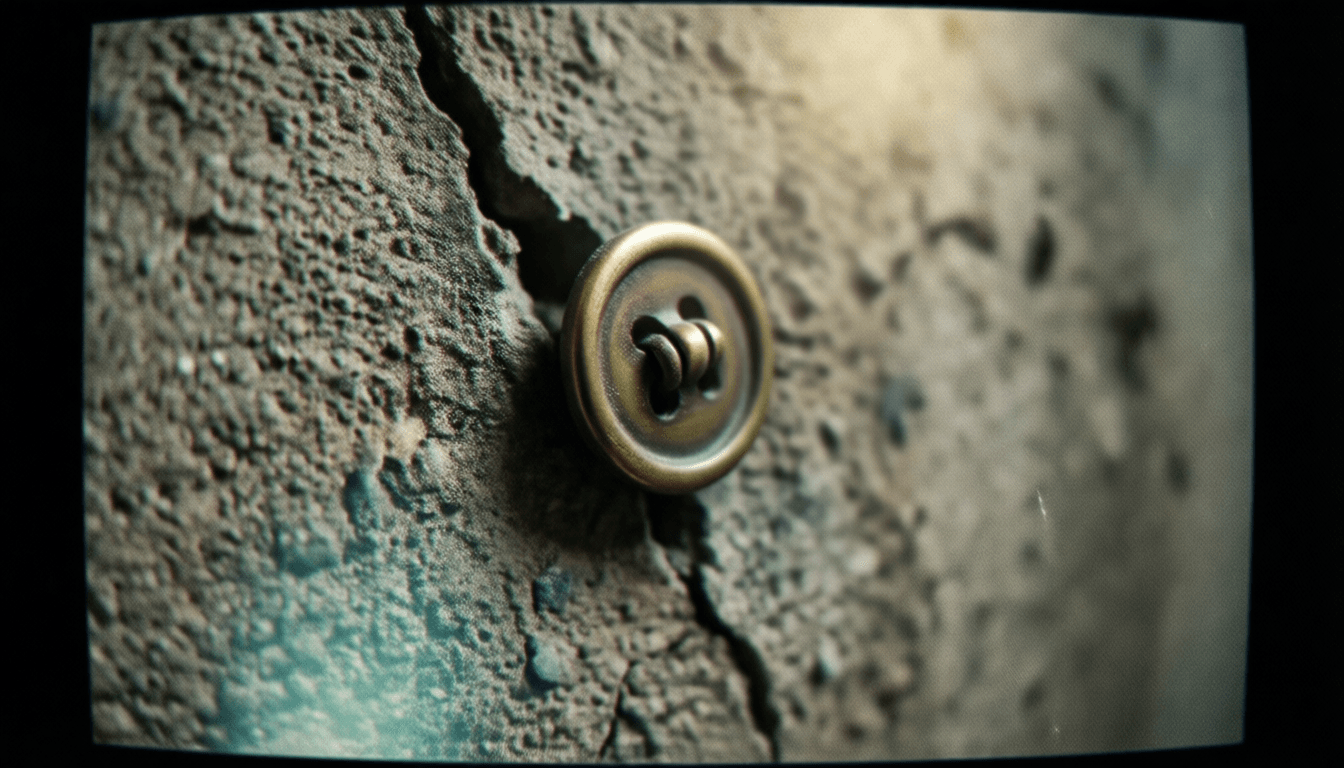
But then she saw something else. Something she hadn't seen when she was there, something not present on the original film. Embedded in a crack on the bunker wall in the background of the photo was a small, worn brass button. The kind found on colonial-era military uniforms. Too small to identify with certainty, no discernible insignia, but its mere presence was chilling. The button *wasn't there*. She *knew* it hadn't been there.
Dr. Sharma now lives with a quiet, persistent dread. The silence, the feeling of being observed by time itself, the overwhelming void. These sensations have not entirely left her. They linger at the periphery of her perception. She knows, with a terrifying certainty, that the mystery of Subhas Chandra Bose's disappearance isn't merely an unresolved historical question. It's an active, suffocating force, a deep and hostile absence, rooted in a specific, forgotten place, that tolerates no inquiry. The void she faced wasn't merely empty. It was *waiting*. And now, a piece of that silent, overwhelming weight has followed her home.
[ CLASSIFIED VERDICT ]
[ACCESS LOG - SOURCE FILE]
The fate of Netaji Subhas Chandra Bose, an Indian independence leader reportedly killed in a 1945 plane crash in Taiwan, has long remained a mystery, giving rise to numerous conspiracy theories. This story explores an imagined whisper that the enigma surrounding his death might be connected to a forgotten secret facility in Taiwan.