When the Sky Breathes
Records of Yun Geon, a prominent Joseon astronomer-official and scholar in the 17th century, abruptly vanish from the official chronicles after 1682. Curiously, only one cryptic sentence remained in his personal diary, discovered in the National Archives: “A blood-red crack blossoms tonight; beneath its light, all shall unravel.” While official history states Yun Geon ‘retired due to illness,’ there is no death record, no detailed account of his later life, and his extensive library remained sealed, never to be opened again. What draws attention in modern times are descriptions of a ‘blood-red aurora’ observed for three days and nights in late 1682, found in contemporary weather journals and an obscure Jesuit missionary’s diary—a phenomenon absent from royal astronomical records. Residents of a remote mountainous region north of Seoul still whisper about the “Star-Gazing Peak,” where the air grows cold and “sometimes the sky breathes.”
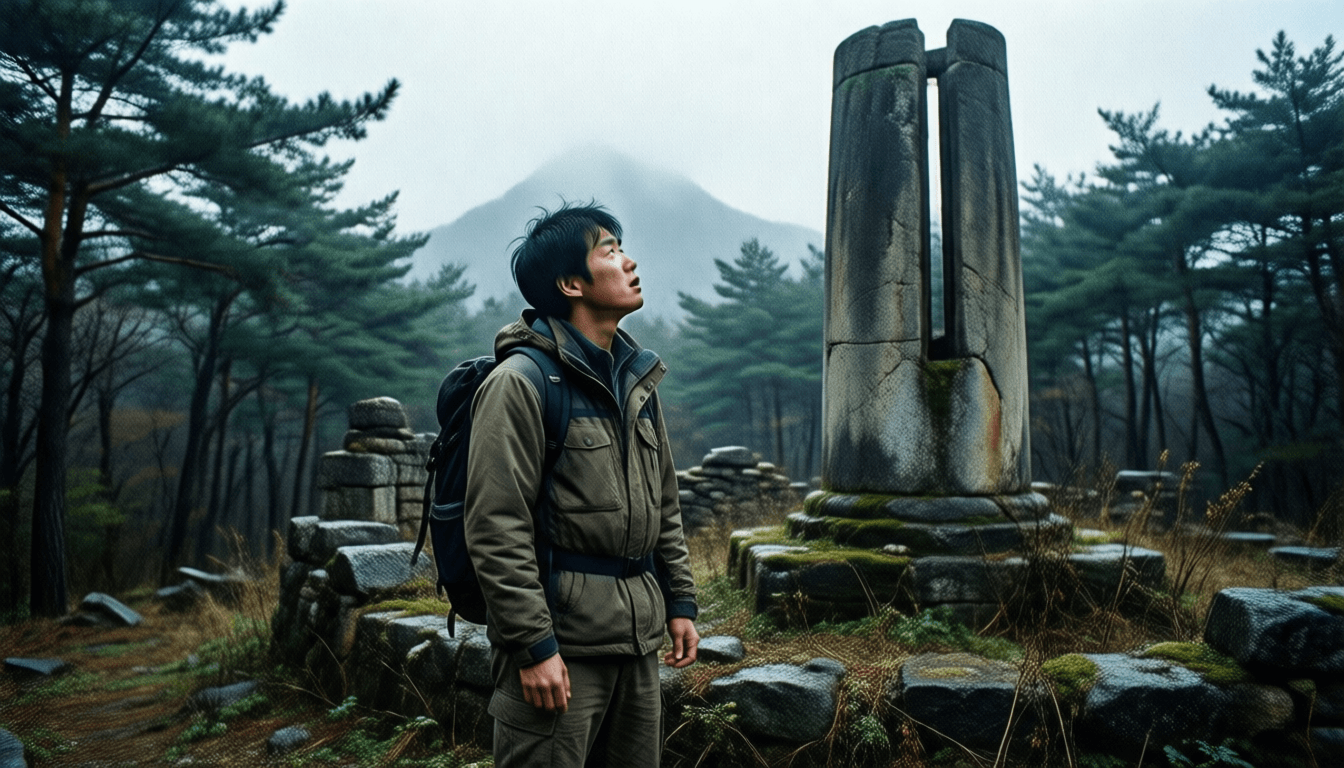
Drawn by historical anomalies and persistent local superstition, I tracked down the remnants of Yun Geon’s personal observatory. It was a small stone structure hidden deep within a dense forest, on the slopes of a high mountain that locals called the “Star-Gazing Peak.” The ascent through the thick pine forest was arduous, and the place seemed completely subsumed by nature, forgotten. The observatory consisted of a circular stone platform, the partially collapsed walls of a small building, and a massive stone sundial column with a vertical slit designed for sky observation. The moment I stepped onto the site, the air felt distinctly different. Even on a calm day, it was strangely still, and a faint, low vibration resonated not in my ears, but in my chest. I meticulously documented the damaged ruins, searching for hidden spaces or other inscriptions.
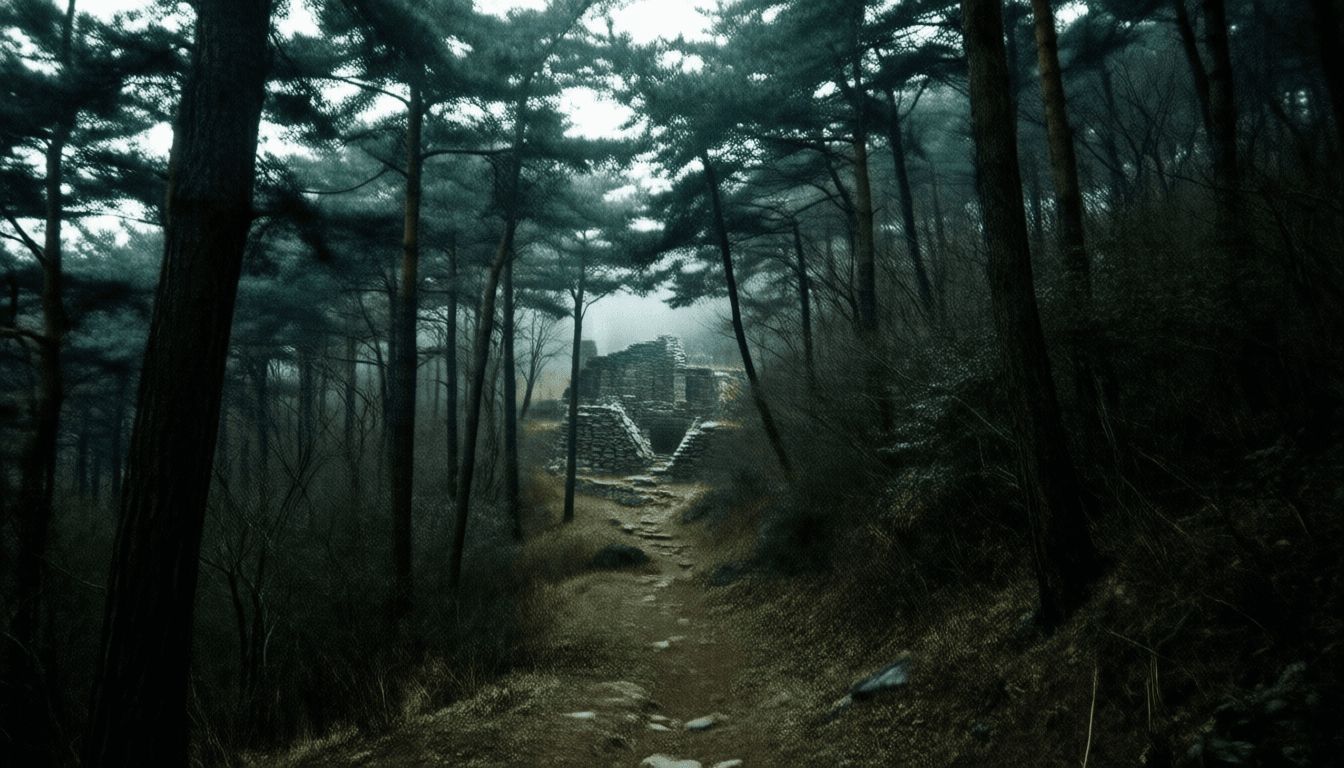
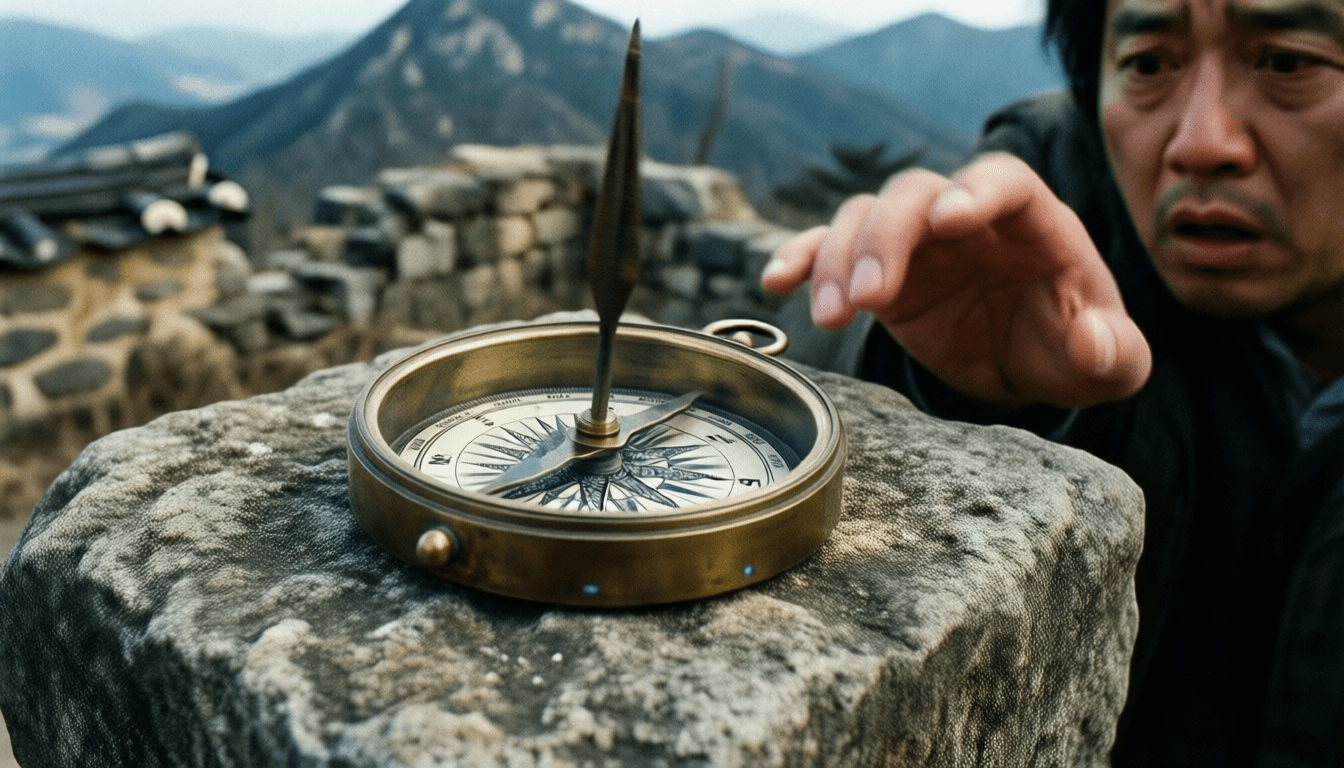
Inside the collapsed building, in a place untouched by sunlight, the temperature dropped several degrees, creating an unnatural chill that seeped into my skin even in the autumn weather. Dust motes hung motionless in the light beams filtering through cracks in the ceiling. The vibrations grew increasingly distinct, becoming a low resonance that permeated beyond my eardrums, deep into my bones. Outside sounds—rustling leaves or distant bird calls—were eerily faint, as if the stone absorbed all noise. As I examined the interior of the sundial column, my hand swept over the ancient stone, finding it far smoother than expected. However, in certain areas, faint, rough, desperate scratch marks, like those of an animal’s claws rather than symbols, remained. The sliver of sky visible through the column’s observation slit was subtly darker and a deeper blue than the sky outside. Placing my compass on the central stone platform, it spun wildly for a full minute before stopping, not pointing north, but straight down into the very stone itself. In that instant, a profound sense of isolation washed over me, a feeling of being utterly alone even though the place was far from empty.
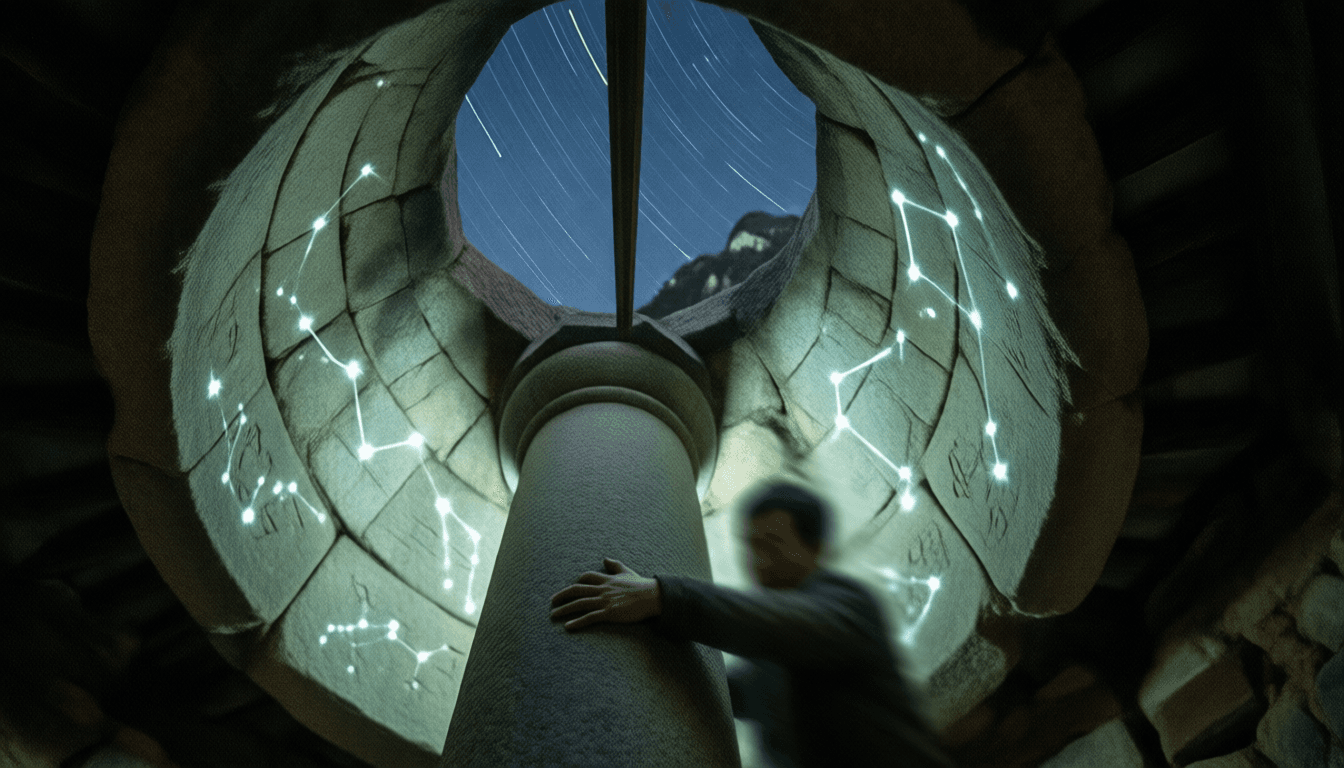
As I became engrossed in deciphering the rough, hasty star charts carved into the inner wall of the sundial column, night fell quickly. These were not conventional constellations, but distorted, elongated forms, like tentacles stretching out from empty space. As the first stars pierced the deepening twilight, the low vibration transformed into a pressure that filled my skull. The air inside the sundial column became incredibly heavy, and gravity felt like an almost physical weight pressing down. The familiar stars in the night sky, visible through the narrow observation slit, began to waver. They didn't twinkle; instead, they stretched out into improbable streaks of light, then snapped back into place with an audible ‘click.’ Then again, even faster, like elastic under immense tension. The stone sundial column itself began to emit a faint, internal light, which revealed a final inscription, almost carved into the stone: “It hungers. It drinks the stars. I shall be its breath.”
Suddenly, a terrible change occurred. My sense of balance vanished, followed by an unpleasant oscillation between crushing gravity and dizzying weightlessness. The light emanating from the sundial column flickered intensely, like a pulse, blinding me with kaleidoscopic distortions that warped the very air. I felt an invisible force grasp my right arm. It was neither cold nor hot, but a senseless grip of perfect ‘void’ itself, yet it pulled me with an uncanny strength. It was not a hand. It was a silent, irresistible suction, drawing me towards the opening of the sundial column. I felt my arm stretch and lengthen, my bones groaning under unbelievable pressure. The world outside the column’s opening seemed to melt into a swirling vortex of light and darkness, a silent maelstrom with a gaping maw. My body felt as though it were being disassembled. Torn apart at a molecular level, each atom yearned to be drawn into that celestial maw Yun Geon must have faced. I struggled, I screamed, but no sound escaped. The vibration had now become a deafening, colossal silence.
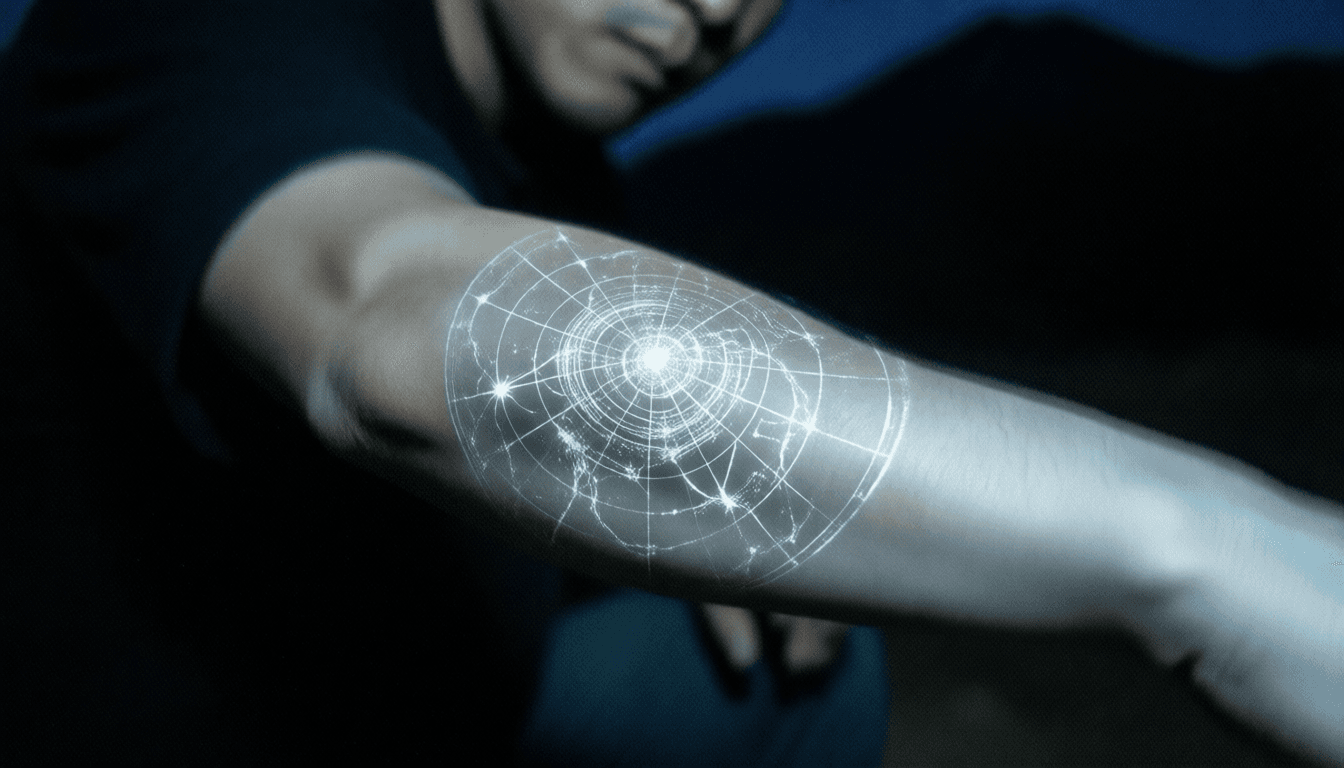
I don't know how I escaped. One moment, my arm was stretching beyond human limits, my vision filled with an impossible, star-swallowing void. The next, I was stumbling down the rocky slope, gasping for breath, the night sky perfectly normal again, the vibrations gone. But my right arm bore the marks of a deep, unsettling transformation. The skin wasn't merely bruised or scratched. From the point of contact, a subtle, intricate, silvery-white pattern spread just beneath the surface. They resembled the distorted celestial maps Yun Geon had etched into the sundial column, faintly emitting a cold, almost imperceptible glow when viewed in darkness. A profound, bone-chilling cold had permanently settled in that arm, impervious to any warmth.
Yun Geon hadn't simply “retired.” He had been drawn in, assimilated by the void disguised as the cosmos. And now, a part of that void remains within me. Sometimes, in the dead of night, when I look up at the infinite stars, I don't see mere pinpricks of light. I see faint, subtle ripples in the fabric of the night. Momentary, almost imperceptible ‘stretching’ and ‘contraction’ that hints at a colossal, unseen presence breathing in the darkness. Official records still speak of disappearance, but I now understand the unsettling, persistent truth. The sky is not empty, and the silence between the stars is not vacant. It is merely waiting, and sometimes, it breathes.
[ CLASSIFIED VERDICT ]
[ACCESS LOG - SOURCE FILE]
This story is based on the sudden disappearance of Joseon astronomer-official Yun Geon from historical records in 1682, and unofficial accounts of a 'blood-red aurora' phenomenon not found in official histories. The main backdrop of this narrative is the local superstition among residents of a remote mountainous region north of Seoul, who whisper about the 'Star-Gazing Peak' where the sky sometimes breathes.