West Virginia Sheepsquatch: The Twisted Shepherd
Strange occurrences have been reported in the remote mountainous region of Pocahontas County, West Virginia, over the past few months. Since late autumn 2023, local farmers have experienced livestock mutilations that cannot be explained by the capabilities of known predators. Sheep, and in one instance, even a heifer intended for auction, were found with their organs surgically removed with precision. There was little blood at the scene, and no drag marks whatsoever. State wildlife officials initially suspected the work of a cult or highly organized predation, but further investigation revealed inconsistent and peculiar clues.
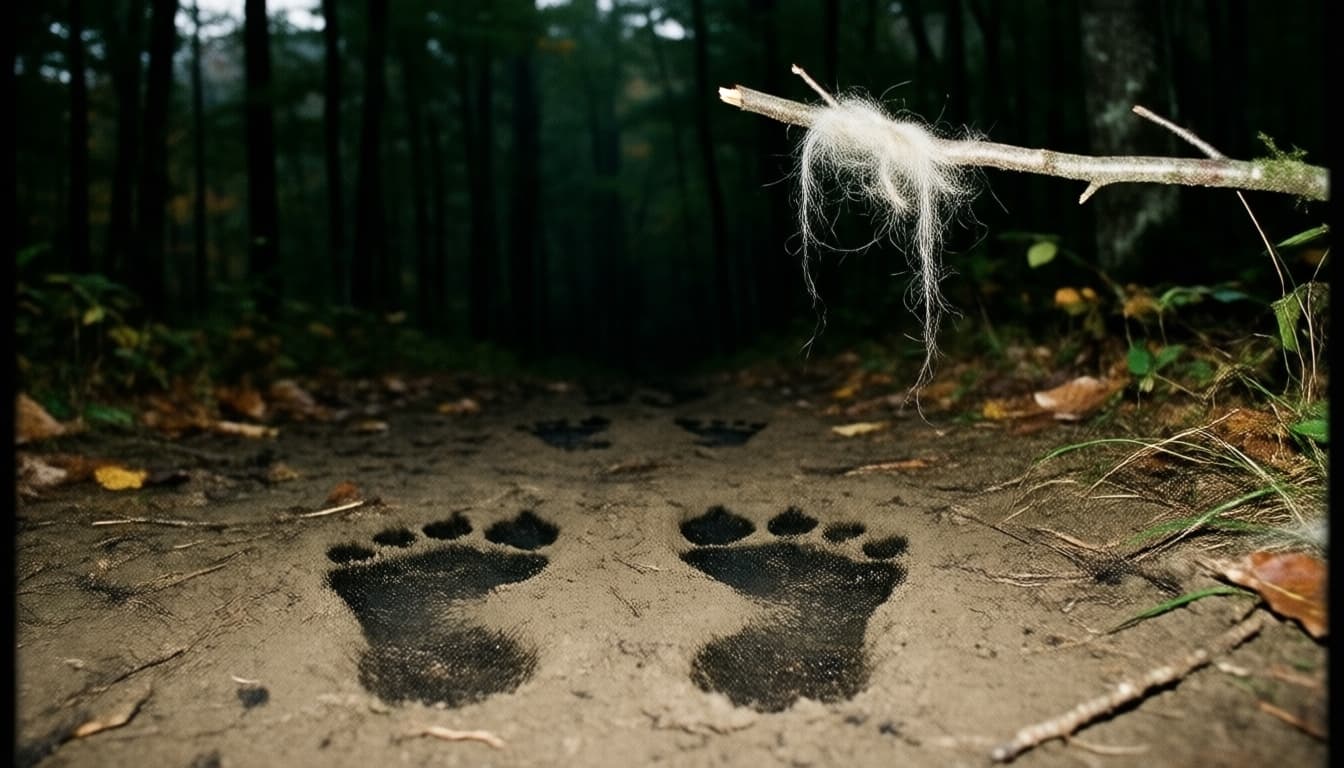
Alongside common deer and coyote tracks, large, distinctly two-toed hoof-shaped footprints were repeatedly found, accompanied by traces of heavy, bipedal locomotion. These footprints did not belong to any known classification. Crucially, coarse, off-white, wool-like fibers, densely matted, were consistently discovered on fences, low branches, and even in the soil. Furthermore, the disappearance of hiker Elias Thorne in October 2023 near the border of the Cranberry Wilderness Area amplified concerns. His abandoned campsite showed signs of a violent struggle—a torn tent and scattered belongings—but no body. Most puzzlingly, a significant quantity of the aforementioned fibrous residue was found around the campsite. Forensic analysis failed to identify this substance. Soon, rumors began to spread among online forums and local residents, linking these incidents to the legend of the 'Sheepsquatch'—an aggressive, territorial, bipedal cryptid resembling a sheep. These consistent reports demanded immediate in-depth investigation.
Based on the accumulated evidence, I initiated an on-site investigation. The target area was deep within the Monongahela National Forest, where recent livestock incidents were concentrated and close to Elias Thorne's last known location. Old logging trails were now encroached by brush, disappearing into the dense, oppressive canopy of the forest. The air itself felt heavy, thick with the scent of damp earth and decaying leaves. Sunlight struggled to penetrate the foliage, leaving the forest floor in perpetual twilight. The forest immediately asserted its presence. The usual symphony of a typical forest—birdsong, rustling leaves, the distant murmur of a stream—was strikingly absent. An unnatural stillness dominated, amplifying every rustle of my gear, every twig snapping underfoot. The only consistent sound was a barely perceptible, low hum of the forest, which seemed to vibrate into my very bones. Following faint animal trails, I discovered chillingly repetitive, two-toed hoof-shaped footprints. They often led into narrow, steep ravines, accompanied by bipedal tracks—likely a passage for something traversing this domain.
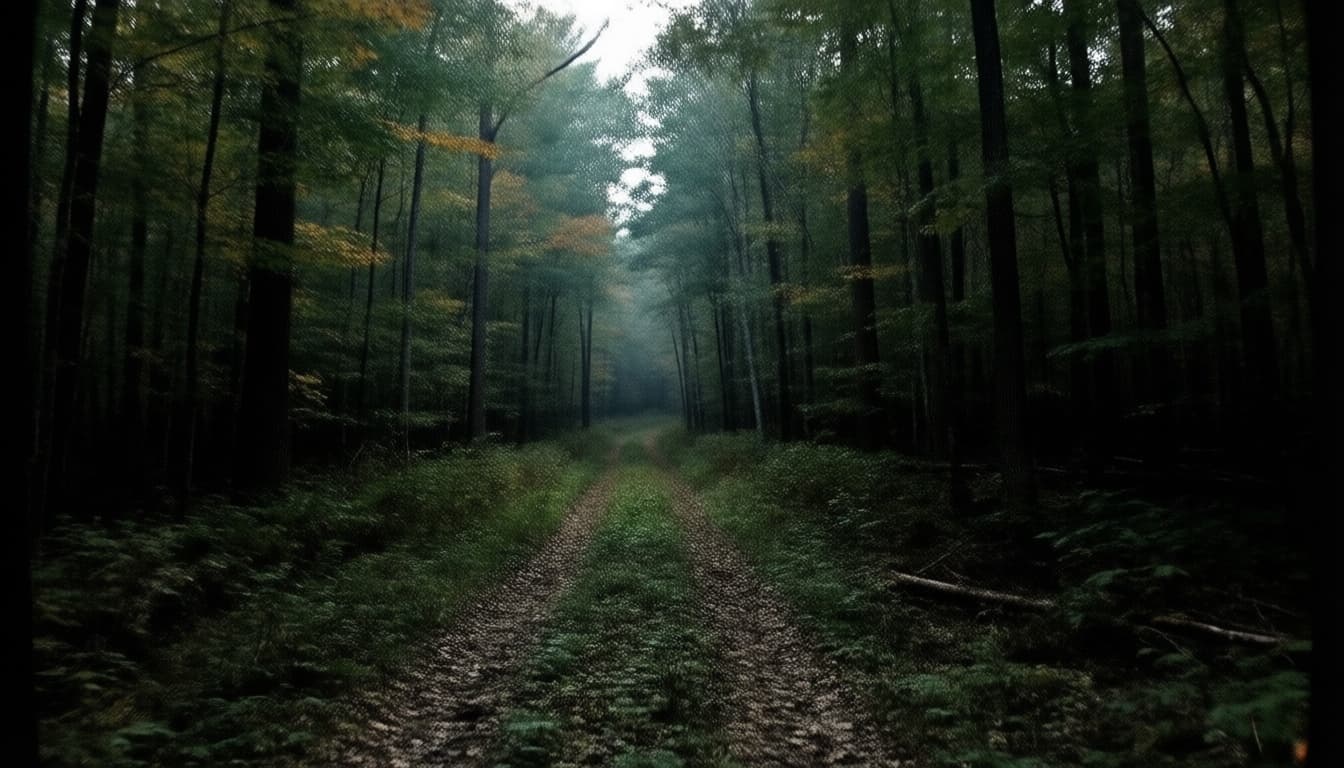
The stillness became a palpable presence, pressing down on me. Deep within the ravine, strange phenomena began to manifest. A faint, guttural bleating sound, like a sheep's cry, seemed to emanate from multiple directions simultaneously, then played in reverse, as if exhaling rather than inhaling. The sound melted into the silence without a clear source. My footsteps, which normally would have echoed clearly, were strangely muffled, their reverberations delayed and distorted, as if the air itself absorbed and scrambled sound waves.
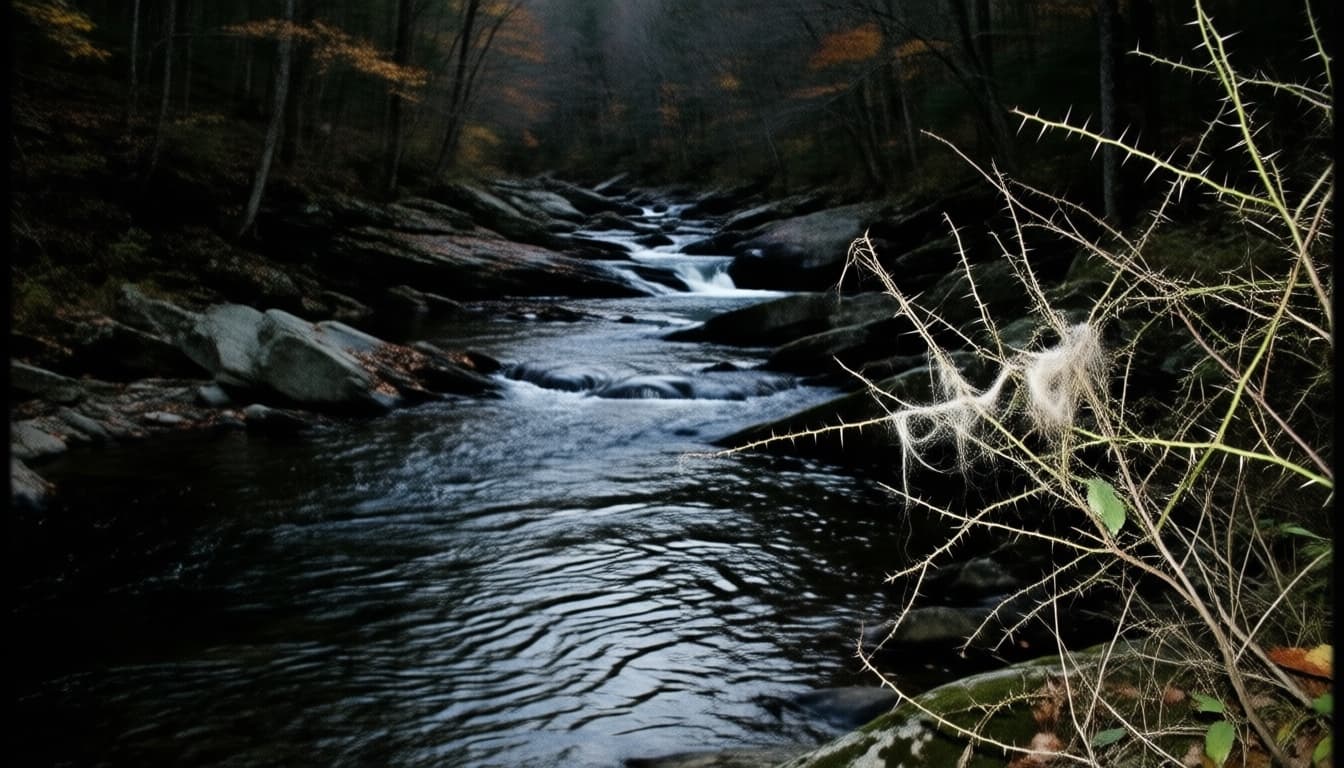
I encountered a narrow, rocky stream. The water flow was subtly odd. Small eddies spun counter to the visible current, rotating in reverse around an unseen point, creating small, unnatural whirlpools within the smooth flow. In one particular pool, the surface, despite the dim light, reflected nothing, appearing as a void of pure darkness. More of the coarse, off-white fibers were discovered, snagged on low thorns or embedded in pieces of old, broken branches. This was no mere animal fur. It possessed a unique elasticity and emitted a faint, acrid odor—a mix of damp wool and a metallic, almost ozone-like scent. Some strands appeared almost woven, entangled with tiny bits of bark and unidentifiable organic matter.
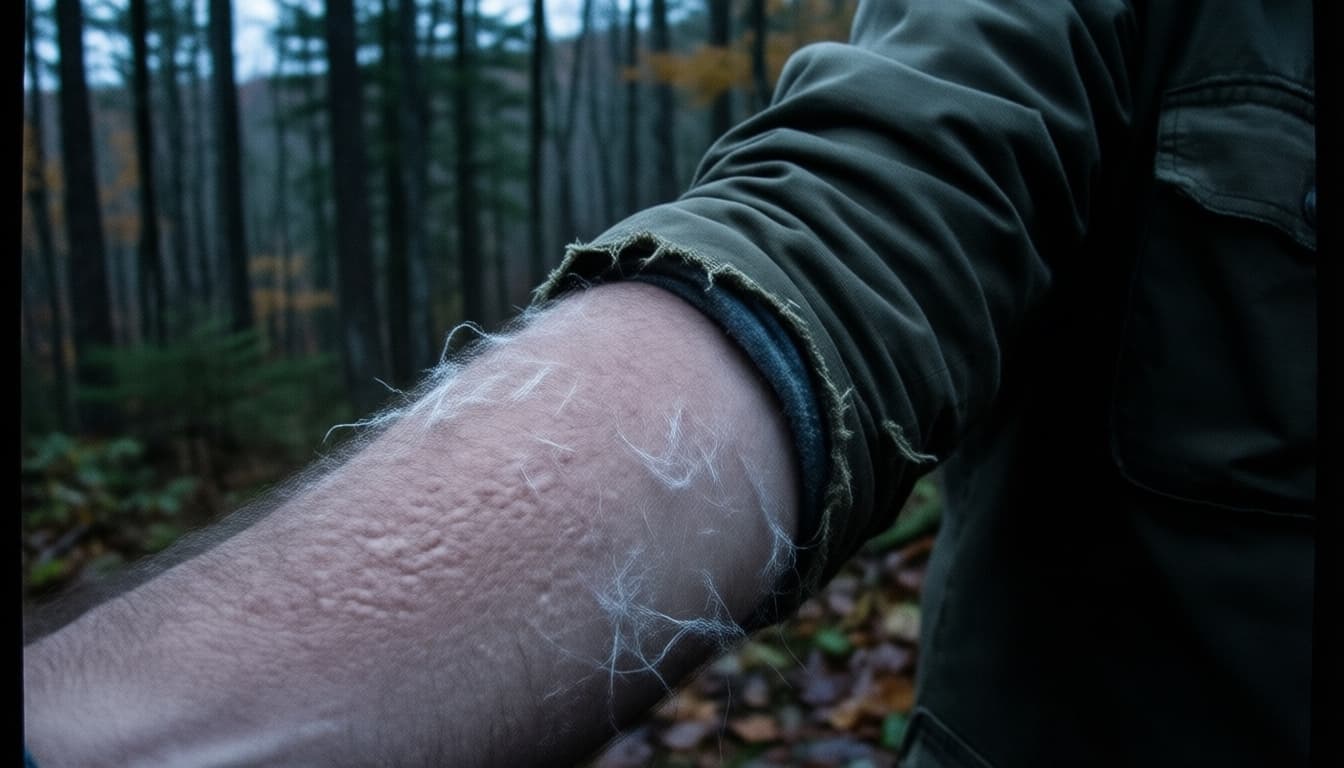
In localized pockets of air, a sudden and drastic temperature drop occurred. It wasn't due to shade or wind. Stepping into it was like entering a refrigerator, a bone-chilling cold that raised goosebumps on my skin. This was accompanied by a subtle static electricity that made the fine hairs on my arms stand on end. The feeling of being watched was no longer a vague unease; it was a physical certainty, a pressure behind my eyes, a prickling sensation on my neck. Whatever was here, it was aware of my presence.
The trail led into a small, enclosed ravine, choked with fallen trees and ancient, fractured rocks. The stench of ozone and damp, metallic decay grew stronger. Among the debris lay a recently deceased deer—or what remained of it. The carcass was not torn apart or dismembered like by a bear or wolf. It had been meticulously processed. Large portions of flesh had been cleanly excised, and the bones eerily exposed with precise detail. There was almost no splatter of blood, as if the bodily fluids themselves had been siphoned away.
As I documented the scene, the air around me became impossibly still. The bleating returned. No longer distant, it seemed to come from everywhere and nowhere within the ravine. It was a sound of deep anguish, yet also imbued with a terrifying predatory hunger. The very atmosphere of the ravine seemed to warp. A twisted branch, as thick as a man's thigh and at my head height, snapped with an eerie 'thud.' It wasn't a crack and break, but rather a sound like the tree itself collapsing internally under unseen immense pressure. I instinctively ducked, a powerful shockwave hitting my ears as the air shifted.
Then, for a fleeting moment, something entered my vision. A colossal, off-white form, incredibly dense and shaggy. It rose from behind a pile of fallen trees. It moved with impossible speed, a blur of matted wool and immense bulk spreading silently. Clearly bipedal, easily over two meters tall, its sheer mass was abnormal. A pair of darkly intelligent eyes glinted briefly in the gloom, unsettlingly keen. It wasn't just observing. It was acting.
Before I could react, an unseen force struck my shoulder. There was no impact sound, only a profound, chilling cold that instantly penetrated my jacket and skin, and a sense of immense, inertial weight. I fell onto wet rocks, my head hitting a stone. The faint, acrid ozone and damp wool smell filled my mouth and nose. My vision blurred. As I scrambled to get up, I felt a coarse, fibrous texture brush my face. Then a heavy, blunt, clawed hand, with astonishing dexterity, tore a piece of fabric from my sleeve. It wasn't just a brush; it was an attempt to incapacitate, to seize. The creature seemed to actively manipulate the acoustic properties of the ravine. Its movements created pockets of absolute silence, making it impossible to pinpoint its exact location or trajectory despite its size. It wasn't hunting. It was culling.
My escape was desperate. I scrambled through the disorienting ravine amidst the backward-playing bleats that twisted my sense of direction. I fled, the pervasive cold and acrid scent enveloping me. Behind me, an unseen pressure seemed to push and guide me.
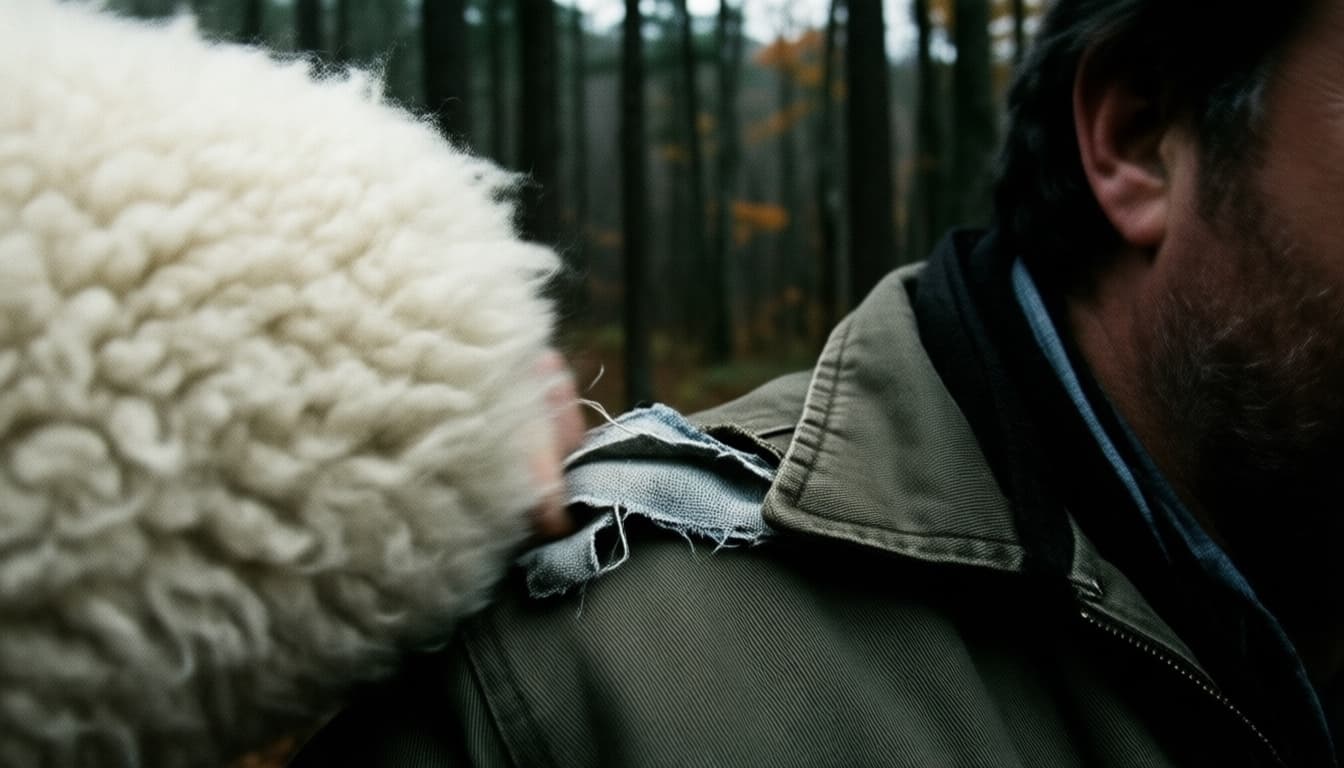
Bruised and bewildered, I miraculously made it back to my vehicle mostly intact. My subsequent report was precise, dryly stating the facts devoid of personal terror, but the evidence spoke for itself. Deeply embedded in the torn fabric of my jacket and in the skin of my left arm were strands of the off-white fibers. Microscopic examination revealed they defied classification. Neither animal nor plant, they possessed an anomalous cellular structure, seemingly woven from organic and mineral components. They held a faint, persistent electrostatic charge.
The true horror was not the fleeting glimpse of its immense size, its unsettling intelligence in its eyes, or the unnatural silence of its movements. It was the realization that it was not merely an aggressive animal. It operated by different rules. The 'mutilations' were not random; they were precise. The 'fibrous residue' clinging to Elias Thorne's campsite, and now to me, was not mere shedding. It seemed to be an intrinsic part of its very being, capable of penetrating and entangling. The pervasive cold I felt, the static electricity, the silently overwhelming force—all suggested that this entity somehow warped the physical laws of its immediate environment. The creature, dubbed 'Sheepsquatch' in legend, was not just a cryptid. It was an environmental manipulator, a silent, woolly engine of localized environmental distortion and surgical predation.
The scent of damp wool and ozone still permeates my clothes, and it won't wash off my skin. It remains a constant, chilling phantom. And in the dead of night, within the oppressive stillness of my own home, I sometimes hear it. That faint, guttural bleating. Playing in reverse, as if 'drawn out' of existence, an echo preceding its source. The knowledge gained is not a conclusion but an unhealing wound. Questions remain: What happens when one comes into contact with something that defies the laws of nature? And what exactly was that residue from the missing hiker? Simple evidence of a struggle, or something far more unsettling—a transformation, a partial absorption, a macabre woolly mimicry? The forest, it seems, has its own silent, cold, and utterly alien shepherd.
[ CLASSIFIED VERDICT ]
[ACCESS LOG - SOURCE FILE]
The legendary cryptid 'Sheepsquatch' from West Virginia is known as a colossal bipedal monster with a wool-like appearance. Suspected of involvement in livestock mutilations and hiker disappearances, it is said to possess the ability to distort and manipulate the physical laws of its surroundings. This story is based on eyewitness accounts of the Sheepsquatch and its bizarre abilities.