
Vale da Cinza: The Brand of Fire
The remote region of Vale da Cinza in Minas Gerais, Brazil, has recorded an abnormally high incidence of localized fires for over a century. These fires typically consumed old farmhouses with arched roofs or specific perfectly circular sections within dense forests. Official reports consistently attributed the causes to 'electrical faults,' 'arson (unidentified suspect),' or 'poor agricultural waste management.' However, a deep dive into police records from the late 19th to early 20th centuries revealed a recurring pattern: investigators, confronted with bewildered villagers, would dismiss the confused testimonies as 'local superstition' and close the cases.
The true clue emerged recently online. Just eight months ago, a newly built cattle shed on the outskirts of Vale da Cinza was completely incinerated. A low-resolution cellphone video, briefly posted on a local news website before being quickly deleted due to 'sensational content,' captured an intense orange-red light moving across the fields at impossible speeds during the night. The audio in the video was distorted and full of static, but beneath it, a powerful, rhythmic thudding—too heavy for typical animal footsteps—and a high-pitched, guttural scream, almost like a horse, were distinctly audible. Before its deletion, local community pages were abuzz with whispering comments like, "It's back," "Another one is gone," and "Never go near the old priest's land." No one directly mentioned Brazil's ancient legends, but the implication was clear. A subtle current of generational, vague fear was palpable. This investigator, drawn by the ominous harmony of this story consistently transmitted across generations and through different mediums, prepared for a journey.
The road to Vale da Cinza was long, with paved roads giving way to bumpy dirt tracks, delving deeper into the humid, dense forest. The air grew progressively heavy and still, carrying an almost metallic scent. The coordinates pointed to the crumbling ruins of a colonial-era farmhouse, overgrown with vines and rotting timber, known locally as 'O Campo da Velha' (The Old Woman's Field). Stepping out of the car, the silence was immediate and profound. No bird calls, no rustling leaves, no buzzing insects—all the usual jungle sounds were completely absent. The temperature was abnormally high for that time of day, yet the sky was heavily overcast. A small stream, flowing at an unusually slow pace, meandered through the ruins, its surface almost motionless. A faint, pungent odor, like a mix of ozone and burnt sugar, hung stagnant in the air. Near the stream, the ground was scorched jet-black in a perfect circle, approximately 1.5 meters in diameter, the earth hardened and cracked. The surrounding vegetation remained untouched. The ash was fine and powdery, and when touched, it emitted an inexplicable residual heat.
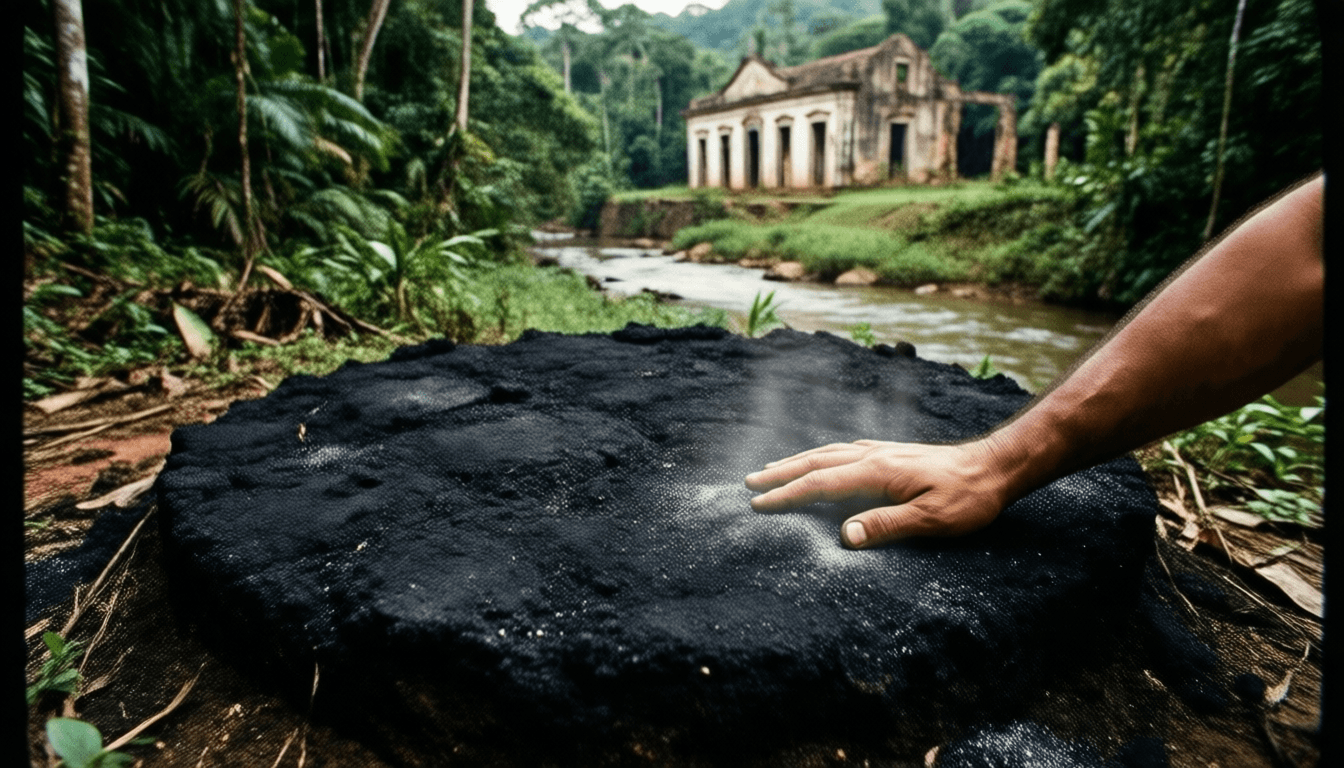
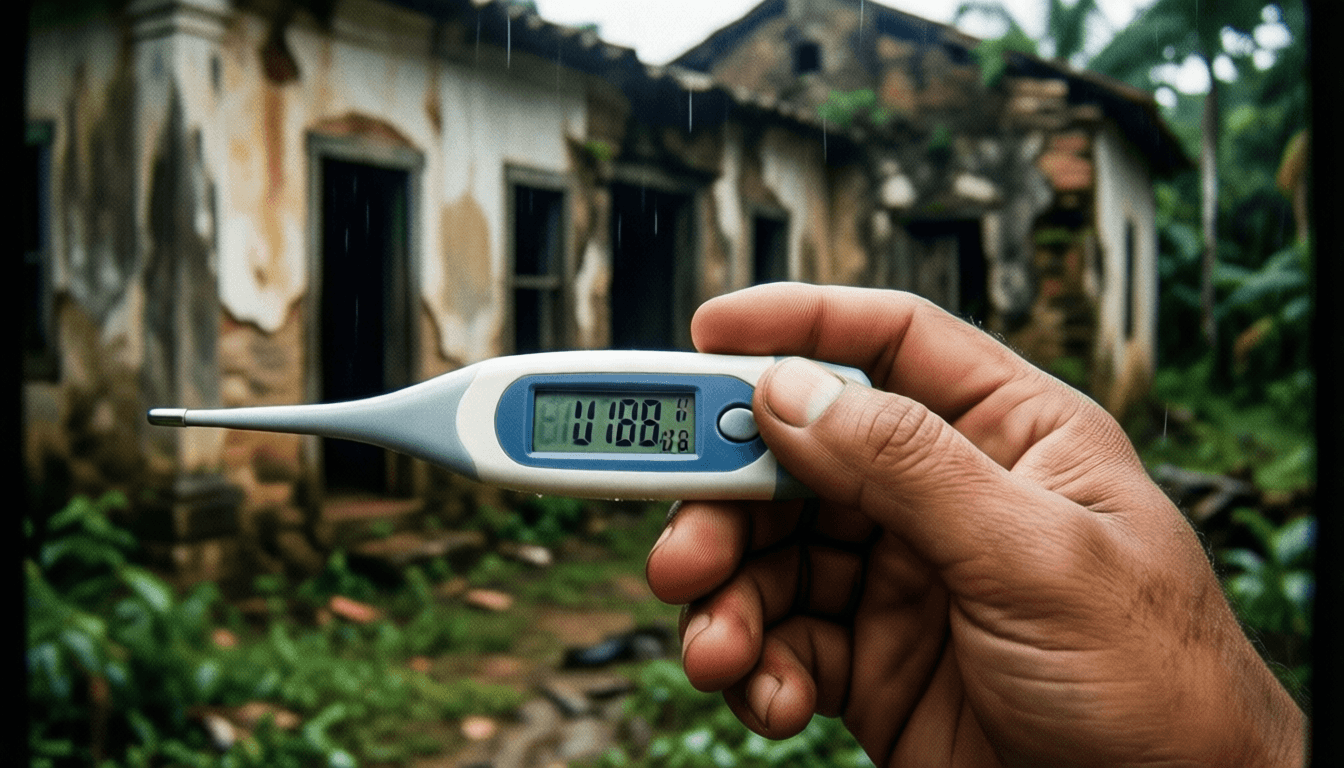
As twilight approached, the oppressive silence slowly began to break. A regular thudding sound, barely discernible at first from a distance, soon intensified, transmitting vibrations through the investigator's boot soles. It seemed to emanate from the ground itself, making it difficult to pinpoint a specific direction. The already sluggish current of the stream momentarily reversed, small ripples moving upstream against the main flow before subsiding back into an abnormal torpor. Local anomalies escalated. A dried leaf caught in a cobweb near a crumbling wall spontaneously combusted with a faint 'pop,' burning brightly for less than a second before vanishing like smoke, leaving no trace of ash. Moments later, a sudden, chilling cold swept through the air, causing goosebumps despite the surrounding heat. The air itself began to feel viscous and heavy. A digital thermometer held out by the investigator showed temperatures erratically spiking and plummeting within seconds.
And then the sound came. It wasn't a horse's whinny, nor a scream. It was a deep, guttural tremor, a colossal, raw agony and fury that seemed to emanate from beneath the earth. It vibrated through the chest and distorted the air. It was too massive a sound to come from any animal, too primal to be a mere echo. As the sound faded, an even deeper, more profound silence remained, broken only by the investigator's own ragged breathing. Small stones on the ground began to shift imperceptibly, as if reacting to infrasonic vibrations. The air shimmered like a mirage, and a faint electrical hum filled the stillness.
The hum grew in intensity, transforming into a roar. From the depths of the farmhouse ruins, a shadowed hollow created by a collapsed section, an intense orange-red light began to bloom. It wasn't a slow-creeping ember, but a blinding brilliance that erupted instantly, pulsing with ferocious energy. The regular thudding returned. No longer distant, it was immediate and rapid, transforming into a thunderous gallop.
Within the blazing light, a form appeared. It was roughly horse-like, colossal, and enveloped in intensely shimmering heat. There was no discernible head; only a dazzling focal point of pure energy. It was not burning, but was fire itself—a self-existent phenomenon that defied observation. As it moved, the ground beneath its 'hooves' didn't just scorch; it seemed to vanish as if vaporized, leaving deep, vitrified imprints. The surrounding air was visibly superheated, shimmering like a mirage.
It charged.
Frozen for a moment by the impossible sight, the investigator found himself trapped with his back against a crumbling stone wall. The surrounding stones glowed cherry-red from the radiant heat, cracks beginning to appear on their surfaces. Desperate adrenaline triggered a frantic scramble for escape. The entity closed the distance with terrifying speed. The heat was a physical force, searing exposed skin and scorching lungs with every gasped breath.
As the burning mass bore down, the investigator lunged desperately sideways, diving through a narrow gap in the collapsing wall. The entity's passage was a blur of intense light and immense force, not a direct collision, but a glancing impact of pure energy emitted from the entity itself—a wave of intense heat and kinetic force that slammed the investigator against the rough stone of the escape route. A ripping, agonizing scream tore through the air. It was less a sound and more a pure, guttural wave of despair and fury, vibrating through bone and causing momentary disorientation and deafness. A searing pain erupted on the investigator's left forearm. Just as he tumbled into the overgrown weeds of the backyard, the entire section of the farmhouse ruins that had just glowed red was consumed by an impossible inferno from within, as if swallowed by a furnace, the ancient stone walls liquefying and collapsing inwards.
The investigator stumbled away from the blaze, disoriented, severely burned, and with a ringing in his ears that slowly subsided. The smell of scorched earth and an indescribable metallic odor clung to his clothes. The burn on his left forearm was no ordinary blistered wound. It was intricate, deep, and angry red, almost like a brand, pulsing with a persistent internal heat, as if tiny embers were embedded beneath the skin.

Days later, the investigator, even in the sterile environment of his archive office, suffered from physical and psychological trauma. The burn defied all medical expectations, refusing to heal normally. It emitted a faint, persistent warmth, and under certain light, it possessed a strange, almost iridescent metallic sheen. Medical examinations offered no explanation beyond 'atypical thermal injury.'
Reviewing recovered equipment, the high-precision temperature sensor was overwhelmed and ceased functioning, having exceeded its maximum measurement range. The audio recorder captured only distorted static at the climax, but one segment contained a low-frequency hum combined with a distant, agonizing groan that resonated with the memory of the ear-splitting scream. Most unsettling, however, was a faint, regular pulse detected by several sensitive electromagnetic field meters. These subtle, rhythmic fluctuations precisely mirrored the persistent throb of the burn on his arm.
In the quiet of the archive, the investigator brought his scarred arm close to an old Geiger counter. The device, designed to detect ionizing radiation, emitted faint, regular 'clicks' perfectly synchronized with the pulse in his arm. It wasn't radiation. It was something else, something imprinted, something resonating with the impossible energy witnessed in Vale da Cinza. The phenomenon wasn't merely observed; it had made contact, leaving a permanent, indelible mark. The burn was a brand and a constant reminder. The entity was not merely within the ruins, but a physical manifestation of a localized distortion of reality, a lingering resonance eternally bound to the witness. The unknown horror was no longer confined to a remote Brazilian village. It had come home.

[ CLASSIFIED VERDICT ]
[ACCESS LOG - SOURCE FILE]
In the Vale da Cinza region of Minas Gerais, Brazil, unusual localized fires have been reported for over a century. Among the local residents, there's an ominous legend of an intensely orange-red light that moves at impossible speeds at night, appearing to incinerate buildings before vanishing. This entity is said to be accompanied by heavy hoofbeats and horse-like screams.