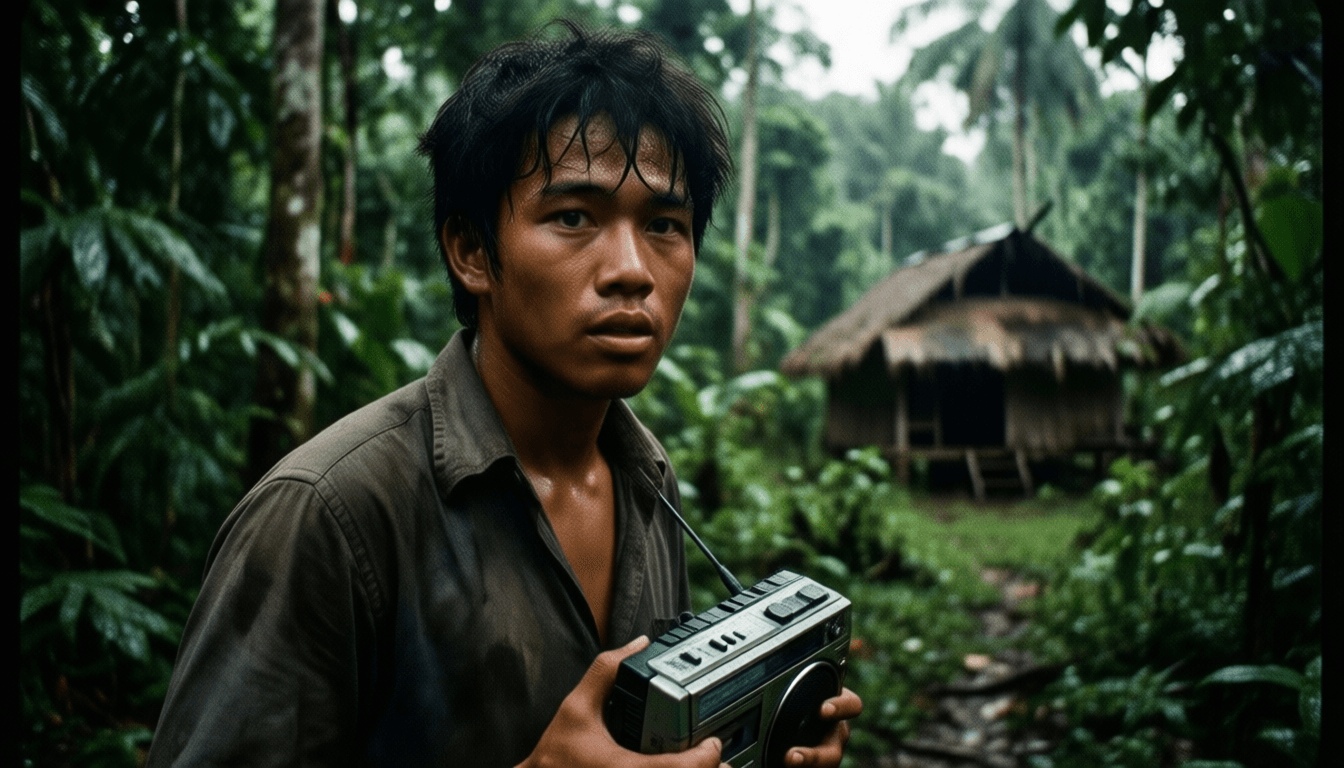
The Season of Manananggal
Local newspaper articles in the archives are always the most convincing evidence. Not the sensational headlines of national tabloids, but small, deeply buried reports from remote newspapers in the Visayas islands. For the past decade, these articles have chronicled outbreaks of 'unexplained wasting disease' in isolated villages. Primarily affecting pregnant women and young children, it presented consistent symptoms: rapid weight loss, extreme pallor, and profound fatigue. Often, it led to death within weeks, without any known pathogen or environmental contaminant. Local health authorities, perplexed, always attributed it to malnutrition or an unknown virus, but residents, with fervent intensity, whispered the same explanation whenever the lunar cycles and humid typhoon season arrived: the activity of the Manananggal. The most recent cluster, reported last month in an isolated village near Siquijor after an unusually harsh typhoon, particularly caught my attention. The pattern was too precise to ignore.
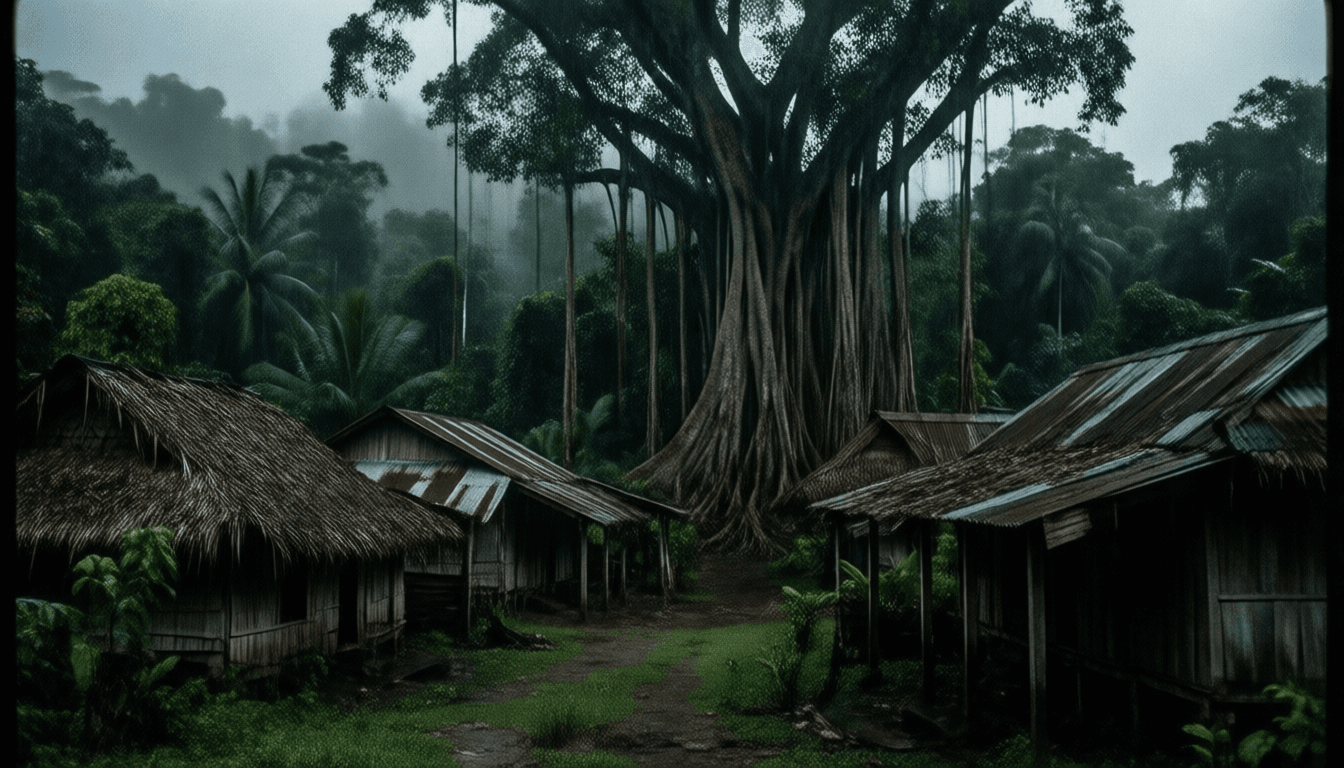
One day, with the sky heavy with impending rain, I arrived in the village, the air thick with sticky humidity and the smell of wet earth. My guide, the taciturn Aling, grew visibly more nervous as we ventured deeper into the lush farmlands bordering the jungle. The small village itself was unnaturally quiet. Dogs watched warily, tails tucked, and residents averted their gaze, their faces etched with a fatigue that went beyond poverty. Aling pointed to an old Balete tree at the jungle's edge. Its twisted roots formed a colossal, dark cathedral. "They say… she lives there," his voice was barely a whisper. All affected homes were within a 500-meter radius of that tree. Near its base was a small, abandoned hut with a half-collapsed roof, where the most recent victim, a young mother, was reportedly found. My initial hypothesis revolved around environmental toxins or an unknown pathogen, but the dense anxiety of the villagers and the precisely affected area began to shake my scientific skepticism.
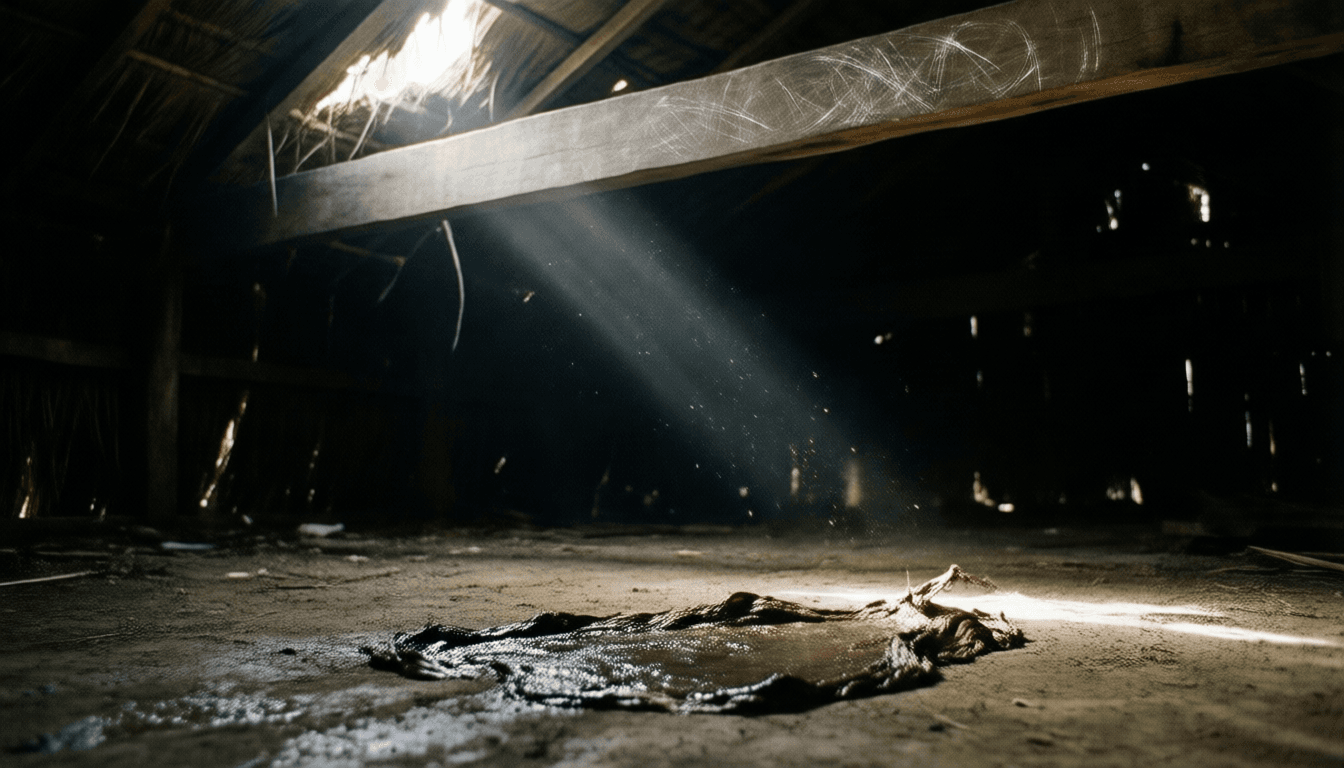
As I approached the abandoned hut, the familiar chorus of jungle insects and birds abruptly ceased. The silence was heavy, almost painful, pressing down on my ears. Even at midday, with only slivers of sunlight piercing through the humid canopy, the air grew noticeably colder. Inside the hut, dust motes hung heavily in the air, illuminated obliquely by light filtering through gaps in the roof. A sickening, sticky odor assailed my senses – a bizarre, unfamiliar scent, simultaneously rotten yet eerily sweet and metallic. On the dirt floor, a black, viscous stain had dried, a faint, elongated trail suggesting something had dripped and crawled rather than simply spilled. My audio recorder, which had been capturing ambient sounds, picked up faint, high-pitched clicking noises inaudible to my ears. A sudden, unexplainable cold draft flowed down my spine, even without any gaps in the windows or walls. It wasn't an airflow, but rather a sensation as if something had passed through that space. I looked up, scanning the underside of the ceiling beams. High above a person's natural reach were faint, elongated scratch marks. They seemed like delicate claw marks, yet strangely shallow and smooth. Scientific explanation began to unravel at that moment.
Driven by morbid curiosity and rapidly diminishing scientific rationality, I began to search around the Balete tree. Its colossal roots formed a labyrinthine network, and in one particularly dense section, I discovered a hidden cavity. Peering inside, the air was thick, still, and significantly colder than before. In the deep shadows, my flashlight beam found it. It was a grotesque sight: a human lower torso, cleanly severed just below the ribs, propped upright against the damp earth. The exposed internal organs glowed faintly in the darkness, abnormally preserved, and seemed to squirm with a faint, ominous pulsation. A primal, instinctive terror washed over me, freezing me in place.
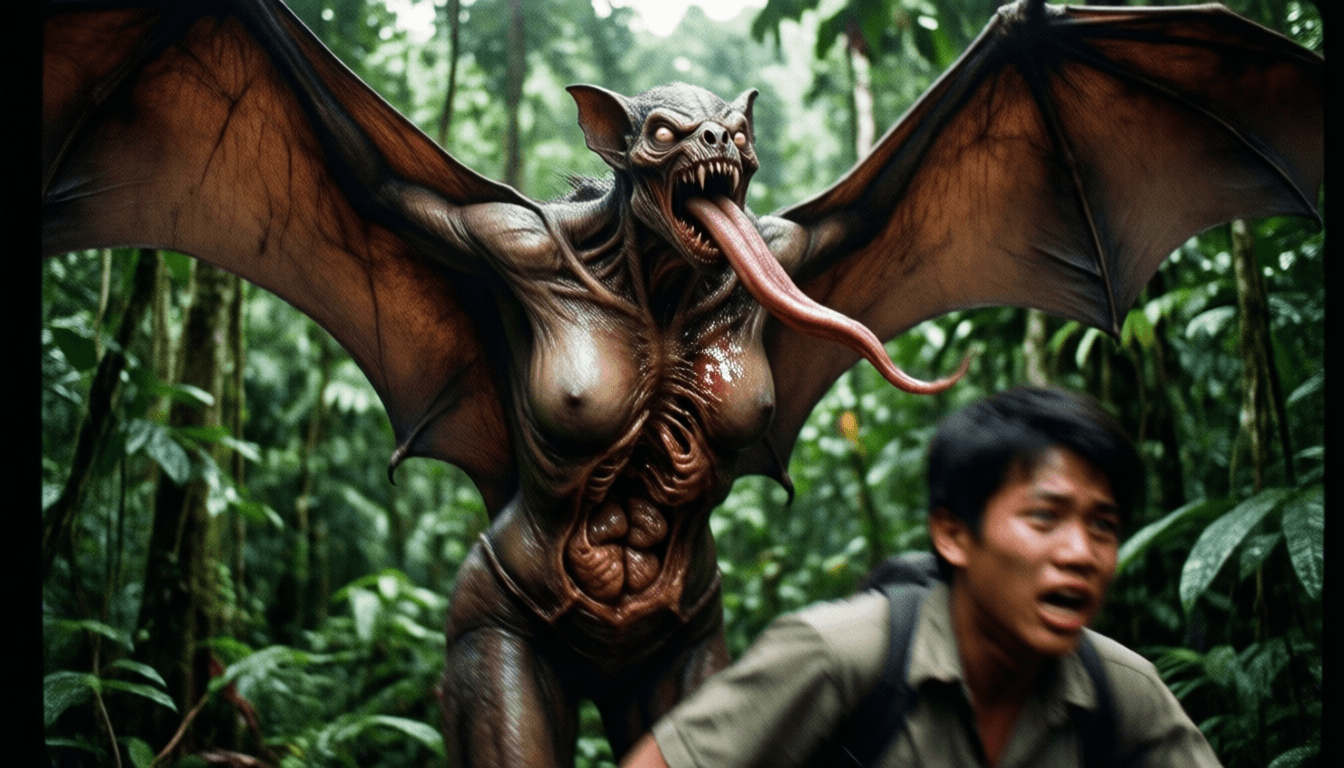
Suddenly, a fast whooshing sound directly above my head shattered the profound silence. The previously quiet jungle exploded with a sudden cacophony of bird cries and rustling leaves, instantly overwhelming my senses. I snapped my head up. From within the dense canopy, something dropped silently onto the branches, then slid down. It was a woman's upper torso. It was a woman’s, yet unnaturally elongated, with colossal, leathery bat wings silently flapping with a smooth, powerful rhythm, even without wind or noticeable movement. Its internal organs were horrifyingly exposed, glistening and writhing, black, sticky liquid dripping like faint tendrils. The face was emaciated, and the eyes burned with a greedy, intelligent hunger. A long, extending proboscis-like tongue uncoiled from its mouth, tipped with a needle-sharp barb. It moved with impossible speed and agility, hovering around me, not flying away. The exposed intestines pulsed like waves, and its wings created a silent, oppressive pressure. I realized the silence had been the prelude, that this was a hunting ground, and it had been there all along.
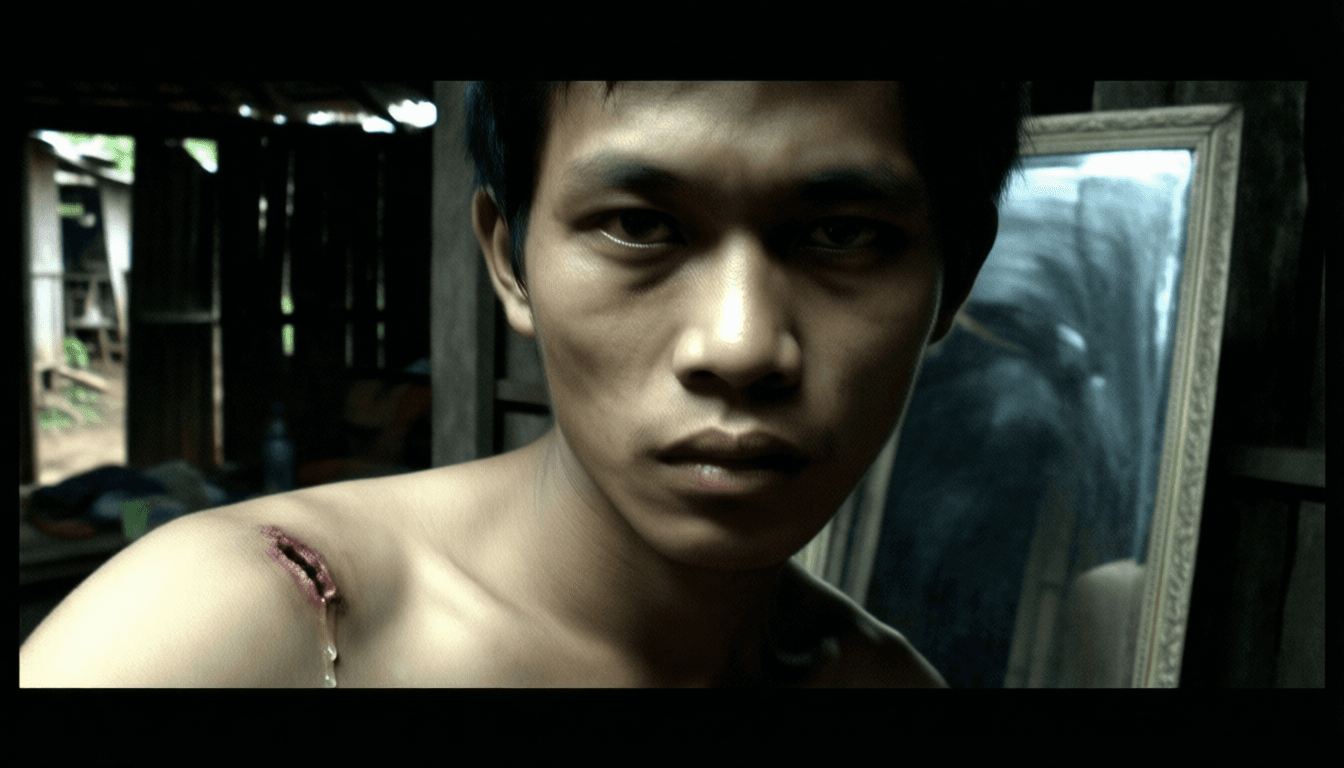
It descended, claws extended. I staggered backward, tripping over the twisted roots, tumbling roughly to the ground. The tentacle-like tongue lashed out with terrifying speed, striking my exposed shoulder. A burning, tearing agony, like dozens of needles piercing my flesh simultaneously. And then, a cold void spread from the point of contact. It was not biting, but an attempt to extract something. I thrashed wildly, kicking out indiscriminately. My foot connected with something solid, and the creature let out a silent scream. A high-frequency vibration burrowed into my skull, causing extreme pain and momentary disorientation. It flinched, recoiling for a brief second, its burning eyes locked on me with chilling intensity. I seized the opportunity, scrambled to my feet, and fled blindly through the undergrowth. The image of those exposed, writhing intestines was branded into my mind like an indelible mark.
Hours later, disoriented and debilitated, I stumbled out of the jungle. The villagers, now gathered on their porches, regarded me with knowing, fearful pity. I had returned to civilization, but the incident was dismissed by authorities as a “wild animal attack” or “delusion” brought on by heatstroke and exhaustion.
Weeks later, in the sterile quiet of my archives, the 'wasting disease' reports took on a new, horrifying significance. The wound on my shoulder, though externally healed, continues to ooze a clear, sour liquid. More disturbingly, I've begun to experience an unexplained, constant fatigue, a persistent pallor, and a deep hunger that no amount of food can satisfy. My weight has been slowly, subtly, but steadily decreasing. Every night, I instinctively check my reflection in the mirror, scrutinizing for subtle changes—an abnormal elongation of my facial contours, deeper shadows beneath my eyes. The high-pitched clicking sounds I recorded near the abandoned hut now replay like a distorted heartbeat. And that rhythm is subtly accelerating day by day. The boundary between myth and creature has blurred, and I now realize, with a visceral, undeniable understanding, that I am no longer merely an observer. The season of Manananggal is cyclical, they say, a time when the veils of the world thin. And now, I know why in my own body.
[ CLASSIFIED VERDICT ]
[ACCESS LOG - SOURCE FILE]
The Manananggal is a vampiric creature from Philippine folklore. Typically appearing as a woman, it is said to detach its upper torso and internal organs at night to fly around, preying on sleeping pregnant women and children by draining their blood. By day, it returns to human form, hiding its lower body.