Ulleungdo Trench: The Dragon's Cry
Official KIOST (Korea Institute of Ocean Science and Technology) reports on anomalous phenomena occurring in the Ulleungdo Trench deep-sea are mostly redacted, but widely discussed within the marine science community. In 2021, two catastrophic failures of deep-sea unmanned submersibles (ROVs) occurred within 72 hours, precisely at a specific coordinate between 800m and 1200m, attributed to "unprecedented localized vibrational stress" and "anomalous acoustic resonance frequencies." Subsequent attempts at recovery by a manned submersible also experienced severe hull damage warnings and identical acoustic sensor overloads, forcing an emergency ascent. Officially, this was attributed to 'unpredictable geological instability'.
However, rumors persisted. Online deep-sea exploration forums linked these incidents to old bathymetric records showing unexplained changes in seafloor topography over decades. Ulleungdo fishermen, for generations, have spoken of "the dragon's cry" emanating from the deep sea, preceding abnormal currents and unseasonable catches. Once dismissed as superstition, this ancient legend is now quietly being re-evaluated against modern, inexplicable deep-sea engineering failures, sparking unofficial investigations into what might be 'sculpting' the deep.
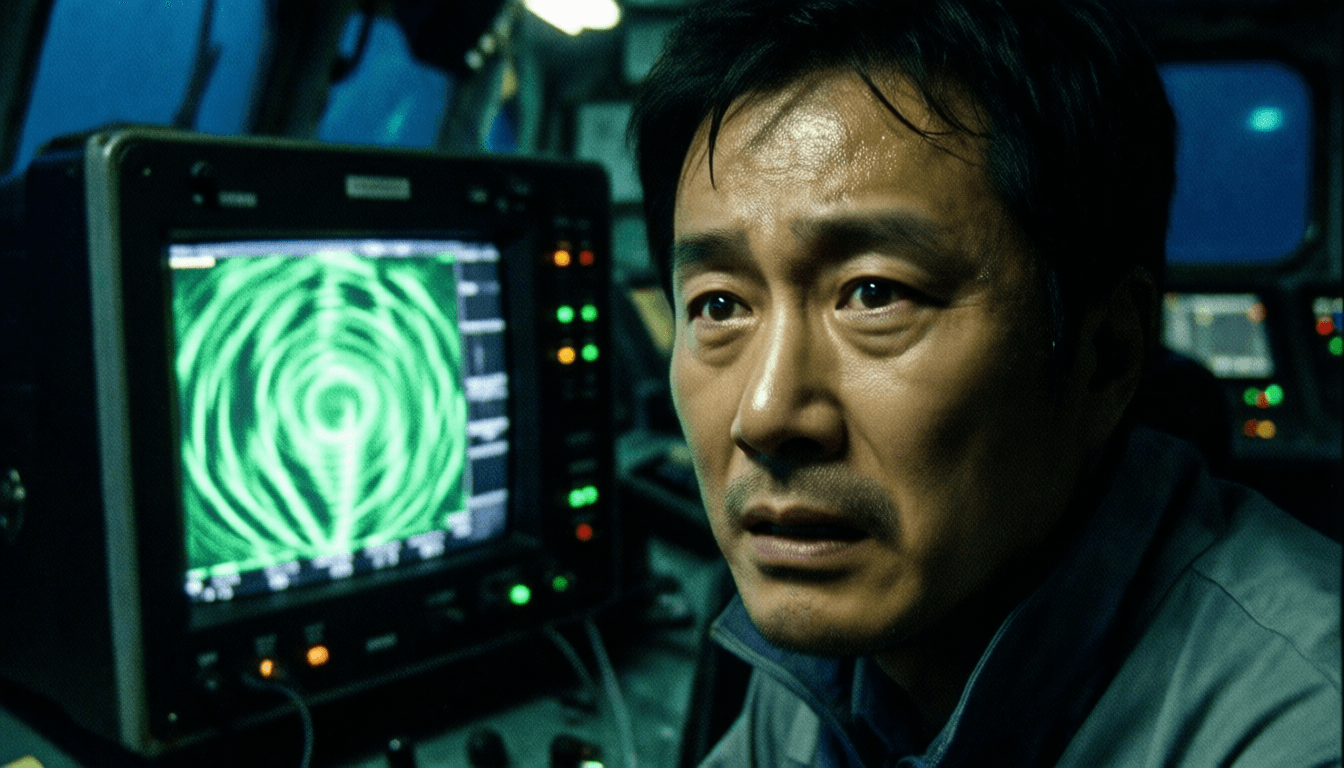
Dr. Lee Min-jun, a respected independent deep-sea cartographer, secured private funding to investigate the rumored topographical discrepancies in the Ulleungdo Trench. Skeptical of supernatural explanations but intrigued by the scientific inconsistencies in KIOST's data, he deployed a custom-built, reinforced ROV equipped with advanced acoustic mapping and vibrational analysis systems from his private chartered research vessel. The descent was typical: immense hydrostatic pressure, absolute darkness beyond the ROV's powerful floodlights, and the steady, monotonous hum of its internal machinery. Initial sonar readings at shallower depths confirmed expected volcanic rock formations.
However, as the ROV approached the reported zone beyond 900m, the bedrock began to exhibit an unnervingly, almost deliberately, regular pattern. Canyon walls revealed sharp, unnatural angles and eerily smooth, almost polished surfaces, instead of natural erosion or tectonic fracture patterns. Features inconsistent with known geological processes. Dr. Lee observed these anomalies from the control room of his surface vessel, a growing sense of unease coiling within him.

As the ROV penetrated deeper into a particularly narrow canyon, the surrounding environment subtly shifted. The ROV's hydrophones began to pick up faint, extremely low-frequency hums and pulses. Initially dismissed as geological noise or harmonics from the ROV's own internal systems, these sounds gradually resolved into distinct 'patterns.' Complex, non-random sequences that suggested communication or mechanical operation. Active sonar pings from the ROV, sent to map the canyon walls, began returning delayed and distorted echoes, defying the speed of sound in water. As if acoustic energy was momentarily captured, manipulated, and then re-released by the surrounding deep-sea rock itself.
External sensors detected micro-currents and sediment movements contradicting existing deep-sea thermocline and current predictions. Minute particulate matter would 'flow against' expected currents, or form unnatural localized eddies around the ROV, hinting at powerful, unseen energy transfers. The ROV's hull integrity sensors recorded subtle, periodic pressure fluctuations. These were distinct from the slow, steady increase of hydrostatic pressure, suggesting the water column itself was undergoing subtle, rhythmic compression and expansion. As if the deep sea was 'breathing'.
A realist, Dr. Lee's scientific explanations began to crumble. The patterns in the hums grew more complex, hinting at an intentionality beyond natural phenomena. The re-routed echoes were not mere delays, but 'responses.' The 'sculpted' rock formations, now clearer in the ROV's intense lights, revealed not just angles, but intricate, almost resonant structures deeply etched into the abyssal rock. The profound silences between the hums began to feel not like an absence, but an expectant, predatory stillness.
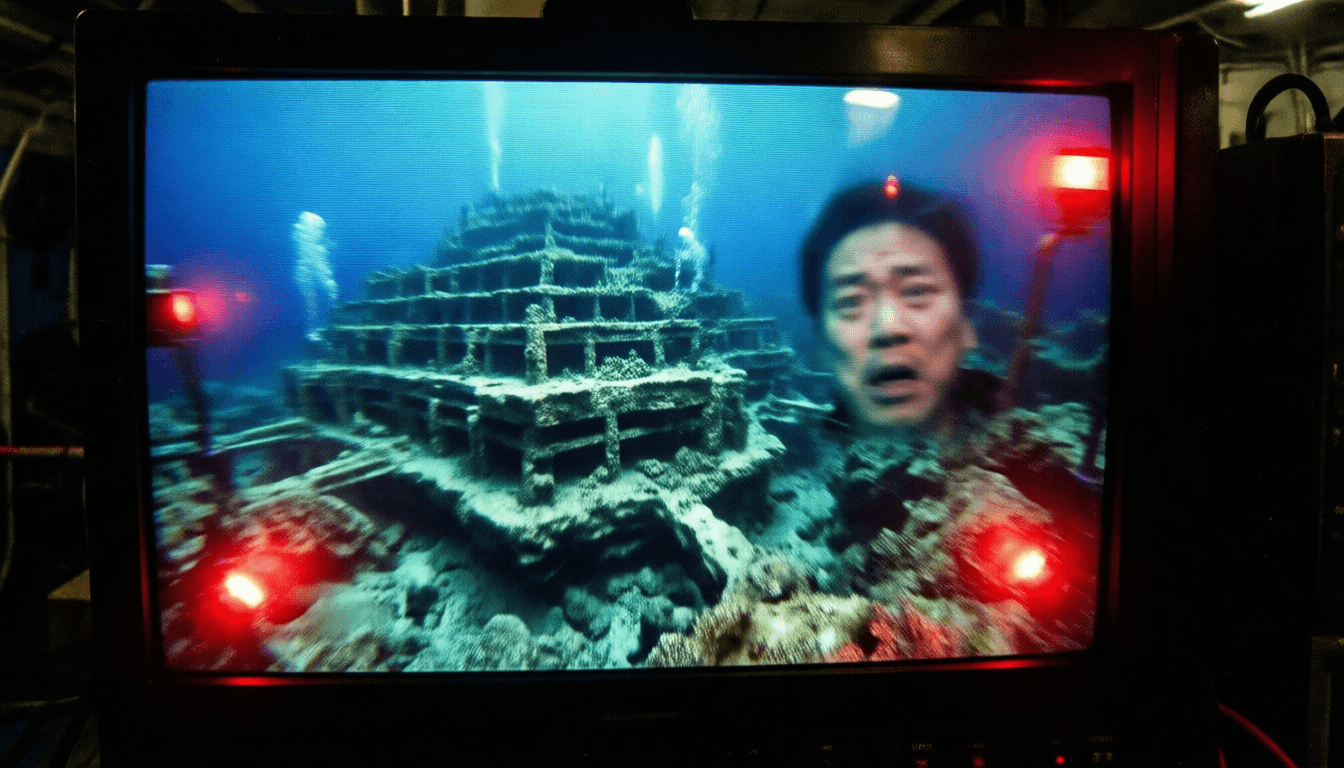
Dr. Lee steered the ROV towards what appeared to be the epicenter of the acoustic activity. It was a massive, multi-tiered amphitheater carved into the seafloor with impossible precision. An architectural feat too complex to be naturally formed. As the ROV approached its center, an incredibly powerful acoustic pulse erupted. It was not merely a sound; it was a physical force.
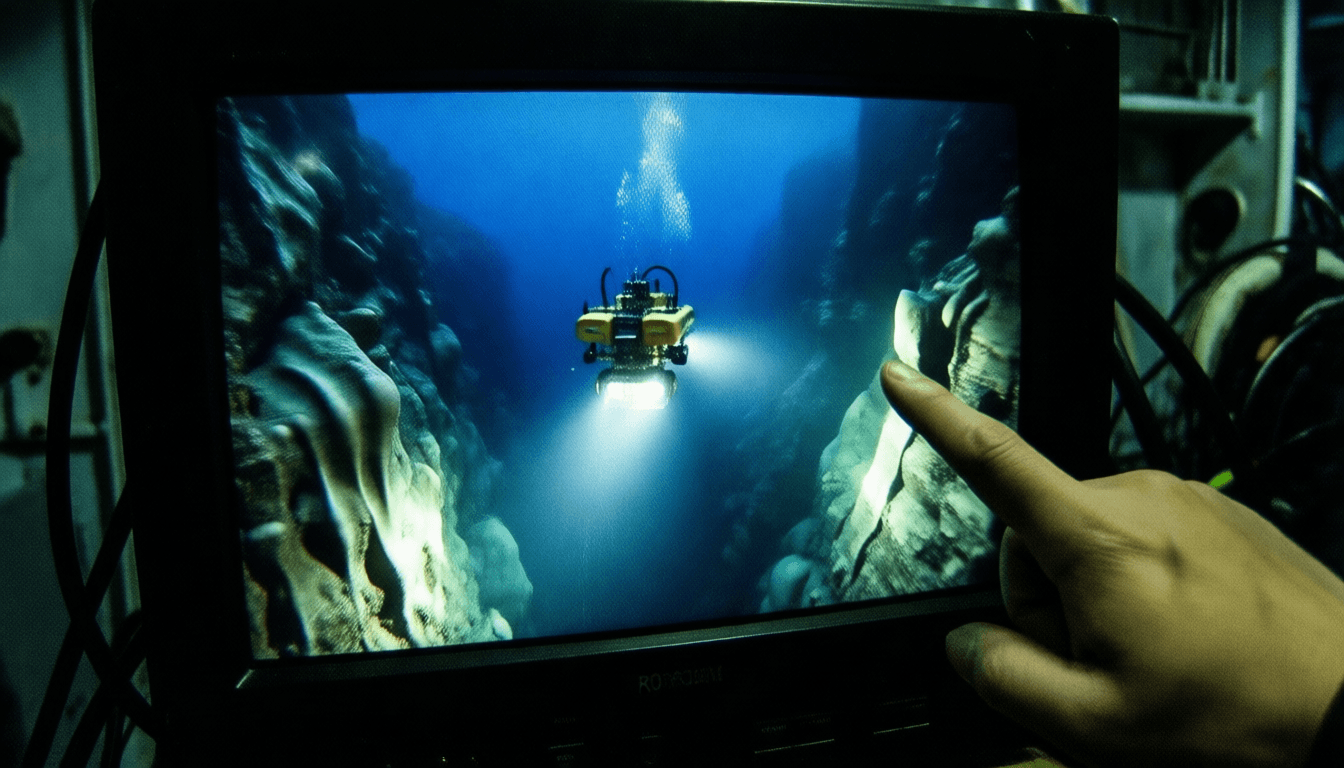
The ROV's thrusters instantly seized. Control was overridden by internal vibrational resonance. The ROV was inevitably drawn towards the amphitheater's core, 'fighting' against all the power of its now-dead motors. External cameras captured the surrounding water column 'shimmering' and noticeably distorting. Tiny pockets of trapped gas within the deep-sea rock around the ROV simultaneously 'imploded and exploded,' creating micro-acoustic bursts, further destabilizing the canyon walls.
The deep hum amplified, transforming into a deafening, agonizing shriek transmitted through the ROV's reinforced hull. It wasn't merely transmitted; it originated 'within' the ROV's very structure, resonating with its metal, attempting to tear it apart from the inside. Dr. Lee felt the deep, bone-rattling vibrations through the deck of his research vessel, in his very teeth. On his monitors, Dr. Lee watched as the bedrock around the ROV visibly 'shifted, groaned, and fractured' in response to the acoustic output. He realized the 'sculptures' were not static forms, but 'active components' of a colossal, invisible acoustic mechanism.
The ROV collided with a sharp protrusion of a newly formed canyon wall, the impact bending its main manipulator arm. Alarms blared. A new, higher frequency pulse hit, and the primary hull integrity sensors flashed crimson. Water began rapidly infiltrating a secondary compartment. In a panic, Dr. Lee manually initiated an emergency ascent, but the ROV was still violently vibrating, held captive, self-destructing. External pressure fluctuated wildly, indicating that localized, extreme acoustic cavitation was literally carving away the water around the ROV, creating ephemeral, overwhelming voids.
Barely conscious, Dr. Lee manually severed the ROV's main tether and jettisoned emergency ballast, initiating a slow, uncontrolled ascent. Just before the cameras cut out, the last faint image was of the 'amphitheater' below 'pulsing with light.' Not visible light spectrum, but strange internal energy radiating from the newly activated rock. The water column around the ascending ROV was churned with deep-sea gases and sediment from the structurally damaged canyon.
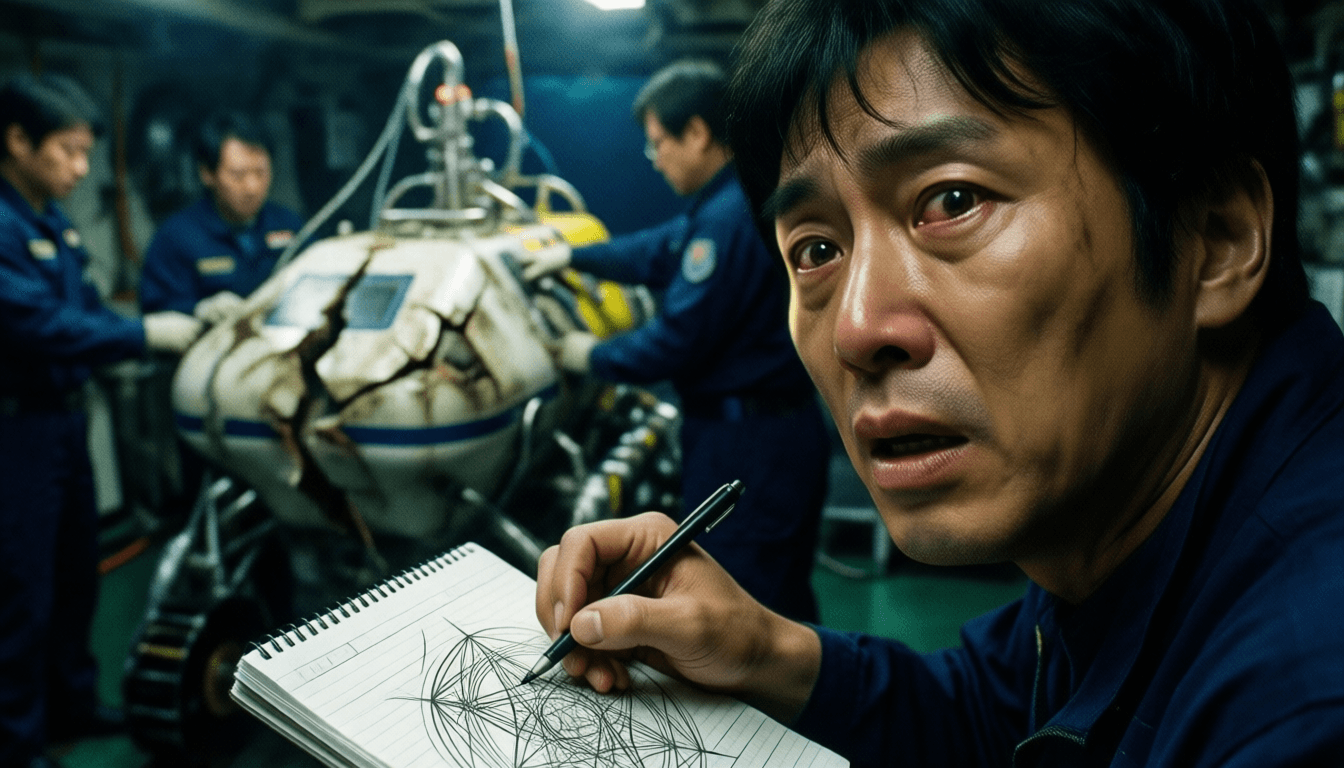
Dr. Lee and his crew returned to port, the severely damaged ROV recovered. Its advanced acoustic sensors were not merely broken; they were 'molecularly dissembled' in patterns inexplicable by known physical forces. The hull showed microscopic, patterned stress fractures perfectly consistent with extreme resonant acoustic assault. Most of the recovered data was corrupted: a jumble of unprocessable raw acoustic frequencies, interspersed with short, highly complex geometric acoustic signatures resembling nothing scientifically known.
Dr. Lee suffers from permanent, severe tinnitus and a low-frequency hum audible only in absolute silence. He now unconsciously sketches complex geometric patterns. He has abandoned deep-sea research.
The true horror, Dr. Lee posits, is not that something 'made' the canyon, but that it is still 'making' it. The KIOST reports' "anomalous acoustic resonance frequencies" were not malfunctions, but the 'signature' of an actively shaping force. The old fishermen's "dragon's cry" is not a myth. It is the hum of an unseen, incomprehensible abyssal intelligence. The slow, methodical architect that regards human technology as a trivial obstruction to be acoustically disassembled and rearranged, a transient noise appearing and disappearing within the work of its endless resonance.
Months later, new high-resolution bathymetric maps of the Ulleungdo Trench quietly revealed a 'new, small, perfectly geometric depression' at the exact coordinates where Dr. Lee's ROV had its fatal encounter. Its lines too sharp, too precise, to be natural.
Sometimes, in the profound quiet of his home, Dr. Lee swears the hum grows louder.
[ CLASSIFIED VERDICT ]
[ACCESS LOG - SOURCE FILE]
Based on the "dragon's cry" legend passed down for generations among Ulleungdo fishermen, this story features unidentified sounds from the deep sea that change seafloor topography and cause unpredictable marine phenomena. Linked to catastrophic failures of deep-sea exploration equipment inexplicable by modern science, this myth is re-evaluated as a chilling possibility of an ancient intelligence actively "sculpting" the seafloor. The belief in a deep-sea ruler beyond human understanding has evolved into modern horror.