Tomino's Hell: The Whispering Shrine
For decades, ‘Tomino’s Hell (トミノの地獄)’, a poem by Japanese poet Yomota Inuhiko published in his collection 『The Stone Rolls』, was considered merely a peculiar work of literature. However, with the advent of the digital age, an eerie warning began to accompany the poem, circulating across online forums and social media. “Do not read this poem aloud. If you do, misfortune will strike, you will fall ill, or you may even die.”
Initially dismissed as mere internet folklore, the persistence and widespread dissemination of this warning became undeniable. My archives contained an unusual cluster of reports: inexplicable sudden illnesses, minor accidents leading to disproportionate injuries, and an increase in 'maritime disappearances' in the coastal areas where the poem circulated. Short-term disappearances even surfaced in rural regions. While no single dramatic event cemented the legend, the steady ‘whispers’ of misfortune and numerous low-intensity reports hinted at a pattern. A persistent, low-frequency anomaly, demanding direct, controlled investigation.
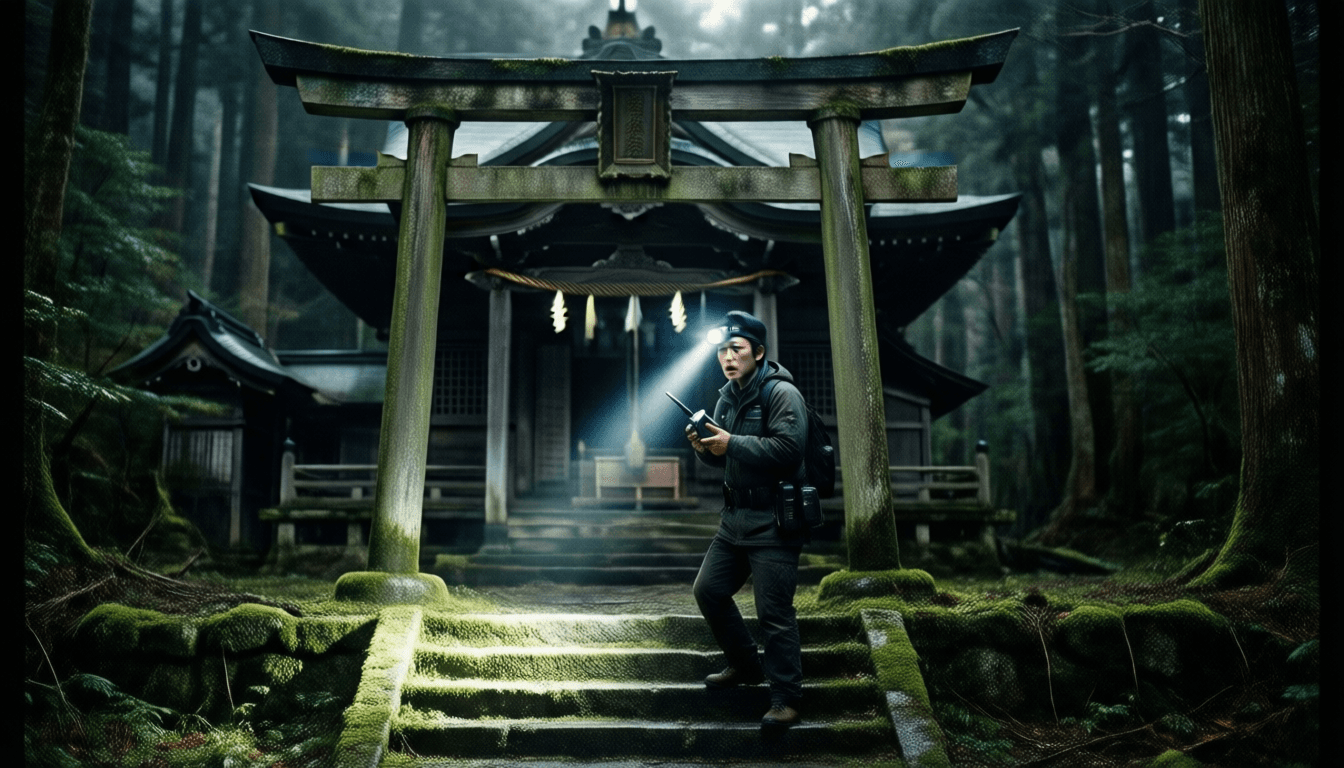
For my investigation, I chose a small, abandoned shrine hidden deep within the forest of a forgotten prefecture, not far from the coast. Local maps labeled it ‘The Whispering Shrine,’ and it was reportedly last maintained around the 1960s. As I approached the shrine, the air grew perceptibly colder, and the silence deepened. Even the distant sounds of vehicles vanished, replaced by the rustle of leaves and the intermittent drip of water from within the thick undergrowth. My gear bag, containing a high-fidelity audio recorder, sensitive environmental sensors, and multiple lighting units, felt heavier with each step.
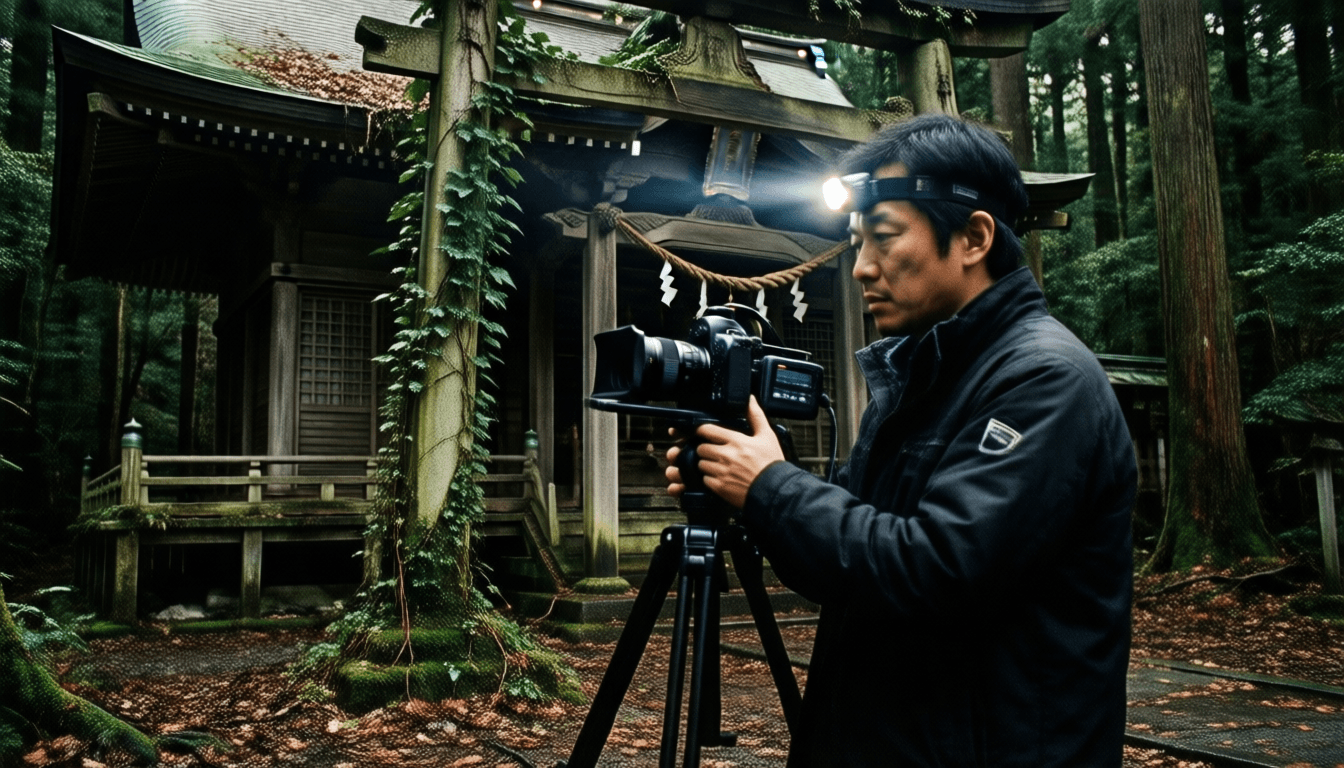
The shrine was a skeletal structure, half-swallowed by kudzu vines. Moss coated the stone steps, and the small wooden torii gate tilted precariously. The ground was soft with centuries of fallen leaves and damp earth. I set up my cameras and audio recorders, ensuring optimal visibility and sound quality. The environmental sensors recorded an abnormally cool but stable ambient temperature. The silence was profound, so crushing that my own heartbeat seemed unusually loud.
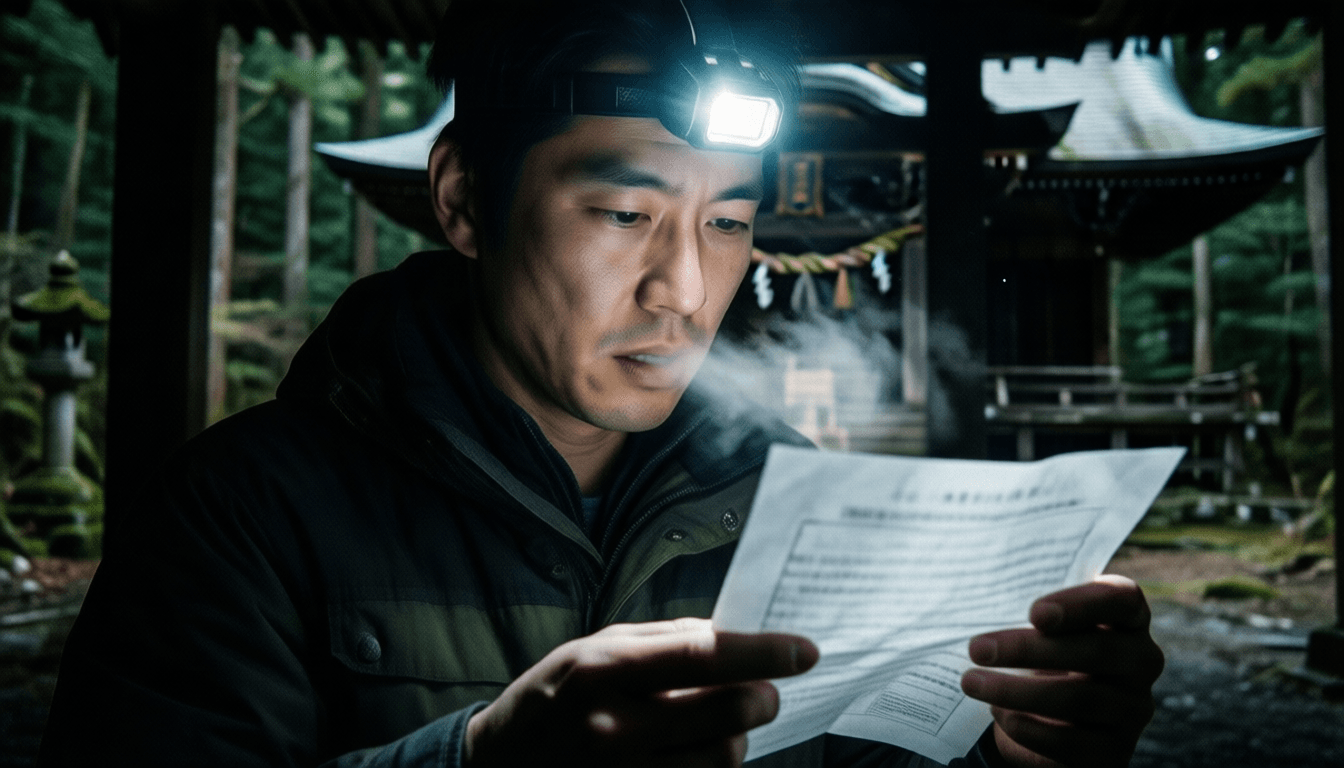
Confirming my equipment was operational, I retrieved a printed copy of ‘Tomino’s Hell.’ The paper felt cool in my hands. Taking a deep breath, I tasted air mixed with damp earth and decay. My objective was to read the entire poem aloud and document any subsequent phenomena. As I began to read, my voice, absorbed by the oppressive silence, sounded strangely flat.
Subtle shifts were detectable as I proceeded. The opening stanza, about sisters spewing jewels, felt innocuous. But by the second stanza, describing a ‘blood-stained hell,’ the ambient temperature dropped abruptly. My breath became visibly misted in the beam of my headlamp, yet the sensor array still reported a consistent, albeit low, temperature. I checked the readings. The screen flickered momentarily, displaying a sub-zero figure before returning to its initial stable temperature. A mere glitch, I rationalized.
My previously flat voice now seemed to carry an unnatural resonance. Each word I spoke echoed, but not in a natural way. The echoes were subtly delayed, sometimes starting behind me in dissonance, sometimes seeming to originate from the decaying shrine structure itself. It was as if multiple versions of my own voice were repeating my words fractions of a second later, forming a discordant chorus.
The shadows around the shrine seemed to deepen on their own, independent of my lighting. They clung to the ancient trees, twisting and stretching in ways my static lights couldn’t explain. Beneath one particularly thick, gnarled ancient tree, I realized the shadow at the periphery of my vision was expanding and contracting as if breathing. A strange chill ran down my spine.
A profound sense of being watched settled over me, a physical pressure on my chest. My hand, clutching the poem, began to tremble almost imperceptibly. The air was heavy and viscous, filled with an invisible humidity that wasn’t rain. A faint, sickening smell, a mix of old, undisturbed earth and something indescribably metallic, began to fill the hollow. I finished the final lines, “into the bottomless pit of darkness / where no flowers bloom.” The words echoed multiple times, fading into a deep, unnatural silence. The air was now bitterly, bone-chillingly cold.
The silence after the poem’s recitation was absolute. A vacuum pressing against my eardrums. My teeth chattered, not just from the cold, but from an accelerating terror. I reached into my bag, intending to retrieve warmer clothing and review initial recordings. It was then that the first impossible event occurred.
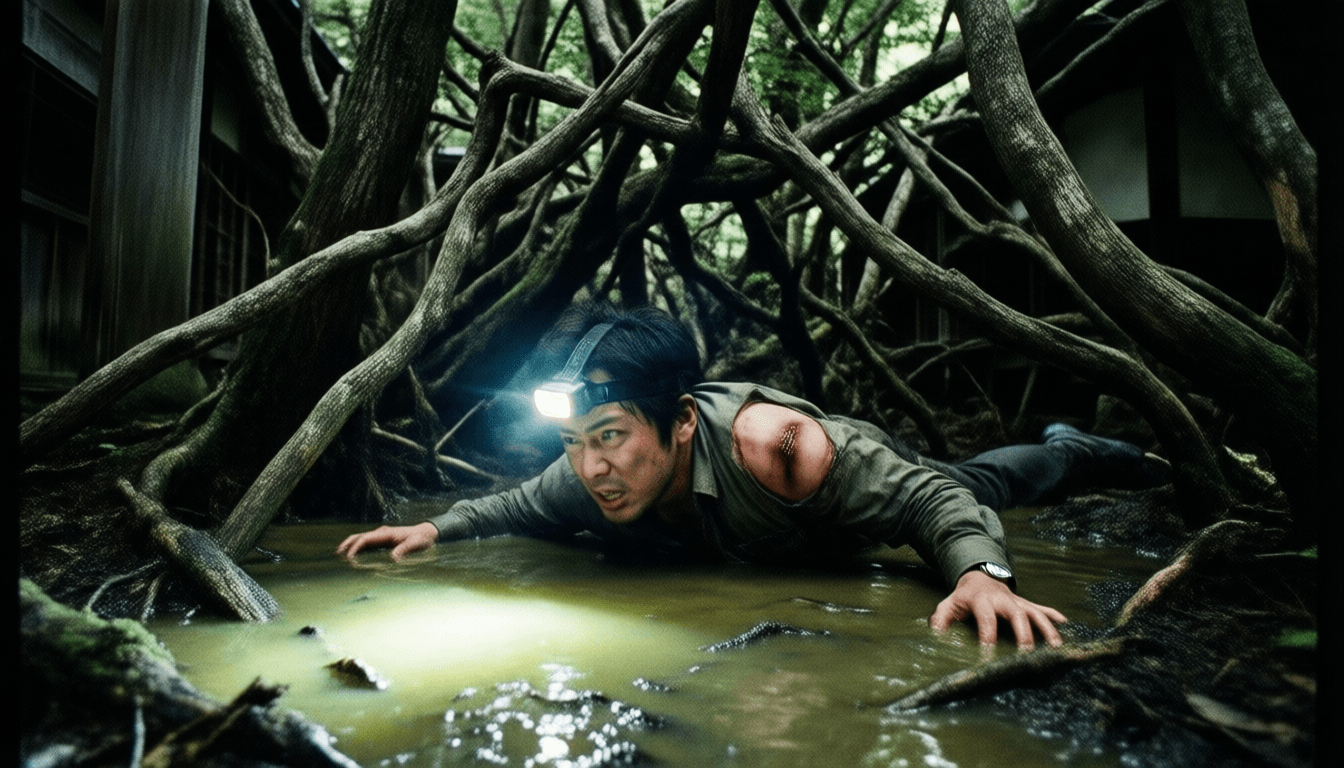
The ground beneath me shifted. Not a gentle subsidence. It was a sudden, violent lurch, as if the earth itself was contracting. I stumbled, instinctively reaching out for the damp, moss-covered stones of the shrine. But the moss was suddenly slick. Not with water, but with a thick, dark, viscous fluid that seemed to faintly absorb light. It wasn’t blood, but it had an eerily organic consistency.
A sudden, immense force struck me from behind. I pitched forward, face-first, into the cold, pulsating goo. There was no visible assailant. No warning. It was as if an invisible, colossal hand had shoved me. Pain flared in my left shoulder as it slammed into the ground. I gasped, thrashing, my headlamp momentarily dislodged, casting wild, erratic beams of light.
The temperature plummeted to even more impossible levels. My exposed skin felt raw, and the frozen air seemed to burn my lungs with every breath. My vision blurred, and the oppressive silence suddenly shattered into an cacophony of sound. My audio recorder, still operational, captured it. It wasn’t human speech. Layers of sticky, low whispers, scratching sounds, and a low, resonant ‘humming’ that seemed to emanate from everywhere and nowhere at once. It was an ancient, perfectly alien chorus of despair.
And then, the world around me began to physically unravel. The trees around the shrine, so still moments before, twisted. Branches thrashed like desperate limbs, growing to impossible lengths, intertwining with each other. They formed an impenetrable thicket, sealing off the path I had entered. The kudzu on the shrine walls tautened, cracking the ancient wood and revealing impossible depths of shadow within the fractured structure.
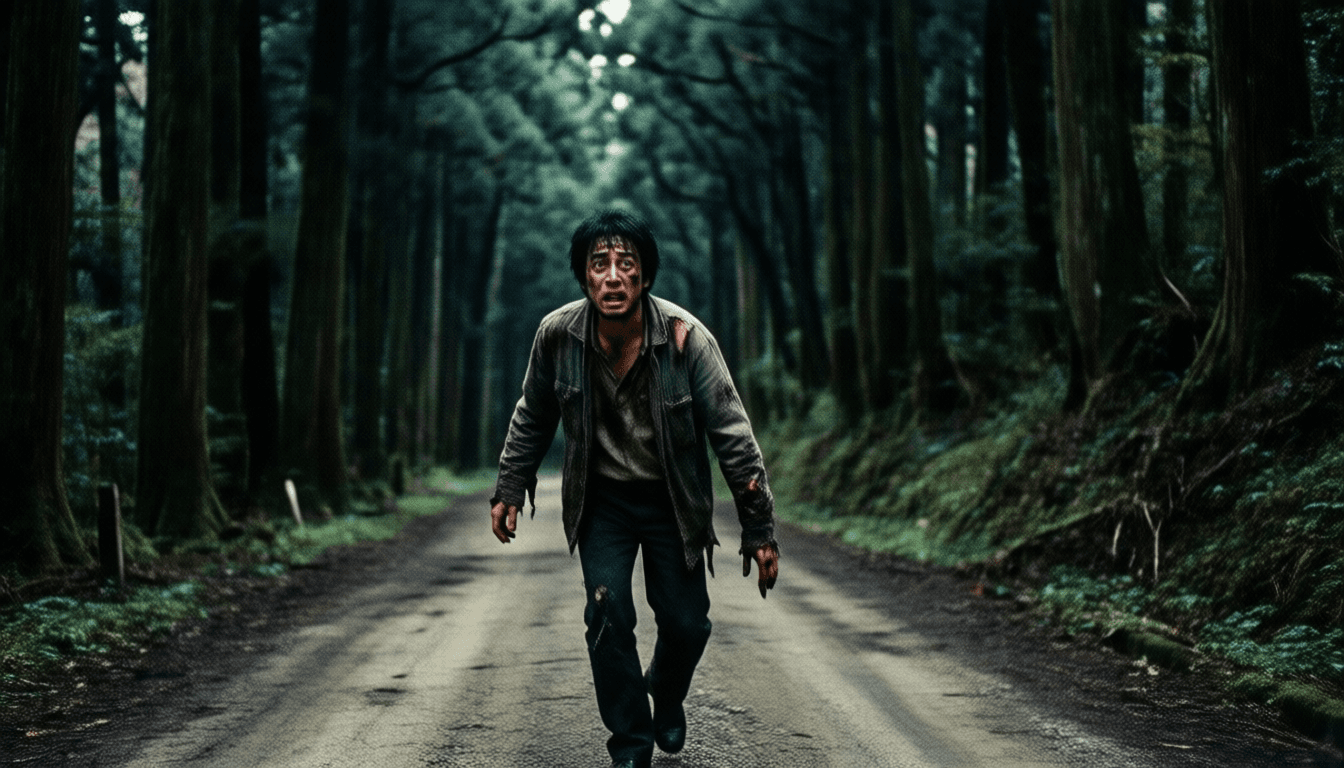
I was trapped. The thicket was impassable. The ground was sinking, the viscous fluid rising around my boots, dragging me down. The source of the horrifying whispers pressed in with furious intensity. A vast, all-consuming, unseen presence. I clutched at the sinking ground, my injured shoulder screaming in agony. Desperation spurred me. Through a momentary lull in the frantic thrashing of branches, I saw a small, unblocked gap in the thicket, a sliver of an escape. With a primal scream, I lunged. I pushed forward, ignoring tearing vines and the crushing weight that tried to hold me. Skin tore on my arms, my breath ragged, as I forced my way through the closing gap. And then, finally, I broke free of the dense tree line, collapsing onto the relatively solid ground of the old access road.
Somehow, I made it back to my car. Disoriented and shaking, my left arm hung limp. The return journey was a blur. My primary concern was the recorded data. At the nearest hospital, a fractured clavicle was diagnosed. Consistent with a powerful, direct impact, but with no clear explanation of ‘what’ caused it. I merely stated vaguely that I “fell in the dark.”
In the solitude of my office, I reviewed the recordings. Environmental sensors showed impossible, violent fluctuations. Temperatures dropped to minus 50 degrees, EMF fields spiked to levels that would fry any electronics, and barometric pressure swings suggested localized atmospheric collapse. My visual recordings were corrupted, a blizzard of static noise and distorted light where the shrine should have been.
But the audio… the audio was intact. My voice reading the poem was clear at first. Then the layered echoes began. The sudden impact that threw me to the ground was a sickening thud, followed by my choked gasp. And then the deluge of sound. The raw audio was a terrifying tapestry of sticky, low whispers and a low, rhythmic ‘humming.’ Exactly as I remembered. Interspersed between my desperate struggles and ragged breaths was something else. A phrase, repeated softly, almost subliminally, in a language I couldn’t understand, yet ancient and terribly malevolent.
The last few seconds of the recording were the worst. After my desperate thrashing and the sound of tearing fabric, there was a wet, heavy, ‘thump… thump… thump…’ as if something was being dragged across the damp earth. It was rhythmic, deliberate, and much closer to the microphone than any previous sound. And then, a sudden, final, echoing silence.
The printout of ‘Tomino’s Hell’ that I had brought had also changed. The black ink of the Japanese characters had subtly bled. It had spread outwards, as if stained by an invisible humidity. The paper itself was unnaturally cold, retaining its chill even when left in a warm room.
I have since deleted all digital files related to Project TX-JH-011 from accessible archives. The physical evidence is sealed and stored. I do not speak of what happened in that valley. The legend of Tomino’s Hell is not a curse of words. It is an invitation. An open door. And something answers. I know this now. The experience left me with more than a broken bone. It was an indelible coldness, an echo remaining at the periphery of my hearing, and the undeniable knowledge that some hells are not merely metaphorical, and some doors, once opened, never truly close. They simply… remain.
[ CLASSIFIED VERDICT ]
[ACCESS LOG - SOURCE FILE]
Yomota Inuhiko's poem 'Tomino's Hell' is the basis of an urban legend that claims reading it aloud will bring misfortune, illness, or even death. This story revolves around the supernatural phenomena and warnings of ill fate that occur when one recites the poem.