Cold Whispers That Steal Life
In late August 2023, an article in the local Romanian newspaper,
The article chronicled the exhumation of a resident named Ion Popescu, who had died suddenly six months prior. It was accompanied by a blurry but ominous photograph of the grave. According to witnesses cited in the article, Popescu’s body was “unusually well-preserved,” his “nails and hair had grown,” and most disturbingly, “fresh earth was found around his mouth, as if he had recently consumed soil.” Despite the reluctant attendance of a priest performing the traditional strigoi eradication ritual by driving a sharpened oak stake through the chest, the article concluded by quoting the villagers’ assertion: “The evil remains. It was merely agitated.” This scarcely reported local news became powerful and unsettling primary evidence for Dr. Son.
With specific accounts of “abnormal preservation,” “earth around the mouth,” and the community’s persistent unease aligning remarkably with historical strigoi legends, Dr. Elias Son secured academic funding and began his investigation. His journey to Bacurești was long and arduous. As he ascended into the foothills of the Carpathian Mountains, past dense forests and dilapidated roads, the air grew noticeably colder, even in late summer.
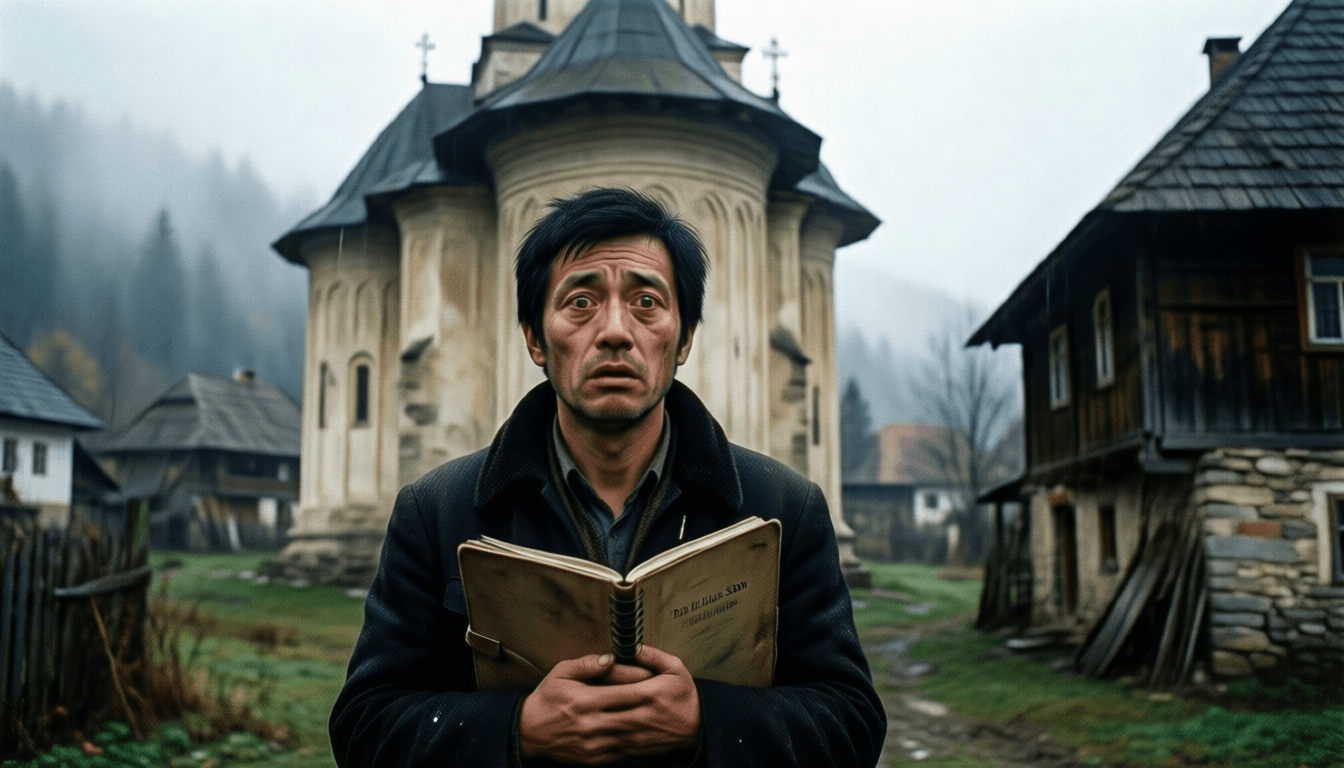
Upon arriving at the village, time itself seemed to have stopped. It comprised only a handful of dilapidated stone and timber houses precariously clinging to the valley’s slopes. The few residents he encountered were gaunt and wary, their eyes betraying deep suspicion. Gheorghe, a taciturn old man who served as the unofficial local historian, offered no assistance, merely grunting a warning not to disturb the peace. He simply pointed towards the ancient, weathered stone church and its overgrown cemetery on a lonely hill overlooking the village.
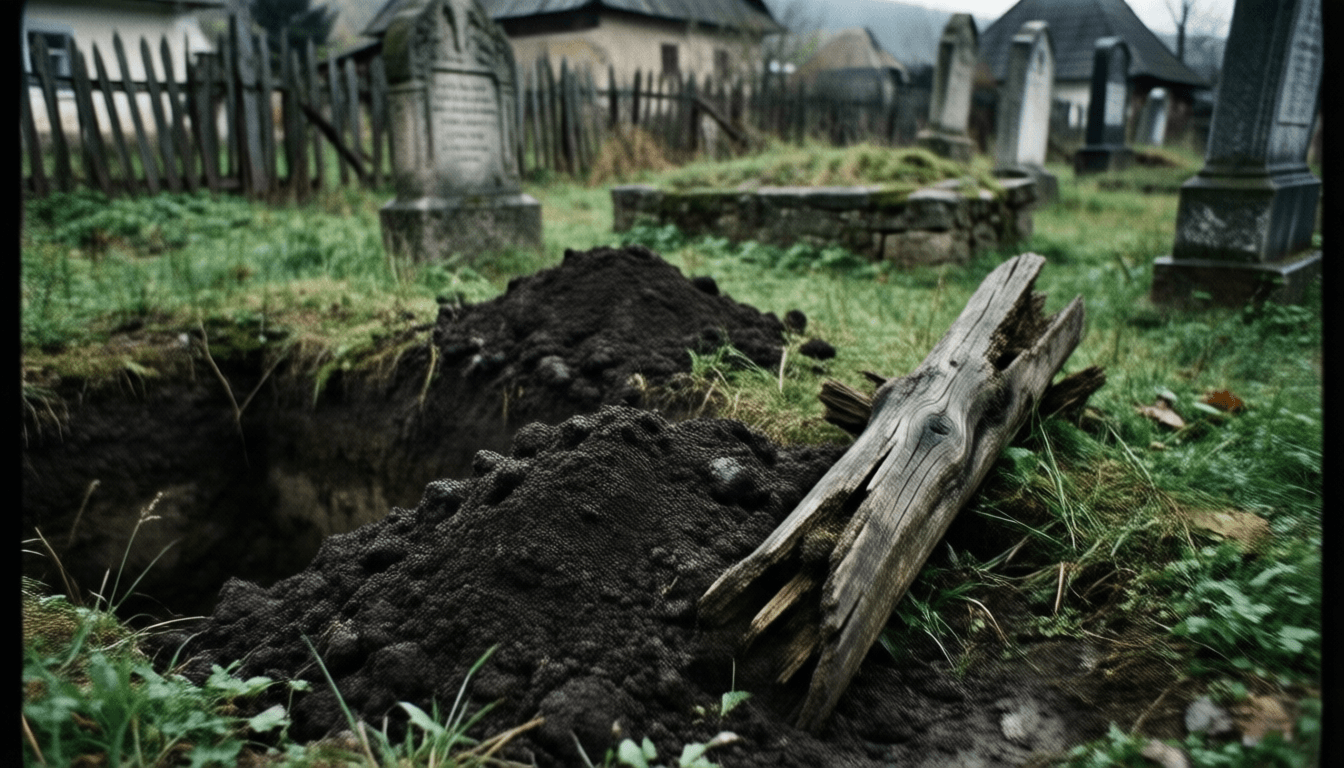
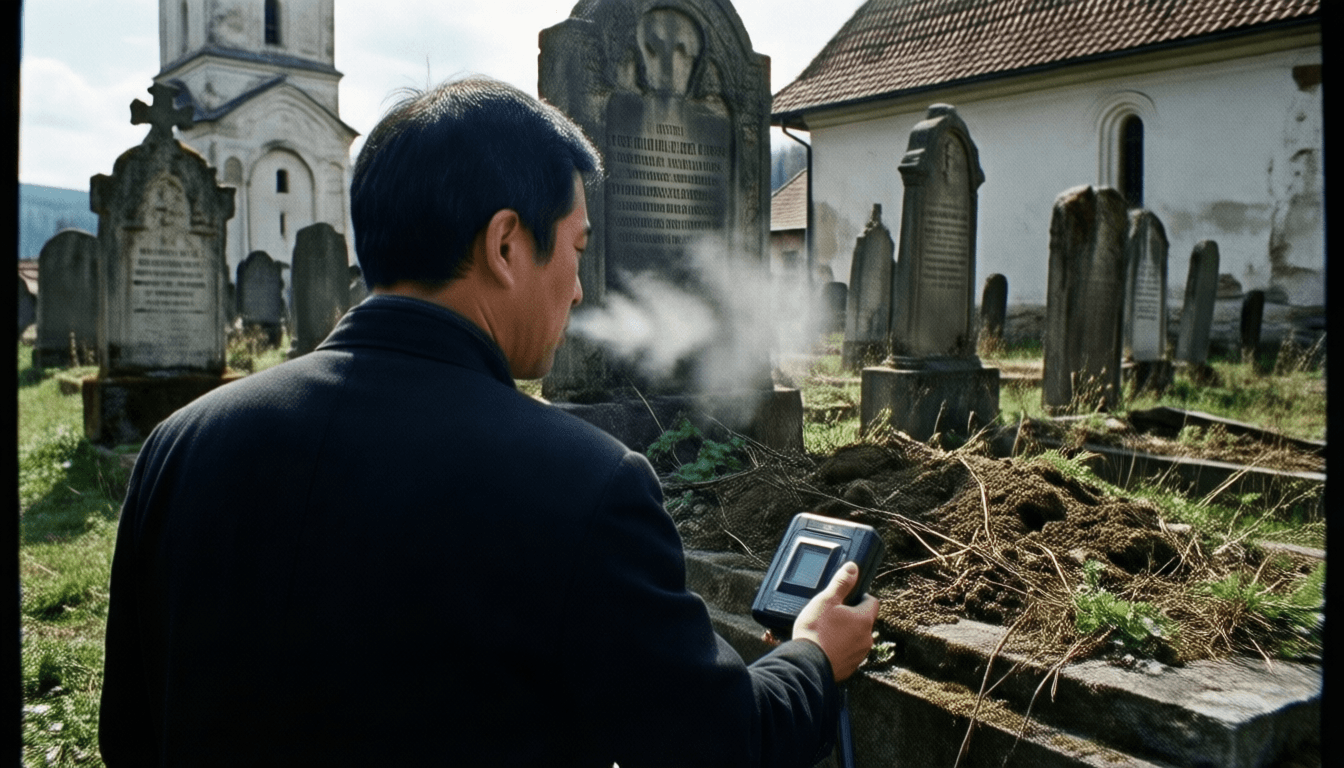
Elias located Ion Popescu’s grave by the freshly disturbed earth. Beneath the smell of damp soil and decaying leaves, a metallic, almost copper-like scent emanated from the rich, dark earth. He found a rough, broken oak stake discarded beside the grave, confirming the villagers’ claims. As he began setting up his portable environmental sensors and recording equipment, a subtle, unexplainable chill began to radiate from the grave itself, despite the warm afternoon sun. His digital thermometer blinked erratically, refusing to stabilize at anything but an abnormally low temperature directly above the fresh soil.
As Elias meticulously documented the site, the strange phenomena intensified. The air around the church and cemetery grew unnaturally still, as if absorbing all ambient noise. The rustling of leaves, the hum of insects, even the faint crowing of roosters from the village below, seemed to vanish or become abnormally subdued as he approached the crypt entrance beneath the church. When Elias spoke aloud, testing his recorder, his voice seemed swallowed, without the echo it should have found within the ancient stone structure.
The localized cold continued to deepen, radiating outwards from the crypt. Condensation formed on his camera lens and equipment surfaces despite no direct moisture. He began to feel an extreme fatigue, accompanied by an unexplainable, bone-chilling cold that defied the ambient temperature. His usual academic focus splintered, replaced by a subtle, unsettling dread that clung to the very air. He would often turn abruptly, feeling a cold pressure against his back, as if an unseen presence stood too close, only to find himself alone. As dusk deepened and the valley fell into profound shadow, the rusted bell in the church’s belfry, silent for decades, tolled once, ‘CLANG,’ echoing eerily through the unnatural silence. It was precisely then that Elias prepared to descend into the crypt.
Despite Gheorghe’s vague warnings and his own escalating dread, Elias descended into the crypt beneath the church. The damp underground space was thick with the scent of decaying stone and the same metallic, nauseating cold he had first encountered at the grave. He relied on his powerful tactical flashlight, but even its beam struggled against the pervasive darkness.
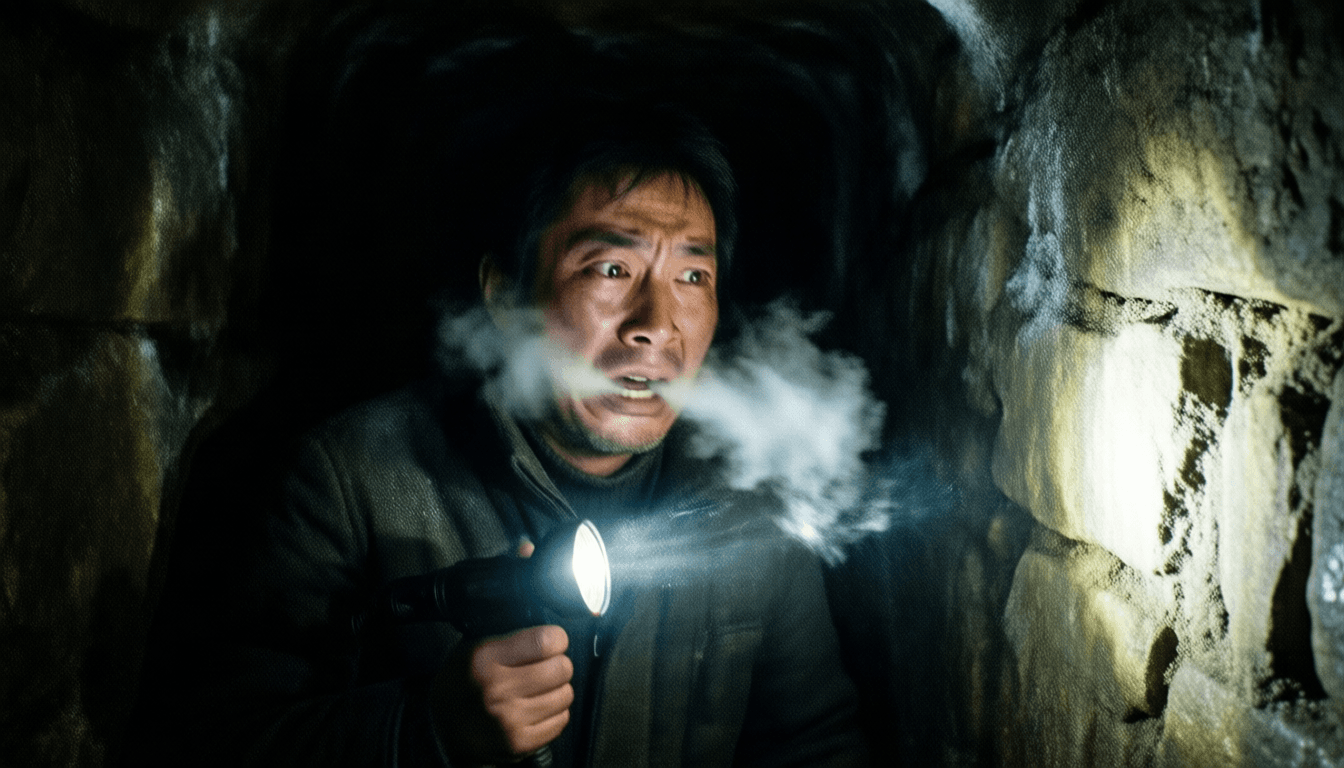
The moment he stepped onto the crypt’s earthen floor, the temperature plunged to an impossible degree. His breath instantly crystallized, becoming a thick, visible fog that hung heavy in the air. Water droplets, falling from the unseen ceiling, froze mid-air, shattering on the stone floor with crystalline precision as tiny, ephemeral icicles, creating a faint, unsettling percussion. The flashlight’s battery, abnormally drained by the extreme cold, flickered violently before dying, plunging him into suffocating, absolute darkness.
Simultaneously, the crypt seemed to actively contract. The roughly hewn stone walls appeared to press inwards, distorting his spatial perception. The solid earthen floor deceptively softened, seeming to suck at his feet. What appeared solid became almost liquid beneath his boots, trapping his legs. The more he struggled to lift his feet, the deeper he sank. An immense, unseen pressure crushed his chest, his lungs feeling pulverized. He gasped, but no air filled his collapsing diaphragm. It was like a vast, suffocating weight, an internal vacuum.
Then the whispers began. No longer static noise, but distinct, sibilant voices in his own language. Yet they were alien, impossibly cold, and filled the silence. They spoke in detail of his deepest, hidden anxieties, promising oblivion, describing the slow, insidious depletion of his life force. He felt the rapid egress of warmth from his body. A deep, internal cold replaced it, invading his very core. His vision narrowed to a tunnel, his eyes feeling as though crystalline ice was forming within them. Cold, spectral fingers brushed and fumbled across his face and through his hair.
With a final surge of adrenaline, Elias fumbled for the small, silver-tipped wooden ritual stake he had dismissed as a mere prop. He desperately, blindly thrust it towards the source of the invisible cold, towards the approximate location where Popescu’s coffin would have rested within the crypt. For an instant, a horrific scream, not from Elias but from the overwhelming darkness itself, ripped through the crypt, shaking the ancient stone walls. The pressure crushing his chest instantly vanished. The extreme cold receded just enough for him to gasp in icy vapor. He collapsed, trembling violently, but he had survived. His body, however, suffered from an unbearable, internal cold.
Hours later, Elias was found by Gheorghe and other wary villagers, hypothermic and in deep shock, though without signs of trauma. He either wouldn’t or couldn’t speak of the true events, blaming his unconsciousness on a fall and exposure.
Back in the sterile reality of his university lab, Elias was changed. He suffered from chronic, debilitating fatigue and an unpleasant, internal cold that no amount of heating or layering could dispel. His meticulous academic precision remained, but a gauntness settled on his face, and his eyes held a distant, haunted expression.
He reviewed the audio recordings from the crypt. What had once sounded like static now, undeniably and chillingly, contained the whispers he had heard. At times, his own name was clear. Interspersed were sounds of impossible cold and the distorted, horrific scream. He published his academic findings on Strigoi legends, obsessively focusing on historical records of “energy displacement” and “heat absorption” in folklore, hinting at a darker, unseen reality hidden beneath superstition. His colleagues noted his new, unsettling theoretical framework, but dismissed it as mere academic abstraction.
In his personal journal, beneath meticulous notes on medieval Romanian texts, a cryptic final entry was added: "They do not crave blood. They crave warmth, life, the essence of being. And once touched, it never fully returns. The cold... it remains. A piece of it stays within you, constantly draining, a reminder that some things don’t just take; they become a part of you."
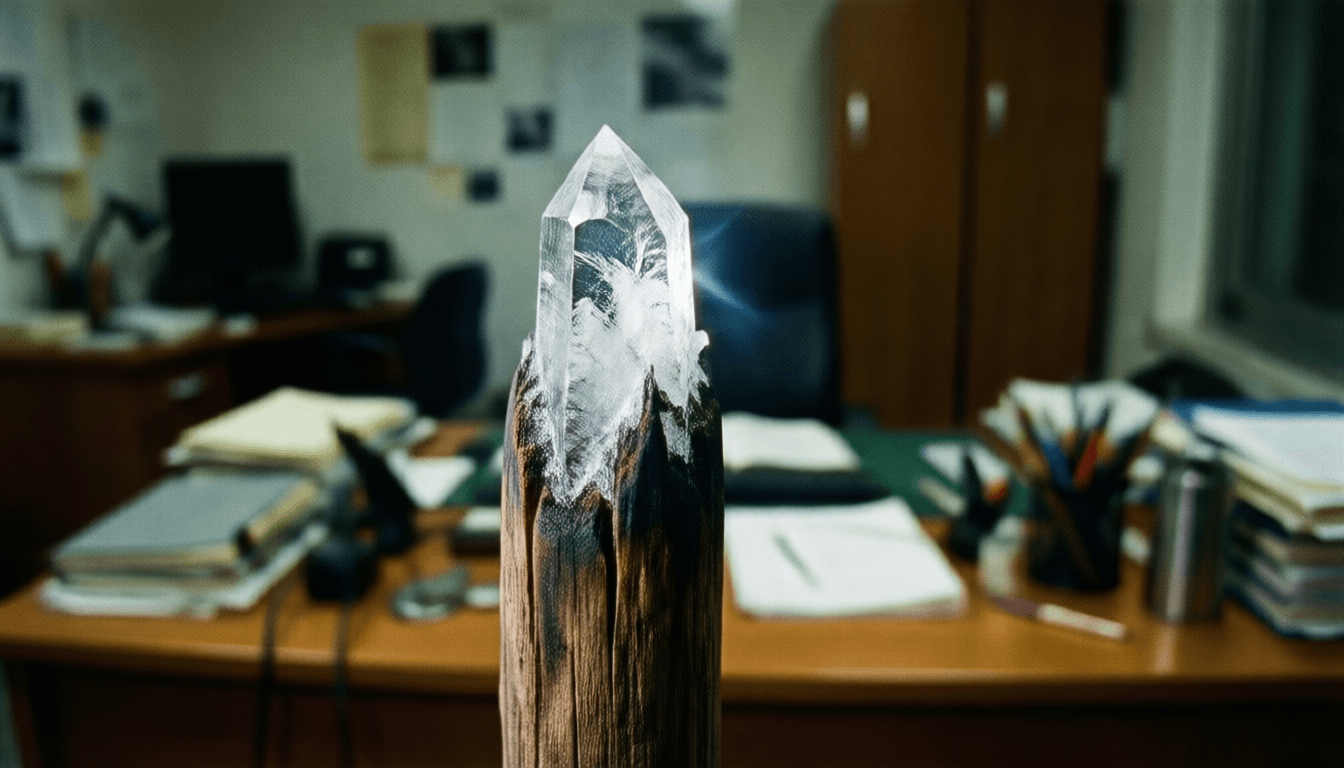
Weeks later, while organizing his field research equipment, he found a tiny, perfectly preserved ice crystal clinging to the silver tip of the ritual wooden stake he had used. Despite the warm temperature of his office, it showed no signs of melting. A faint, internal cold pulsed from it. It was a cold, tangible piece of the impossible temperature within the crypt. It was a silent, insidious echo of the eternal winter he had barely escaped, a chilling testament that some truths, once encountered, leave their mark long after the immediate danger has passed.
[ CLASSIFIED VERDICT ]
[ACCESS LOG - SOURCE FILE]
This story is based on the legend of the 'Strigoi,' a vampire-like entity found in Romanian folklore. Strigoi are characterized by unusually well-preserved corpses upon exhumation, showing growth of hair and nails, and often having dirt around the mouth, believed to steal the life force and warmth of the living. The community's demand for exhumation and the specific evidence discovered align with this ancient legend.