Tiyanak of Mabini Forest: The Moving Cry
For the past four months, a series of unexplainable incidents has plagued Sitio Calatagan, a remote agricultural area bordering the Mabini Forest Reserve. Local police reports, initially filed as ‘missing persons’ or ‘lost hikers,’ progressively took on a more bizarre character. The common thread in every report was a ‘distress signal’: specifically, the inconsolable cry of a baby. Despite extensive searches, teams never found a single infant, nor any explanation for the cries. Community social media groups are now rife with warnings, and the term ‘Tiyanak,’ usually reserved for cautionary tales, began to be invoked as a real concern. The most recent incident occurred just two weeks ago to Mang Pedro, a local elder known for his extensive knowledge of the forest. He was found disoriented and nearly hypothermic three kilometers off the main path, muttering about a ‘moving cry’ and ‘baby’s face in the dark, then flashing teeth.’ Official explanation: dehydration and disorientation. Our investigation, however, suggested a deeper, more unsettling truth.
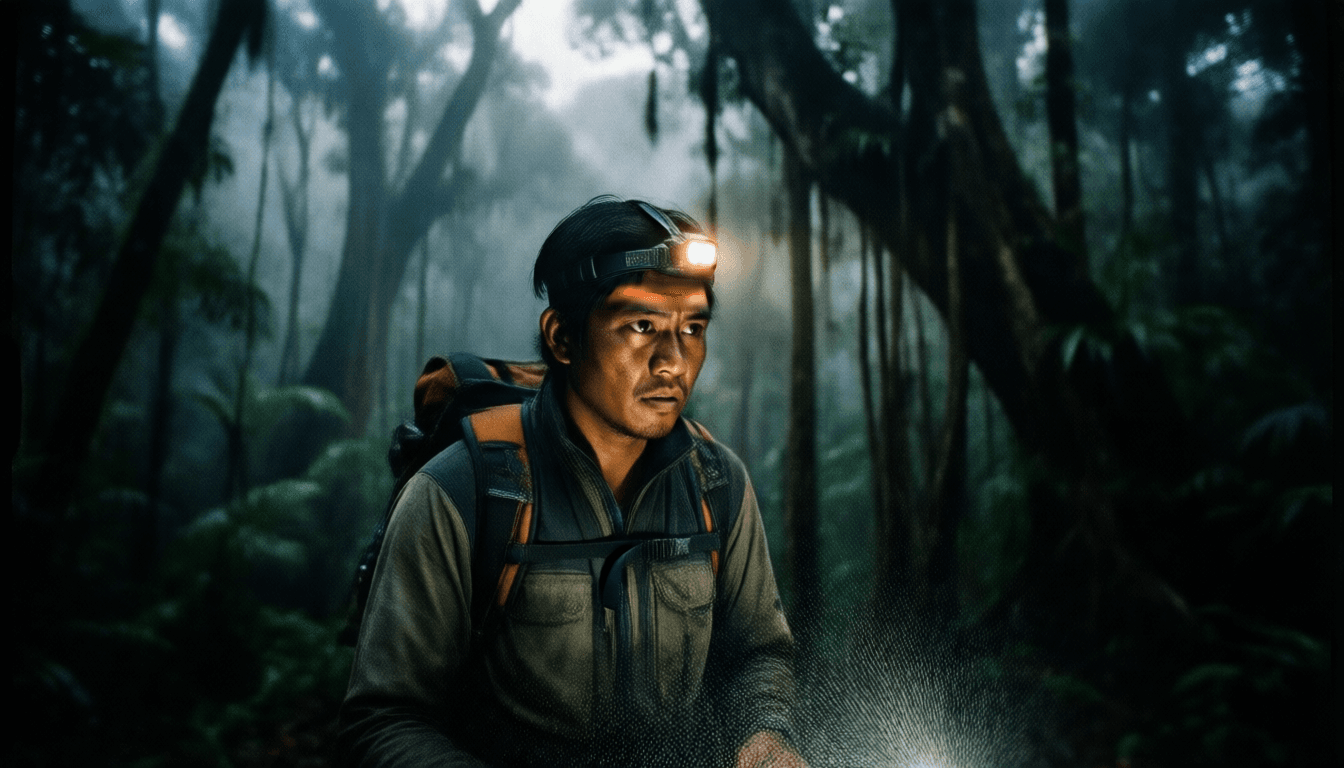
Our equipment was standard: a high-sensitivity directional microphone, a thermal imaging camera, an enhanced GPS unit, and a set of surgical shears for navigating the overgrown paths. The Mabini Forest Reserve, particularly its western fringes near Sitio Calatagan, was notorious for its suffocating humidity and dense undergrowth. Sunlight struggled to penetrate the triple canopy, leaving the forest floor in perpetual twilight. The air hung heavy with the smell of damp earth and decaying leaves. Initial recordings yielded typical forest sounds: cicada chirps, the distant calls of monitor lizards, the rustle of unseen life in the thicket. We followed a faint game trail, reportedly Mang Pedro’s last confirmed point. An unnatural quiet began to assert itself in strange pockets, an initial absence that felt more like a deliberate suppression of sudden localized cessation of insect calls. Our objective was to establish an environmental baseline and, if possible, isolate the claimed auditory anomaly.
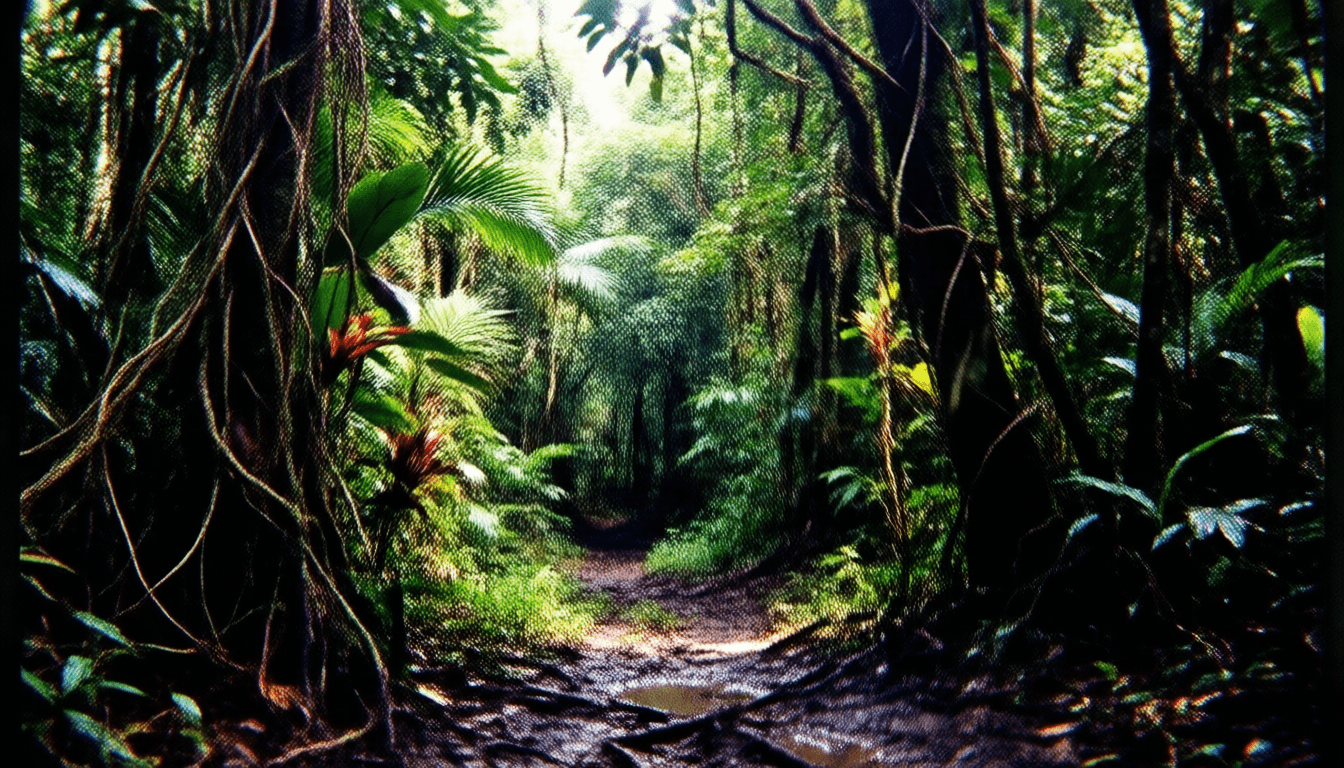
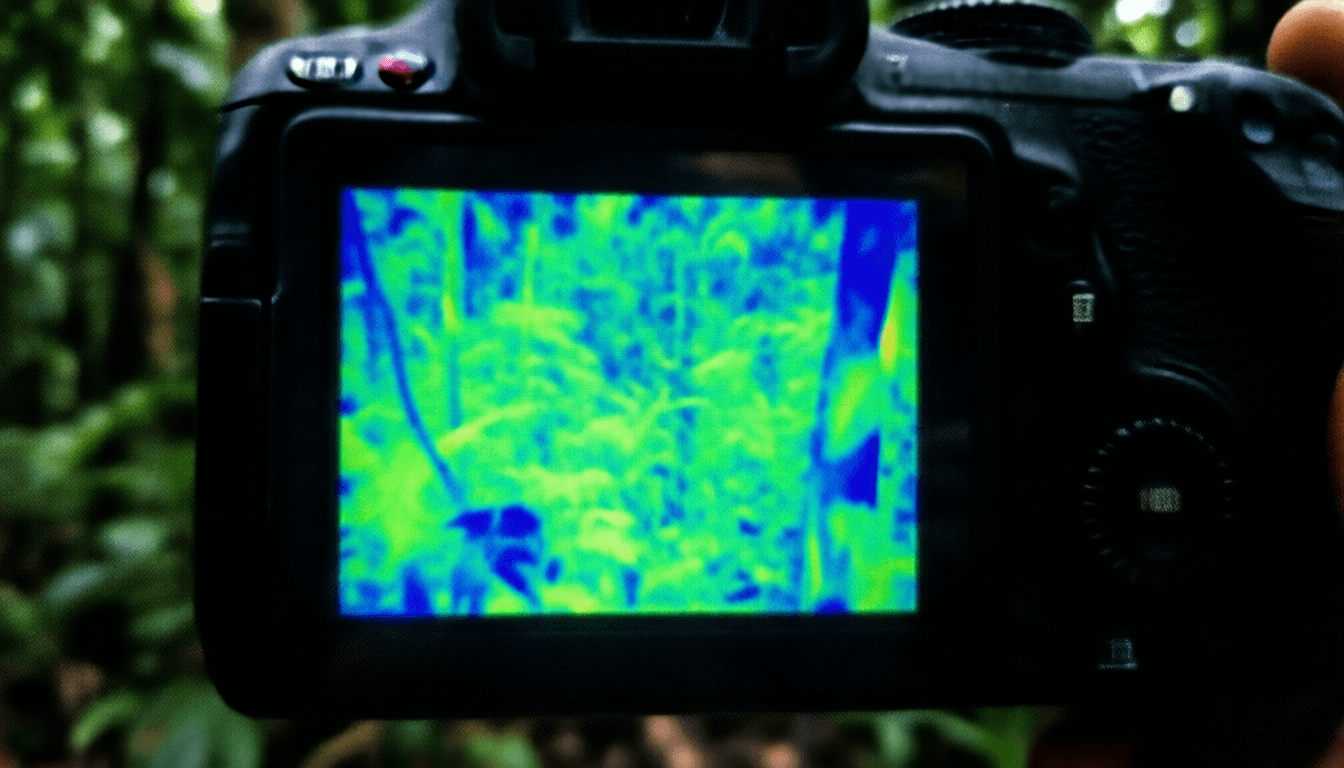
At 4:37 PM, the parabolic microphone registered its first distinct anomaly: a faint, high-pitched wail. It wasn't distant, nor was it directly ahead. The sound seemed to emanate from approximately 20 meters forward, only to reappear within seconds, 30 meters to our left. There was no trace of any physical movement. The cry itself was eerily genuine – the raw, desperate cry of an infant. We swept the thermal camera in the direction of the sound, but it revealed nothing beyond the uniform thermal signature of the plant life. Simultaneously, within a three-meter radius around us, the ambient temperature plummeted by approximately four degrees Celsius, a drop that lasted for a mere ninety seconds. We witnessed glistening droplets of water, eerily condensed beneath leaves, slowly re-absorb upwards, returning to the leaf’s surface – a brief, impossible defiance of gravity. Our previously stable GPS signal fluctuated wildly, registering our position several meters from our actual coordinates before snapping back. The natural hum of forest life seemed actively suppressed around us, replaced by an increasingly suffocating silence punctuated only by the moving cry. My analytical mind sought explanations: acoustic trickery, atmospheric inversions, equipment malfunction – but the simultaneous occurrence of these phenomena began to erode rational certainty, replaced by a cold, steady dread.
The cries intensified. No longer shifting, it was fixed directly ahead. It seemed to emanate from a small, muddy depression obscured by a thicket of Pandan bushes. Driven by the urgency of a distressed child, we pushed through the thorny foliage, caution be damned. There, nestled in the mud between the exposed roots of an ancient Baretete tree, was an infant. Its skin appeared mottled, its cries a thin, reedy sound that vibrated to the bone. No cradle, no blanket, just damp earth. As I knelt, extending a gloved hand, the ambient sounds of the forest ceased entirely. There was only absolute void, save for the infant’s screaming. The screaming abruptly deepened, twisting into a sound of pure malice. The small body began to contort impossibly. I noticed skeletal structures twisting and elongating beneath its seemingly delicate skin. Its tiny fingers stretched into needle-sharp claws that seemed ready to snap. The previously closed eyes snapped open, a horrifying flash of sickly yellow in the damp darkness, pupils shining like pure obsidian. Where the infant's mouth had been, a gaping maw ripped open, its interior lined with hundreds of needle-like teeth. Before I could recoil, it lunged. A speed defying physics. One moment it was in the depression, the next it was on me. A blur of movement and malevolence. A burning agony erupted in my forearm as it tore through reinforced fabric, then skin and muscle. An unbelievable vice-like grip emanated from the tiny body, trying to drag me down into the shaded roots of the Baretete tree. The world seemed to tilt. Instinctively, I brought up the surgical shears, plunging one blade into the creature's chest. It shrieked – a sound of pure, unholy agony that seemed to reverberate through the very ground. The grip loosened for a fleeting second, and I twisted free, tumbling backward into a muddy, hidden sinkhole. Even in that moment, its unblinking eyes burned into mine before the earth swallowed me.

The exact sequence of events after tumbling into the sinkhole remains a blur. Only the cold, clinging sensation of mud, the receding shriek, and an overwhelming, primal urge to escape, to crawl out, to flee from the suffocating presence there. Three days later, I was found by a local search party, disoriented, hypothermic, with a severe laceration on my forearm. The wound defied ordinary medical explanation – too clean for a wild animal attack, too irregular for a simple fall. The surgical shears were still clutched in my hand, one blade bent at an impossible angle, its tip coated in a viscous, dark fluid. Lab analysis only identified the fluid as 'biologically anomalous.' My field recorder, miraculously still functional, contained a single corrupted audio file: a loop of the initial infant’s cry, abruptly morphing into distorted screaming, then pure static, followed by a faint, rhythmic thumping, like a heart beating far too fast. I submitted my report of environmental anomalies, impossible movement, and attack. It was classified as ‘wildlife encounter exacerbated by severe disorientation and hallucination.’ My physical wounds healed, but the laceration on my forearm twitches involuntarily at the mere sound of a baby crying on television. And sometimes, in the absolute quiet of my office, a residual cold spot manifests, a momentary drop in temperature perceptible only on my skin. The local warnings in Sitio Calatagan continue. ‘Unnatural baby cries’ are now reported not just deep in the reserve, but sometimes near the main roads. We hadn't found the Tiyanak. We had merely confirmed its existence, and I live with its viscous trace, and a quiet understanding of what still waits in the deep, humid shadows of the Mabini Forest.

[ CLASSIFIED VERDICT ]
[ACCESS LOG - SOURCE FILE]
This story is based on the Filipino urban legend of the 'Tiyanak.' The Tiyanak is a baby demon said to inhabit forests, luring passersby deeper into the woods by mimicking the cries of an infant. Once close, it transforms into a horrific creature and devours its victims. Some legends claim it is the spirit of a stillborn or unbaptized infant.