The Winged Nightmare of the Valley
From late 2023 to early 2024, strange incidents continuously appeared in local newspapers and online communities, centered around Frederick County and Carroll County in Maryland. The Frederick Gazette on November 17, 2023, published an article titled "Unexplained Livestock Mutilations Strike Local Farms." The article detailed the discovery of three cows found dead in a remote valley bordering Gambrill State Park. The animals showed no signs of struggle but had deep, precise lacerations on their flanks and necks, along with multiple large puncture wounds. Authorities attributed this to "large raptor or scavenger activity," but local farmers strongly refuted, stating, "No hawk or eagle could inflict such wounds."
The Carroll County Times on January 5, 2024, reported similar incidents crossing county lines with an article titled "Mystery Predator Strikes Again." This time, residents testified to hearing "disturbing, sharp screams" at night preceding the attacks. One farmer claimed to have seen a "huge, winged black shape, larger than any airplane" disappear beyond the forest. A police spokesperson dismissed these claims as "natural predator activity exaggerated by local folklore."
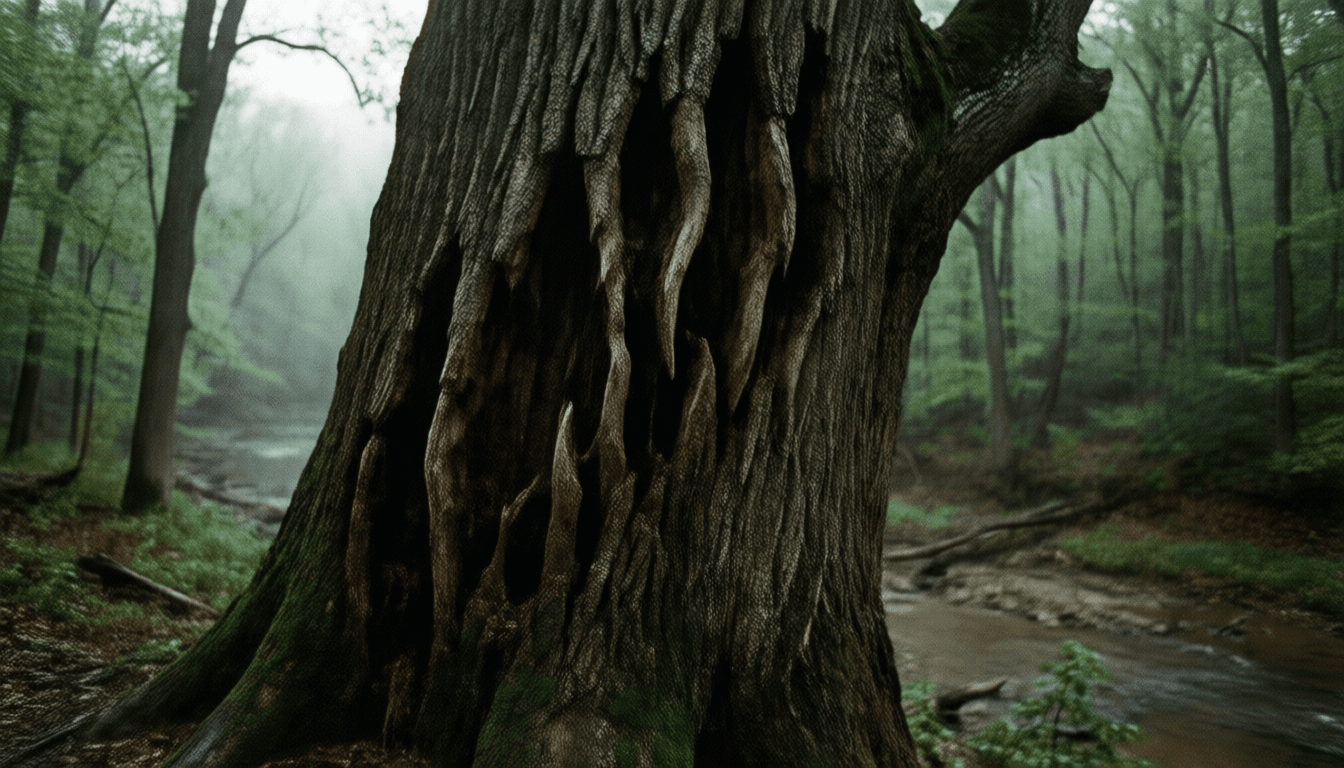
On the "MDCrypto-Net" online forum, the 'Gambrill_Wings?' thread was flooded with numerous posts. Witnesses described "impossible shadows," "localized wind shifts," and a "foul, metallic smell" near the attack sites. Photos of unusual scratches on trees were also shared; while dismissed by skeptics as lightning or logging equipment, their distinctive claw-like patterns drew attention. From this point, the term "Snallygaster" began to resurface from Maryland's lesser-known folklore. It was no longer a historical curiosity but a chilling present possibility. I noted the recurring pattern: similar wounds, similar auditory phenomena, and similar official denials. The consistency was too strong to ignore.

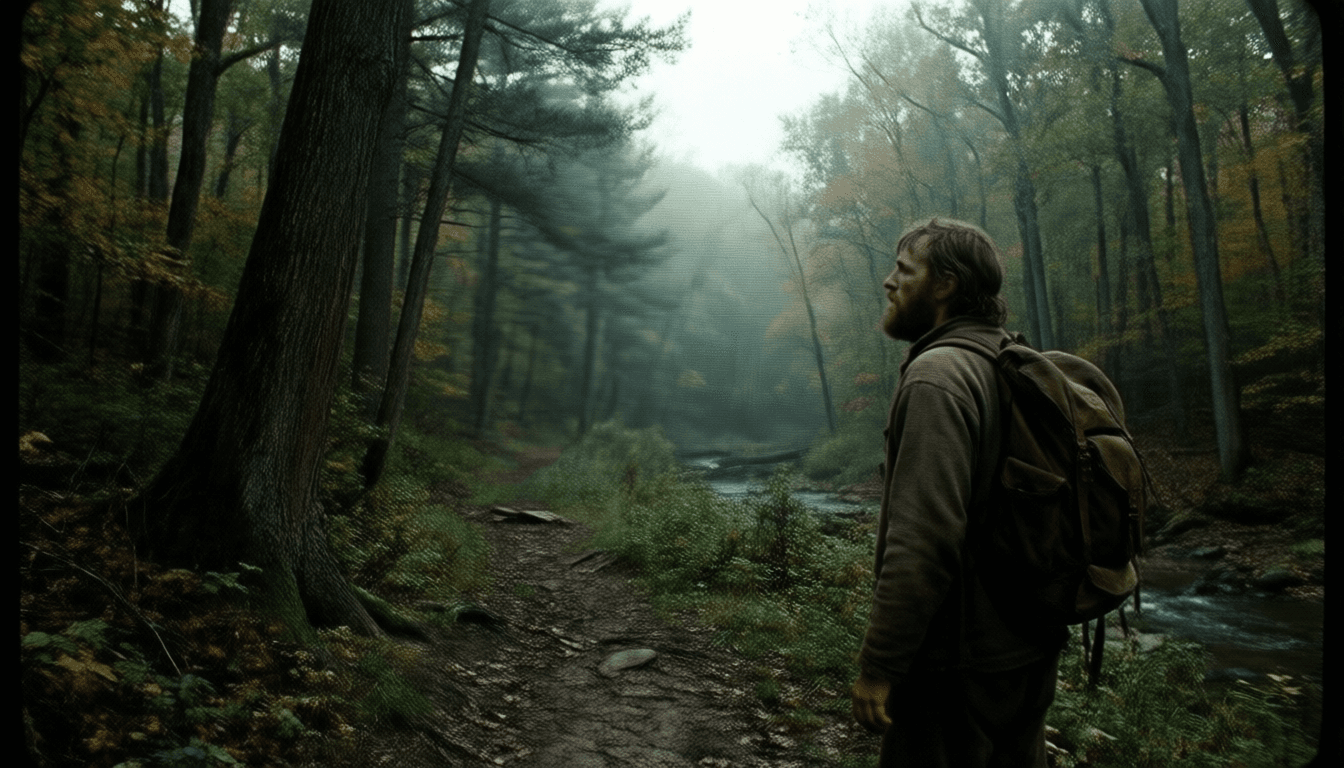
As a lean, methodical folklorist, I sometimes conducted field research bordering on investigative journalism. This time, the clues were too intriguing. I parked my nondescript vehicle miles away from any established trail. Coordinates, cross-referenced from old survey maps and recent incident reports, pointed to a deep valley, a forgotten backwater in the foothills of the Appalachian Mountains. As I stepped onto the overgrown logging path, the air grew still. The usual forest sounds – chirping birds, cicadas, the rustling of small animals – were strikingly absent. Only the crunch of my boots on dead leaves broke the unnatural silence. Above the scent of pine and damp earth, a faint, almost imperceptible pungent aroma hung – like ozone after lightning, or old blood. Sunlight struggled to penetrate the dense canopy, creating perpetual twilight. The deeper I ventured, the colder the air grew, a distinct chill despite the mild autumn afternoon.
The valley itself was a geological anomaly. A narrow, winding gorge cut through ancient rock, its walls moist with moss. Here, the silence deepened, swallowing sound. I shouted as a simple test, and the echo was bizarre; it returned delayed and distorted, as if sound waves were physically obstructed or absorbed before returning. A small stream flowed along the valley floor. In one section, the water moved with an abnormal stillness, seeming to hesitate against the current, its surface smooth and undisturbed like glass despite visible rocks. An irrational chill ran down my spine, unbidden.
Far above, out of human reach, several massive branches of ancient oak trees were not merely broken but deeply gouged and twisted, as if crushed by an enormous, unseen force. Their patterns matched no known animal or natural phenomenon. A low, hoarse growl reverberated incredibly deeply through the very earth itself, reaching me as a vibration through my boots rather than a distinct sound in the air. It seemed to come from everywhere and nowhere at once. Then, abruptly, a localized downdraft struck me, violently whipping my hair and clothes and scattering dead leaves in small eddies, yet the surrounding canopy barely ten feet away remained eerily still. I stood, heart pounding, trying to rationalize, but cold logic was crumbling. Something moved at the edge of my vision. A shadow, lightning-quick, darting behind a stand of black hemlock.
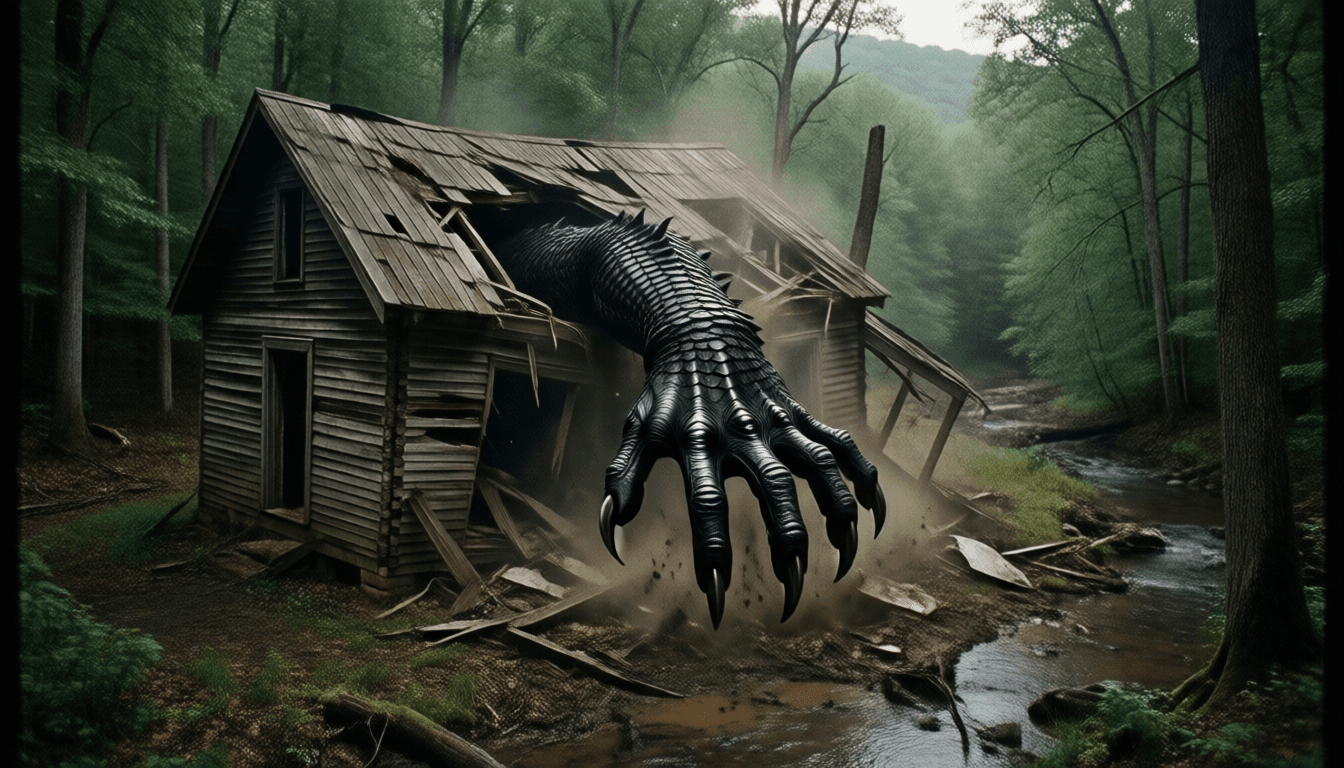
Driven by a growing, chilling certainty, I ventured deeper. The valley opened slightly into a small clearing, dominated by the decaying skeleton of an old hunting cabin, its roof partially collapsed, walls leaning inward. The metallic, pungent smell was intense here, almost suffocating. Inside the cabin was a mess. Old hunting gear was strewn everywhere, covered in decades of dust. Yet, on a rusty metal trough, deep, parallel scratches were clear – wider and more powerful than any known animal. On the floor, scattered amongst the debris, were fragments of bone. Not deer or fox, but larger, their edges strangely fractured and almost pulverized.
The moment I knelt to examine a particularly ominous bone fragment, the air above the cabin exploded. A sound unlike anything earthly, a deafening, sharp scream, was not merely an auditory phenomenon but a physical one. It vibrated through my skull, causing instant nausea, momentary vision loss, and a disorienting wave of pressure. The cabin's timbers groaned under a sudden, immense force. Then came the impact. Not a collision, but a colossal
I returned to my vehicle, bleeding and in a state of pure terror, after a desperate sprint. The drive out of the valley was a blur of shadows and the screams echoing in my mind. At a small rural emergency room, the attending doctor examined my leg. "Deep lacerations, severe bruising, possible muscle tears," he stated, efficiently disinfecting the wounds. "You appear to have been badly attacked by a large animal, perhaps a big dog or a bear, but the depth of these wounds and... their unusually clean cuts are peculiar." The doctor stitched the wounds without further comment, but the nurse, changing the dressing, saw the sharp, precise cuts and whispered, "Don't these look like they were cut by something unnaturally sharp?" I offered no explanation.
Back in my small apartment, the investigation report was still incomplete. My field notes detailed the coordinates, environmental anomalies, bone fragments, and scratched metal. However, the crucial part,
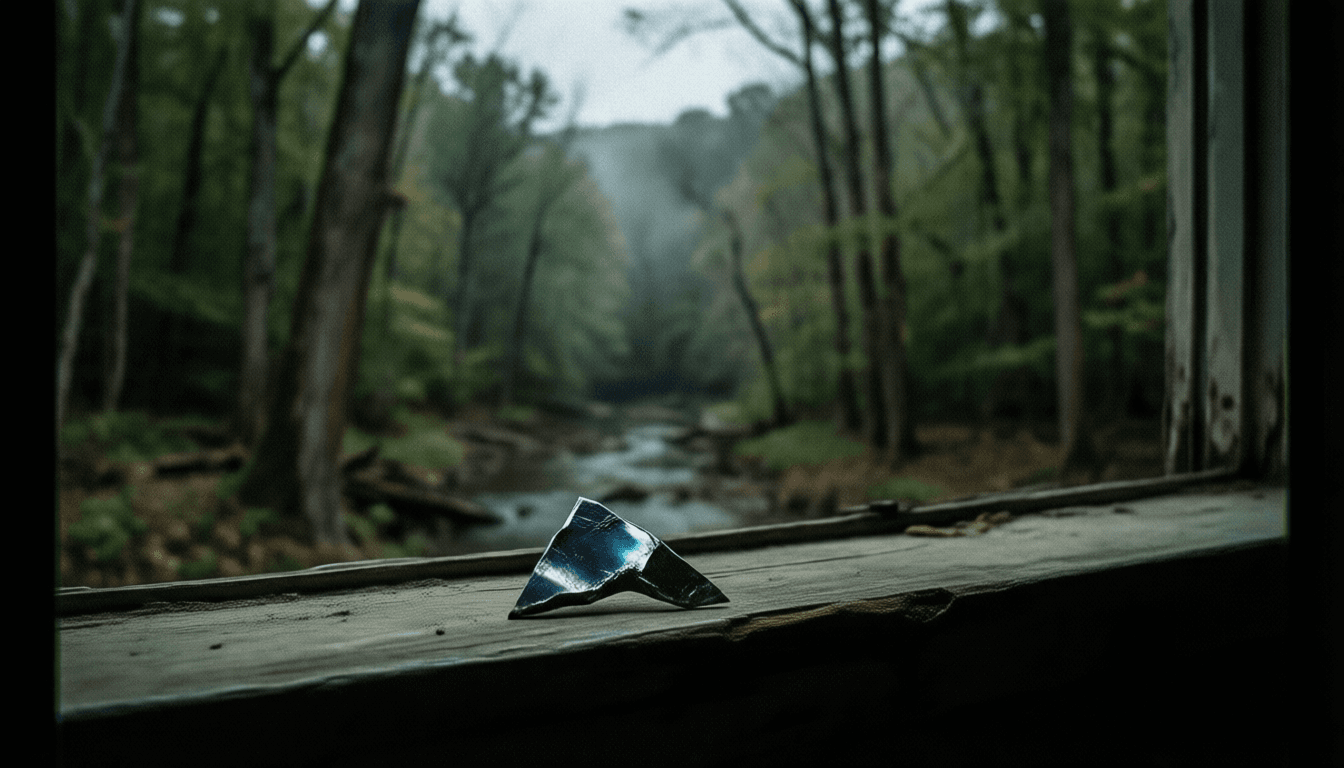
Later, meticulously cleaning my torn boot, I found it: a small, dark, metallic shard, incredibly sharp, embedded deep in the rubber sole. It had an anomalous luster, unlike any stone or metal I'd seen. Too small for official analysis, too strange to ignore. I carefully placed it on my desk, beside a stack of old Snallygaster folklore books.
Days later, a new alert flashed on my computer screen. Local news breaking from another Maryland county, an adjacent, undeveloped wilderness. "More Unexplained Livestock Deaths Reported. Residents Describe Eerie Silence." I read the words, looking at the black metallic shard on my desk. Gazing at the distant forest outside my window, a deep, chilling understanding settled in my mind. The creature wasn't confined to legend, or to just one valley. It was real. It was moving. And the silence, once merely unsettling, now spoke volumes about the presence of an apex predator who knew its hunting grounds far better than any human. The Snallygaster was not a myth. It was merely waiting. And it remembered.
[ CLASSIFIED VERDICT ]
[ACCESS LOG - SOURCE FILE]
This story is based on the urban legend of the 'Snallygaster,' a creature from Maryland's lesser-known folklore. The Snallygaster is said to possess bird-like wings, attack livestock with sharp talons, and emit a metallic cry. While historically often mistaken for large raptors like eagles or hawks, this narrative posits its existence as a present and chilling threat, far beyond mere superstition.