The Silent Watcher of the Lower Sulphur River
In the early 1970s, the ‘Fouke Monster’ incident near Boggy Creek in Fouke, Arkansas, had already settled into a quiet, chilling corner of American cryptozoological history. Local newspapers, particularly the
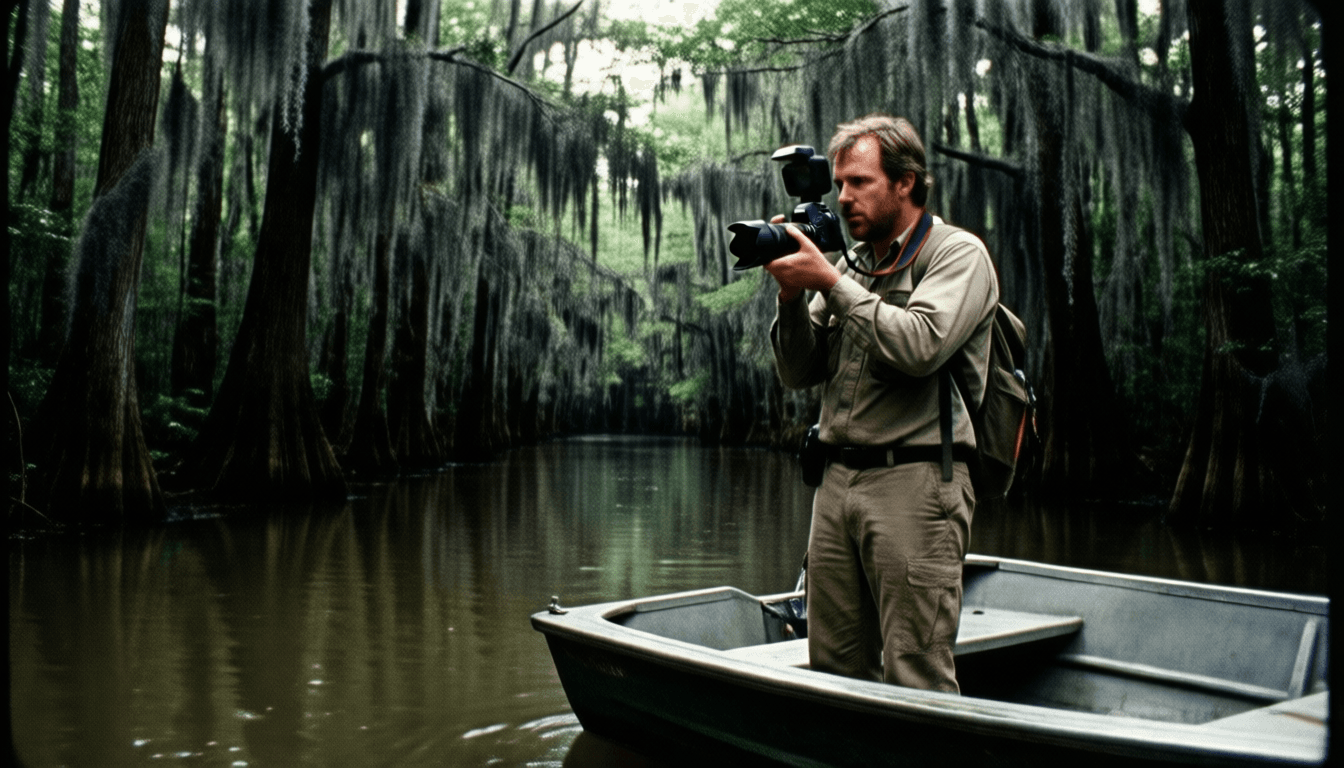
Dr. Aris Thorn, a meticulous cryptozoological archivist who focused on environmental patterns rather than sensational claims, arrived in Fouke not to 'find' a monster, but to document any environmental irregularities or inexplicable phenomena in the deepest, most untraveled sections of the Lower Sulphur River, where the most recent quiet reports had begun. Equipped with high-resolution cameras, directional microphones, environmental sensors, and plaster casting gear, Thorn ventured deep into the dense, ancient cypress swamps in a rented flat-bottomed boat.
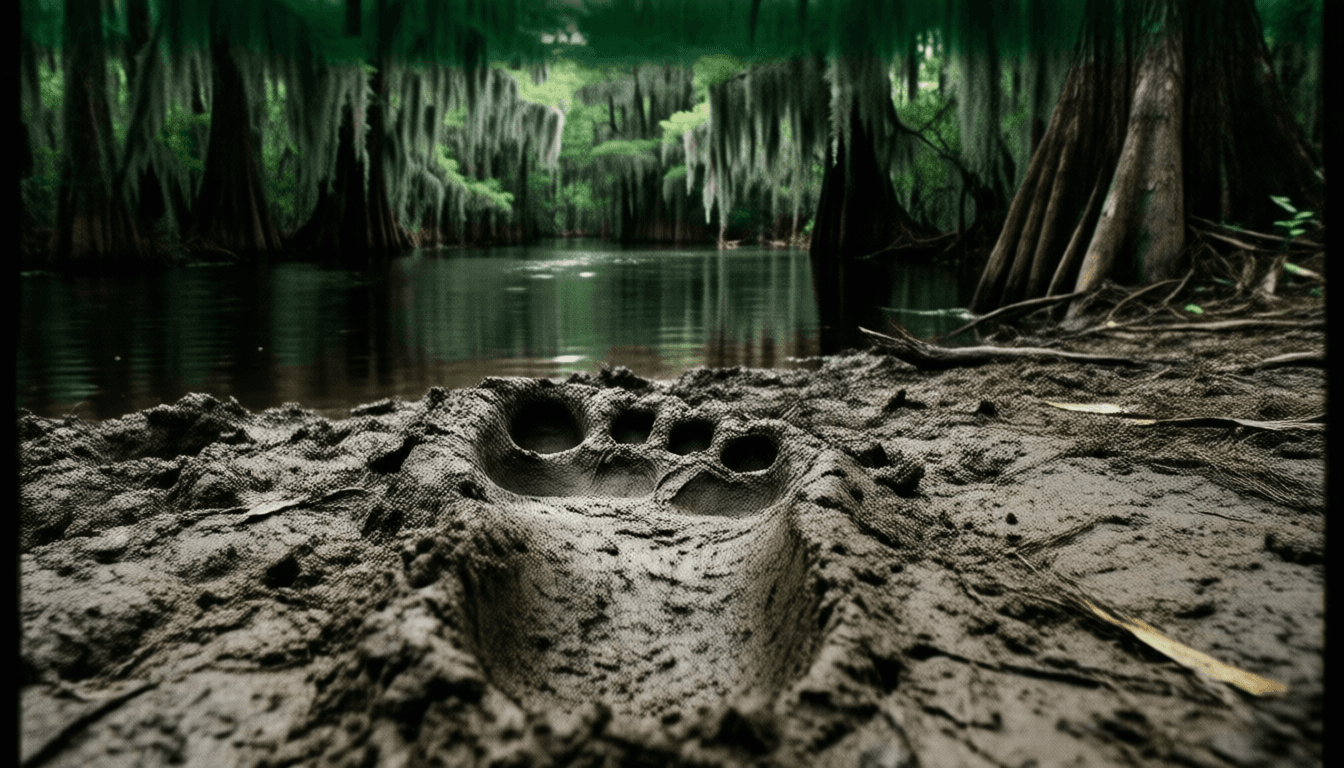
The air was a thick, oppressive blanket of humidity, laced with the scent of decay and primeval earth. Giant cypress trees, draped in Spanish moss, rose out of the dark, tannic water, their knobby roots like petrified sentinels. The dominant sound was the incessant, buzzing symphony of unseen insects: cicadas, mosquitoes, and countless unidentifiable chirps and hums. It was a living wall of sound. Hours into navigating the winding bayous and oxbows, Thorn noticed his first subtle anomaly: a series of unusually large, indistinct footprints pressed into the soft, black mud near a particularly isolated waterway. They were far too wide and heavy for any known local animal, lacking the distinct toe structure of human prints. Most unsettling was the complete absence of disturbed vegetation or water splash around them. It was as if whatever left them had weighted its steps impossibly silently, lifting its feet without effort.
The incessant insect hum suddenly ceased. Not fading gradually, but an instantaneous, unnerving silence that swallowed all sound. The air grew heavier, thicker, pressing down on Thorn. Minutes of agonizing, palpable stillness followed the deafening noise, before the symphony slowly, cautiously, resumed. Then, a faint but distinct odor began to permeate the humid air. A bizarre concoction of wet dog, damp earth, sulfur, and a deeply ingrained, unpleasant animalistic, almost metallic fishiness. It was momentary, carried on an impossible current of air, suggesting proximity despite the visual void of the dense foliage.
Reviewing his audio recordings later, Thorn captured a faint, guttural vocalization. It seemed to echo even before fully fading, coming from multiple, impossible directions simultaneously within the dense swamp. A deep, resonant sound, unlike any known animal call. While observing a small tributary, his eyes caught a subtle, distinct ripple moving *upstream* against the slow current. There was no visual source or disturbance. It was brief but undeniable, a momentary defiance of the water’s natural flow. Moments later, at the very edge of his vision, he perceived a large, faint shadow moving through the thick brush at an impossible speed. It vanished before Thorn could fully register it, leaving him with only a deep, chilling feeling of being watched. The presence of something impossibly close, yet unseen.
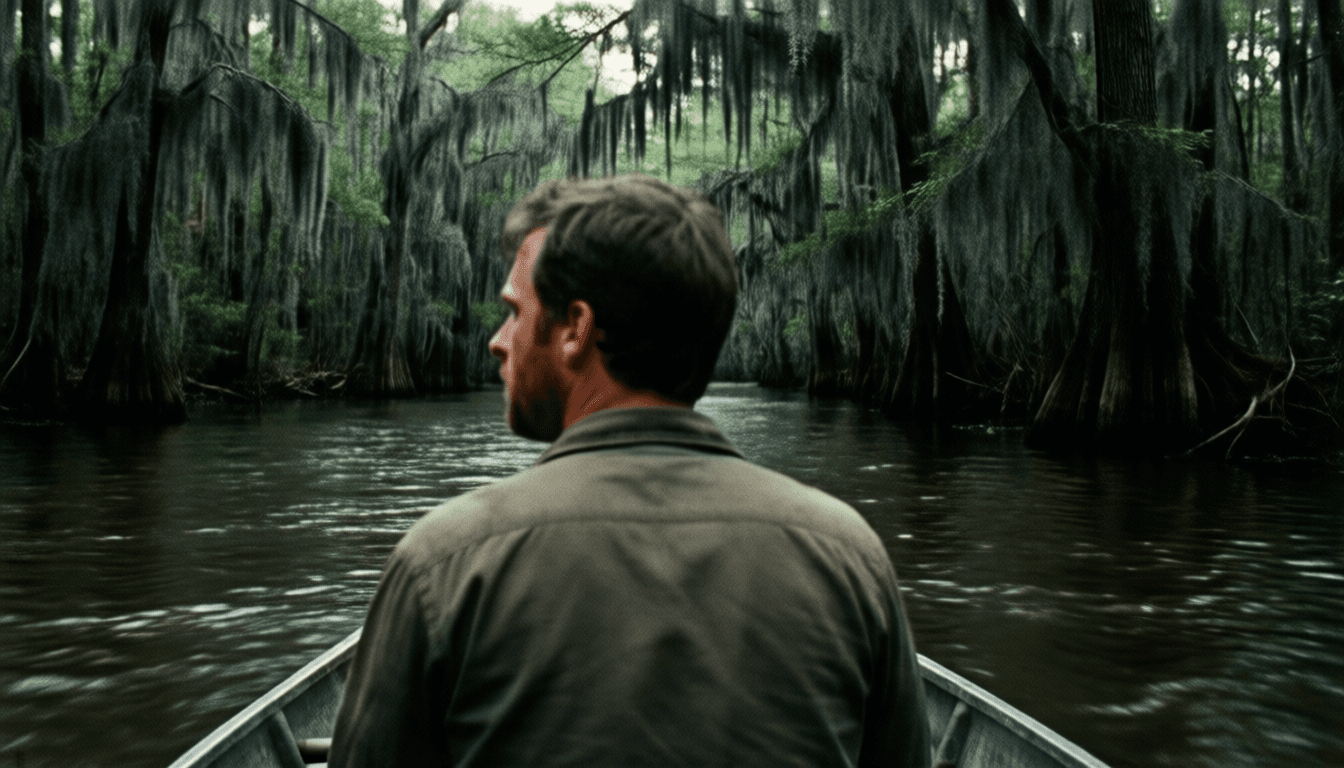
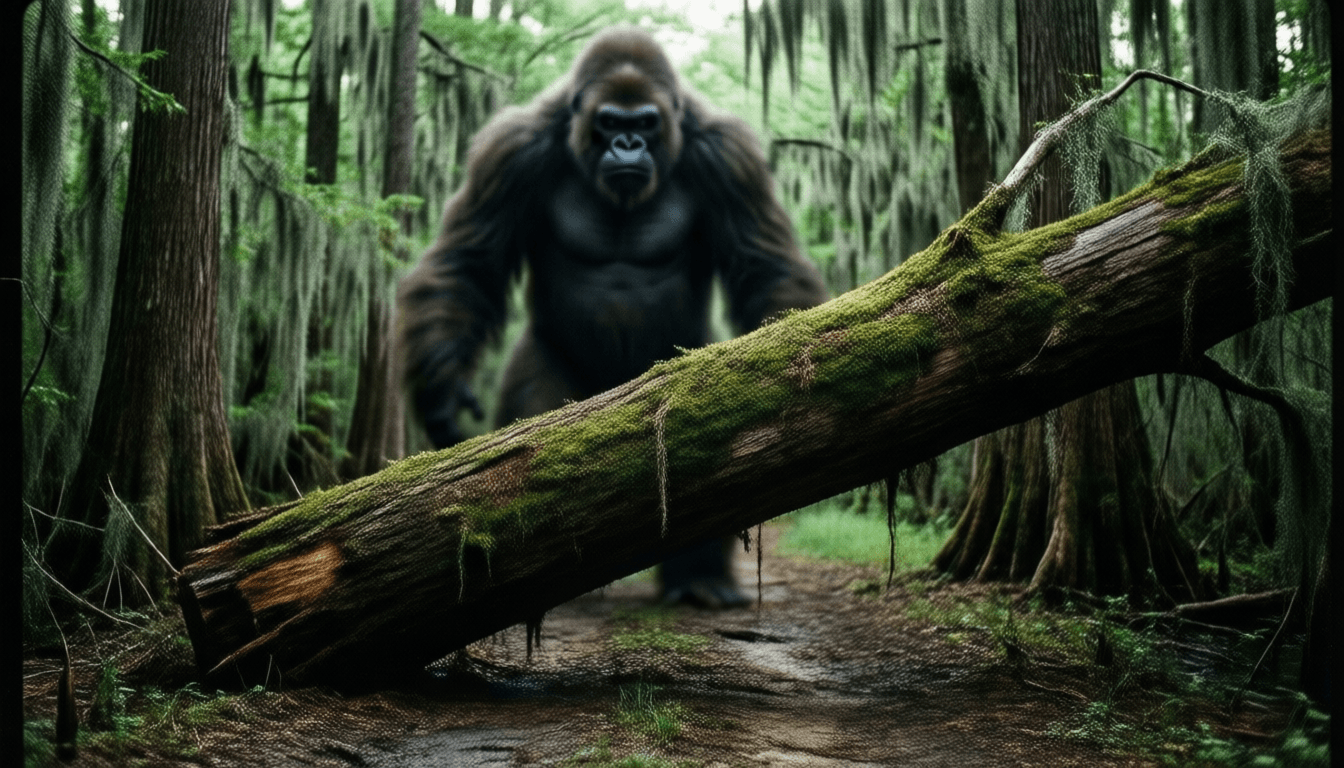
Thorn pushed deeper, lured by the giant footprints which led into a thicket of particularly old, gnarled cypress swamp rumored to be a hotspot of activity. He was hours from his boat, surrounded by a wall of almost impenetrable vegetation. The foul stench was now overpowering, a suffocating presence. As he knelt to document a print, a massive, moss-covered cypress log — easily 150 kilograms — suddenly pushed across the narrow path behind him with a deafening crack of wood and splash of mud. It settled with a sickening thud, effectively blocking his only retreat. No animal, unless an elephant, could have moved something so heavy so silently and precisely into place. It was an intentional, immense act of force.
Trapped, Thorn turned, his heart hammering. From the deep shadows of the reeds, a massive, shaggy form emerged, outlined by the low, filtered light. It was impossibly huge, inconceivably powerful, yet unsettlingly agile and quiet despite its immense bulk. Deep-set eyes glowed with a low, unwavering reddish light. The foul stench intensified, now sickeningly close. It took one deliberate, heavy step. Thorn instinctively backed away, seeking another escape. In that instant, thick, thorny vines hanging nearby seemed to wrap around his legs, *tightening*, pulling him down with bizarre precision. It was as if the environment itself was complicit. The creature was suddenly *there*, too fast and too close for its colossal size, its movement seemingly defying the dense brush. It didn’t roar, but emitted a low, resonant growl that vibrated Thorn’s chest, a sound unlike any known predator. A massive, hairy hand reached for him, shockingly dexterous yet immensely powerful. He felt the chilling brush of coarse fur, the immense pressure of its presence, the searing heat emanating from its enormous body. And he struggled. A desperate burst of adrenaline propelled him away. He barely evaded the crushing grasp, scrambling into a gap in the brush, his legs severely scraped by submerged roots. Half-crawling, half-swimming, he thrashed through the muddy water. The guttural growl seemed to echo not behind him, but *inside his head*. The presence didn't pursue far into the water, but its suffocating presence remained, a shadow imprinted on the very air.
Thorn, injured and deeply traumatized, survived and escaped the swamp. He made it back to his vehicle, the adrenaline slowly draining, replaced by a deep, chilling numbness. Weeks later, in his sterile lab, he began meticulously examining the recovered equipment. The field recorder, after the final guttural growl, captured a faint, high-frequency “shush.” It resembled static, yet possessed an organic quality that defied analysis. The recording was otherwise perfectly clear.
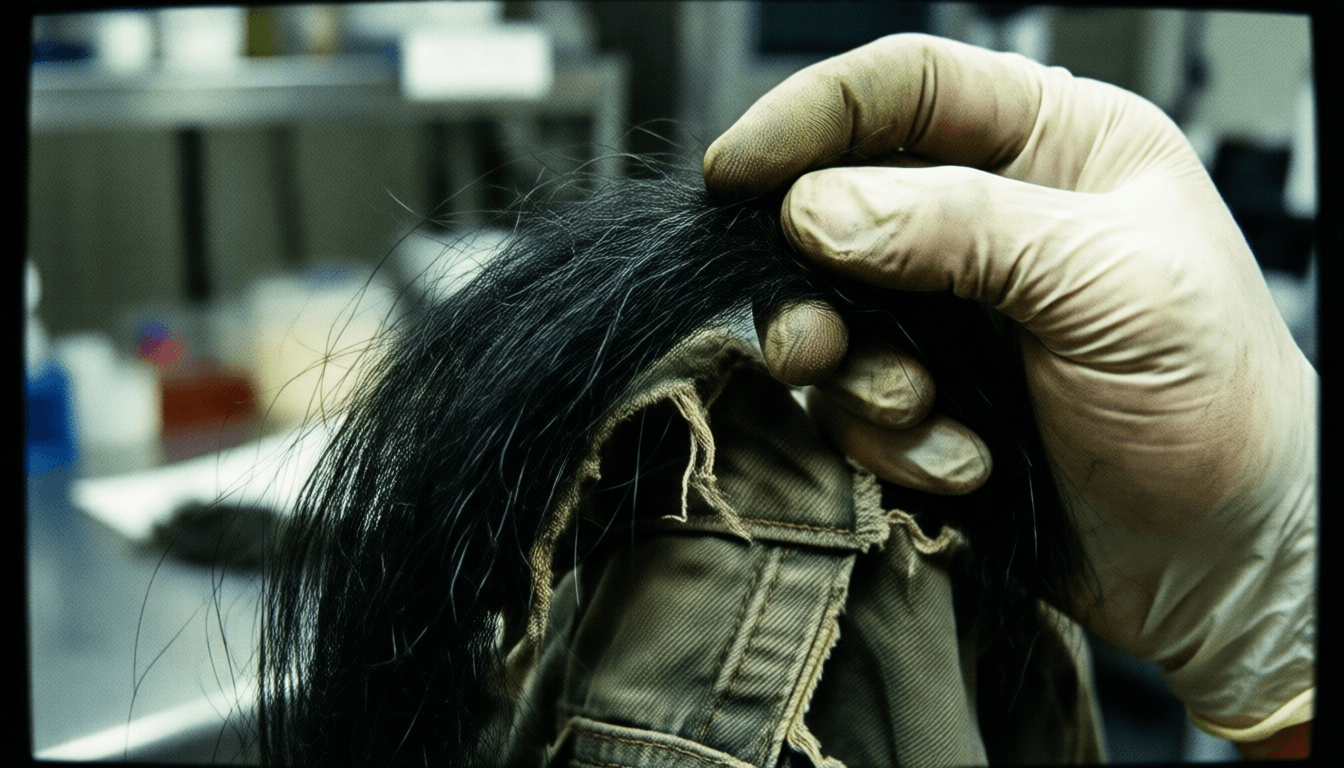
He found it caught in a tear in his pants: a single, long, thick strand of black hair. It was unlike the fur of any known primate or large mammal. Under a portable microscope, it revealed an unusual, almost segmented medulla. Its internal structure defied standard classification. It was undeniably biological material, yet utterly anomalous. The deep abrasions on his legs from his escape were real. But on the sleeve where the creature’s hand had almost gripped him, a faint, dark, unidentifiable stain resisted ordinary washing, seeming not to be on the fabric, but pressed *into* it.
Thorn compiled his records: the consistency of the Fouke legend, the environmental anomalies, impossible strength, unsettling silence, the precise trap, terrifying proximity, and now, physical evidence. He never published his findings. He realized now that some things were not meant to be explained, but only observed with deep terror. He sealed the hair sample in a dark drawer, forever changed, keeping his secret. He knew the 'monster' was not delusion, not a mere animal, but an apex predator existing beyond our accepted parameters. Silently coexisting in the deep, dark heart of the Arkansas swamp, waiting. And it had moved that log with chilling intelligence. A calculated act. Thorn realized with chilling certainty: the whispers were true, and far more terrifying than any film.
[ CLASSIFIED VERDICT ]
[ACCESS LOG - SOURCE FILE]
The Fouke Monster is a large, hairy, ape-like cryptid reportedly sighted in the early 1970s near Fouke, Arkansas. Known for its foul odor and immense strength, it instilled fear in local residents. It is one of America's prominent cryptid legends, so famous that it inspired the cult film 'The Legend of Boggy Creek'.