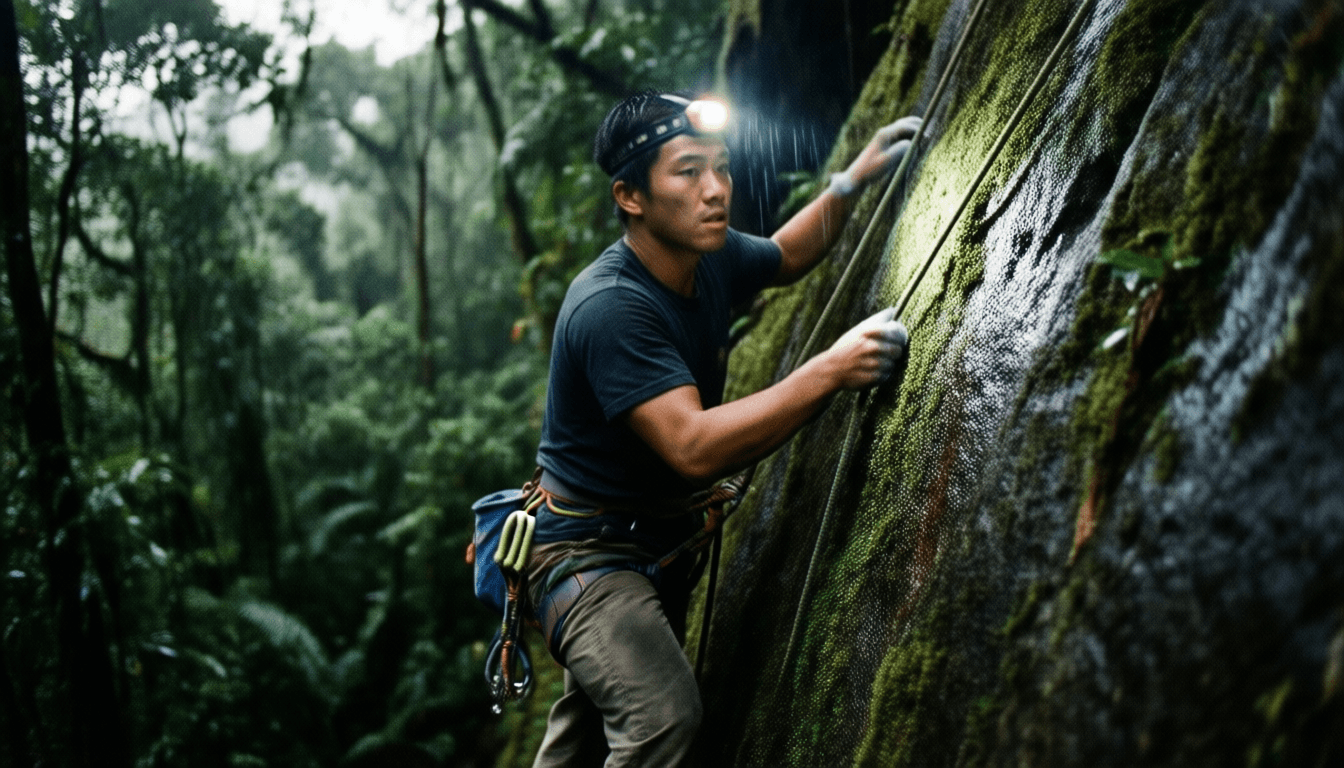
The Whispers of Pedra da Gávea
The ceaseless whispers surrounding Pedra da Gávea, soaring in Rio de Janeiro, Brazil, have long been documented. A colossal granite monolith that seems to erupt directly from the Atlantic rainforest, its summit has been sculpted by erosion into a massive, almost human-like face. Yet, it’s not merely a geological oddity that draws disquieted attention. For centuries, explorers, mystics, and local guides have pointed to enigmatic markings etched upon its ‘forehead’. Some claim them to be Phoenician script, thousands of years old. Mainstream archaeology largely dismisses them as natural erosion, but recently, a peculiar digital artifact resurfaced. A low-resolution forum post from 2008 claimed a local climber discovered a ‘hidden chamber’ or ‘unusually smooth passage’ near the main inscriptions, accessible only under specific low-visibility weather conditions. A blurry, indistinct photo seemed to show a shadowed recess, but the post was deleted within hours. Diligent archivists, however, saved the text. It ended with an ominous sentence: “It wasn’t ‘written’ on the rock. It came ‘from’ the rock.”
Driven by the faint forum post and its outrageous claims, I hired a local guide, familiar with Pedra da Gávea’s challenging ascent, and obtained climbing permits. The climb was grueling. A relentless vertical journey through the humid, dense Atlantic rainforest, the air thick with moisture, the distant, unseen sounds of the jungle swirling around me. Ascending past the tree line, Pedra da Gávea’s colossal ‘face’ came fully into view. Up close, its imposing presence was even more overwhelming, its immense scale disorienting. Winds howled, carrying the scent of salt and earth. The guide pointed to the vast expanse of weathered stone that comprised the main inscription area. The markings were indeed ambiguous, a confusing mix of natural fissures, moss, and shadows. I deployed my portable high-resolution LiDAR scanner and hyperspectral imaging equipment, meticulously documenting the enigmatic inscriptions. Initial readings confirmed only natural weathering, seemingly supporting the official explanation. My gaze, however, was fixed on the ‘specific low-visibility weather conditions’ mentioned in the old post. As the afternoon deepened, a thick, unseasonal fog began to roll in from the ocean, slowly enveloping the mountain’s upper reaches.
As the fog thickened, visibility dramatically diminished. The colossal mountain shrank to the immediate radius illuminated by my headlamp. Uneasy with the sudden change in weather, my guide remained wary, keeping a constant distance. It was within this fog that my surroundings began to subtly warp.
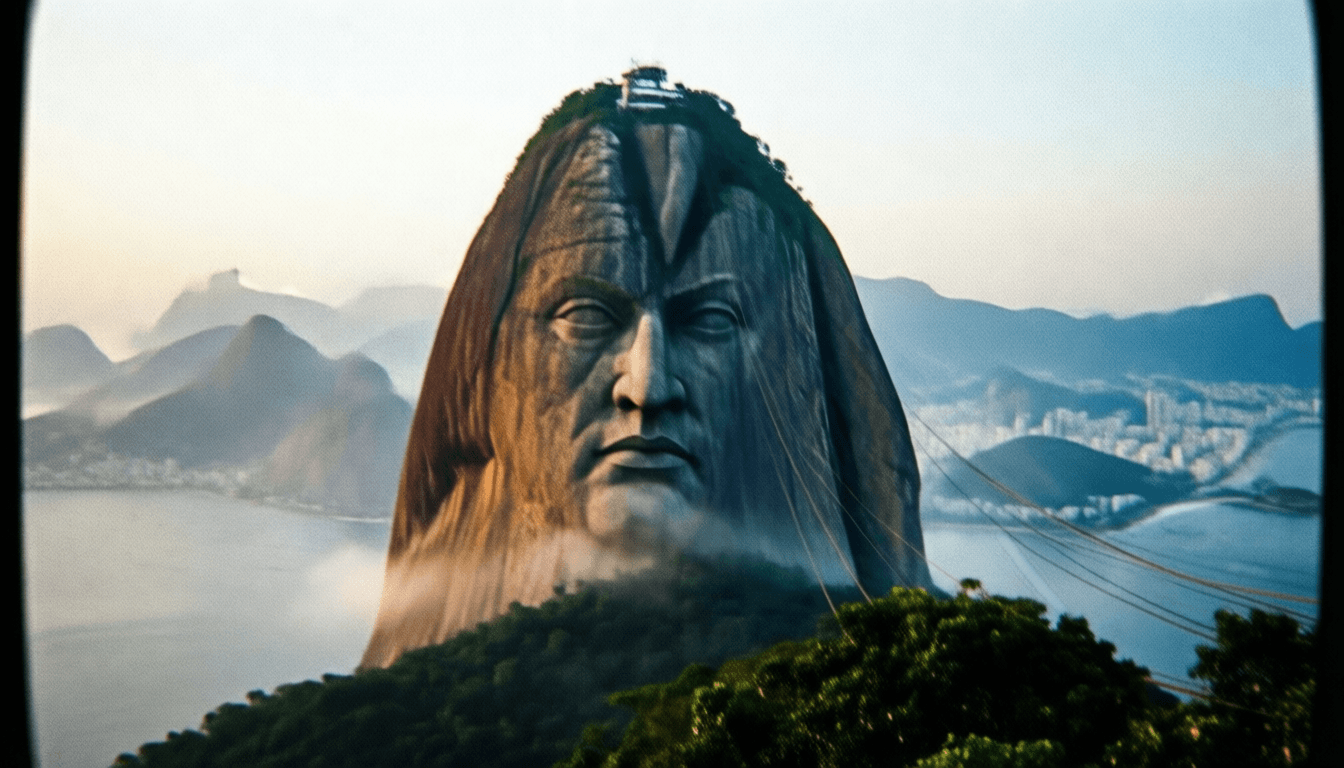
The echoes of my voice, usually sharp and crisp in the open air, became strangely delayed, stretched, and distorted, as if passing through a vast, unseen cavity ‘within’ the rock. At one point, a sharp metallic clang from dropped equipment reverberated moments later, much ‘deeper’, humming, a resonant sound that defied mere echo. Even the normally roaring wind transformed into a low, sustained thrum, a vibration I felt through the soles of my climbing boots.
Pockets of cold, significantly colder than the ambient temperature, suddenly appeared, making my breath visibly fog. The air itself felt heavy and dense, creating a pressure that muffled my eardrums, as if descending into a column of water. Under the concentrated beam of my headlamp, the enigmatic Phoenician-like markings seemed to ‘shift’. Not physically moving, but the interplay of shadows and light within the intricate fissures seemed to reconfigure, revealing new angles, new depths. Like a palimpsest written in layers. The LiDAR scanner began to detect anomalous subsurface densities behind certain clusters of inscriptions. Areas where the rock should have been solid registered as strangely porous, or even hollow. I began to suspect that the markings were not merely on the surface, but an external manifestation of something existing ‘between’ the stones.
My growing unease was compounded by a persistent feeling of being watched. Not by my guide, who was now almost invisible in the fog, but by something immensely ancient and vast, residing ‘within’ the rock itself.
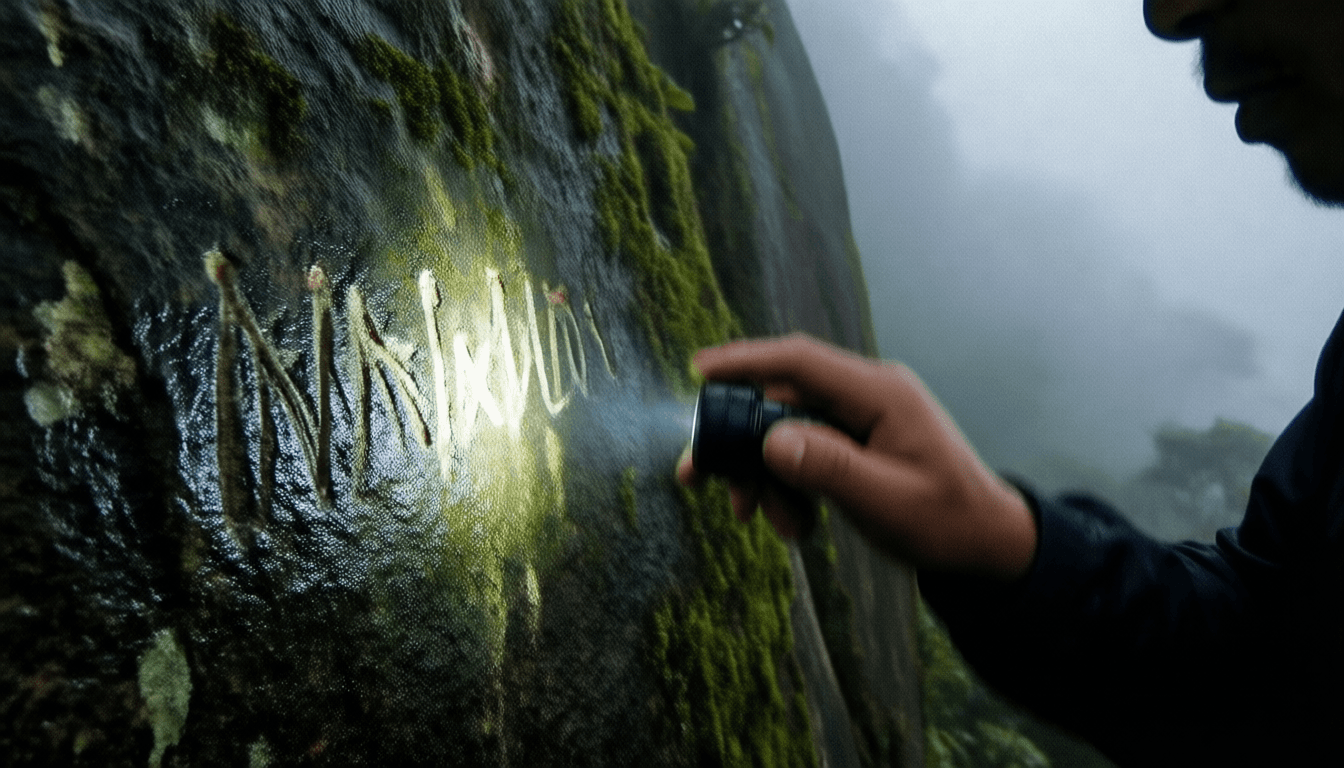
Drawn by the anomalous LiDAR readings and the escalating environmental distortions, I edged closer to a particularly dense cluster of ‘inscriptions’. I was convinced this was the ‘hidden passage’. I extended my equipment’s probe, attempting to get deeper subsurface readings. It was a mistake.
The mountain responded.
A low, guttural vibration, distinct from natural seismic activity or wind pressure, erupted directly from the rock face. It wasn't an echo; it was a sound originating ‘within’ the stone. A deep, resonant groan that vibrated through my very bones. The ‘inscriptions’ on the rock face began to faintly ‘glow’ from within. A sickly green light pulsed rhythmically with the groaning, making the fissures look like veins of a colossal, suffering organism.
The ground beneath me didn’t shake, but the air around me suddenly ‘compressed’ with immense force. As if gripped by a gigantic, invisible hand. I was violently slammed against the damp, cold rock face, my equipment scattering everywhere. An impossible, localized landslide began. Not from above, but erupting explosively from a section of the cliff ‘right next to me’, precisely blocking the path I had just taken. This wasn't erosion; it was active, targeted confinement.
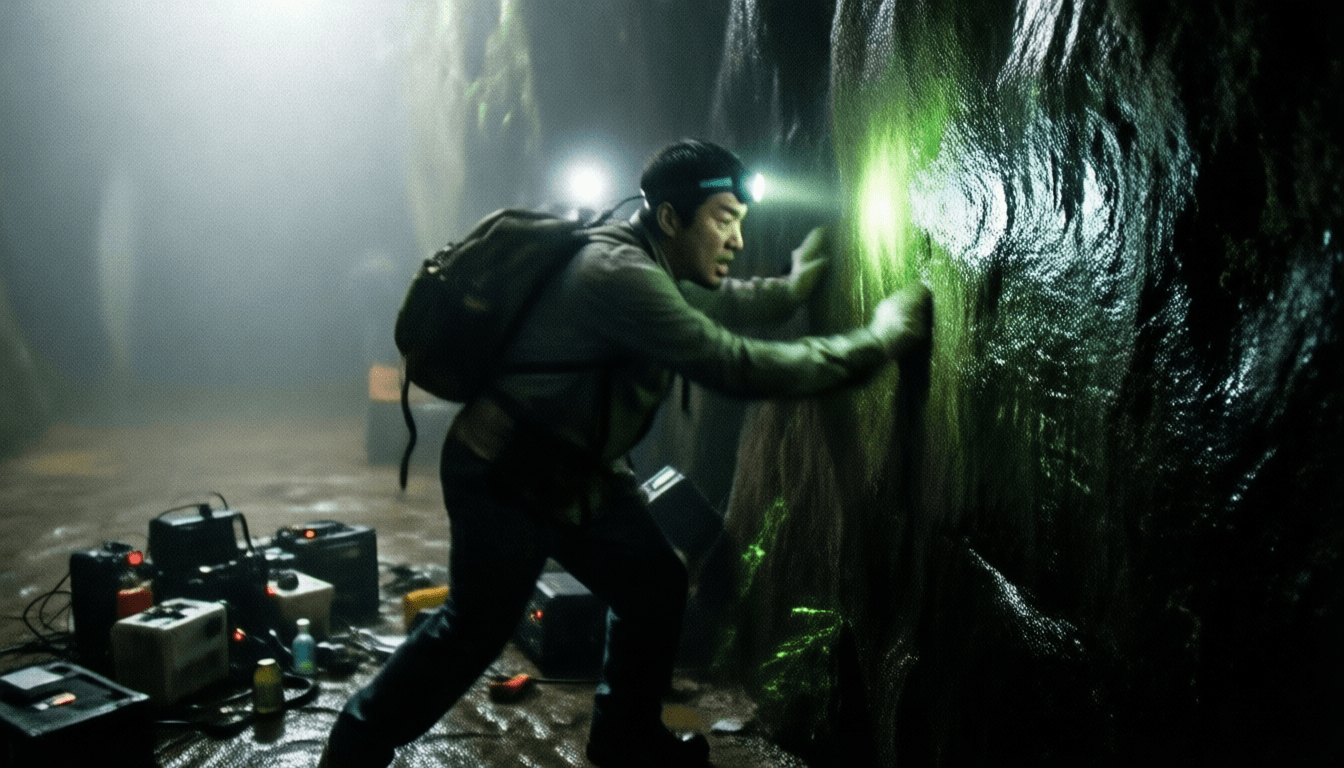
As I struggled to rise, disoriented and bruised, a freezing, viscous ‘pressure’ enveloped me. It was neither air nor water. Something heavy and intangible seemed to be trying to ‘push’ me into the stone. An attempt to absorb me. Through a brief parting in the fog, Pedra da Gávea’s ‘face’ seemed to warp. Its granite features contorted as if in agony or exerting immense force. I felt a deep, invasive presence violate my mind. A silent, ancient scream. A vast, primordial hunger. I understood. The ‘inscriptions’ were not a language ‘for’ humans, but a pattern of ‘restraint’, a complex seal failing under immense internal pressure. This mountain was not a monument. It was a prison.
Bleeding and barely conscious, I managed to crawl through a narrow crevice created by the localized rockfall, stumbling down the mountainside until I was eventually found by my frantic guide. From the safety of a distant base camp, Pedra da Gávea appeared serene and impassive. Its ‘face’ again seemed a mere trick of light and shadow, the fog long dispersed. It looked like any other magnificent mountain.
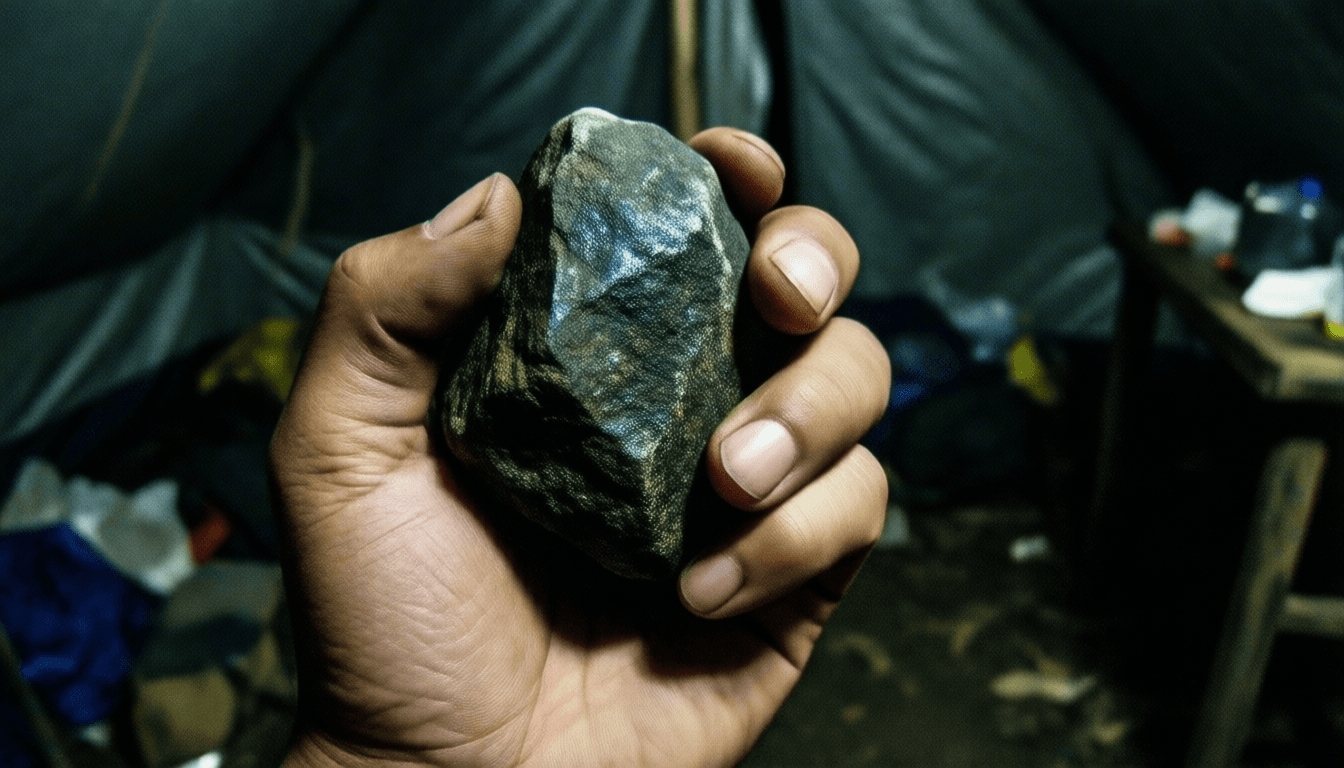
Yet, the evidence remained. My high-resolution audio recorder, miraculously intact, contained two minutes of deep, guttural vibrations—utterly unidentifiable, without any natural source. My hyperspectral scans captured moments of impossible internal luminescence within the rock. Most chillingly, a fist-sized rock fragment, lodged in my torn backpack. It possessed an internal crystalline structure unlike any known granite and emitted a faint, imperceptible coldness even at ambient temperatures. I understood now. The ‘inscriptions’ were not meant for us to ‘read’, but were patterns ‘from’ something trying to communicate, or perhaps simply to ‘escape’. This mountain was not a natural formation. It was a prison, and its ‘face’ was not an ancient idol, but the silent, suffering face of a colossal, ancient entity trapped within. I never published my findings, never spoke of Pedra da Gávea’s true nature. I understood that some secrets are not for humanity, and some prisons are best left undisturbed. But every time I see the mountain, traces of that immense, suffocating pressure return. A chilling reminder that the Earth itself might be a living tomb, and some things are merely dormant, waiting for their bonds to loosen.
[ CLASSIFIED VERDICT ]
[ACCESS LOG - SOURCE FILE]
Pedra da Gávea mountain in Rio de Janeiro, Brazil, features a massive rock formation resembling a 'human face' at its summit, with some claiming ancient Phoenician inscriptions are etched upon it. Furthermore, persistent rumors speak of a 'hidden chamber' or 'passage' accessible only under low-visibility conditions. This legend intertwines the mountain's geological peculiarities with mystical interpretations, continuing to this day.