The Wailing of Xochimilco
Records compiled by the Mexico City Xochimilco Canal Administration over the past 20 years recently entered the archives. Classified under 'Unsolved Cases – Public Safety', these reports detail an increasing frequency of 'unexplained disappearances' of children aged between three and seven years old in remote waterways and ancient chinampa (floating garden) areas. Attached local police summary reports repeatedly feature nearly identical witness statements: a mournful wailing sound, described as 'immeasurably clear and close', echoing over the water. This sound was *always* heard *after* a child disappeared, and never before.
Some official reports included fragmentary mentions of 'pale white figures' briefly seen by the water's edge, which authorities dismissed as 'stress-induced misinterpretations'. An anonymous online dataset cross-referencing these incidents with local forum posts and old newspaper articles revealed a startling pattern: the wailing always occurred in areas with almost no water flow, yet children were never found upstream or downstream. Acoustic analysis of these incidents, based on fragmented amateur recordings, suggested properties defying known underwater sound propagation laws. These unresolved, eerie phenomena called for deeper investigation.
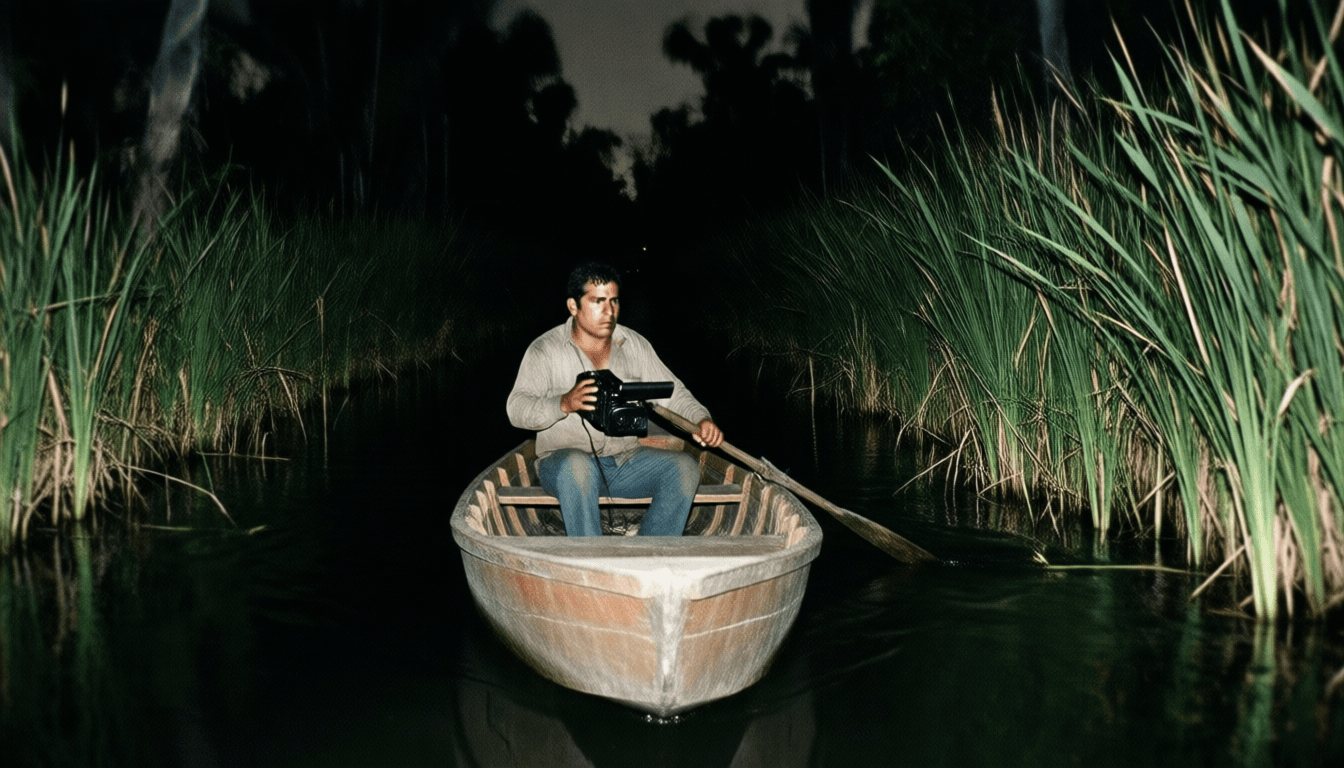
My investigation began on a moonless night, at a less-used entry point near Embarcadero Cuemanco. The air was thick with the smell of stagnant water, decaying reeds, and distant wood smoke. I rented a small chalupa (small boat) and navigated into the narrow, labyrinthine waterways winding between the ancient chinampas. The soil here was unusually soft, and while the water flow was generally calm, deep, unpredictable eddies were known to occur. My goal was to record the ambient acoustic environment and capture the anomalous auditory phenomena mentioned in the reports.
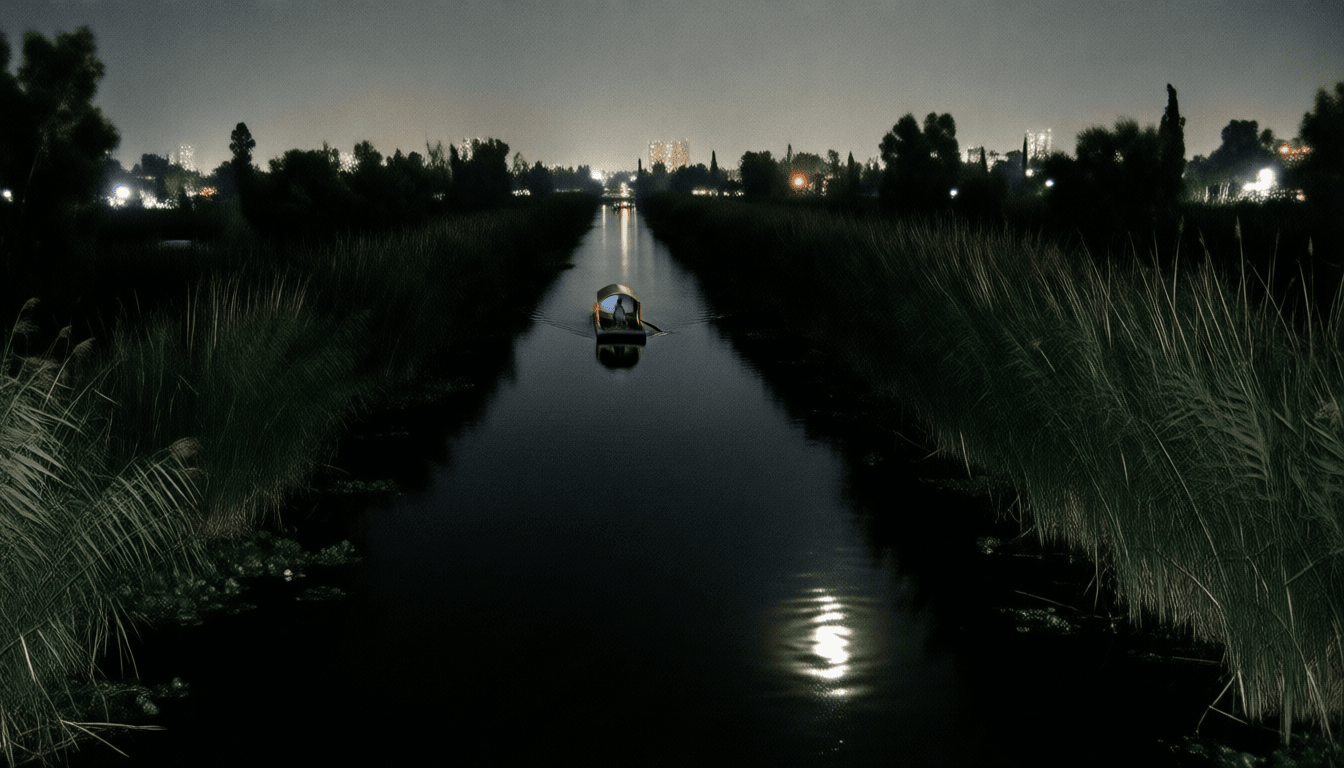
Initially, profound silence dominated. The distant hum of the city was almost entirely absorbed, creating an unnaturally still space. The hydrophone detected only faint ripples against the boat bottom and the soft rush of water against the banks. The surface, a black mirror, reflected only the tall, sparsely scattered stars. I noted the windless, albeit slight and steady, flow of the canal and marked precise location coordinates. As I ventured deeper into the unlit waterways, the peaceful quiet slowly morphed into an overwhelming stillness.
Immediately after rounding a reed-choked bend in the canal, amidst reeds taller than the boat, a subtle change was detected. My external microphone picked up a sudden, sharp drop in ambient noise. Even the faint sounds of insects ceased. The previously gentle ripples became erratic, as if an invisible weight pressed against something beneath the boat. A localized, fleeting chill wafted through the air, raising goosebumps on my skin despite my thick jacket. I noted the time, checked environmental parameters, and began recording in earnest.
A low, mournful sound, barely audible at first, seemed to resonate not from a fixed point but from the water itself, vibrating the boat's wooden hull. It was too deep to be a human voice, yet too drawn-out to be an animal. I swept the riverbanks with my infrared camera, but no heat signatures beyond the surrounding vegetation were detected. The low hum slowly intensified, morphing into a long, guttural lament – a sound of profound despair. It was distinctly auditory, yet without any discernible origin. It seemed to come from directly ahead, then beside, then deep beneath the boat, defying the laws of acoustic propagation. The sense of isolation was absolute.
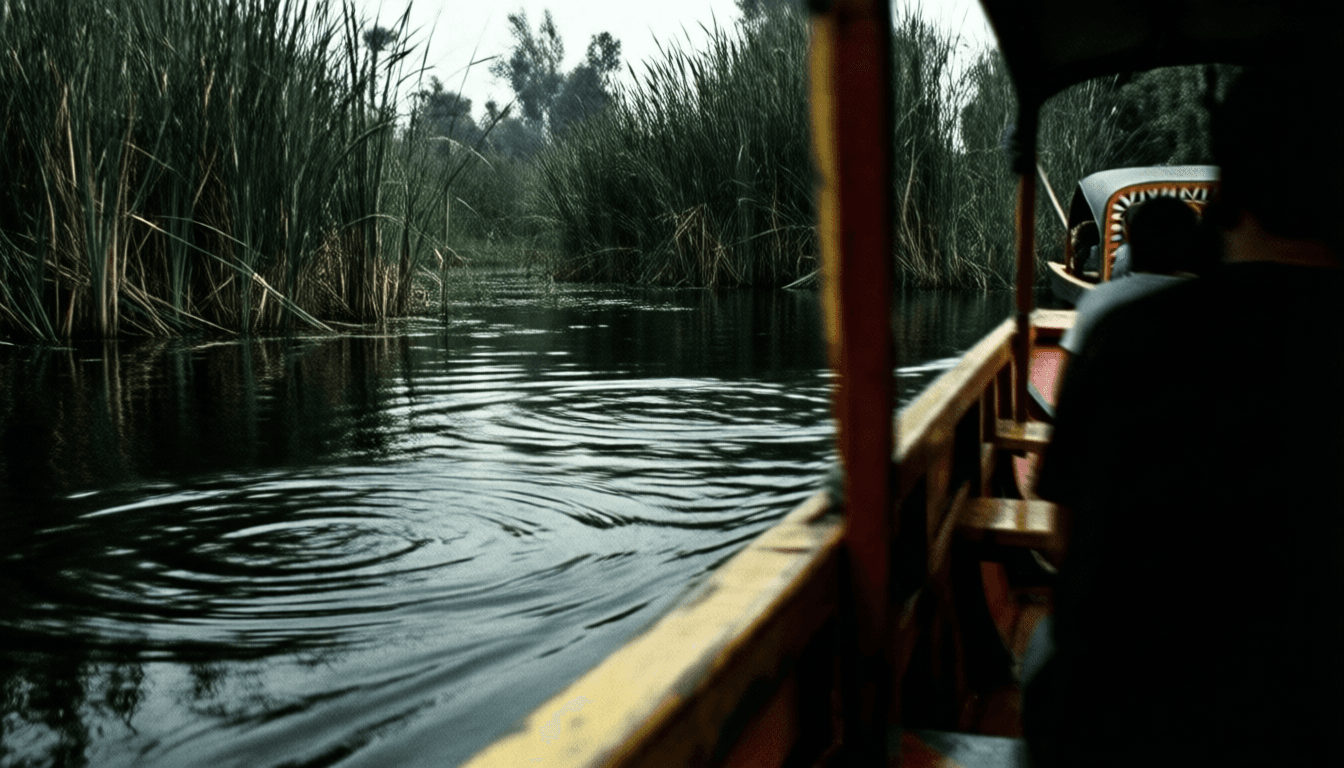
The lament escalated into a heart-wrenching shriek. It was impossibly close. At that very instant, the chalupa lurched violently, caught on something massive directly below. The water around the boat, previously calm, unnaturally swirled inward, pulling down despite the canal's slow current, tilting the boat precariously. And then, from the submerged darkness within the dense, decaying reed beds of the riverbank, a form *unfurled*. Enveloped in what appeared to be damp, heavy white fabric, the figure was long and faint in the low light. Its movement was not a slide, but an impossible *rise*, as if the water itself gave birth to it.
The face was obscured, whether by wet hair or perpetual shadow, but an overwhelming sense of ineffable, eternal sorrow emanated. The scream now directly from the figure, shaking beyond the ears, deep into the chest. A disturbingly pale hand, almost translucent in the dim light, reached across the water with unbelievable speed. It seized not my oar, but my left ankle. An icy, crushing pressure instantly piercing bone and muscle. It was not a physical pull, but a profound emotional traction, as if an immense sorrow sought to drag me into its abyss. The recording device suddenly registered a deafening static, followed by my unnatural, choked scream. Then, a short circuit, and the sound abruptly cut off.
I kicked with desperate force. The unstable boat lost balance. The contact broke. Only an unbearable, deep chill and a sensation of falling into infinite sorrow remained. The figure receded soundlessly back into the reeds, disappearing into shadows and swirling water as quickly as it had appeared. Only the faint afterglow of its sorrow remained.
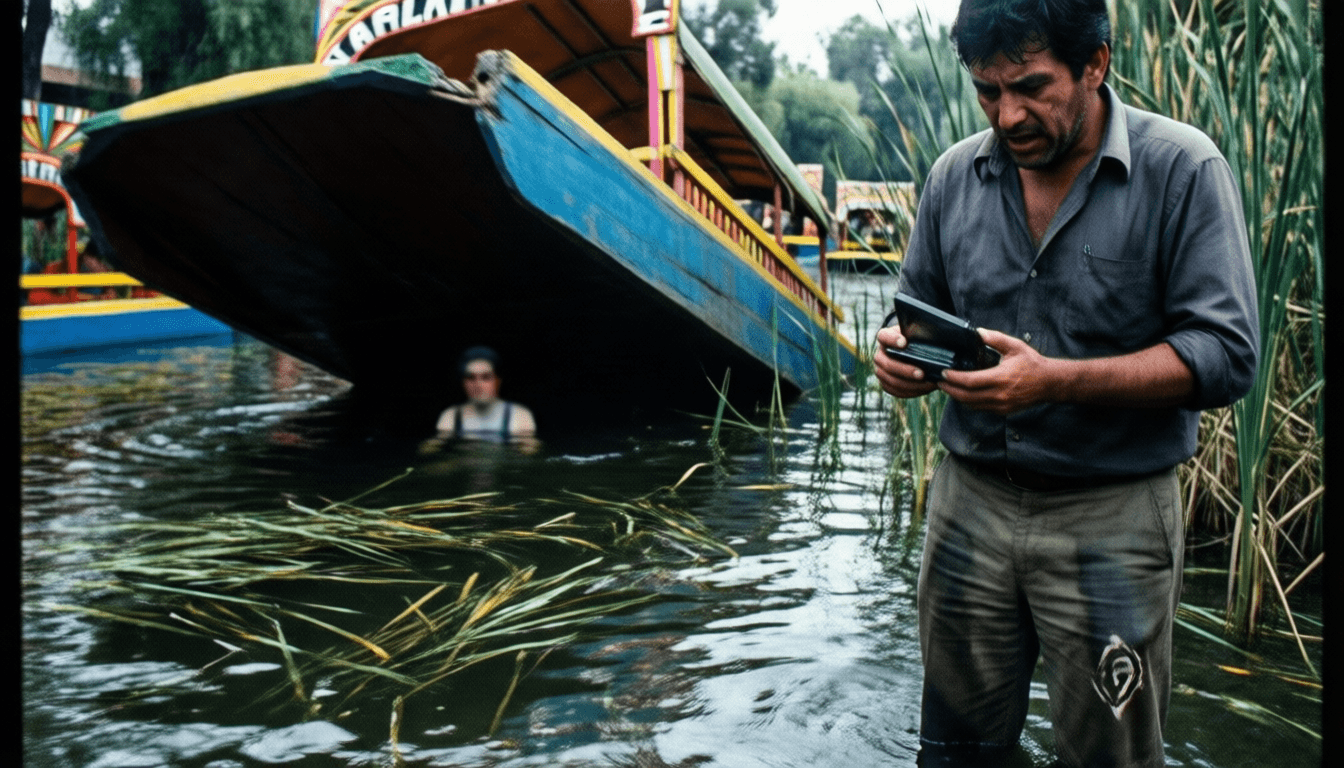
I returned to the dock in a state of hypothermia and deep disorientation. My clothes were wet and torn. There was no visible injury on my left ankle where it had been touched. Yet, for weeks, a persistent localized numbness was accompanied by intermittent, bone-chilling cold that penetrated to the bone. Some files were recovered from the submerged recording device. They meticulously captured the initial stillness and the gradually intensifying hum of the ambient acoustic environment.

The last few seconds of the recording were crucial: after all ambient noise inexplicably vanished, a distinct non-human wailing escalating to an intensity far beyond any known acoustic phenomenon, followed by rapid heartbeats and my undeniable choked groans, then an abrupt cut-off as the device short-circuited. There was no clear visual of the figure. Only acoustic evidence of an impossible presence.
Weeks later, reviewing the records and recovered audio, I found a faint, almost imperceptible discoloration on the inside of my left pant leg. Precisely where the grip had been. It was not a stain of mud or rust, but a faded, bluish-gray mark that would not wash off, no matter how much I scrubbed. The Xochimilco Canal Administration records are still receiving reports of unexplained disappearances. The wailing is still reported, always *after*, never *before*. The entity was not hunting with malice. It was in an eternal, destructive search. I was merely an ephemeral obstruction in the infinite flow of its sorrow. The chill still lingers, a phantom sensation, chilling evidence that some sorrows are not merely emotional but primordial, and they actively reclaim what they believe is theirs.
[ CLASSIFIED VERDICT ]
[ACCESS LOG - SOURCE FILE]
This story is based on 'La Llorona,' the famous Mexican legend of the Weeping Woman. It draws inspiration from the terrifying urban legend of a spectral woman who drowned her own children and now forever wails, searching for them and sometimes taking other children. The setting of Mexico City's Xochimilco canals and ancient chinampa areas is also deeply intertwined with this legend.