
Van Meter's Whispers: Abyssal Presence Beneath the Mine
In 1903, the <Van Meter Register> documented bizarre incidents involving a winged creature with glowing horns, dubbed the 'Van Meter Visitor'. For a century, these reports were dismissed as local legend. However, the recent digitization of lost Iowa State Agricultural Extension Office meteorological records has unveiled an overlooked detail: days before the initial sightings, a sequence of highly localized barometric depressions and anomalous electromagnetic disturbances were recorded near Van Meter's now-closed gypsum mine. This wasn't just a regional weather anomaly; it was a sudden, isolated atmospheric disruption concentrated directly above the mine shafts. This scientific footnote transformed a mere legend into a geophysically documented phenomenon. The question now shifted from 'what' people saw, to 'what' could cause such severe, localized environmental stress.
Intrigued by the correlation in historical data, I sought out the remains of the old Van Meter gypsum mine. It was a scar etched into the earth: overgrown with thickets, a spiderweb of crumbling tunnels, partially sealed entrances, and forgotten ventilation shafts. Even on a warm autumn day, the air carried a distinct earthy, cold quality, and a subtle metallic scent, subtly different from gypsum's characteristic mineral tang. A particular entry shaft, obscured for a century by a rusted, buckled grate, seemed to align most closely with the historical barometric anomaly reports.
Equipped with a geological survey kit, high-lumen flashlight, thermal camera, and sensitive atmospheric sensors, I began my descent. The initial passage was cramped, and the air immediately grew heavy. The distant rustle of leaves transitioned into a stifling silence, broken only by the unseen drip of water and the scuff of my boots. My atmospheric sensors immediately registered a slight but definite pressure drop, far beyond what simple changes in depth could explain.
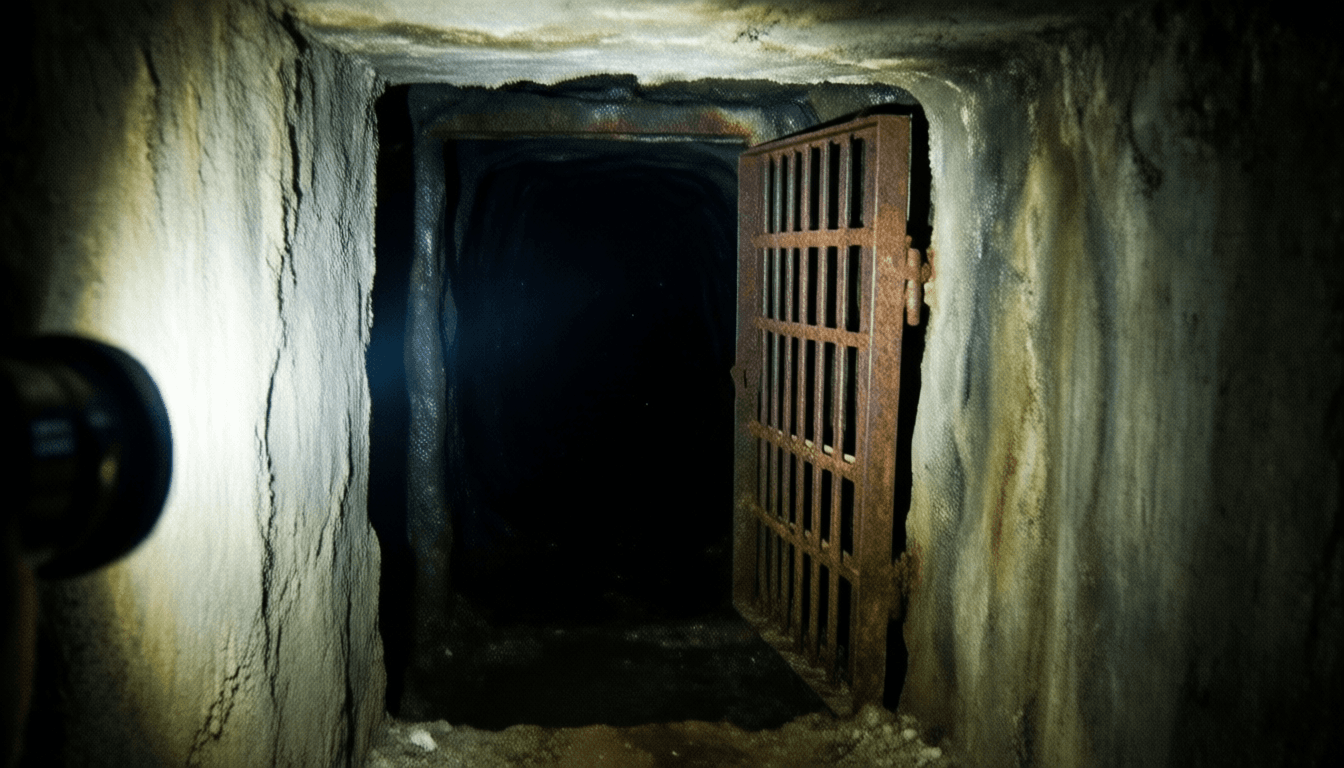
Deeper still, the subtle environmental anomalies intensified. Sounds seemed strangely muffled or absorbed in certain sections. In others, a small scrape of equipment would echo unnervingly, stretching as if reflecting from impossibly distant surfaces. My audio recorder began to pick up sudden, sharp bursts of static, accompanied by an infrasonic hum barely at the edge of human hearing.
The metallic scent grew stronger, now mingled with something acrid and strangely organic. There was a hint of ozone, but it was an intensely animalistic, unpleasant stench, like a blend of something putrid and burnt hair. The air held a chilling coldness, localized thermal sink zones that my thermal camera couldn't fully explain, showing ambient temperatures dropping by 5-8 degrees Celsius in spaces barely a meter wide.
My powerful flashlight beam, usually cutting sharply through darkness, seemed to lose its intensity in deeper, wider caverns, diffusing and absorbing. Shadows exhibited subtle shifts, deepening or receding independently of my movements. Dust motes, normally still in the stagnant air, occasionally showed minute, irregular currents, swirling gently without any perceptible air movement. My atmospheric sensors showed erratic pressure fluctuations, spiking and dropping by several millibars within seconds, an impossibility in a stable subterranean environment.
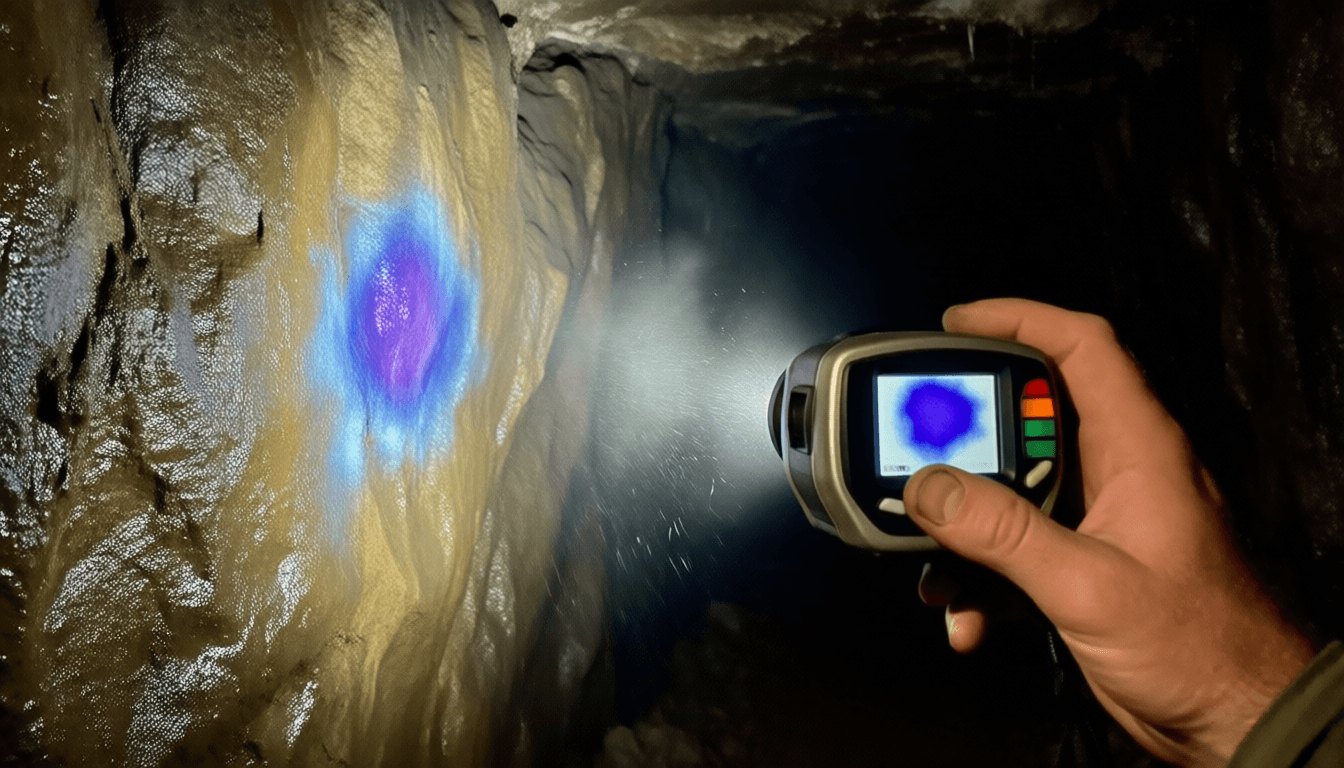
The psychological pressure was immense. Unexplained sounds pressed in on the silence. Every shadow seemed to harbor a fleeting shape. The cold, noxious air raised goosebumps on my skin, intensifying a primal sense of being *watched*.
I reached a vast, natural cavern, its ceiling lost in darkness, its floor strewn with ancient rockfalls. My atmospheric sensors screamed, indicating rapid, impossible pressure drops alongside a grating, high-pitched hum. A sudden, violent tremor shook the cavern, dislodging loose stones. My only exit, the main passage behind me, groaned and then completely collapsed, sealed by tons of earth. I was trapped.
Then, from the abyssal darkness across the cavern, a greenish-white light pulsed into existence. It was organic, not mechanical, radiating an abominable cold that dropped the cavern's ambient temperature by dozens of degrees in mere seconds. This was no reflection; it was internal luminescence, a living beacon. The air pressure plummeted further, creating an eerie, near-vacuum effect. Breathing became a desperate, painful effort, my lungs gasping in the sudden, anomalous emptiness. My thermal camera flickered, but showed patches of negative thermal energy around the pulsating light – areas registering temperatures below any absolute on Earth. This was an entity, acting independently, defying logic.
And then the sound: a deep, raspy *thrum* that vibrated through the rock and into my bones. It was followed by a sudden, violent displacement of air. A colossal, unseen form hurtled past, the change in air pressure so intense it tore at my clothes and flung me backwards, sending me tumbling into the debris. In that split second of horrific contact, a cold, leathery surface, imbued with the metallic stench, grazed my face, leaving a burning, frigid laceration on my cheek. The light flared blindingly and then vanished into the cavern's deepest, darkest recesses, the abominable cold and vacuum subsiding slightly, allowing me to gasp for air, disoriented and aching.
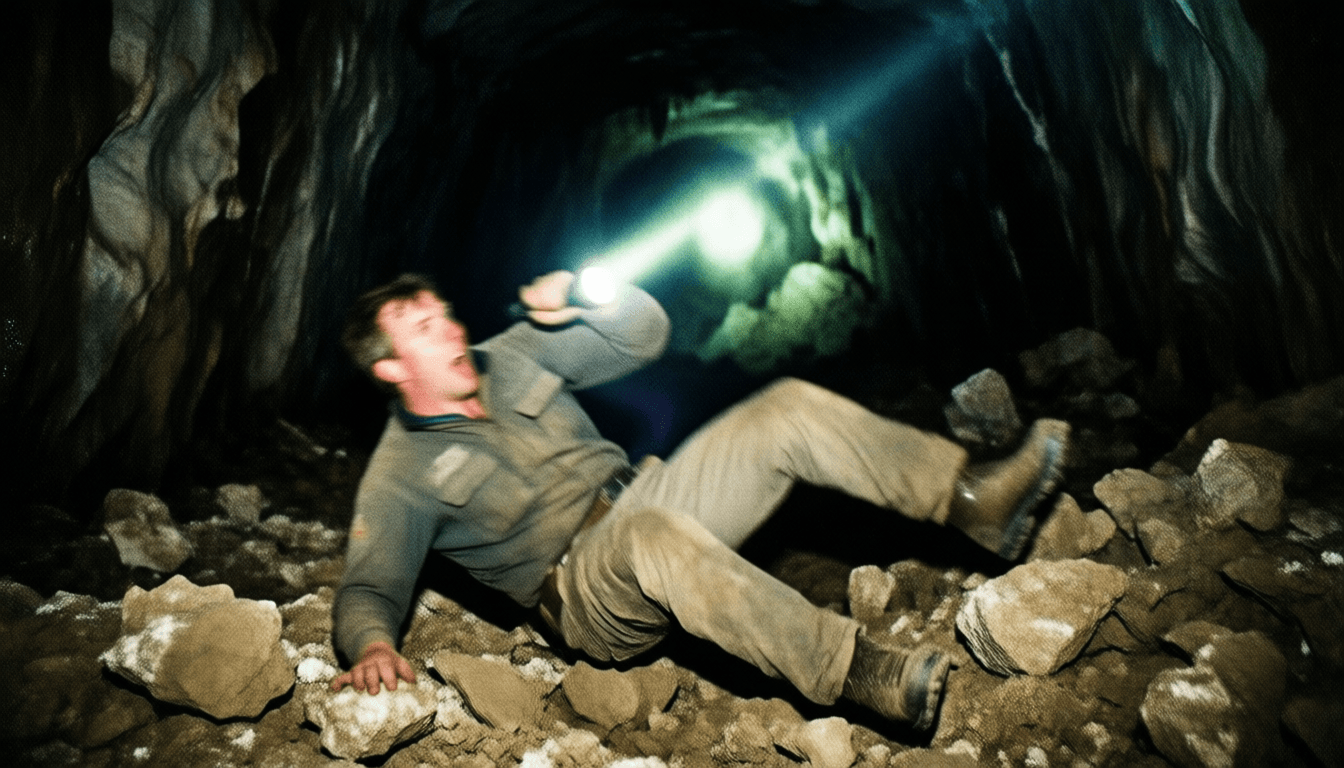
I lay there, battered and gasping for what felt like an eternity. The creature was gone, or simply retreated to inaccessible depths, but its presence still hung with a suffocating weight. Driven by primal terror, I clawed at the newly fallen rockfall, discovering a narrow, unstable crevice created by the tremor. It was a desperate chance. I squeezed through, and hours later, aching and shattered, I emerged into the cold, clean air of the surface.
The physical evidence was subtle but profound. The deep, jagged laceration on my cheek where the creature had brushed me remained, raw and impossibly cold to the touch. It never fully healed, leaving a faint, discolored scar that sometimes feels like a sliver of ice on my skin. The acrid, metallic scent and organic stench clung to my clothes and skin, stubbornly remaining no matter how much I tried to wash it off. Weeks later, the faint smell would sometimes resurface, triggered by damp earth or deep silence, bringing with it a wave of nausea and primal fear.
My atmospheric sensors were irrecoverably damaged. The last few minutes of my audio recorder were a cacophony of distorted static, yet within it, a less-than-second segment held that low, raspy thrum and high-pitched hum, so fundamentally alien that playing it back evoked an immediate, visceral revulsion. But the most chilling after-effect was internal: a persistent, low-frequency hum that sometimes vibrates deep within my bones, a phantom echo of the cavern's pressure. It intensifies whenever the barometric pressure drops significantly or I am in absolute silence. It is an intimate, horrifying reminder that the Van Meter Visitor is not merely a creature of folklore, but an entity existing at the very edge of physical laws, and that some doors, once opened, continue to resonate long after they're shut.

[ CLASSIFIED VERDICT ]
[ACCESS LOG - SOURCE FILE]
The Van Meter Visitor is an urban legend about a winged monster with glowing horns, sighted in Van Meter, Iowa, USA, in 1903. This creature terrorized residents with strange lights and sounds, becoming a local folktale for a century. This story explores the scientific basis of this legend through recently digitized meteorological records.