The Unburnt Crying Boy
The urban legend surrounding 'The Crying Boy' painting is not just a campfire ghost story. It remains a chilling footnote in the documented chronicles of misfortune, primarily emerging in 1980s Britain. Countless fires occurred with unknown causes, but there was one eerie commonality: a painting of a sad young boy with large, tearful eyes was always found at the scene. The most shocking and sensational detail, widely reported by tabloids like the British popular newspaper 'The Sun', was that in fire scenes where homes were reduced entirely to ashes, this painting alone was found miraculously, almost defiantly, intact. Sometimes it was perfectly hanging on a sooty wall, other times it lay among the debris, the boy's face turned upwards. The boy's painted tears seemed undamaged despite the all-consuming flames. Unable to find direct causes for the fires and baffled by the painting's peculiar resilience, fire investigators were forced to theorize coincidences or localized ignition points. However, to the public and some persistent individuals, the unburnt boy's tenacious presence hinted at something far more sinister than mere coincidence. It signified a terrible curse. And I, as an archivist documenting mysteries, wanted to find that painting myself and gaze into its eyes.
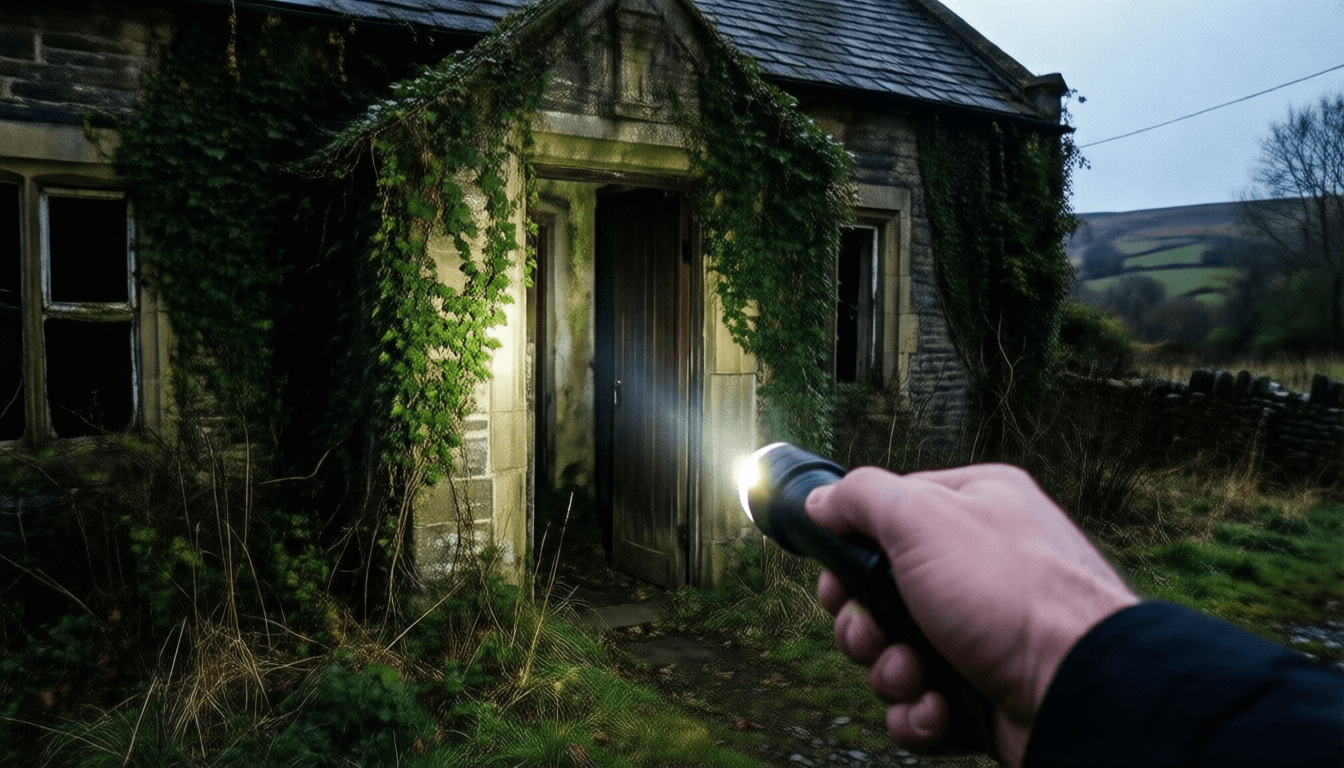
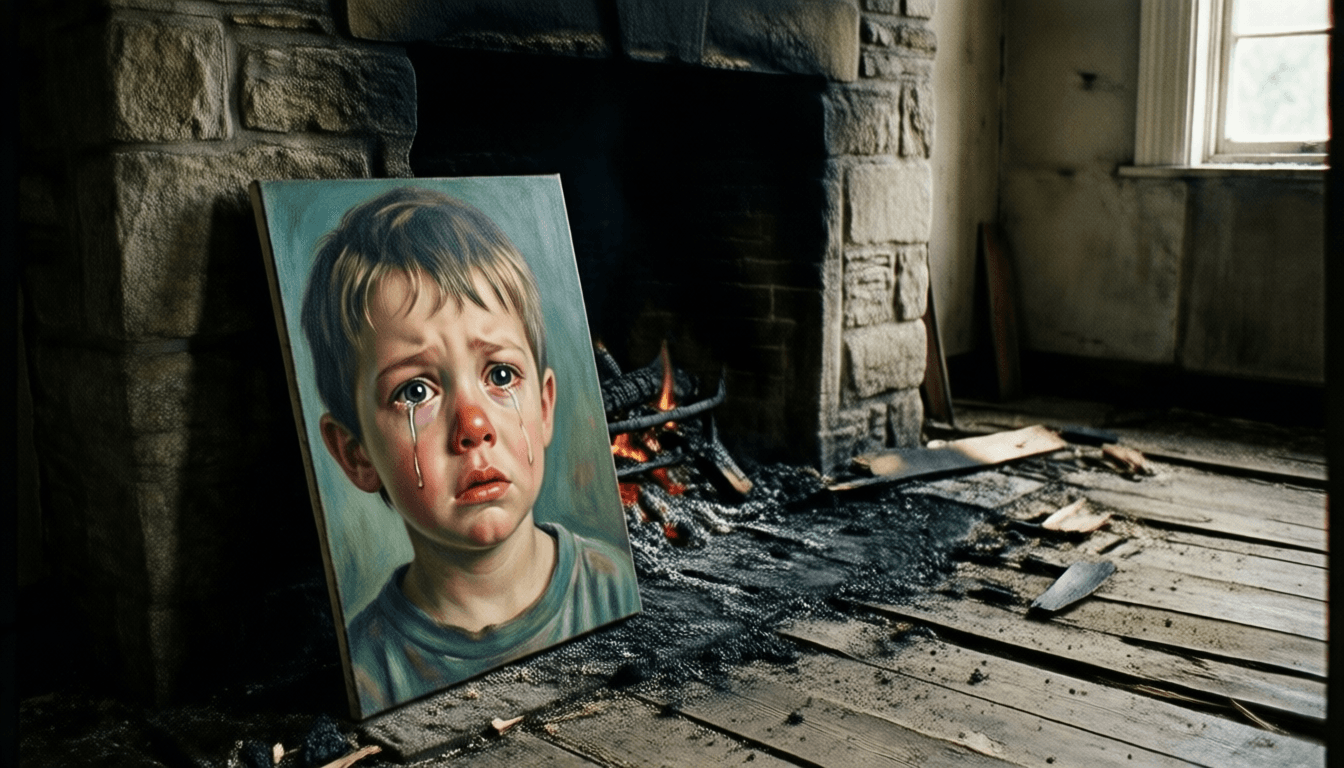
My investigation led me to a remote village on the outskirts of the Peak District. There stood a ruined farmhouse known as 'Ash House'. Its history was short but tragic. Abandoned decades ago after a fire claimed an entire family, it had later been briefly occupied by squatters and rural artists before being abandoned again and falling into ruin. According to local whispers, one eccentric among these artists had acquired an original 'Crying Boy' painting, convinced he could unravel its curse through art. He disappeared, leaving behind only a half-finished canvas and an overturned easel. The farmhouse was a stark skeleton of charred timber and broken stone, overgrown with coarse ivy. Stepping inside, the air was a thick, stagnant blanket of dust and damp. Even after decades, the stench of decay and old smoke seemed to cling to the structure. My flashlight beam cut through the gloom, revealing collapsed ceilings, discarded furniture, and the persistent smell of decay. I carefully navigated the warped floorboards and debris. In the unexpected chill of the main living room, my breath plumed white. And there, almost deliberately placed amidst the chaos, leaning against a soot-filled fireplace, it was. The faded, yet instantly recognizable painting. The Crying Boy. Despite the dust and grime, the boy's large, dark eyes held an unnatural depth, fixed on something beyond the frame.
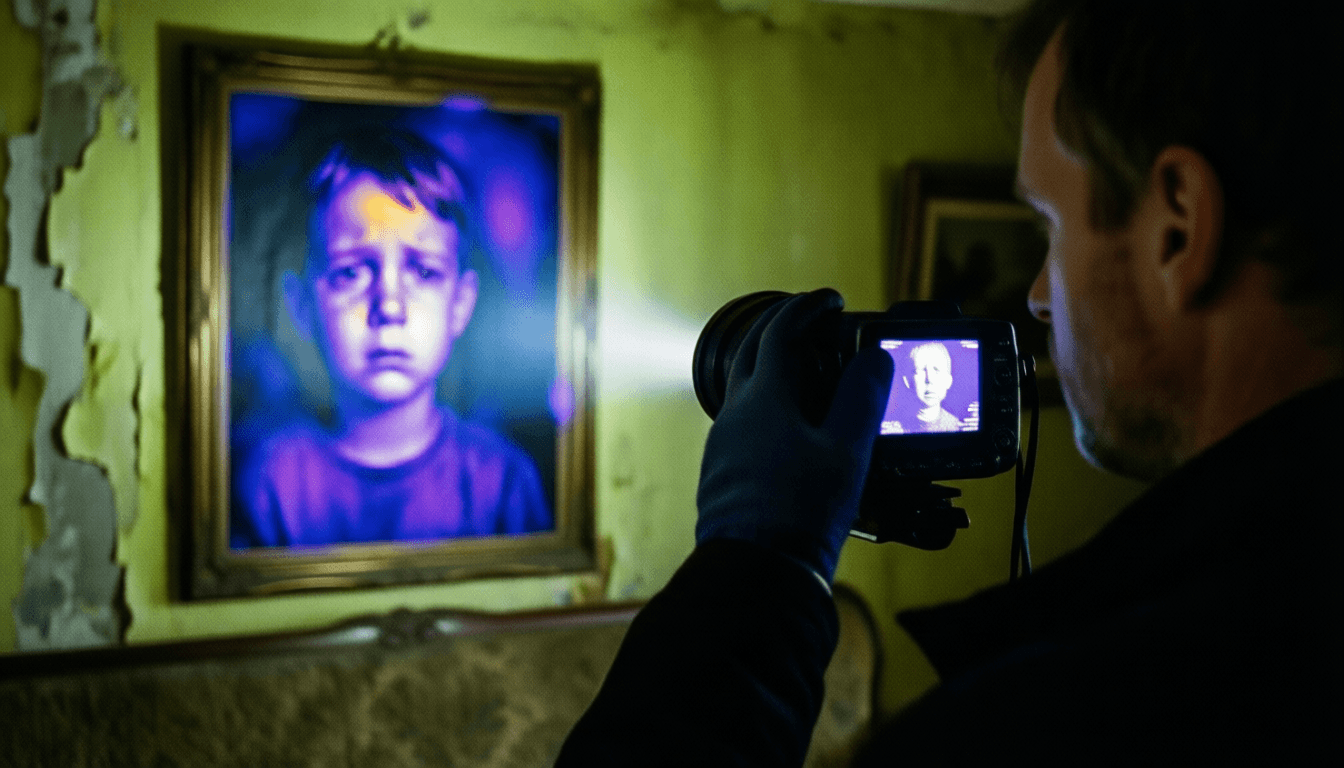
I set up my digital recorder and thermal camera. The ambient temperature was a stable 9 degrees Celsius, but on the thermal camera monitor, irregular cold spots registered around the painting. Dropping to 3 degrees, then spiking to 15, then falling again – a phenomenon inexplicable by air currents or material properties. But what overwhelmed me first and foremost was the silence. It wasn't just quiet. It was a vacuum of unnaturally perfect silence, devoid even of the characteristic creaks or eerie sounds of an old house. Even the rustle of my jacket seemed to be swallowed, barely audible. I stared at the painting. The boy's eyes seemed to follow me, like a classic optical illusion, but here, the illusion was far more distinct and personal. Presently, I began to detect a subtle change in the painted tear tracks. A faintly shimmering wetness, a trace of almost imperceptible movement. Then, auditory distortions began. What I first dismissed as external wind sounds or my own internal monologue began to take form as a very faint, distant sound. It was a low, mournful sigh. It was so subtle, barely audible over the hiss of my recorder. It didn't seem to come from any direction, but rather reverberated 'within' the oppressive silence, feeling like atmospheric pressure pressing on my eardrums. I checked my equipment. No external interference. The temperature around the painting now held steadily at 0 degrees Celsius, and a sharp, piercing cold, like needles on my skin, emanated from it, though the rest of the room remained at 9 degrees.
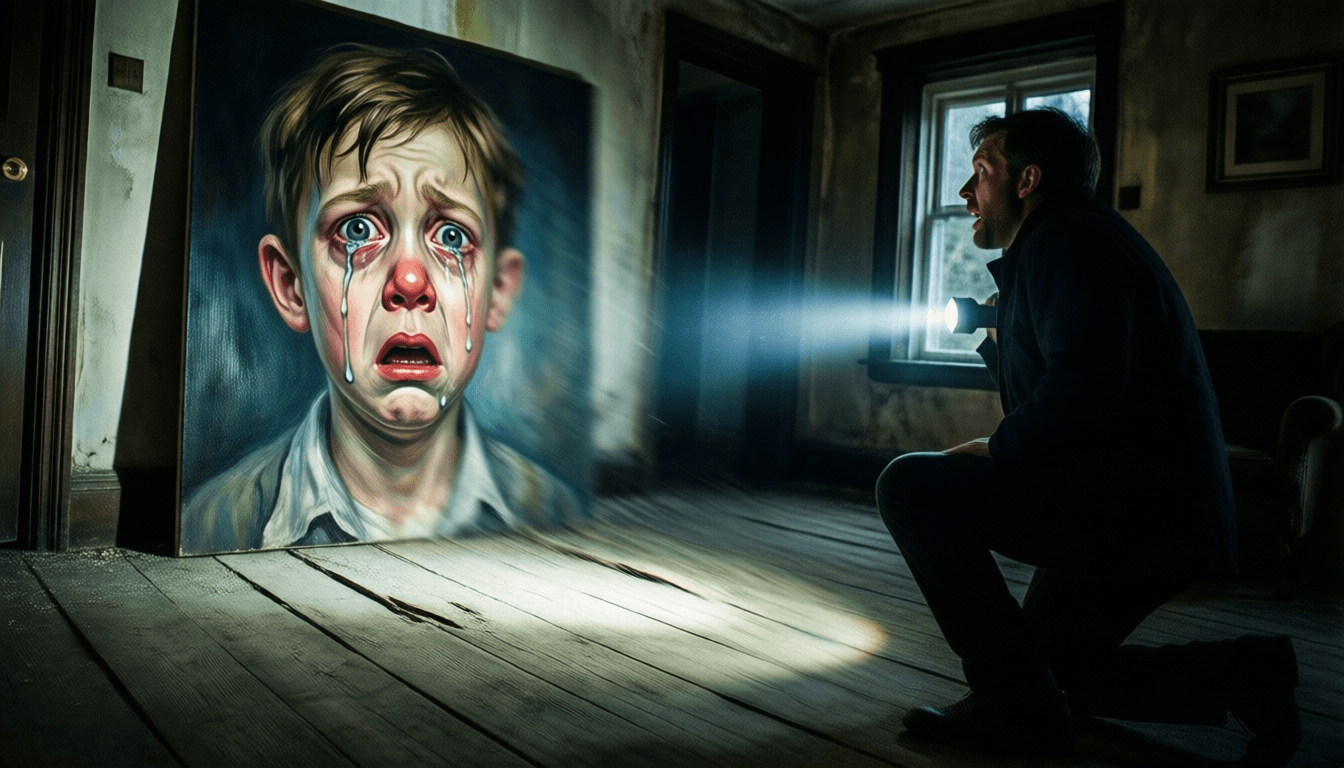
The sigh was no longer faint. A damp, close sound of deep lamentation vibrated through the floorboards and my entire body. Shadows in the room coalesced around the edges of the painting, as if the canvas itself was being sucked into pure darkness. The thermal camera screamed blue-white, then froze, seemingly indicating temperatures lower than frozen. Presently, a pungent smell, like burnt sugar, filled the air. And then, the painting began to move. First, it subtly vibrated against the fireplace stones, then it swayed as if held by an unseen hand, tilting unnaturally. Then, with incredible speed, it slid across the rough floor towards me. The boy's face, caught in the flashlight beam, distorted. His closed mouth transformed into a silent scream, gaping in terror, and the painted tears shimmered deceptively, wet.
I stumbled backward, my heart pounding violently. The air in the room pressed heavily, as if all oxygen was being violently sucked out. My breath caught. I struggled to breathe, my lungs burning. The silence shattered. A choked, guttural wail seemed to emanate from everywhere and nowhere at once. The old house screamed, timbers seeming to rip apart, but even those sounds reverberated unnaturally, moments later. My vision blurred. A massive, invisible weight pressed down on my chest, forcing me to my knees. A burning, icy pain gripped my bare hands. With a scream of incandescent agony, I recoiled my hands. My flashlight fell with a clatter, plunging the room into near darkness. In the faint light from outside the window, I saw it. A faint, indistinct, childlike figure, not fully formed, but clearly coalescing within the painting's frame. Its eyes now stared at me like burning embers in the gloom. The pressure intensified. Consciousness faded with a suffocating sensation. Under the unbearable weight and choking cold, I felt myself collapsing. Summoning a final surge of adrenaline, I blindly kicked at the painting. The painting spun, hit a crumbling wall with a loud bang, and fell face down with a terrible thud. The pressure released, the wailing stopped abruptly, and a new, eerie silence descended. I crawled out, not daring to look back. The burning wounds on my gasping hands felt frozen with an unearthly cold.
Hours later, I was found miles away, disoriented, babbling incoherently about the painting and an absurd cold. Medical personnel found no other physical injuries beyond frostbite-like burns on my hands. These wounds stubbornly refused to heal, leaving behind a searing pain. My recording equipment, retrieved by a colleague, was inexplicable. The thermal camera's data was corrupted and unrecoverable, showing only scrambled pixels. The recorder, during those critical hours, only registered static, interspersed with what sounded like distant, tormented wails that abruptly cut off, resuming as static. When police searched Ash House, the living room was exactly as I had described. But the painting was nowhere to be found. No trace remained. Authorities dismissed my experience as severe hallucinations brought on by hypothermia and the eerie atmosphere of the abandoned house.
But I know the truth. I now sleep with my windows open, even in the dead of winter, tormented by an irrational fear of enclosed spaces and the phantom smell of burnt sugar. Sometimes, in the perfect silence of dawn, I still hear it. A faint, almost imperceptible sigh. The moment I hear it, the sound grows and distorts, becoming an uncontrollable child's sob, drawing ever closer. I now know why the painting was always found unburnt. The boy does not suffer in the fire. The boy is the fire itself. He does not burn, but he ensures who does. And I know with chilling certainty that somewhere, in a forgotten attic or a dusty antique shop, the painting of the tearful boy is silently weeping, ready to begin its terrible work once more.

[ CLASSIFIED VERDICT ]
[ACCESS LOG - SOURCE FILE]
This story is based on the urban legend of 'The Crying Boy' painting, which spread in 1980s Britain. A terrifying curse is tied to this painting: homes where it resided would suffer inexplicable fires, and even if everything turned to ash, the painting alone would remain perfectly intact. This creepy tale became widely known to the public through actual media reports, terrorizing communities across the UK.