The Truth of Oscar Pond
The initial reports from 1949 in Churubusco, Indiana, about 'Oscar,' a 200-kilogram giant turtle rumored to inhabit Gale Harris's pond, are well-known and generally dismissed as a mere local folktale – a charming regional eccentricity. However, recent events suggest something far more sinister. Over the past 18 months, three attempts to install sediment monitoring equipment in 'Oscar Pond,' now a park pond after extensive dredging and refurbishment, have each met with the same inexplicable failure. Anchor systems designed for marine environments were found neatly severed, thick steel cables inexplicably frayed, and on one occasion, a deep-sea sonar device was recovered with part of its rigid casing crushed inward, as if subjected to immense pressure. Official explanations – "manufacturing defects," "unforeseen underwater debris," even "vandalism" – are growing increasingly unconvincing. Older locals, particularly, whisper that 'Oscar' still resides in the depths. More chilling still, last year an amateur diver, filming aquatic life for a local environmental project, uploaded a rough 5-second video to a local forum, showing a massive black mass moving with impossible speed beneath the clear water before vanishing into the murky depths. Though quickly dismissed as a hoax and deleted, the image has been seared into the minds of those who saw it. This investigator obtained a copy before its deletion.
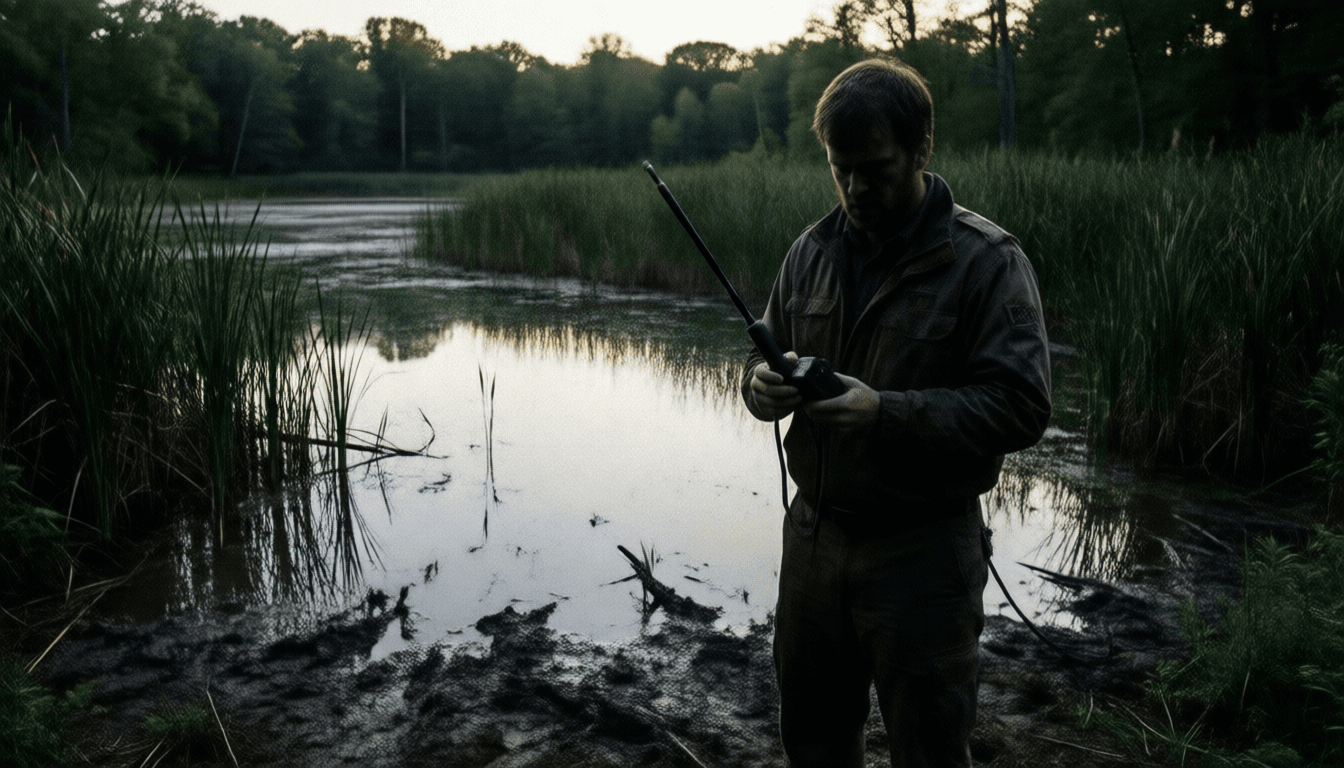
Equipped with deep-sea sonar, an underwater microphone array, and a thermal imaging drone, I arrived at Oscar Pond. The day was humid and muggy, the air heavy with the scent of damp earth and decaying leaves. The pond itself was deceptively serene: a wide, shallow, muddy expanse bordered by dense cattails and willow saplings, with the center—an artificial void created by dredging—inky deep and black. I first deployed the drone to scan the pond's perimeter, observing an abnormally calm surface with little typical insect activity or small ripples. The underwater microphones were strategically placed, cables trailing into the mud. Initial sonar scans from the bank detected an anomaly in the deepest section: a large, irregular mass whose signal constantly shifted, making precise identification impossible. The mud along the bank was strangely soft, almost viscous, stubbornly sucking at my boots. Despite being a semi-urban park, the stillness was profound, even distant traffic noise seemed swallowed by the oppressive air. There was a persistent, low hum beneath my feet, felt more than heard, especially when standing close to the water's edge.
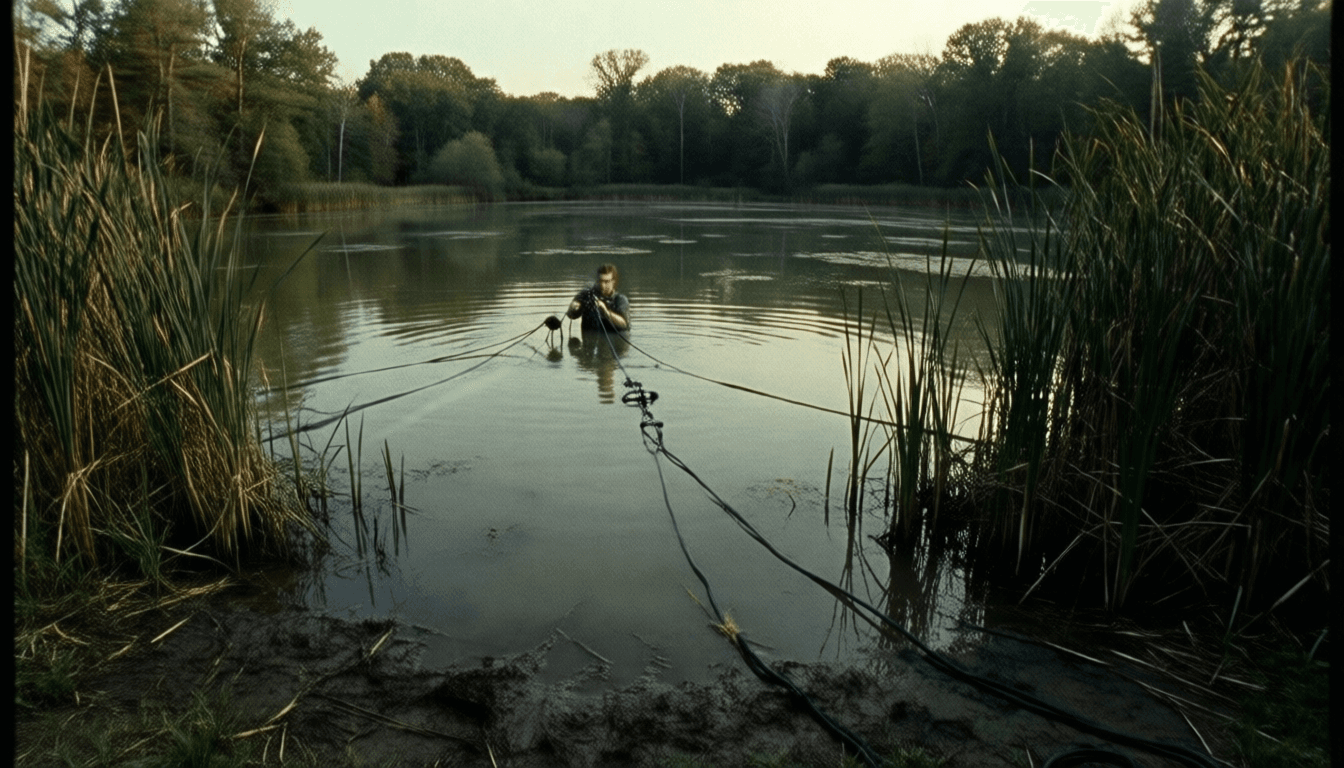
As dusk fell, the anomalies intensified. The drone's thermal camera picked up inexplicable heat signatures beneath the pond's surface—massive thermal masses appearing and disappearing without any surface disturbance. The underwater microphones began to record intermittent, deep thrumming sounds. Not the sound of objects dropping, but slow, heavy impacts reverberating through the water and ground. One recording, in particular, captured a low-frequency rumble far deeper than any known fish or mammal, seemingly moving through the water, implying a massive volume in motion.
On the pond's surface, subtle, almost imperceptible ripples were observed. These moved against typical breezes, originating from the pond's deepest part and vanishing before reaching the shore. I launched a small rubber boat equipped with directional sonar to pinpoint the source of the thermal anomalies. As I rowed toward the center, the water directly beneath the boat felt abnormally cold—a sudden localized drop in temperature. The sonar screen flickered, then locked onto a colossal, irregular object directly beneath the boat. It was impossibly larger than previous readings, and it was moving. Slowly, deliberately, it began to ascend. The humming vibration grew stronger, now distinctly felt through the boat's hull.
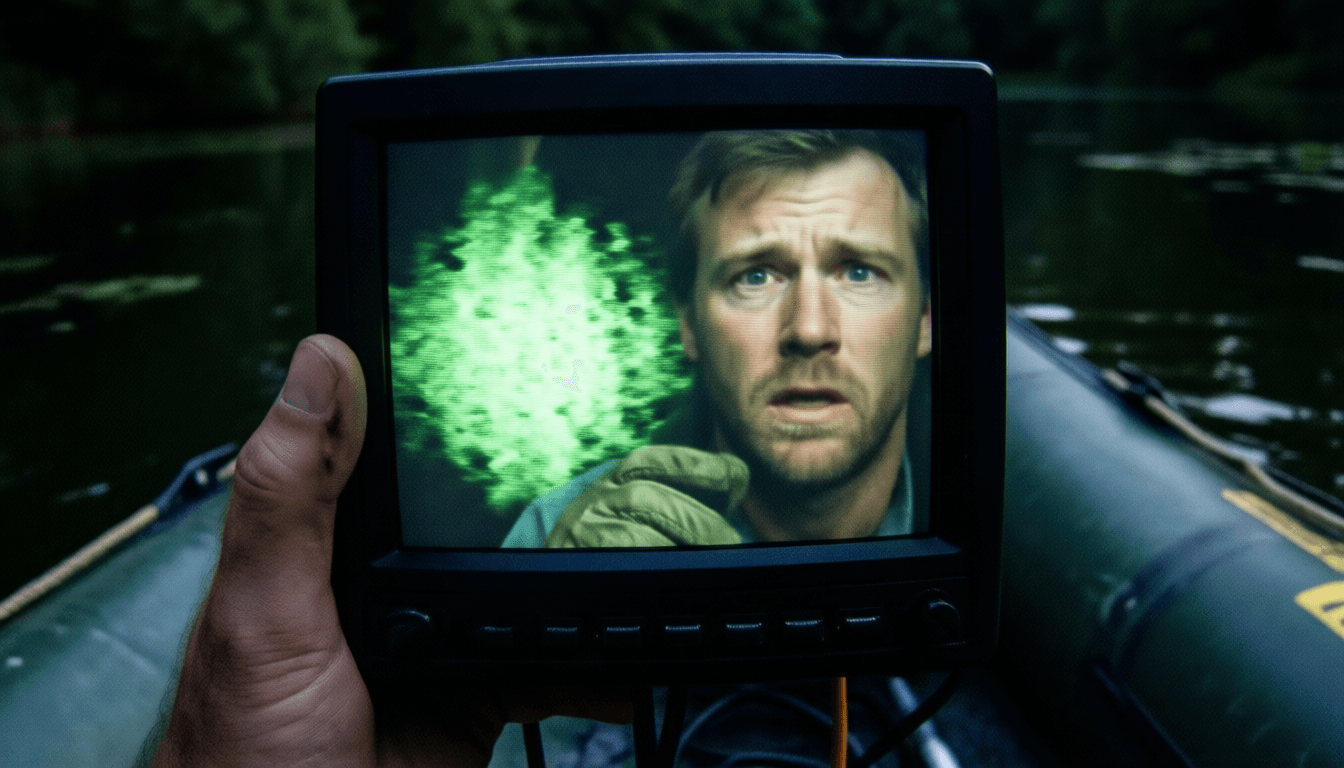
The directional sonar rendered an object of colossal scale, far exceeding any known turtle species. Its form was indistinct, yet unmistakably organic. As I stared at the screen, a new, unsettling detail emerged: the object's depth signal was violently fluctuating. It seemed to be expanding and distorting, not just moving upward.
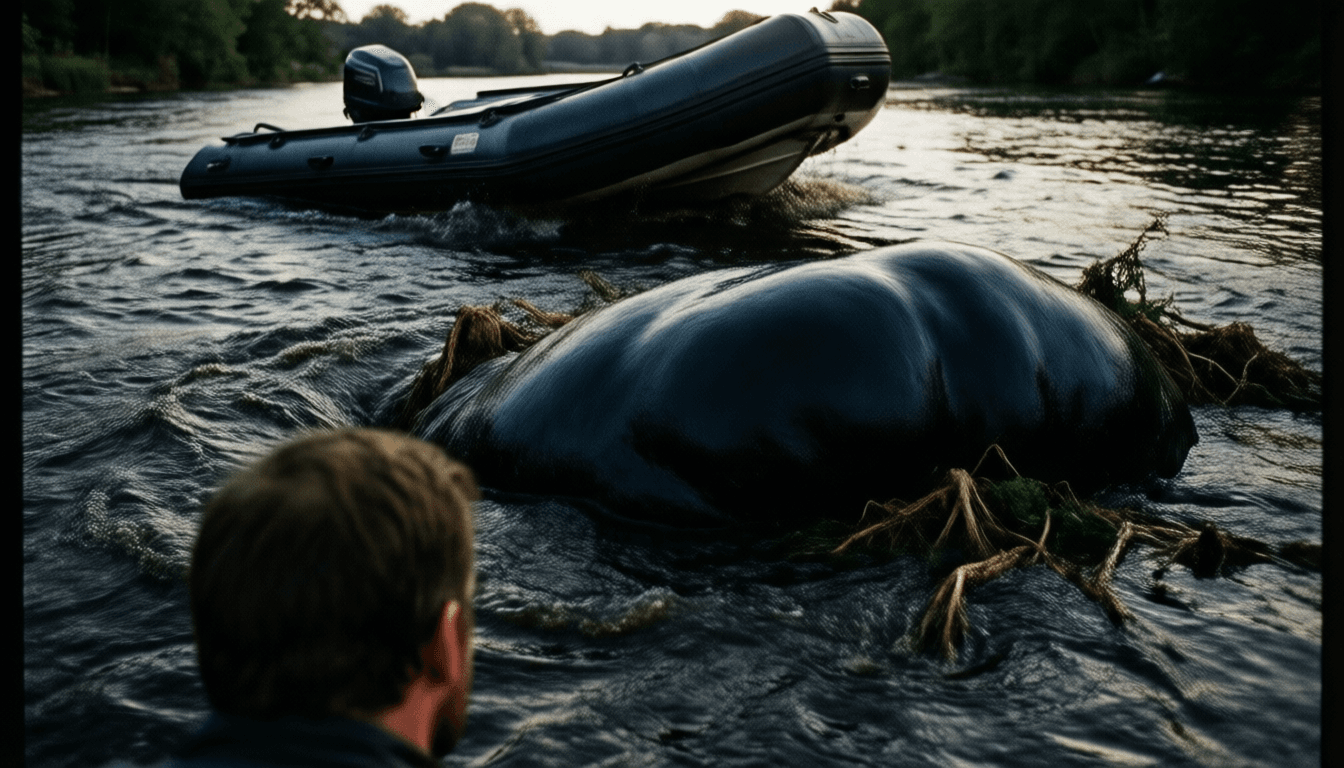
Then, without warning or surface disturbance, the boat was not rocked by a wave, but lifted. There was a slow, inevitable surge from beneath. The water around the boat churned not with splashes, but with massive, silent bubbles of deep, black mud and long-rotted vegetation. The air grew heavy with a primal, earthy stench. The boat tilted sharply, and I lost my footing, dropping the sonar device into the churning depths.
And with a sickening lurch, the boat capsized. I was flung into the cold, black water, thick with silt and an alien, sticky algae. Disoriented, I thrashed towards the surface, feeling something brush against my leg. It was neither soft nor sharp, but a vast, incredibly solid and smooth surface. It continued to move, creating an immense, invisible current. It felt like an submerged cliff moving with impossible speed and power. The water itself seemed to be pulling downwards—a silent, powerful suction trying to drag me deeper. As I desperately struggled to break free, a colossal black shadow passed overhead, briefly obscuring the last twilight glow. From the depths below, a sound echoed: a monstrous grinding of stone against stone. I breached the surface, coughing up foul water, and desperately scrambled towards the distant bank. A horrifying sense of being watched by something indifferent and immensely powerful pressed down on me. I felt the creature's cold current recede back into the inky blackness as the water became eerily calm again, as if nothing had happened. Bruised, scratched, and covered in ancient mud and sticky algae, I gasped and stumbled, trembling uncontrollably, as I crawled onto the bank.
I collapsed on the bank, panting, the taste of fear and metallic pond water in my mouth. All my equipment was swallowed by the depths. My hands trembled, but I managed to push myself up. The mud on my clothes felt like a second skin. As I finally stood, I noticed a dark, irregular fragment caught in the hem of my torn trousers. It was heavy and cold, impossibly smooth on one side, and rough, strangely layered, on the other, like petrified bone or ancient shell. It was unlike anything found in known local geology.
The next day, my incident report to local authorities was met with polite skepticism: "underwater debris," "unstable boat," "disorientation due to hypothermia." My tale of a gigantic, aggressive unidentified creature was dismissed as the after-effects of shock. But I knew. I clutched the fragment, my thumb tracing its irregular surface – a physical memory of the encounter. Later, studying local geological maps, I traced subtle, ancient fault lines and underwater cave systems crisscrossing beneath Churubusco. They connected Oscar Pond not only to adjacent waterways but to a vast, unknown subterranean network. The pond was not a sealed ecosystem. It was merely a visible vent for something colossal and ancient. The Beast of Busco was not a legend. It was mischaracterized. It was not an impossibly large turtle trapped in a farmer's pond named Oscar. It was an entity—a geological force disguised as an unidentified creature—moving through subterranean rivers and voids, indifferent to the surface world until disturbed. Now, it knows it has been disturbed. I know this truth. A cold fear permeated my bones—a chilling certainty that a dark, indifferent abyss had finally taken notice of the surface world. I understand why divers never found it, and why no net could hold it. It wasn't hiding; it simply was. Vast, ancient, a living part of the Earth itself, merely receding back into the silence from which it had emerged.

[ CLASSIFIED VERDICT ]
[ACCESS LOG - SOURCE FILE]
A local folktale from Churubusco, Indiana, claims that 'Oscar Pond' is home to 'Oscar,' a 200-kilogram giant turtle. While often dismissed as a mere regional curiosity, recent inexplicable equipment failures in the pond hint at a deeper, more sinister truth behind the myth.